















Asia-Pacific Polyvinyl Alcohol (PVA) Market Outlook to 2030
Region:Asia
Author(s):Naman Rohilla
Product Code:KROD4095
October 2024
87
About the Report
Asia-Pacific Polyvinyl Alcohol (PVA) Market Overview
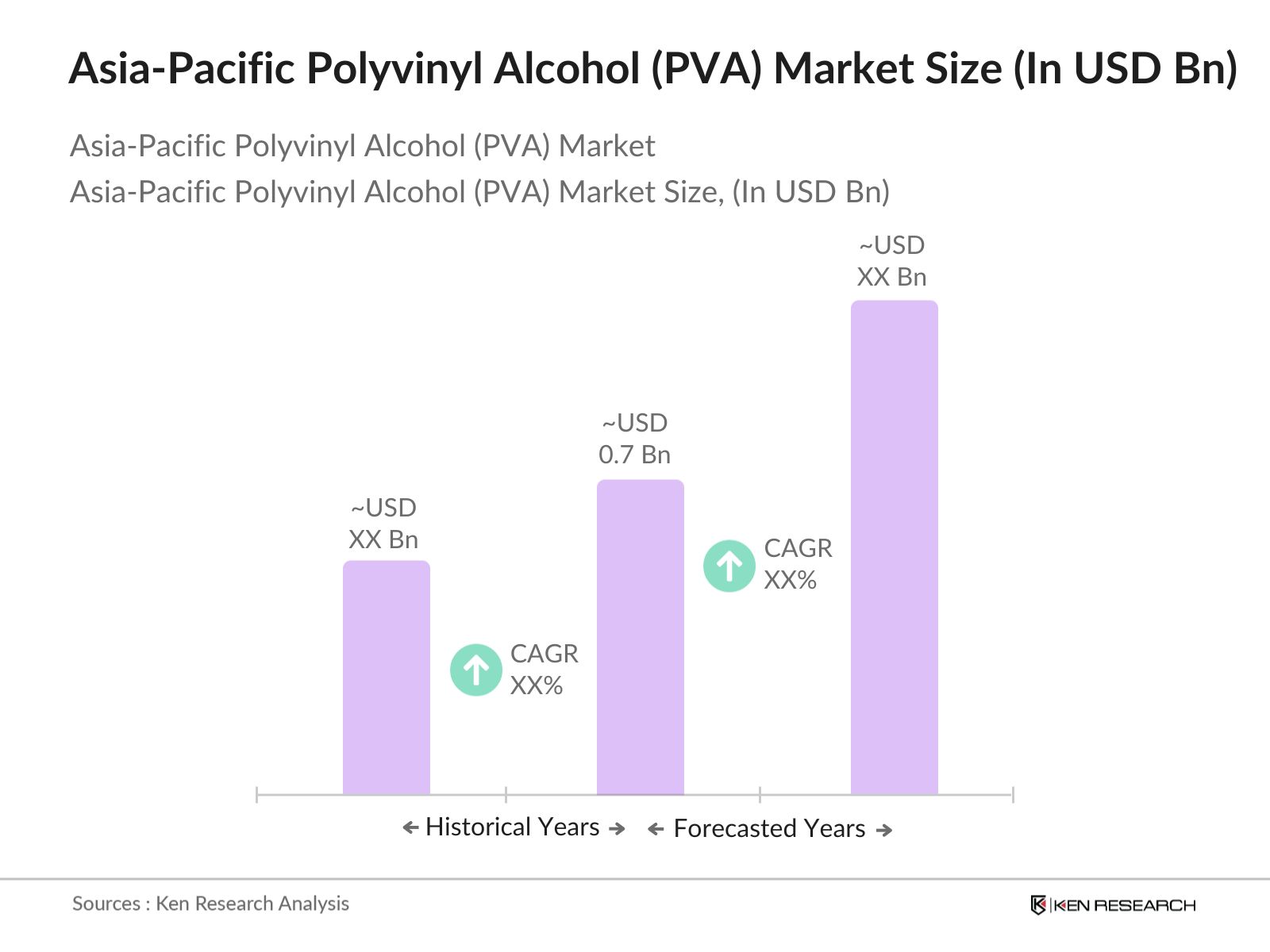
- The Asia-Pacific Polyvinyl Alcohol (PVA) market is valued at USD 0.7 billion, driven by the increasing demand for sustainable and biodegradable materials across industries. This surge in demand is particularly evident in sectors like packaging, textile, and pharmaceuticals, where PVA’s unique properties such as biodegradability, water solubility, and chemical resistance make it an ideal choice. The market's growth is bolstered by government regulations promoting eco-friendly solutions, coupled with rising consumer awareness about sustainability in packaging materials.
- In terms of geographic dominance, countries like China and Japan lead the Asia-Pacific PVA market. China's dominance is attributed to its expansive manufacturing sector and large-scale consumption of PVA in packaging and textile applications. Meanwhile, Japan has a strong presence due to advanced technologies in polymer production and a well-established chemical industry. These countries benefit from robust industrial ecosystems, established infrastructure, and government support for sustainable products.
- PVA’s growing application in food packaging requires strict compliance with food safety and environmental certifications. In 2024, the Food Safety and Standards Authority of India (FSSAI) and Japan's Food Safety Commission mandated certifications for materials used in food packaging. PVA’s biodegradable and non-toxic nature positions it as a preferred material, adhering to these regulations. The increasing focus on eco-friendly materials in food packaging is expected to further drive demand for PVA.
 Asia-Pacific Polyvinyl Alcohol (PVA) Market Segmentation
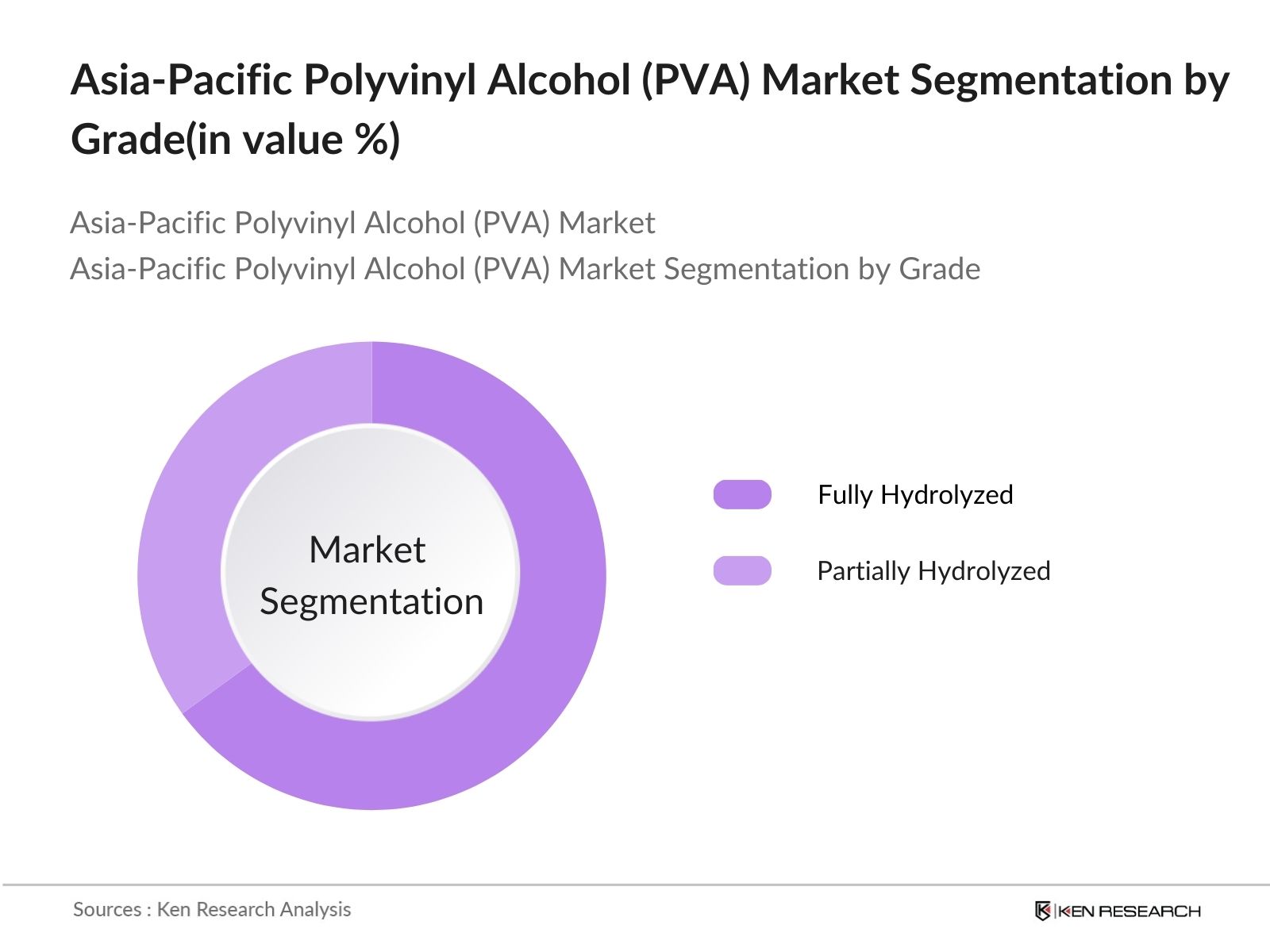
- By Grade: The market is segmented by grade into fully hydrolyzed and partially hydrolyzed variants. Fully hydrolyzed PVA holds a dominant market share due to its higher solubility in cold water and stronger tensile strength, which makes it a preferred choice in packaging films and textile sizing. The growing application of fully hydrolyzed PVA in biodegradable plastics further boosts its demand in the region, particularly in markets where sustainability is becoming a priority.
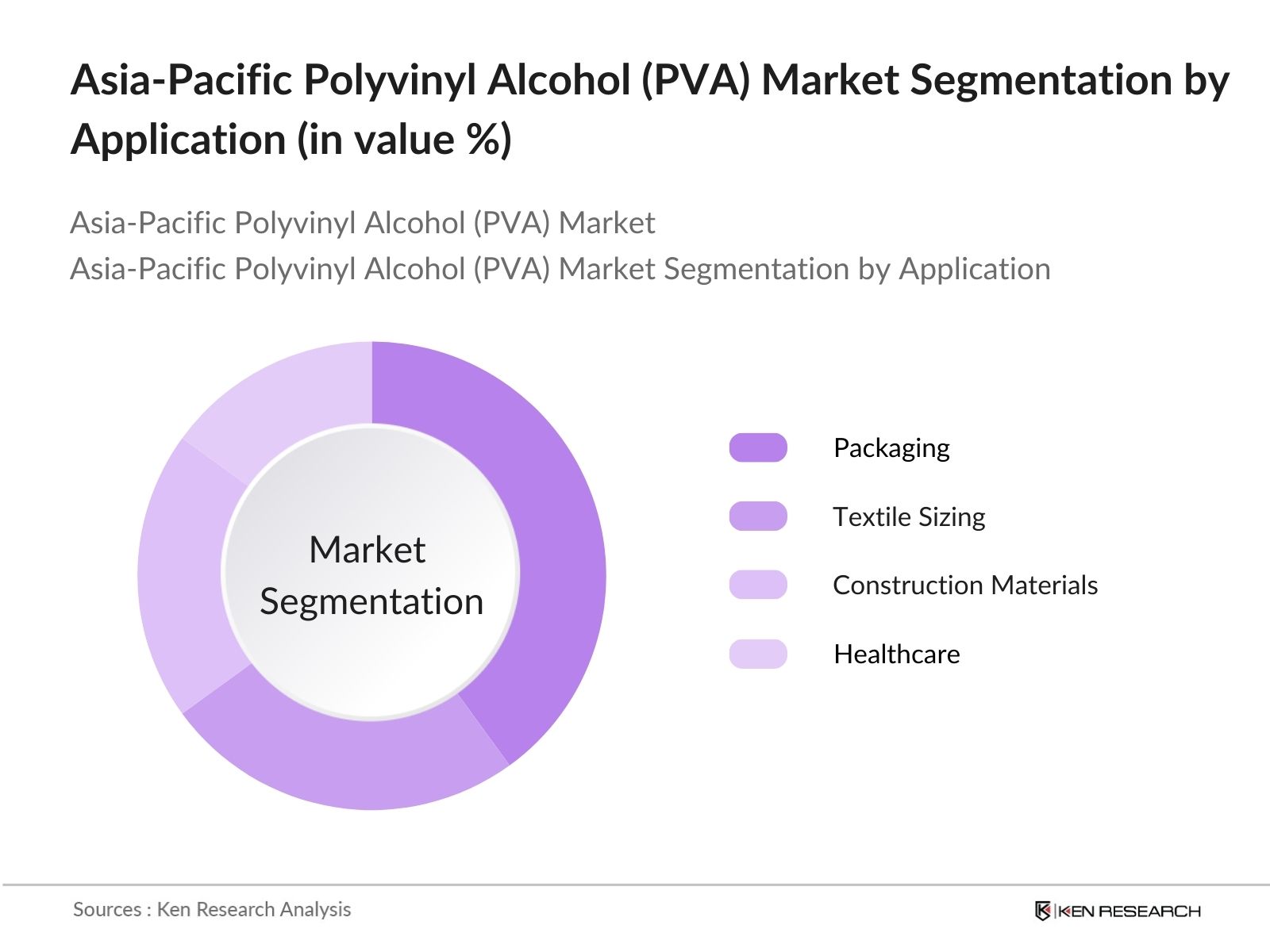
- By Application: The market is also segmented by application into packaging, textile sizing, construction materials, and healthcare. Packaging dominates the application segment, driven by the increasing demand for biodegradable and water-soluble films. The packaging industry's adoption of PVA for eco-friendly packaging solutions, particularly in food packaging and detergent pods, has reinforced its leading position in the market. The trend toward sustainable packaging is further driven by governmental regulations on reducing plastic waste.
Asia-Pacific Polyvinyl Alcohol (PVA) Market Competitive Landscape
The Asia-Pacific PVA market is dominated by several key players, many of whom have a longstanding presence in the region and deep expertise in polymer manufacturing. The market’s competitive landscape is marked by continuous innovation, strategic partnerships, and R&D investments to enhance product performance and meet growing consumer demands for sustainable solutions. The Asia-Pacific Polyvinyl Alcohol market is characterized by a mix of local and global players. Companies like Kuraray Co., Ltd. and Sinopec dominate the market due to their extensive production capabilities, wide distribution networks, and focus on developing eco-friendly PVA products. Other notable players include Sekisui Chemical and Anhui Wanwei, which have strengthened their positions through continuous innovation in product formulations and applications.
| Company | Establishment Year | Headquarters | No. of Employees | Revenue (USD Bn) | R&D Expenditure (USD Mn) | Global Reach | Product Innovation | Production Capacity (tons/year) | Supply Chain Integration |
|---|---|---|---|---|---|---|---|---|---|
| Kuraray Co., Ltd. | 1926 | Japan | - | - | - | - | - | - | - |
| Sinopec | 2000 | China | - | - | - | - | - | - | - |
| Sekisui Chemical | 1947 | Japan | - | - | - | - | - | - | - |
| Anhui Wanwei | 1984 | China | - | - | - | - | - | - | - |
| Wacker Chemie AG | 1914 | Germany | - | - | - | - | - | - | - |
Asia-Pacific Polyvinyl Alcohol (PVA) Market Analysis
Asia-Pacific Polyvinyl Alcohol (PVA) Market Growth Drivers
- Growth in Textile and Paper Industries: The Asia-Pacific region is witnessing growth in the textile and paper industries, driving demand for Polyvinyl Alcohol (PVA). In 2023, the textile sector in countries like China and India reached a production output of around 70 million tons of fabric annually, according to World Bank data. PVA, known for its excellent adhesive and film-forming properties, is increasingly being adopted for textile sizing and paper coatings. The increasing use of PVA in these industries is expected to drive market growth, supported by governmental programs aimed at industrial development across the region.
- Increasing Demand for Biodegradable Plastics: Consumer demand for environmentally friendly materials is boosting the adoption of biodegradable plastics, including PVA. In 2023, Asia-Pacific's production of biodegradable plastics reached 2.1 million tons, driven by stringent environmental regulations. PVA’s water solubility and biodegradability make it a preferred choice for packaging applications. The Indian government's “Swachh Bharat Mission,” which focuses on sustainability, is encouraging the use of biodegradable materials, further accelerating demand for PVA in various sectors.
- Rise in Consumer Awareness for Sustainable Packaging: In 2024, consumer awareness of environmental issues is at an all-time high in Asia-Pacific, with nearly 76% of consumers in countries like Japan, Australia, and South Korea expressing concern about sustainable packaging, as per IMF data. This shift in consumer behaviour is pushing companies toward adopting PVA in packaging due to its biodegradability. Governments in the region are also incentivizing companies that adopt eco-friendly packaging practices, making PVA a key material in the sector.
Asia-Pacific Polyvinyl Alcohol (PVA) Market Challenges
- Volatile Raw Material Prices: One of the key challenges faced by the PVA market is the volatility in the prices of raw materials, particularly vinyl acetate monomer (VAM). In 2023, the price of VAM fluctuated between USD 1,200 to USD 1,500 per ton, as reported by the World Bank. This volatility is primarily due to supply chain disruptions and geopolitical tensions in major VAM-producing countries. Such price fluctuations impact PVA manufacturers' profit margins, posing a major challenge to the market's growth.
- Competition from Substitutes like Polyethylene: PVA faces stiff competition from other polymers such as polyethylene, which dominates the packaging industry due to its low cost and widespread availability. In 2023, polyethylene accounted for nearly 85% of the total polymer demand in Asia-Pacific packaging. Despite PVA's environmental benefits, the high cost of production compared to polyethylene makes it less attractive to cost-conscious industries. Governments are pushing for the adoption of biodegradable materials, but the economic feasibility remains a challenge for PVA adoption.
Asia-Pacific Polyvinyl Alcohol (PVA) Market Future Outlook
Over the next five years, the Asia-Pacific Polyvinyl Alcohol (PVA) market is expected to witness growth driven by increased demand for biodegradable and sustainable materials in key industries such as packaging, textiles, and pharmaceuticals. Rising environmental awareness and stringent regulations regarding plastic waste management will propel the adoption of PVA-based solutions across various sectors. Additionally, advancements in polymer technology and the introduction of innovative products tailored to specific industrial needs will play a crucial role in expanding the market’s potential.
Asia-Pacific Polyvinyl Alcohol (PVA) Market Opportunities
- Growing Adoption in Agriculture and Medical Packaging: There is a growing opportunity for PVA in agriculture and medical packaging applications. In 2024, the agriculture sector in Asia-Pacific accounted for 35% of global food production, which highlights the need for sustainable packaging solutions. PVA's biodegradable and water-soluble properties make it an ideal candidate for agricultural applications such as seed coatings and water-soluble packaging for fertilizers. In the medical field, the demand for sterile and biodegradable packaging has grown by 18% year-on-year, providing market opportunities for PVA.
- New Market Applications in Pharmaceuticals: PVA is increasingly being explored for pharmaceutical applications, particularly in drug delivery systems. In 2023, the Asia-Pacific pharmaceutical market was valued at USD 420 billion, with a rising trend toward biodegradable and biocompatible materials. PVA’s film-forming and adhesive properties make it suitable for developing controlled-release drug delivery systems and tablet coatings. The expanding pharmaceutical sector across major economies like China, India, and Japan presents growth potential for PVA in biomedical applications.
Scope of the Report
| By Grade |
Fully Hydrolyzed Partially Hydrolyzed |
| By Application |
Textile Sizing Paper Coating Food Packaging Construction Materials |
| By End-User Industry |
Packaging Industry Textile Industry Electronics Industry Healthcare Industry |
| By Solubility |
Water-Soluble Non-Soluble |
| By Region |
China Japan South Korea Australia and New Zealand India |
Products
Key Target Audience
Polymer Manufacturers
Textile Industry Players
Packaging Industry Players
Banks and Financial Institutions
Construction Material Suppliers
Pharmaceutical Companies
Venture Capital & Investment Firms
Government and Regulatory Bodies (Ministry of Environment, Ministry of Industry and Trade)
Research and Development Institutions
Companies
Kuraray Co., Ltd.
Sinopec
Sekisui Chemical
Anhui Wanwei Group Co., Ltd.
Wacker Chemie AG
Nippon Gohsei
OCI Company Ltd.
Chang Chun Group
Solutia
DuPont
China Petroleum & Chemical Corporation
Nycon
Ultrachem Ltd.
Japan VAM & Poval Co., Ltd.
Anhui Sinowin Chemical Co., Ltd.
Table of Contents
1. Asia-Pacific Polyvinyl Alcohol (PVA) Market Overview
1.1. Definition and Scope
1.2. Market Taxonomy
1.3. Market Growth Rate
1.4. Market Segmentation Overview
2. Asia-Pacific Polyvinyl Alcohol (PVA) Market Size (In USD Bn)
2.1. Historical Market Size
2.2. Year-On-Year Growth Analysis
2.3. Key Market Developments and Milestones
3. Asia-Pacific Polyvinyl Alcohol (PVA) Market Analysis
3.1. Growth Drivers (Demand in Packaging Industry, Rising Water-Soluble Films Usage, Biodegradability Advantages)
3.1.1. Growth in Textile and Paper Industries
3.1.2. Increasing Demand for Biodegradable Plastics
3.1.3. Rise in Consumer Awareness for Sustainable Packaging
3.2. Market Challenges (High Production Costs, Limited Availability of Raw Materials)
3.2.1. Volatile Raw Material Prices
3.2.2. Competition from Substitutes like Polyethylene
3.3. Opportunities (Expansion in Food Packaging, Innovations in Biomedical Applications)
3.3.1. Growing Adoption in Agriculture and Medical Packaging
3.3.2. New Market Applications in Pharmaceuticals
3.4. Trends (Shift Toward Green Chemistry, Adoption of Water-Soluble Solutions)
3.4.1. Integration of PVA in Eco-friendly Packaging Materials
3.4.2. Rising Usage in Laundry Detergent Pods
3.5. Government Regulations (Environmental Regulations for Biodegradable Plastics)
3.5.1. Regulatory Compliance for Sustainable Materials
3.5.2. Certifications for Food Safety and Environmental Impact
3.6. SWOT Analysis
3.7. Stake Ecosystem
3.8. Porter’s Five Forces Analysis
3.9. Competition Ecosystem
4. Asia-Pacific Polyvinyl Alcohol (PVA) Market Segmentation
4.1. By Grade (In Value %)
4.1.1. Fully Hydrolyzed
4.1.2. Partially Hydrolyzed
4.2. By Application (In Value %)
4.2.1. Textile Sizing
4.2.2. Paper Coating
4.2.3. Food Packaging
4.2.4. Construction Materials
4.3. By End-User Industry (In Value %)
4.3.1. Packaging Industry
4.3.2. Textile Industry
4.3.3. Electronics Industry
4.3.4. Healthcare Industry
4.4. By Solubility (In Value %)
4.4.1. Water-Soluble
4.4.2. Non-Soluble
4.5. By Region (In Value %)
4.5.1. China
4.5.2. Japan
4.5.3. South Korea
4.5.4. Australia and New Zealand
4.5.5. India
5. Asia-Pacific Polyvinyl Alcohol (PVA) Market Competitive Analysis
5.1. Detailed Profiles of Major Companies
5.1.1. Kuraray Co., Ltd.
5.1.2. Sekisui Chemical Co., Ltd.
5.1.3. Sinopec
5.1.4. Anhui Wanwei Group Co., Ltd.
5.1.5. Nippon Gohsei (Mitsubishi Chemical)
5.1.6. China Petroleum & Chemical Corporation
5.1.7. Wacker Chemie AG
5.1.8. OCI Company Ltd.
5.1.9. Japan VAM & Poval Co., Ltd.
5.1.10. Chang Chun Group
5.1.11. Anhui Sinowin Chemical Co., Ltd.
5.1.12. Solutia
5.1.13. DuPont
5.1.14. Nycon
5.1.15. Ultrachem Ltd.
5.2. Cross Comparison Parameters (Revenue, Headquarters, Number of Employees, Production Capacities, Supply Chain Integration, R&D Investments, Product Innovation, Global Reach)
5.3. Market Share Analysis
5.4. Strategic Initiatives
5.5. Mergers and Acquisitions
5.6. Investment Analysis
5.7. Venture Capital Funding
5.8. Government Grants
5.9. Private Equity Investments
6. Asia-Pacific Polyvinyl Alcohol (PVA) Market Regulatory Framework
6.1. Environmental Standards for Biodegradable Plastics
6.2. Compliance Requirements for Food Packaging
6.3. Certification Processes for Textile Applications
7. Asia-Pacific Polyvinyl Alcohol (PVA) Future Market Size (In USD Bn)
7.1. Future Market Size Projections
7.2. Key Factors Driving Future Market Growth
8. Asia-Pacific Polyvinyl Alcohol (PVA) Future Market Segmentation
8.1. By Grade (In Value %)
8.2. By Application (In Value %)
8.3. By End-User Industry (In Value %)
8.4. By Solubility (In Value %)
8.5. By Region (In Value %)
9. Asia-Pacific Polyvinyl Alcohol (PVA) Market Analysts’ Recommendations
9.1. TAM/SAM/SOM Analysis
9.2. Customer Cohort Analysis
9.3. Marketing Initiatives
9.4. White Space Opportunity Analysis
Disclaimer Contact UsResearch Methodology
Step 1: Identification of Key Variables
This stage involved constructing a detailed market map of the Asia-Pacific Polyvinyl Alcohol (PVA) market, including all major stakeholders. Data was gathered through a combination of secondary sources and proprietary databases to identify key market dynamics.
Step 2: Market Analysis and Construction
Historical data on market penetration, pricing trends, and production volumes were analyzed to estimate the PVA market’s current size. The data was validated using multiple data points from the industry and in-depth market research.
Step 3: Hypothesis Validation and Expert Consultation
Our team conducted interviews with key players in the PVA market, including manufacturers and suppliers, to validate the research hypotheses. Their insights into market dynamics helped refine the report’s conclusions.
Step 4: Research Synthesis and Final Output
The final stage involved combining primary and secondary research data to generate a comprehensive analysis of the PVA market. Detailed insights into consumer preferences, production capabilities, and emerging trends were compiled into this report.
Frequently Asked Questions
How big is the Asia-Pacific Polyvinyl Alcohol (PVA) Market?
The Asia-Pacific Polyvinyl Alcohol (PVA) market is valued at USD 0.7 billion, driven by rising demand for biodegradable and sustainable materials across various industries.
What are the challenges in the Asia-Pacific PVA Market?
Key challenges in the Asia-Pacific Polyvinyl Alcohol (PVA) market include the high production costs of PVA and volatile raw material prices, which can affect the overall profitability of manufacturers in the region.
Who are the major players in the Asia-Pacific PVA Market?
Major players in the Asia-Pacific Polyvinyl Alcohol (PVA) market include Kuraray Co., Ltd., Sinopec, Sekisui Chemical, and Anhui Wanwei, which dominate due to their strong production capacities and wide-reaching distribution networks.
What are the growth drivers of the Asia-Pacific PVA Market?
Growth drivers of the Asia-Pacific Polyvinyl Alcohol (PVA) market include increased demand for biodegradable plastics, sustainable packaging solutions, and innovations in the healthcare and textile industries.
Why Buy From Us?

What makes us stand out is that our consultants follows Robust, Refine and Result (RRR) methodology. i.e. Robust for clear definitions, approaches and sanity checking, Refine for differentiating respondents facts and opinions and Result for presenting data with story

We have set a benchmark in the industry by offering our clients with syndicated and customized market research reports featuring coverage of entire market as well as meticulous research and analyst insights.

While we don't replace traditional research, we flip the method upside down. Our dual approach of Top Bottom & Bottom Top ensures quality deliverable by not just verifying company fundamentals but also looking at the sector and macroeconomic factors.

With one step in the future, our research team constantly tries to show you the bigger picture. We help with some of the tough questions you may encounter along the way: How is the industry positioned? Best marketing channel? KPI's of competitors? By aligning every element, we help maximize success.

Our report gives you instant access to the answers and sources that other companies might choose to hide. We elaborate each steps of research methodology we have used and showcase you the sample size to earn your trust.

If you need any support, we are here! We pride ourselves on universe strength, data quality, and quick, friendly, and professional service.