
Asia Pacific PNT (Positioning, Navigation, and Timing) Market Outlook to 2030
Region:Asia
Author(s):Shreya Garg
Product Code:KROD5827
Region:Asia
Author(s):Shreya Garg
Product Code:KROD5827
December 2024
92
By Application: The market is segmented by application into defense and military, agriculture, automotive, infrastructure and construction, and telecommunications. The defense and military segment hold a dominant position in the market due to the critical need for accurate and secure navigation systems in military operations. Governments in the region, especially China and India, have been heavily investing in defense PNT technologies to enhance their military capabilities and national security.

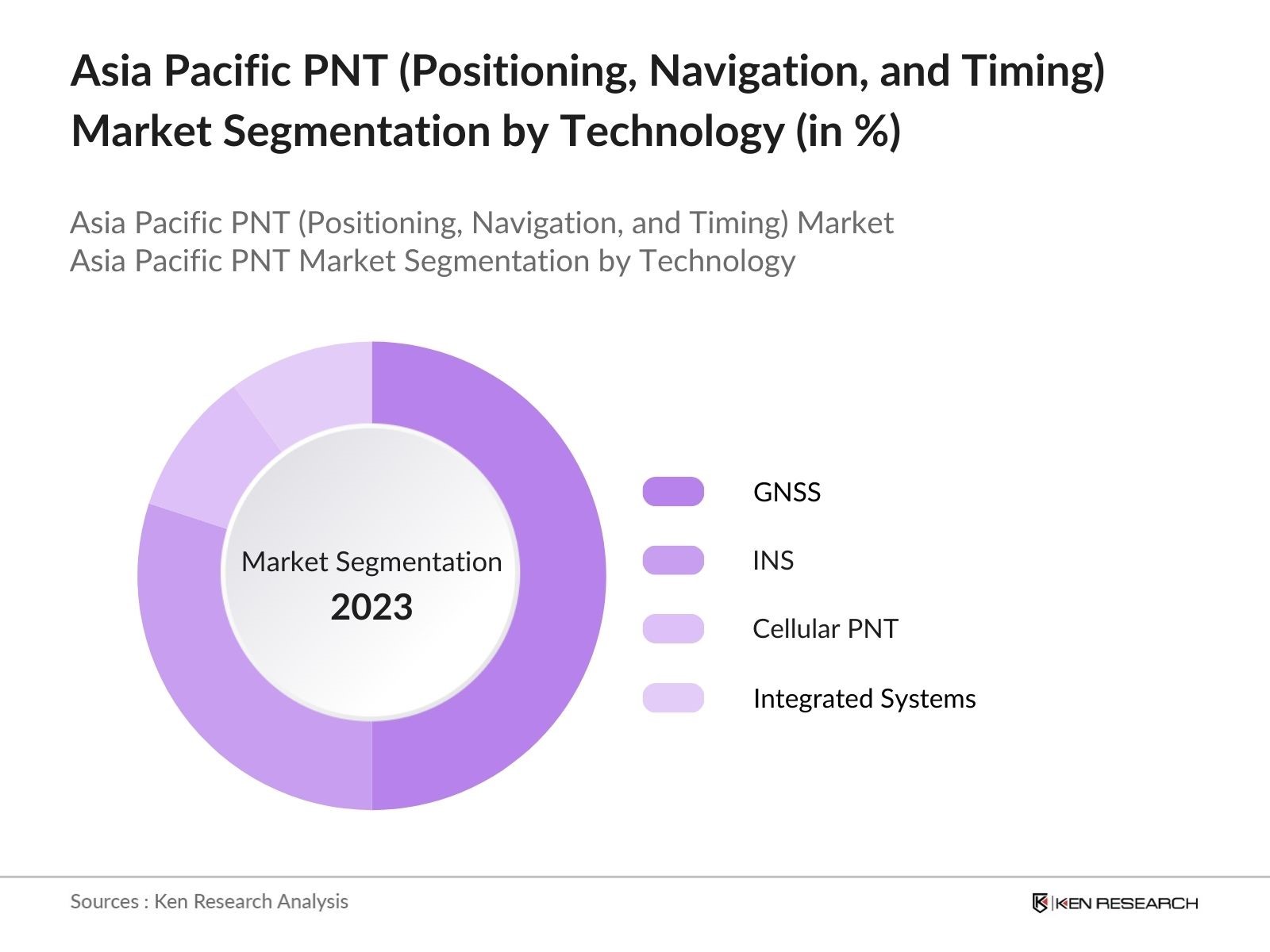
By Technology: The market is also segmented by technology into GNSS (Global Navigation Satellite Systems), INS (Inertial Navigation Systems), Cellular PNT, and integrated systems. GNSS dominates the market, accounting for the largest share due to its widespread use in applications like navigation, timing, and surveying. The presence of region-specific systems like Chinas BeiDou and Japans Quasi-Zenith Satellite System (QZSS) further strengthens the dominance of GNSS in the Asia Pacific market.
The Asia Pacific PNT market is characterized by a few major players that dominate the market with their extensive satellite networks and technological expertise. Companies like Lockheed Martin, Raytheon Technologies, and Honeywell International Inc. are prominent in the market, providing advanced solutions to defense and commercial sectors. Regional players, such as China's BeiDou Navigation Satellite System and Japan's QZSS, also contribute significantly to the competitive landscape.
|
Company |
Established Year |
Headquarters |
R&D Investments |
Satellite Networks |
Technology Collaborations |
Revenue (USD Mn) |
Strategic Partnerships |
Market Penetration |
Patent Portfolio |
|
Lockheed Martin Corporation |
1912 |
Bethesda, Maryland, USA |
|||||||
|
Raytheon Technologies |
2020 |
Waltham, Massachusetts, USA |
|||||||
|
Honeywell International Inc. |
1906 |
Charlotte, North Carolina, USA |
|||||||
|
BeiDou Navigation Satellite System |
2000 |
Beijing, China |
|||||||
|
Thales Group |
2000 |
La Dfense, Paris, France |
Over the next five years, the Asia Pacific PNT market is expected to grow significantly, driven by increasing demand for precision timing and navigation systems across multiple sectors such as transportation, public safety, and defense. Advancements in satellite technology, coupled with government initiatives to promote indigenous satellite navigation systems, will further propel market growth. The expanding adoption of PNT systems in emerging technologies, including autonomous vehicles and drones, is expected to create substantial market opportunities.
|
By Application |
Defense and Military Agriculture Automotive Infrastructure and Construction Telecommunications |
|
By Technology |
GNSS INS Cellular PNT Integrated Systems |
|
By Solution Type |
Hardware Software Services |
|
By End User |
Government and Public Safety Commercial Enterprises Individual Consumers |
|
By Region |
China India Japan South Korea Australia |
1.1 Definition and Scope
1.2 Market Taxonomy
1.3 Market Growth Rate
1.4 Market Segmentation Overview
2.1 Historical Market Size
2.2 Year-On-Year Growth Analysis
2.3 Key Market Developments and Milestones
3.1 Growth Drivers
3.1.1 Increasing Demand for Location-Based Services (LBS)
3.1.2 Expansion of Smart Cities and Urbanization Projects
3.1.3 Rise in Autonomous Systems and Drones
3.1.4 Government Initiatives and Defense Applications
3.2 Market Challenges
3.2.1 High Costs of Technology Infrastructure
3.2.2 GPS Signal Interference and Vulnerabilities
3.2.3 Lack of Skilled Workforce in Advanced Technologies
3.3 Opportunities
3.3.1 Growing Adoption in Agriculture and Surveying
3.3.2 Advancements in Satellite Technology
3.3.3 Regional Collaboration for Enhanced PNT Services
3.4 Trends
3.4.1 Integration of PNT with IoT and 5G Networks
3.4.2 Increased Use in Automotive and Maritime Industries
3.4.3 Demand for PNT in Precision Timing Applications
3.5 Government Regulations
3.5.1 National Satellite Positioning Initiatives
3.5.2 Spectrum Allocation Policies
3.5.3 Public-Private Partnerships in PNT Infrastructure
3.6 SWOT Analysis
3.7 Stakeholder Ecosystem
3.8 Porters Five Forces
3.9 Competition Ecosystem
4.1 By Application (In Value %)
4.1.1 Defense and Military
4.1.2 Agriculture
4.1.3 Automotive
4.1.4 Infrastructure and Construction
4.1.5 Telecommunications
4.2 By Technology (In Value %)
4.2.1 GNSS (Global Navigation Satellite Systems)
4.2.2 INS (Inertial Navigation Systems)
4.2.3 Cellular PNT
4.2.4 Integrated Systems
4.3 By Solution Type (In Value %)
4.3.1 Hardware
4.3.2 Software
4.3.3 Services
4.4 By End User (In Value %)
4.4.1 Government and Public Safety
4.4.2 Commercial Enterprises
4.4.3 Individual Consumers
4.5 By Region (In Value %)
4.5.1 China
4.5.2 India
4.5.3 Japan
4.5.4 South Korea
4.5.5 Australia
5.1 Detailed Profiles of Major Companies
5.1.1 Lockheed Martin Corporation
5.1.2 Northrop Grumman Corporation
5.1.3 Honeywell International Inc.
5.1.4 Raytheon Technologies
5.1.5 Qualcomm Technologies Inc.
5.1.6 Trimble Inc.
5.1.7 Hexagon AB
5.1.8 Garmin Ltd.
5.1.9 Broadcom Inc.
5.1.10 Thales Group
5.1.11 Septentrio
5.1.12 Furuno Electric Co., Ltd.
5.1.13 BeiDou Navigation Satellite System (BDS)
5.1.14 u-blox AG
5.1.15 STMicroelectronics
5.2 Cross Comparison Parameters (R&D Investments, Technology Collaborations, Patent Portfolio, Revenue, Market Share, Strategic Partnerships, Mergers & Acquisitions, Employee Strength)
5.3 Market Share Analysis
5.4 Strategic Initiatives
5.5 Mergers and Acquisitions
5.6 Investment Analysis
5.7 Government Grants and Subsidies
5.8 Private Equity Investments
6.1 Navigation Satellite Systems Compliance Requirements
6.2 Certification Standards
6.3 Data Security and Privacy Regulations
7.1 Future Market Size Projections
7.2 Key Factors Driving Future Market Growth
8.1 By Application (In Value %)
8.2 By Technology (In Value %)
8.3 By Solution Type (In Value %)
8.4 By End User (In Value %)
8.5 By Region (In Value %)
9.1 TAM/SAM/SOM Analysis
9.2 Customer Cohort Analysis
9.3 Marketing Initiatives
9.4 White Space Opportunity Analysis
The initial step involves creating an ecosystem map that identifies all key stakeholders within the Asia Pacific PNT market. This process is based on a thorough desk review and the use of various proprietary databases to gather industry-level insights and define critical market dynamics.
In this phase, historical market data for the Asia Pacific PNT market is compiled, analyzed, and validated. This includes assessing the penetration of PNT systems across various industries and evaluating revenue generated from multiple service providers.
Hypotheses generated from the initial data are then tested through consultations with industry experts via interviews. These discussions help refine and validate the market insights obtained from earlier stages.
The final phase synthesizes all research findings, leading to the development of a comprehensive analysis of the Asia Pacific PNT market. This is done through in-depth engagement with market players to validate the conclusions drawn from the research.
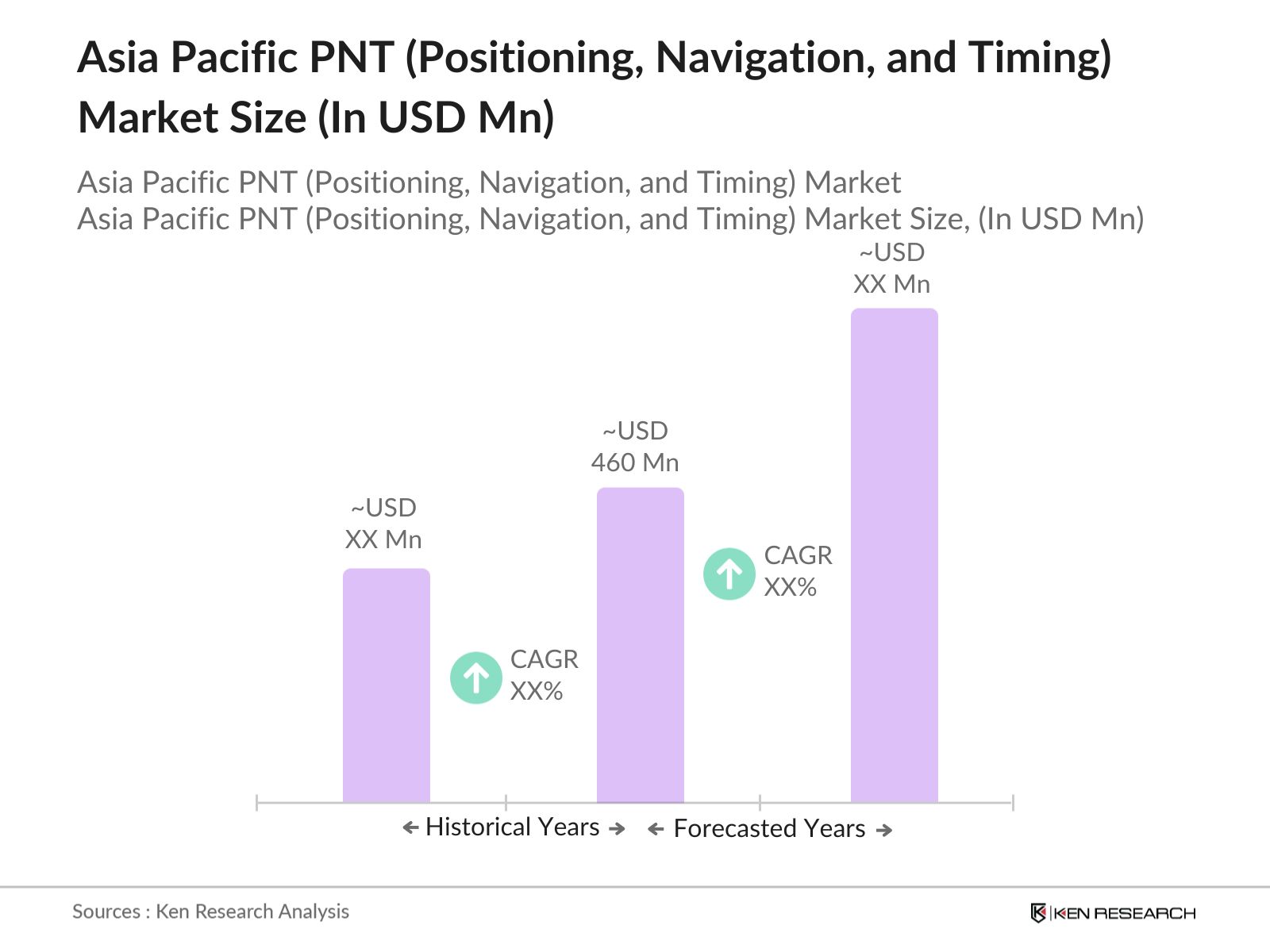
The Asia Pacific PNT market is valued at USD 460 million, driven by the growing demand for precision timing and navigation services across industries such as defense, automotive, and agriculture.
Key challenges in the Asia Pacific PNT market include high technology infrastructure costs, GPS signal interference, and the shortage of skilled professionals to operate and maintain PNT systems.
The major players in the Asia Pacific PNT market include Lockheed Martin Corporation, Raytheon Technologies, Honeywell International Inc., and China's BeiDou Navigation Satellite System (BDS), all of which dominate due to their technological expertise and strong market presence.
The Asia Pacific PNT market is primarily driven by the increasing use of PNT systems in autonomous vehicles, smart city initiatives, and defense applications. Additionally, government support for satellite navigation systems in China and Japan contributes significantly to market growth.
The defense sector plays a crucial role in driving the market as governments across Asia Pacific invest in advanced PNT technologies for national security and military applications. This results in high demand for secure and accurate navigation systems in the Asia Pacific PNT market.

What makes us stand out is that our consultants follows Robust, Refine and Result (RRR) methodology. i.e. Robust for clear definitions, approaches and sanity checking, Refine for differentiating respondents facts and opinions and Result for presenting data with story

We have set a benchmark in the industry by offering our clients with syndicated and customized market research reports featuring coverage of entire market as well as meticulous research and analyst insights.

While we don't replace traditional research, we flip the method upside down. Our dual approach of Top Bottom & Bottom Top ensures quality deliverable by not just verifying company fundamentals but also looking at the sector and macroeconomic factors.

With one step in the future, our research team constantly tries to show you the bigger picture. We help with some of the tough questions you may encounter along the way: How is the industry positioned? Best marketing channel? KPI's of competitors? By aligning every element, we help maximize success.

Our report gives you instant access to the answers and sources that other companies might choose to hide. We elaborate each steps of research methodology we have used and showcase you the sample size to earn your trust.

If you need any support, we are here! We pride ourselves on universe strength, data quality, and quick, friendly, and professional service.