
Asia-Pacific Power Tools Market Outlook to 2030
Region:Global
Author(s):Abhinav kumar
Product Code:KROD8543
Region:Global
Author(s):Abhinav kumar
Product Code:KROD8543
November 2024
82
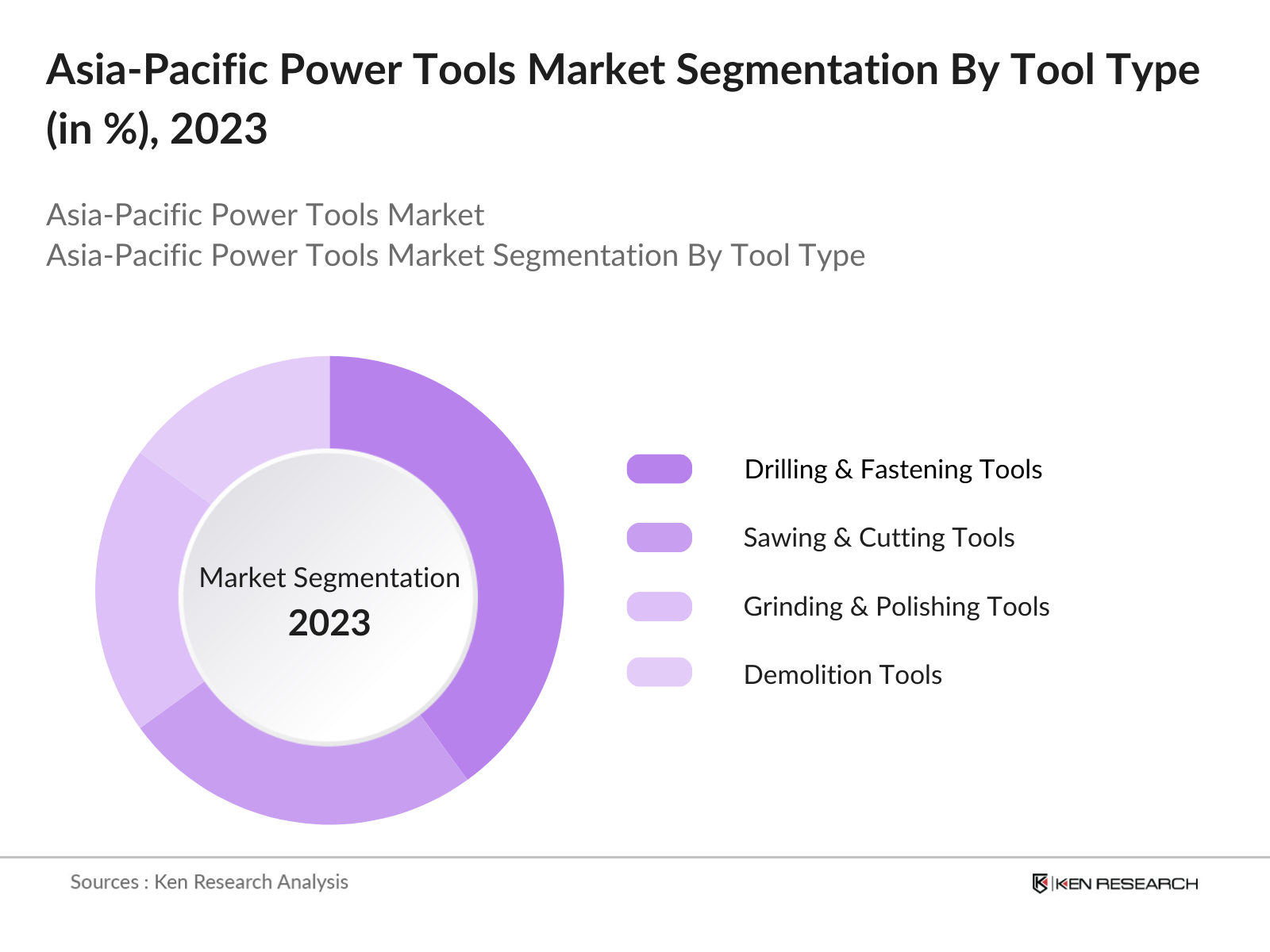
By Tool Type: The Asia-Pacific power tools market is segmented by tool type into drilling and fastening tools, sawing and cutting tools, grinding and polishing tools, and demolition tools. Among these, drilling and fastening tools hold the dominant market share, primarily due to their widespread application across various industries, including construction, automotive, and manufacturing. These tools are essential for assembling components, creating precise holes, and fastening materials, making them indispensable in industrial and DIY tasks. The popularity of these tools is further enhanced by the growing use of cordless, battery-powered options, which provide greater mobility and convenience to users.
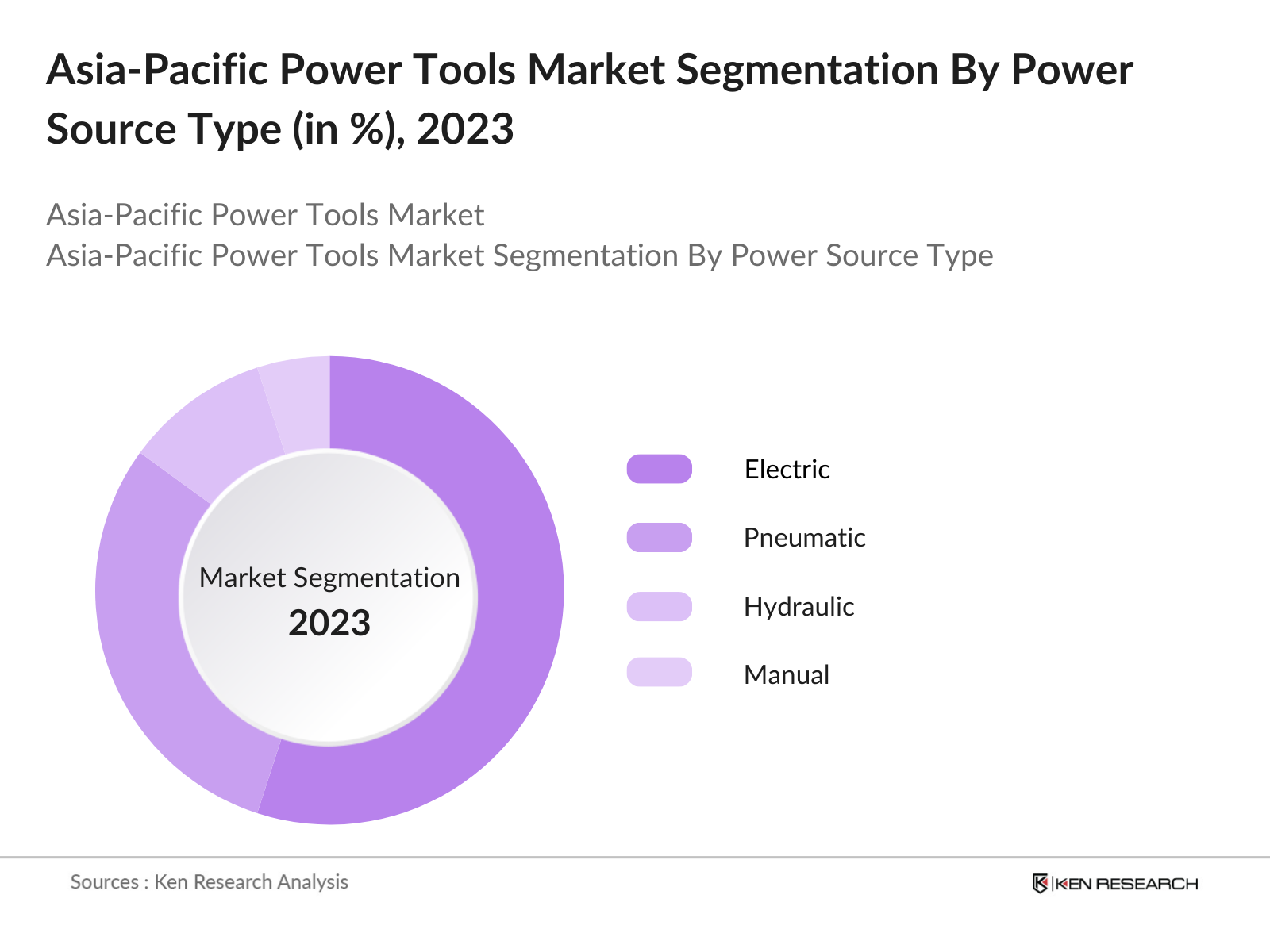
By Power Source: Power tools in the Asia-Pacific market are categorized by their power source into electric, pneumatic, hydraulic, and manual. The electric segment, particularly battery-powered tools, dominates the market, holding the largest share. This is due to the convenience and portability offered by cordless tools, especially with advancements in lithium-ion batteries. Additionally, the increasing adoption of electric tools in the residential and industrial sectors, due to their low maintenance and enhanced efficiency, continues to drive growth in this segment.
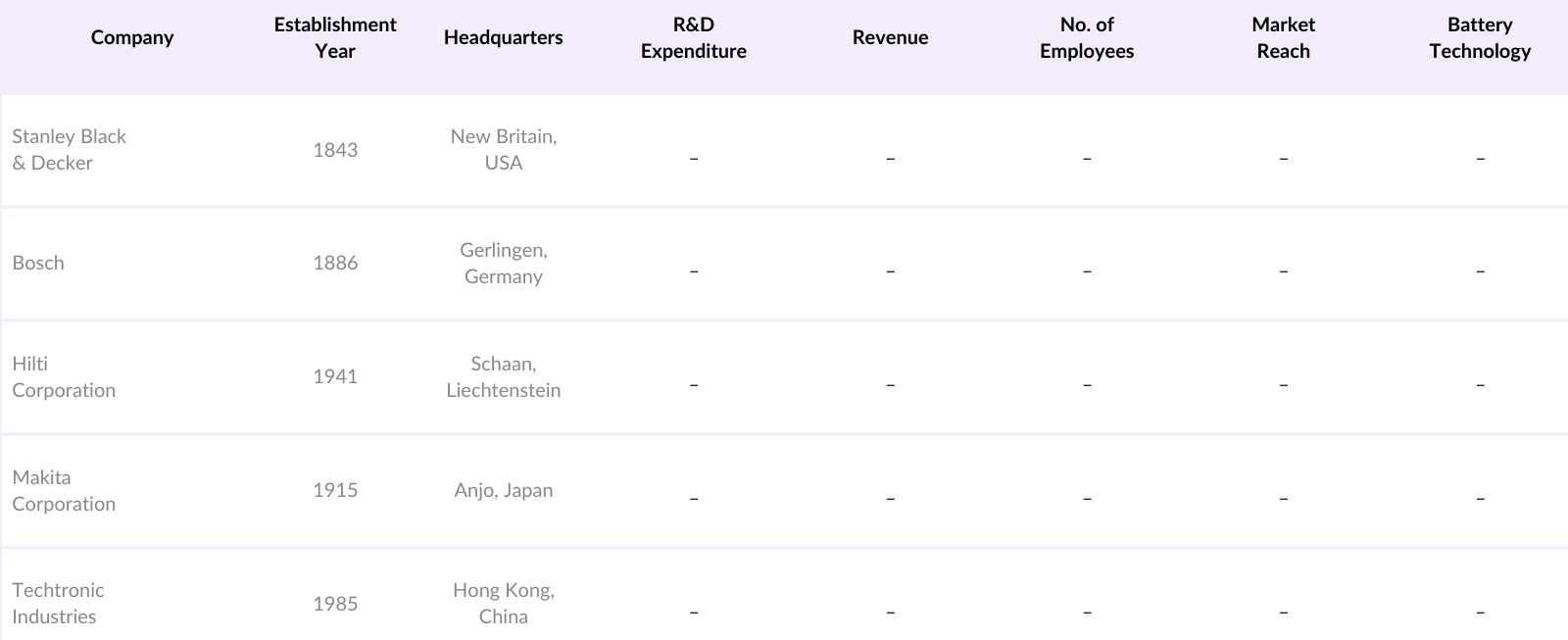
The Asia-Pacific power tools market is dominated by several key players who have a significant influence on market dynamics. Global brands, as well as regional manufacturers, contribute to the competitive landscape, with companies focusing on technological innovation and strategic partnerships to maintain their market positions. These players are investing heavily in R&D to introduce new products and improve battery technologies, which is a critical differentiator in the power tools sector. Consolidation through mergers and acquisitions is also a trend, as companies look to expand their market reach and enhance their product portfolios.
Over the next five years, the Asia-Pacific power tools market is expected to experience robust growth, driven by rapid urbanization, industrial expansion, and technological advancements. The growing popularity of cordless power tools, fueled by improvements in battery technology, will be a significant driver of market growth. Additionally, increasing government investment in infrastructure development across countries like China and India will further boost demand. The market is also expected to benefit from the rising trend of DIY home improvement activities, particularly in developed nations like Japan and Australia. As the demand for sustainable and energy-efficient tools grows, manufacturers will increasingly focus on developing eco-friendly, lightweight, and smart power tools. The adoption of smart tools, integrated with AI and IoT for predictive maintenance and enhanced performance, will likely become a key trend. Companies that invest in innovation and cater to the growing demand for sustainable products will position themselves at the forefront of the market.
|
By Power Source |
Electric Pneumatic Hydraulic Others |
|
By Tool Type |
Drilling & Fastening Demolition Sawing Grinding Others |
|
By End-User Industry |
Construction Automotive Manufacturing Aerospace, Others |
|
By Distribution Channel |
Offline Online |
|
By Country |
China, India Japan South Korea Australia ASEAN |
1.1. Definition and Scope
1.2. Market Taxonomy
1.3. Market Growth Rate (CAGR, Y-o-Y Growth)
1.4. Market Segmentation Overview (Power Source, Tool Type, End-User Industry, Distribution Channel, Country)
2.1. Historical Market Size (Revenue, Volume)
2.2. Year-On-Year Growth Analysis (Growth Rate, Absolute Growth)
2.3. Key Market Developments and Milestones (New Product Launches, Strategic Alliances, Major Mergers)
3.1. Growth Drivers
3.1.1. Increasing Adoption of DIY Tools
3.1.2. Expanding Infrastructure & Construction Sector
3.1.3. Rapid Industrialization in Emerging Markets
3.1.4. Technological Advancements in Cordless Tools
3.2. Market Challenges
3.2.1. Volatile Raw Material Prices (Steel, Plastics)
3.2.2. High Initial Costs for Battery-Powered Tools
3.2.3. Lack of After-Sales Support in Rural Areas
3.3. Opportunities
3.3.1. Growth in Automotive Aftermarket
3.3.2. Expansion of E-commerce Channels
3.3.3. Increased Demand from Renewable Energy Projects
3.4. Trends
3.4.1. Shift to Cordless Power Tools
3.4.2. Increased Use of Smart Tools (Connected Devices)
3.4.3. Integration of AI for Predictive Maintenance
3.5. Government Regulations
3.5.1. Safety Standards for Electric Tools
3.5.2. Import-Export Regulations
3.5.3. Environmental Regulations on Lithium-Ion Batteries
3.6. SWOT Analysis
3.7. Stakeholder Ecosystem (Manufacturers, Distributors, Service Providers)
3.8. Porters Five Forces (Buyer Power, Supplier Power, Threat of Substitutes, Threat of New Entrants, Industry Rivalry)
3.9. Competition Ecosystem (Local vs. Global Players, Product Differentiation)
4.1. By Power Source (In Value %) 4.1.1. Electric
4.1.2. Pneumatic
4.1.3. Hydraulic
4.1.4. Others (Manual, Solar)
4.2. By Tool Type (In Value %) 4.2.1. Drilling & Fastening Tools
4.2.2. Demolition Tools
4.2.3. Sawing and Cutting Tools
4.2.4. Grinding and Polishing Tools
4.2.5. Others (Sanding, Routing)
4.3. By End-User Industry (In Value %) 4.3.1. Construction
4.3.2. Automotive
4.3.3. Manufacturing
4.3.4. Aerospace
4.3.5. Others (DIY, Residential)
4.4. By Distribution Channel (In Value %) 4.4.1. Offline Retail
4.4.2. Online Channels
4.5. By Country (In Value %) 4.5.1. China
4.5.2. India
4.5.3. Japan
4.5.4. South Korea
4.5.5. Australia
4.5.6. ASEAN
5.1. Detailed Profiles of Major Companies
5.1.1. Stanley Black & Decker
5.1.2. Bosch
5.1.3. Hilti Corporation
5.1.4. Makita Corporation
5.1.5. Techtronic Industries
5.1.6. Hitachi Koki Co., Ltd.
5.1.7. Snap-on Incorporated
5.1.8. Ingersoll-Rand PLC
5.1.9. Apex Tool Group
5.1.10. Husqvarna AB
5.1.11. Festool
5.1.12. Emerson Electric Co.
5.1.13. Panasonic Corporation
5.1.14. Atlas Copco AB
5.1.15. DEWALT Industrial Tools
5.2. Cross Comparison Parameters (Headquarters, No. of Employees, Revenue, R&D Expenditure, Market Share, Product Portfolio, Regional Presence, Strategic Initiatives)
5.3. Market Share Analysis
5.4. Strategic Initiatives (Product Launches, Joint Ventures)
5.5. Mergers and Acquisitions
5.6. Investment Analysis
5.7. Venture Capital Funding
5.8. Government Grants
5.9. Private Equity Investments
6.1. Safety Regulations
6.2. Certification Requirements
6.3. Environmental Compliance (Battery Disposal, E-waste)
6.4. Import-Export Tariffs
7.1. Future Market Size Projections
7.2. Key Factors Driving Future Market Growth
8.1. By Power Source (Electric, Pneumatic, Hydraulic, Others)
8.2. By Tool Type (Drilling & Fastening, Demolition, Sawing, Grinding, Others)
8.3. By End-User Industry (Construction, Automotive, Manufacturing, Aerospace, Others)
8.4. By Distribution Channel (Offline, Online)
8.5. By Country (China, India, Japan, South Korea, Australia, ASEAN)
9.1. TAM/SAM/SOM Analysis
9.2. Customer Cohort Analysis
9.3. Marketing Initiatives
9.4. White Space Opportunity Analysis
Disclaimer Contact UsIn the initial phase, a comprehensive ecosystem map was developed for the Asia-Pacific power tools market, identifying key stakeholders such as manufacturers, distributors, and end-users. The primary objective was to outline the critical variables influencing market dynamics, supported by extensive desk research from proprietary databases and industry reports.
Historical data on market size, product segmentation, and revenue streams was analyzed to assess the markets trajectory. Key factors such as market penetration, product innovation, and the growing shift towards cordless tools were closely examined to derive accurate market insights.
Market hypotheses were validated through interviews with industry experts, leveraging a combination of online surveys and telephone interviews. These consultations provided valuable insights into operational challenges, emerging trends, and growth opportunities, directly from key industry players.
The final phase involved synthesizing data gathered from multiple sources to create a validated, data-driven report. Direct feedback from manufacturers and distributors was used to verify the findings and ensure that the report reflected current market conditions accurately.
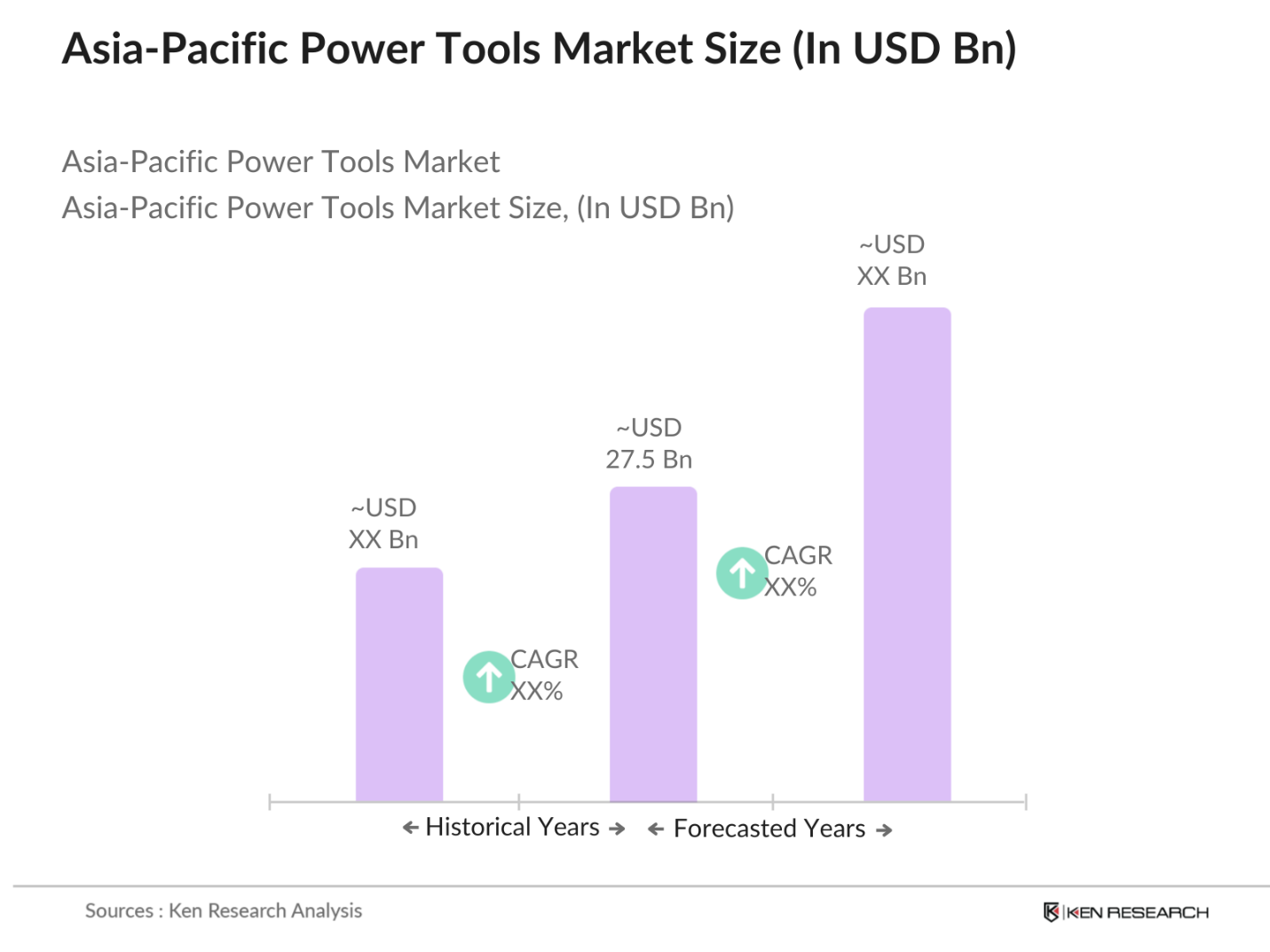
The Asia-Pacific power tools market is valued at USD 27.5 billion, with robust growth driven by rapid industrialization and a strong demand for cordless power tools across sectors.
Key challenges include the volatility of raw material prices, the high initial cost of battery-powered tools, and the lack of skilled workforce to operate advanced machinery in certain regions.
Major players in the market include Stanley Black & Decker, Bosch, Hilti Corporation, Makita Corporation, and Techtronic Industries, known for their extensive product portfolios and strong distribution networks.
Growth is driven by the expanding construction sector, rising adoption of DIY tools, technological advancements in cordless power tools, and increased demand from the automotive and manufacturing industries.

What makes us stand out is that our consultants follows Robust, Refine and Result (RRR) methodology. i.e. Robust for clear definitions, approaches and sanity checking, Refine for differentiating respondents facts and opinions and Result for presenting data with story

We have set a benchmark in the industry by offering our clients with syndicated and customized market research reports featuring coverage of entire market as well as meticulous research and analyst insights.

While we don't replace traditional research, we flip the method upside down. Our dual approach of Top Bottom & Bottom Top ensures quality deliverable by not just verifying company fundamentals but also looking at the sector and macroeconomic factors.

With one step in the future, our research team constantly tries to show you the bigger picture. We help with some of the tough questions you may encounter along the way: How is the industry positioned? Best marketing channel? KPI's of competitors? By aligning every element, we help maximize success.

Our report gives you instant access to the answers and sources that other companies might choose to hide. We elaborate each steps of research methodology we have used and showcase you the sample size to earn your trust.

If you need any support, we are here! We pride ourselves on universe strength, data quality, and quick, friendly, and professional service.