















Asia Pacific Printers Market Outlook to 2030
Region:Asia
Author(s):Abhinav kumar
Product Code:KROD9962
November 2024
98
About the Report
Asia Pacific Printers Market Overview
- The Asia Pacific Printers Market is valued at USD 15.9 billion, driven by the rapid technological advancements in printing technologies and the growing demand for multifunctional devices across sectors like education, healthcare, and retail. The increasing penetration of e-commerce and the adoption of wireless printing solutions further bolster market expansion.
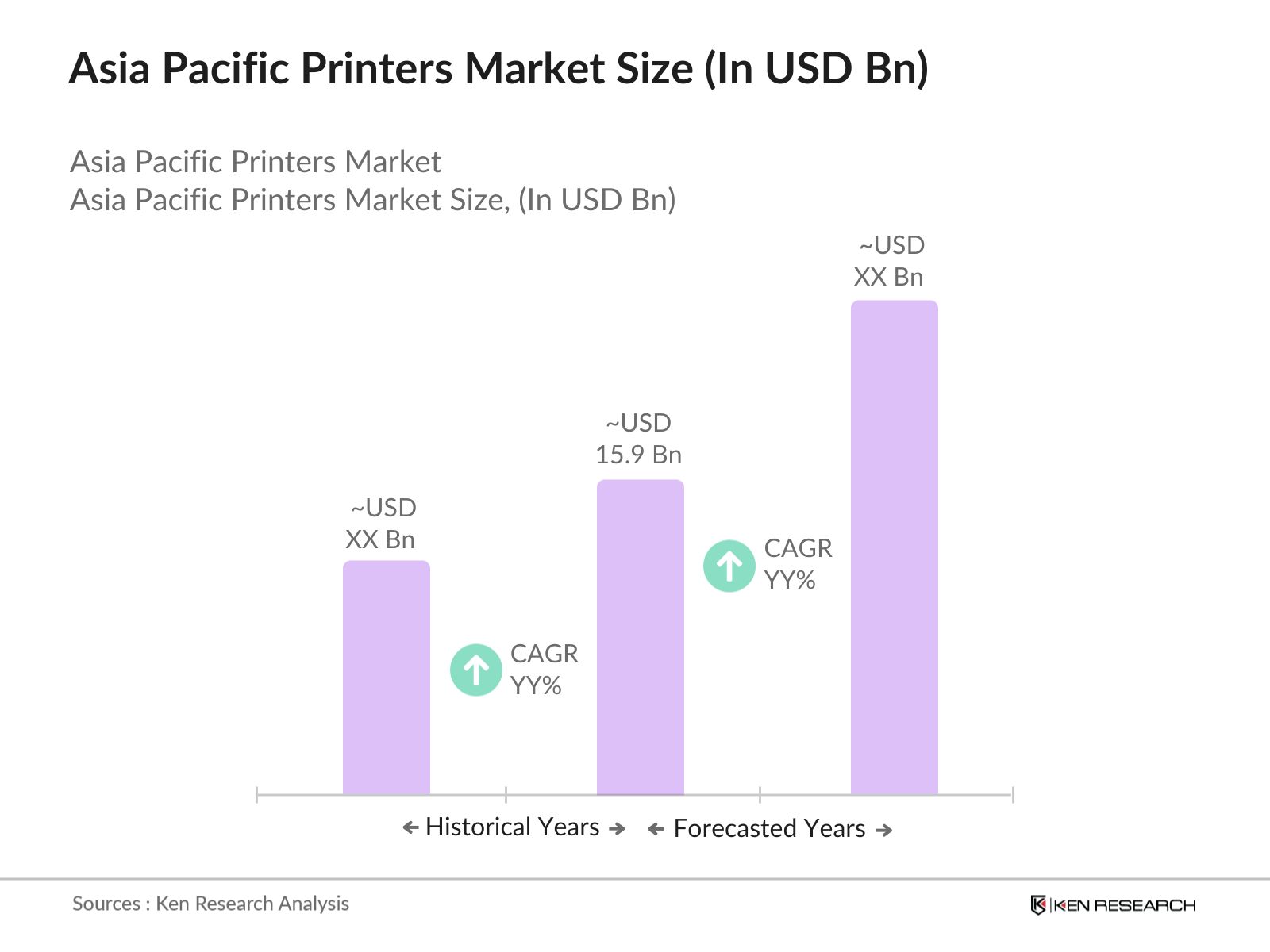
- Countries such as China, Japan, and India dominate the market due to their strong manufacturing base, rising adoption of advanced technologies, and large-scale consumption across industries. China leads due to its cost-effective production and export-oriented policies. Japan's dominance stems from its innovative capabilities in technology, while India's market is fueled by the rapid digitalization of businesses and government initiatives promoting technology adoption.
- The Chinese government has implemented the Green Printing Initiative to promote environmentally friendly printing practices. This policy encourages the adoption of sustainable materials and technologies in the printing industry to reduce environmental impact.
Asia Pacific Printers Market Segmentation
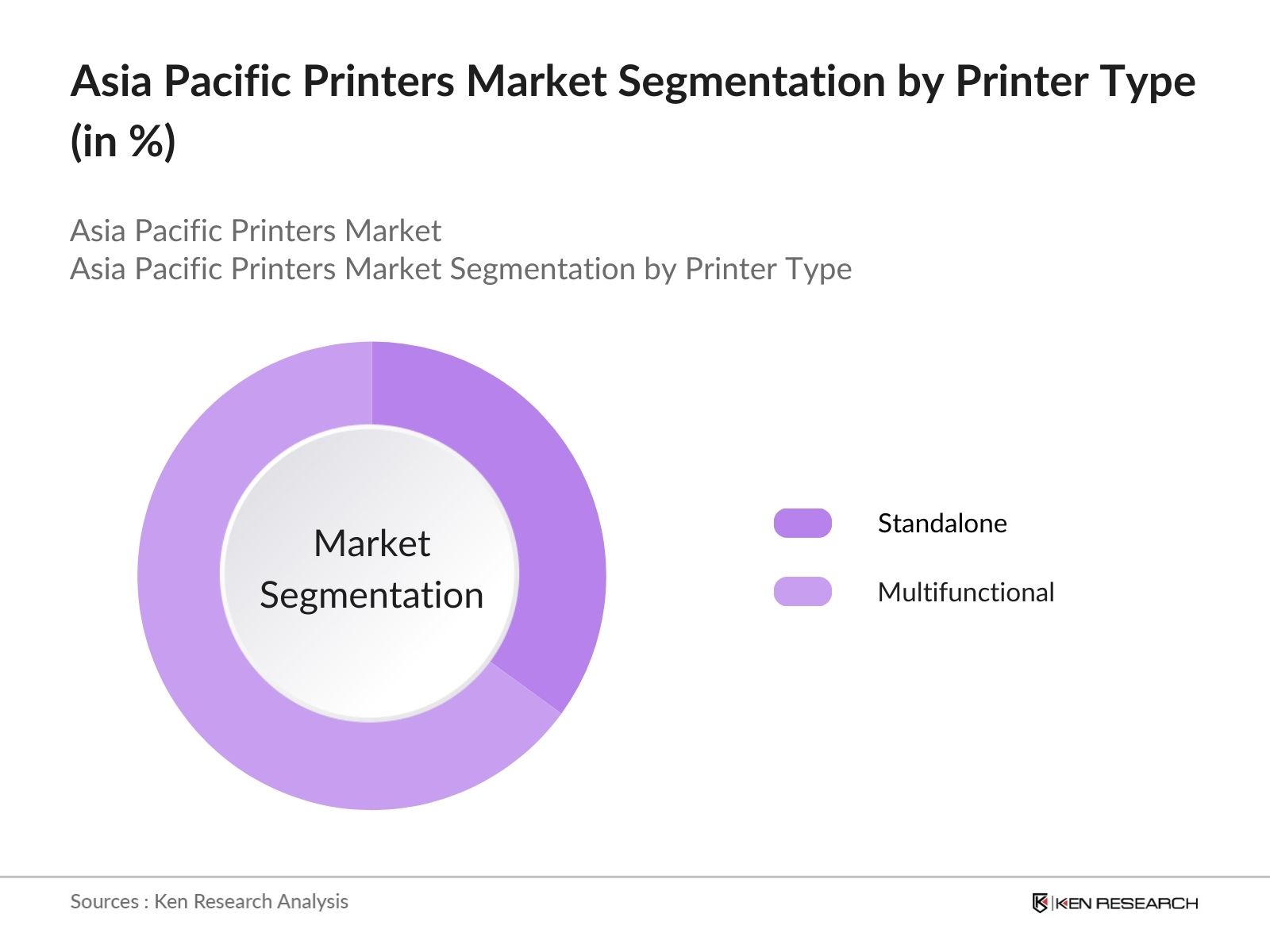
By Printer Type: The market is segmented by printer type into standalone and multifunctional printers. Multifunctional printers hold a dominant market share due to their versatility, offering printing, scanning, copying, and faxing capabilities in a single device. Their widespread adoption across corporate offices, educational institutions, and government organizations highlights their efficiency and cost-effectiveness, making them the preferred choice for high-volume tasks.
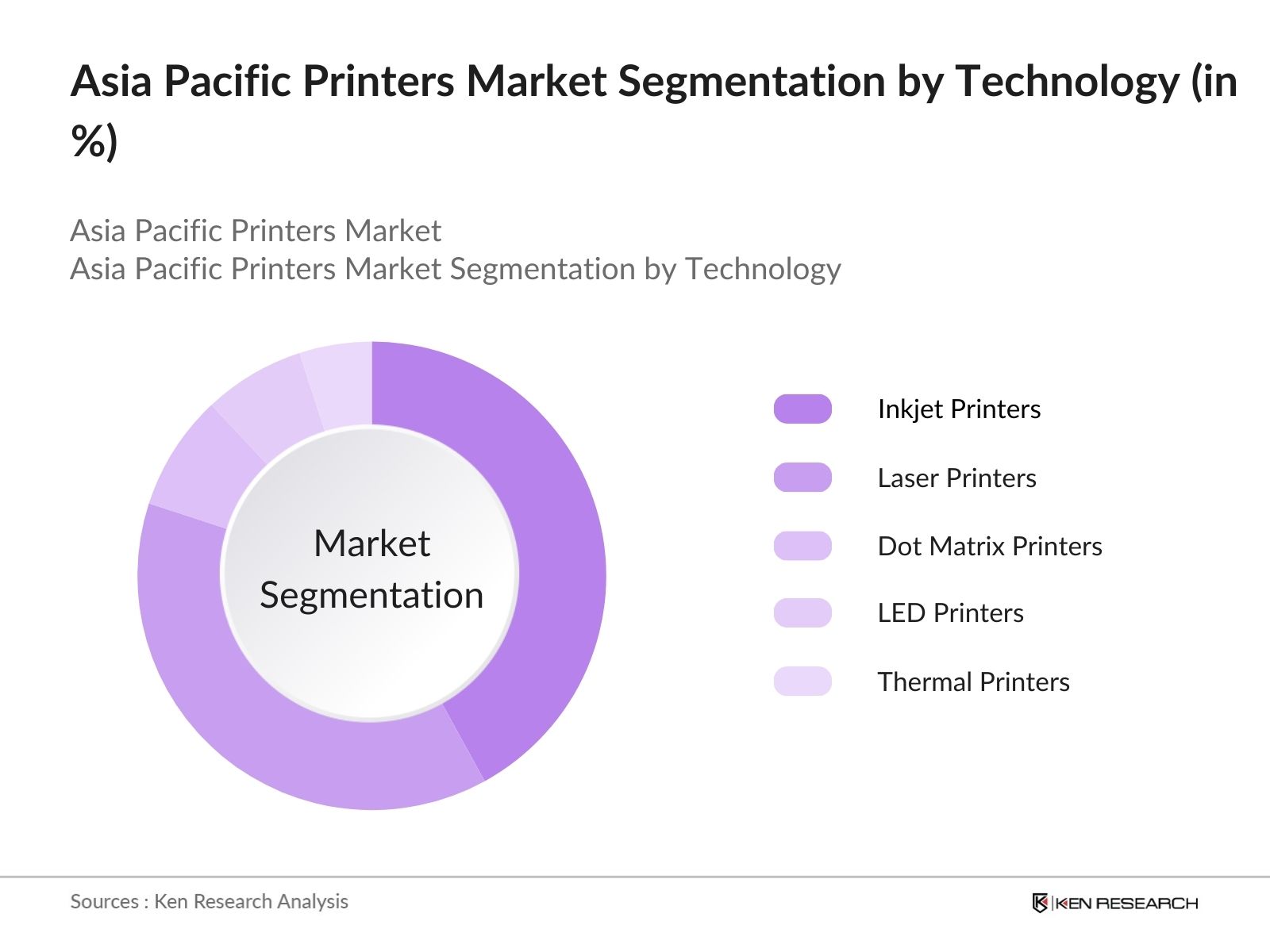
By Technology: The market is segmented by technology into inkjet printers, laser printers, dot matrix printers, LED printers, and thermal printers. Inkjet printers dominate due to their affordability and high-quality output, making them ideal for both home and small business use. Their adaptability for photo printing and compatibility with different paper types contribute to their popularity.
Asia Pacific Printers Market Competitive Landscape
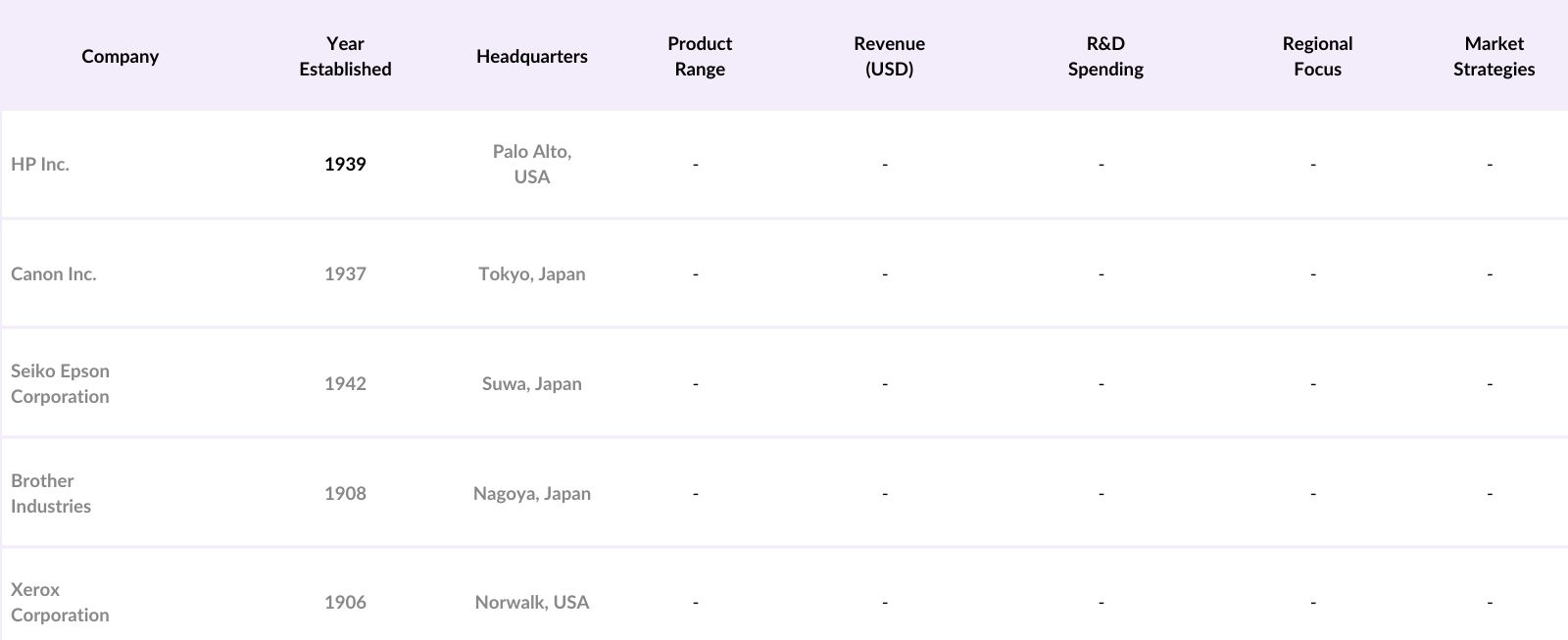
The market is characterized by the presence of key global and regional players that focus on innovation, expansion, and partnerships to maintain market leadership. The markets competitive structure reflects a mix of technological innovation and customer-centric strategies.
Asia Pacific Printers Market Analysis
Market Growth Drivers
- Expansion of E-commerce Platforms: The Asia Pacific region has witnessed a surge in e-commerce activities, with online retail sales reaching around USD 2.5 trillion in 2024. This growth has led to increased demand for packaging and labeling, thereby boosting the need for commercial printers to cater to the packaging industry's requirements.
- Adoption of 3D Printing Technologies: The integration of 3D printing in manufacturing processes has gained momentum, with the Asia Pacific 3D printing market growth. Industries such as automotive, healthcare, and aerospace are increasingly utilizing 3D printing for prototyping and production, driving the demand for advanced printing solutions.
- Government Initiatives Promoting Digitalization: Governments across the region are implementing policies to promote digital infrastructure. For instance, China's "Made in China 2025" initiative emphasizes the development of advanced manufacturing technologies, including printing solutions, to enhance industrial capabilities.
Market Challenges
- Environmental Regulations: Stringent environmental laws are being enforced to reduce electronic waste. For example, Japan's Home Appliance Recycling Law mandates the recycling of electronic goods, including printers, imposing additional compliance costs on manufacturers.
- Supply Chain Disruptions: The global semiconductor shortage has impacted the production of electronic devices, including printers. Manufacturers are facing delays and increased costs due to the scarcity of essential components, affecting the timely delivery of products to the market.
Asia Pacific Printers Market Future Outlook
The Asia Pacific Printers industry is expected to witness steady growth, driven by the increasing integration of cloud-based printing solutions and the rising demand for energy-efficient and sustainable printers.
Future Market Opportunities
- Growth in 3D Printing Applications: Over the next five years, the Asia Pacific region is expected to witness significant growth in 3D printing applications across industries such as healthcare, automotive, and aerospace. The adoption of 3D printing for prototyping and production is anticipated to drive demand for advanced printing solutions.
- Shift Towards Subscription-Based Printing Services: Businesses are projected to increasingly adopt subscription-based printing services, offering flexibility and cost savings. This model allows companies to access the latest printing technologies without substantial upfront investments, aligning with the trend towards operational expenditure over capital expenditure.
Scope of the Report
|
Printer Type |
Standalone |
|
Technology |
Inkjet Printers |
|
Printer Interface |
Wired |
|
Output Type |
Color |
|
End-User |
Residential |
|
Region |
China South Korea Japan India Australia Rest of APAC |
Products
Key Target Audience Organizations and Entities Who Can Benefit by Subscribing This Report:
Printer Manufacturers
Component Suppliers
Distributors and Retailers
Corporate Offices
Educational Institutions
Healthcare Providers
Investors and Venture Capitalist Firms
Government and Regulatory Bodies (e.g., Ministry of Industry and Information Technology, National Institute of Standards and Technology)
Companies
Players Mentioned in the Report:
HP Inc.
Canon Inc.
Seiko Epson Corporation
Brother Industries, Ltd.
Xerox Corporation
Samsung Electronics Co., Ltd.
Ricoh Company, Ltd.
Konica Minolta, Inc.
Kyocera Corporation
Fujifilm Holdings Corporation
Table of Contents
1. Asia Pacific Printers Market Overview
1.1. Definition and Scope
1.2. Market Taxonomy
1.3. Market Growth Rate
1.4. Market Segmentation Overview
2. Asia Pacific Printers Market Size (USD Million)
2.1. Historical Market Size
2.2. Year-On-Year Growth Analysis
2.3. Key Market Developments and Milestones
3. Asia Pacific Printers Market Analysis
3.1. Growth Drivers
3.1.1. Technological Advancements
3.1.2. Increasing Demand in Emerging Economies
3.1.3. Expansion of E-commerce and Online Retail
3.1.4. Adoption of Wireless and Mobile Printing Solutions
3.2. Market Challenges
3.2.1. High Operational Costs
3.2.2. Environmental Concerns and Regulations
3.2.3. Competition from Digital Alternatives
3.3. Opportunities
3.3.1. Growth in 3D Printing Applications
3.3.2. Demand for Customized Printing Solutions
3.3.3. Integration with Cloud Services
3.4. Trends
3.4.1. Shift Towards Multifunctional Devices
3.4.2. Development of Energy-Efficient Printers
3.4.3. Rise of Subscription-Based Printing Services
3.5. Government Regulations
3.5.1. Environmental Compliance Standards
3.5.2. Import and Export Policies
3.5.3. Data Security and Privacy Laws
3.6. SWOT Analysis
3.7. Stakeholder Ecosystem
3.8. Porters Five Forces Analysis
3.9. Competitive Landscape
4. Asia Pacific Printers Market Segmentation
4.1. By Printer Type (Value %)
4.1.1. Standalone
4.1.2. Multifunctional
4.2. By Technology (Value %)
4.2.1. Inkjet Printers
4.2.2. Laser Printers
4.2.3. Dot Matrix Printers
4.2.4. LED Printers
4.2.5. Thermal Printers
4.3. By Printer Interface (Value %)
4.3.1. Wired
4.3.2. Wireless
4.4. By Output Type (Value %)
4.4.1. Color
4.4.2. Monochrome
4.5. By End-User (Value %)
4.5.1. Residential
4.5.2. Commercial
4.5.3. Educational Institutions
4.5.4. Government
4.5.5. Others
4.6. By Region (Value %)
4.6.1. China
4.6.2. Japan
4.6.3. India
4.6.4. South Korea
4.6.5. Australia
4.6.6. Rest of APAC
5. Asia Pacific Printers Market Competitive Analysis
5.1. Detailed Profiles of Major Companies
5.1.1. HP Inc.
5.1.2. Canon Inc.
5.1.3. Seiko Epson Corporation
5.1.4. Brother Industries, Ltd.
5.1.5. Xerox Corporation
5.1.6. Samsung Electronics Co., Ltd.
5.1.7. Ricoh Company, Ltd.
5.1.8. Konica Minolta, Inc.
5.1.9. Kyocera Corporation
5.1.10. Fujifilm Holdings Corporation
5.1.11. Panasonic Corporation
5.1.12. Sharp Corporation
5.1.13. Lexmark International, Inc.
5.1.14. OKI Electric Industry Co., Ltd.
5.1.15. Dell Technologies Inc.
5.2. Cross Comparison Parameters
5.2.1. Revenue
5.2.2. Market Share
5.2.3. Product Portfolio
5.2.4. Geographic Presence
5.2.5. Research and Development Expenditure
5.2.6. Strategic Initiatives
5.2.7. Employee Strength
5.2.8. Customer Base
5.3. Market Share Analysis
5.4. Strategic Initiatives
5.5. Mergers and Acquisitions
5.6. Investment Analysis
5.7. Venture Capital Funding
5.8. Government Grants
5.9. Private Equity Investments
6. Asia Pacific Printers Market Regulatory Framework
6.1. Environmental Standards
6.2. Compliance Requirements
6.3. Certification Processes
7. Asia Pacific Printers Future Market Size (USD Million)
7.1. Future Market Size Projections
7.2. Key Factors Driving Future Market Growth
8. Asia Pacific Printers Future Market Segmentation
8.1. By Printer Type (Value %)
8.2. By Technology (Value %)
8.3. By Printer Interface (Value %)
8.4. By Output Type (Value %)
8.5. By End-User (Value %)
9. Asia Pacific Printers Market Analysts Recommendations
9.1. TAM/SAM/SOM Analysis
9.2. Customer Cohort Analysis
9.3. Marketing Initiatives
9.4. White Space Opportunity Analysis
Disclaimer Contact UsResearch Methodology
Step 1: Identification of Key Variables
A comprehensive ecosystem map was developed, incorporating all stakeholders within the Asia Pacific Printers Market. Extensive desk research and proprietary databases were utilized to identify key variables influencing market dynamics.
Step 2: Market Analysis and Construction
Historical market data was analyzed, including penetration rates and technological trends, to assess revenue streams and market dynamics. Advanced analytics were applied to ensure data reliability.
Step 3: Hypothesis Validation and Expert Consultation
Industry-specific hypotheses were validated through interviews with executives and technical experts from leading companies, providing qualitative and quantitative insights into market trends.
Step 4: Research Synthesis and Final Output
A bottom-up approach was used to synthesize findings, complemented by insights from manufacturers and distributors. This ensured a validated, comprehensive analysis of the Asia Pacific Printers Market.
Frequently Asked Questions
1. How big is the Asia Pacific Printers Market?
The Asia Pacific Printers Market is valued at USD 15.9 billion, driven by the increasing adoption of multifunctional devices, wireless solutions, and 3D printing technologies.
2. What are the challenges in the Asia Pacific Printers Market?
Challenges in the Asia Pacific Printers Market include high operational costs, stringent environmental regulations, and the rising competition from digital alternatives such as paperless workflows.
3. Who are the major players in the Asia Pacific Printers Market?
Key players in the Asia Pacific Printers Market include HP Inc., Canon Inc., Seiko Epson Corporation, Brother Industries, and Xerox Corporation, each dominating due to their innovation and strong distribution networks.
4. What are the growth drivers of the Asia Pacific Printers Market?
The Asia Pacific Printers Market is driven by rapid technological advancements, increasing demand for multifunctional devices, and the expansion of smart office setups across the region
Why Buy From Us?

What makes us stand out is that our consultants follows Robust, Refine and Result (RRR) methodology. i.e. Robust for clear definitions, approaches and sanity checking, Refine for differentiating respondents facts and opinions and Result for presenting data with story

We have set a benchmark in the industry by offering our clients with syndicated and customized market research reports featuring coverage of entire market as well as meticulous research and analyst insights.

While we don't replace traditional research, we flip the method upside down. Our dual approach of Top Bottom & Bottom Top ensures quality deliverable by not just verifying company fundamentals but also looking at the sector and macroeconomic factors.

With one step in the future, our research team constantly tries to show you the bigger picture. We help with some of the tough questions you may encounter along the way: How is the industry positioned? Best marketing channel? KPI's of competitors? By aligning every element, we help maximize success.

Our report gives you instant access to the answers and sources that other companies might choose to hide. We elaborate each steps of research methodology we have used and showcase you the sample size to earn your trust.

If you need any support, we are here! We pride ourselves on universe strength, data quality, and quick, friendly, and professional service.