















Asia Pacific Probiotic Market Outlook to 2030
Region:Global
Author(s):Abhinav kumar
Product Code:KROD6430
November 2024
82
About the Report
Asia Pacific Probiotic Market Overview
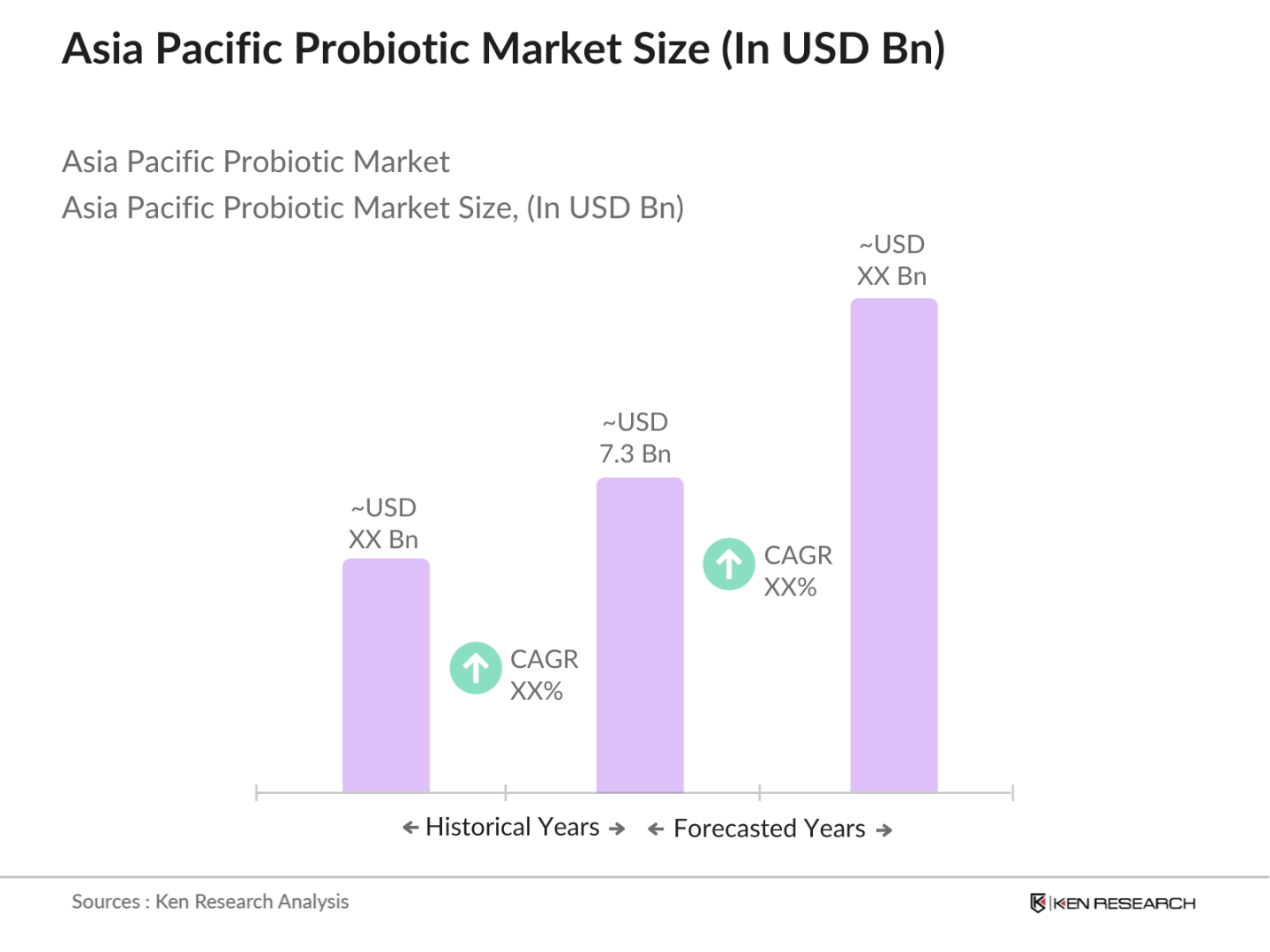
- The Asia Pacific Probiotic Market is valued at USD 7.3 billion, driven by increased health awareness and dietary shifts towards functional foods in rapidly urbanizing economies like China, India, and Japan. Probiotics have become essential in daily diets due to their benefits in enhancing digestive and immune health. Key growth drivers include heightened consumer health consciousness, increased disposable incomes, and innovation in probiotic food and beverage products, with significant investments from both local and global players.
- China and Japan are leading in the Asia Pacific probiotic market. China dominates due to its vast consumer base, growing middle-class population, and extensive dairy and supplement production. Japans dominance is rooted in its early adoption of probiotics, well-established infrastructure, and strong consumer trust in health supplements. Both countries benefit from government-backed health initiatives that bolster probiotics usage and investment.
- Personalized health supplements, including tailored probiotics, are becoming popular in countries like Singapore and Japan. As of 2023, approximately 20% of probiotic consumers in Japan report using customized supplements. This trend is supported by growth in wearable health tech, which helps consumers monitor their health more closely, fueling demand for personalized probiotics.
Asia Pacific Probiotic Market Segmentation
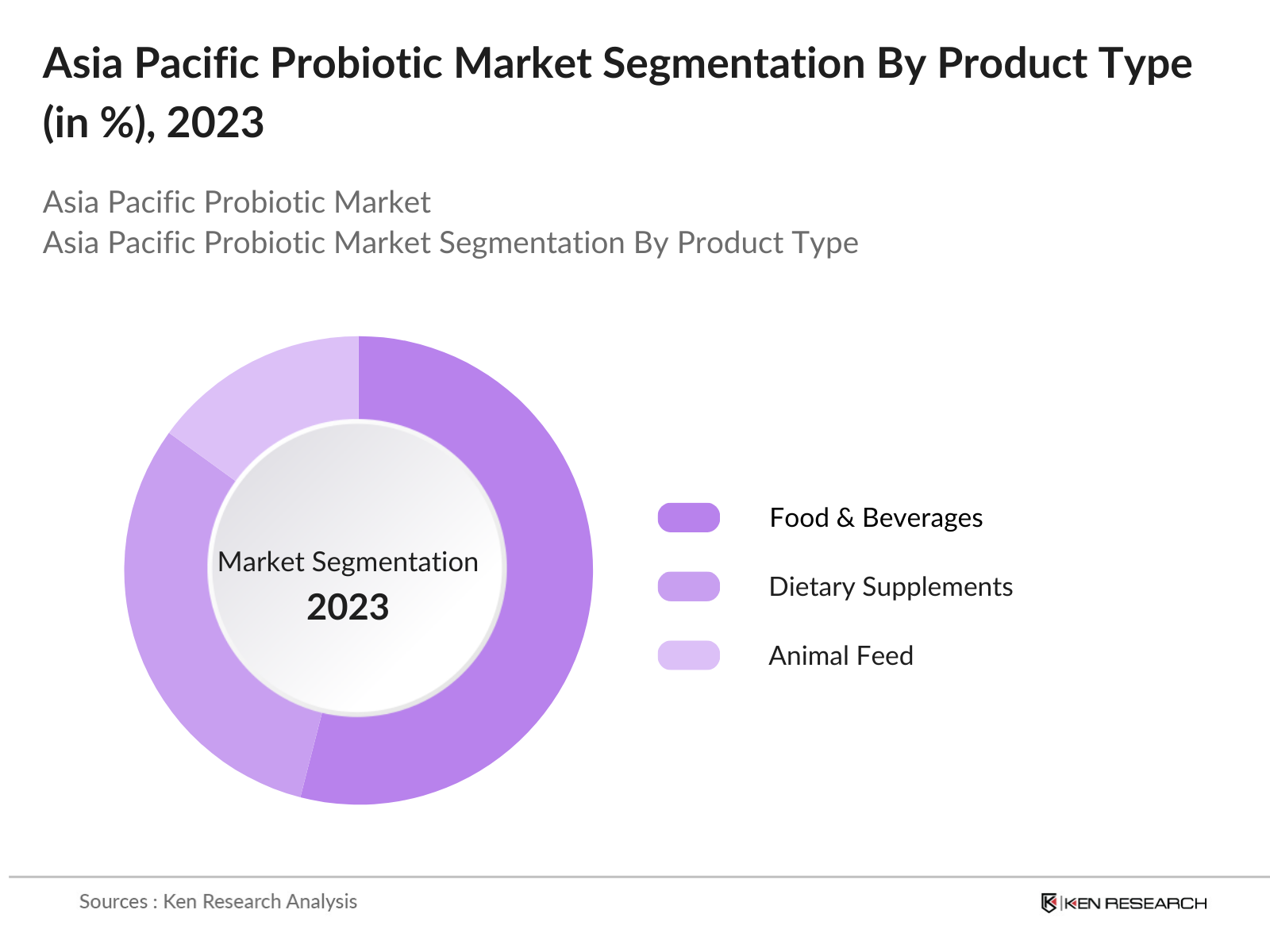
By Product Type The Asia Pacific Probiotic Market is segmented by product type into Food & Beverages, Dietary Supplements, and Animal Feed. Food & Beverages hold a dominant market share, largely attributed to the popularity of probiotic drinks and yogurts among health-conscious consumers in markets like Japan and South Korea. Companies like Yakult and Danone have established strong consumer loyalty through effective branding and distribution, making this sub-segment the largest within product types.
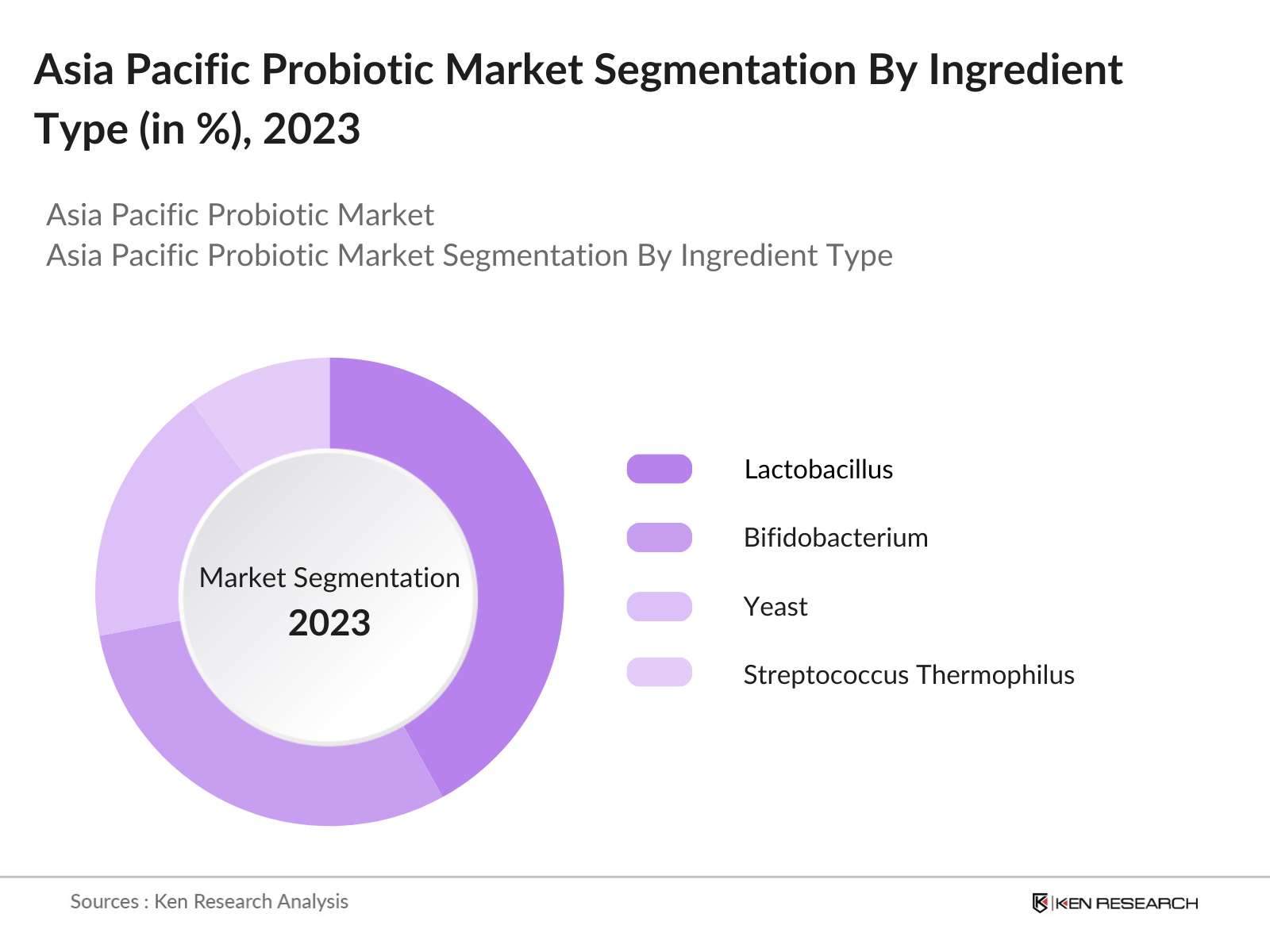
By Ingredient Type: Market segmentation by ingredient type includes Lactobacillus, Bifidobacterium, Yeast, and Streptococcus Thermophilus. Lactobacillus leads in market share as it is extensively used in dairy-based probiotic products and has high consumer acceptance due to its well-documented health benefits. The prominence of Lactobacillus is further supported by R&D investment and product innovation by companies focusing on dairy and non-dairy applications.
Asia Pacific Probiotic Market Competitive Landscape
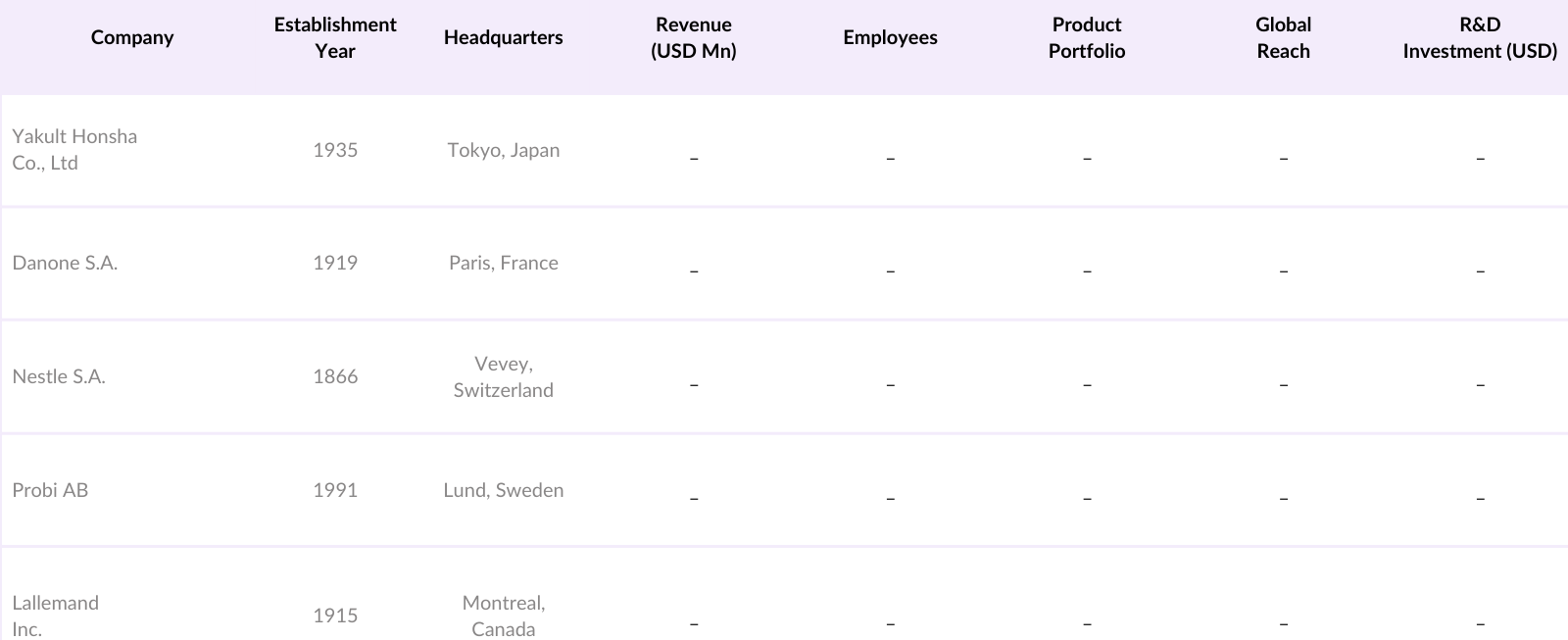
The Asia Pacific Probiotic Market is characterized by both local and global players with substantial market shares. Key players leverage brand loyalty, diversified product lines, and strategic R&D investments to maintain their competitive edge. The Asia Pacific probiotic market includes prominent brands such as Yakult Honsha Co., Ltd. and global giants like Nestle and Danone. These companies capitalize on their established market presence and consumer trust, underscoring the competitive consolidation within this space.
Asia Pacific Probiotic Industry Analysis
Growth Drivers
- Health and Wellness Trends: Probiotic consumption in Asia Pacific aligns with a growing health-conscious trend, reflected in an increase in overall life expectancy, which reached 74.2 years in 2024 according to the World Bank. Urbanization in the region has grown to 58% as of 2024, with increased disposable incomes allowing consumers to prioritize health-enhancing products, including probiotics. Japan and South Korea reported a higher per capita health expenditure of $3,300 and $2,600, respectively, signaling a trend towards spending on wellness, which supports demand for probiotics.
- Rising Awareness in Digestive Health: The Asian population has a notable incidence of digestive ailments, with China reporting approximately 55 million cases of functional digestive disorders, particularly prevalent in urban areas. This rise in awareness for gut health corresponds with governmental campaigns in countries like Japan, which includes gut health in its annual health policy objectives. These campaigns, along with a 20% increase in gastroenterological hospital visits in South Korea over the past two years, have boosted awareness and demand for probiotics as an effective digestive aid.
- Increasing Functional Food and Beverage Demand: Asias functional food and beverage market has expanded rapidly, with the demand for fortified beverages seeing a 15% rise in Japan in 2023. Consumers in countries like China are increasingly seeking beverages with health benefits, spurred by urbanization and changing lifestyles. This demand supports the growth of probiotics, especially in functional food and beverage segments, with South Koreas imports of fortified food ingredients doubling over the past two years, as recorded by the IMF.
Market Challenges
- Regulatory Hurdles: Stringent food safety regulations across countries like Japan and Australia impose significant barriers. In 2024, Chinas regulatory body issued new compliance standards requiring extensive documentation for health claims on probiotic products. Japan follows similar stringent regulatory measures, making product compliance costly and time-intensive. This regulatory rigor adds complexity and slows market penetration for new products in Asia Pacific.
- High Production Costs: Probiotic production costs remain high due to specialized manufacturing processes and the need for temperature-controlled transport. With an average inflation rate of 3% across Asia in 2023, according to the World Bank, costs for raw materials and bio-fermentation processes have risen, squeezing manufacturers' profit margins. This high cost structure limits smaller
Asia Pacific Probiotic Market Future Outlook
The Asia Pacific Probiotic Market is expected to experience significant growth in the coming years. Increasing consumer demand for health-oriented products, coupled with innovation in probiotics applications across beverages, food, and supplements, will drive market expansion. The supportive regulatory frameworks in major markets like China and Japan, along with advancements in product delivery technologies, are anticipated to further enhance the adoption of probiotics, propelling market growth over the next five years.
Opportunities
- Product Diversification: Brands are expanding probiotic offerings beyond traditional yogurts to capsules, powders, and even skincare products. In Japan and South Korea, new product categories like probiotic supplements grew by 12% in market share from 2022-2023, as per data from the World Bank. Diversifying product types meets various consumer preferences, opening new market segments and boosting overall probiotic consumption.
- Expansion in E-commerce and Digital Retail: Online shopping has surged across Asia, with e-commerce penetration in Southeast Asia growing to 65% in 2023, making it easier for consumers to access probiotic products. Countries like China have seen a 25% increase in health and wellness product sales online, indicating a promising channel for probiotics to reach new customers across rural and urban regions.
Scope of the Report
|
By Product Type |
Food & Beverages Dietary Supplements Animal Feed |
|
By End-Use Application |
Human Probiotics Animal Probiotics |
|
By Ingredient Type |
Lactobacillus Bifidobacterium Yeast Streptococcus Thermophilus |
|
By Function |
Gut Health Immunity Lactose Intolerance Weight Management |
|
By Distribution Channel |
Online Retail Supermarkets & Hypermarkets Specialty Stores Pharmacies |
Products
Key Target Audience Organizations and Entities Who Can Benefit by Subscribing This Report:
Investors and Venture Capitalist Companies
Government and Regulatory Bodies (e.g., Food Safety and Standards Authority of India)
Food and Beverage Manufacturing Industries
Dietary Supplement Producer Companies
Dairy Product Manufacturing Companies
Animal Feed Manufacturing Companies
Online Retailers and E-commerce Platform Comapnies
Companies
Players Mentioned in the Report
Yakult Honsha Co., Ltd.
Danone S.A.
Nestle S.A.
Probi AB
Lallemand Inc.
BioGaia AB
Glac Biotech
Chr. Hansen Holding A/S
Archer Daniels Midland Company
Lifeway Foods, Inc.
Table of Contents
1. Asia Pacific Probiotic Market Overview
1.1 Definition and Scope
1.2 Market Taxonomy
1.3 Market Growth Rate (CAGR)
1.4 Segmentation Overview
1.5 Emerging Applications and Innovations
2. Asia Pacific Probiotic Market Size (in USD Mn)
2.1 Historical Market Size
2.2 Year-on-Year Growth Analysis
2.3 Volume Analysis (Tonnes and Liters)
2.4 Market Milestones and Noteworthy Developments
3. Asia Pacific Probiotic Market Dynamics
3.1 Growth Drivers
3.1.1 Health and Wellness Trends
3.1.2 Rising Awareness in Digestive Health
3.1.3 Increasing Functional Food and Beverage Demand
3.1.4 Technological Innovations in Probiotics Delivery
3.2 Market Challenges
3.2.1 Regulatory Hurdles
3.2.2 High Production Costs
3.2.3 Limited Consumer Awareness in Emerging Markets
3.2.4 Stability and Shelf-Life Constraints
3.3 Opportunities
3.3.1 Product Diversification
3.3.2 Expansion in E-commerce and Digital Retail
3.3.3 Increased Investment in R&D and Clinical Trials
3.3.4 Strategic Collaborations
3.4 Market Trends
3.4.1 Personalized Nutrition and Probiotics
3.4.2 Probiotic-Infused Beverages and Snacks
3.4.3 Growth in Vegan and Dairy-Free Probiotics
3.4.4 Probiotics for Immunity Enhancement
3.5 Regulatory Landscape
3.5.1 Food Safety Standards
3.5.2 Labeling and Health Claims
3.5.3 Import and Export Regulations
3.5.4 Compliance Across Key Countries
3.6 SWOT Analysis
3.7 Stakeholder Ecosystem
3.8 Porters Five Forces Analysis
3.9 Competitive Landscape Analysis
4. Asia Pacific Probiotic Market Segmentation
4.1 By Product Type
4.1.1 Food & Beverages
4.1.2 Dietary Supplements
4.1.3 Animal Feed
4.2 By End-Use Application
4.2.1 Human Probiotics
4.2.2 Animal Probiotics
4.3 By Ingredient Type
4.3.1 Lactobacillus
4.3.2 Bifidobacterium
4.3.3 Yeast
4.3.4 Streptococcus Thermophilus
4.4 By Function
4.4.1 Gut Health
4.4.2 Immunity
4.4.3 Lactose Intolerance
4.4.4 Weight Management
4.5 By Distribution Channel
4.5.1 Online Retail
4.5.2 Supermarkets & Hypermarkets
4.5.3 Specialty Stores
4.5.4 Pharmacies
5. Asia Pacific Probiotic Market Competitive Analysis
5.1 Detailed Profiles of Major Companies
5.1.1 Yakult Honsha Co., Ltd.
5.1.2 Danone S.A.
5.1.3 Chr. Hansen Holding A/S
5.1.4 Nestle S.A.
5.1.5 Probi AB
5.1.6 Lallemand Inc.
5.1.7 BioGaia AB
5.1.8 DuPont Nutrition & Biosciences
5.1.9 Morinaga Milk Industry Co., Ltd.
5.1.10 Kerry Group
5.1.11 Glac Biotech
5.1.12 I-Health, Inc.
5.1.13 Archer Daniels Midland Company
5.1.14 Lifeway Foods, Inc.
5.1.15 Royal DSM
5.2 Cross Comparison Parameters (Revenue, Market Share, Headquarters, Production Capacity, Global Reach, R&D Focus, Key Partnerships, Product Portfolio)
5.3 Market Share Analysis (by Revenue and Volume)
5.4 Strategic Initiatives
5.5 Mergers and Acquisitions
5.6 Investment Analysis
5.7 Venture Capital Funding
5.8 Government and Private Grants
5.9 Private Equity Investments
6. Asia Pacific Probiotic Market Regulatory Framework
6.1 Standardization and Certification
6.2 Safety and Compliance Requirements
6.3 Labeling and Health Claims Regulations
7. Asia Pacific Probiotic Future Market Size (In USD Mn)
7.1 Projections for Future Market Size
7.2 Key Growth Drivers and Forecasts
8. Asia Pacific Probiotic Market Future Segmentation
8.1 By Product Type
8.2 By Application
8.3 By Ingredient Type
8.4 By Function
8.5 By Distribution Channel
9. Asia Pacific Probiotic Market Analysts Recommendations
9.1 Total Addressable Market (TAM), Serviceable Available Market (SAM), and Serviceable Obtainable Market (SOM) Analysis
9.2 Consumer Cohort Analysis
9.3 Strategic Marketing Recommendations
9.4 Identification of White Space Opportunities
Disclaimer Contact UsResearch Methodology
Step 1: Identification of Key Variables
This initial phase involved constructing an ecosystem map encompassing major stakeholders within the Asia Pacific Probiotic Market. This step relied on desk research, leveraging secondary and proprietary databases to compile comprehensive market-level data, with a primary focus on identifying and defining the critical variables influencing market dynamics.
Step 2: Market Analysis and Data Collection
A compilation and analysis of historical data pertaining to the Asia Pacific Probiotic Market were conducted. This included assessing market penetration, sales data, and the resulting revenue. A further evaluation of consumer preferences across demographics provided insights into market trends.
Step 3: Hypothesis Validation and Expert Consultation
Market hypotheses were developed and validated through expert consultations. These consultations, conducted through CATI interviews, yielded valuable operational and financial insights from industry practitioners, refining and corroborating market estimates.
Step 4: Data Synthesis and Final Output
The final phase engaged with leading probiotic manufacturers to acquire insights into product segments, sales performance, and consumer preferences. This interaction confirmed and complemented data derived from a bottom-up approach, ensuring an accurate and validated analysis of the Asia Pacific Probiotic Market.
Frequently Asked Questions
1. How big is the Asia Pacific Probiotic Market?
The Asia Pacific Probiotic Market is valued at USD 7.3 billion, with substantial growth driven by rising health awareness and increased demand for functional food products across key economies.
2. What are the primary challenges in the Asia Pacific Probiotic Market?
Challenges include stringent regulatory requirements, high production costs, and the need for stability and shelf-life improvements. These factors affect market expansion and profitability.
3. Who are the major players in the Asia Pacific Probiotic Market?
Key players include Yakult Honsha Co., Ltd., Danone S.A., Nestle S.A., Probi AB, and Lallemand Inc., who leverage established brand equity and diverse product portfolios to maintain market dominance.
4. What are the growth drivers for the Asia Pacific Probiotic Market?
The market is driven by consumer awareness of digestive health, a shift towards functional foods, and innovations in probiotics formulation, which cater to both health-conscious and convenience-seeking consumers.
Why Buy From Us?

What makes us stand out is that our consultants follows Robust, Refine and Result (RRR) methodology. i.e. Robust for clear definitions, approaches and sanity checking, Refine for differentiating respondents facts and opinions and Result for presenting data with story

We have set a benchmark in the industry by offering our clients with syndicated and customized market research reports featuring coverage of entire market as well as meticulous research and analyst insights.

While we don't replace traditional research, we flip the method upside down. Our dual approach of Top Bottom & Bottom Top ensures quality deliverable by not just verifying company fundamentals but also looking at the sector and macroeconomic factors.

With one step in the future, our research team constantly tries to show you the bigger picture. We help with some of the tough questions you may encounter along the way: How is the industry positioned? Best marketing channel? KPI's of competitors? By aligning every element, we help maximize success.

Our report gives you instant access to the answers and sources that other companies might choose to hide. We elaborate each steps of research methodology we have used and showcase you the sample size to earn your trust.

If you need any support, we are here! We pride ourselves on universe strength, data quality, and quick, friendly, and professional service.