















Asia Pacific Quantum Computer Market Outlook to 2030
Region:Asia
Author(s):Naman Rohilla
Product Code:KROD9312
December 2024
96
About the Report
Asia Pacific Quantum Computer Market Overview
- The Asia Pacific Quantum Computer Market, valued at USD 1 billion, is driven by the increasing investments in quantum computing technology by governments and major tech companies. Continuous advancements in quantum mechanics applications across various industries, such as finance, pharmaceuticals, and artificial intelligence, have bolstered the demand. The rising prominence of quantum computing as a transformative technology for solving complex problems also accelerates this growth. Government initiatives further drive innovation and development within this market.
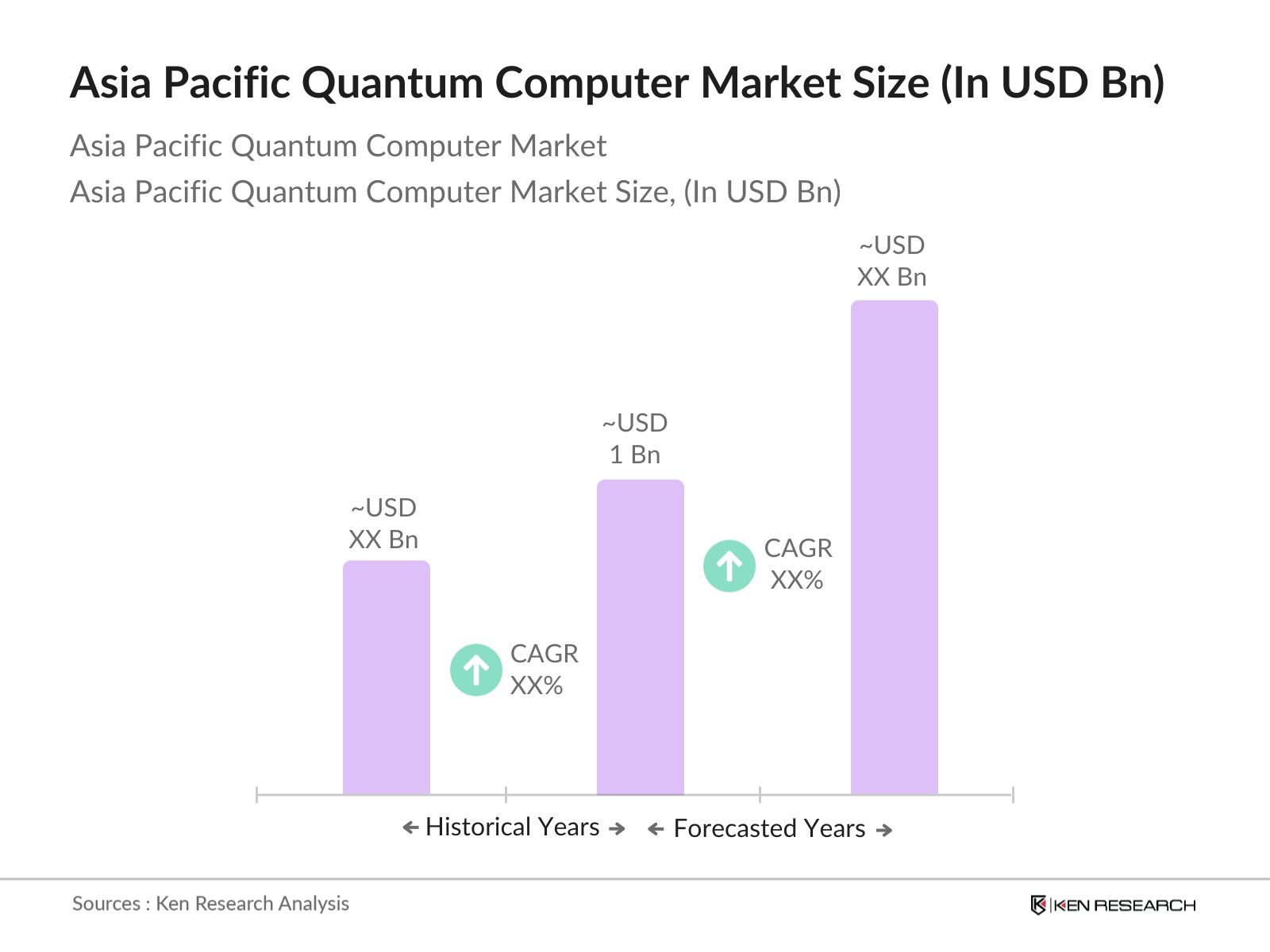
- Japan and China dominate the Asia Pacific Quantum Computer Market due to significant investments in research and development in quantum computing. Japans established technological ecosystem and Chinas ambitious technological agenda have positioned these countries at the forefront of quantum advancements. Both countries benefit from supportive governmental policies, a skilled workforce, and established tech industries that enhance quantum computing development, contributing to their leading status within the region.
- Countries in Asia Pacific, including China and Australia, have instituted comprehensive national quantum programs that outline regulatory frameworks and funding mechanisms to support quantum technology development. These programs aim to create a conducive environment for innovation and ensure that the benefits of quantum computing are realized across various sectors.
Asia Pacific Quantum Computer Market Segmentation
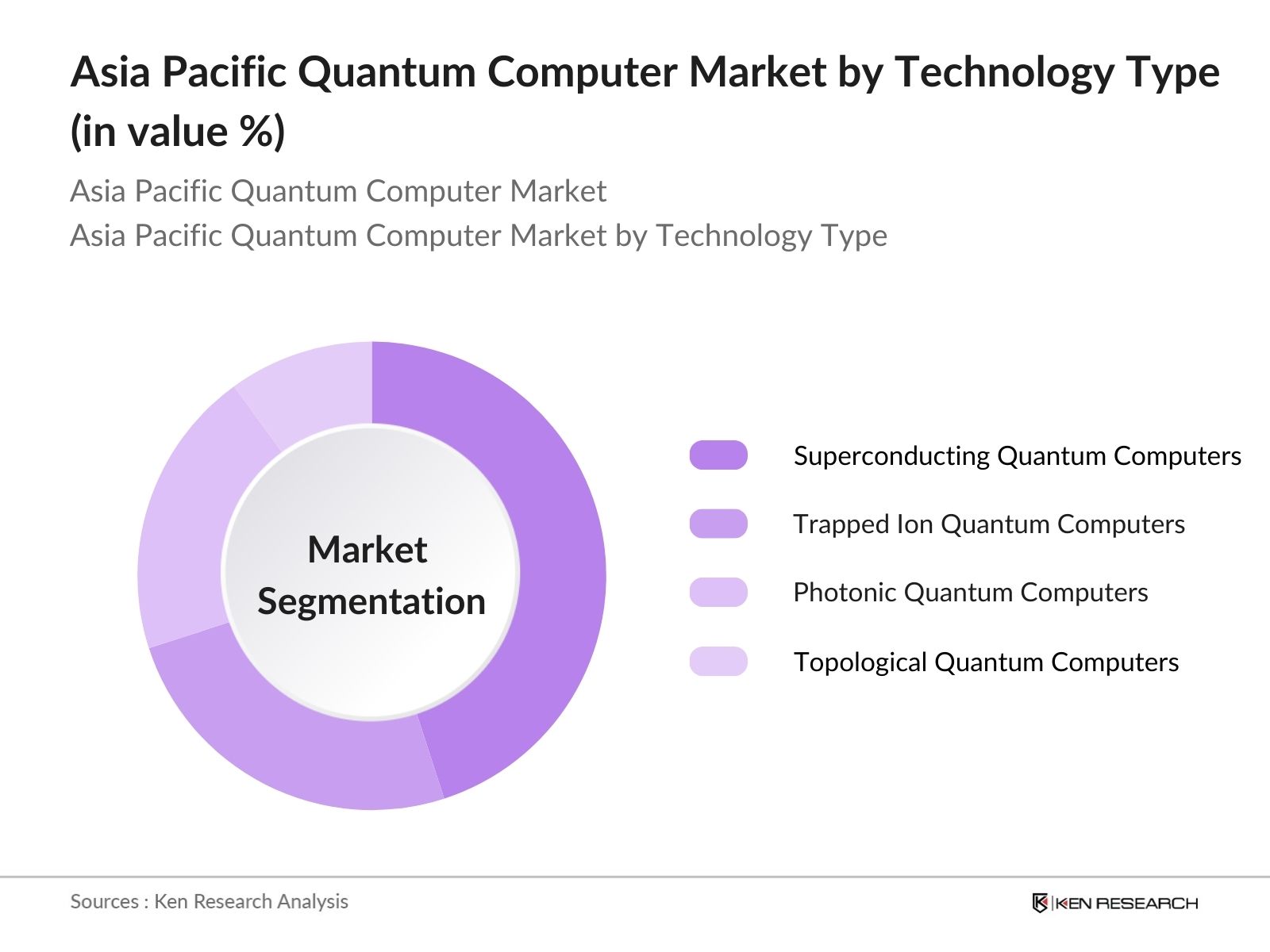
By Technology Type: The Asia Pacific Quantum Computer Market is segmented into superconducting quantum computers, trapped ion quantum computers, photonic quantum computers, and topological quantum computers. Superconducting quantum computers currently dominate due to their high efficiency and lower error rates compared to other types. Companies like Google and IBM extensively use superconducting technology, backed by significant research funding.
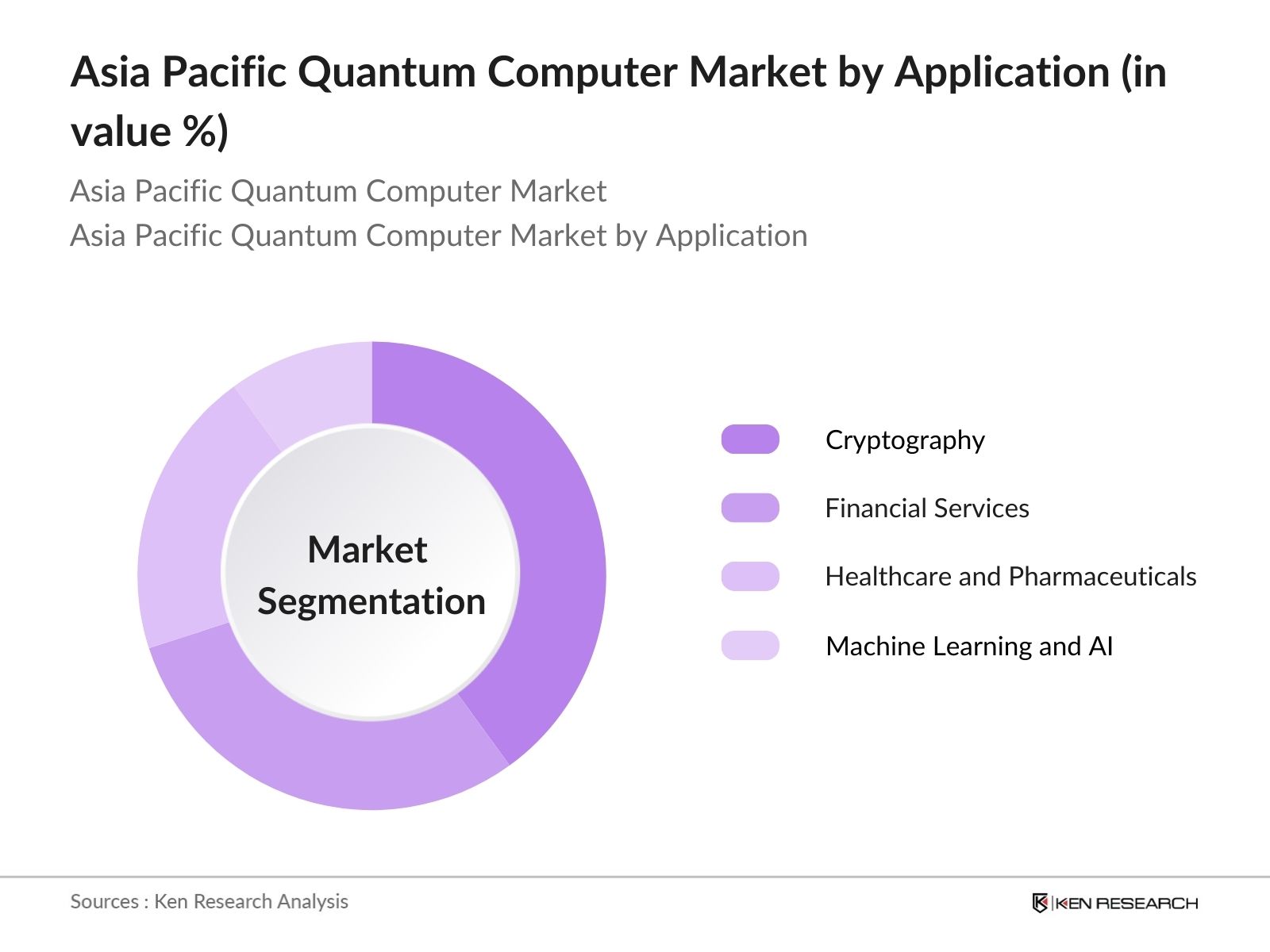
By Application: The Asia Pacific Quantum Computer Market is also segmented by application into cryptography, financial services, healthcare and pharmaceuticals, and machine learning and artificial intelligence. Cryptography holds a dominant share due to the urgent demand for secure data protection against increasingly sophisticated cyber threats. Quantum computers offer unparalleled encryption capabilities, making cryptography a critical application area.
Asia Pacific Quantum Computer Market Competitive Landscape
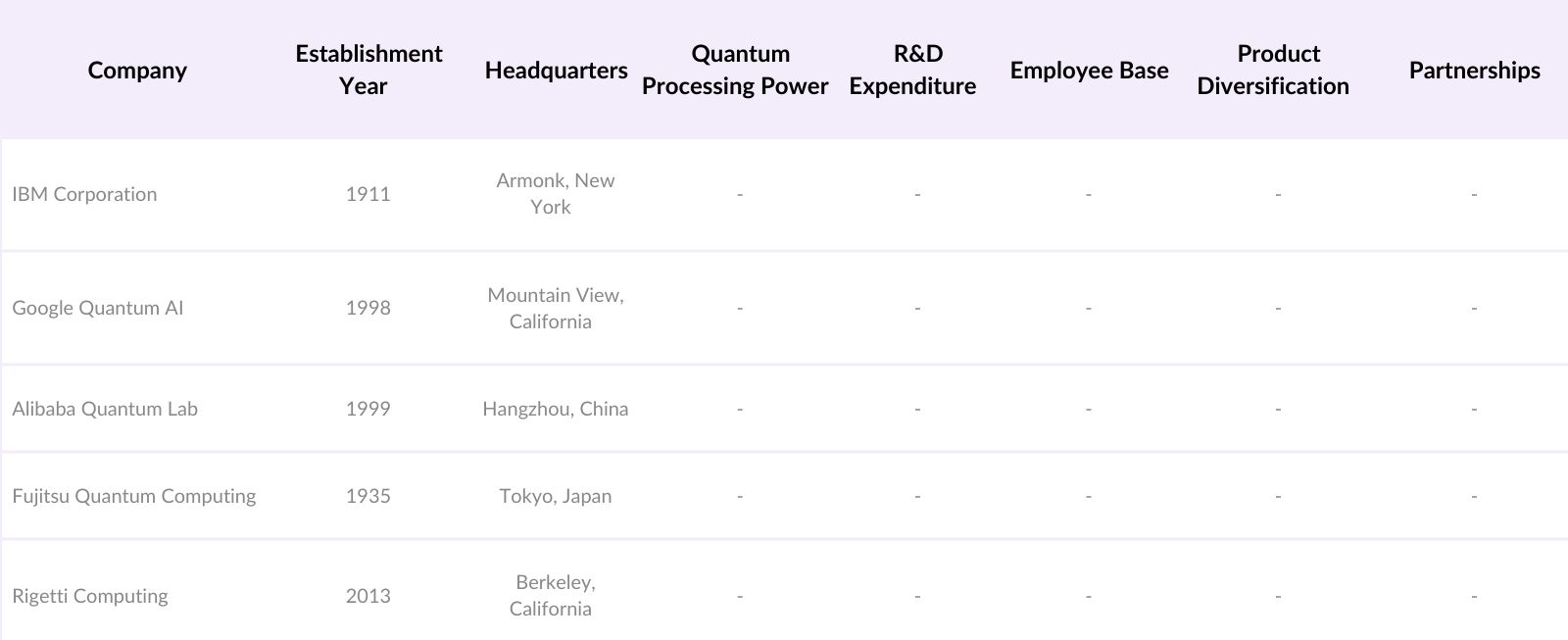
The Asia Pacific Quantum Computer Market is dominated by a few major players, including tech giants and specialized companies focusing on quantum advancements. Key players such as IBM, Google Quantum AI, and Alibaba Quantum Lab leverage strong research and development capabilities and have formed strategic partnerships to solidify their presence.
Asia Pacific Quantum Computer Market Analysis
Market Growth Drivers
- Rising Demand for High-Performance Computing: The demand for high-performance computing (HPC) in sectors like meteorology, physics, and bioinformatics is driving the growth of the quantum computing market in Asia Pacific. In 2022, the investment in HPC in China alone exceeded 15 billion ($2.1 billion), emphasizing the regional need for advanced computational capabilities to handle complex simulations and data analysis, which quantum computers can significantly enhance.
- Growing AI Integration in Quantum Computing: Integration of artificial intelligence (AI) with quantum computing is becoming increasingly prevalent. In 2024, South Korea invested approximately $50 million in AI-driven quantum computing projects to accelerate capabilities in machine learning and optimization problems. This fusion of AI and quantum computing is poised to revolutionize industries by enabling faster processing and more sophisticated algorithms.
- Increased Investment in Quantum Research: The Asia Pacific region has seen a surge in investments directed towards quantum computing research. In 2025, India announced a $75 million funding initiative aimed at quantum technologies, reflecting a regional trend towards supporting these high-potential areas. These investments are crucial for developing quantum algorithms and enhancing the technology's commercial viability.
Market Challenges
- High Initial and Maintenance Costs: Quantum computers require significant initial investment and high maintenance costs due to their complex hardware and environmental requirements. For instance, maintaining quantum systems often involves cryogenic temperatures, which can be financially intensive. This high cost barrier limits broader market adoption and implementation, particularly in emerging economies within the Asia Pacific region.
- Scarcity of Quantum Computing Skills: There is a notable shortage of skilled professionals in the quantum computing field within the Asia Pacific. For example, a 2023 survey by a major university in Singapore highlighted that only 20% of its IT graduates felt adequately prepared to work in quantum computing roles. This skills gap poses a significant challenge to the development and widespread adoption of quantum technologies.
Asia Pacific Quantum Computer Market Future Outlook
The Asia Pacific Quantum Computer Market is anticipated to experience robust growth driven by increasing investments in quantum technologies, strategic government initiatives, and a growing demand for quantum applications across industries. The region is poised to become a global hub for quantum computing, with rising competition among tech giants and startups to establish a foothold in this emerging field. This growth is expected to be supported by advancements in quantum processing capabilities and the expansion of quantum cloud services.
Market Opportunities
Expansion in APAC Emerging Economies: Emerging economies in the Asia Pacific, such as Vietnam and Indonesia, are increasingly recognizing the potential of quantum computing. Governmental bodies in these countries have begun investing in quantum research centers, aiming to harness quantum technologies for economic and technological advancements. These efforts are expected to open new markets and application areas within the region.
Adoption in Cryptography and Cybersecurity: Quantum computing offers groundbreaking prospects in enhancing cryptography and cybersecurity. In 2025, the deployment of quantum-safe encryption technologies in financial institutions across Asia Pacific has increased, driven by the need to secure vast amounts of data against potential quantum-enabled breaches. This trend presents significant opportunities for market expansion in security-intensive industries.
Scope of the Report
|
Technology Type |
Superconducting Quantum Computers |
|
Trapped Ion Quantum Computers |
|
|
Photonic Quantum Computers |
|
|
Topological Quantum Computers |
|
|
Deployment Mode |
Cloud-Based Quantum Computers |
|
On-Premise Quantum Computers |
|
|
Application |
Cryptography |
|
Financial Services |
|
|
Healthcare and Pharmaceuticals |
|
|
Machine Learning and AI |
|
|
End-User |
Government and Defense |
|
BFSI |
|
|
Energy |
|
|
Telecommunications |
|
|
Region |
East Asia |
|
Southeast Asia |
|
|
South Asia |
|
|
Oceania |
Products
Key Target Audience
Quantum Computing Companies
Investor and Venture Capitalist Firms
Banks and Financial Institutions
Government and Regulatory Bodies (China National Quantum Information Center, Japan Quantum Computing Program)
Cybersecurity Firms
Pharmaceutical and Healthcare Enterprises
Financial Services and Banking Institutions
Cloud Service Providers
Research and Development Institutions
Companies
Players Mentioned in the Report
IBM Corporation
Google Quantum AI
Alibaba Quantum Lab
Fujitsu Quantum Computing
Rigetti Computing
Microsoft Quantum
Baidu Quantum Computing
NEC Corporation
Toshiba Quantum Technology
Quantum Circuits Inc.
Table of Contents
1. Asia Pacific Quantum Computer Market Overview
1.1 Definition and Scope
1.2 Market Taxonomy
1.3 Market Evolution and Key Milestones
1.4 Market Segmentation Overview
2. Asia Pacific Quantum Computer Market Size (In USD)
2.1 Historical Market Analysis
2.2 Year-On-Year Price Trends
2.3 Key Developments Impacting Market Size
3. Asia Pacific Quantum Computer Market Analysis
3.1 Growth Drivers (Regulatory Support, Advancements in Quantum Technology)
3.1.1 Government Initiatives for Quantum Advancements
3.1.2 Rising Demand for High-Performance Computing
3.1.3 Growing AI Integration in Quantum Computing
3.1.4 Increased Investment in Quantum Research
3.2 Market Challenges (Cost Constraints, Limited Expertise)
3.2.1 High Initial and Maintenance Costs
3.2.2 Scarcity of Quantum Computing Skills
3.2.3 Limited Quantum Software Availability
3.2.4 Hardware Scalability Issues
3.3 Opportunities (Regional Expansion, Enterprise Applications)
3.3.1 Expansion in APAC Emerging Economies
3.3.2 Adoption in Cryptography and Cybersecurity
3.3.3 Quantum Use in Pharmaceuticals
3.3.4 Scope for Cloud Quantum Services
3.4 Trends (Hybrid Quantum-Classical Systems, Quantum Cloud)
3.4.1 Rise of Quantum Cloud Computing Solutions
3.4.2 Increased R&D in Quantum Materials
3.4.3 Growth in Quantum Hybrid Models
3.4.4 Collaborative Research Initiatives
3.5 Government Regulation (Standards, Incentives, Security Compliance)
3.5.1 National Quantum Programs
3.5.2 Quantum Technology Certification Standards
3.5.3 Data Security Compliance in Quantum
3.5.4 International Collaboration Policies
3.6 SWOT Analysis
3.7 Quantum Computing Stakeholder Ecosystem
3.8 Porters Five Forces Analysis
3.9 Competitive Landscape Analysis
4. Asia Pacific Quantum Computer Market Segmentation
4.1 By Technology Type (In Value %)
4.1.1 Superconducting Quantum Computers
4.1.2 Trapped Ion Quantum Computers
4.1.3 Photonic Quantum Computers
4.1.4 Topological Quantum Computers
4.2 By Deployment Mode (In Value %)
4.2.1 Cloud-Based Quantum Computers
4.2.2 On-Premise Quantum Computers
4.3 By Application (In Value %)
4.3.1 Cryptography
4.3.2 Financial Services
4.3.3 Healthcare and Pharmaceuticals
4.3.4 Machine Learning and AI
4.4 By End-User (In Value %)
4.4.1 Government and Defense
4.4.2 BFSI
4.4.3 Energy
4.4.4 Telecommunications
4.5 By Region (In Value %)
4.5.1 East Asia
4.5.2 Southeast Asia
4.5.3 South Asia
4.5.4 Oceania
5. Asia Pacific Quantum Computer Market Competitive Analysis
5.1 Detailed Profiles of Major Companies
5.1.1 IBM Corporation
5.1.2 Google Quantum AI
5.1.3 Intel Corporation
5.1.4 Microsoft Quantum
5.1.5 Alibaba Quantum Lab
5.1.6 Fujitsu Quantum Computing
5.1.7 D-Wave Systems Inc.
5.1.8 Baidu Quantum Computing
5.1.9 Rigetti Computing
5.1.10 Atos Quantum
5.1.11 Amazon Braket
5.1.12 NEC Corporation
5.1.13 Toshiba Quantum Technology
5.1.14 Quantum Circuits Inc.
5.1.15 Xanadu Quantum Technologies
5.2 Cross Comparison Parameters (R&D Spend, Employee Base, Key Patents, Innovation Score, Product Diversification, Quantum Cloud Services, AI Integration, Quantum Processing Power)
5.3 Market Share Analysis
5.4 Strategic Initiatives and Product Developments
5.5 Mergers, Acquisitions, and Partnerships
5.6 Venture Capital Investments
5.7 Government Grants and Funding
5.8 Private Equity Investments
5.9 Emerging Quantum Startups
6. Asia Pacific Quantum Computer Market Regulatory Framework
6.1 Quantum Technology Standards and Certifications
6.2 Compliance and Licensing Requirements
6.3 Data and Security Standards
6.4 International Quantum Collaboration Agreements
7. Asia Pacific Quantum Computer Market Future Market Size (In USD)
7.1 Projections for Quantum Price Trends
7.2 Key Drivers for Future Quantum Market Growth
8. Asia Pacific Quantum Computer Market Future Segmentation
8.1 By Technology Type (In Value %)
8.2 By Deployment Mode (In Value %)
8.3 By Application (In Value %)
8.4 By End-User (In Value %)
8.5 By Region (In Value %)
9. Asia Pacific Quantum Computer Market Analysts Recommendations
9.1 Total Addressable Market (TAM), Serviceable Available Market (SAM), Serviceable Obtainable Market (SOM) Analysis
9.2 Market Entry and Expansion Strategies
9.3 Innovation and R&D Focus
9.4 White Space and Opportunity Analysis
Disclaimer Contact UsResearch Methodology
Step 1: Identification of Key Variables
The initial phase entails mapping the ecosystem of the Asia Pacific Quantum Computer Market, identifying critical stakeholders, and assessing the primary variables that impact market growth. This includes desk research on quantum computing technologies, investments, and applications.
Step 2: Market Analysis and Construction
This step involves historical data collection on market penetration, including evaluating the demand across industry applications like cryptography and financial services. Data from multiple proprietary and secondary sources ensures accurate insights.
Step 3: Hypothesis Validation and Expert Consultation
Hypotheses based on market data are validated through expert interviews with stakeholders such as technology firms and government bodies. These consultations provide unique insights into the market landscape.
Step 4: Research Synthesis and Final Output
The final stage involves synthesizing all data points, including insights from tech companies, government initiatives, and market trends, to deliver an accurate, actionable report on the Asia Pacific Quantum Computer Market.
Frequently Asked Questions
01. How big is the Asia Pacific Quantum Computer Market?
The Asia Pacific Quantum Computer Market is valued at USD 1 billion, driven by substantial investments from both government and private entities focused on quantum technology advancement.
02. What are the challenges in the Asia Pacific Quantum Computer Market?
Challenges include high costs of quantum infrastructure, limited expertise, and complex technological requirements for scaling quantum applications across industries.
03. Who are the major players in the Asia Pacific Quantum Computer Market?
Key players include IBM Corporation, Google Quantum AI, Alibaba Quantum Lab, Fujitsu Quantum Computing, and Rigetti Computing, each known for their significant R&D investments and technology offerings.
04. What are the growth drivers of the Asia Pacific Quantum Computer Market?
Growth drivers include government initiatives, increasing cybersecurity requirements, advancements in AI, and growing demand for computational solutions across healthcare and financial sectors.
Why Buy From Us?

What makes us stand out is that our consultants follows Robust, Refine and Result (RRR) methodology. i.e. Robust for clear definitions, approaches and sanity checking, Refine for differentiating respondents facts and opinions and Result for presenting data with story

We have set a benchmark in the industry by offering our clients with syndicated and customized market research reports featuring coverage of entire market as well as meticulous research and analyst insights.

While we don't replace traditional research, we flip the method upside down. Our dual approach of Top Bottom & Bottom Top ensures quality deliverable by not just verifying company fundamentals but also looking at the sector and macroeconomic factors.

With one step in the future, our research team constantly tries to show you the bigger picture. We help with some of the tough questions you may encounter along the way: How is the industry positioned? Best marketing channel? KPI's of competitors? By aligning every element, we help maximize success.

Our report gives you instant access to the answers and sources that other companies might choose to hide. We elaborate each steps of research methodology we have used and showcase you the sample size to earn your trust.

If you need any support, we are here! We pride ourselves on universe strength, data quality, and quick, friendly, and professional service.