















Asia-Pacific Refractories Market Outlook to 2030
Region:Global
Author(s):Abhinav kumar
Product Code:KROD1175
December 2024
82
About the Report
Asia-Pacific Refractories Market Overview
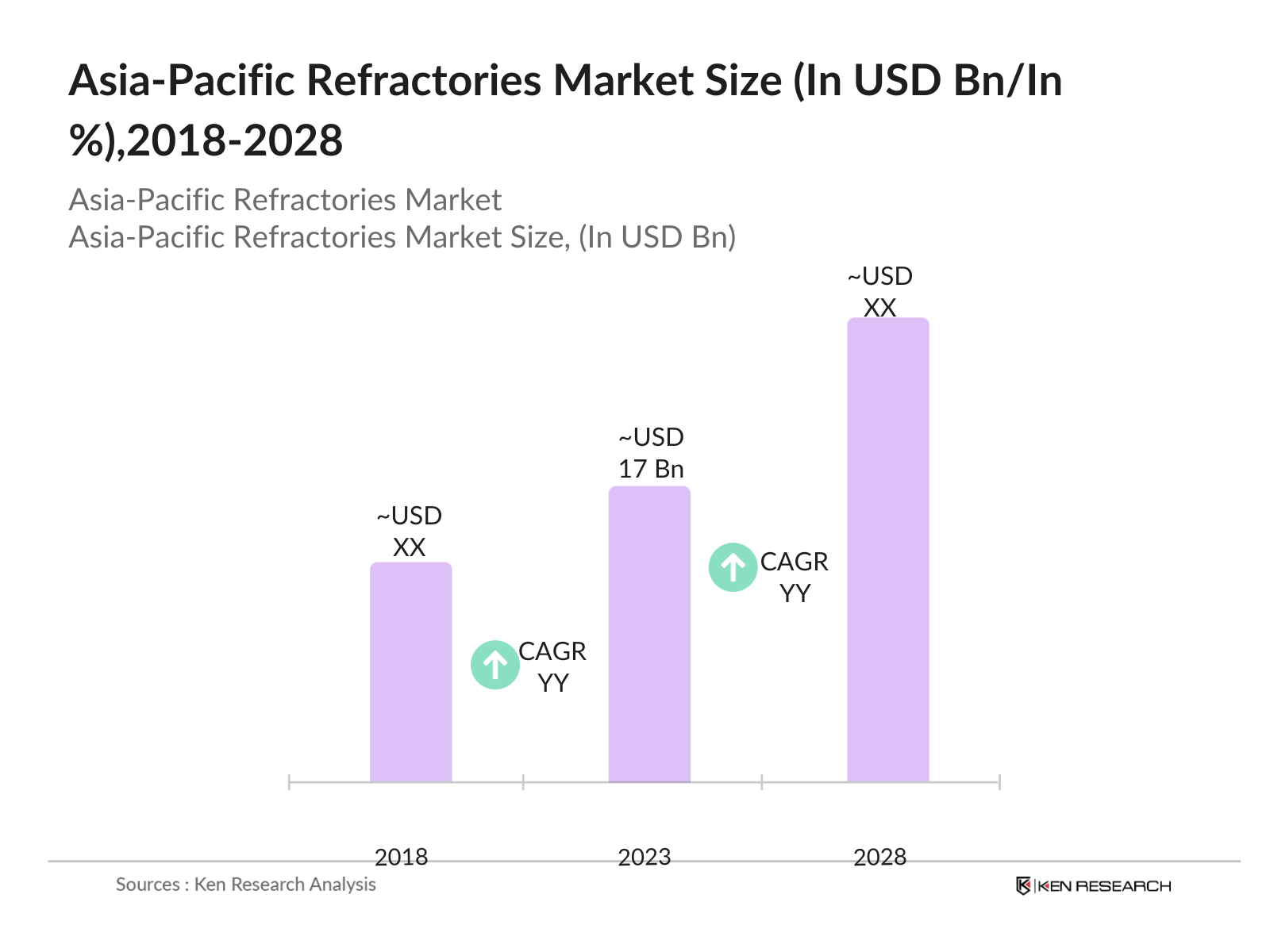
- The Asia-Pacific refractories market reached a valuation of USD 17 billion in 2023, driven by significant industrial expansion, particularly in the steel and cement sectors. The growth is further fueled by increasing infrastructure projects and the rising demand for high-performance materials capable of withstanding extreme temperatures.
- Key players in the Asia-Pacific refractories market include RHI Magnesita, Saint-Gobain, Krosaki Harima Corporation, Vesuvius plc, and Morgan Advanced Materials. These companies dominate the market through their innovation in refractory solutions, comprehensive product portfolios, and strong regional presence. Their strategic investments in technology and production capabilities bolster their leadership in this competitive landscape.
- The eastern region of Asia-Pacific dominates the refractories market due to high industrial activity in countries like China and Japan. This dominance is attributed to the substantial production capacities and ongoing investments in steel and cement industries, which require advanced refractory materials for optimal performance and efficiency.
- In 2023, RHI Magnesita launched a new line of high-performance refractories tailored for the steel industry in Asia-Pacific. This development is part of their broader strategy to enhance their market footprint and address the specific needs of the region's growing steel production sector.
Asia-Pacific Refractories Market Segmentation
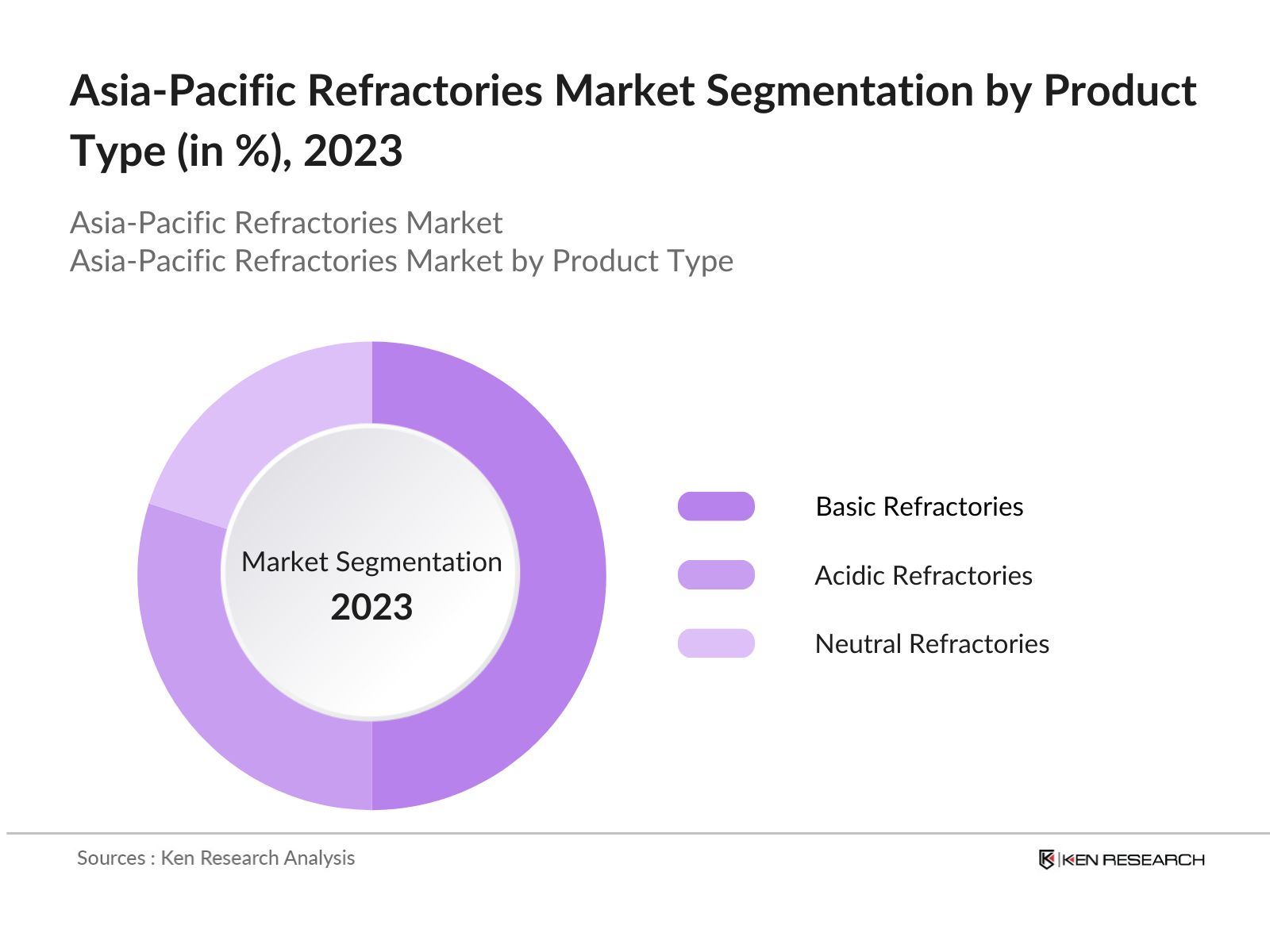
By Product Type: The Asia-Pacific refractories market is segmented into bricks, monolithic, and others. In 2023, bricks dominate this segment due to their extensive use in high-temperature applications like steel furnaces and cement kilns. Their durability and efficiency in thermal insulation make them the preferred choice across various industries.
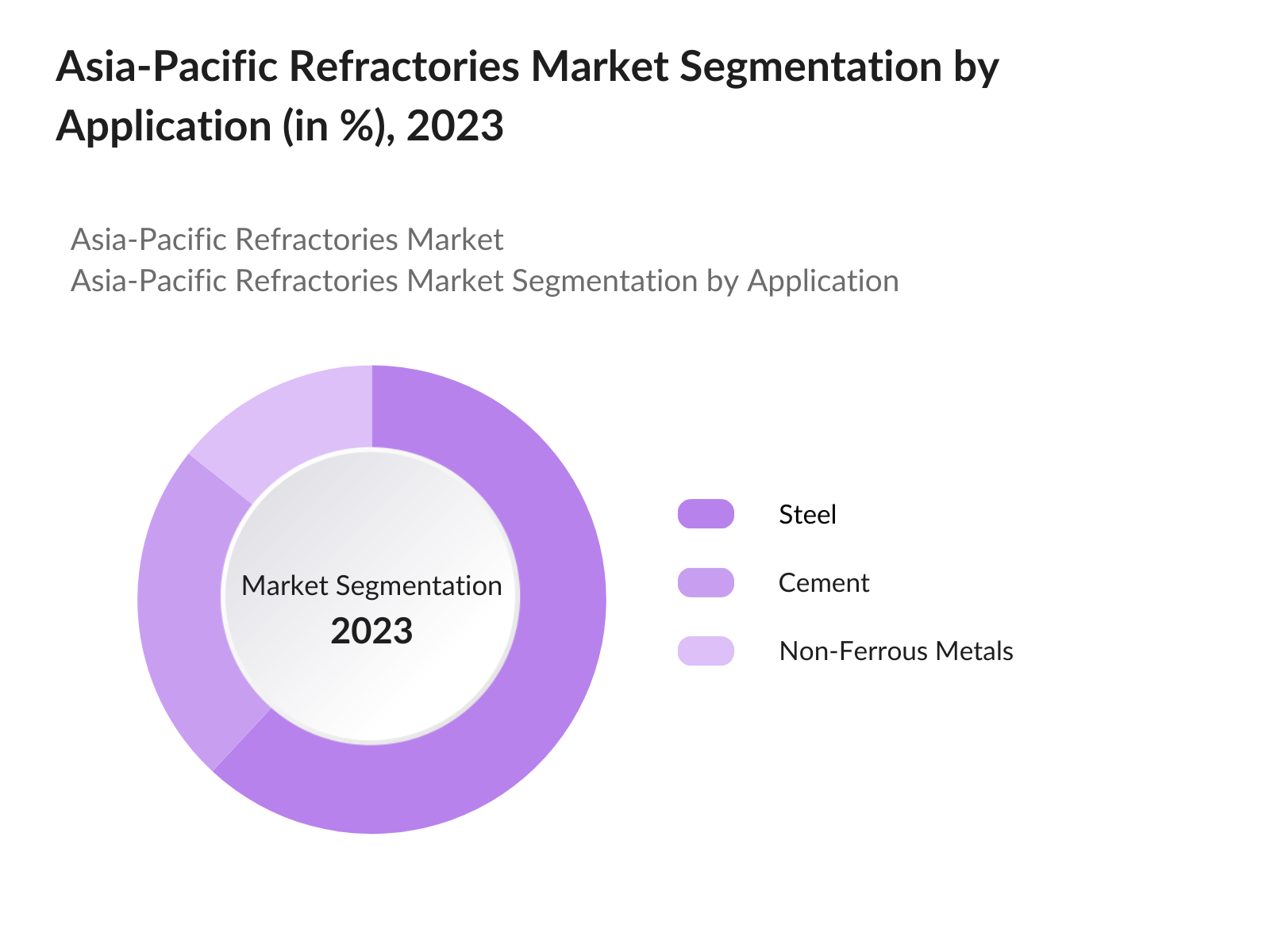
By Application: The market is segmented by application into steel, cement, non-ferrous metals, and others. In 2023, the steel industry led this segment owing to its high consumption of refractory materials for furnace linings and other critical components, driven by continuous production and technological advancements in steel manufacturing processes.
By Region: The Asia-Pacific refractories market is segmented by region into North Asia-Pacific, South Asia-Pacific, East Asia-Pacific, and West Asia-Pacific. In 2023, East Asia-Pacific led the market due to its strong industrial activity, with China and Japan being major contributors. China's large-scale industrial production and Japan's advanced manufacturing technologies drive significant demand for refractories in this region.
Asia-Pacific Refractories Market Competitive Landscape
|
Company |
Establishment Year |
Headquarters |
|
RHI Magnesita |
2017 |
Vienna, Austria |
|
Saint-Gobain |
1665 |
Paris, France |
|
Krosaki Harima Corp. |
1957 |
Tokyo, Japan |
|
Vesuvius plc |
1916 |
London, UK |
|
Morgan Advanced Materials |
1856 |
London, UK |
- China National Building Material Group Corporation (CNBM): CNBM holds a significant share of the Asia-Pacific refractories market, accounting for approximately 20% of the total market revenue. With over 5 million tons of production capacity annually, CNBM leverages its extensive network and advanced manufacturing technologies to cater to the steel, cement, and non-ferrous metal industries.
- Krosaki Harima Corporation: Krosaki Harima, a leading Japanese refractories supplier, contributes around 15% to the market share in the Asia-Pacific region. The companys R&D investments, totaling over USD 50 million annually, support its production of high-performance refractory materials tailored for various industrial applications.
Asia-Pacific Refractories Industry Analysis
Asia-Pacific Refractories Market Growth Drivers
- Expanding Industrial Activities: The rapid industrialization across Asia-Pacific, particularly in China and India, is a major growth driver for the refractories market. In 2023, industrial production in China increased by 6.5%, fueling demand for refractories used in steel and cement production, which saw a 7% rise in consumption.
- Rising Steel Production: The growth in steel production across the region significantly impacts the refractories market. In 2023, Asia-Pacifics steel production reached 1.8 billion tons, accounting for 70% of global output. The high demand for refractories in steelmaking processes has contributed to a market growth rate of 5% annually.
- Infrastructure Development: Ongoing infrastructure projects in the Asia-Pacific region drive the need for refractories. For example, Indias government has committed USD 1 trillion to infrastructure development by 2030, boosting demand for refractories in construction materials and industrial applications.
Asia-Pacific Refractories Market Challenges
- Raw Material Price Volatility: The refractories market faces challenges due to fluctuations in raw materials like bauxite and magnesite prices. This volatility can impact production costs and market stability. For instance, the price of bauxite surged by 15% in 2023, affecting the cost structure of refractory products.
- Environmental Regulations: Stricter environmental regulations across the region pose challenges for refractory manufacturers, particularly in terms of compliance and adapting to new standards. In 2024, new emission standards in Japan required significant modifications in manufacturing processes, increasing operational costs.
Asia-Pacific Refractories Market Government Initiatives
- Chinas 14th Five-Year Plan (2021-2025): The Chinese government has allocated approximately USD 300 million to support the development and modernization of the refractories industry. This plan includes subsidies for research and development, aimed at improving refractory materials performance and sustainability, particularly for the steel and cement sectors.
- Japans Green Innovation Fund (2024): Japan has introduced a Green Innovation Fund with a budget of USD 150 million to encourage the adoption of eco-friendly refractories. The initiative focuses on reducing carbon emissions and promoting energy-efficient practices in the refractory industry, benefiting key players like Krosaki Harima Corporation.
Asia-Pacific Refractories Market Future Outlook
The Asia-Pacific refractories market is expected to experience robust growth by 2028, driven by technological advancements and increasing industrial demands. The region's industrial expansion, particularly in steel and cement sectors, will continue to propel the market forward.
Future Trends
- Integration of AI and IoT (2028): By 2028, the integration of AI and IoT technologies in the refractory industry will revolutionize operations. These technologies will enable real-time monitoring and management of refractory performance, optimize production processes, and enhance quality control. The increased use of predictive maintenance will significantly reduce downtime and operational costs.
- Growth in Eco-Friendly Refractory Solutions (2028): By 2028, there will be a marked shift towards eco-friendly refractory solutions, including using recycled materials and sustainable production practices. Regulatory pressures and corporate sustainability goals will drive the adoption of refractories that minimize environmental impact and improve energy efficiency.
Scope of the Report
|
By Product Type |
Bricks Monolithics Others |
|
By Application |
Steel Cement Non-Ferrous Metals Others |
|
By Region |
North Asia-Pacific South Asia-Pacific East Asia-Pacific West Asia-Pacific |
Products
Key Target Audience Organizations and Entities who can benefit by Subscribing This Report:
Steel Manufacturers
Cement Producers
Non-Ferrous Metals Producers
Industrial Engineers
Infrastructure Development Companies
Government & Regulatory Bodies (e.g., Ministry of Industry in various countries)
Time Period Captured in the Report
Historical Period: 2018-2023
Base Year: 2023
Forecast Period: 2023-2028
Companies
Players Mentioned in the Report
RHI Magnesita
Saint-Gobain
Krosaki Harima Corporation
Vesuvius plc
Morgan Advanced Materials
Shinagawa Refractories Co., Ltd.
HarbisonWalker International
Refratechnik Holding GmbH
Calderys
Imerys Refractory Minerals
Magnesita Refractories
Allied Mineral Products
Coorstek Inc.
Minteq International Inc.
Ceramics Industries
Table of Contents
1. Asia-Pacific Refractories Market Overview
1.1. Definition and Scope
1.2. Market Taxonomy
1.3. Market Growth Rate
1.4. Market Segmentation Overview
2. Asia-Pacific Refractories Market Size (in USD Bn)
2.1. Historical Market Size
2.2. Year-on-Year Growth Analysis
2.3. Key Market Developments and Milestones
3. Asia-Pacific Refractories Market Analysis
3.1. Growth Drivers
3.1.1. Industrialization
3.1.2. Construction Boom
3.1.3. Increasing Demand from Steel and Cement Industries
3.1.4. Government Initiatives and Investments
3.2. Restraints
3.2.1. High Raw Material Costs
3.2.2. Regulatory Compliance Costs
3.2.3. Environmental Concerns
3.3. Opportunities
3.3.1. Technological Innovations
3.3.2. Expansion in Emerging Markets
3.3.3. Growth in End-Use Industries
3.4. Trends
3.4.1. Development of High-Performance Refractories
3.4.2. Rise in Eco-Friendly Refractory Solutions
3.4.3. Adoption of Digitalization and Automation
3.5. Government Regulation
3.5.1. Environmental Standards and Policies
3.5.2. Emission Reduction Regulations
3.5.3. Incentives for Sustainable Practices
3.5.4. Industry-Specific Compliance Requirements
3.6. SWOT Analysis
3.7. Stakeholder Ecosystem
3.8. Competition Ecosystem
4. Asia-Pacific Refractories Market Segmentation, 2023
4.1. By Product Type (in Value %)
4.1.1. Ceramic Refractories
4.1.2. Non-Ceramic Refractories
4.2. By End-Use Industry (in Value %)
4.2.1. Steel
4.2.2. Cement
4.2.3. Glass
4.2.4. Other Industrial Applications
4.3. By Material Type (in Value %)
4.3.1. Alumina
4.3.2. Silica
4.3.3. Magnesite
4.3.4. Other Materials
4.4. By Region (in Value %)
4.4.1. North Asia
4.4.2. South Asia
4.4.3. East Asia
4.4.4. West Asia
5. Asia-Pacific Refractories Market Cross Comparison
5.1. Detailed Profiles of Major Companies
5.1.1. RHI Magnesita
5.1.2. Vesuvius
5.1.3. Krosaki Harima
5.1.4. Shinagawa Refractories
5.1.5. HarbisonWalker International
5.1.6. Saint-Gobain
5.1.7. Magnezit Group
5.1.8. Refratechnik
5.2. Cross Comparison Parameters (No. of Employees, Headquarters, Inception Year, Revenue)
6. Asia-Pacific Refractories Market Competitive Landscape
6.1. Market Share Analysis
6.2. Strategic Initiatives
6.3. Mergers and Acquisitions
6.4. Investment Analysis
6.4.1. Venture Capital Funding
6.4.2. Government Grants
6.4.3. Private Equity Investments
7. Asia-Pacific Refractories Market Regulatory Framework
7.1. Environmental Standards
7.2. Compliance Requirements
7.3. Certification Processes
8. Asia-Pacific Refractories Market Future Size (in USD Bn)
8.1. Future Market Size Projections
8.2. Key Factors Driving Future Market Growth
9. Asia-Pacific Refractories Market Future Segmentation
9.1. By Product Type (in Value %)
9.2. By End-Use Industry (in Value %)
9.3. By Material Type (in Value %)
9.4. By Region (in Value %)
10. Asia-Pacific Refractories Market Analysts Recommendations
10.1. TAM/SAM/SOM Analysis
10.2. Customer Cohort Analysis
10.3. Marketing Initiatives
10.4. White Space Opportunity Analysis
Disclaimer Contact UsResearch Methodology
Step 1: Identifying Key Variables
Ecosystem creation for all the major entities and referring to multiple secondary and proprietary databases to perform desk research around market to collate industry level information.
Step 2: Market Building
Collating statistics on Asia-Pacific refractories market over the years, penetration of marketplaces and service providers ratio to compute revenue generated for Asia-Pacific refractories market. We will also review service quality statistics to understand revenue generated which can ensure accuracy behind the data points shared.
Step 3: Validating and Finalizing
Building market hypothesis and conducting CATIs with industry experts belonging to different companies to validate statistics and seek operational and financial information from company representatives.
Step 4: Research Output
Our team will approach refractories market companies and understand nature of product segments and sales, consumer preference and other parameters, which will support us validate statistics derived through bottom to top approach from refractories market companies.
Frequently Asked Questions
1. How big is the Asia-Pacific Refractories Market?
The Asia-Pacific refractories market was valued at USD 15.8 billion in 2023. This growth is driven by expanding industrial activities, particularly in steel and cement production, and increasing infrastructure investments across the region.
2. Who are the major players in the Asia-Pacific Refractories Market?
Major players in the market include RHI Magnesita, Saint-Gobain, Krosaki Harima Corporation, Vesuvius plc, and Morgan Advanced Materials. These companies lead the market due to their extensive technological advancements and strong regional presence.
3. What are the growth drivers for the Asia-Pacific Refractories Market?
Key growth drivers include industrial expansion in steel and cement sectors, technological advancements in refractory materials, and government investments in infrastructure projects. These factors collectively boost the demand for high-performance refractories.
4. What are the challenges in the Asia-Pacific Refractories Market?
The market faces challenges such as raw material price volatility, stringent environmental regulations, and global supply chain disruptions. These issues can impact production costs and market stability, requiring strategic adjustments from manufacturers.
Why Buy From Us?

What makes us stand out is that our consultants follows Robust, Refine and Result (RRR) methodology. i.e. Robust for clear definitions, approaches and sanity checking, Refine for differentiating respondents facts and opinions and Result for presenting data with story

We have set a benchmark in the industry by offering our clients with syndicated and customized market research reports featuring coverage of entire market as well as meticulous research and analyst insights.

While we don't replace traditional research, we flip the method upside down. Our dual approach of Top Bottom & Bottom Top ensures quality deliverable by not just verifying company fundamentals but also looking at the sector and macroeconomic factors.

With one step in the future, our research team constantly tries to show you the bigger picture. We help with some of the tough questions you may encounter along the way: How is the industry positioned? Best marketing channel? KPI's of competitors? By aligning every element, we help maximize success.

Our report gives you instant access to the answers and sources that other companies might choose to hide. We elaborate each steps of research methodology we have used and showcase you the sample size to earn your trust.

If you need any support, we are here! We pride ourselves on universe strength, data quality, and quick, friendly, and professional service.