
Asia Pacific Reishi Mushroom Market Outlook to 2030
Region:Asia
Author(s):Yogita Sahu
Product Code:KROD4133
December 2024
98
About the Report
Asia Pacific Reishi Mushroom Market Overview
- The Asia Pacific Reishi Mushroom market is valued at USD 2.9 billion, driven by increased consumer interest in health-boosting products, especially those with medicinal properties. This market expansion is supported by a five-year historical analysis, which shows consistent growth due to the rising demand for organic supplements and functional foods. Additionally, the medicinal and adaptogenic properties of Reishi mushrooms have garnered attention from both healthcare professionals and wellness-focused consumers, fueling demand in nutraceutical applications.
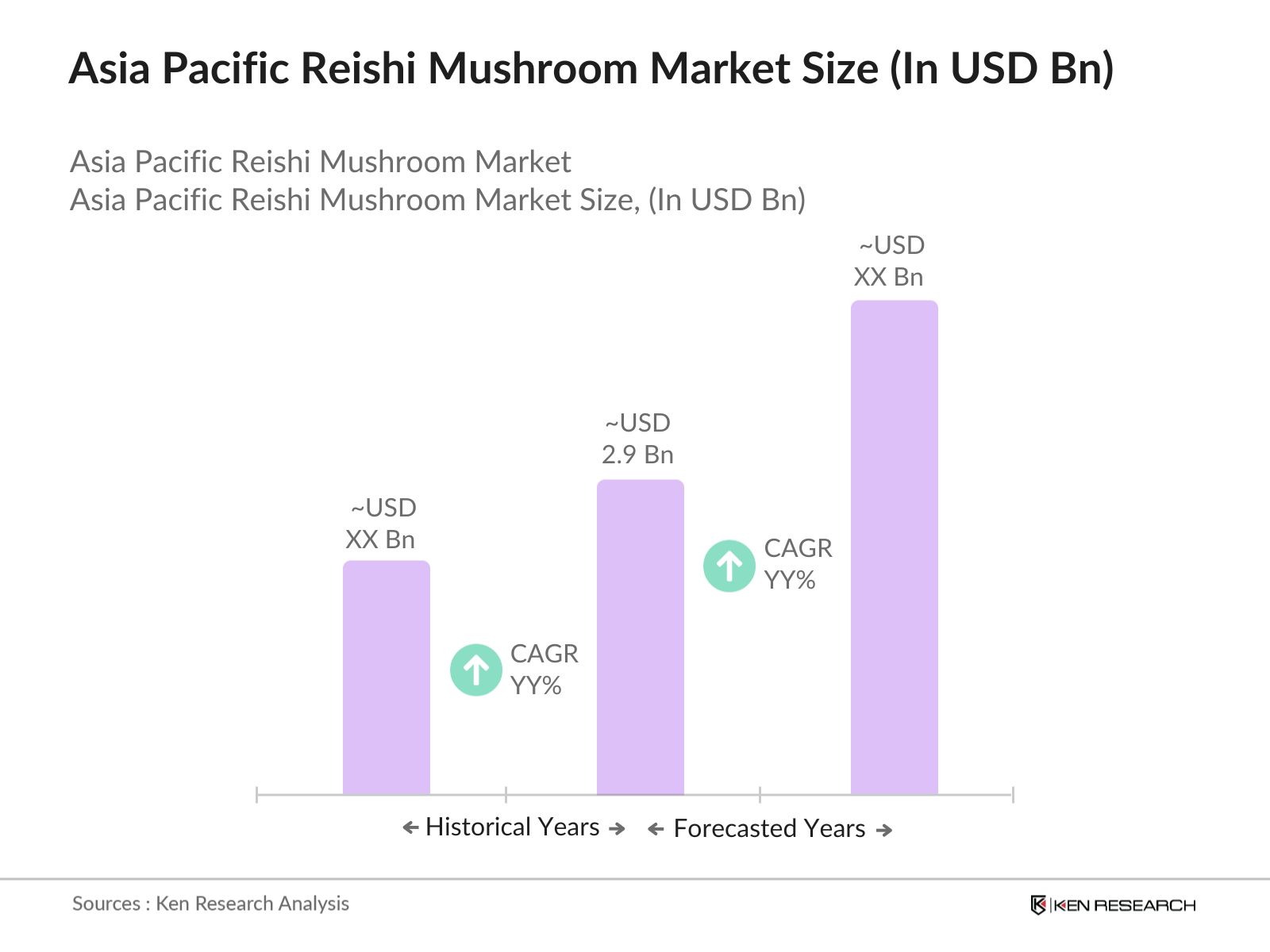
- The dominant countries in this market include China and Japan, with China leading due to its established history in traditional medicine and extensive cultivation capabilities. Japan follows closely, propelled by advanced R&D and a population with high awareness of functional foods. South Korea also plays a significant role, where demand is driven by high disposable income and a growing wellness culture.
- The Chinese government allocated $50 million in 2023 towards advanced cultivation technology for mushrooms, including reishi. This investment includes research and development for high-yield strains and climate-resilient farming practices aimed at bolstering production. This support is expected to facilitate a stable reishi mushroom supply chain, benefiting the broader Asia Pacific market.
Asia Pacific Reishi Mushroom Market Segmentation
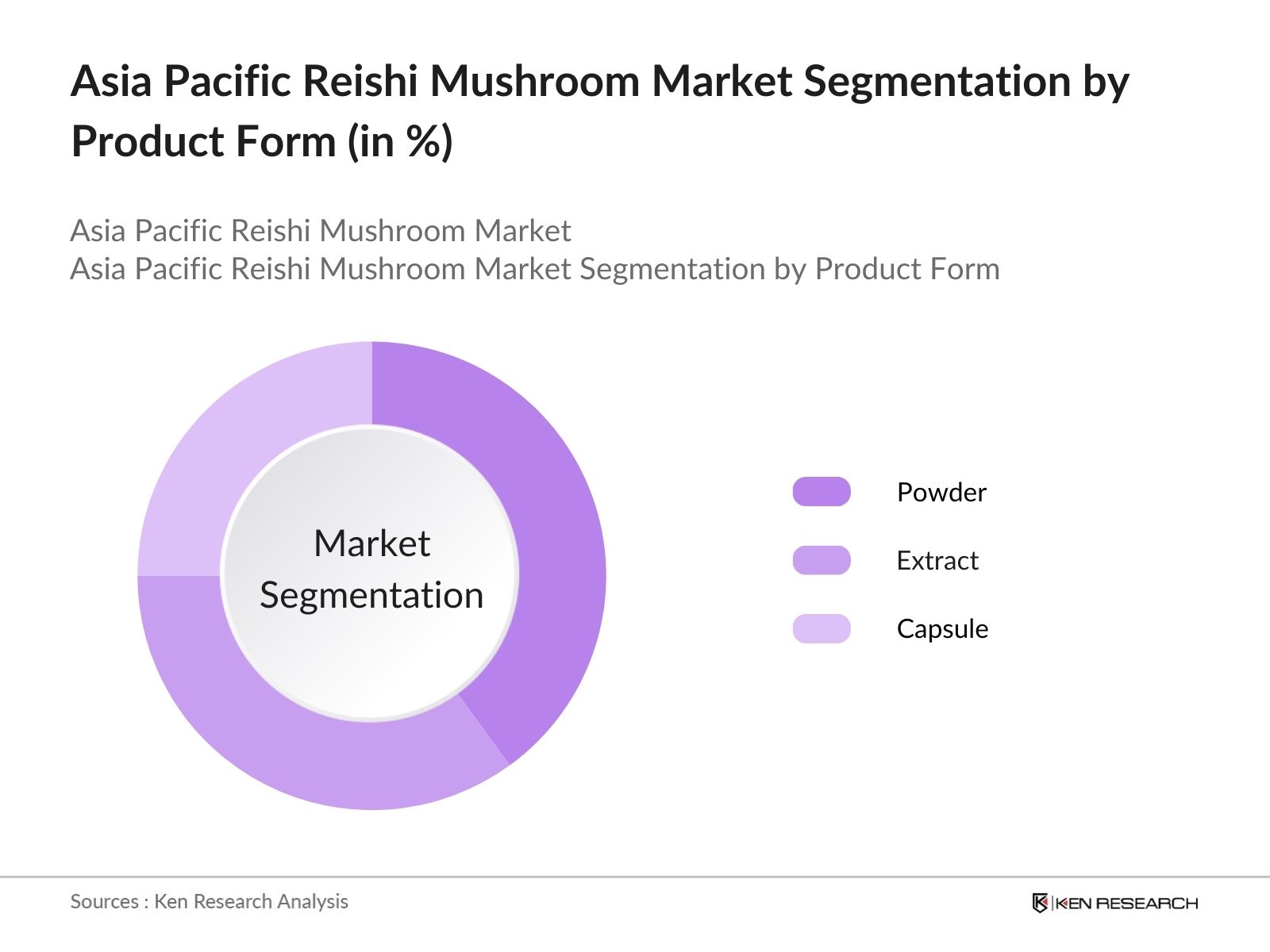
By Product Form: The market is segmented by product form into powder, extract, and capsule. Reishi Mushroom powder holds a dominant market share under this segmentation, largely due to its versatility and ease of incorporation into various health supplements and food products. Many consumers and businesses prefer powder because it offers flexibility in dosage and can be readily added to smoothies, teas, and other formulations, which aligns with current trends in personalized nutrition.
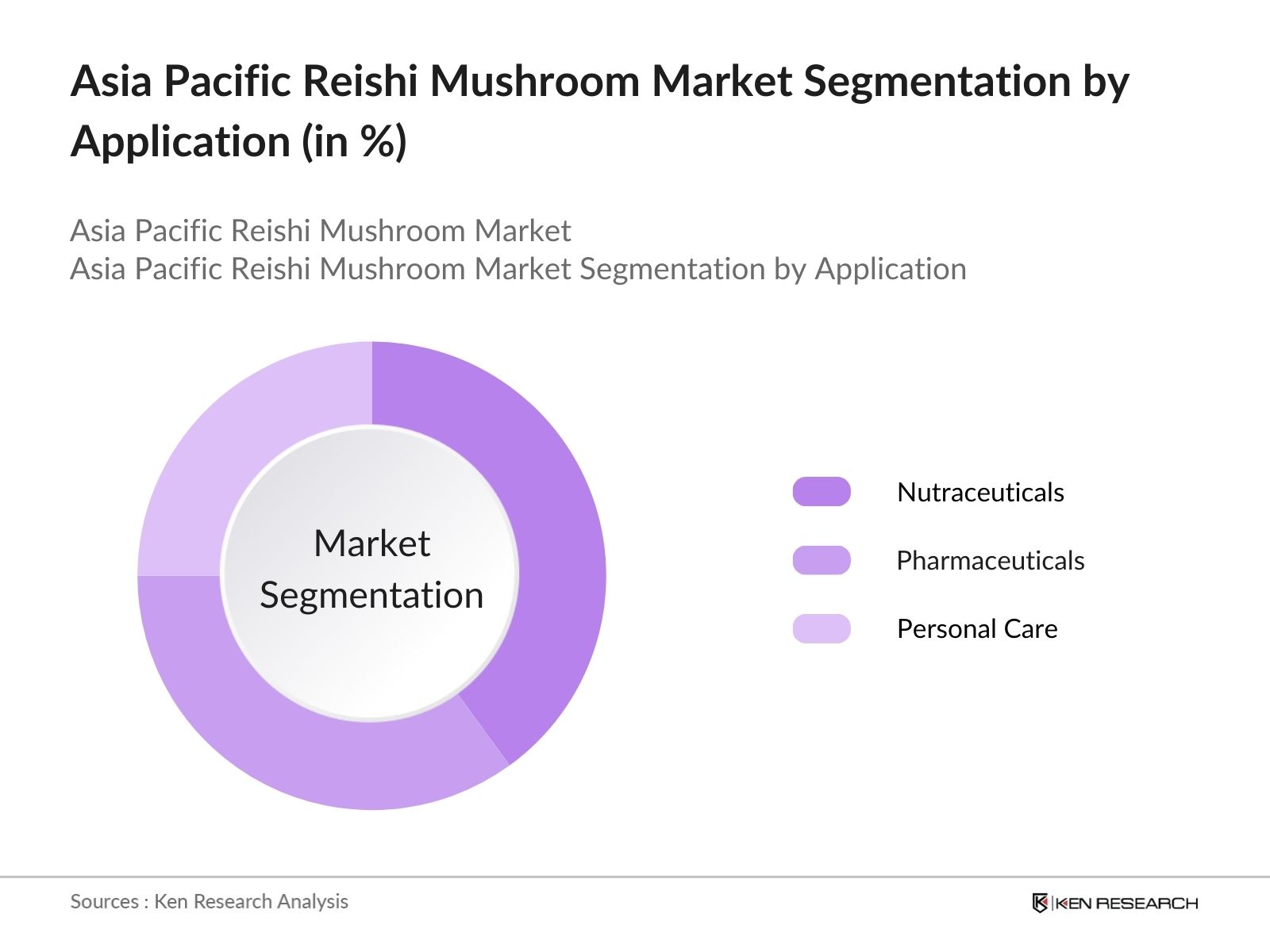
By Application: In terms of application, the market is divided into pharmaceuticals, nutraceuticals, and personal care. Nutraceuticals dominate this segmentation due to growing consumer interest in natural supplements. Reishi mushrooms are frequently included in nutraceuticals for their adaptogenic and immune-boosting benefits. This segments dominance is also attributed to consumers preference for products with clear, clinically backed health benefits, making nutraceuticals the preferred application.
Asia Pacific Reishi Mushroom Market Competitive Landscape
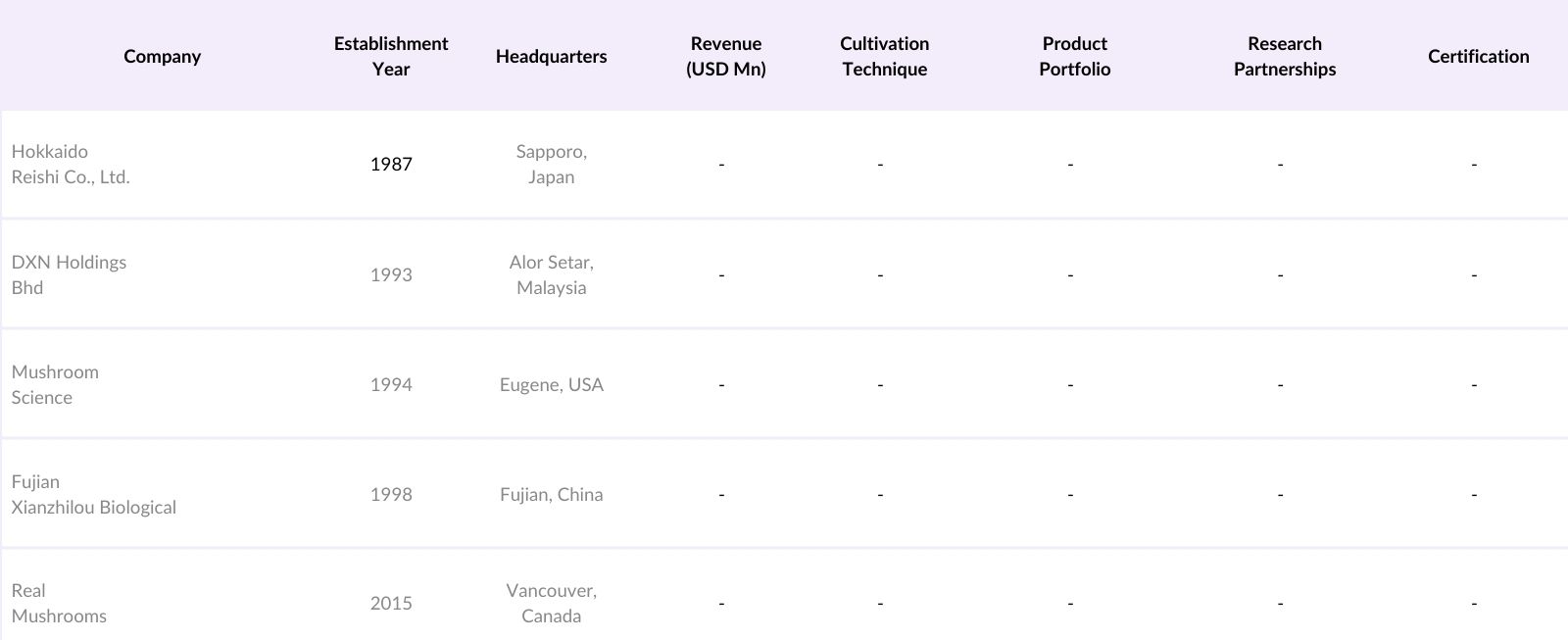
The market is dominated by a few key players who possess strong market presence and influence through extensive distribution networks, innovation in cultivation techniques, and quality certifications. Local and regional companies have gained competitive advantages by focusing on sustainable cultivation practices and unique formulations to attract consumers in wellness markets.
Asia Pacific Reishi Mushroom Market Analysis
Market Growth Drivers
- Increasing Health Consciousness among Consumers: With over 1.6 billion people in Asia Pacific prioritizing health and wellness, demand for functional foods like reishi mushrooms is surging. These mushrooms are noted for their immune-boosting and anti-inflammatory properties. As health concerns rise in densely populated countries like China and Japan, the market for reishi mushrooms is experiencing notable growth, with government healthcare bodies actively promoting herbal supplements as part of their wellness campaigns.
- Expansion of Alternative Medicine Market in Asia Pacific: Alternative medicine holds a substantial market within Asia Pacific. Countries like China, with nearly 1.4 billion people, have a long history of integrating medicinal mushrooms in traditional therapies. Recent data from the National Bureau of Statistics in China show an annual increase in alternative medicine adoption, which includes reishi mushrooms for treatments related to immunity and cardiovascular health.
- Government Support for Mushroom Cultivation in Rural Areas: Governments in Asia Pacific, especially in China, are allocating substantial funds toward mushroom farming, including reishi mushrooms, in rural areas. The Chinese government, for instance, recently invested $200 million in rural mushroom cultivation projects to boost agricultural income and meet local demand.
Market Challenges
- High Cost of Organic Reishi Mushroom Cultivation: Organic cultivation practices are essential to meet regulatory standards in countries like Japan and South Korea, but costs remain prohibitive. Recent reports from Japans Ministry of Agriculture indicate that organic farming expenses for reishi mushrooms are 40% higher than conventional methods. This results in high retail prices, often limiting access to a niche consumer base, particularly affecting lower-income households in developing regions within Asia Pacific.
- Inconsistent Quality Standards Across Regions: The market faces challenges in quality consistency due to varying regional standards. Countries like India lack stringent regulations on herbal supplement production, leading to disparities in product quality. This inconsistency affects consumer trust, as over 60% of surveyed consumers in South Korea report concerns regarding product authenticity.
Asia Pacific Reishi Mushroom Market Future Outlook
The Asia Pacific Reishi Mushroom industry is expected to grow in the coming years, driven by rising consumer demand for natural health supplements and an expanding nutraceutical market. Increased R&D investments to validate health benefits and sustainable cultivation practices will support the market's long-term growth.
Future Market Opportunities
- Expansion of Functional Food Applications: Over the next five years, reishi mushrooms are expected to be widely incorporated into functional foods such as energy bars, beverages, and snacks. With Asia Pacific's functional food market projected to add over $15 billion in sales by 2029, companies will increasingly invest in research and development to enhance the versatility and accessibility of reishi-based products, supported by consumer demand for natural, health-enhancing ingredients.
- Increased Emphasis on Organic Reishi Cultivation: By 2029, organic reishi mushrooms are anticipated to dominate the Asia Pacific market as governments enforce stricter regulations on sustainable farming. With nearly $30 million expected in government subsidies for organic agriculture by 2025, organic reishi mushrooms will capture a more substantial market share, attracting health-focused consumers and encouraging environmentally conscious cultivation practices.
Scope of the Report
|
By Type |
Powder Extract Capsule |
|
By Application |
Pharmaceuticals Nutraceuticals Personal Care |
|
By Sales Channel |
Online Offline |
|
By End User |
Individual Consumers Health Practitioners Food Manufacturers |
|
By Region |
China Japan South Korea India Australia |
Products
Key Target Audience Organizations and Entities Who Can Benefit by Subscribing This Report:
Health and Wellness Retailers
Pharmaceutical Manufacturers
Nutraceutical Companies
Personal Care Product Manufacturers
Organic Product Distributors
Government and Regulatory Bodies (Food and Drug Administrations, Health Ministries)
Investor and Venture Capitalist Firms
E-commerce Platforms
Companies
Players Mentioned in the Report:
Hokkaido Reishi Co., Ltd.
DXN Holdings Bhd
Ganoderma Industries Co., Ltd.
Mushroom Science
Nammex
Oriveda BV
Fujian Xianzhilou Biological Science and Technology Co., Ltd.
Real Mushrooms
Xiuzheng Pharmaceutical Group Co., Ltd.
Hunan Kanglu Biotech Co., Ltd.
Table of Contents
1. Asia Pacific Reishi Mushroom Market Overview
1.1 Definition and Scope
1.2 Market Taxonomy
1.3 Market Growth Rate
1.4 Market Segmentation Overview
2. Asia Pacific Reishi Mushroom Market Size (In USD Mn)
2.1 Historical Market Size
2.2 Year-On-Year Growth Analysis
2.3 Key Market Developments and Milestones
3. Asia Pacific Reishi Mushroom Market Analysis
3.1 Growth Drivers
3.1.1 Increased Awareness of Health Benefits
3.1.2 Rise in Functional Food Demand
3.1.3 Expansion of Nutraceutical Industry
3.1.4 Growing Interest in Organic Products
3.2 Market Challenges
3.2.1 High Production Costs
3.2.2 Limited Consumer Knowledge
3.2.3 Supply Chain Complexities
3.3 Opportunities
3.3.1 Innovation in Cultivation Techniques
3.3.2 Growth in Online Retail Channels
3.3.3 Rising Demand in Cosmeceuticals
3.4 Trends
3.4.1 Increasing Demand for Vegan and Organic Products
3.4.2 Expansion of Superfood Categories
3.4.3 Collaborative Farming Initiatives
3.5 Government Regulations
3.5.1 Quality Standards for Herbal Products
3.5.2 Organic Certification Processes
3.5.3 Compliance with Environmental Policies
3.6 SWOT Analysis
3.7 Supply Chain Analysis (Cultivation to Retail)
3.8 Porters Five Forces
3.9 Competitive Landscape
4. Asia Pacific Reishi Mushroom Market Segmentation
4.1 By Type (In Value %)
4.1.1 Powder
4.1.2 Extract
4.1.3 Capsule
4.2 By Application (In Value %)
4.2.1 Pharmaceuticals
4.2.2 Nutraceuticals
4.2.3 Personal Care
4.3 By Sales Channel (In Value %)
4.3.1 Online
4.3.2 Offline
4.4 By End User (In Value %)
4.4.1 Individual Consumers
4.4.2 Health Practitioners
4.4.3 Food Manufacturers
4.5 By Region (In Value %)
4.5.1 China
4.5.2 Japan
4.5.3 South Korea
4.5.4 India
4.5.5 Australia
5. Asia Pacific Reishi Mushroom Market Competitive Analysis
5.1 Detailed Profiles of Major Companies
5.1.1 Hokkaido Reishi Co., Ltd.
5.1.2 DXN Holdings Bhd
5.1.3 Ganoderma Industries Co., Ltd.
5.1.4 Mushroom Science
5.1.5 Nammex
5.1.6 Oriveda BV
5.1.7 Fujian Xianzhilou Biological Science and Technology Co., Ltd.
5.1.8 Real Mushrooms
5.1.9 Xiuzheng Pharmaceutical Group Co., Ltd.
5.1.10 Hunan Kanglu Biotech Co., Ltd.
5.1.11 Nutra Green Biotechnology Co., Ltd.
5.1.12 Bio-Botanica Inc.
5.1.13 Swanson Health Products
5.1.14 Terrasoul Superfoods
5.1.15 Tokiwa Phytochemical Co., Ltd.
5.2 Cross Comparison Parameters (Revenue, Product Portfolio, Regional Presence, Innovation in Cultivation Techniques, Sustainable Practices, Research Partnerships, Distribution Channels, Certifications)
5.3 Market Share Analysis
5.4 Strategic Initiatives
5.5 Mergers and Acquisitions
5.6 Investment and Funding Analysis
5.7 R&D Expenditure Analysis
5.8 Marketing and Brand Positioning
6. Asia Pacific Reishi Mushroom Market Regulatory Framework
6.1 Import and Export Policies
6.2 Product Registration and Certification
6.3 Compliance with Organic Standards
6.4 Health and Safety Regulations
7. Asia Pacific Reishi Mushroom Market Future Segmentation
7.1 By Type
7.2 By Application
7.3 By Sales Channel
7.4 By End User
7.5 By Region
8. Asia Pacific Reishi Mushroom Market Future Size (In USD Mn)
8.1 Future Market Size Projections
8.2 Key Drivers of Future Market Growth
9. Asia Pacific Reishi Mushroom Market Analysts Recommendations
9.1 TAM/SAM/SOM Analysis
9.2 Market Entry Strategy
9.3 Product Innovation Opportunities
9.4 Key Consumer Demographics
Research Methodology
Step 1: Identification of Key Variables
The initial phase involves mapping the Reishi Mushroom market ecosystem, identifying stakeholders, and determining the key variables influencing market dynamics. This is achieved through desk research using a combination of secondary sources and proprietary databases.
Step 2: Market Analysis and Construction
This step involves analyzing historical data to understand market penetration and trends in Reishi Mushroom products across regions. This includes assessing revenue generation and the balance between product demand and supply.
Step 3: Hypothesis Validation and Expert Consultation
Hypotheses are formed regarding market trends and growth factors, then validated through interviews with industry experts and stakeholders. These consultations provide crucial insights into operational and financial aspects directly from market practitioners.
Step 4: Research Synthesis and Final Output
This phase involves synthesizing insights from primary and secondary research to develop a validated, comprehensive report. Engagement with key market players ensures the final analysis accurately reflects the Asia Pacific Reishi Mushroom markets landscape.
Frequently Asked Questions
1. How big is the Asia Pacific Reishi Mushroom Market?
The Asia Pacific Reishi Mushroom Market is valued at USD 2.9 billion, driven by a combination of rising health awareness, demand for natural supplements, and its applications in nutraceuticals.
2. What challenges does the Asia Pacific Reishi Mushroom Market face?
Key challenges in the Asia Pacific Reishi Mushroom Market include high production costs, limited consumer awareness outside urban areas, and complex distribution logistics, which impact profitability and growth.
3. Who are the major players in the Asia Pacific Reishi Mushroom Market?
Prominent players in the Asia Pacific Reishi Mushroom Market include Hokkaido Reishi Co., Ltd., DXN Holdings Bhd, Ganoderma Industries Co., Ltd., Mushroom Science, and Nammex. These companies lead due to their distribution networks, R&D, and product quality.
4. What factors drive growth in the Asia Pacific Reishi Mushroom Market?
Growth in the Asia Pacific Reishi Mushroom Market is driven by increasing consumer interest in wellness products, innovation in cultivation methods, and the inclusion of Reishi mushrooms in various health and personal care products.
Why Buy From Us?

What makes us stand out is that our consultants follows Robust, Refine and Result (RRR) methodology. i.e. Robust for clear definitions, approaches and sanity checking, Refine for differentiating respondents facts and opinions and Result for presenting data with story

We have set a benchmark in the industry by offering our clients with syndicated and customized market research reports featuring coverage of entire market as well as meticulous research and analyst insights.

While we don't replace traditional research, we flip the method upside down. Our dual approach of Top Bottom & Bottom Top ensures quality deliverable by not just verifying company fundamentals but also looking at the sector and macroeconomic factors.

With one step in the future, our research team constantly tries to show you the bigger picture. We help with some of the tough questions you may encounter along the way: How is the industry positioned? Best marketing channel? KPI's of competitors? By aligning every element, we help maximize success.

Our report gives you instant access to the answers and sources that other companies might choose to hide. We elaborate each steps of research methodology we have used and showcase you the sample size to earn your trust.

If you need any support, we are here! We pride ourselves on universe strength, data quality, and quick, friendly, and professional service.