
Asia Pacific Robotic Vacuum Cleaner Market Outlook to 2030
Region:Asia
Author(s):Meenakshi Bisht
Product Code:KROD7539
Region:Asia
Author(s):Meenakshi Bisht
Product Code:KROD7539
November 2024
96
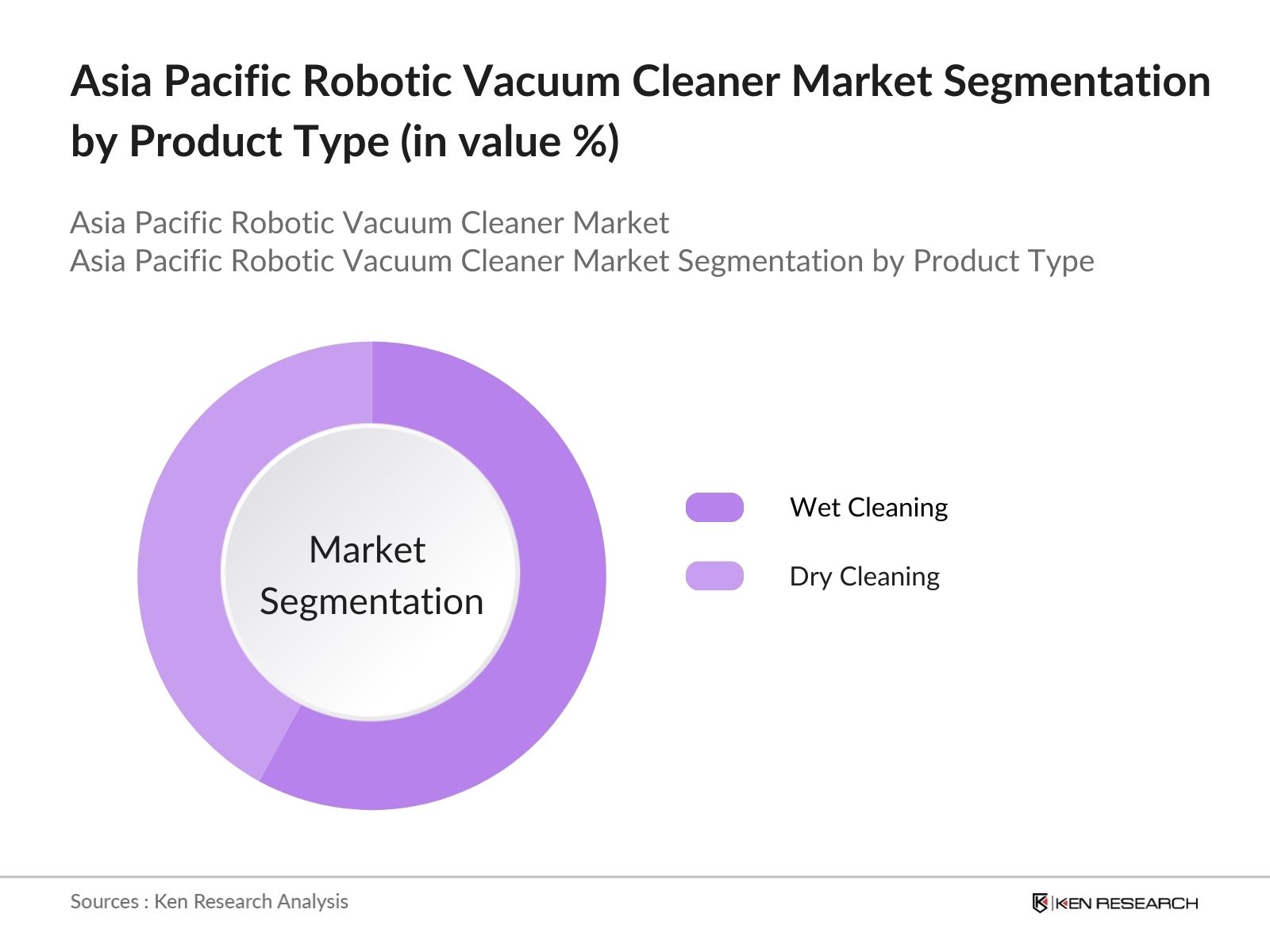
By Product Type: The Asia Pacific robotic vacuum cleaner market is segmented by product type into Wet Cleaning Robotic Vacuum Cleaners and Dry Cleaning Robotic Vacuum Cleaners. The Wet Cleaning Robotic Vacuum Cleaners hold a dominant market share due to the increasing demand for multifunctional cleaning devices that can sweep and mop simultaneously. This feature is particularly popular in urban areas where space is limited, and consumers look for compact, efficient home solutions. The convenience of wet cleaning features, which combine vacuuming and mopping, appeals to households that need thorough cleaning with minimal effort.
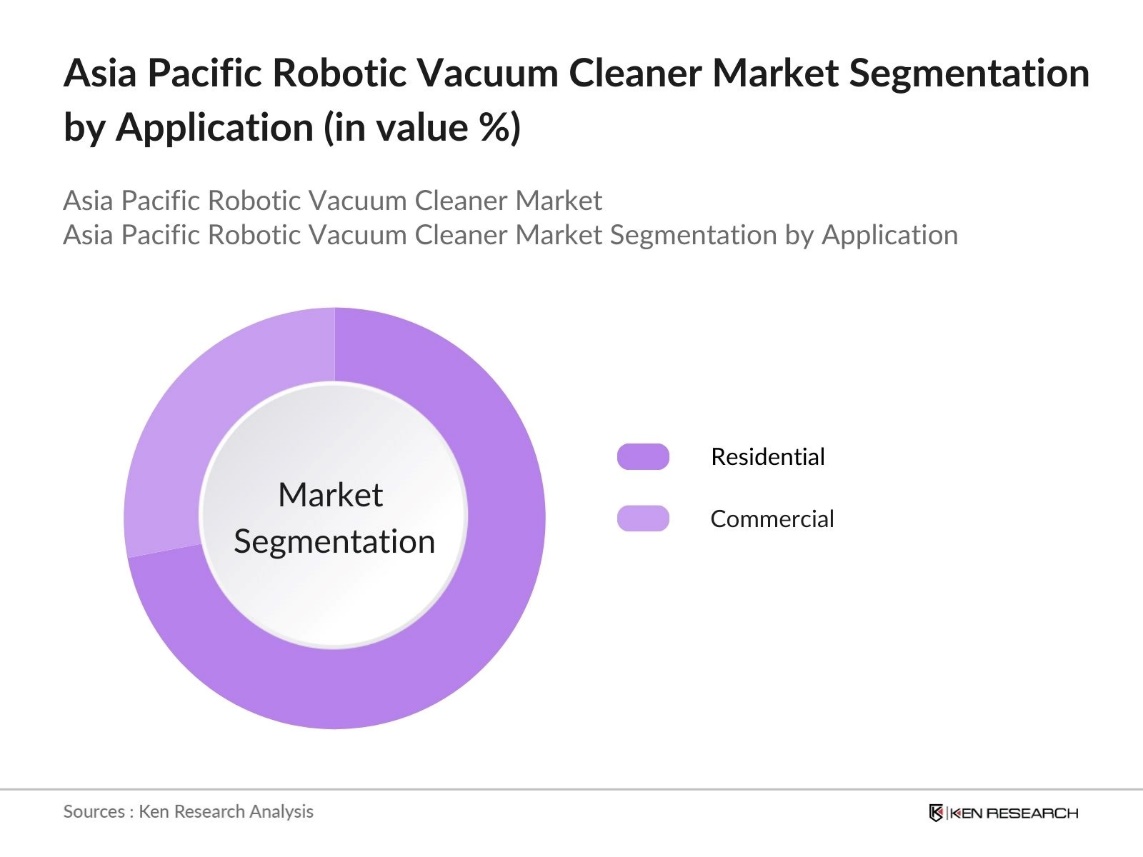
By Application: The Asia Pacific robotic vacuum cleaner market is also segmented by application into Residential and Commercial. The Residential segment leads the market as consumers increasingly seek convenience in their daily routines. Urban families with busy lifestyles are inclined to invest in smart cleaning solutions to maintain hygiene without dedicating significant time. The rapid increase in smart home adoption, coupled with e-commerce growth, supports the dominance of residential applications in the robotic vacuum cleaner market.
The market is characterized by the presence of both regional and global players who engage in intense competition to capture market share. Major players continue to innovate, integrating AI and IoT into their products to offer improved performance and user experience. The market is also witnessing collaborations and acquisitions as companies strive to strengthen their product portfolio and geographic presence.
|
Company |
Establishment Year |
Headquarters |
Market Presence |
Product Innovation |
Revenue |
Distribution Network |
Technology Integration |
R&D Investment |
|
iRobot Corporation |
1990 |
Bedford, USA |
||||||
|
Ecovacs Robotics |
1998 |
Suzhou, China |
||||||
|
Xiaomi Corporation |
2010 |
Beijing, China |
||||||
|
Samsung Electronics |
1969 |
Suwon, South Korea |
||||||
|
Dyson Ltd |
1991 |
Malmesbury, UK |
The Asia Pacific robotic vacuum cleaner market is expected to see significant growth over the next five years, fueled by rapid urbanization, technological advancements in artificial intelligence, and increasing demand for smart home solutions. As more consumers prioritize convenience and efficiency, robotic vacuum cleaners are becoming integral parts of modern households. Additionally, the rise of e-commerce platforms will further accelerate market growth as companies expand their online presence and offer direct-to-consumer sales models.
|
By Product Type |
Wet Cleaning Dry Cleaning |
|
By Application |
Residential Commercial |
|
By Charging Mode |
Automatic Recharging Manual Charging |
|
By Distribution Channel |
Online Offline |
|
By Region |
China Japan India Australia South Korea |
1.1. Definition and Scope
1.2. Market Taxonomy
1.3. Market Growth Rate
1.4. Market Segmentation Overview
2.1. Historical Market Size
2.2. Year-on-Year Growth Analysis
2.3. Key Market Developments and Milestones
3.1. Growth Drivers
3.1.1. Rising Adoption of Smart Home Devices
3.1.2. Increasing Disposable Income
3.1.3. Growing Urbanization
3.1.4. Technological Advancements in AI and Sensors
3.2. Market Challenges
3.2.1. High Initial Cost
3.2.2. Low Penetration in Developing Regions
3.2.3. Technical Limitations (Navigation and Coverage)
3.3. Opportunities
3.3.1. Integration with IoT Ecosystems
3.3.2. Expansion in Emerging Markets
3.3.3. Eco-Friendly and Energy-Efficient Models
3.4. Trends
3.4.1. Introduction of Voice-Controlled Robotic Vacuums
3.4.2. Multi-Functionality (Mopping and Sweeping)
3.4.3. Growth of E-commerce and Direct-to-Consumer Sales
3.5. Government Regulations
3.5.1. Import and Trade Regulations
3.5.2. Environmental Certifications
3.5.3. Safety Standards for Autonomous Devices
3.6. SWOT Analysis
3.7. Stake Ecosystem (Suppliers, Manufacturers, Distributors)
3.8. Porters Five Forces
3.9. Competition Ecosystem
4.1. By Product Type (In Value %)
4.1.1. Robotic Vacuum Cleaners with Wet Cleaning Feature
4.1.2. Robotic Vacuum Cleaners with Dry Cleaning Feature
4.2. By Application (In Value %)
4.2.1. Residential
4.2.2. Commercial
4.3. By Charging Mode (In Value %)
4.3.1. Automatic Recharging
4.3.2. Manual Charging
4.4. By Distribution Channel (In Value %)
4.4.1. Online
4.4.2. Offline
4.5. By Region (In Value %)
4.5.1. China
4.5.2. Japan
4.5.3. India
4.5.4. Australia
4.5.5. South Korea
5.1. Detailed Profiles of Major Companies
5.1.1. iRobot Corporation
5.1.2. Ecovacs Robotics
5.1.3. Xiaomi Corporation
5.1.4. Samsung Electronics
5.1.5. Dyson Ltd
5.1.6. Neato Robotics, Inc.
5.1.7. LG Electronics Inc.
5.1.8. Panasonic Corporation
5.1.9. Roborock
5.1.10. SharkNinja Operating LLC
5.1.11. Haier Group Corporation
5.1.12. ILIFE Innovation Ltd
5.1.13. Midea Group
5.1.14. Eufy (Anker Innovations)
5.1.15. Hobot Technology Inc.
5.2. Cross Comparison Parameters (Revenue, Product Portfolio, Geographical Presence, Product Innovation)
5.3. Market Share Analysis
5.4. Strategic Initiatives
5.5. Mergers and Acquisitions
5.6. Investment Analysis
5.7. Venture Capital Funding
5.8. Government Grants
5.9. Private Equity Investments
6.1. Product Standards and Certifications
6.2. Environmental Regulations
6.3. Trade and Import Policies
7.1. Future Market Size Projections
7.2. Key Factors Driving Future Market Growth
8.1. By Product Type (In Value %)
8.2. By Application (In Value %)
8.3. By Charging Mode (In Value %)
8.4. By Distribution Channel (In Value %)
8.5. By Region (In Value %)
9.1. TAM/SAM/SOM Analysis
9.2. Customer Cohort Analysis
9.3. Marketing Initiatives
9.4. White Space Opportunity Analysis
Disclaimer Contact UsWe identified critical variables influencing the Asia Pacific robotic vacuum cleaner market, including product innovations, distribution channels, and consumer preferences. This step involved comprehensive desk research using secondary databases to gather market-specific data and assess industry trends.
In this step, we analyzed historical data from proprietary and third-party sources to assess market dynamics. We evaluated market penetration, sales performance, and revenue generation across key regions, focusing on both residential and commercial applications.
We validated the research findings by conducting interviews with industry experts and key stakeholders from leading companies in the robotic vacuum cleaner market. These consultations provided valuable insights into product development and market trends, helping to refine the data.
The final analysis was compiled by synthesizing data from various sources, including direct engagement with manufacturers and distributors. This ensured the accuracy of market projections and provided a detailed overview of current market conditions, competitive dynamics, and future outlook.
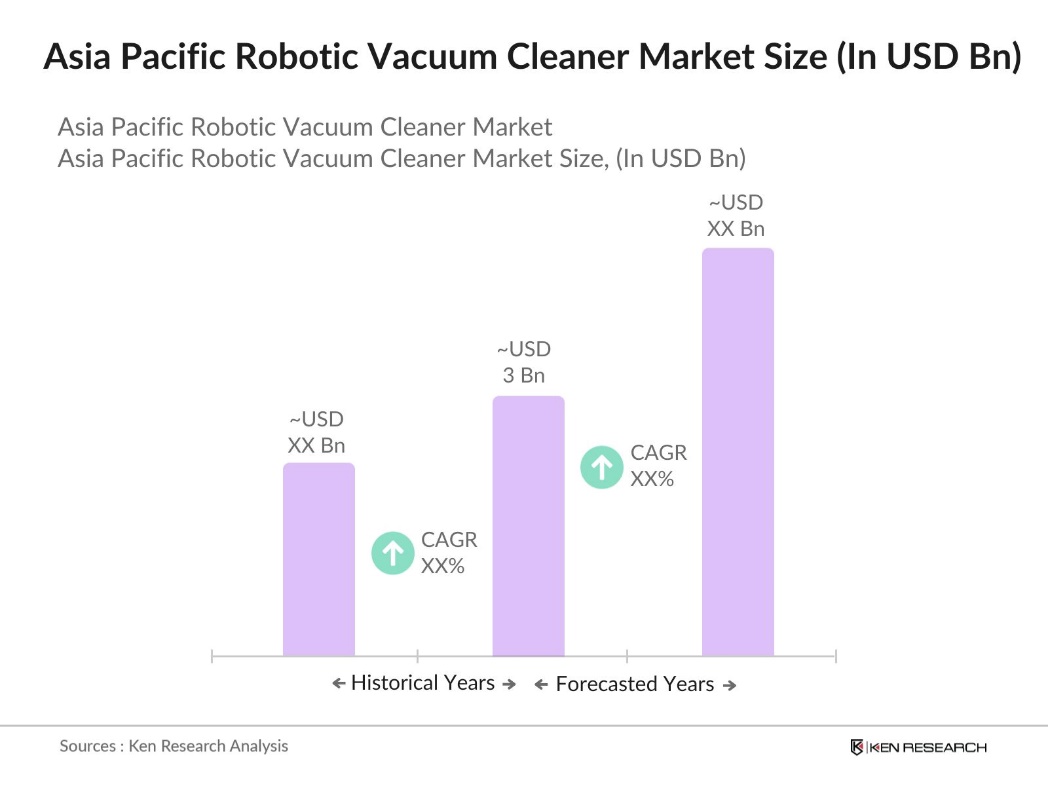
The Asia Pacific Robotic Vacuum Cleaner Market is valued at USD 3 billion, driven by increasing demand for automation and smart home devices.
Challenges in Asia Pacific Robotic Vacuum Cleaner Market include the high cost of devices, technical limitations in navigation and cleaning coverage, and low market penetration in developing countries.
Key players in the Asia Pacific Robotic Vacuum Cleaner Market include iRobot Corporation, Ecovacs Robotics, Xiaomi Corporation, Samsung Electronics, and Dyson Ltd. These companies lead the market due to their innovative products and extensive distribution networks.
The Asia Pacific Robotic Vacuum Cleaner Market is driven by increasing consumer interest in smart home solutions, rising disposable incomes, and technological advancements in AI and IoT integration.

What makes us stand out is that our consultants follows Robust, Refine and Result (RRR) methodology. i.e. Robust for clear definitions, approaches and sanity checking, Refine for differentiating respondents facts and opinions and Result for presenting data with story

We have set a benchmark in the industry by offering our clients with syndicated and customized market research reports featuring coverage of entire market as well as meticulous research and analyst insights.

While we don't replace traditional research, we flip the method upside down. Our dual approach of Top Bottom & Bottom Top ensures quality deliverable by not just verifying company fundamentals but also looking at the sector and macroeconomic factors.

With one step in the future, our research team constantly tries to show you the bigger picture. We help with some of the tough questions you may encounter along the way: How is the industry positioned? Best marketing channel? KPI's of competitors? By aligning every element, we help maximize success.

Our report gives you instant access to the answers and sources that other companies might choose to hide. We elaborate each steps of research methodology we have used and showcase you the sample size to earn your trust.

If you need any support, we are here! We pride ourselves on universe strength, data quality, and quick, friendly, and professional service.