
Asia Pacific Shipping Containers Market Outlook to 2030
Region:China
Author(s):Vijay Kumar
Product Code:KROD9185
Region:China
Author(s):Vijay Kumar
Product Code:KROD9185
November 2024
81
Listen to the audio summary
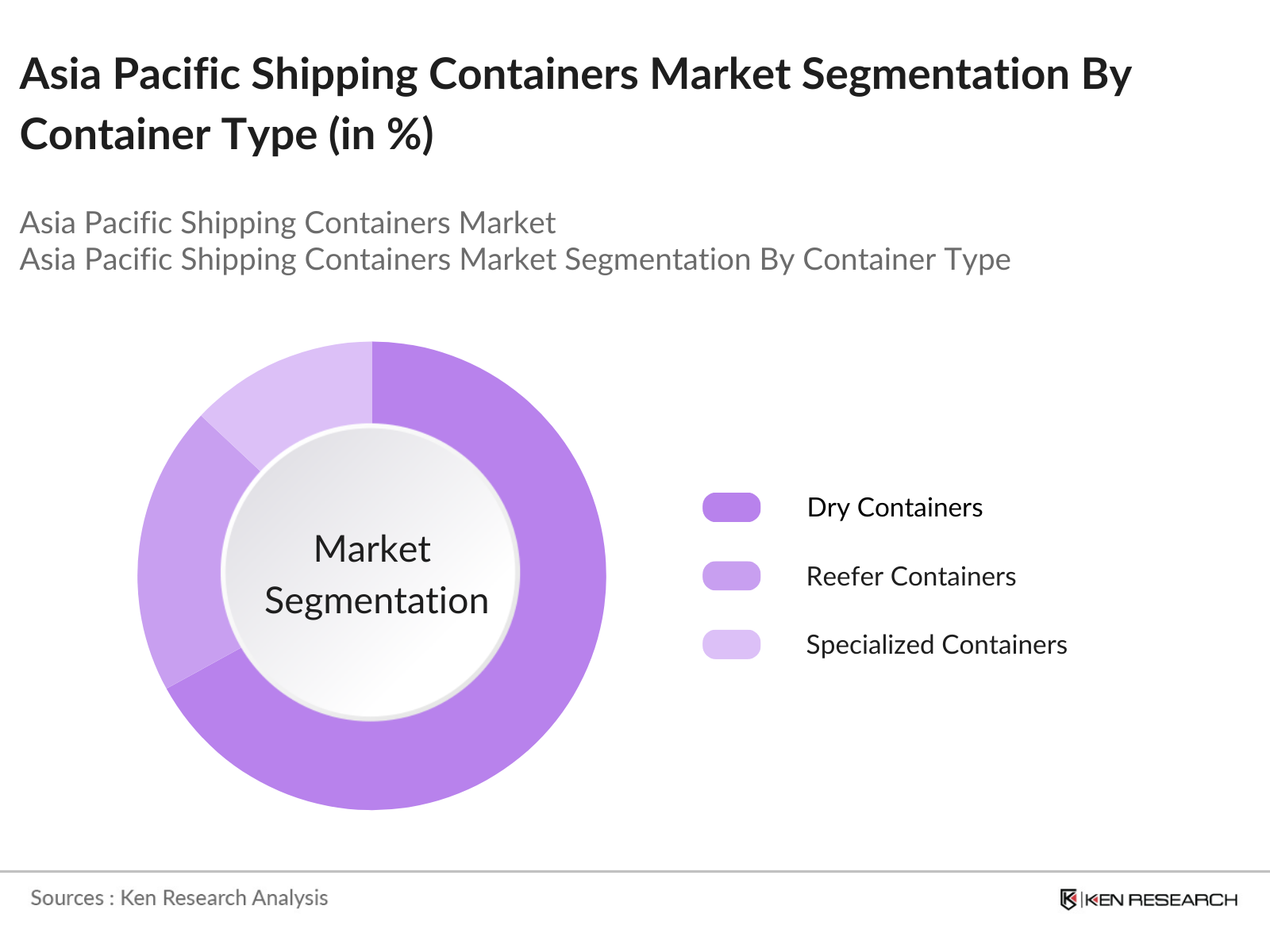
By Container Type: The Asia Pacific Shipping Containers Market is segmented by container type, including dry containers, reefer containers, and specialized containers (e.g., ISO tanks, open tops). Currently, dry containers dominate this segment due to their versatility and widespread use in transporting non-perishable goods. Major manufacturers and logistics companies continue to invest in dry containers, given their high utility across various industry sectors.
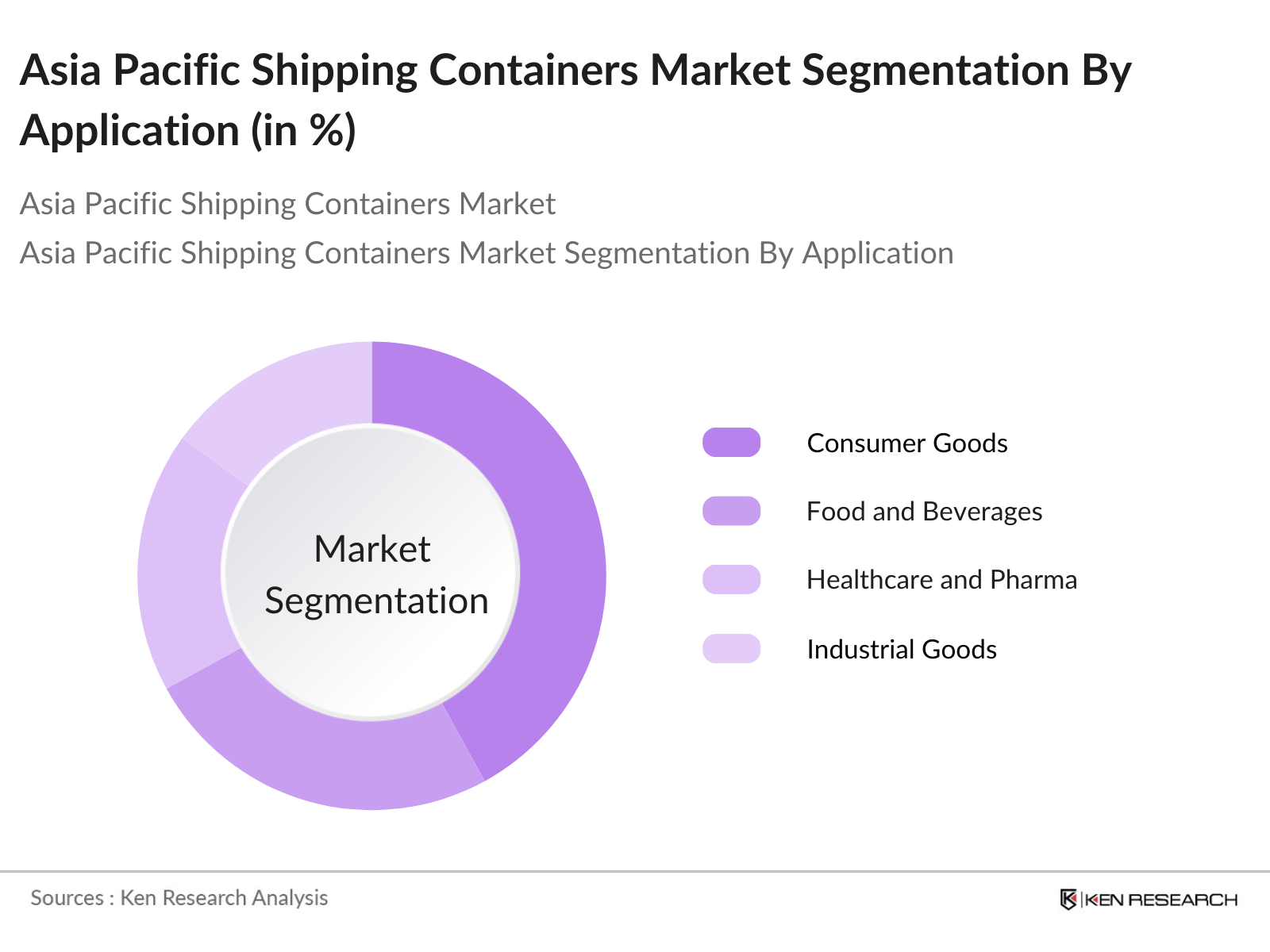
By Application: The market is segmented by application into consumer goods, food and beverages, healthcare and pharmaceuticals, industrial goods, and chemicals. The consumer goods segment holds a significant share due to the high demand for durable and versatile containers that facilitate smooth transit and storage. Food and beverages also represent a notable share, with the reefer containers market growth ensuring safe transport of perishable items.
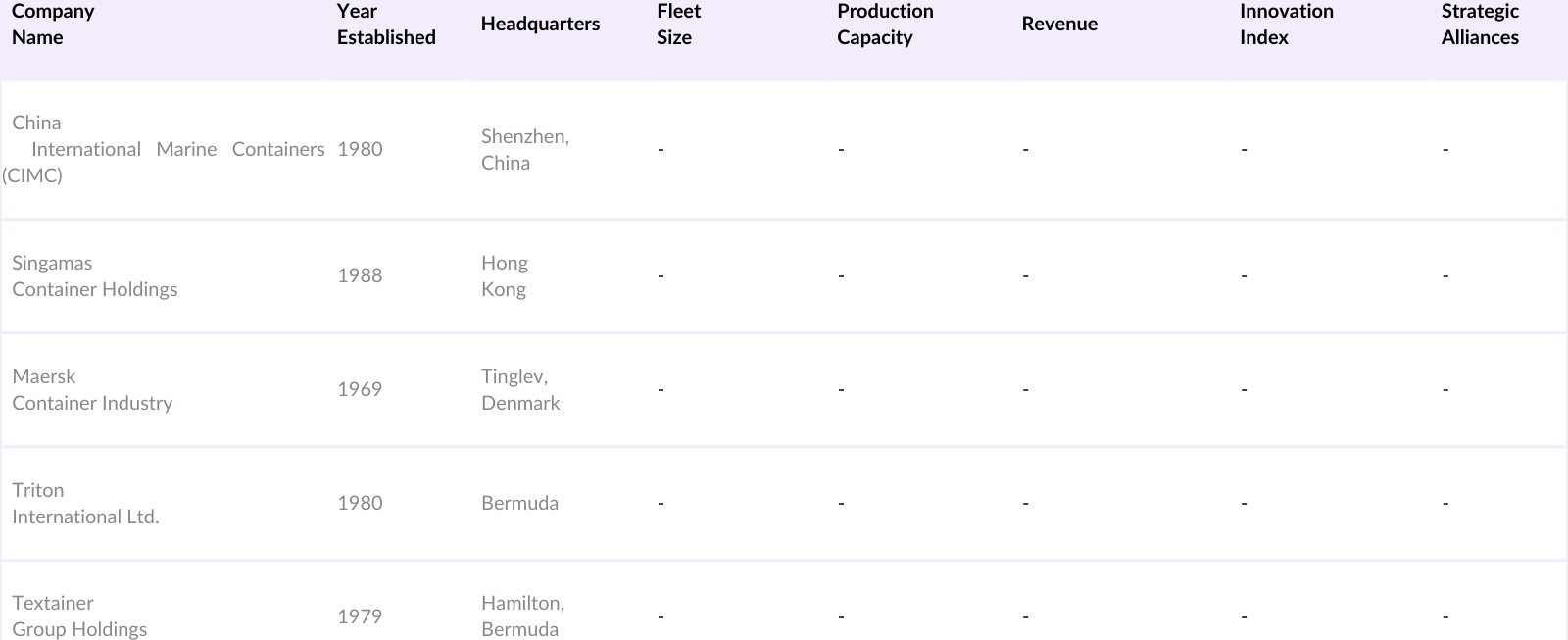
The Asia Pacific Shipping Containers Market is primarily consolidated, with a few major players dominating through their extensive production capacity and global distribution networks. Major companies include China International Marine Containers (CIMC) and Singamas Container Holdings, each contributing significantly to container manufacturing and logistics innovation.
The Asia Pacific Shipping Containers Market is anticipated to grow, driven by increasing demand for sustainable and specialized containers. This growth will be bolstered by regional port expansions, enhanced logistics infrastructure, and increased demand for intermodal transportation. Furthermore, technological advancements such as blockchain in logistics and real-time container tracking systems are likely to enhance container efficiency and management across the supply chain.
|
Container Type |
Dry Containers Reefer Containers Special Containers |
|
Container Size |
20 ft Containers 40 ft Containers Others |
|
Transportation Mode |
Ocean Freight Rail Transport Intermodal Transport |
|
Application |
Consumer Goods Food and Beverage Healthcare Industrial Goods Chemicals |
|
Region |
China India Japan South Korea ASEAN Countries |
1.1 Definition and Scope
1.2 Market Taxonomy
1.3 Market Growth Rate (TEU Volume Growth)
1.4 Market Segmentation Overview
2.1 Historical Market Size
2.2 Year-On-Year Growth Analysis
2.3 Key Market Developments and Milestones
3.1 Growth Drivers
3.1.1 Rapid Growth in Maritime Trade (Export-Import Ratio)
3.1.2 Increased Demand for Sustainable Containers (Green Shipping)
3.1.3 Expansion of Port Infrastructure
3.1.4 Trade Agreements Impact
3.2 Market Challenges
3.2.1 High Initial Costs and Container Shortages
3.2.2 Regulatory Compliance (IMO2020, Safety Standards)
3.2.3 Port Congestion and Inefficiencies
3.2.4 Dependency on Steel Prices
3.3 Opportunities
3.3.1 Digitalization in Supply Chain (Blockchain and IoT)
3.3.2 Container Leasing and Sharing Models
3.3.3 Regional Trade Collaborations
3.3.4 Innovations in Container Technology (Smart Containers)
3.4 Trends
3.4.1 Rise of Reefer Containers
3.4.2 Adoption of AI in Shipping Logistics
3.4.3 Growth in Transshipment Activities
3.4.4 Container Recycling and Refurbishment Practices
3.5 Government Regulations
3.5.1 Regional Environmental Standards
3.5.2 Compliance with International Maritime Regulations (IMO, SOLAS)
3.5.3 Port Authority Policies
3.5.4 Subsidies and Incentives for Green Containers
3.6 SWOT Analysis
3.7 Stakeholder Ecosystem
3.8 Porters Five Forces Analysis
3.9 Competition Ecosystem
4.1 By Container Type (In Volume %)
4.1.1 Dry Containers
4.1.2 Reefer Containers
4.1.3 Special Containers (ISO Tanks, Open Tops, Flat Racks)
4.2 By Container Size (In Volume %)
4.2.1 20 ft Containers
4.2.2 40 ft Containers
4.2.3 Others (45 ft and Special Sizes)
4.3 By Transportation Mode (In Volume %)
4.3.1 Ocean Freight
4.3.2 Rail Transport
4.3.3 Intermodal Transport
4.4 By Application (In Volume %)
4.4.1 Consumer Goods
4.4.2 Food and Beverage
4.4.3 Healthcare and Pharmaceuticals
4.4.4 Industrial Goods
4.4.5 Chemicals and Hazardous Materials
4.5 By Region (In Volume %)
4.5.1 China
4.5.2 India
4.5.3 Japan
4.5.4 South Korea
4.5.5 ASEAN Countries
5.1 Detailed Profiles of Major Companies
5.1.1 China International Marine Containers Co., Ltd. (CIMC)
5.1.2 Maersk Container Industry
5.1.3 Singamas Container Holdings Ltd.
5.1.4 COSCO Shipping Development Co., Ltd.
5.1.5 Dong Fang International Container Co.
5.1.6 Evergreen Marine Corporation
5.1.7 Hapag-Lloyd AG
5.1.8 Hyundai Heavy Industries
5.1.9 Klinge Corporation
5.1.10 Orient Overseas Container Line
5.1.11 Triton International Ltd.
5.1.12 CAI International, Inc.
5.1.13 Global Ship Lease, Inc.
5.1.14 Textainer Group Holdings Limited
5.1.15 Florens Container Services Company Ltd.
5.2 Cross Comparison Parameters (Fleet Size, Production Capacity, Market Share, Revenue, Geographic Presence, Key Clients, Innovation Index, Strategic Alliances)
5.3 Market Share Analysis
5.4 Strategic Initiatives
5.5 Mergers and Acquisitions
5.6 Investment Analysis
5.7 Government Funding Programs
5.8 Private Equity and Venture Capital Investments
6.1 Environmental Standards for Shipping Containers
6.2 Compliance with National and International Regulations
6.3 Certification Processes for Container Manufacturers
7.1 Future Market Size Projections
7.2 Key Factors Driving Future Market Growth
8.1 By Container Type (In Value %)
8.2 By Container Size (In Value %)
8.3 By Transportation Mode (In Value %)
8.4 By Application (In Value %)
8.5 By Region (In Value %)
9.1 Total Addressable Market (TAM) Analysis
9.2 Customer Cohort Analysis
9.3 Marketing and Positioning Strategies
9.4 White Space and New Entrant Opportunity Analysis
Disclaimer Contact UsThe initial phase involved mapping the entire Asia Pacific Shipping Containers Market, identifying primary stakeholders, including container manufacturers, shipping companies, and regulators. This included in-depth desk research across proprietary databases, with a focus on supply chain dynamics and regulatory landscapes.
We aggregated historical data on shipping container production, exports, and imports across Asia Pacific. This step assessed the ratios of standard vs. specialized containers in the market, analyzing operational metrics critical to revenue estimations and logistics efficiency.
Market hypotheses were developed and validated through expert interviews with senior managers in container manufacturing firms and shipping logistics companies. These insights provided operational knowledge, enhancing the accuracy of market forecasts and understanding market dynamics.
The final stage synthesized all collected data into a structured report, supported by field validation and case studies from leading industry players. This approach ensured a comprehensive analysis of the Asia Pacific Shipping Containers Market, confirming market share estimates and growth factors.
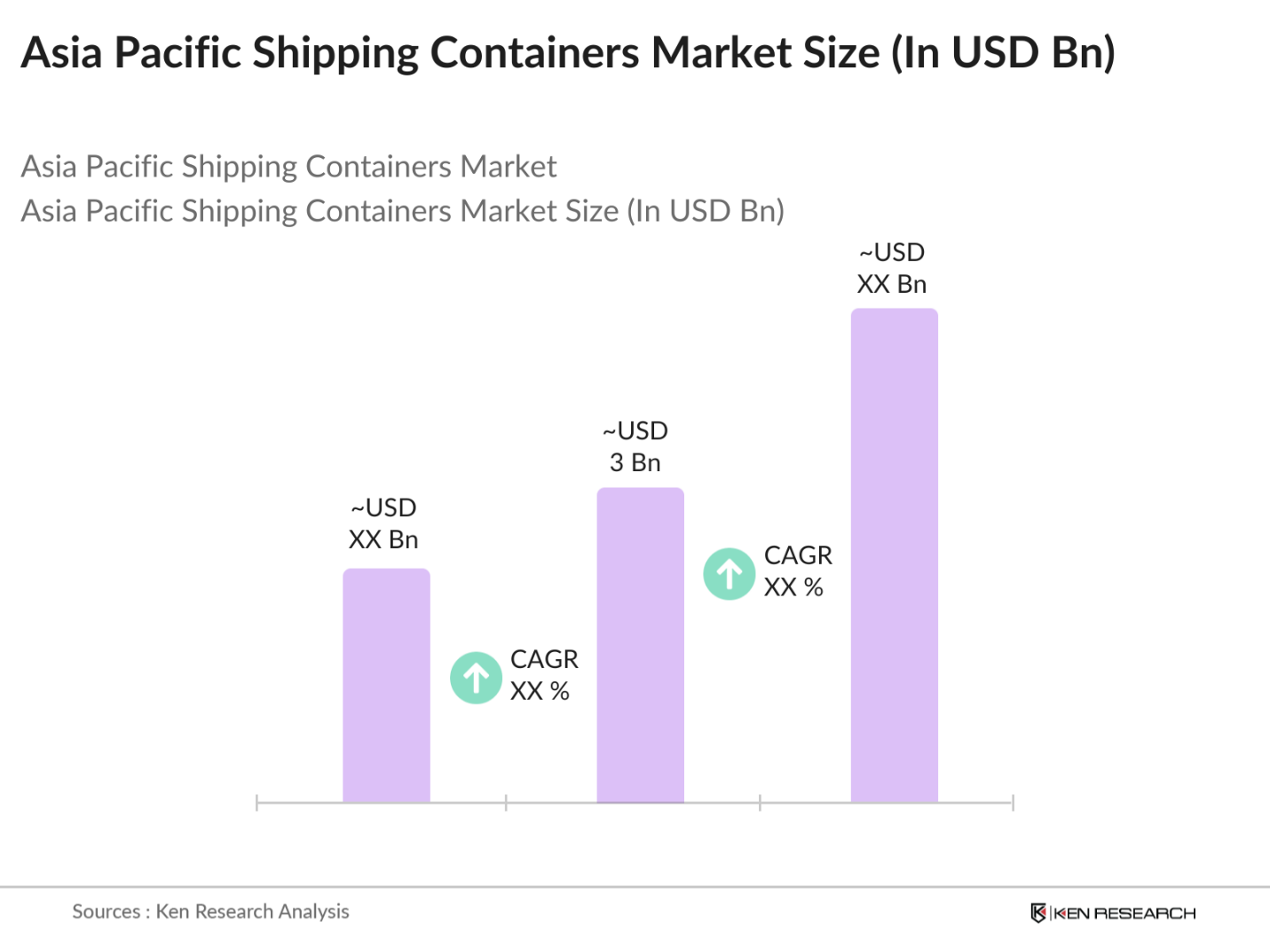
The Asia Pacific Shipping Containers Market is valued at USD 3 billion, based on a five-year historical analysis. This market is primarily driven by increased regional trade, growing demand for efficient intermodal transport, and strategic expansions in port infrastructure.
Key challenges include high initial costs, container shortages, and dependency on steel prices, coupled with compliance challenges due to stringent regulations on container safety and sustainability.
The market is led by China International Marine Containers (CIMC), Singamas Container Holdings, Maersk Container Industry, Triton International Ltd., and Textainer Group Holdings, driven by their production capacity, strategic alliances, and market reach.
Growth in the market is spurred by the expansion of port infrastructure, trade agreements, and rising demand for efficient containerized transport in industries like consumer goods, food and beverages, and healthcare.

What makes us stand out is that our consultants follows Robust, Refine and Result (RRR) methodology. i.e. Robust for clear definitions, approaches and sanity checking, Refine for differentiating respondents facts and opinions and Result for presenting data with story

We have set a benchmark in the industry by offering our clients with syndicated and customized market research reports featuring coverage of entire market as well as meticulous research and analyst insights.

While we don't replace traditional research, we flip the method upside down. Our dual approach of Top Bottom & Bottom Top ensures quality deliverable by not just verifying company fundamentals but also looking at the sector and macroeconomic factors.

With one step in the future, our research team constantly tries to show you the bigger picture. We help with some of the tough questions you may encounter along the way: How is the industry positioned? Best marketing channel? KPI's of competitors? By aligning every element, we help maximize success.

Our report gives you instant access to the answers and sources that other companies might choose to hide. We elaborate each steps of research methodology we have used and showcase you the sample size to earn your trust.

If you need any support, we are here! We pride ourselves on universe strength, data quality, and quick, friendly, and professional service.