















Asia Pacific Skin Lightening Products Market Outlook to 2030
Region:Asia
Author(s):Meenakshi Bisht
Product Code:KROD6127
December 2024
86
About the Report
Asia Pacific Skin Lightening Products Market Overview
- The Asia Pacific Skin Lightening Products market is valued at USD 6.15 billion, based on a five-year historical analysis. This growth is driven by cultural preferences for fairer skin tones across the region, coupled with increasing disposable incomes and the influence of global beauty trends. Consumer awareness regarding skin health, coupled with advancements in product formulations, is further driving demand for skin lightening products across various demographics.
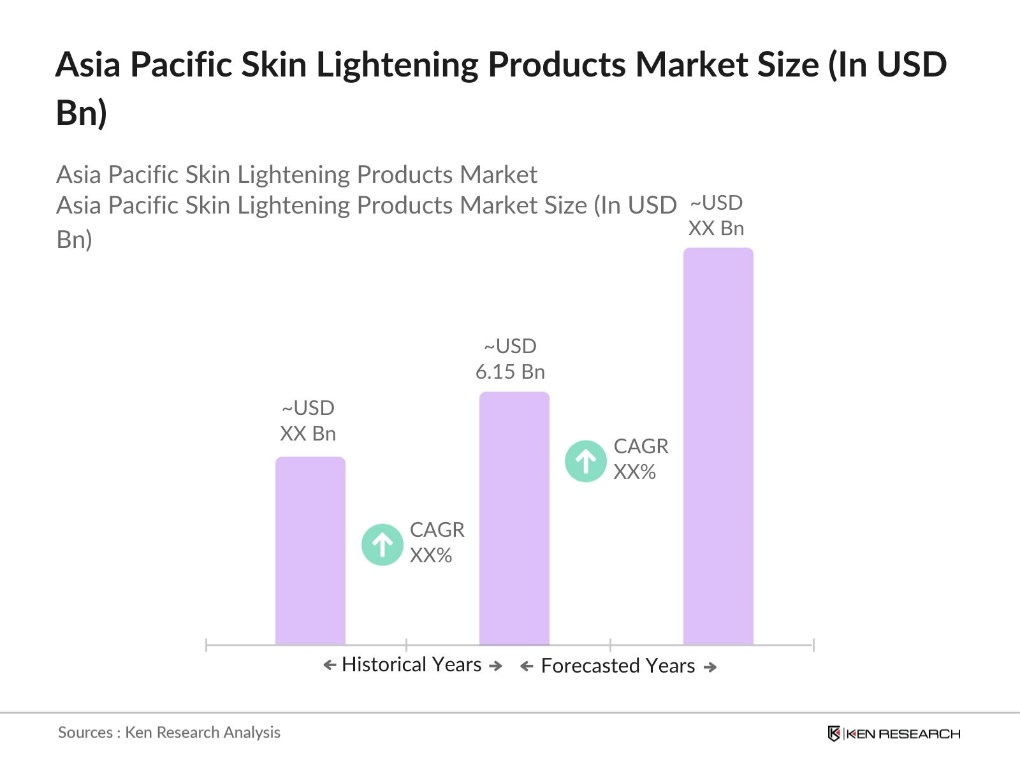
- Countries such as China, India, and Japan dominate the Asia Pacific Skin Lightening Products market due to their large population bases, cultural preference for fair skin, and growing urbanization. In these countries, established beauty traditions, combined with an increasing number of middle-class consumers willing to invest in skincare products, sustain the dominance of these regions in the market.
- Government-imposed bans on toxic ingredients are shaping the market, with ASEAN enforcing strict ingredient guidelines for cosmetic products. According to the ASEAN Secretariat, over 25,000 cosmetic units containing banned substances were recalled in 2023, underscoring regulatory efforts to ensure product safety. This regulatory push impacts product formulation and enforces higher safety standards across the industry.
Asia Pacific Skin Lightening Products Market Segmentation
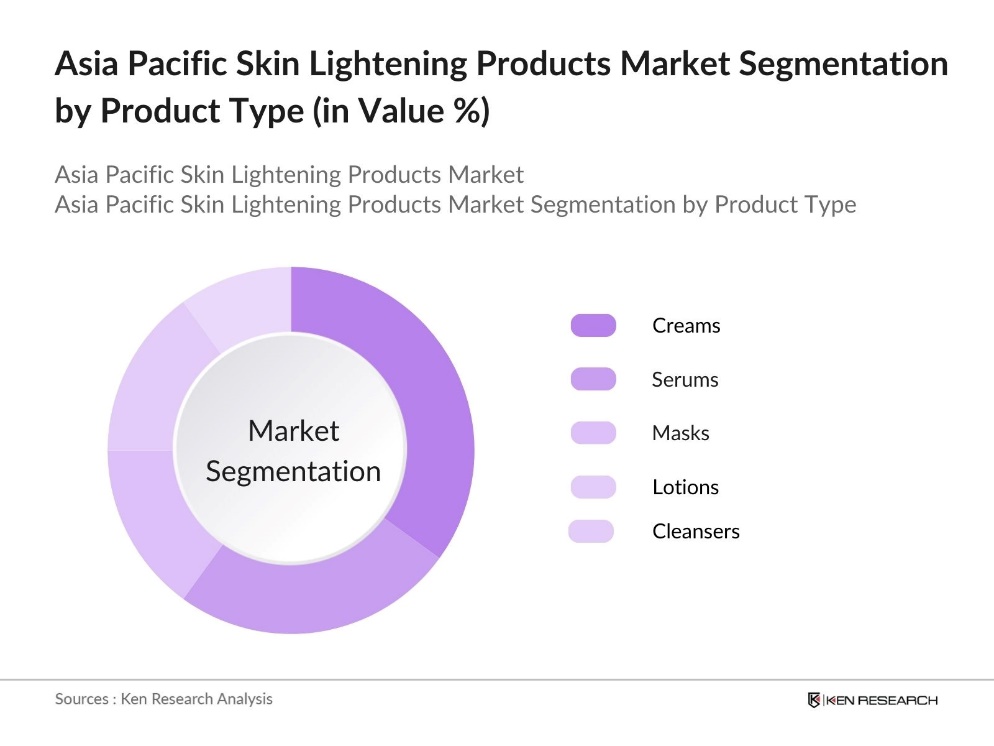
By Product Type: The market is segmented by product type into creams, serums, masks, lotions, and cleansers. Recently, creams have a dominant market share in the Asia Pacific under this segmentation. This dominance is attributed to the established effectiveness of creams in delivering targeted results over time, coupled with consumer familiarity and trust in this form. Many top brands in the region offer various cream-based products tailored to meet specific skin concerns, which further contributes to their popularity.
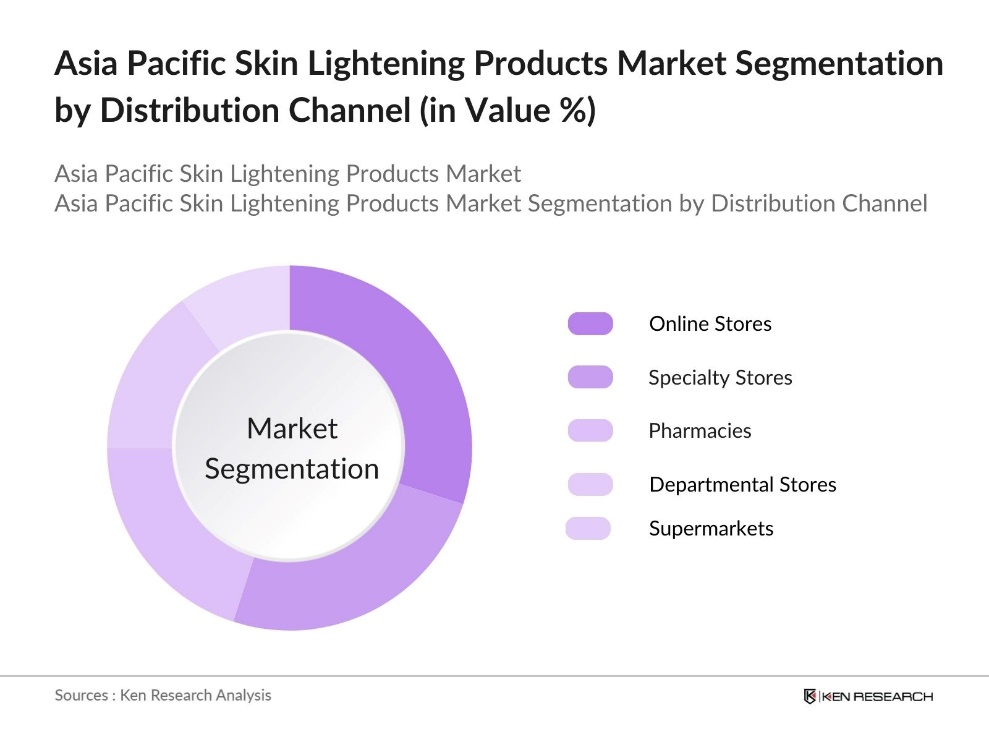
By Distribution Channel: The market is segmented by distribution channel into online stores, specialty stores, pharmacies, departmental stores, and supermarkets/hypermarkets. Among these, online stores have gained significant traction, reflecting changes in consumer shopping behaviors across the Asia Pacific. Online platforms allow customers to conveniently access a wide range of products, read reviews, and compare options, catering to the increasing preference for digital shopping experiences, especially among younger consumers.
Asia Pacific Skin Lightening Products Market Competitive Landscape
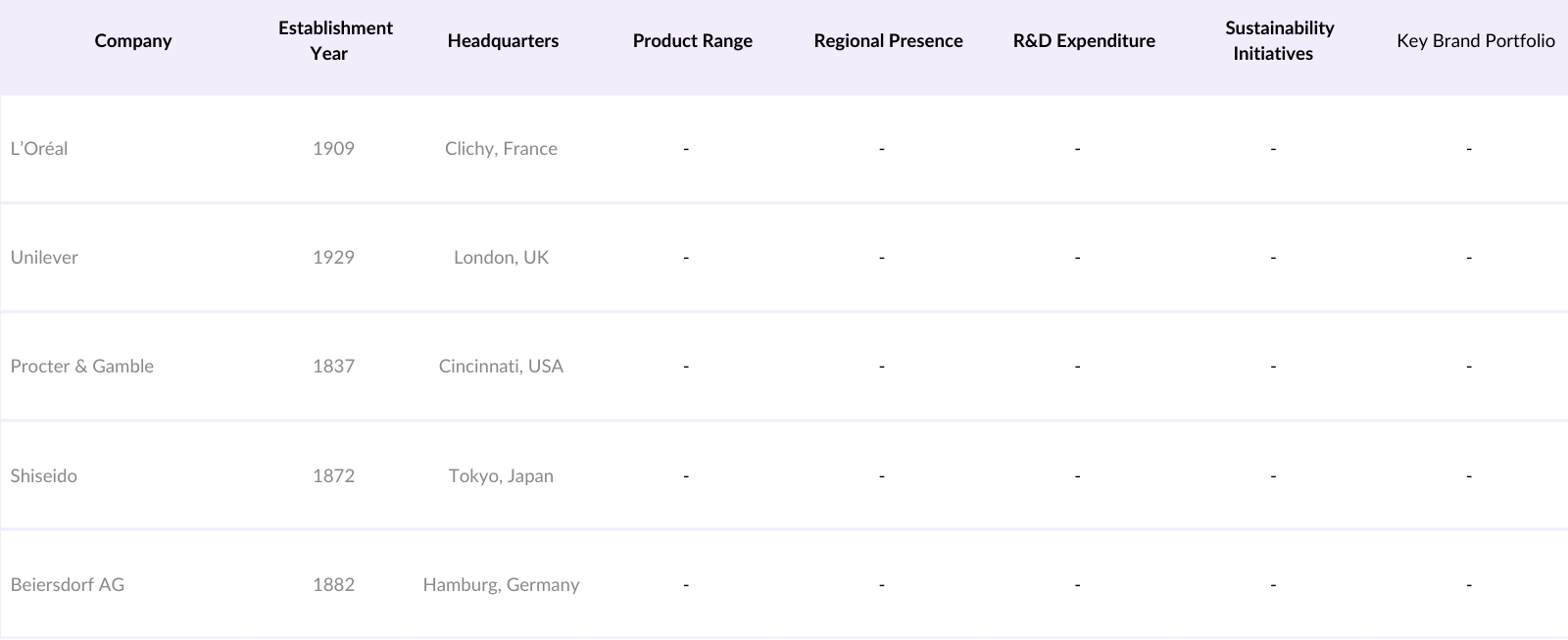
The Asia Pacific Skin Lightening Products market is dominated by a few key players, including LOral, Unilever, and Procter & Gamble. This consolidation highlights the influence of established brands with extensive product lines, strong distribution channels, and significant investment in R&D. New entrants often face barriers due to brand loyalty and regulatory challenges, strengthening the positions of existing players.
Asia Pacific Skin Lightening Products Industry Analysis
Growth Drivers
- Increasing Demand for Cosmetic Products (Market Demand): The Asia Pacific market for skin lightening products is witnessing substantial demand, driven by the increasing usage of cosmetics across urban centers in countries like China, India, and Japan. As of 2024, China's urban population is estimated to be approximately 941 million people, which constitutes about 66.4% of its total population, highlighting the growing consumer interest. This expanding consumer base underscores the demand for skin lightening products in the region.
- Rising Awareness of Skin Health (Consumer Awareness): Consumer awareness of skin health is contributing to the adoption of skin lightening products that also offer skincare benefits. According to a recent report by the United Nations Environment Program, Asia Pacific countries observed a 20% increase in demand for skin health products by 2023, including lightening agents that provide additional UV protection and moisture retention. Countries like Thailand and Vietnam have seen heightened demand, reflecting a growing consumer base seeking not only cosmetic enhancement but also comprehensive skincare.
- Expansion of E-commerce in the Asia Pacific (E-commerce Trends): The growth of e-commerce across Asia Pacific is driving the skin lightening products market, allowing consumers in both urban and rural areas to access a broad range of skincare options. High e-commerce adoption in countries like South Korea, Singapore, and the Philippines enhances product reach, making it easier for diverse consumer demographics to explore and purchase skin lightening products, fueling market expansion.
Market Challenges
- Regulatory Restrictions on Ingredients (Regulatory Compliance): Strict regulations on certain ingredients, such as hydroquinone and mercury, present challenges for skin lightening product manufacturers in the Asia Pacific region. These regulations, enforced through directives like the ASEAN Cosmetic Directive, ban harmful ingredients, which affects product formulation and limits ingredient options. As a result, manufacturers must invest in ongoing R&D to develop compliant alternatives, impacting product availability and increasing production costs.
- Ethical Concerns and Public Backlash (Ethical Standards): The skin lightening market faces ethical concerns and public backlash due to perceived racial and social implications associated with these products. Growing awareness around these issues has led to shifts in consumer sentiment, as more people question the societal impact of skin lightening. This change challenges manufacturers to realign their products with evolving consumer values and address public concerns around beauty standards responsibly.
Asia Pacific Skin Lightening Products Market Future Outlook
Over the next five years, the Asia Pacific Skin Lightening Products market is expected to see robust growth driven by continuous product innovation, rising consumer awareness of skin health, and increased accessibility through e-commerce platforms. Manufacturers are likely to introduce products with natural and organic ingredients, responding to growing consumer demand for safe and sustainable skincare options.
Market Opportunities
- Product Innovation and Natural Ingredients (Product Innovation): The increasing consumer interest in natural and herbal ingredients offers a promising avenue for companies to innovate within the skin lightening market. Products using botanical ingredients are perceived as safer and more sustainable, aligning with the growing preference for natural-based formulations. This shift presents significant growth potential for brands focusing on developing skin lightening products that meet consumer demand for safer, eco-friendly options.
- Growing Demand in Emerging Markets (Emerging Markets): The expanding middle class in emerging markets such as Indonesia, Thailand, and Vietnam is driving demand for premium skincare products, including skin lightening solutions. Rising disposable incomes in these regions support a greater willingness to invest in quality cosmetic products, making emerging markets increasingly attractive. This economic shift positions these regions as key areas for growth, fueling opportunities for brands targeting these demographics.
Scope of the Report
|
Product Type |
Creams Serums Masks Lotions Cleansers |
|
Distribution Channel |
Online Stores Specialty Stores Pharmacies Departmental Stores Supermarkets/Hypermarkets |
|
End-User |
Women Men Teenagers |
|
Ingredient Type |
Chemical-based Natural-based Hybrid Formulations |
|
Country |
China India Japan South Korea Australia |
Products
Key Target Audience
Cosmetic Manufacturers
Pharmaceutical Industry
Packaging Industry
Product Testing and Certification Agencies
Government and Regulatory Bodies (FDA, MOH)
Investors and venture capital Firms
Banks and Financial Institutions
Companies
Players Mentioned in the Report
LOral
Unilever
Procter & Gamble
Shiseido Co., Ltd.
Beiersdorf AG
Kao Corporation
Johnson & Johnson
Amorepacific Corporation
Estee Lauder Companies Inc.
Himalaya Herbals
Table of Contents
1. Asia Pacific Skin Lightening Products Market Overview
1.1 Definition and Scope
1.2 Market Taxonomy
1.3 Market Growth Rate
1.4 Market Segmentation Overview
2. Asia Pacific Skin Lightening Products Market Size (In USD Mn)
2.1 Historical Market Size
2.2 Year-On-Year Growth Analysis
2.3 Key Market Developments and Milestones
3. Asia Pacific Skin Lightening Products Market Analysis
3.1 Growth Drivers
3.1.1 Increasing Demand for Cosmetic Products (Market Demand)
3.1.2 Cultural and Social Influence (Cultural Trends)
3.1.3 Rising Awareness of Skin Health (Consumer Awareness)
3.1.4 Expansion of E-commerce in the Asia Pacific (E-commerce Trends)
3.2 Market Challenges
3.2.1 Regulatory Restrictions on Ingredients (Regulatory Compliance)
3.2.2 Ethical Concerns and Public Backlash (Ethical Standards)
3.2.3 High Costs of R&D for Product Development (R&D Costs)
3.2.4 Market Competition and Brand Loyalty (Market Competition)
3.3 Opportunities
3.3.1 Product Innovation and Natural Ingredients (Product Innovation)
3.3.2 Growing Demand in Emerging Markets (Emerging Markets)
3.3.3 Potential in Mens Skin Care Segment (Target Demographics)
3.3.4 Partnerships with Dermatologists and Clinicians (Partnerships)
3.4 Trends
3.4.1 Shift towards Organic Skin Care Products (Product Trends)
3.4.2 Rising Popularity of Whitening Creams with SPF (Product Features)
3.4.3 Anti-aging Features in Skin Lightening Products (Anti-aging Demand)
3.4.4 Sustainable Packaging Initiatives (Sustainability)
3.5 Government Regulations
3.5.1 Bans on Harmful Ingredients (Ingredient Regulations)
3.5.2 Labeling and Transparency Requirements (Labeling Standards)
3.5.3 Import Tariffs and Export Incentives (Trade Policies)
3.5.4 Health and Safety Standards for Cosmetics (Health Standards)
3.6 SWOT Analysis
3.7 Stakeholder Ecosystem
3.8 Porters Five Forces Analysis
3.9 Competition Ecosystem
4. Asia Pacific Skin Lightening Products Market Segmentation
4.1 By Product Type (In Value %)
4.1.1 Creams
4.1.2 Serums
4.1.3 Masks
4.1.4 Lotions
4.1.5 Cleansers
4.2 By Distribution Channel (In Value %)
4.2.1 Online Stores
4.2.2 Specialty Stores
4.2.3 Pharmacies
4.2.4 Departmental Stores
4.2.5 Supermarkets/Hypermarkets
4.3 By End-User (In Value %)
4.3.1 Women
4.3.2 Men
4.3.3 Teenagers
4.4 By Ingredient Type (In Value %)
4.4.1 Chemical-based
4.4.2 Natural-based
4.4.3 Hybrid Formulations
4.5 By Country (In Value %)
4.5.1 China
4.5.2 India
4.5.3 Japan
4.5.4 South Korea
4.5.5 Australia
5. Asia Pacific Skin Lightening Products Market Competitive Analysis
5.1 Detailed Profiles of Major Companies
5.1.1 LOral
5.1.2 Unilever
5.1.3 Procter & Gamble
5.1.4 Beiersdorf AG
5.1.5 Shiseido Co., Ltd.
5.1.6 Kao Corporation
5.1.7 Johnson & Johnson
5.1.8 Amorepacific Corporation
5.1.9 Estee Lauder Companies Inc.
5.1.10 Himalaya Herbals
5.1.11 Mentholatum
5.1.12 Olay (P&G)
5.1.13 Kanebo Cosmetics Inc.
5.1.14 Avon Products, Inc.
5.1.15 Oriflame Holding AG
5.2 Cross Comparison Parameters (Revenue, R&D Expenditure, Employee Count, Market Share, Product Portfolio, Presence in E-commerce, Brand Reputation, Sustainability Initiatives)
5.3 Market Share Analysis
5.4 Strategic Initiatives
5.5 Mergers and Acquisitions
5.6 Investment Analysis
5.7 Venture Capital Funding
5.8 Government Grants
5.9 Private Equity Investments
6. Asia Pacific Skin Lightening Products Market Regulatory Framework
6.1 Ingredient Compliance Standards
6.2 Product Labeling Requirements
6.3 Advertising and Claims Regulations
6.4 Environmental Compliance and Sustainability Mandates
7. Asia Pacific Skin Lightening Products Future Market Size (In USD Mn)
7.1 Future Market Size Projections
7.2 Key Factors Driving Future Market Growth
8. Asia Pacific Skin Lightening Products Future Market Segmentation
8.1 By Product Type (In Value %)
8.2 By Distribution Channel (In Value %)
8.3 By End-User (In Value %)
8.4 By Ingredient Type (In Value %)
8.5 By Country (In Value %)
9. Asia Pacific Skin Lightening Products Market Analysts Recommendations
9.1 Total Addressable Market (TAM) Analysis
9.2 Serviceable Available Market (SAM) Analysis
9.3 Serviceable Obtainable Market (SOM) Analysis
9.4 Market Entry Strategies
9.5 White Space Opportunity Analysis
Disclaimer Contact UsResearch Methodology
Step 1: Identification of Key Variables
The initial phase involves constructing an ecosystem map encompassing all major stakeholders within the Asia Pacific Skin Lightening Products Market. This step is underpinned by extensive desk research, utilizing a combination of secondary and proprietary databases to gather comprehensive industry-level information. The primary objective is to identify and define the critical variables that influence market dynamics.
Step 2: Market Analysis and Construction
In this phase, we will compile and analyze historical data pertaining to the Asia Pacific Skin Lightening Products Market. This includes assessing market penetration, the ratio of marketplaces to service providers, and the resultant revenue generation. Furthermore, an evaluation of service quality statistics will be conducted to ensure the reliability and accuracy of the revenue estimates.
Step 3: Hypothesis Validation and Expert Consultation
Market hypotheses will be developed and subsequently validated through computer-assisted telephone interviews (CATIs) with industry experts representing a diverse array of companies. These consultations will provide valuable operational and financial insights directly from industry practitioners, which will be instrumental in refining and corroborating the market data.
Step 4: Research Synthesis and Final Output
The final phase involves direct engagement with multiple skin lightening product manufacturers to acquire detailed insights into product segments, sales performance, consumer preferences, and other pertinent factors. This interaction will serve to verify and complement the statistics derived from the bottom-up approach, thereby ensuring a comprehensive, accurate, and validated analysis of the Asia Pacific Skin Lightening Products market.
Frequently Asked Questions
01. How big is the Asia Pacific Skin Lightening Products Market?
The Asia Pacific Skin Lightening Products Market is valued at USD 6.15 billion, driven by rising consumer interest in skincare, increasing urbanization, and cultural beauty preferences.
02. What are the main challenges in the Asia Pacific Skin Lightening Products Market?
Challenges in Asia Pacific Skin Lightening Products Market include strict regulatory scrutiny regarding ingredients, ethical concerns related to skin lightening, and increasing competition from emerging local brands.
03. Who are the major players in the Asia Pacific Skin Lightening Products Market?
Key players in Asia Pacific Skin Lightening Products Market include LOral, Unilever, Procter & Gamble, Shiseido Co., Ltd., and Beiersdorf AG, which lead the market with their established brands and extensive product portfolios.
04. What drives the growth of the Asia Pacific Skin Lightening Products Market?
The Asia Pacific Skin Lightening Products Market growth is propelled by factors such as cultural preferences for lighter skin, an expanding middle-class population, and the influence of global beauty trends on consumer behavior in the Asia Pacific region.
Why Buy From Us?

What makes us stand out is that our consultants follows Robust, Refine and Result (RRR) methodology. i.e. Robust for clear definitions, approaches and sanity checking, Refine for differentiating respondents facts and opinions and Result for presenting data with story

We have set a benchmark in the industry by offering our clients with syndicated and customized market research reports featuring coverage of entire market as well as meticulous research and analyst insights.

While we don't replace traditional research, we flip the method upside down. Our dual approach of Top Bottom & Bottom Top ensures quality deliverable by not just verifying company fundamentals but also looking at the sector and macroeconomic factors.

With one step in the future, our research team constantly tries to show you the bigger picture. We help with some of the tough questions you may encounter along the way: How is the industry positioned? Best marketing channel? KPI's of competitors? By aligning every element, we help maximize success.

Our report gives you instant access to the answers and sources that other companies might choose to hide. We elaborate each steps of research methodology we have used and showcase you the sample size to earn your trust.

If you need any support, we are here! We pride ourselves on universe strength, data quality, and quick, friendly, and professional service.