















Asia Pacific Small Modular Reactor (SMR) Market Outlook to 2030
Region:Asia
Author(s):Shreya Garg
Product Code:KROD5883
December 2024
95
About the Report
Asia Pacific Small Modular Reactor (SMR) Market Overview
- The Asia Pacific Small Modular Reactor (SMR) market is valued at USD 5 billion, based on a five-year historical analysis. This valuation is driven by the region's escalating energy demands, particularly in rapidly industrializing nations, and a concerted shift towards low-carbon energy solutions. The compact and scalable nature of SMRs offers a viable alternative to traditional nuclear reactors, aligning with the region's energy diversification strategies.
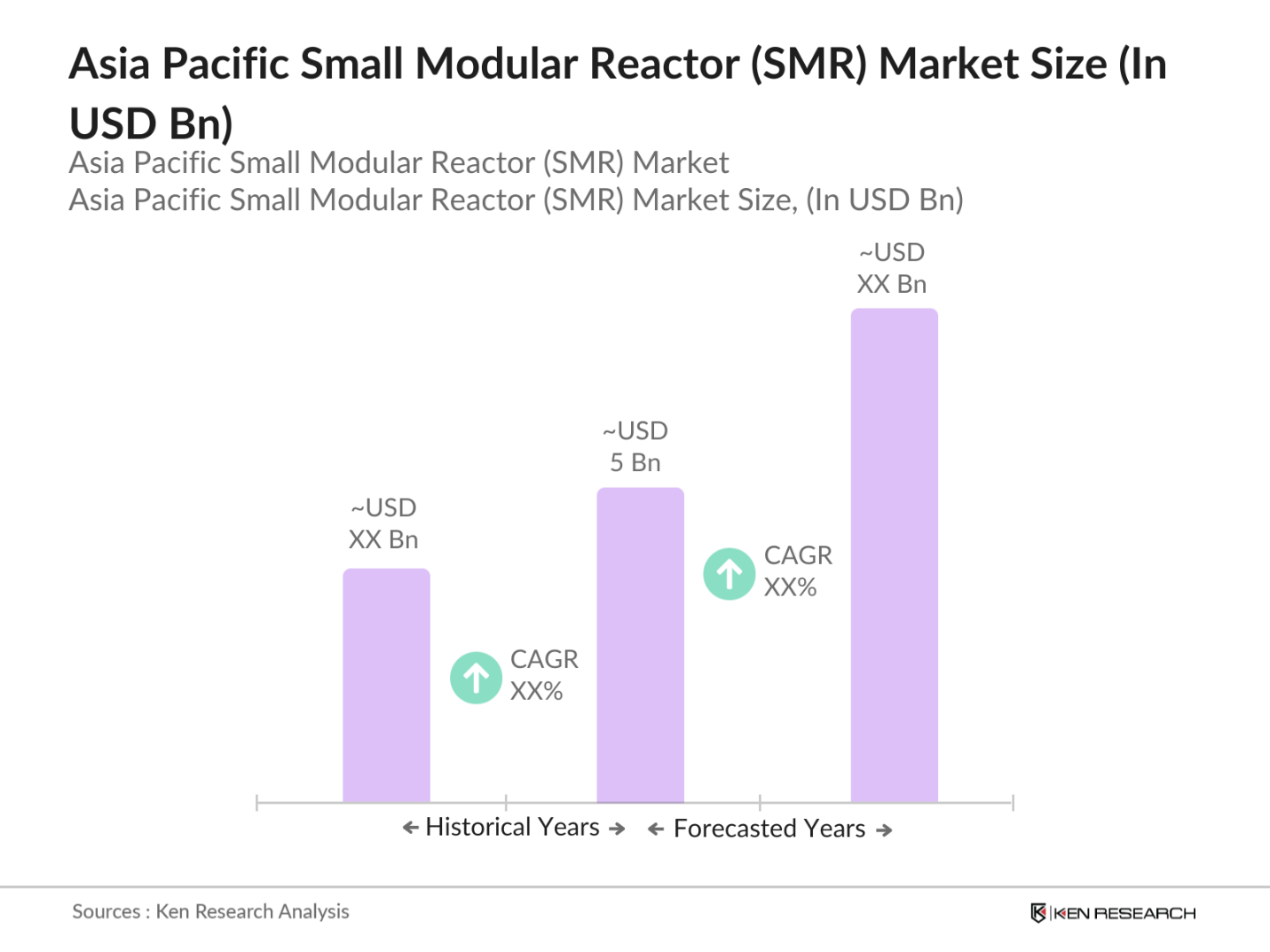
- China and Japan are the dominant players in the Asia Pacific SMR market. China's dominance stems from substantial investments in nuclear technology and a robust pipeline of SMR projects aimed at enhancing energy security and reducing carbon emissions. Japan's focus on SMR technology is driven by its commitment to revitalize its nuclear energy sector post-Fukushima, emphasizing safety and efficiency.
- Various governments, including India, are actively working on the development of SMRs. The Indian government has emphasized the potential of SMRs to facilitate a clean energy transition, particularly in repurposing sites previously used for coal-based power generation. The design and modular nature of SMRs enable significant cost savings. Studies suggest that capital costs for SMRs could be reduced by up to 20-32% through advanced manufacturing and modular construction techniques.
Asia Pacific Small Modular Reactor (SMR) Market Segmentation
By Reactor Type: The market is segmented by reactor type into Pressurized Water Reactors (PWR), Boiling Water Reactors (BWR), High-Temperature Gas-Cooled Reactors (HTGR), Molten Salt Reactors (MSR), and Fast Neutron Reactors (FNR). Pressurized Water Reactors (PWR) hold a dominant market share due to their proven technology, operational safety, and widespread adoption in existing nuclear power infrastructure. The familiarity and reliability of PWRs make them a preferred choice for new SMR deployments in the region. 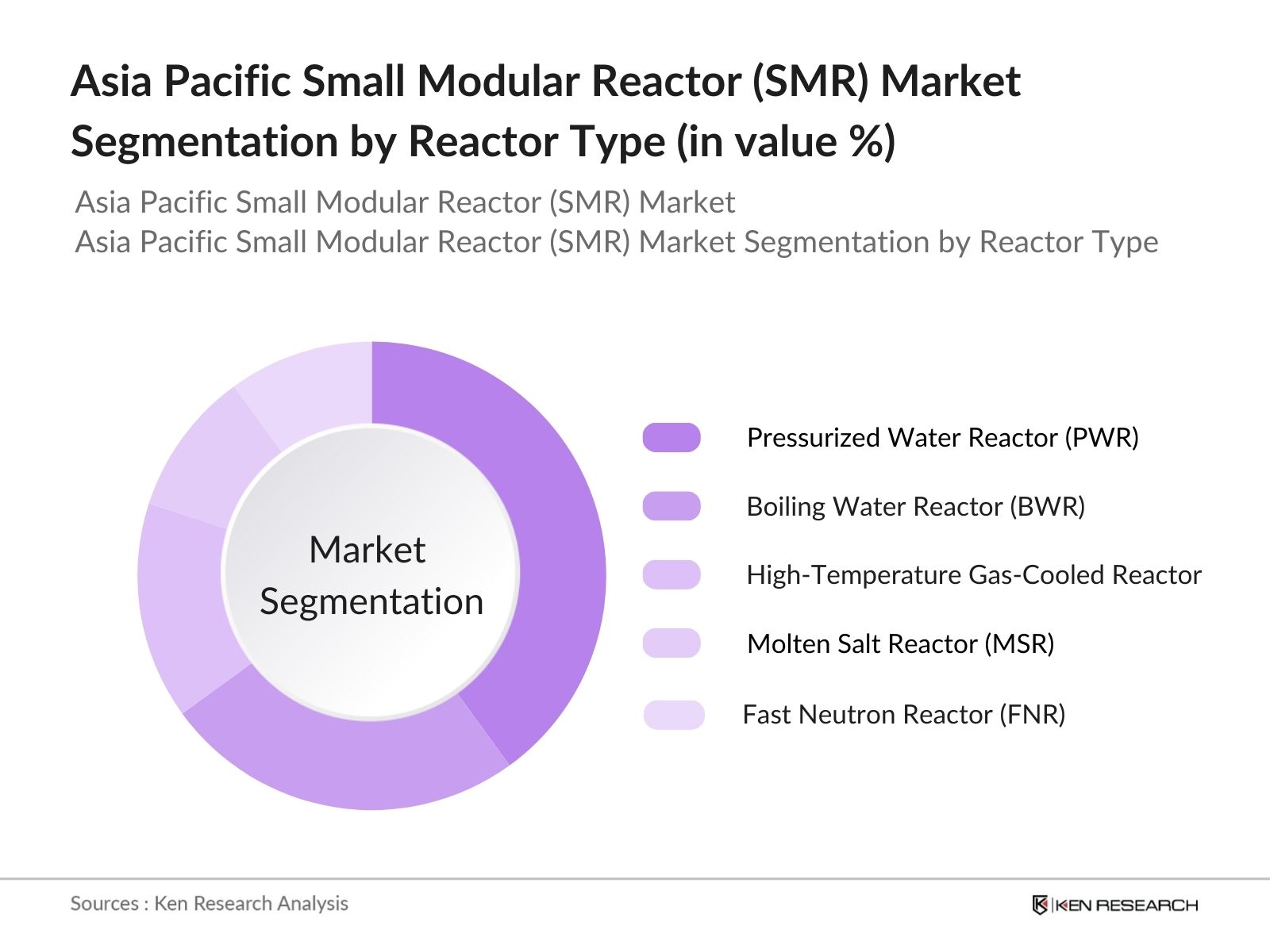
By Application: The market is further segmented by application into Power Generation, Desalination, Process Heat, Hydrogen Production, and Industrial Applications. Power Generation is the leading application segment, driven by the region's growing electricity demand and the need for stable, low-carbon energy sources. SMRs offer a flexible and scalable solution to meet these energy requirements, particularly in remote and off-grid areas. 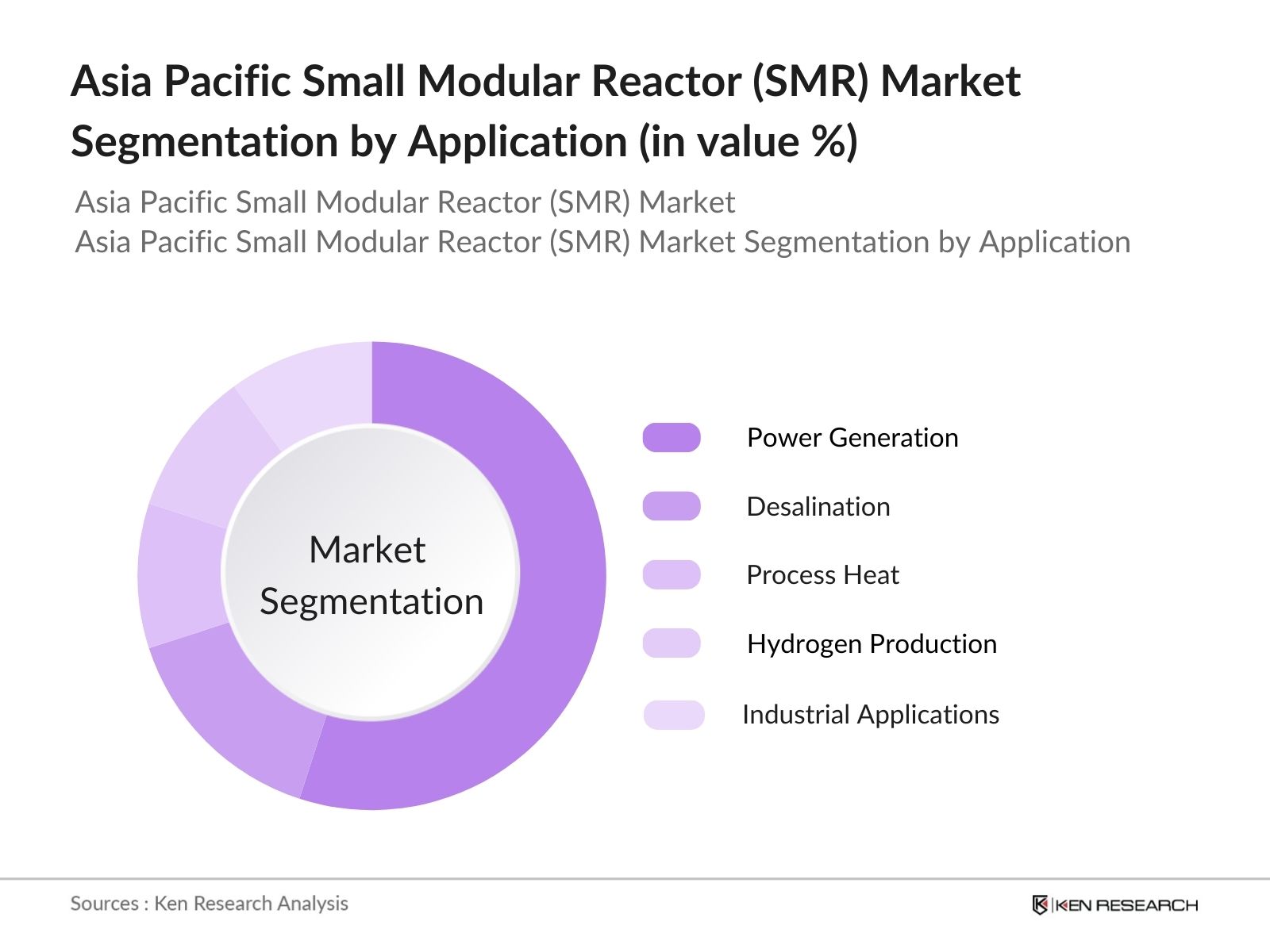
Asia Pacific Small Modular Reactor (SMR) Market Competitive Landscape
The Asia Pacific SMR market is characterized by the presence of key players who are actively engaged in the development and deployment of SMR technologies. This competitive landscape underscores the strategic importance of SMRs in the region's energy portfolio. 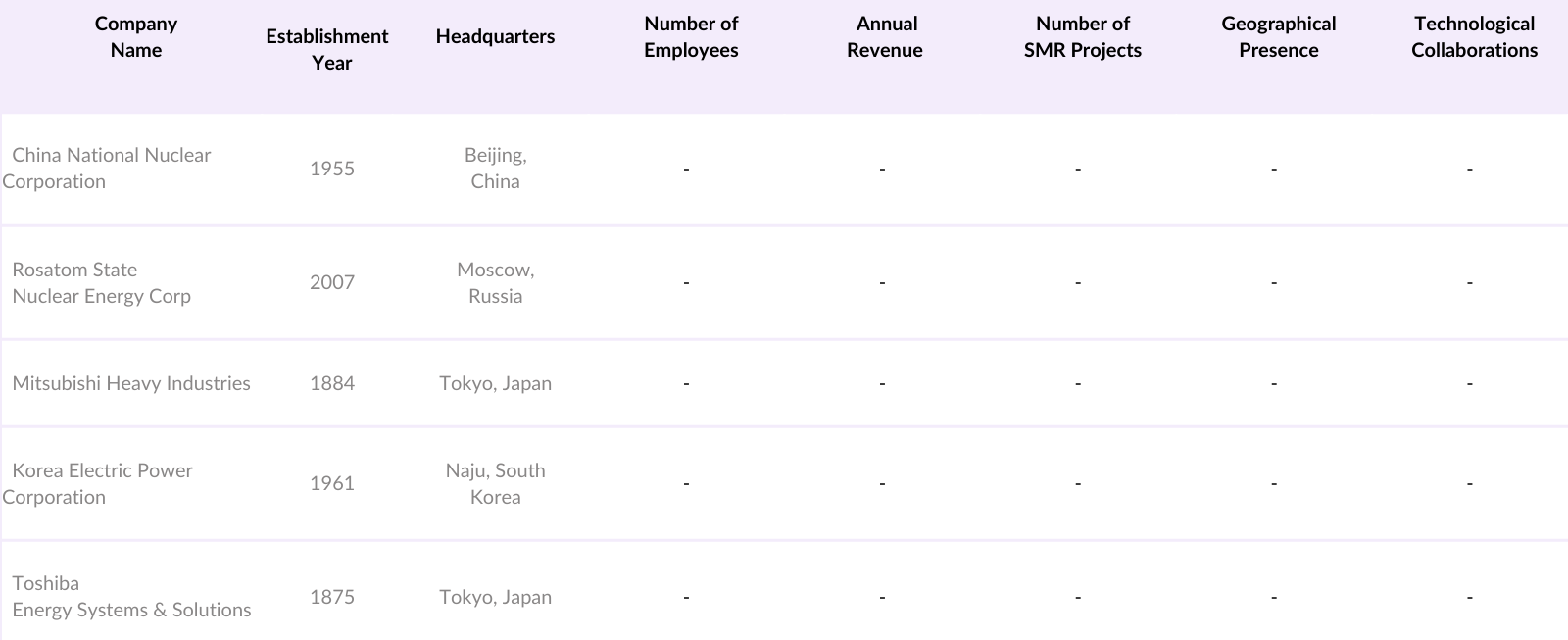
Asia Pacific Small Modular Reactor (SMR) Industry Analysis
Growth Drivers
- Rising Energy Demand in Emerging Economies: Emerging economies are experiencing significant increases in energy consumption due to rapid industrialization and urbanization. For instance, India's energy demand is projected to grow by 3.4% annually through 2026, driven by an improving economic outlook. Similarly, China's energy consumption continues to rise, with the country accounting for 60% of new renewable capacity added globally in 2023. This surge in energy demand underscores the need for scalable and efficient energy solutions, such as Small Modular Reactors (SMRs), to meet the growing requirements sustainably.
- Government Initiatives for Clean Energy: Governments worldwide are implementing policies to promote clean energy adoption. In the United States, the Biden-Harris Administration has allocated $10.6 billion in the Department of Energy's climate and clean energy research, development, demonstration, and deployment programs, aiming for a 50-52% reduction in economy-wide net greenhouse gas pollution by 2030. Similarly, the European Union has earmarked substantial funds to support clean energy projects, reflecting a global commitment to reducing carbon emissions and fostering sustainable energy solutions.
- Technological Advancements in Reactor Design: Advancements in reactor technology are enhancing the efficiency and safety of nuclear energy. Innovations such as modular and scalable reactor designs are making nuclear power more adaptable to various energy needs. These technological improvements are crucial for integrating nuclear energy into modern power grids and meeting the dynamic energy demands of the 21st century.
Market Challenges
- High Initial Capital Expenditure: The development and deployment of nuclear reactors, including SMRs, require substantial initial investments. This high capital expenditure can be a barrier for many countries and companies, especially in regions with limited financial resources. Addressing this challenge necessitates innovative financing models and international cooperation to make nuclear energy projects more accessible and economically viable.
- Public Perception and Acceptance: Public concerns about nuclear safety and environmental impact can influence the acceptance of nuclear energy projects. Incidents such as the Fukushima disaster have heightened public apprehension, necessitating transparent communication and robust safety measures to build trust and support for nuclear energy initiatives.
Asia Pacific Small Modular Reactor (SMR) Market Future Outlook
Over the next five years, the Asia Pacific SMR market is expected to experience significant growth, driven by continuous government support, advancements in reactor technology, and increasing demand for clean and reliable energy sources. The modular nature of SMRs allows for scalable deployment, making them suitable for a variety of applications, including power generation in remote areas and integration with renewable energy systems. Additionally, ongoing research and development efforts are anticipated to enhance the efficiency and safety of SMR technologies, further bolstering their adoption in the region.
Future Market Opportunities
- Integration with Renewable Energy Sources: Nuclear energy, particularly through SMRs, offers a reliable and consistent power supply that can complement intermittent renewable sources like wind and solar. This integration can enhance grid stability and ensure a steady energy supply, addressing the variability challenges associated with renewable energy.
- Export Potential to Neighboring Regions: Countries developing advanced nuclear technologies have the opportunity to export these solutions to neighboring regions facing energy deficits. For example, the United States is collaborating with India to support its ambitious target of 500 GW of non-fossil fuel power generation capacity by 2030, providing regulatory and grid support to facilitate this goal. Such collaborations can foster regional energy security and economic growth.
Scope of the Report
|
Reactor Type |
Pressurized Water Reactor (PWR) |
|
Application |
Power Generation |
|
Deployment |
Single-Module Power Plant |
|
Location |
Land-Based |
|
Country |
China |
Products
Key Target Audience
Nuclear Power Plant Operators
Energy Policy Makers (e.g., Ministry of Energy and Mineral Resources)
Environmental Regulatory Agencies (e.g., National Environment Agency)
Utility Companies
Industrial Process Heat Users
Desalination Plant Operators
Hydrogen Production Facilities
Investors and Venture Capitalist Firms
Companies
Major Players
China National Nuclear Corporation (CNNC)
Rosatom State Nuclear Energy Corporation
Mitsubishi Heavy Industries
Korea Electric Power Corporation (KEPCO)
Toshiba Energy Systems & Solutions Corporation
Hitachi-GE Nuclear Energy
Rolls-Royce Holdings
General Electric Hitachi Nuclear Energy
Terrestrial Energy
Holtec International
X-energy
Moltex Energy
Ultra Safe Nuclear Corporation
NuScale Power
Westinghouse Electric Company
Table of Contents
Asia Pacific Small Modular Reactor (SMR) Market Overview
Definition and Scope
Market Taxonomy
Market Growth Rate
Market Segmentation Overview
Asia Pacific Small Modular Reactor (SMR) Market Size (USD Billion)
Historical Market Size
Year-On-Year Growth Analysis
Key Market Developments and Milestones
Asia Pacific Small Modular Reactor (SMR) Market Analysis
Growth Drivers
Rising Energy Demand in Emerging Economies
Government Initiatives for Clean Energy
Technological Advancements in Reactor Design
Market Challenges
High Initial Capital Expenditure
Regulatory Hurdles and Licensing Issues
Public Perception and Acceptance
Opportunities
Integration with Renewable Energy Sources
Export Potential to Neighboring Regions
Development of Off-Grid Power Solutions
Trends
Adoption of Advanced Manufacturing Techniques
Collaborations between Public and Private Sectors
Focus on Modular and Scalable Reactor Designs
Government Regulations
Nuclear Energy Policies in Key Countries
Safety Standards and Compliance Requirements
Incentives and Subsidies for SMR Development
SWOT Analysis
Stakeholder Ecosystem
Porter's Five Forces Analysis
Competitive Landscape
Asia Pacific Small Modular Reactor (SMR) Market Segmentation
By Reactor Type (Value %)
Pressurized Water Reactor (PWR)
Boiling Water Reactor (BWR)
High-Temperature Gas-Cooled Reactor (HTGR)
Molten Salt Reactor (MSR)
Fast Neutron Reactor (FNR)
By Application (Value %)
Power Generation
Desalination
Process Heat
Hydrogen Production
Industrial Applications
By Deployment (Value %)
Single-Module Power Plant
Multi-Module Power Plant
By Location (Value %)
Land-Based
Marine-Based
By Country (Value %)
China
Japan
South Korea
India
Australia
Rest of Asia Pacific
Asia Pacific Small Modular Reactor (SMR) Market Competitive Analysis
Detailed Profiles of Major Companies
China National Nuclear Corporation (CNNC)
Rosatom State Nuclear Energy Corporation
Westinghouse Electric Company
NuScale Power
Mitsubishi Heavy Industries
Korea Electric Power Corporation (KEPCO)
Toshiba Energy Systems & Solutions Corporation
Hitachi-GE Nuclear Energy
Rolls-Royce Holdings
General Electric Hitachi Nuclear Energy
Terrestrial Energy
Holtec International
X-energy
Moltex Energy
Ultra Safe Nuclear Corporation
Cross Comparison Parameters
Number of Employees
Headquarters Location
Year of Establishment
Annual Revenue
Number of SMR Projects
Geographical Presence
Technological Collaborations
R&D Investment
Market Share Analysis
Strategic Initiatives
Mergers and Acquisitions
Investment Analysis
Venture Capital Funding
Government Grants
Private Equity Investments
Asia Pacific Small Modular Reactor (SMR) Market Regulatory Framework
Environmental Standards
Compliance Requirements
Certification Processes
Asia Pacific Small Modular Reactor (SMR) Future Market Size (USD Billion)
Future Market Size Projections
Key Factors Driving Future Market Growth
Asia Pacific Small Modular Reactor (SMR) Future Market Segmentation
By Reactor Type (Value %)
By Application (Value %)
By Deployment (Value %)
By Location (Value %)
By Country (Value %)
Asia Pacific Small Modular Reactor (SMR) Market Analysts Recommendations
Total Addressable Market (TAM), Serviceable Available Market (SAM), and Serviceable Obtainable Market (SOM) Analysis
Customer Cohort Analysis
Marketing Initiatives
White Space Opportunity Analysis
Disclaimer Contact UsResearch Methodology
Step 1: Identification of Key Variables
The initial phase involves constructing an ecosystem map encompassing all major stakeholders within the Asia Pacific SMR Market. This step is underpinned by extensive desk research, utilizing a combination of secondary and proprietary databases to gather comprehensive industry-level information. The primary objective is to identify and define the critical variables that influence market dynamics.
Step 2: Market Analysis and Construction
In this phase, we compile and analyze historical data pertaining to the Asia Pacific SMR Market. This includes assessing market penetration, the ratio of marketplaces to service providers, and the resultant revenue generation. Furthermore, an evaluation of service quality statistics is conducted to ensure the reliability and accuracy of the revenue estimates.
Step 3: Hypothesis Validation and Expert Consultation
Market hypotheses are developed and subsequently validated through computer-assisted telephone interviews (CATIs) with industry experts representing a diverse array of companies. These consultations provide valuable operational and financial insights directly from industry practitioners, which are instrumental in refining and corroborating the market data.
Step 4: Research Synthesis and Final Output
The final phase involves direct engagement with multiple SMR manufacturers to acquire detailed insights into product segments, sales performance, consumer preferences, and other pertinent factors. This interaction serves to verify and complement the statistics derived from the bottom-up approach, thereby ensuring a comprehensive, accurate, and validated analysis of the Asia Pacific SMR market.
Frequently Asked Questions
01. How big is the Asia Pacific SMR Market?
The Asia Pacific SMR market is valued at USD 5 billion. This market size is driven by increasing demand for clean energy, especially in emerging economies, and the region's ongoing transition to low-carbon energy solutions.
02. What are the main growth drivers for the Asia Pacific SMR Market?
Key growth drivers in the Asia Pacific SMR market include rising electricity demand, government support for nuclear energy projects, and the technological advantages of SMRs, such as modularity and scalability, which make them ideal for remote locations and smaller grids.
03. Which countries are the dominant players in the Asia Pacific SMR Market?
China and Japan lead the SMR market in the Asia Pacific. Chinas focus on SMRs is propelled by significant government funding and a proactive stance on nuclear energy. Japan, on the other hand, emphasizes safe nuclear technology in response to energy security and environmental goals.
04. What challenges are present in the Asia Pacific SMR Market?
The primary challenges in the Asia Pacific SMR market include high initial capital costs, stringent regulatory requirements, and public skepticism regarding nuclear energy safety. Additionally, lengthy approval and construction timelines hinder rapid deployment.
05. Who are the major players in the Asia Pacific SMR Market?
Key players in the Asia Pacific SMR market include China National Nuclear Corporation (CNNC), Rosatom State Nuclear Energy Corporation, Mitsubishi Heavy Industries, Korea Electric Power Corporation (KEPCO), and Toshiba Energy Systems & Solutions Corporation. These companies have a significant influence due to established expertise, robust R&D investments, and strategic partnerships.
Why Buy From Us?

What makes us stand out is that our consultants follows Robust, Refine and Result (RRR) methodology. i.e. Robust for clear definitions, approaches and sanity checking, Refine for differentiating respondents facts and opinions and Result for presenting data with story

We have set a benchmark in the industry by offering our clients with syndicated and customized market research reports featuring coverage of entire market as well as meticulous research and analyst insights.

While we don't replace traditional research, we flip the method upside down. Our dual approach of Top Bottom & Bottom Top ensures quality deliverable by not just verifying company fundamentals but also looking at the sector and macroeconomic factors.

With one step in the future, our research team constantly tries to show you the bigger picture. We help with some of the tough questions you may encounter along the way: How is the industry positioned? Best marketing channel? KPI's of competitors? By aligning every element, we help maximize success.

Our report gives you instant access to the answers and sources that other companies might choose to hide. We elaborate each steps of research methodology we have used and showcase you the sample size to earn your trust.

If you need any support, we are here! We pride ourselves on universe strength, data quality, and quick, friendly, and professional service.