















Asia Pacific Social Trading Platform Market Outlook to 2030
Region:Asia
Author(s):Abhinav kumar
Product Code:KROD4568
December 2024
82
About the Report
Asia Pacific Social Trading Platform Market Overview
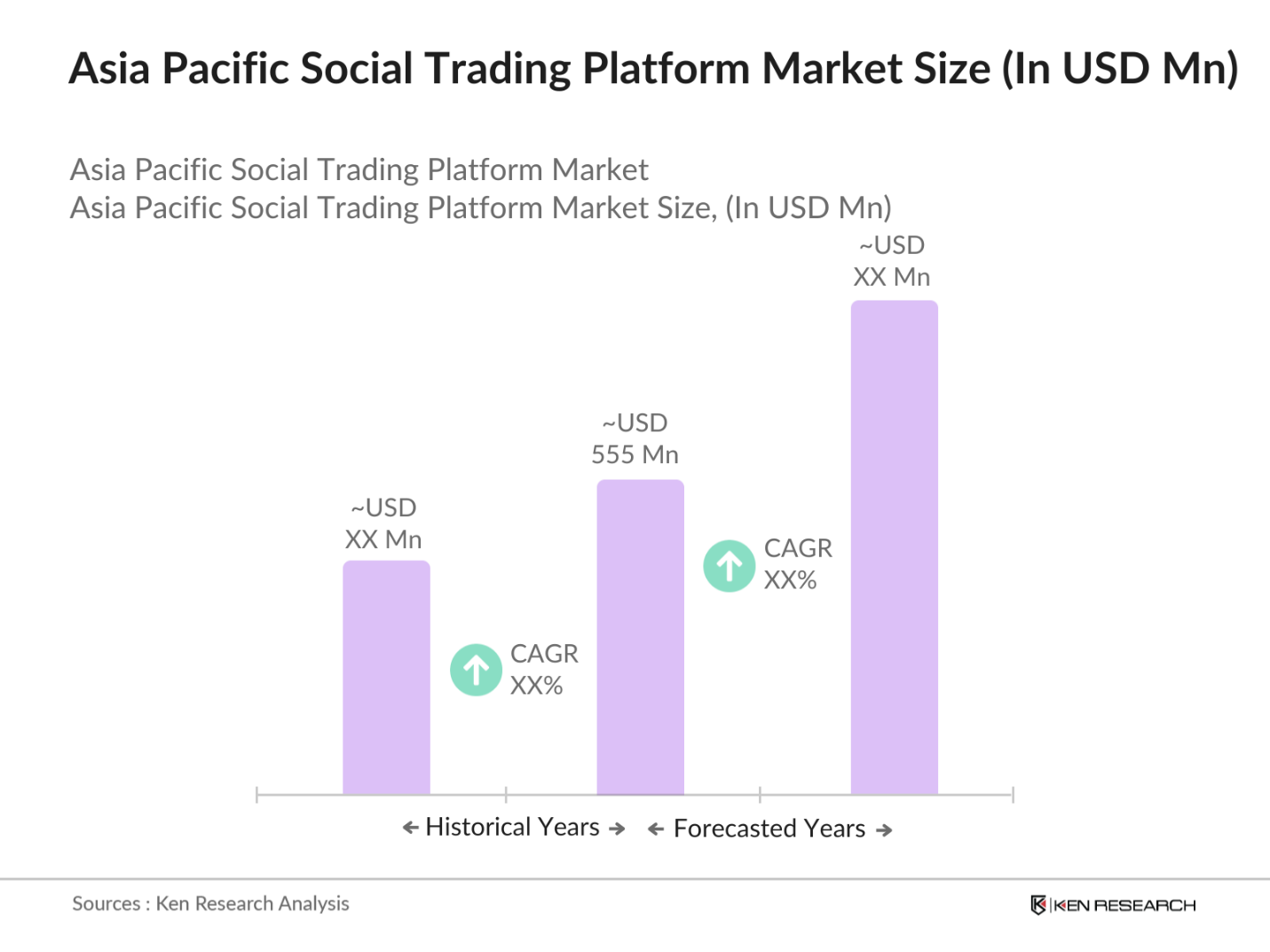
- The Asia Pacific social trading platform market is valued at USD 555 million, based on a five-year historical analysis. The market has been driven primarily by the rapid adoption of digital financial services, growing retail investor participation, and the rise of mobile trading platforms. Social trading platforms enable users to trade financial instruments by copying strategies from seasoned traders, making investing accessible to beginners. The ease of use and availability of trading apps has spurred demand, especially among millennials and Gen Z users who prefer mobile-based financial solutions.
- The market is dominated by countries like China, Japan, and Australia. Chinas dominance is due to its vast retail investor base and rapid technological advancements in financial services. Japans regulatory environment supports a thriving financial technology sector, while Australias established financial infrastructure and growing cryptocurrency adoption fuel its prominence in the market. These nations benefit from their robust technological ecosystems, strong financial regulations, and growing interest in personal finance and investment platforms.
- Regulatory clarity is essential for the growth of social trading platforms in the Asia Pacific, with 80% of countries having established clear frameworks for digital financial services as of 2023, according to the Financial Stability Board. This regulatory environment promotes safe trading practices and enhances consumer protection, thereby increasing user confidence in social trading platforms. Countries like Singapore and Australia have taken significant steps towards streamlining regulations, creating a supportive ecosystem that fosters innovation while ensuring compliance. This clarity is vital for attracting investments and encouraging platform growth.
Asia Pacific Social Trading Platform Market Segmentation
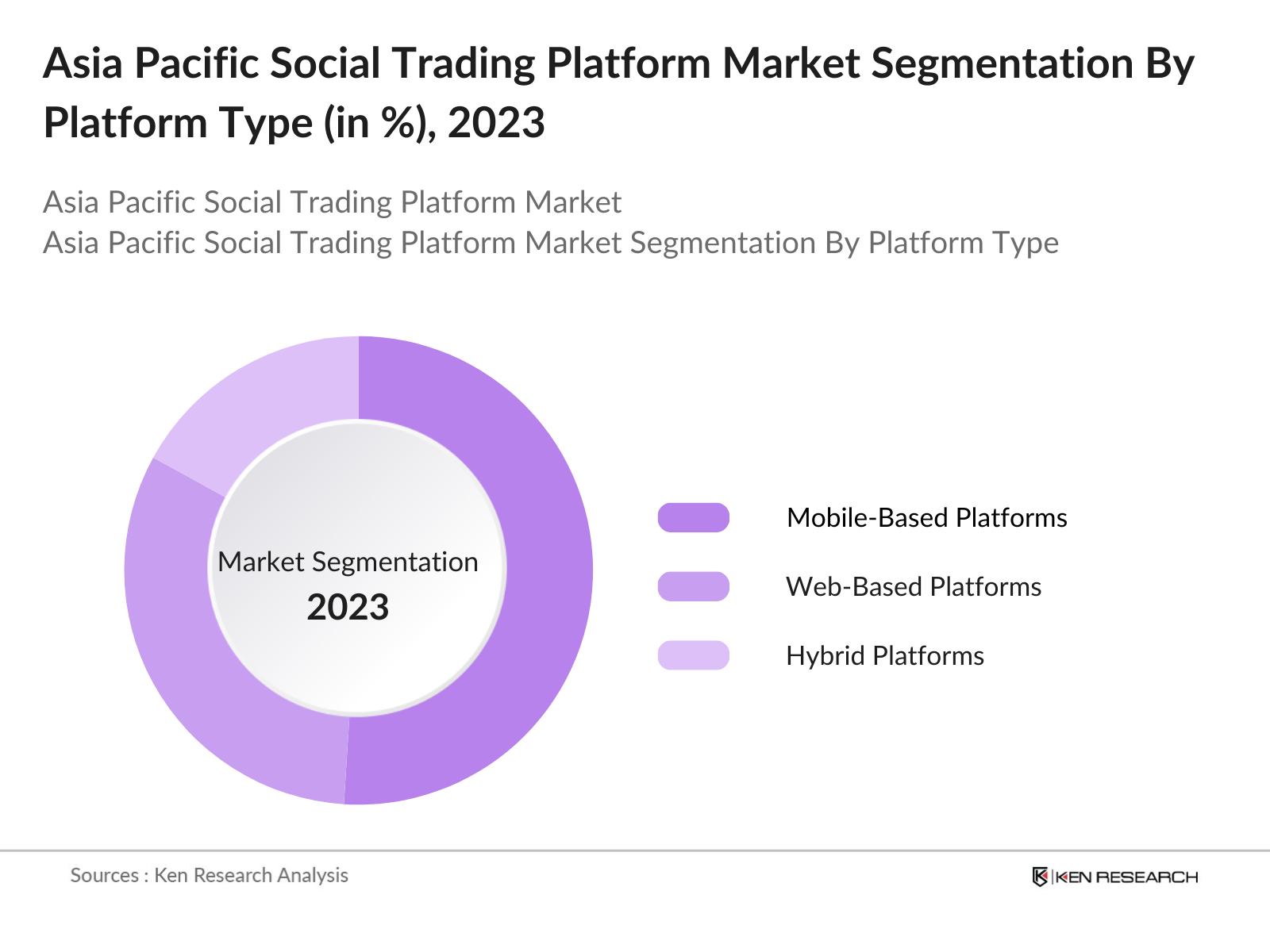
By Platform Type: The Asia Pacific social trading platform market is segmented by platform type into Web-Based Platforms, Mobile-Based Platforms, and Hybrid Platforms. Recently, Mobile-Based Platforms have held a dominant market share. This dominance is due to the widespread use of smartphones across the region, coupled with the growing demand for on-the-go financial solutions. The integration of real-time data, ease of use, and mobile-optimized features are essential factors attracting younger investors. Leading players have invested heavily in app-based solutions to capture this growing market.
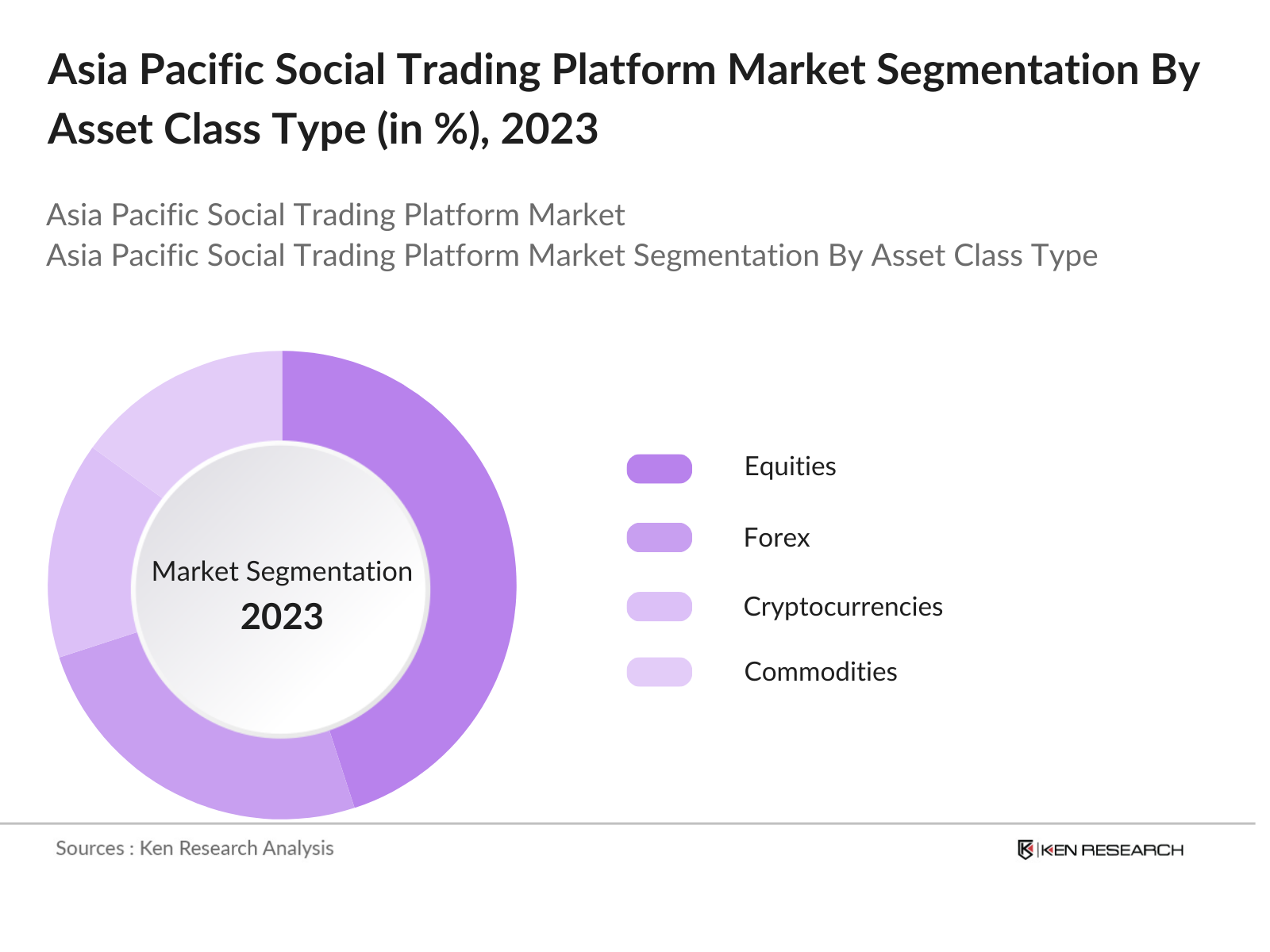
By Asset Class: The market is also segmented by asset class into Equities, Forex, Cryptocurrencies, Commodities, and Indices. Equities are currently dominating this segment due to their long-established history and familiarity with the majority of investors. The availability of diverse equity options and the significant presence of local and international stock markets make equities the go-to choice for both retail and institutional traders. The ease of access to equity markets through social trading platforms adds to their popularity.
Asia Pacific Social Trading Platform Market Competitive Landscape
The Asia Pacific social trading platform market is characterized by the presence of both local and international players. Key companies in the market have established themselves as leaders through technological innovation, user-centric platforms, and strategic partnerships. The market is dominated by firms like eToro and ZuluTrade, which offer extensive social trading features and maintain a strong user base in the region. Additionally, local companies like AvaTrade and Pepperstone are gaining traction due to their understanding of regional customer needs and regulatory environments.
|
Company |
Establishment Year |
Headquarters |
No. of Users |
Monthly Active Traders |
Platform Security Rating |
Revenue Model |
Copy Trade Volume |
Customer Acquisition Cost |
Customer Retention Rate |
|
eToro |
2007 |
Tel Aviv, Israel |
_ |
_ |
_ |
_ |
_ |
_ |
_ |
|
ZuluTrade |
2007 |
Athens, Greece |
_ |
_ |
_ |
_ |
_ |
_ |
_ |
|
AvaTrade |
2006 |
Dublin, Ireland |
_ |
_ |
_ |
_ |
_ |
_ |
_ |
|
Pepperstone |
2010 |
Melbourne, Australia |
_ |
_ |
_ |
_ |
_ |
_ |
_ |
|
NAGA Group AG |
2015 |
Hamburg, Germany |
_ |
_ |
_ |
_ |
_ |
_ |
_ |
Asia Pacific Social Trading Platform Industry Analysis
Growth Drivers
- Increasing Retail Investor Participation: Retail investor participation in financial markets across the Asia Pacific region has surged significantly, with the total number of retail investors exceeding 200 million in 2023, up from 150 million in 2021, according to the Asian Development Bank. This increase reflects a growing trend where individuals are increasingly attracted to stock markets, bolstered by enhanced access to information and trading platforms. Additionally, the World Bank reports that 40% of the adult population in emerging markets now invests in financial assets, indicating a robust trend towards democratizing investment opportunities and fueling market growth.
- Expanding Mobile Trading Platforms: The rapid proliferation of mobile trading platforms has led to a substantial increase in user acquisition. In 2023, the number of active mobile trading users in the Asia Pacific region reached approximately 120 million, up from 90 million in 2021, as per data from Statista. Furthermore, research indicates that nearly 75% of new retail investors now prefer mobile trading applications due to their convenience and accessibility, reflecting a significant shift in trading behavior. This growing reliance on mobile technology is expected to drive further market expansion and engagement in trading activities.
- Integration of AI and Automation in Trading: The integration of artificial intelligence (AI) in trading platforms is transforming the landscape, with 30% of trading firms in the Asia Pacific region reporting the use of AI-driven algorithms to enhance trading decisions as of 2023. According to McKinsey, AI adoption in finance has accelerated, with firms leveraging machine learning for risk assessment and automated trading. The market for AI in financial services is projected to reach $22.6 billion by 2025, underscoring the growing significance of AI technologies in enhancing operational efficiency and decision-making capabilities.
Market Challenges
- Market Volatility Affecting User Confidence: Market volatility remains a significant challenge for social trading platforms, with a reported user churn rate of approximately 25% in 2023, as many investors exit during periods of instability. The World Bank highlighted that geopolitical tensions and economic uncertainty, including inflation rates reaching as high as 6% in key economies, have contributed to this volatility. This environment leads to reduced investor confidence and hesitance among potential users, making it imperative for platforms to develop strategies that address these concerns to retain and attract investors effectively.
- High Competition Among Platforms: The Asia Pacific social trading market faces intense competition, with over 150 platforms vying for user attention as of 2023, according to a report by the Asia Pacific Financial Markets Association. This high competitor density increases the pressure on platforms to innovate and differentiate themselves to maintain market share. Consequently, the need for unique features and enhanced user experiences has become paramount. As platforms strive to offer more competitive services, sustaining user loyalty becomes a challenging task, impacting overall market growth potential.
Asia Pacific Social Trading Platform Market Future Outlook
Over the next five years, the Asia Pacific social trading platform market is expected to exhibit significant growth, driven by the increasing demand for user-friendly trading platforms, the rise of mobile trading solutions, and the adoption of cryptocurrency trading. Additionally, technological advancements such as AI-driven trading tools and the integration of blockchain for enhanced security and transparency will bolster the markets development. The region's regulatory environment is also evolving, with several countries refining their frameworks to support digital financial services, further fostering growth in the market.
Opportunities
- Penetration into Emerging Economies: merging economies in the Asia Pacific are ripe for social trading platform penetration, with internet penetration rates expected to reach 75% by 2025, up from 60% in 2022, according to the International Telecommunication Union (ITU). This growing connectivity presents a significant opportunity for platforms to tap into a previously underserved market of retail investors. Additionally, the rising middle class, projected to reach 1.4 billion by 2025, further enhances the potential user base. By focusing on these emerging markets, social trading platforms can unlock new revenue streams and expand their user demographics.
- Increased Usage of Cryptocurrency on Platforms: The integration of cryptocurrency trading into social trading platforms is gaining momentum, with approximately 200 million crypto wallets active globally as of 2023, according to Chainalysis. This trend is expected to drive user engagement, as 46% of retail investors in Asia Pacific expressed interest in trading cryptocurrencies alongside traditional assets. The growing acceptance of digital currencies among younger investors presents a unique opportunity for platforms to innovate their offerings and cater to a tech-savvy demographic eager to explore new investment avenues.
Scope of the Report
|
By Platform Type |
Web-Based Platforms Mobile-Based Platforms Hybrid Platforms |
|
By Asset Class |
Equities Forex Cryptocurrencies Commodities Indices |
|
By User Type |
Retail Investors Institutional Investors |
|
By Revenue Model |
Commission-Based Model Subscription-Based Model Advertising Revenue |
|
By Region |
East Asia South Asia Southeast Asia Oceania |
Products
Key Target Audience Organizations and Entities Who Can Benefit by Subscribing This Report:
Investor and Venture Capitalist Firms
Government and Regulatory Bodies (e.g., Monetary Authority of Singapore, Australian Securities and Investments Commission)
Retail Trading Companies
FinTech Industries
Cryptocurrency Exchange Companies
Tech Solution Companies
Companies
Players Mentioned in the Report:
eToro
ZuluTrade
Covesting
AvaTrade
NAGA Group AG
Darwinex
Trade360
Pepperstone
Alvexo
OANDA
Table of Contents
1. Asia Pacific Social Trading Platform Market Overview
1.1 Definition and Scope
1.2 Market Taxonomy
1.3 Market Growth Rate
1.4 Market Segmentation Overview
2. Asia Pacific Social Trading Platform Market Size (In USD Bn)
2.1 Historical Market Size
2.2 Year-On-Year Growth Analysis
2.3 Key Market Developments and Milestones
3. Asia Pacific Social Trading Platform Market Analysis
3.1 Growth Drivers
3.1.1 Increasing Retail Investor Participation
3.1.2 Expanding Mobile Trading Platforms
3.1.3 Integration of AI and Automation in Trading
3.1.4 Regulatory Reforms Supporting Digital Finance
3.2 Market Challenges
3.2.1 Market Volatility Affecting User Confidence
3.2.2 High Competition Among Platforms
3.2.3 Regulatory Complexities Across Multiple Jurisdictions
3.3 Opportunities
3.3.1 Penetration into Emerging Economies
3.3.2 Increased Usage of Cryptocurrency on Platforms
3.3.3 Collaboration with FinTechs
3.4 Trends
3.4.1 Integration of Social Media for Trader Interactions
3.4.2 Rise of Copy Trading Features
3.4.3 Use of Data Analytics for Personalized Insights
3.5 Government Regulations
3.5.1 Regional Regulatory Frameworks on Social Trading Platforms
3.5.2 Impact of KYC and AML Guidelines on Trading
3.5.3 Taxation on Cryptocurrency Transactions
3.5.4 Data Protection and Privacy Standards
3.6 SWOT Analysis
3.7 Stake Ecosystem
3.8 Porters Five Forces Analysis
3.9 Competition Ecosystem
4. Asia Pacific Social Trading Platform Market Segmentation
4.1 By Platform Type (In Value %)
4.1.1 Web-Based Platforms
4.1.2 Mobile-Based Platforms
4.1.3 Hybrid Platforms
4.2 By Asset Class (In Value %)
4.2.1 Equities
4.2.2 Forex
4.2.3 Cryptocurrencies
4.2.4 Commodities
4.2.5 Indices
4.3 By User Type (In Value %)
4.3.1 Retail Investors
4.3.2 Institutional Investors
4.4 By Revenue Model (In Value %)
4.4.1 Commission-Based Model
4.4.2 Subscription-Based Model
4.4.3 Advertising Revenue
4.5 By Region (In Value %)
4.5.1 East Asia
4.5.2 South Asia
4.5.3 Southeast Asia
4.5.4 Oceania
5. Asia Pacific Social Trading Platform Market Competitive Analysis
5.1 Detailed Profiles of Major Companies
5.1.1. eToro
5.1.2. ZuluTrade
5.1.3. Covesting
5.1.4. AvaTrade
5.1.5. NAGA Group AG
5.1.6. Darwinex
5.1.7. Trade360
5.1.8. Pepperstone
5.1.9. Alvexo
5.1.10. OANDA
5.1.11. FXTM
5.1.12. Plus500
5.1.13. RoboForex
5.1.14. OctaFX
5.1.15. IG Group
5.2 Cross Comparison Parameters (No. of Users, Active Monthly Traders, Platform Latency, Trade Execution Speed, Platform Security Rating, Customer Satisfaction Score, Customer Acquisition Cost, Average User Lifetime Value)
5.3 Market Share Analysis
5.4 Strategic Initiatives
5.5 Mergers and Acquisitions
5.6 Investment Analysis
5.7 Venture Capital Funding
5.8 Government Grants
5.9 Private Equity Investments
6. Asia Pacific Social Trading Platform Market Regulatory Framework
6.1 National and Regional Standards
6.2 Compliance Requirements
6.3 Certification Processes
7. Asia Pacific Social Trading Platform Future Market Size (In USD Bn)
7.1 Future Market Size Projections
7.2 Key Factors Driving Future Market Growth
8. Asia Pacific Social Trading Platform Future Market Segmentation
8.1 By Platform Type (In Value %)
8.2 By Asset Class (In Value %)
8.3 By User Type (In Value %)
8.4 By Revenue Model (In Value %)
8.5 By Region (In Value %)
9. Asia Pacific Social Trading Platform Market Analysts Recommendations
9.1 TAM/SAM/SOM Analysis
9.2 Customer Cohort Analysis
9.3 Marketing Initiatives
9.4 White Space Opportunity Analysis
Research Methodology
Step 1: Identification of Key Variables
In the initial stage, we construct a comprehensive ecosystem map of the Asia Pacific Social Trading Platform Market. Extensive desk research was performed, utilizing secondary databases and proprietary market intelligence systems to identify critical variables that influence market dynamics.
Step 2: Market Analysis and Construction
This step involved collecting historical data on the Asia Pacific Social Trading Platform Market, including user adoption rates, platform penetration, and the influence of technological trends. Data was analyzed for patterns that would impact revenue generation and market growth.
Step 3: Hypothesis Validation and Expert Consultation
Key market hypotheses were developed and validated through interviews with industry professionals, including trading platform operators and financial services experts. These insights helped refine our understanding of the market.
Step 4: Research Synthesis and Final Output
In the final phase, data from both primary and secondary sources were synthesized to produce a detailed and validated market report. The findings provide actionable insights and projections for the market.
Frequently Asked Questions
01. How big is the Asia Pacific Social Trading Platform Market?
The Asia Pacific social trading platform market is valued at USD 555 million. This growth is driven by increased retail investor participation and the adoption of mobile trading platforms.
02. What are the challenges in the Asia Pacific Social Trading Platform Market?
Challenges include intense competition among platforms, evolving regulatory frameworks across multiple regions, and ensuring security in trading, particularly around cryptocurrencies.
03. Who are the major players in the Asia Pacific Social Trading Platform Market?
Major players in the market include eToro, ZuluTrade, AvaTrade, Pepperstone, and NAGA Group AG, all of which have established strong user bases and offer innovative trading features.
04. What are the growth drivers of the Asia Pacific Social Trading Platform Market?
Growth is primarily driven by the rising popularity of mobile-based trading solutions, increasing financial literacy among young investors, and the adoption of cryptocurrencies for trading.
Why Buy From Us?

What makes us stand out is that our consultants follows Robust, Refine and Result (RRR) methodology. i.e. Robust for clear definitions, approaches and sanity checking, Refine for differentiating respondents facts and opinions and Result for presenting data with story

We have set a benchmark in the industry by offering our clients with syndicated and customized market research reports featuring coverage of entire market as well as meticulous research and analyst insights.

While we don't replace traditional research, we flip the method upside down. Our dual approach of Top Bottom & Bottom Top ensures quality deliverable by not just verifying company fundamentals but also looking at the sector and macroeconomic factors.

With one step in the future, our research team constantly tries to show you the bigger picture. We help with some of the tough questions you may encounter along the way: How is the industry positioned? Best marketing channel? KPI's of competitors? By aligning every element, we help maximize success.

Our report gives you instant access to the answers and sources that other companies might choose to hide. We elaborate each steps of research methodology we have used and showcase you the sample size to earn your trust.

If you need any support, we are here! We pride ourselves on universe strength, data quality, and quick, friendly, and professional service.