
Asia Pacific Sodium-Ion Battery Market Outlook to 2030
Europe Shampoo Market Outlook to 2028
Region:Asia
Author(s):Shreya Garg
Product Code:KROD7954
December 2024
85
About the Report
Asia Pacific Sodium-Ion Battery Market Overview
- The Asia Pacific Sodium-Ion Battery market is valued at USD 450 million, grounded on a five-year historical analysis. This growth trajectory is driven by the regions ongoing shift towards renewable energy sources, a pressing need for reliable grid storage solutions, and cost-efficient alternatives to lithium-based batteries. Sodium-ion batteries have gained traction due to their cost advantages and reduced dependency on scarce minerals, catering to sectors like renewable energy and electric vehicles (EVs). Their suitability for energy storage at grid scale further drives the markets expansion.
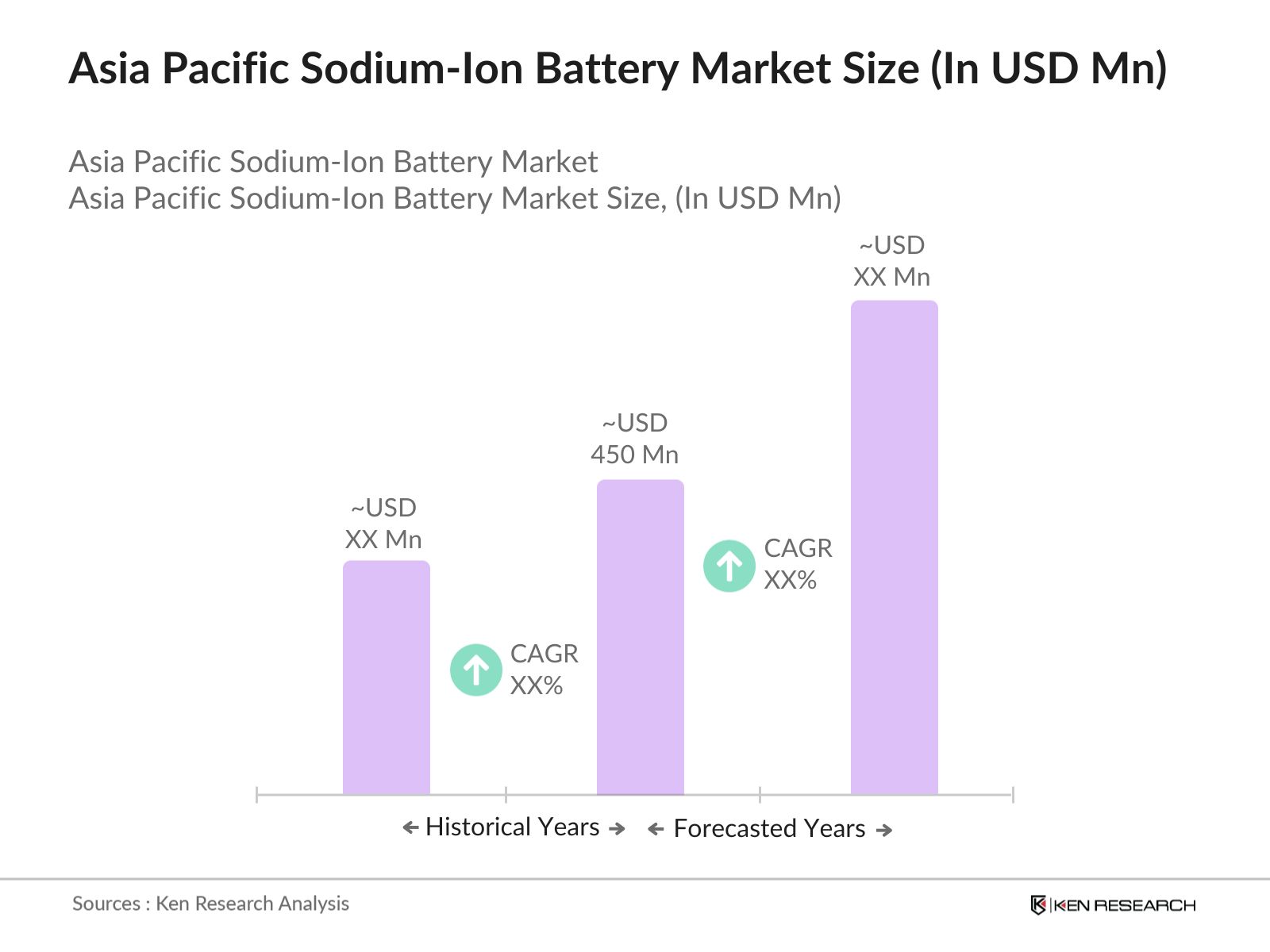
- Key countries like China, Japan, and South Korea lead the market. Chinas dominance is attributed to its substantial sodium reserves and government-backed renewable energy programs, while Japans focus on sustainable technology innovation and South Koreas robust manufacturing infrastructure contribute significantly to the markets growth. These countries have accelerated sodium-ion technology adoption for energy storage, enabling stability and support for renewable power integration.
- Regulatory bodies across Asia Pacific are setting new standards for sodium-ion battery safety and performance to ensure reliability. For instance, Chinas GB 38031-2020 regulations mandate stringent safety and quality testing for batteries, including emerging types like sodium-ion. These regulations facilitate safe adoption across diverse sectors, especially in grid storage and transportation, where battery safety is critical for market penetration
Asia Pacific Sodium-Ion Battery Market Segmentation
By Technology Type: The market is segmented by technology type into Aqueous, Non-Aqueous, and Sodium-Sulfur batteries. The aqueous sub-segment holds a dominant market position due to its low-cost manufacturing and superior safety profile, which reduces risks of fire or explosion in various applications. Additionally, this technology supports large-scale grid applications, especially in countries focusing on utility-scale renewable energy integration.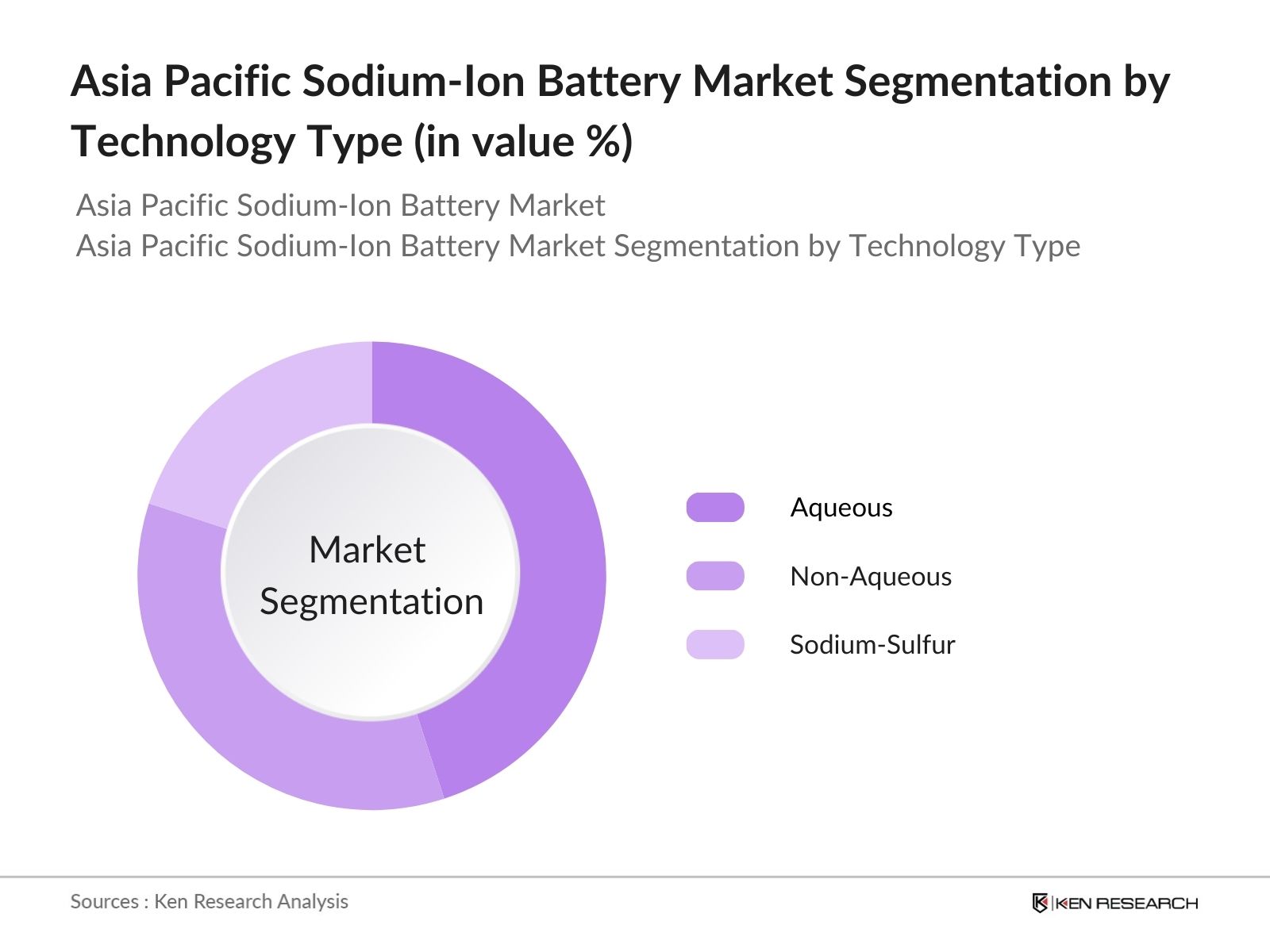
By End-Use Application: The market is also segmented by end-use application into Energy Storage Systems (ESS), Consumer Electronics, Automotive, and Industrial Applications. The ESS sub-segment dominates the market share due to the increasing need for reliable, sustainable energy storage solutions to support grid stability amidst growing renewable energy production. The segments dominance is strengthened by sodium-ion batteries inherent advantages, such as lower costs and reduced environmental impact, making them favorable for widespread energy storage.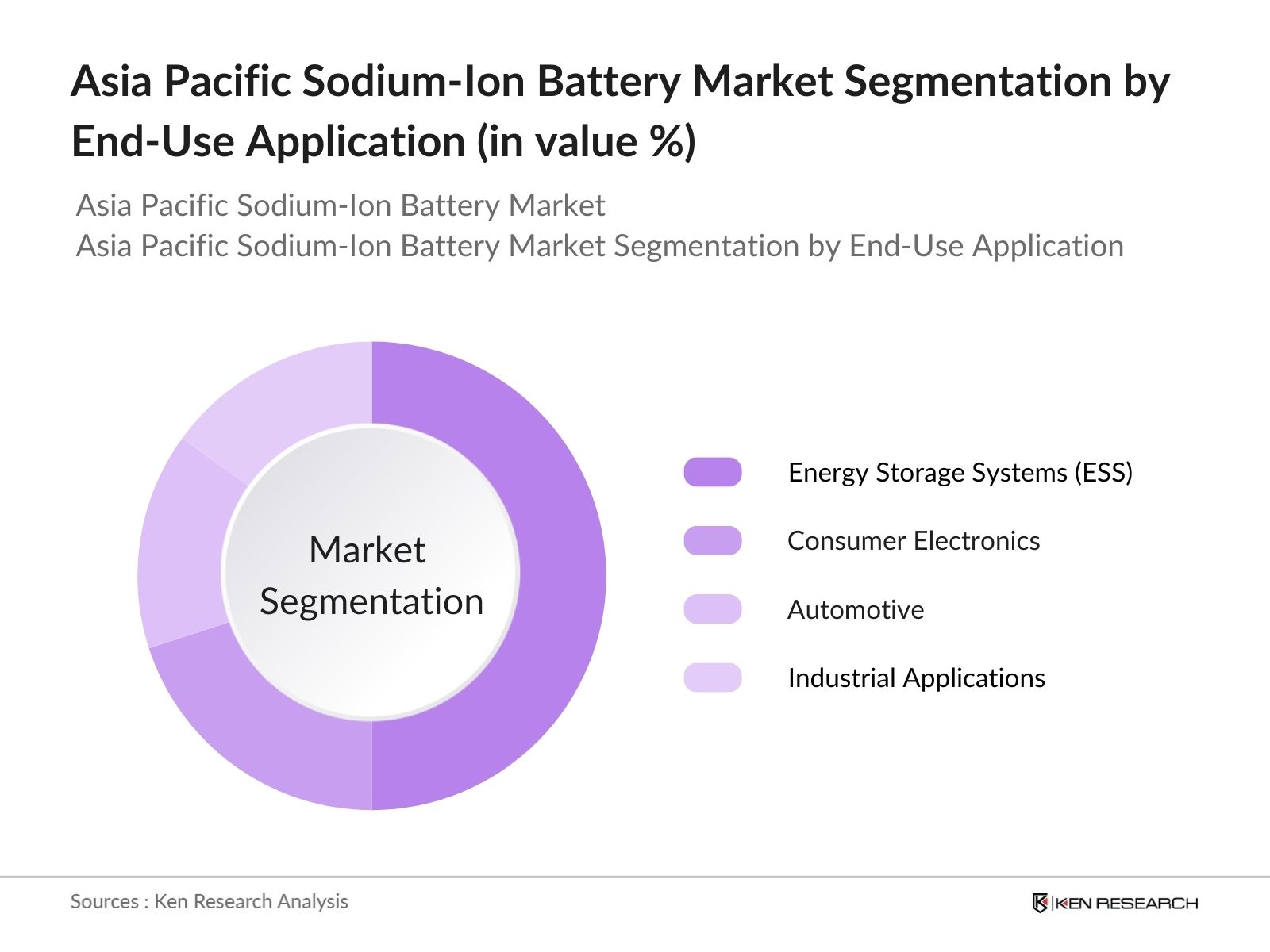
Asia Pacific Sodium-Ion Battery Market Competitive Landscape
The Asia Pacific Sodium-Ion Battery market is primarily dominated by a few key players, both regional and international. Leading companies in the market include notable sodium-ion battery manufacturers, which have solidified their presence through continuous R&D, strategic partnerships, and robust manufacturing capabilities. The market is characterized by high competition, with companies investing heavily in technology advancement to cater to the diverse needs of applications in energy storage, EVs, and industrial sectors.
|
Company |
Establishment Year |
Headquarters |
Technology Focus |
R&D Investment |
Manufacturing Capacity |
Geographic Reach |
Product Innovation |
Strategic Alliances |
Revenue (2023) |
|
Faradion Limited |
2011 |
UK |
|||||||
|
AMTE Power Plc |
2013 |
UK |
|||||||
|
Natron Energy |
2012 |
USA |
|||||||
|
Contemporary Amperex Technology Co. Limited (CATL) |
2011 |
China |
|||||||
|
HiNa Battery Technology |
2017 |
China |
Asia Pacific Sodium-Ion Battery Industry Analysis
Growth Drivers
- Abundant Sodium Resources: The Asia Pacific region holds significant sodium reserves, particularly in countries like China and India, where vast salt flats and mineral-rich waters provide easy access to sodium resources. For instance, Indias salt production reached approximately 30 million metric tons in 2023, with a substantial portion suitable for use in sodium-ion battery development. This resource abundance contrasts with lithium availability, which is geographically concentrated and limited in Asia. The lower extraction costs for sodium further enhance its viability as a battery material, supporting its adoption in the region.
- Cost Efficiency Compared to Lithium-Ion Batteries: Sodium-ion batteries offer a cost-effective alternative to lithium-ion, as sodium is both more abundant and less costly to extract. Compared to lithium, which costs approximately $12,000 per ton in 2023, sodium can be sourced at a fraction of that price due to its widespread availability and simpler processing requirements. These cost efficiencies make sodium-ion batteries especially appealing in large-scale applications like grid storage, where high capacity at a lower cost is crucial, supporting the regions renewable energy initiatives.
- Renewable Energy Integration: Asia Pacifics renewable energy investments are accelerating, with China alone adding over 40 GW of new solar capacity in 2023. Sodium-ion batteries, with their cost-effectiveness and scalability for grid storage, align well with this trend. The batteries are particularly suited for balancing the intermittent supply from renewable sources, reducing reliance on fossil fuel-based backup systems. This integration supports regional energy goals, such as Indias aim for 175 GW of renewable energy capacity by 2025, thereby fostering demand for alternative battery storage solutions.
Market Challenges
- Technical Challenges in Battery Longevity: Sodium-ion batteries face challenges in achieving comparable lifecycle longevity to lithium-ion counterparts. Current sodium-ion designs offer around 2,000 charge cycles, which lags behind the 3,0005,000 cycles of advanced lithium-ion batteries. This affects their appeal for applications like grid storage, where long-term performance stability is essential. Innovations in materials, particularly for anodes, are ongoing to enhance cycle life, yet sodium-ion technology requires further research to meet industry standards in longevity.
- Supply Chain and Material Stability: The supply chain for sodium-ion batteries is still developing, with limited suppliers of high-purity materials like sodium carbonate. Asia Pacific faces potential bottlenecks, as refining capacities in key countries, including India, are geared more toward lithium processing. In 2023, China accounted for over 60% of global battery material refining, with sodium-ion processing constituting a small portion. Diversifying and stabilizing supply chains for these critical materials will be essential for ensuring a consistent supply of sodium-ion batteries across the region.
Asia Pacific Sodium-Ion Battery Market Future Outlook
The Asia Pacific Sodium-Ion Battery market is positioned for substantial growth, fueled by ongoing advancements in sodium-ion technology, increasing demand for renewable energy storage solutions, and reduced reliance on scarce minerals like lithium. As environmental concerns and energy security take precedence, sodium-ion batteries are expected to gain wider adoption across the region, particularly in grid storage and transportation sectors. Furthermore, strategic collaborations between governments and leading battery manufacturers will play a crucial role in shaping the markets future.
Future Market Opportunities
- Expansion into EV and Grid Storage Sectors: As the EV market grows in Asia PacificChina alone produced over 7 million EVs in 2023theres a growing opportunity for sodium-ion batteries in EVs, especially for low-range and affordable models. Additionally, grid storage for renewable energy, driven by regional solar and wind installations, offers a vast market. For example, India has a target of 175 GW renewable capacity by 2025, which could benefit from sodium-ions cost efficiency. This aligns with regional goals for affordable and sustainable energy storage solutions.
- Collaboration with Regional Governments on Clean Energy Initiatives: Asia Pacific governments are actively promoting clean energy, with Japan, China, and India rolling out incentives for renewable energy infrastructure. China invested $546 billion in renewable energy projects in 2023, creating demand for affordable battery storage. Government-backed collaborations in sodium-ion technology development can accelerate its adoption for grid storage applications. Public-private partnerships, such as India's National Mission on Advanced and High-Impact Technologies, also foster sodium-ion research, furthering its market growth potential.
Scope of the Report
|
Technology Type |
Aqueous Non-Aqueous Sodium-Sulfur |
|
End-Use Application |
Energy Storage Systems (ESS) Consumer Electronics Automotive Industrial Applications |
|
Component |
Anode Materials Cathode Materials Electrolytes Separators |
|
Battery Type |
Sodium-Ion Battery Sodium-Sulfur Battery Sodium-Air Battery |
|
Country |
China Japan South Korea India Rest of Asia Pacific |
Products
Key Target Audience
Investor and Venture Capitalist Firms
Government and Regulatory Bodies (e.g., National Development and Reform Commission (China), Ministry of Economy, Trade and Industry (Japan))
Battery Manufacturers
Electric Vehicle Manufacturers
Renewable Energy Storage Providers
Industrial Automation Companies
Banks and Financial Institutes
Home Energy Storage System Providers
Automotive OEMs
Companies
Major Players
Faradion Limited
AMTE Power Plc
Natron Energy
Contemporary Amperex Technology Co. Limited (CATL)
HiNa Battery Technology
Tiamat Energy
Li-FUN Technology Corporation
Broadbit Batteries
Altris AB
Adani Power
Zhejiang Lvming Energy Company
Jiangsu Zoolnasm Energy Technology Co. Ltd.
Northvolt AB
KPIT Technologies
Blue Solutions
Table of Contents
Asia Pacific Sodium Battery Market Overview
1.1 Definition and Scope
1.2 Market Taxonomy
1.3 Market Landscape and Ecosystem Overview
1.4 Current Market Position and Key Indicators
Asia Pacific Sodium Battery Market Size
2.1 Historical Analysis and Industry Evolution
2.2 Key Market Developments and Milestones
2.3 Market Drivers and Limitations
2.4 Regional Contributions and Distribution Metrics
Asia Pacific Sodium Battery Market Analysis
3.1 Growth Drivers
3.1.1 Demand Surge from Energy Storage Solutions
3.1.2 Advancements in Renewable Energy Integration
3.1.3 Industrial Applications and Operational Efficiency
3.2 Market Challenges
3.2.1 Limited Raw Material Supply
3.2.2 High Initial Production Costs
3.2.3 Regulatory Hurdles and Compliance Costs
3.3 Opportunities
3.3.1 Expansion in Electric Vehicle (EV) Applications
3.3.2 Technological Collaborations and Partnerships
3.3.3 Geographic Expansion in Emerging Markets
3.4 Trends
3.4.1 Shift Towards Low-Cost Alternative Energy Storage
3.4.2 Focus on Sustainable and Eco-Friendly Batteries
3.4.3 Integration with Smart Grid Infrastructures
3.5 Regulatory Framework
3.5.1 Environmental Standards and Safety Protocols
3.5.2 Regional Certification Requirements
3.5.3 Government Initiatives for Sustainable Energy Solutions
3.6 SWOT Analysis
3.7 Stakeholder Ecosystem Analysis
3.8 Porters Five Forces Analysis
3.9 Competitive Ecosystem Overview
Asia Pacific Sodium Battery Market Segmentation
4.1 By Technology Type (In Value %)
4.1.1 Aqueous
4.1.2 Non-Aqueous
4.1.3 Sodium-Sulfur
4.2 By End-Use Application (In Value %)
4.2.1 Energy Storage Systems (ESS)
4.2.2 Consumer Electronics
4.2.3 Automotive
4.2.4 Industrial Applications
4.3 By Component (In Value %)
4.3.1 Anode Materials
4.3.2 Cathode Materials
4.3.3 Electrolytes
4.3.4 Separators
4.4 By Battery Type (In Value %)
4.4.1 Sodium-Ion Battery
4.4.2 Sodium-Sulfur Battery
4.4.3 Sodium-Air Battery
4.5 By Country (In Value %)
4.5.1 China
4.5.2 Japan
4.5.3 South Korea
4.5.4 India
4.5.5 Rest of Asia Pacific
Asia Pacific Sodium Battery Market Competitive Analysis
5.1 Detailed Profiles of Major Companies
5.1.1 NGK Insulators Ltd.
5.1.2 Faradion Ltd.
5.1.3 Aquion Energy, Inc.
5.1.4 Tiamat Energy
5.1.5 Altris AB
5.1.6 Natron Energy Inc.
5.1.7 HiNa Battery Technology Co., Ltd.
5.1.8 General Electric Company
5.1.9 Sumitomo Electric Industries, Ltd.
5.1.10 BYD Co. Ltd.
5.1.11 CATL (Contemporary Amperex Technology Co., Limited)
5.1.12 Mitsubishi Corporation
5.1.13 Reliance Industries Limited
5.1.14 Panasonic Corporation
5.1.15 Tesla Inc.
5.2 Cross-Comparison Parameters
- Production Capacity
- Geographical Reach
- Product Portfolio Diversity
- Research and Development Focus
- Strategic Partnerships
- Revenue Performance
- Manufacturing Capabilities
- Environmental Impact Initiatives
5.3 Market Share Analysis by Competitor
5.4 Strategic Initiatives and Technological Innovations
5.5 Merger & Acquisition Activity
5.6 Investment Trends and Analysis
5.7 Venture Capital and Private Equity Involvement
5.8 Public-Private Funding Collaborations
5.9 Government and Institutional Grants
Asia Pacific Sodium Battery Market Regulatory Framework
6.1 Regional Environmental Standards
6.2 Compliance Requirements by Product Type
6.3 Certification Processes and Approval Timelines
Future Market Outlook for Asia Pacific Sodium Batteries
7.1 Projected Market Dynamics and Key Trends
7.2 Key Drivers Expected to Influence Future Growth
Future Market Segmentation Scope
8.1 By End use (In Value %)
8.2 By Battery (In Value %)
8.3 By Technology (In Value %)
8.4 By Component (In Value %)
8.5 By Region (In Value %)
Market Analysts Strategic Recommendations
9.1 Total Addressable Market (TAM) Analysis
9.2 Strategic Target Market Segmentation (SAM) Analysis
9.3 Customer Cohort Analysis
9.4 Market Entry and Expansion Opportunities
9.5 Strategic Marketing and Positioning Recommendations
9.6 Technology Advancement Recommendations
9.7 White Space Opportunity Analysis
Disclaimer
Contact Us
Research Methodology
Step 1: Identification of Key Variables
The initial phase involves constructing a comprehensive map of stakeholders in the Asia Pacific Sodium-Ion Battery Market. This step incorporates secondary research to identify and define the variables influencing market trends and dynamics.
Step 2: Market Analysis and Construction
Historical data analysis on sodium-ion battery market penetration, production output, and segment-wise revenue generation enables a structured market overview. Service quality and performance metrics are also evaluated to ensure data reliability.
Step 3: Hypothesis Validation and Expert Consultation
Formulated hypotheses are validated through consultations with industry experts via Computer-Assisted Telephone Interviews (CATIs), providing operational insights and supporting data corroboration.
Step 4: Research Synthesis and Final Output
Engagements with top sodium-ion battery manufacturers refine and validate the segmentation analysis and revenue estimates, ensuring a comprehensive, data-backed view of the Asia Pacific Sodium-Ion Battery market.
Asia Pacific Sodium Battery Market Report
Frequently Asked Questions
01 How big is the Asia Pacific Sodium-Ion Battery Market?
The Asia Pacific Sodium-Ion Battery market is valued at USD 450 million, driven by increased demand in renewable energy and grid storage solutions.
02 What challenges face the Asia Pacific Sodium-Ion Battery Market?
Key challenges in the Asia Pacific Sodium-Ion Battery market include technical limitations in battery longevity and safety concerns, especially at scale, as well as supply chain stability for battery components.
03 Who are the major players in the Asia Pacific Sodium-Ion Battery Market?
Leading players in the Asia Pacific Sodium-Ion Battery market include Faradion Limited, CATL, HiNa Battery Technology, Natron Energy, and AMTE Power, which drive market trends through innovation and strategic alliances.
04 What drives the Asia Pacific Sodium-Ion Battery Market?
The Asia Pacific Sodium-Ion Battery market is primarily driven by the need for cost-effective energy storage and reduced dependence on lithium, which aligns with regional renewable energy goals.
05 What opportunities exist within the Asia Pacific Sodium-Ion Battery Market?
Opportunities in the Asia Pacific Sodium-Ion Battery market include collaborations with governments for renewable integration, advancements in sodium-sulfur battery technology, and expanded applications in EVs and grid storage solutions.
Why Buy From Us?

What makes us stand out is that our consultants follows Robust, Refine and Result (RRR) methodology. i.e. Robust for clear definitions, approaches and sanity checking, Refine for differentiating respondents facts and opinions and Result for presenting data with story

We have set a benchmark in the industry by offering our clients with syndicated and customized market research reports featuring coverage of entire market as well as meticulous research and analyst insights.

While we don't replace traditional research, we flip the method upside down. Our dual approach of Top Bottom & Bottom Top ensures quality deliverable by not just verifying company fundamentals but also looking at the sector and macroeconomic factors.

With one step in the future, our research team constantly tries to show you the bigger picture. We help with some of the tough questions you may encounter along the way: How is the industry positioned? Best marketing channel? KPI's of competitors? By aligning every element, we help maximize success.

Our report gives you instant access to the answers and sources that other companies might choose to hide. We elaborate each steps of research methodology we have used and showcase you the sample size to earn your trust.

If you need any support, we are here! We pride ourselves on universe strength, data quality, and quick, friendly, and professional service.