















Asia Pacific Swine Feed Market Outlook to 2030
Region:Asia
Author(s):Shambhavi
Product Code:KROD8563
November 2024
83
About the Report
Asia Pacific Swine Feed Market Overview
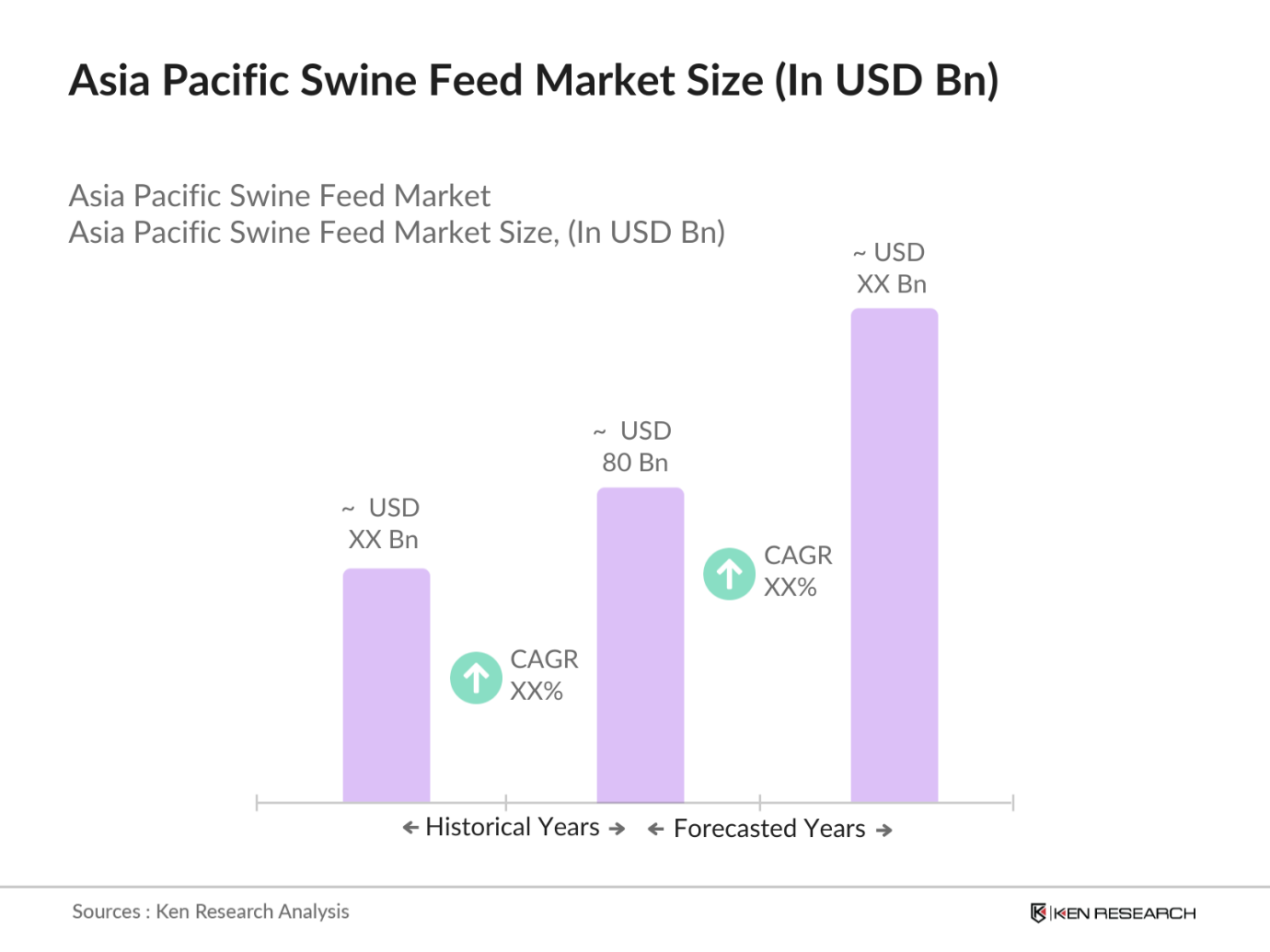
- The Asia Pacific Swine Feed Market is valued at USD 80 billion, with a robust growth trajectory driven by increasing pork consumption and advancements in animal nutrition technologies. The market is primarily propelled by the rising demand for high-quality feed products that enhance growth performance and feed efficiency among swine. Notable contributors to market growth include the expanding middle-class population, which fuels meat consumption, and the integration of modern farming practices that emphasize health and productivity.
- The dominant countries in this market include China, Japan, and India, which account for a significant share due to their high pork consumption rates and established pig farming industries. China remains the largest producer and consumer of pork globally, with increasing investments in feed technology and biosecurity measures. Japan's advanced livestock management practices and Indias growing swine sector further reinforce the region's prominence in the swine feed market.
- Governments across the Asia Pacific region have established stringent regulations to ensure the safety and quality of animal feed. These standards aim to prevent contamination and the spread of diseases. For example, China's Ministry of Agriculture has implemented the "Measures for the Administration of Feed and Feed Additive Production Licenses" to regulate feed production and ensure quality control.
Asia Pacific Swine Feed Market Segmentation
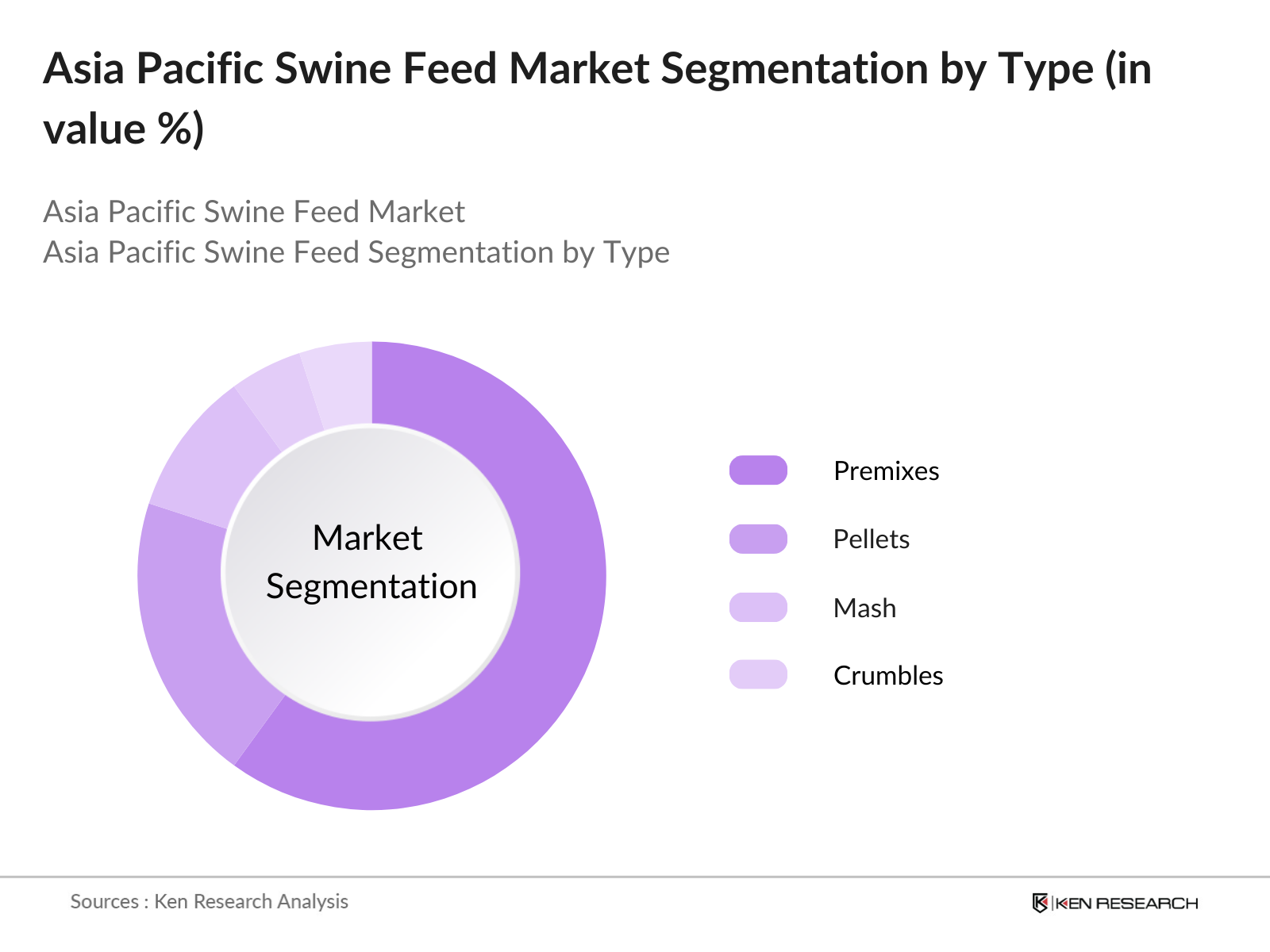
By Type: The Asia Pacific Swine Feed Market is segmented by type into premixes, pellets, mash, and crumbles. Pellets currently hold the largest market share due to their convenience in feeding and better digestibility, which leads to improved feed conversion ratios. The compact form of pellets reduces feed wastage, making them a preferred choice among farmers.
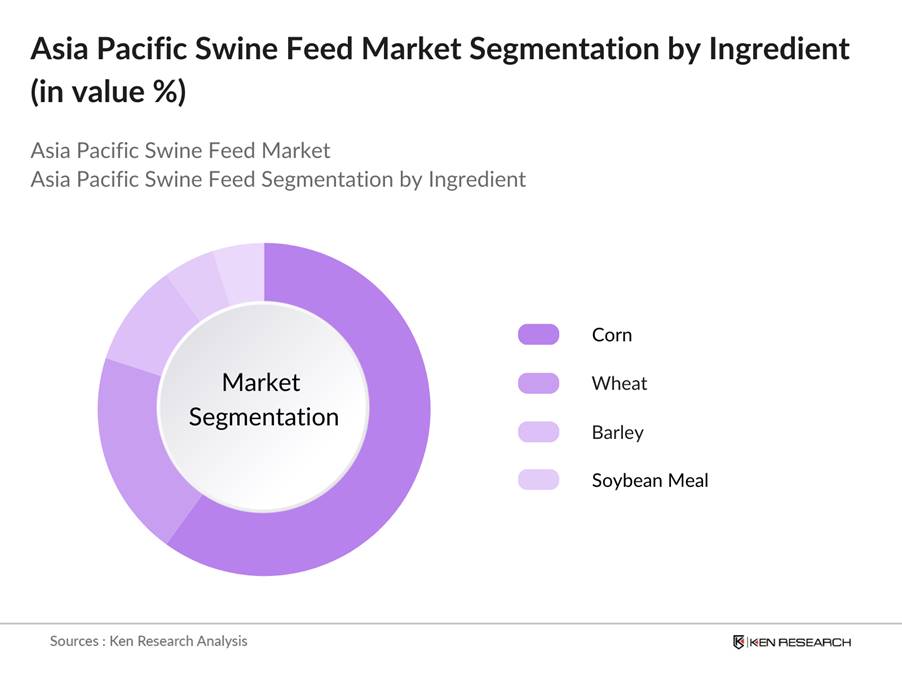
By Ingredient: This market is also segmented by ingredient into corn, wheat, barley, and soybean meal. Corn is the leading ingredient due to its high energy content and availability, which contributes to its dominant market position. It is favored for formulating balanced swine diets, essential for achieving optimal growth rates and production efficiency.
Asia Pacific Swine Feed Market Competitive Landscape
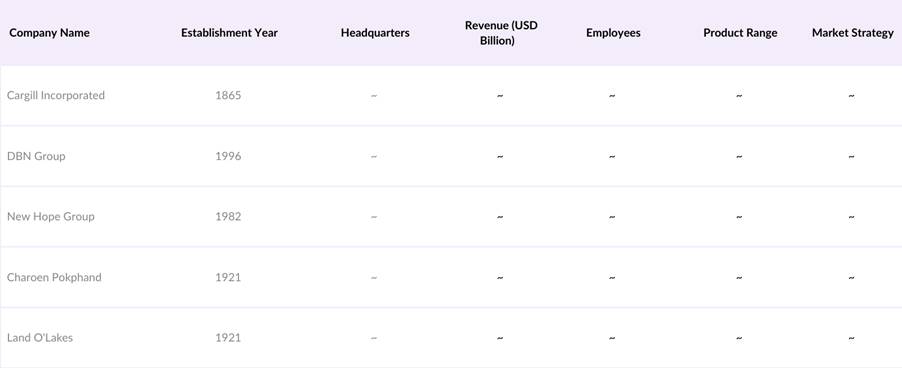
The Asia Pacific Swine Feed Market is characterized by the presence of several key players that dominate the landscape. These companies are actively involved in research and development to enhance their product offerings and maintain a competitive edge.
The competitive landscape highlights the consolidation in the market, with major players investing heavily in research and technology to develop innovative feed solutions tailored to the needs of modern pig farming.
Asia Pacific Swine Feed Market Analysis
Growth Drivers
- Increased Meat Consumption: The demand for pork in the Asia Pacific region has surged significantly, driven by rising populations and changing dietary preferences. In 2022, pork consumption in the Asia Pacific reached 80 million metric tons, accounting for 56% of global pork consumption (FAO). As income levels increase, more consumers are shifting towards meat-centric diets, particularly in countries like China and Vietnam, contributing to the growth of the swine feed market.
- Rising Swine Production: The Asia Pacific region, especially China, is the largest producer of swine, contributing over 50% of the world's total pork production. In 2022, China produced approximately 54 million metric tons of pork, a testament to the robust growth in livestock farming (USDA). The increase in swine production necessitates a corresponding rise in swine feed, driving market expansion.
- Nutritional Advancements: Advances in swine nutrition, particularly the development of specialized feed formulations that improve feed conversion ratios, are significant growth drivers. Research indicates that the use of additives such as enzymes and probiotics in feed can enhance growth rates and health in swine, thereby increasing demand for more sophisticated feed products. In 2023, the adoption of such innovations is expected to boost feed efficiency by up to 15% in key markets like China and India (Animal Nutrition Journal).
- Regulatory Support: Governments in the Asia Pacific region are implementing supportive policies to enhance livestock production, including initiatives to improve feed safety and quality. For instance, the Chinese government has launched multiple programs aimed at modernizing pig farming and feed production, which are anticipated to foster growth in the swine feed sector. Investments in research and development to enhance feed safety standards are also on the rise, as governments focus on ensuring food security (Chinese Ministry of Agriculture).
Market Challenges
- Fluctuating Raw Material Prices: The swine feed market faces challenges from the volatility of raw material prices, particularly grains like corn and soybean meal. In 2022, corn prices peaked at $8.00 per bushel due to supply chain disruptions and weather impacts, putting pressure on feed manufacturers (World Bank). This volatility affects profitability and pricing strategies for feed producers, leading to potential market instability.
- Disease Outbreaks in Swine: The threat of disease outbreaks, such as African Swine Fever (ASF), remains a significant challenge for the swine industry. In 2022, ASF outbreaks led to the culling of millions of pigs in Asia, particularly in China, adversely impacting feed consumption and production stability. The economic loss from ASF has been estimated at over $100 billion, highlighting the fragility of the supply chain in the face of such outbreaks (FAO).
Asia Pacific Swine Feed Market Future Outlook
Over the next few years, the Asia Pacific Swine Feed Market is anticipated to experience significant growth driven by increasing demand for pork products, the rise in meat consumption per capita, and advancements in feed technology. The industry's focus on sustainable practices and the use of alternative protein sources are expected to shape the future of swine feed formulations. Moreover, regulatory changes favoring animal welfare and feed safety standards will push manufacturers to innovate continuously, creating a robust and dynamic market landscape.
Market Opportunities
- Expansion into Emerging Markets: The Asia Pacific region is experiencing rapid economic growth, leading to increased demand for animal protein, particularly pork. Countries like India and Vietnam are witnessing a rise in pork consumption, presenting significant opportunities for swine feed producers to tap into these emerging markets. For instance, India's pork consumption has been steadily increasing, driven by urbanization and changing dietary preferences.
- Development of Specialized Feed Products: Advancements in animal nutrition have paved the way for specialized feed products tailored to specific growth stages and health requirements of swine. The growing awareness among farmers about the benefits of customized feed solutions is propelling the demand for such products. This trend is evident in the increasing adoption of feed additives that enhance growth rates and disease resistance in pigs.
Scope of the Report
|
Product Type |
Grower Feed Finisher Feed Starter Feed |
|
Ingredients |
Corn Soybean Meal Wheat Additives |
|
Formulation Type |
Complete Feed Concentrated Feed Premixes |
|
Distribution Channel |
Direct Sales Retail Online |
|
Region |
China Japan Australia India Rest of the APAC |
Products
Key Target Audience
Investors and Venture Capitalist Firms
Government and Regulatory Bodies (e.g., Ministry of Agriculture in various countries)
Swine Producers and Farmers
Animal Nutrition Companies
Food Processing Firms
Supply Chain and Logistics Companies
Feed Ingredient Suppliers
Veterinary and Health Advisory Services
Companies
Players mentioned in the report
Cargill Incorporated
DBN Group
New Hope Group
Charoen Pokphand Foods
Land O'Lakes
Purina Animal Nutrition
Alltech
Feed One Co.
Beijing Dabeinong Technology Group Co., Ltd.
Wens Foodstuff Group Co., Ltd.
Zhengbang Group
ForFarmers
Nutreco
J.D. Heiskell & Co.
Kent Nutrition Group
Table of Contents
1. Asia Pacific Swine Feed Market Overview
1.1. Definition and Scope
1.2. Market Taxonomy
1.3. Market Growth Rate
1.4. Market Segmentation Overview
2. Asia Pacific Swine Feed Market Size (In USD Bn)
2.1. Historical Market Size
2.2. Year-On-Year Growth Analysis
2.3. Key Market Developments and Milestones
3. Asia Pacific Swine Feed Market Analysis
3.1. Growth Drivers
3.1.1. Increased Meat Consumption
3.1.2. Rising Swine Production
3.1.3. Nutritional Advancements
3.1.4. Regulatory Support
3.2. Market Challenges
3.2.1. Fluctuating Raw Material Prices
3.2.2. Disease Outbreaks in Swine
3.2.3. Environmental Regulations
3.3. Opportunities
3.3.1. Innovations in Feed Formulation
3.3.2. Expansion of Export Markets
3.3.3. Increasing Demand for Organic Feed
3.4. Trends
3.4.1. Adoption of Precision Feeding
3.4.2. Use of Alternative Protein Sources
3.4.3. Integration of Technology in Feeding
3.5. Government Regulation
3.5.1. Feed Safety Standards
3.5.2. Sustainable Farming Initiatives
3.5.3. Supportive Agricultural Policies
3.6. SWOT Analysis
3.7. Stake Ecosystem
3.8. Porters Five Forces
3.9. Competition Ecosystem
4. Asia Pacific Swine Feed Market Segmentation
4.1. By Product Type (In Value %)
4.1.1. Grower Feed
4.1.2. Finisher Feed
4.1.3. Starter Feed
4.2. By Ingredients (In Value %)
4.2.1. Corn
4.2.2. Soybean Meal
4.2.3. Wheat
4.2.4. Additives
4.3. By Formulation Type (In Value %)
4.3.1. Complete Feed
4.3.2. Concentrated Feed
4.3.3. Premixes
4.4. By Distribution Channel (In Value %)
4.4.1. Direct Sales
4.4.2. Retail
4.4.3. Online
4.5. By Region (In Value %)
4.5.1. China
4.5.2. Japan
4.5.3. Australia
4.5.4. India
4.5.5. Southeast Asia
5. Asia Pacific Swine Feed Market Competitive Analysis
5.1 Detailed Profiles of Major Companies
5.1.1. Cargill, Inc.
5.1.2. ADM Animal Nutrition
5.1.3. Land O'Lakes, Inc.
5.1.4. New Hope Group
5.1.5. Charoen Pokphand Foods
5.1.6. Nutreco N.V.
5.1.7. Alltech, Inc.
5.1.8. Huvepharma
5.1.9. Bayer AG
5.1.10. DSM Nutritional Products
5.1.11. PHW-Gruppe
5.1.12. Elanco Animal Health
5.1.13. Biomin Holding GmbH
5.1.14. Perdue Agribusiness
5.1.15. Feed One
5.2 Cross Comparison Parameters (Market Share, Revenue, Product Offerings, Geographic Presence, Distribution Channels, Innovation Rate, Customer Base, and Sustainability Initiatives)
5.3. Market Share Analysis
5.4. Strategic Initiatives
5.5. Mergers And Acquisitions
5.6. Investment Analysis
5.7. Venture Capital Funding
5.8. Government Grants
5.9. Private Equity Investments
6. Asia Pacific Swine Feed Market Regulatory Framework
6.1. Feed Safety Standards
6.2. Compliance Requirements
6.3. Certification Processes
7. Asia Pacific Swine Feed Market Future Size (In USD Bn)
7.1. Future Market Size Projections
7.2. Key Factors Driving Future Market Growth
8. Asia Pacific Swine Feed Market Future Segmentation
8.1. By Product Type (In Value %)
8.2. By Ingredients (In Value %)
8.3. By Formulation Type (In Value %)
8.4. By Distribution Channel (In Value %)
8.5. By Region (In Value %)
9. Asia Pacific Swine Feed Market Analysts Recommendations
9.1. TAM/SAM/SOM Analysis
9.2. Customer Cohort Analysis
9.3. Marketing Initiatives
9.4. White Space Opportunity Analysis
Research Methodology
Step 1: Identification of Key Variables
The initial phase involves mapping the swine feed ecosystem, identifying key stakeholders such as feed manufacturers, suppliers, and end-users. Extensive desk research is employed to compile data from secondary sources, including industry reports and market studies.
Step 2: Market Analysis and Construction
Historical data is gathered regarding market dynamics, including pricing trends and consumption patterns. This analysis aims to establish a foundational understanding of market penetration and revenue generation.
Step 3: Hypothesis Validation and Expert Consultation
Consultations with industry experts and key players provide insights into operational practices, product trends, and financial metrics. These interactions help validate assumptions and refine market models.
Step 4: Research Synthesis and Final Output
The final phase synthesizes the data collected through primary and secondary research, ensuring a comprehensive overview of the market. The focus is on accuracy and relevance to inform strategic business decisions.
Frequently Asked Questions
01. How big is the Asia Pacific Swine Feed Market?
The Asia Pacific Swine Feed Market is valued at USD 80 billion, driven by increasing pork consumption and advancements in feed technologies aimed at improving growth efficiency.
02. What are the challenges in the Asia Pacific Swine Feed Market?
Challenges in the Asia Pacific Swine Feed Market include fluctuating raw material prices, regulatory constraints on additives, and the rising threat of disease outbreaks among livestock, which can disrupt feed demand.
03. Who are the major players in the Asia Pacific Swine Feed Market?
Key players in the Asia Pacific Swine Feed Market include Cargill, DBN Group, New Hope Group, and Charoen Pokphand Foods. These companies leverage extensive distribution networks and innovative product offerings to maintain market leadership.
04. What are the growth drivers of the Asia Pacific Swine Feed Market?
The Asia Pacific Swine Feed Market is propelled by rising meat consumption, government support for the livestock sector, and technological advancements in feed formulations that enhance animal health and productivity.
Why Buy From Us?

What makes us stand out is that our consultants follows Robust, Refine and Result (RRR) methodology. i.e. Robust for clear definitions, approaches and sanity checking, Refine for differentiating respondents facts and opinions and Result for presenting data with story

We have set a benchmark in the industry by offering our clients with syndicated and customized market research reports featuring coverage of entire market as well as meticulous research and analyst insights.

While we don't replace traditional research, we flip the method upside down. Our dual approach of Top Bottom & Bottom Top ensures quality deliverable by not just verifying company fundamentals but also looking at the sector and macroeconomic factors.

With one step in the future, our research team constantly tries to show you the bigger picture. We help with some of the tough questions you may encounter along the way: How is the industry positioned? Best marketing channel? KPI's of competitors? By aligning every element, we help maximize success.

Our report gives you instant access to the answers and sources that other companies might choose to hide. We elaborate each steps of research methodology we have used and showcase you the sample size to earn your trust.

If you need any support, we are here! We pride ourselves on universe strength, data quality, and quick, friendly, and professional service.