
Asia-Pacific Textile Market Outlook to 2030
Region:Afganistan
Author(s):Naman Rohilla
Product Code:KROD3280
Region:Afganistan
Author(s):Naman Rohilla
Product Code:KROD3280
November 2024
99
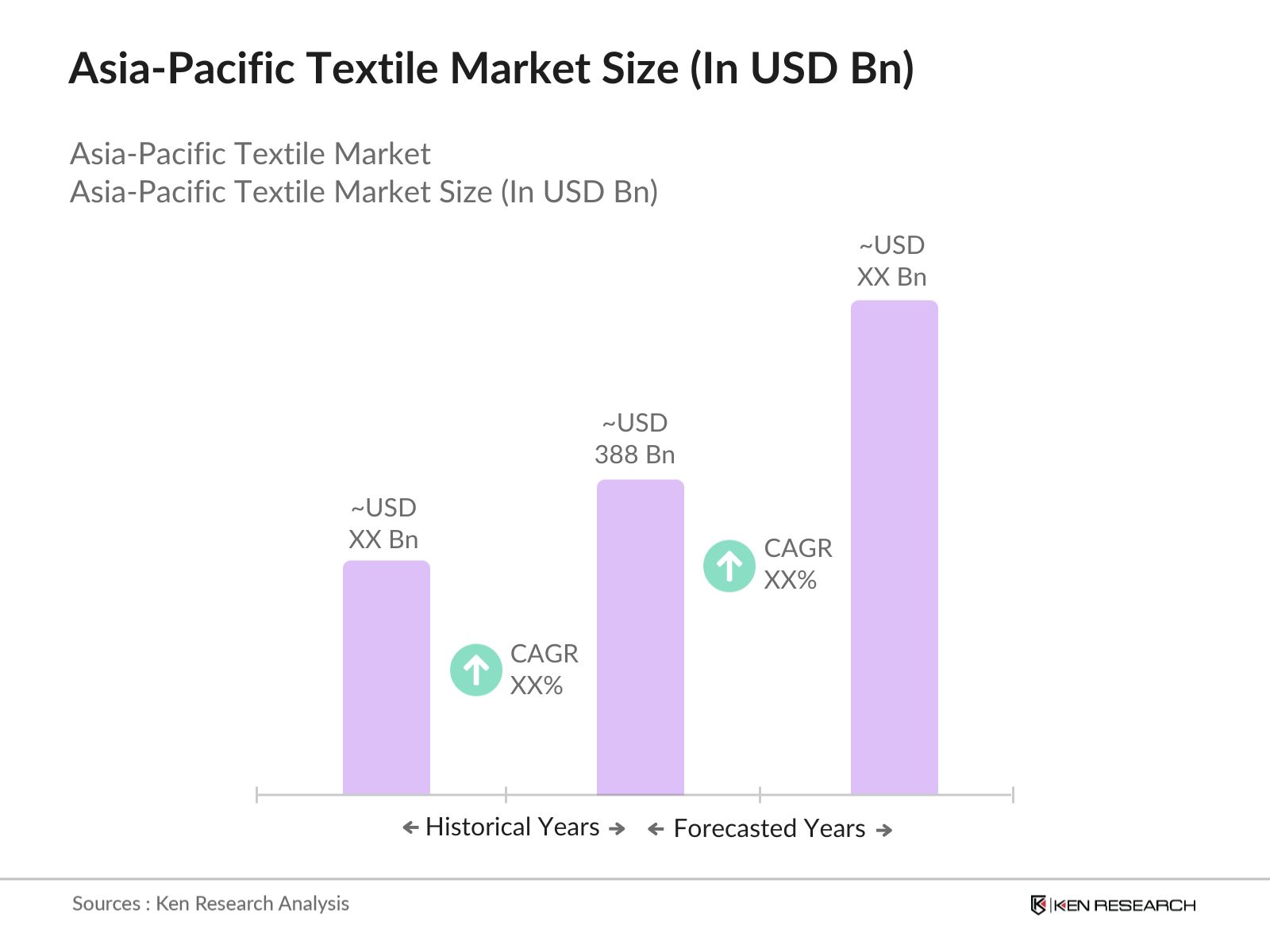
The Asia-Pacific Textile Market is segmented by ownership, service type, speciality type, bed capacity, and geographical region.
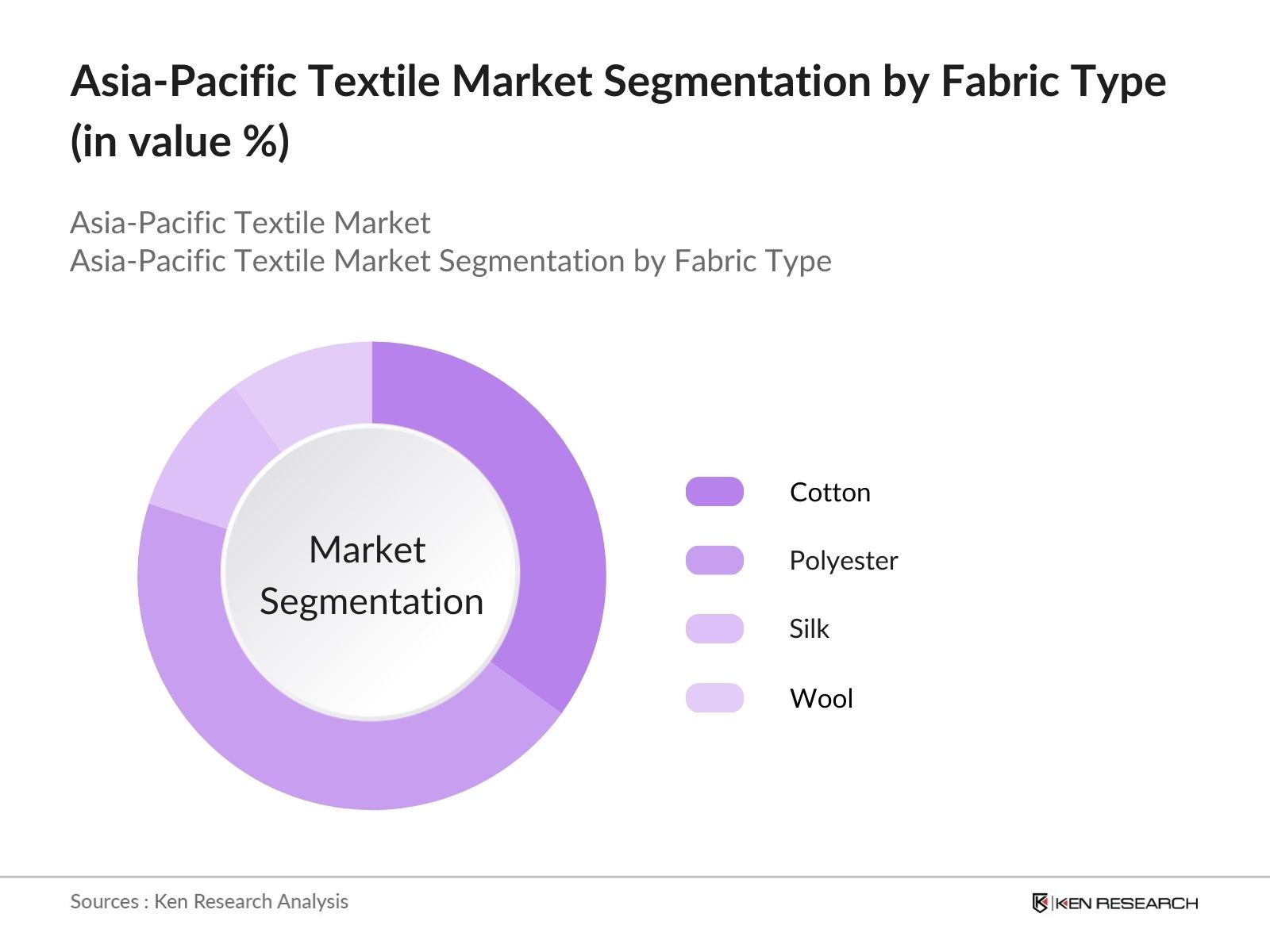
By Fabric Type: The Asia-Pacific Textile market is segmented by fabric type into cotton, polyester, silk, and wool. Recently, polyester has maintained a dominant market share within the fabric type segment, primarily due to its durability, cost-effectiveness, and widespread application in various industries, including fashion and home textiles. Polyester fabrics are lightweight, resistant to shrinking and wrinkling, and have higher moisture-wicking properties, making them preferred for performance wear and active apparel. Additionally, advancements in recycling polyester have boosted its sustainability appeal, further contributing to its dominance.
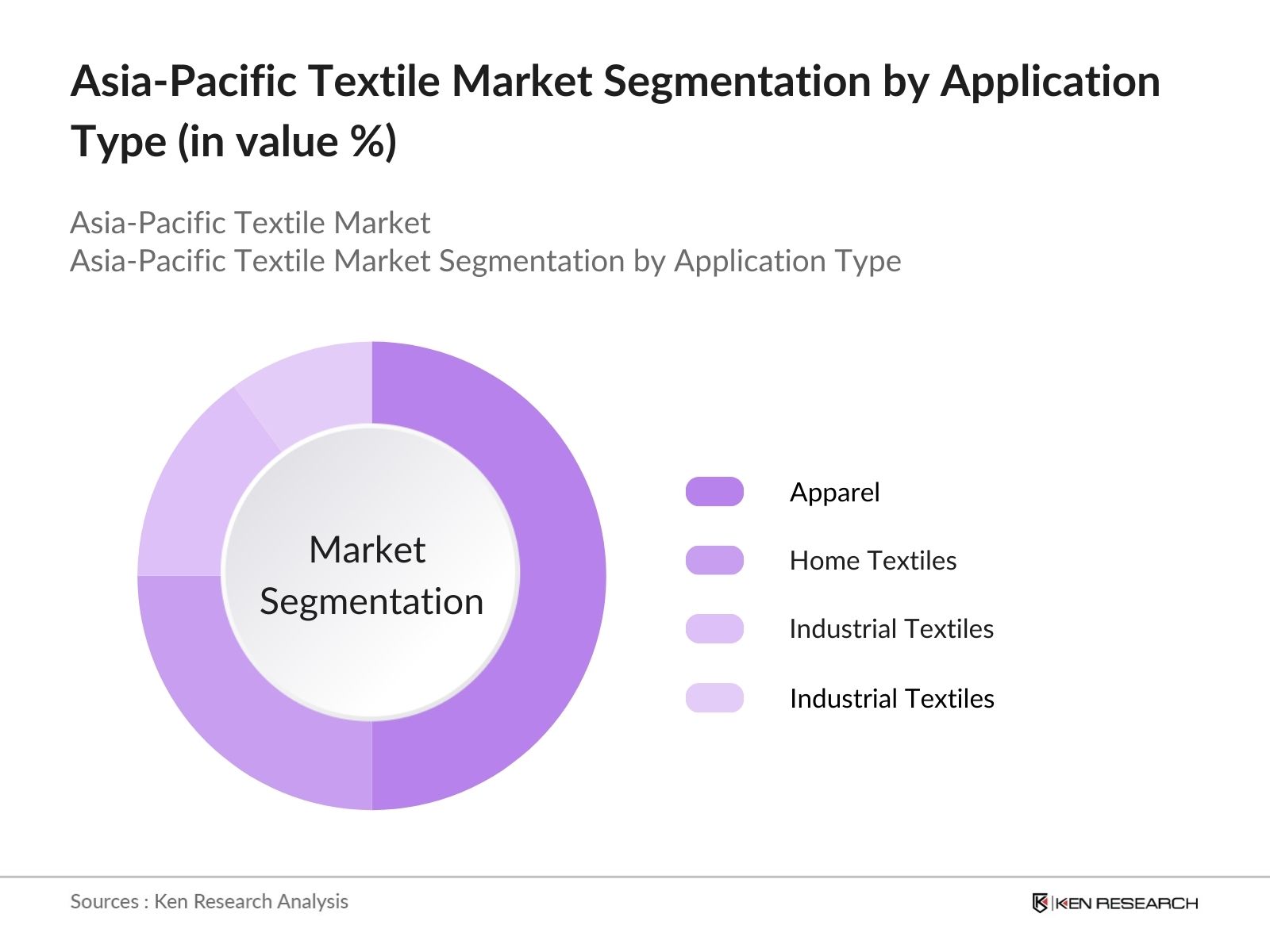
By Application: The Asia-Pacific Textile market is also segmented by application into apparel, home textiles, industrial textiles, and technical textiles. Apparel holds a dominant share in the application segment due to the large consumer base and the regions role as a global hub for fashion production. Major global fashion brands source their products from countries like China, India, and Vietnam, which have developed comprehensive supply chains and competitive labor markets. Additionally, the rise of fast fashion trends and e-commerce platforms has fueled the demand for apparel textiles across the region.
The market features a mix of local giants and multinational corporations, including Shenzhou International and Toray Industries, which lead the industry in terms of production volume and technological innovation. The focus on sustainability and recycling in textiles is also giving rise to new market entrants aiming for eco-friendly solutions. The competitive landscape remains robust, with the top companies focusing on R&D and expansion into emerging markets.
|
Company Name |
Establishment Year |
Headquarters |
Revenue |
No. of Employees |
Fabric Production Capacity |
Key Product |
Sustainability Certifications |
|
Shenzhou International Group |
1989 |
Ningbo, China |
- |
- |
- |
- |
- |
|
PT Sri Rejeki Isman Tbk |
1966 |
Indonesia |
- |
- |
- |
- |
- |
|
Arvind Limited |
1931 |
India |
- |
- |
- |
- |
- |
|
Toray Industries |
1926 |
Japan |
- |
- |
- |
- |
- |
|
Vardhman Textiles |
1965 |
India |
- |
- |
- |
- |
- |
Over the next five years, the Asia-Pacific Textile Market is expected to show growth, driven by increasing consumer demand for sustainable and functional fabrics, coupled with continued investments in advanced textile manufacturing technologies. As brands shift toward eco-friendly production processes, the adoption of recycled materials and circular fashion models will be prominent trends. Additionally, the growth of e-commerce platforms and digital retailing will continue to push the demand for ready-to-wear apparel, particularly in emerging economies within the region.
|
By Fabric Type |
Cotton Polyester Wool Silk |
|
By Application |
Apparel Home Textiles Industrial Textiles Technical Textiles |
|
By Distribution Channel |
Online Offline (Retail, Wholesale) |
|
By End-Use |
Fashion Industry Healthcare Textiles Automotive Textiles Protective Clothing |
|
By Region |
China India Vietnam Japan Rest of APAC |
1.1. Definition and Scope
1.2. Market Taxonomy
1.3. Market Growth Rate
1.4. Market Segmentation Overview
2.1. Historical Market Size
2.2. Year-On-Year Growth Analysis
2.3. Key Market Developments and Milestones
3.1. Growth Drivers
3.1.1. Increasing Demand for Sustainable Textiles
3.1.2. Urbanization and Changing Consumer Preferences
3.1.3. Government Initiatives Supporting Textile Manufacturing (Regional Initiatives: India, China, Vietnam)
3.1.4. Technological Advancements in Fabric Production
3.2. Market Challenges
3.2.1. Volatile Raw Material Prices
3.2.2. Environmental Regulations and Compliance
3.2.3. Skilled Labor Shortage in Emerging Markets
3.3. Opportunities
3.3.1. Growing Demand for Functional and Performance Fabrics
3.3.2. Expansion in the E-Commerce Sector
3.3.3. Digitalization in the Textile Supply Chain (Automation, Smart Textiles)
3.4. Trends
3.4.1. Increasing Use of Recycled Materials
3.4.2. Adoption of Circular Fashion Model
3.4.3. Growth of Fast Fashion in Emerging Markets
3.5. Government Regulations
3.5.1. Textile & Apparel Export Incentives (Country-specific: India, China, Indonesia)
3.5.2. Environmental Sustainability Standards (OEKO-TEX, GOTS)
3.5.3. Import Duties and Trade Policies
3.6. SWOT Analysis
3.7. Stakeholder Ecosystem
3.7.1. Raw Material Suppliers
3.7.2. Manufacturers
3.7.3. Retailers
3.8. Porters Five Forces
3.9. Competition Ecosystem
4.1. By Fabric Type (In Value %)
4.1.1. Cotton
4.1.2. Polyester
4.1.3. Wool
4.1.4. Silk
4.2. By Application (In Value %)
4.2.1. Apparel
4.2.2. Home Textiles
4.2.3. Industrial Textiles
4.2.4. Technical Textiles
4.3. By Distribution Channel (In Value %)
4.3.1. Online
4.3.2. Offline (Retail, Wholesale)
4.4. By End-Use (In Value %)
4.4.1. Fashion Industry
4.4.2. Healthcare Textiles
4.4.3. Automotive Textiles
4.4.4. Protective Clothing
4.5. By Region (In Value %)
4.5.1. China
4.5.2. India
4.5.3. Vietnam
4.5.4. Japan
4.5.5. Rest of APAC
5.1. Detailed Profiles of Major Companies
5.1.1. Shenzhou International Group
5.1.2. PT Sri Rejeki Isman Tbk (Sritex)
5.1.3. Arvind Limited
5.1.4. Toray Industries
5.1.5. Vardhman Textiles
5.1.6. Pacific Textiles Holdings
5.1.7. Parkdale Mills
5.1.8. Weiqiao Textile Company
5.1.9. Reliance Industries (Textile Division)
5.1.10. Nitto Boseki Co., Ltd.
5.1.11. Luthai Textile
5.1.12. Welspun India
5.1.13. Tainan Enterprises
5.1.14. Kyungbang Limited
5.1.15. Teijin Frontier
5.2. Cross Comparison Parameters (Revenue, Fabric Production Capacity, Regional Presence, Sustainability Certifications, R&D Spending, Employee Count, Product Portfolio, Digital Transformation Initiatives)
5.3. Market Share Analysis
5.4. Strategic Initiatives
5.5. Mergers and Acquisitions
5.6. Investment Analysis
5.7. Joint Ventures and Partnerships
5.8. Government Grants and Subsidies
6.1. Environmental and Sustainability Standards (GOTS, OEKO-TEX Certification)
6.2. Compliance with Trade Agreements (ASEAN, RCEP)
6.3. Certification Processes for Export
7.1. Future Market Size Projections
7.2. Key Factors Driving Future Market Growth
8.1. By Fabric Type (In Value %)
8.2. By Application (In Value %)
8.3. By Distribution Channel (In Value %)
8.4. By End-Use (In Value %)
8.5. By Region (In Value %)
9.1. TAM/SAM/SOM Analysis
9.2. Key Investment Opportunities
9.3. Strategic Market Entry Recommendations
9.4. Product Diversification and Innovation Strategies
The initial phase involved identifying key variables that influence the Asia-Pacific Textile Market, with a focus on primary stakeholders, including manufacturers, retailers, and raw material suppliers. Comprehensive desk research was conducted using proprietary databases to gather industry insights.
We compiled historical data from textile manufacturers across the Asia-Pacific region, including penetration rates and fabric production capacity. This data was evaluated to generate revenue estimates and market share figures.
The research team conducted interviews with industry experts and company representatives to validate market data and trends. These consultations provided valuable insights into the production and sales performance of key market players.
The final output includes validated data on market size, segmentation, and competitive landscape, synthesized from both top-down and bottom-up approaches. This ensures accuracy and comprehensiveness in the report.
The Asia-Pacific Textile Market is valued at USD 388 billion, driven by the increasing demand for sustainable fabrics and advancements in manufacturing technologies.
The Asia-Pacific Textile market challenges include environmental regulations, fluctuating raw material prices, and labor shortages in key textile manufacturing countries like China and India.
The Asia-Pacific Textile market key players include Shenzhou International Group, Arvind Limited, Toray Industries, PT Sri Rejeki Isman Tbk, and Vardhman Textiles.
The Asia-Pacific Textile market growth drivers include the expansion of e-commerce platforms, government support for textile exports, and rising consumer demand for sustainable and functional textiles.

What makes us stand out is that our consultants follows Robust, Refine and Result (RRR) methodology. i.e. Robust for clear definitions, approaches and sanity checking, Refine for differentiating respondents facts and opinions and Result for presenting data with story

We have set a benchmark in the industry by offering our clients with syndicated and customized market research reports featuring coverage of entire market as well as meticulous research and analyst insights.

While we don't replace traditional research, we flip the method upside down. Our dual approach of Top Bottom & Bottom Top ensures quality deliverable by not just verifying company fundamentals but also looking at the sector and macroeconomic factors.

With one step in the future, our research team constantly tries to show you the bigger picture. We help with some of the tough questions you may encounter along the way: How is the industry positioned? Best marketing channel? KPI's of competitors? By aligning every element, we help maximize success.

Our report gives you instant access to the answers and sources that other companies might choose to hide. We elaborate each steps of research methodology we have used and showcase you the sample size to earn your trust.

If you need any support, we are here! We pride ourselves on universe strength, data quality, and quick, friendly, and professional service.