
Asia-Pacific Tile Market Outlook to 2030
Region:Afganistan
Author(s):Paribhasha Tiwari
Product Code:KROD7981
Region:Afganistan
Author(s):Paribhasha Tiwari
Product Code:KROD7981
November 2024
99
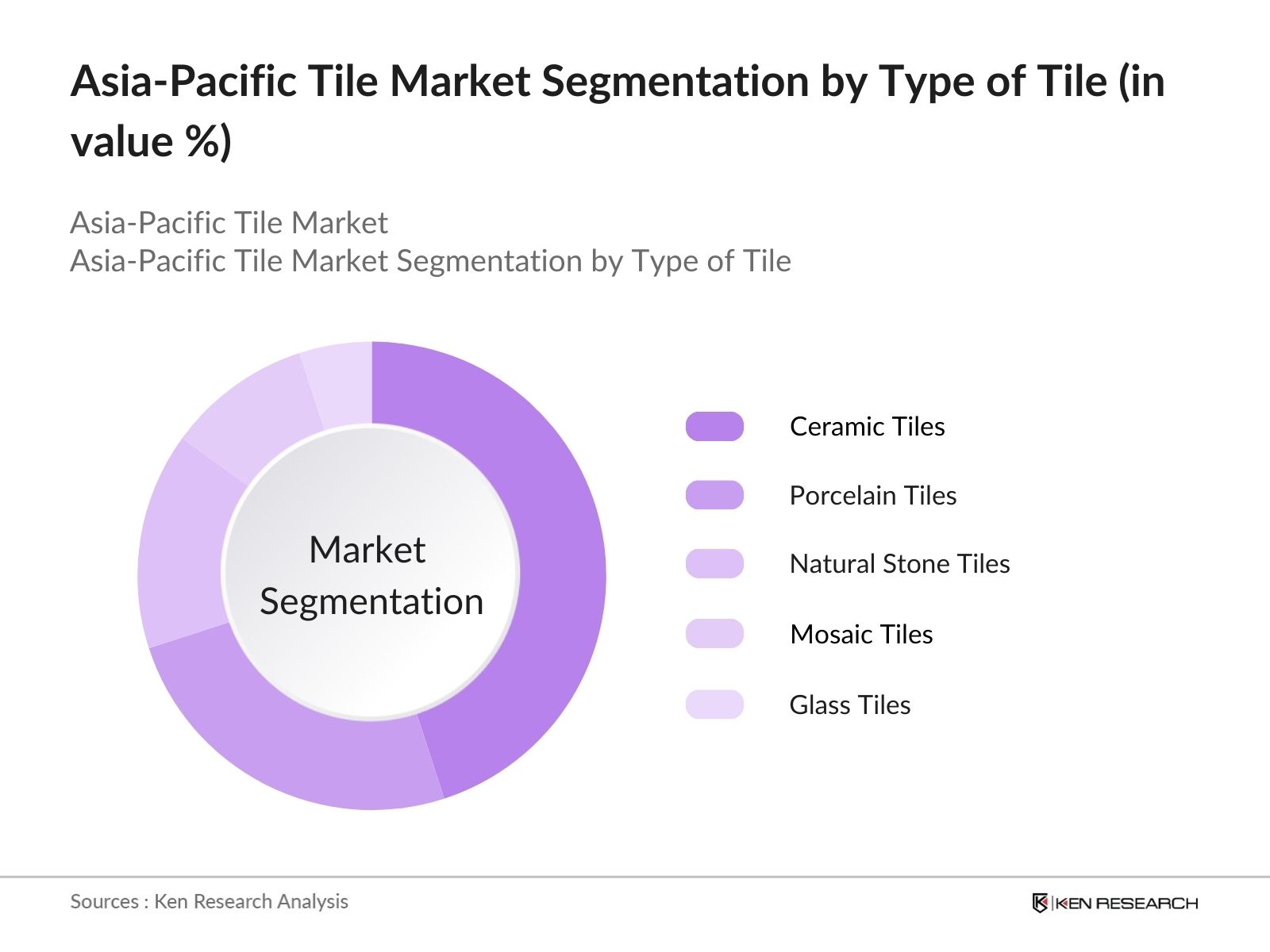
By Type of Tile:
The Asia-Pacific Tile Market is segmented by type of tile into ceramic tiles, porcelain tiles, natural stone tiles, mosaic tiles, and glass tiles. Ceramic tiles hold a dominant market share under this segmentation. This is primarily due to their affordability and widespread availability. Ceramic tiles have become the go-to solution for residential applications, where cost-effectiveness is a critical factor. Furthermore, the variety of designs and easy installation options contribute to their popularity in both new construction and renovation projects.
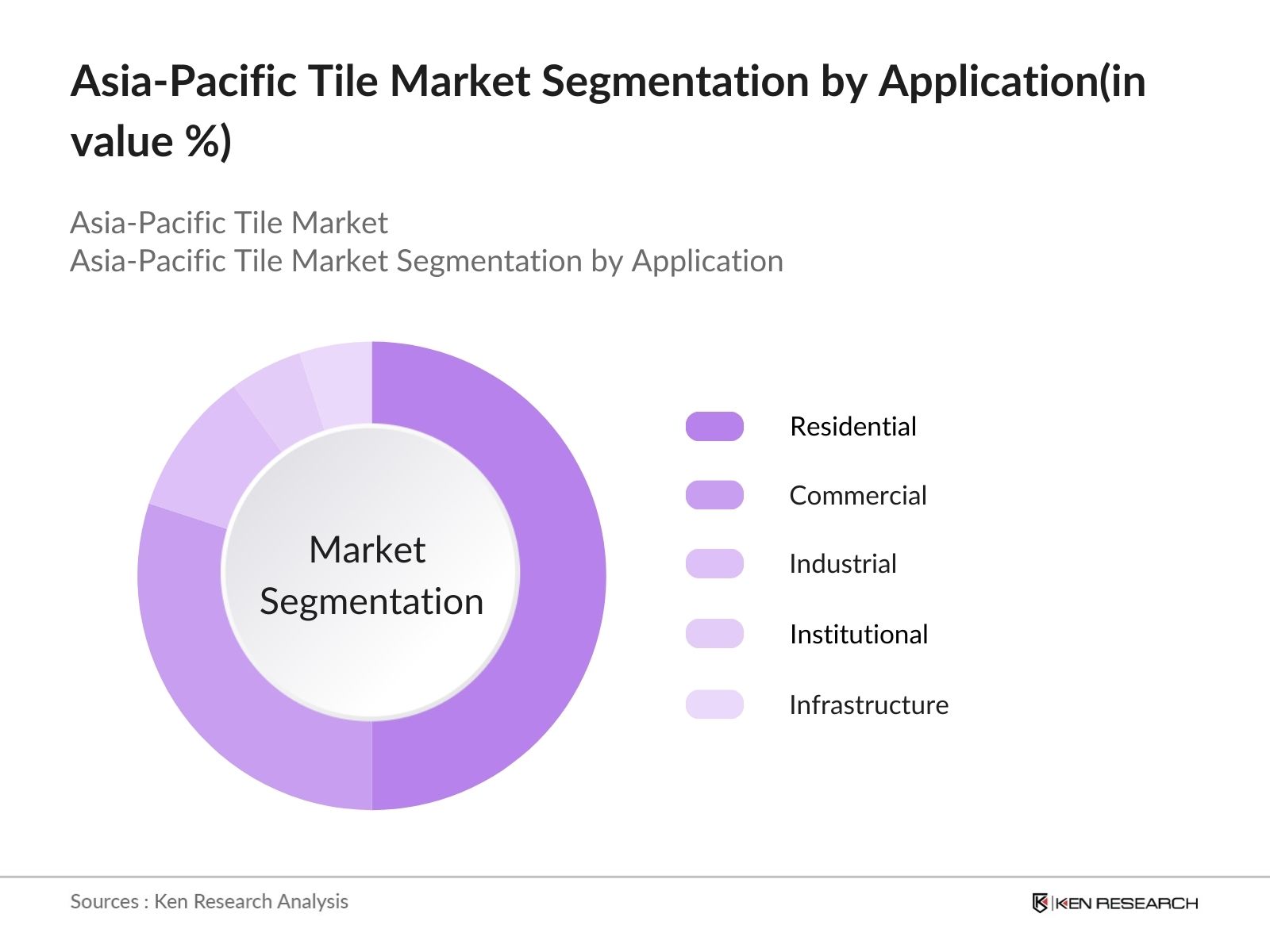
By Application:
The Asia-Pacific Tile Market is segmented by application into residential, commercial, industrial, institutional, and infrastructure. The residential segment dominates the market due to the regions booming housing sector. Countries like China, India, and Southeast Asian nations have seen increased residential construction due to growing urbanization and government-led affordable housing programs. The demand for aesthetically pleasing and cost-effective flooring solutions, particularly for kitchens and bathrooms, has propelled the dominance of this segment.
The Asia-Pacific Tile Market is dominated by both regional players and multinational companies that have established a strong foothold in the region. The market remains competitive due to the high demand for construction materials, particularly tiles. Some of the major players include Kajaria Ceramics, RAK Ceramics, and Mohawk Industries. These companies have built a robust supply chain and manufacturing capabilities to cater to the rising demand. The consolidation within the market indicates a clear concentration of power among these key players.
|
Company Name |
Establishment Year |
Headquarters |
Revenue (USD Bn) |
Tile Output Capacity |
Geographic Footprint |
Product Portfolio |
R&D Investment |
Market Position |
|---|---|---|---|---|---|---|---|---|
|
Kajaria Ceramics |
1985 |
India |
- |
- |
- |
- |
- |
- |
|
RAK Ceramics |
1989 |
United Arab Emirates |
- |
- |
- |
- |
- |
- |
|
Mohawk Industries |
1878 |
United States |
- |
- |
- |
- |
- |
- |
|
SCG Ceramics |
1913 |
Thailand |
- |
- |
- |
- |
- |
- |
|
Asian Granito India Ltd. |
2000 |
India |
- |
- |
- |
- |
- |
- |
Over the next five years, the Asia-Pacific Tile Market is expected to witness robust growth, driven by sustained demand in residential construction and infrastructure projects. Governments in countries like India, Indonesia, and Vietnam are investing heavily in infrastructure development, boosting the demand for tiles. The shift towards eco-friendly and energy-efficient building materials is also expected to shape the future of the tile market, with manufacturers increasingly adopting sustainable production methods.
|
By Type of Tile |
Ceramic Tiles Porcelain Tiles Natural Stone Tiles Mosaic Tiles Glass Tiles |
|
By Application |
Residential Commercial Industria Institutional Infrastructure |
|
By Installation Type |
Floor Tiles Wall Tiles Roof Tiles Ceiling Tiles Facade Tiles |
|
By Distribution Channel |
Offline Online |
|
By Region |
China India Australia Southeast Asia Rest of Asia-Pacific |
Key Target Audience
1.1. Definition and Scope
1.2. Market Taxonomy
1.3. Market Growth Rate
1.4. Market Segmentation Overview
2.1. Historical Market Size
2.2. Year-On-Year Growth Analysis
2.3. Key Market Developments and Milestones
3.1. Growth Drivers (Consumer Demand, Real Estate Development, Export Market
3. Expansion, Government Infrastructure Projects)
3.1.1. Increase in Residential Construction
3.1.2. Growth in Urbanization in Key Markets
3.1.3. Rise in Commercial and Retail Spaces
3.1.4. Export Opportunities from Asia-Pacific to Emerging Markets
3.2. Market Challenges (Cost Structure, Raw Material Price Fluctuations, Regulatory Hurdles, Import Dependency)
3.2.1. High Raw Material Costs (Clay, Silica, etc.)
3.2.2. Regulatory Compliance for Quality Standards
3.2.3. Impact of Trade Tariffs and Import Restrictions
3.2.4. Logistics and Distribution Challenges
3.3. Opportunities (Innovation in Product Design, Green Building Initiatives, Digital Tile Printing Technology, Expansion of Online Retail)
3.3.1. Digital Printing and Customization
3.3.2. Expansion into Eco-Friendly Tiles
3.3.3. Opportunities in Sustainable and Recycled Materials
3.3.4. Increase in E-Commerce Channels for Distribution
3.4. Trends (Customization, Environmentally Friendly Products, Large Format Tiles, Increased Focus on Aesthetics)
3.4.1. Preference for Large-Sized Tiles in Residential Construction
3.4.2. Growth in Sustainable and Recycled Tiles
3.4.3. Rise in Demand for Customizable and Digitally Printed Tiles
3.4.4. Aesthetic Trends Influencing Product Innovation
3.5. Government Regulation (Building Codes, Trade Regulations, Environmental Regulations, Safety Standards)
3.5.1. Building Code Requirements for Tile Usage
3.5.2. Import Regulations on Raw Materials
3.5.3. Environmental Sustainability Policies for Manufacturers
3.5.4. Safety and Quality Compliance for Exports
3.6. SWOT Analysis
3.7. Stakeholder Ecosystem
3.8. Porters Five Forces
3.9. Competitive Landscape Overview
4.1. By Type of Tile (In Value %)
4.1.1. Ceramic Tiles
4.1.2. Porcelain Tiles
4.1.3. Natural Stone Tiles
4.1.4. Mosaic Tiles
4.1.5. Glass Tiles
4.2. By Application (In Value %)
4.2.1. Residential
4.2.2. Commercial
4.2.3. Industrial
4.2.4. Institutional
4.2.5. Infrastructure
4.3. By Installation Type (In Value %)
4.3.1. Floor Tiles
4.3.2. Wall Tiles
4.3.3. Roof Tiles
4.3.4. Ceiling Tiles
4.3.5. Facade Tiles
4.4. By Distribution Channel (In Value %)
4.4.1. Offline (Retailers, Distributors, Contractors)
4.4.2. Online (E-commerce Platforms, Direct Sales)
4.5. By Region (In Value %)
4.5.1. China
4.5.2. India
4.5.3. Australia
4.5.4. Southeast Asia
4.5.5. Rest of Asia-Pacific
5.1. Detailed Profiles of Major Companies
5.1.1. Kajaria Ceramics
5.1.2. RAK Ceramics
5.1.3. SCG Ceramics
5.1.4. Somany Ceramics
5.1.5. Mohawk Industries
5.1.6. Pamesa Cermica
5.1.7. Grupo Lamosa
5.1.8. Victoria PLC
5.1.9. Johnson Tiles
5.1.10. Dongpeng Holdings
5.1.11. Asian Granito India Ltd.
5.1.12. China Ceramics Co., Ltd.
5.1.13. Marazzi Group
5.1.14. Florida Tile
5.1.15. Nitco Ltd.
5.2. Cross Comparison Parameters (Revenue, Tile Output Capacity, Geographic Footprint, Product Portfolio, Certifications, Distribution Networks, R&D Investment, Market Position)
5.3. Market Share Analysis
5.4. Strategic Initiatives
5.5. Mergers and Acquisitions
5.6. Investment Analysis
5.7. Venture Capital Funding
5.8. Government Grants and Subsidies
5.9. Private Equity Investments
6.1. Building and Construction Codes
6.2. Environmental Compliance for Tile Manufacturing
6.3. Import and Export Regulations
6.4. Certification and Quality Standards
7.1. Future Market Size Projections
7.2. Key Factors Driving Future Market Growth
8.1. By Type of Tile (In Value %)
8.2. By Application (In Value %)
8.3. By Installation Type (In Value %)
8.4. By Distribution Channel (In Value %)
8.5. By Region (In Value %)
9.1. TAM/SAM/SOM Analysis
9.2. Customer Cohort Analysis
9.3. Marketing Initiatives
9.4. White Space Opportunity Analysis
Disclaimer Contact UsThis initial phase involved developing a comprehensive ecosystem map of the Asia-Pacific Tile Market. Secondary research was employed to identify critical variables affecting market dynamics, including manufacturing processes, supply chains, and distribution networks.
We gathered historical data on market size and growth drivers by assessing revenue generation, market penetration, and regional demand trends. Key market milestones were identified to evaluate the competitive landscape and strategic movements of leading players.
In this phase, we conducted telephonic interviews with industry experts, including senior executives from tile manufacturing companies. Their insights were instrumental in validating hypotheses and refining market forecasts.
The final stage focused on synthesizing the data gathered from both primary and secondary research. Key trends, such as the shift towards large format tiles and eco-friendly materials, were highlighted, ensuring an accurate and comprehensive market analysis.
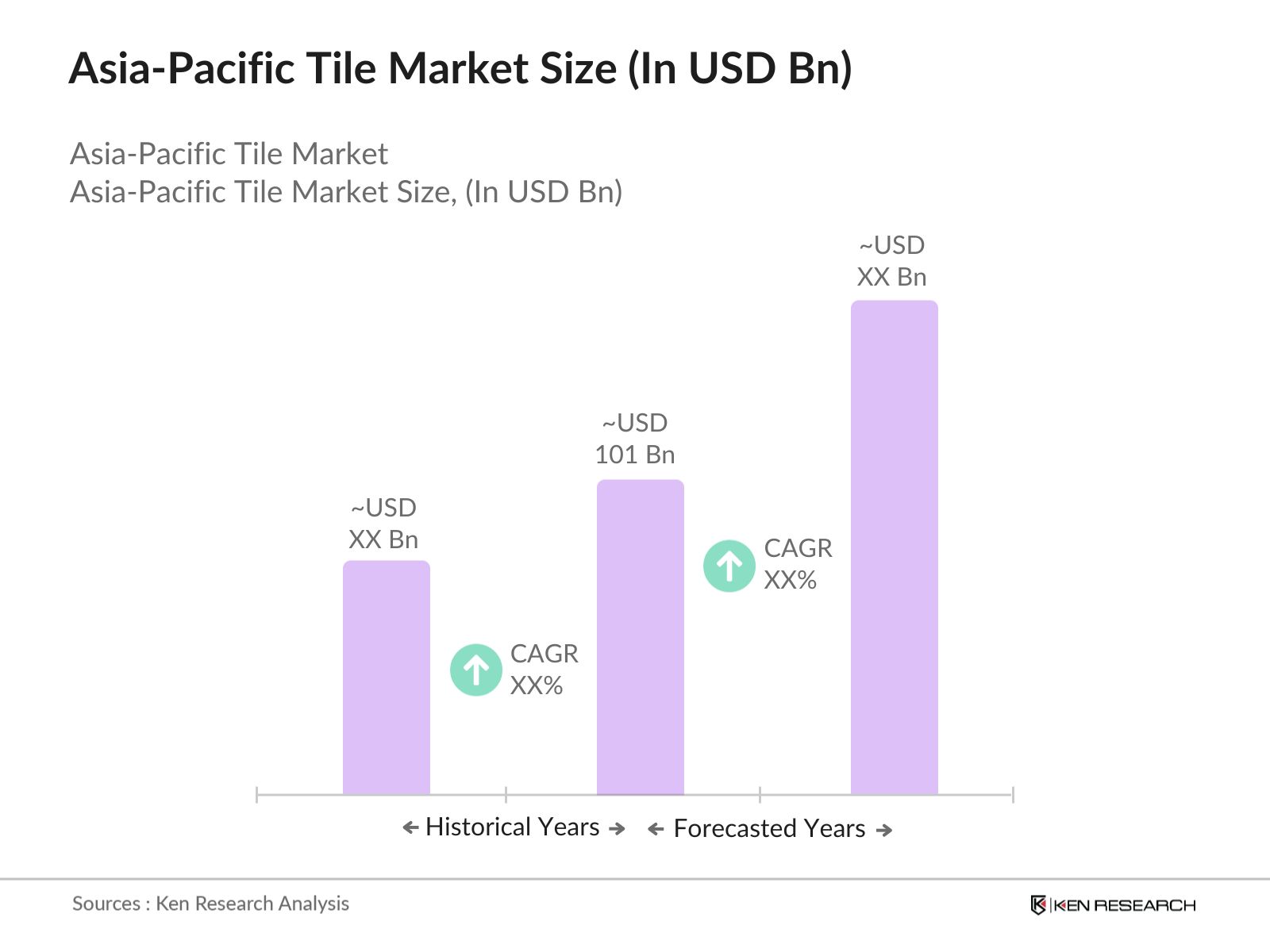
The Asia-Pacific Tile Market is valued at USD 101 billion, driven by rising residential and commercial construction activities across key markets like China, India, and Southeast Asia.
Challenges include fluctuating raw material prices, compliance with environmental regulations, and high competition from local manufacturers. Additionally, import dependency on specific raw materials poses logistical issues.
Key players in the Asia-Pacific Tile Market include Kajaria Ceramics, RAK Ceramics, Mohawk Industries, SCG Ceramics, and Asian Granito India Ltd., which dominate due to their extensive manufacturing capabilities and distribution networks.
The Asia-Pacific Tile market is propelled by the region's rapid urbanization, increasing residential construction projects, and growing demand for aesthetically appealing, durable tiles in both residential and commercial sectors.

What makes us stand out is that our consultants follows Robust, Refine and Result (RRR) methodology. i.e. Robust for clear definitions, approaches and sanity checking, Refine for differentiating respondents facts and opinions and Result for presenting data with story

We have set a benchmark in the industry by offering our clients with syndicated and customized market research reports featuring coverage of entire market as well as meticulous research and analyst insights.

While we don't replace traditional research, we flip the method upside down. Our dual approach of Top Bottom & Bottom Top ensures quality deliverable by not just verifying company fundamentals but also looking at the sector and macroeconomic factors.

With one step in the future, our research team constantly tries to show you the bigger picture. We help with some of the tough questions you may encounter along the way: How is the industry positioned? Best marketing channel? KPI's of competitors? By aligning every element, we help maximize success.

Our report gives you instant access to the answers and sources that other companies might choose to hide. We elaborate each steps of research methodology we have used and showcase you the sample size to earn your trust.

If you need any support, we are here! We pride ourselves on universe strength, data quality, and quick, friendly, and professional service.