
Asia Pacific Titanium Dioxide Market Outlook to 2030
Region:Asia
Author(s):Yogita Sahu
Product Code:KROD3979
December 2024
86
About the Report
Asia Pacific Titanium Dioxide Market Overview
- The Asia Pacific Titanium Dioxide Market is valued at USD 8.9 billion, driven by the increased demand from industries like coatings, plastics, and paper. A key factor contributing to this demand is titanium dioxide's unique properties as a pigment and UV-resistant compound, which are essential for applications in paints, coatings, and sunscreens. Industrial and economic growth across major countries in Asia, coupled with advancements in production technologies, are expected to sustain this demand.
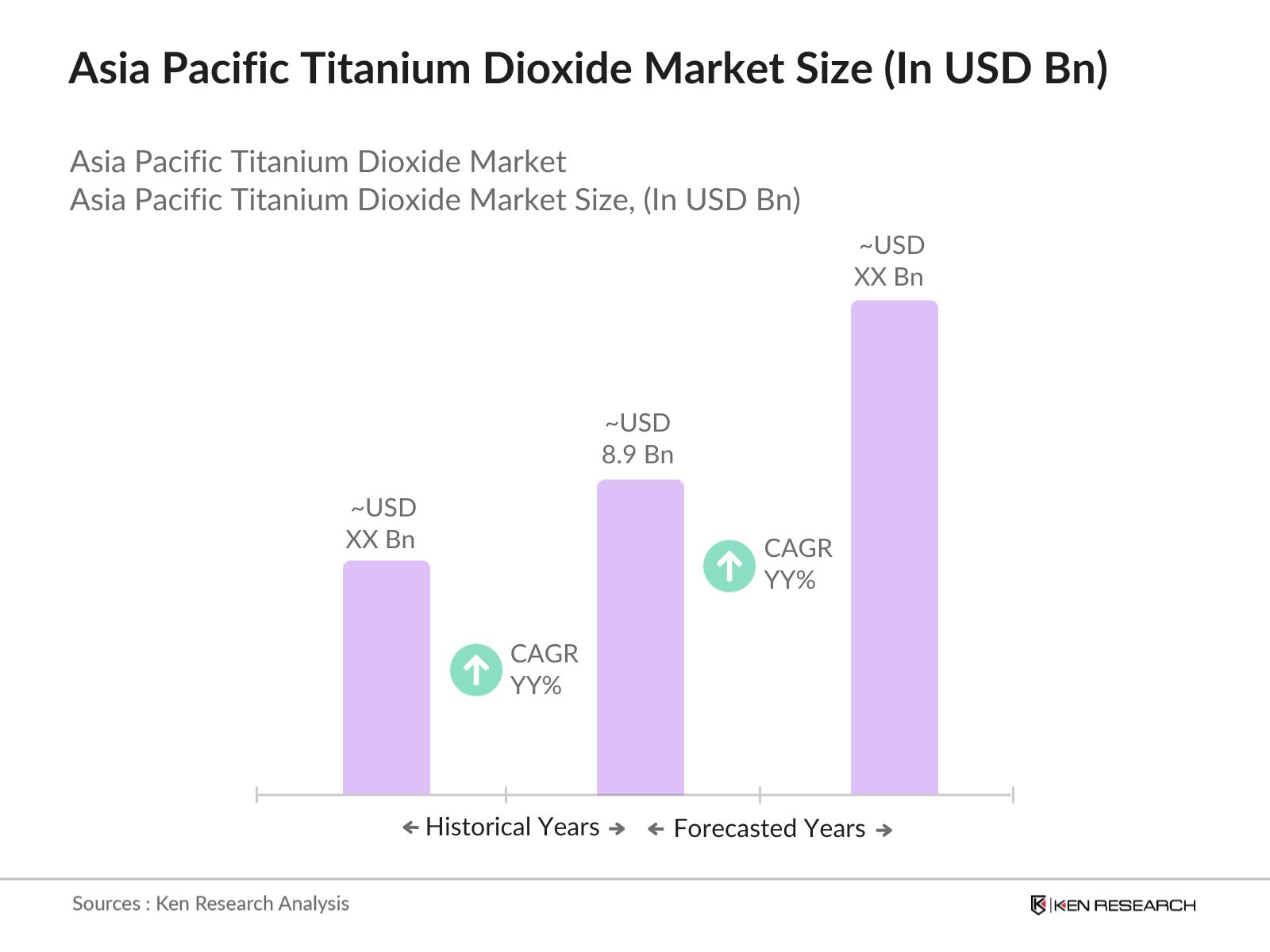
- Countries such as China, Japan, and India lead the titanium dioxide market in Asia Pacific. China's dominance stems from its extensive industrial base, strong production capabilities, and significant investments in titanium dioxide manufacturing. Japan and India follow due to their increasing use of titanium dioxide in high-end coatings, plastics, and cosmetics, along with expanding infrastructure and consumer goods industries.
- In 2024, the Chinese government allocated approximately $3 billion in grants and incentives to support high-tech manufacturing, including the titanium dioxide sector, in order to boost local production capacity. These investments aim to increase self-reliance in essential manufacturing materials, with a goal to produce over 500,000 metric tons of titanium dioxide domestically by the years end, fostering a favorable environment for market expansion.
Asia Pacific Titanium Dioxide Market Segmentation
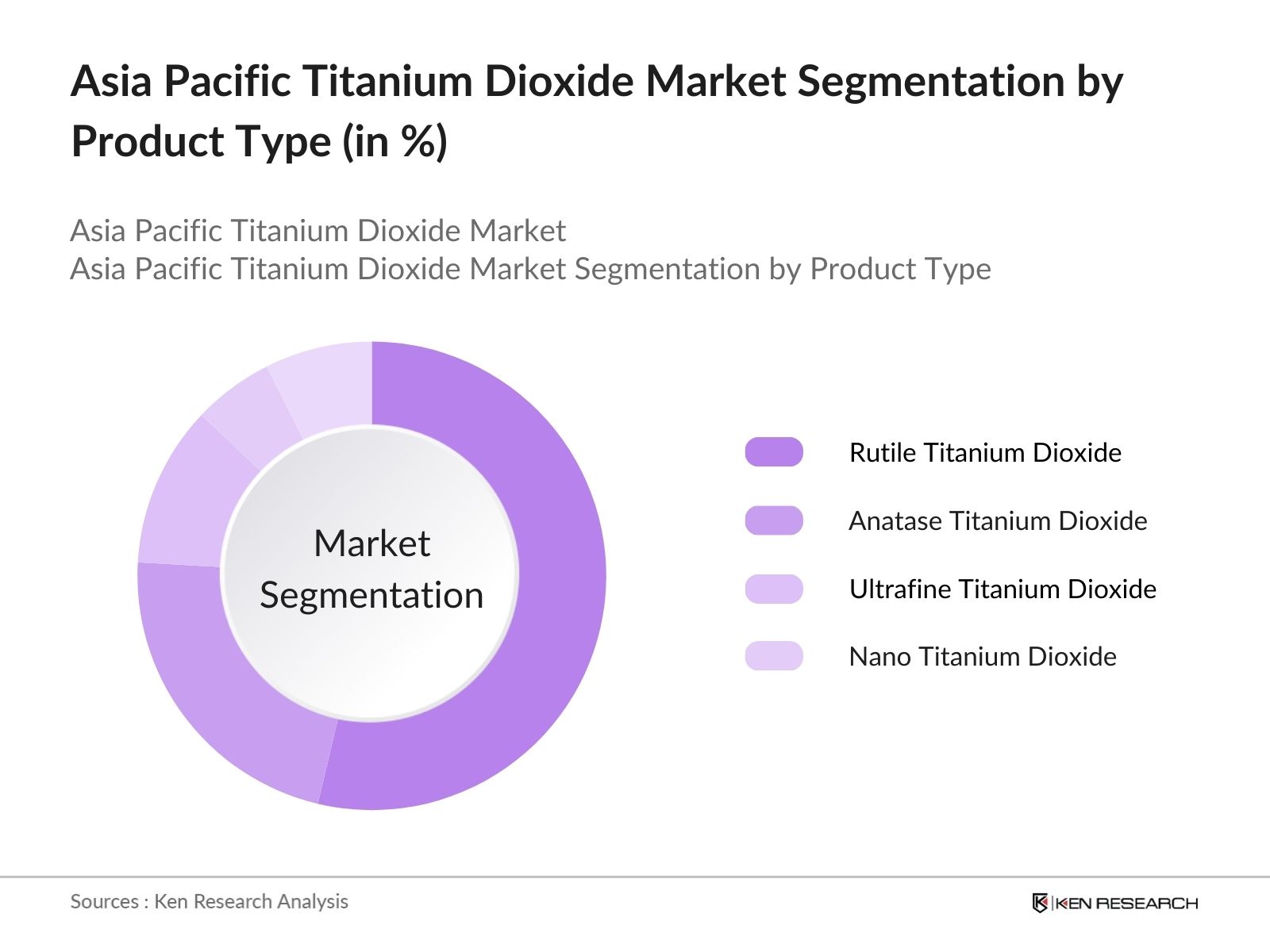
By Product Type: The market is segmented by product type into Rutile Titanium Dioxide, Anatase Titanium Dioxide, Ultrafine Titanium Dioxide, and Nano Titanium Dioxide. Rutile Titanium Dioxide holds a dominant market share due to its high refractive index, making it ideal for applications requiring high opacity and whiteness, such as paints and coatings. Rutiles exceptional durability in outdoor conditions further boosts its demand in construction-related applications, where resistance to weathering is essential.
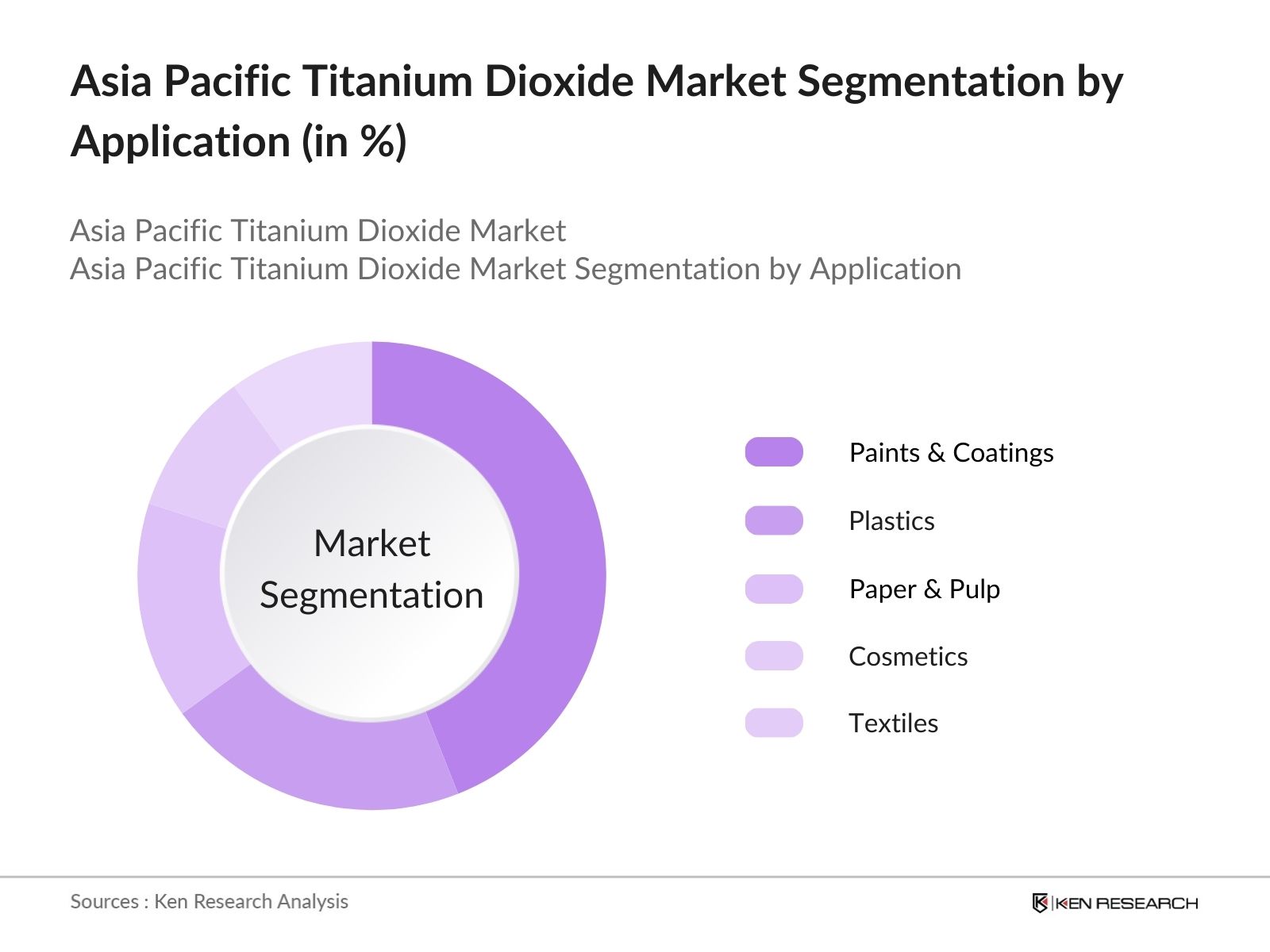
By Application: The market is segmented by application into Paints & Coatings, Plastics, Paper & Pulp, Cosmetics, and Textiles. The Paints & Coatings segment dominates due to the widespread use of titanium dioxide in both decorative and industrial paints. Its ability to provide whiteness, opacity, and UV protection makes it indispensable in architectural and industrial coatings, where these properties enhance durability and aesthetic appeal.
Asia Pacific Titanium Dioxide Market Competitive Landscape
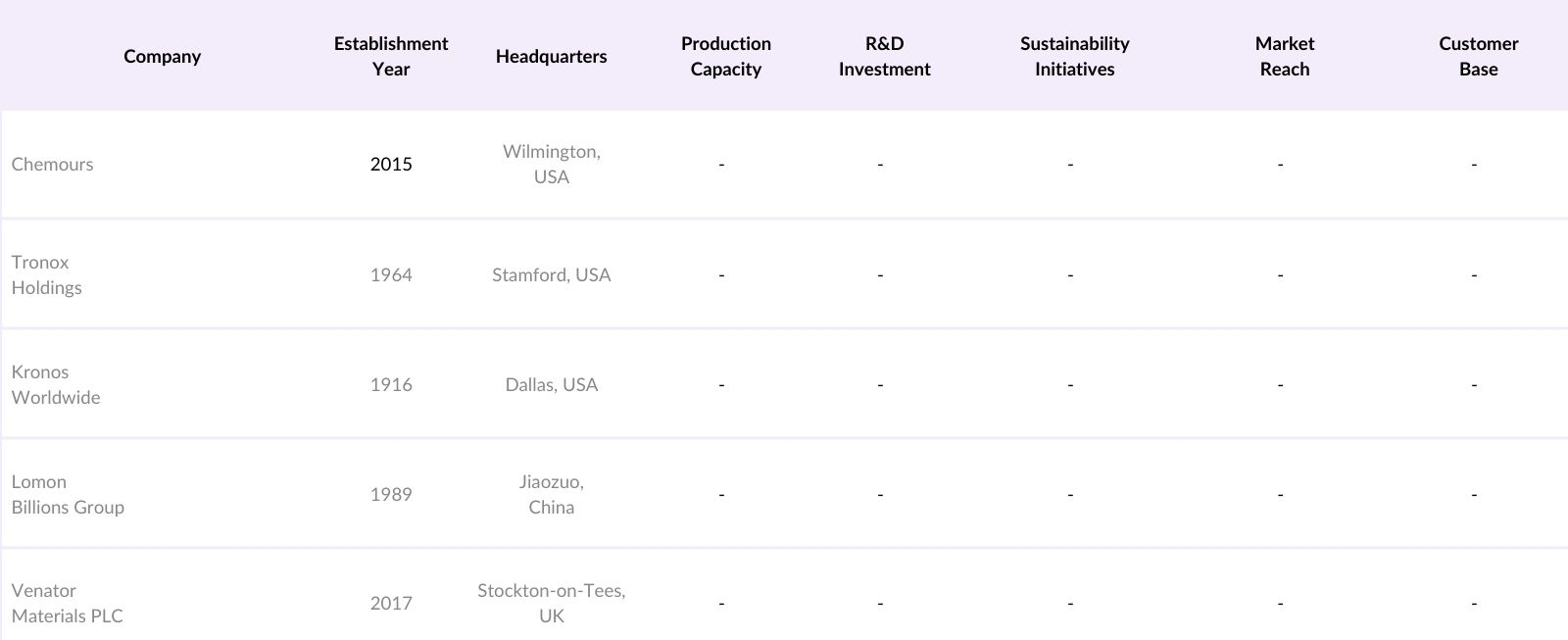
The market is dominated by a few major players, including Chemours, Tronox Holdings, and Kronos Worldwide, which have a strong regional presence and established supply chains. These companies leverage advanced production technologies and robust R&D initiatives to maintain their competitive edge.
Asia Pacific Titanium Dioxide Market Analysis
Market Growth Drivers
- Industrial Expansion Across the Region: In 2024, the Asia-Pacific region experienced a surge in industrial output, with manufacturing output in sectors like automotive, construction, and consumer goods collectively exceeding 3 billion units of titanium dioxide-dependent products. This industrial growth is driving demand for titanium dioxide, as its applications in these sectors are essential for providing high durability, brightness, and opacity in end-products.
- Rise in Paints and Coatings Sector: The construction boom across urban centers in Asia-Pacific in 2024, particularly in major cities across India and Southeast Asia, led to an increased demand for architectural coatings and industrial paints. According to recent construction industry records, over 1.5 billion square meters of residential and commercial space have been added, requiring high-quality coatings to enhance durability and aesthetic appeal.
- Growth in Plastic Production: The rapid expansion in the plastics sector, with an output of over 250 million metric tons in Asia-Pacific in 2024, is boosting titanium dioxide demand, especially for plastics used in packaging and consumer products. Countries like China, which contributed to around 40% of the global plastic production in 2024, use titanium dioxide extensively to enhance the durability, color, and light resistance of plastics, further propelling demand within the regions market.
Market Challenges
- Energy Consumption Costs: Given that titanium dioxide production is highly energy-intensive, the rising cost of energy, which exceeded $0.12 per kilowatt-hour in major manufacturing hubs like China, has led to higher operational expenses. With energy representing nearly 30% of production costs, manufacturers face pressure to optimize production to stay competitive.
- Intense Market Competition: In the Asia-Pacific titanium dioxide market, numerous small-to-medium enterprises contribute to a highly fragmented market, creating competitive pricing pressures. With around 150 titanium dioxide manufacturing units across the region, larger players face challenges in maintaining market share and pricing power.
Asia Pacific Titanium Dioxide Market Future Outlook
Over the next five years, the Asia Pacific Titanium Dioxide industry is expected to witness growth, fueled by expanding applications in emerging economies, advancements in sustainable production technologies, and increased demand for high-performance coatings in construction and automotive sectors.
Future Market Opportunities
- Increased Demand for High-Performance Coatings: Demand for advanced, high-performance coatings in the Asia-Pacific region is anticipated to exceed 1.5 million metric tons annually within the next five years, driven by rising infrastructural projects and automotive needs. Titanium dioxide, a critical component in these coatings, will continue to witness significant demand as manufacturers invest in developing products with higher durability and efficiency.
- Shift Toward Sustainable and Eco-Friendly Solutions: With environmental sustainability as a priority, Asia-Pacific titanium dioxide producers will likely adopt eco-friendly production methods by 2029. Government-backed initiatives are anticipated to boost investments in sustainable manufacturing processes, potentially reducing production-related emissions by over 10%, which will reshape industry standards and operational protocols across the sector.
Scope of the Report
|
By Product Type |
Rutile Titanium Dioxide |
|
Anatase Titanium Dioxide |
|
|
Ultrafine Titanium Dioxide |
|
|
Nano Titanium Dioxide |
|
|
By Application |
Paints & Coatings |
|
Plastics |
|
|
Paper & Pulp |
|
|
Cosmetics |
|
|
Textiles |
|
|
By Process |
Sulfate Process |
|
Chloride Process |
|
|
By Grade |
Standard Grade |
|
High-Opacity Grade |
|
|
By Region |
China |
|
India |
|
|
Japan |
|
|
South Korea |
|
|
Rest of Asia Pacific |
Products
Key Target Audience Organizations and Entities Who Can Benefit by Subscribing This Report:
Investor and Venture Capitalist Firms
Paint and Coating Manufacturers
Plastic Manufacturing Companies
Paper & Pulp Industry Players
Cosmetic and Skincare Brands
Textile Manufacturers
Government and Regulatory Bodies (e.g., Ministry of Industry and Information Technology, Environmental Protection Agency)
Raw Material Suppliers and Distributors
Companies
Players Mentioned in the Report:
Chemours
Tronox Holdings
Kronos Worldwide
Lomon Billions Group
Venator Materials PLC
Huntsman Corporation
INEOS
Cinkarna Celje
Ishihara Sangyo Kaisha Ltd.
Tayca Corporation
Table of Contents
1. Asia Pacific Titanium Dioxide Market Overview
1.1. Definition and Scope
1.2. Market Taxonomy
1.3. Market Growth Rate (Annual Growth Rate, CAGR)
1.4. Market Segmentation Overview
2. Asia Pacific Titanium Dioxide Market Size (In USD Bn)
2.1. Historical Market Size
2.2. Year-On-Year Growth Analysis
2.3. Key Market Developments and Milestones (Production Milestones, Trade Policies)
3. Asia Pacific Titanium Dioxide Market Analysis
3.1. Growth Drivers
3.1.1. Increasing Demand in Coatings Industry
3.1.2. Rising Applications in Plastics and Ceramics
3.1.3. Technological Innovations (Pigment Quality, Nano-TiO)
3.1.4. Regulatory Incentives for Eco-friendly Products
3.2. Market Challenges
3.2.1. Raw Material Volatility (Ilmenite, Rutile Supply Constraints)
3.2.2. Environmental Concerns (Emission Regulations)
3.2.3. Trade Barriers and Tariffs
3.3. Opportunities
3.3.1. Growth in Emerging Economies (India, China)
3.3.2. Advancements in Sustainable Manufacturing
3.3.3. Development in Specialized Grades (Ultrafine Titanium Dioxide)
3.4. Trends
3.4.1. Adoption of Smart Coating Solutions
3.4.2. Integration of IoT in Production Processes
3.4.3. Increased Focus on High-Opacity Grades
3.5. Government Regulation
3.5.1. Environmental Standards (Emissions, Waste Disposal)
3.5.2. Import Tariff Regulations
3.5.3. Product Safety Standards (REACH Compliance)
3.6. SWOT Analysis
3.7. Stake Ecosystem (Manufacturers, Raw Material Suppliers, End-users)
3.8. Porters Five Forces Analysis
3.9. Competition Ecosystem (Manufacturers, R&D, Distributors)
4. Asia Pacific Titanium Dioxide Market Segmentation
4.1. By Product Type (In Value %)
4.1.1. Rutile Titanium Dioxide
4.1.2. Anatase Titanium Dioxide
4.1.3. Ultrafine Titanium Dioxide
4.1.4. Nano Titanium Dioxide
4.2. By Application (In Value %)
4.2.1. Paints & Coatings
4.2.2. Plastics
4.2.3. Paper & Pulp
4.2.4. Cosmetics
4.2.5. Textiles
4.3. By Process (In Value %)
4.3.1. Sulfate Process
4.3.2. Chloride Process
4.4. By Grade (In Value %)
4.4.1. Standard Grade
4.4.2. High-Opacity Grade
4.5. By Region (In Value %)
4.5.1. China
4.5.2. India
4.5.3. Japan
4.5.4. South Korea
4.5.5. Rest of Asia Pacific
5. Asia Pacific Titanium Dioxide Market Competitive Analysis
5.1. Detailed Profiles of Major Companies
5.1.1. Chemours
5.1.2. Tronox Holdings
5.1.3. Kronos Worldwide
5.1.4. Lomon Billions Group
5.1.5. Venator Materials PLC
5.1.6. Huntsman Corporation
5.1.7. INEOS
5.1.8. Cinkarna Celje
5.1.9. Ishihara Sangyo Kaisha Ltd.
5.1.10. Tayca Corporation
5.1.11. Titanos Group
5.1.12. Grupa Azoty
5.1.13. Precheza
5.1.14. CNNC Huayuan Titanium Dioxide Co., Ltd.
5.1.15. Shandong Doguide Group Co., Ltd.
5.2. Cross Comparison Parameters (Market Share, Product Offerings, Revenue, Geographical Presence, Production Capacity, Sustainability Initiatives, R&D Investments, Key Clients)
5.3. Market Share Analysis
5.4. Strategic Initiatives (New Product Launches, Strategic Partnerships)
5.5. Mergers and Acquisitions
5.6. Investment Analysis (Plant Expansions, R&D Centers)
5.7. Venture Capital Funding
5.8. Government Grants
5.9. Private Equity Investments
6. Asia Pacific Titanium Dioxide Market Regulatory Framework
6.1. Environmental Standards (Air Emissions, Effluent Treatment)
6.2. Compliance Requirements (Safety Data Sheets, REACH)
6.3. Certification Processes (ISO Standards, Product Certifications)
7. Asia Pacific Titanium Dioxide Future Market Size (In USD Bn)
7.1. Future Market Size Projections
7.2. Key Factors Driving Future Market Growth (Emerging Applications, Demand in Nanotechnology)
8. Asia Pacific Titanium Dioxide Future Market Segmentation
8.1. By Product Type (In Value %)
8.2. By Application (In Value %)
8.3. By Process (In Value %)
8.4. By Grade (In Value %)
8.5. By Region (In Value %)
9. Asia Pacific Titanium Dioxide Market Analysts Recommendations
9.1. TAM/SAM/SOM Analysis
9.2. Customer Cohort Analysis
9.3. Marketing Initiatives (Target Market Expansion)
9.4. White Space Opportunity Analysis (Emerging Demand Areas)
Disclaimer Contact UsResearch Methodology
Step 1: Identification of Key Variables
The initial phase involved identifying and mapping critical stakeholders within the Asia Pacific Titanium Dioxide Market, including producers, suppliers, and end-users. Extensive secondary research helped define primary variables impacting the market, such as production capacities, raw material availability, and pricing structures.
Step 2: Market Analysis and Construction
This step involved compiling historical data on production and consumption trends, assessing market penetration across key application sectors, and evaluating revenue growth. The process included analyzing competitive benchmarks to establish a solid base for revenue estimation.
Step 3: Hypothesis Validation and Expert Consultation
Market hypotheses were tested through interviews with industry experts and professionals, providing insight into operational factors and market shifts. These consultations included discussions on pricing trends, demand fluctuations, and sustainability challenges.
Step 4: Research Synthesis and Final Output
This final phase combined insights from manufacturers, distributors, and customers, enabling a cross-verification of statistical data. This synthesized analysis ensured the accuracy of projections and provided a detailed perspective on the Asia Pacific Titanium Dioxide Market.
Frequently Asked Questions
1. How big is the Asia Pacific Titanium Dioxide Market?
The Asia Pacific Titanium Dioxide Market is valued at USD 8.9 billion, driven by demand in industries such as coatings, plastics, and paper.
2. What are the challenges in the Asia Pacific Titanium Dioxide Market?
Key challenges in the Asia Pacific Titanium Dioxide Market include fluctuating raw material costs, stringent environmental regulations, and increasing competition from alternative pigments.
3. Who are the major players in the Asia Pacific Titanium Dioxide Market?
Leading companies in the Asia Pacific Titanium Dioxide Market include Chemours, Tronox Holdings, and Kronos Worldwide, known for their robust production capabilities and innovative product offerings.
4. What factors drive growth in the Asia Pacific Titanium Dioxide Market?
The Asia Pacific Titanium Dioxide Market is propelled by rising construction and automotive industries, especially in China and India, where titanium dioxide is essential for high-durability applications.
Why Buy From Us?

What makes us stand out is that our consultants follows Robust, Refine and Result (RRR) methodology. i.e. Robust for clear definitions, approaches and sanity checking, Refine for differentiating respondents facts and opinions and Result for presenting data with story

We have set a benchmark in the industry by offering our clients with syndicated and customized market research reports featuring coverage of entire market as well as meticulous research and analyst insights.

While we don't replace traditional research, we flip the method upside down. Our dual approach of Top Bottom & Bottom Top ensures quality deliverable by not just verifying company fundamentals but also looking at the sector and macroeconomic factors.

With one step in the future, our research team constantly tries to show you the bigger picture. We help with some of the tough questions you may encounter along the way: How is the industry positioned? Best marketing channel? KPI's of competitors? By aligning every element, we help maximize success.

Our report gives you instant access to the answers and sources that other companies might choose to hide. We elaborate each steps of research methodology we have used and showcase you the sample size to earn your trust.

If you need any support, we are here! We pride ourselves on universe strength, data quality, and quick, friendly, and professional service.