
Asia Pacific Tortilla Market Outlook to 2030
Region:Asia
Author(s):Meenakshi Bisht
Product Code:KROD6434
December 2024
81
About the Report
Asia Pacific Tortilla Market Overview
- The Asia Pacific Tortilla Market is valued at USD 2 billion, based on a five-year historical analysis. This market is primarily driven by the increasing consumer demand for convenient and ready-to-eat foods across urban regions. The rise of Western food consumption habits, particularly in emerging markets like China and India, is a key growth driver. Additionally, the growing trend of organic and gluten-free food products is fueling market expansion, as health-conscious consumers seek alternatives to traditional staples.
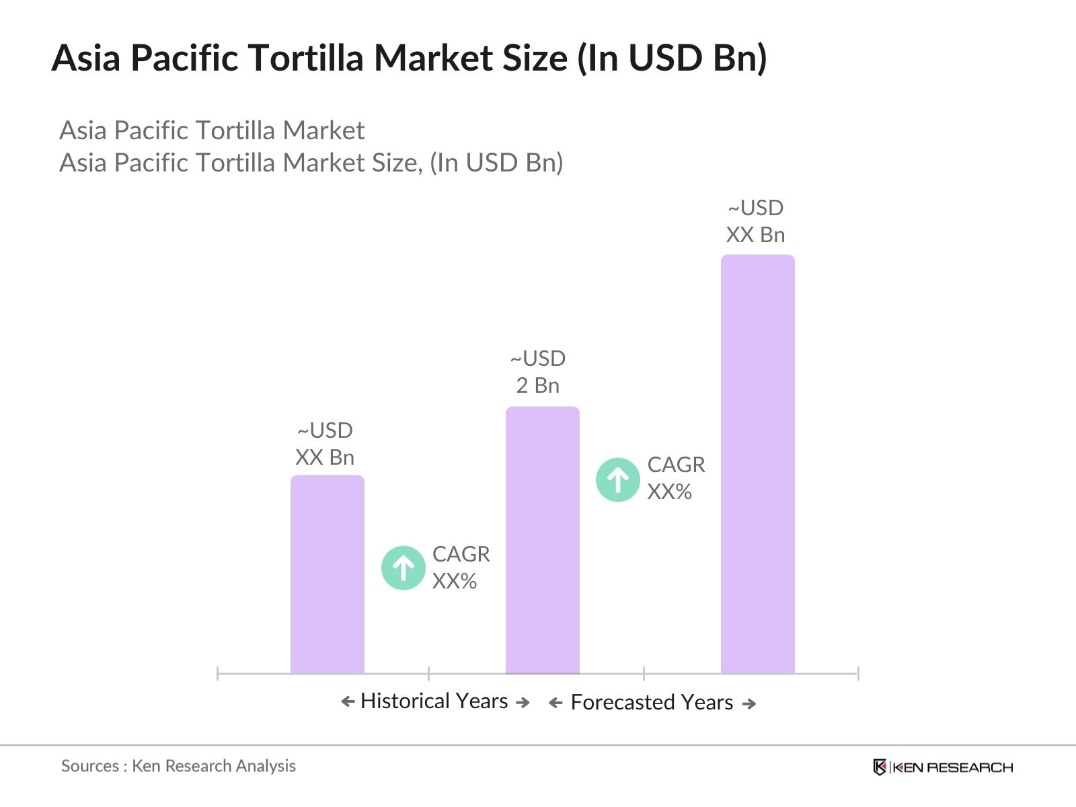
- The dominant countries in the Asia Pacific tortilla market are China, Japan, and Australia. China leads due to its large population, expanding urbanization, and growing foodservice industry. Japan follows closely, with high demand driven by the increasing adoption of Western cuisine in restaurants and homes. Australia's dominance can be attributed to its strong inclination toward health-conscious products and a well-established retail network that supports the distribution of tortillas across the country.
- In 2023, China implemented a tariff adjustment plan that included reducing the Most Favored Nation (MFN) tariff rates on 1,020 commodities, which encompasses various agricultural products. This reduction was effective from January 1, 2023, and aimed to enhance trade relations under agreements such as the Regional Comprehensive Economic Partnership (RCEP).
Asia Pacific Tortilla Market Segmentation
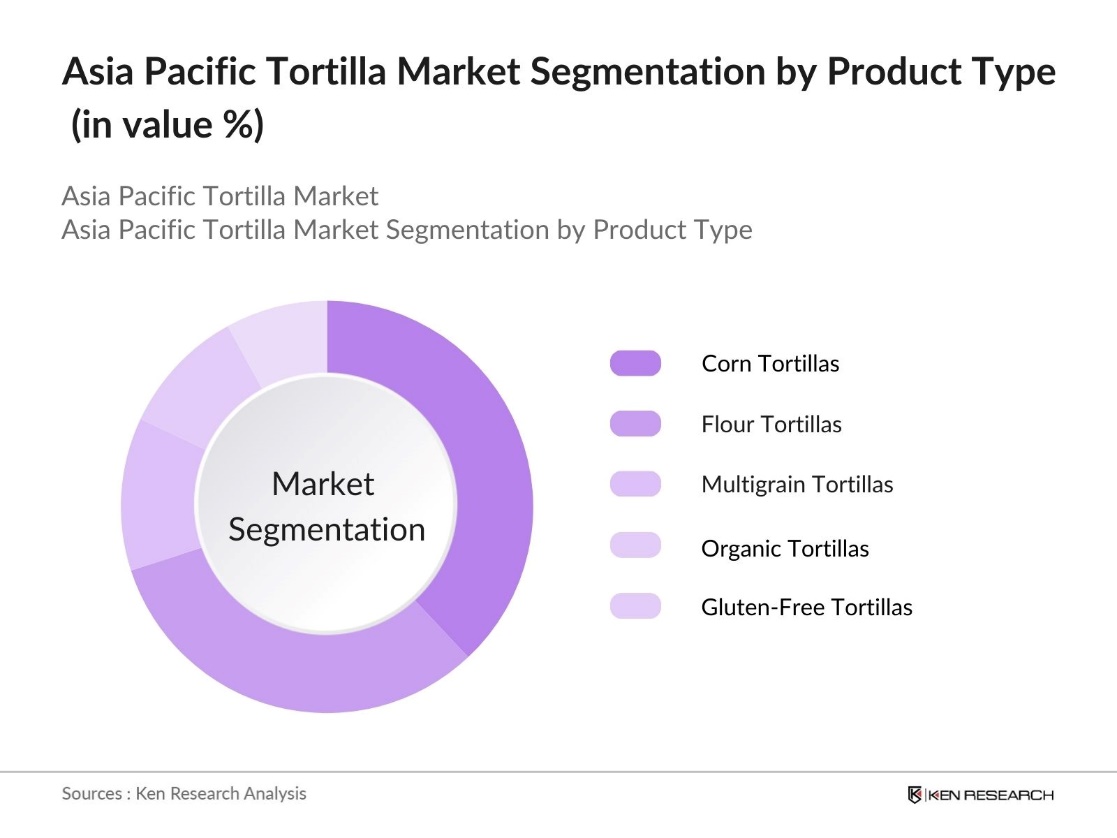
By Product Type: The Asia Pacific tortilla market is segmented by product type into corn tortillas, flour tortillas, multigrain tortillas, organic tortillas, and gluten-free tortillas. Recently, corn tortillas have held a dominant market share under this segmentation due to their widespread use in various foodservice outlets and their alignment with the growing preference for gluten-free products. Corn tortillas are highly versatile and cater to both household consumption and the foodservice industry, which bolsters their market dominance.
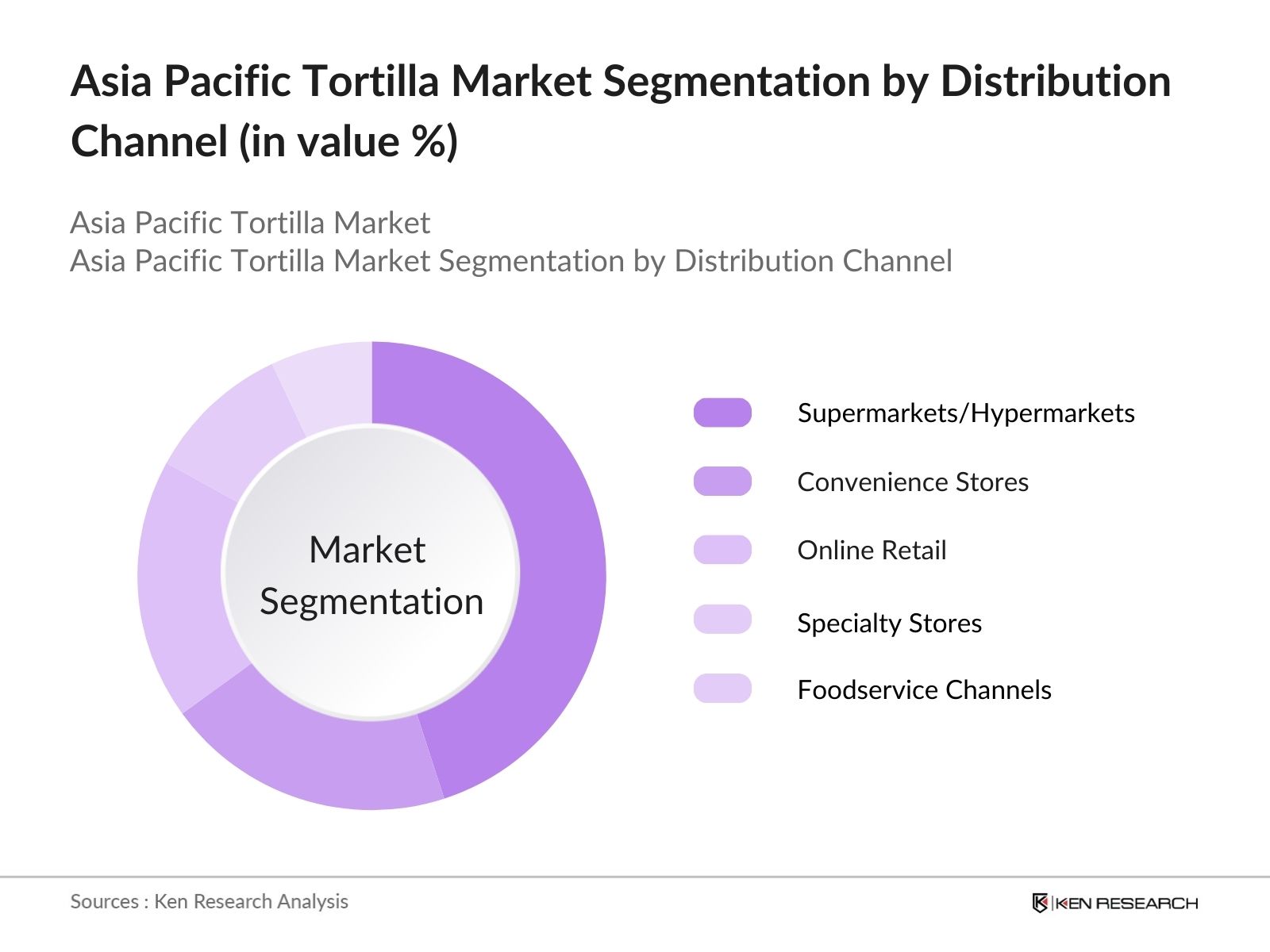
By Distribution Channel: The Asia Pacific tortilla market is segmented by distribution channel into supermarkets/hypermarkets, convenience stores, online retail, specialty stores, and foodservice channels. Supermarkets/hypermarkets have dominated the market share within this segmentation. This dominance is attributed to their widespread presence across urban and suburban areas, enabling consumers easy access to a variety of tortilla products. Additionally, these channels often offer promotions and discounts, attracting a significant portion of price-sensitive consumers.
Asia Pacific Tortilla Market Competitive Landscape
The market is characterized by the dominance of a few key players, both local and global. These players benefit from strong distribution networks, product innovation, and established brand loyalty. The consolidation within the market highlights the significant influence of key companies in shaping market dynamics. For example, Grupo Bimbo and PepsiCo, through their Frito-Lay division, have a notable presence in the region, supported by their global supply chains and extensive product portfolios. Local players like Easy Foods Inc. and Azteca Foods also compete by catering to regional tastes and preferences.
|
Company |
Establishment Year |
Headquarters |
Revenue (USD Mn) |
No. of Employees |
Product Range |
Distribution Network |
R&D Investment |
Brand Recognition |
Sustainability Efforts |
|
Grupo Bimbo |
1945 |
Mexico City, Mexico |
|||||||
|
Gruma, S.A.B. de C.V. |
1949 |
Monterrey, Mexico |
|||||||
|
PepsiCo (Frito-Lay) |
1965 |
New York, USA |
|||||||
|
La Tortilla Factory |
1977 |
Santa Rosa, USA |
|||||||
|
Azteca Foods Inc. |
1970 |
Chicago, USA |
Asia Pacific Tortilla Industry Analysis
Growth Drivers
- Increased Consumer Preference for Ready-to-Eat Food (Product Demand, Consumption Trends)
The Asia Pacific region has seen a significant shift towards ready-to-eat foods, driven by urbanization and a rise in dual-income households. In 2024, countries such as China, India, and Indonesia have seen a growing demand for convenient food options. In 2022, urban population reached 56.9%, with the growth of the population going down to 1.55%. Consumers are moving towards quicker meal solutions, leading to increased tortilla consumption as they fit well into this trend. - Rising Adoption of Western Cuisine in Emerging Markets (Cultural Shifts, Consumer Behavior): The adoption of Western cuisine, particularly in countries like India, Indonesia, and the Philippines, is driving the demand for tortillas. For instance, the GDP per capita for emerging markets and developing economies is projected to be around $6,700 in 2024. This rise in disposable income has led to increased consumption of international foods such as tortillas, now being used in popular items like wraps and tacos. Urban middle-class consumers are increasingly influenced by Western dining habits, further expanding tortilla consumption across the region.
- Expansion of Organized Retail (Retail Expansion, Supermarket Penetration): The expansion of organized retail across Asia-Pacific has significantly contributed to the growth of the tortilla market. Supermarkets and hypermarkets have increased in both urban and semi-urban regions, providing consumers with easier access to packaged tortillas. As large retail chains expand, such as those in China and India, consumers can more readily purchase tortillas as part of their grocery shopping experience. The presence of well-known global chains has also helped popularize tortillas as a convenient food choice, driving demand in local markets and contributing to market growth.
Market Challenges
- Fluctuating Raw Material Prices (Corn and Wheat Prices, Supply Chain Disruptions): The tortilla market in Asia-Pacific faces challenges from fluctuating corn and wheat prices, impacting manufacturers' ability to maintain competitive production costs. Supply chain disruptions and unpredictable global market conditions contribute to rising raw material costs, making it difficult for producers to manage profitability while ensuring consistent product quality and availability.
- Regulatory Challenges (Food Safety Standards, Government Policies): Stringent food safety standards and government policies in Asia-Pacific present challenges for tortilla manufacturers. Strict regulations on labeling, ingredients, and production processes increase compliance costs, while import-export policies complicate market entry. These hurdles, while necessary for consumer protection, create operational difficulties, especially for smaller producers trying to scale in diverse markets.
Asia Pacific Tortilla Market Future Outlook
Over the next five years, the Asia Pacific tortilla market is expected to experience moderate growth driven by increasing consumer demand for convenience foods, the rising popularity of Western cuisine in emerging markets, and a growing focus on health-conscious products. The trend towards organic and gluten-free food options is anticipated to further stimulate demand, especially among urban and health-aware consumers.
Market Opportunities
- Rising Trend of Organic and Gluten-Free Tortillas (Health Consciousness, Organic Product Demand): The increasing health consciousness across Asia-Pacific, especially in urban areas, is driving demand for organic and gluten-free tortillas. Consumers are becoming more aware of the benefits of healthier food choices, particularly those avoiding gluten due to health concerns like celiac disease or gluten intolerance. This trend creates a valuable opportunity for manufacturers to introduce organic and gluten-free tortilla options, catering to a growing health-focused segment of the market.
- Increasing Investment in Cold Chain Infrastructure (Supply Chain, Distribution Networks): The expansion of cold chain infrastructure across Asia-Pacific is creating new growth opportunities for tortilla manufacturers. With increasing investments in cold storage and efficient distribution systems, manufacturers can ensure that their products remain fresh during transportation. This improved infrastructure enables tortillas to reach wider markets, including remote areas, providing better access and maintaining product quality during transit, thereby supporting market expansion.
Scope of the Report
|
Product Type |
Corn Tortillas Flour Tortillas Multigrain Tortillas Organic Tortillas Gluten-Free Tortillas |
|
Distribution Channel |
Supermarkets/Hypermarkets Convenience Stores Online Retail Specialty Stores Foodservice Channels |
|
End-User |
Household Consumption Foodservice Industry Institutional Buyers |
|
Form |
Fresh Frozen Ready-to-Eat |
|
Region |
China India Japan Australia Rest of Asia Pacific |
Products
Key Target Audience
Foodservice Operators
Online Retailers
Tortilla Manufacturers
Importers and Exporters
Organic and Health-Conscious Food Retailers
Government and Regulatory Bodies (e.g., Food Standards Australia New Zealand, Chinese Ministry of Commerce)
Investors and venture capital Firms
Banks and Financial Institutions
Companies
Players Mentioned in the Report
Grupo Bimbo
Gruma, S.A.B. de C.V.
PepsiCo (Frito-Lay)
La Tortilla Factory
Ole Mexican Foods, Inc.
Tyson Foods, Inc.
Azteca Foods Inc.
General Mills (Mission Foods)
Cargill Inc.
Catallia Mexican Foods
Table of Contents
1. Asia Pacific Tortilla Market Overview
1.1. Definition and Scope
1.2. Market Taxonomy
1.3. Market Growth Rate (Market CAGR, Incremental Growth)
1.4. Market Segmentation Overview (Distribution Channel, Product Type, End-User, Form, Region)
2. Asia Pacific Tortilla Market Size (In USD Mn)
2.1. Historical Market Size (Historical Growth, Demand Surge)
2.2. Year-On-Year Growth Analysis (Growth Percentage, Absolute Growth)
2.3. Key Market Developments and Milestones (New Entrants, Major Investments, Market Expansions)
3. Asia Pacific Tortilla Market Analysis
3.1. Growth Drivers
3.1.1. Increased Consumer Preference for Ready-to-Eat Food (Product Demand, Consumption Trends)
3.1.2. Rising Adoption of Western Cuisine in Emerging Markets (Cultural Shifts, Consumer Behavior)
3.1.3. Expansion of Organized Retail (Retail Expansion, Supermarket Penetration)
3.1.4. Growth of Foodservice Industry (Demand from Restaurants, Food Chain Demand)
3.2. Market Challenges
3.2.1. Fluctuating Raw Material Prices (Corn and Wheat Prices, Supply Chain Disruptions)
3.2.2. Regulatory Challenges (Food Safety Standards, Government Policies)
3.2.3. Low Consumer Awareness in Rural Areas (Market Education, Consumer Habits)
3.3. Opportunities
3.3.1. Rising Trend of Organic and Gluten-Free Tortillas (Health Consciousness, Organic Product Demand)
3.3.2. Increasing Investment in Cold Chain Infrastructure (Supply Chain, Distribution Networks)
3.3.3. E-commerce Expansion in Emerging Economies (Digital Platforms, Online Retail Growth)
3.4. Trends
3.4.1. Introduction of Innovative Flavors and Ingredients (Product Diversification, Taste Preferences)
3.4.2. Sustainability in Packaging and Manufacturing (Eco-Friendly Packaging, Energy Efficiency)
3.4.3. Collaboration with Local Foodservice Operators (Partnerships, Localized Offerings)
3.5. Government Regulations
3.5.1. Import and Export Regulations (Trade Policies, Tariff Impact)
3.5.2. Food Labeling and Safety Standards (Labeling Requirements, Regulatory Compliance)
3.5.3. Regional Incentives for Processed Food Manufacturers (Subsidies, Tax Incentives)
3.6. SWOT Analysis (Strengths, Weaknesses, Opportunities, Threats)
3.7. Stakeholder Ecosystem (Suppliers, Distributors, Retailers, Foodservice Operators)
3.8. Porters Five Forces (Supplier Power, Buyer Power, Industry Rivalry, Threat of Substitutes, Threat of New Entrants)
3.9. Competition Ecosystem (Competitive Landscape, Key Player Strategies, Market Share Distribution)
4. Asia Pacific Tortilla Market Segmentation
4.1. By Product Type (In Value %)
4.1.1. Corn Tortillas
4.1.2. Flour Tortillas
4.1.3. Multigrain Tortillas
4.1.4. Organic Tortillas
4.1.5. Gluten-Free Tortillas
4.2. By Distribution Channel (In Value %)
4.2.1. Supermarkets/Hypermarkets
4.2.2. Convenience Stores
4.2.3. Online Retail
4.2.4. Specialty Stores
4.2.5. Foodservice Channels
4.3. By End-User (In Value %)
4.3.1. Household Consumption
4.3.2. Foodservice Industry
4.3.3. Institutional Buyers
4.4. By Form (In Value %)
4.4.1. Fresh
4.4.2. Frozen
4.4.3. Ready-to-Eat
4.5. By Region (In Value %)
4.5.1. China
4.5.2. India
4.5.3. Japan
4.5.4. Australia
4.5.5. Rest of Asia Pacific
5. Asia Pacific Tortilla Market Competitive Analysis
5.1. Detailed Profiles of Major Companies
5.1.1. Grupo Bimbo
5.1.2. Gruma, S.A.B. de C.V.
5.1.3. PepsiCo (Frito-Lay)
5.1.4. La Tortilla Factory
5.1.5. Ole Mexican Foods, Inc.
5.1.6. Tyson Foods, Inc.
5.1.7. Azteca Foods Inc.
5.1.8. General Mills (Mission Foods)
5.1.9. Cargill Inc.
5.1.10. Catallia Mexican Foods
5.1.11. Signature Flatbreads
5.1.12. Tostitos
5.1.13. Harbar LLC
5.1.14. Easy Foods Inc.
5.1.15. Tres Estrellas
5.2. Cross Comparison Parameters (Revenue, No. of Employees, Market Share, Headquarters, Product Innovation, Distribution Channels, Customer Reach, Sustainability Initiatives)
5.3. Market Share Analysis (Market Leadership, Competitive Positioning, Growth Share Matrix)
5.4. Strategic Initiatives (New Product Launches, Collaborations, Acquisitions)
5.5. Mergers and Acquisitions (Recent Deals, Strategic Partnerships, Acquisition Impact)
5.6. Investment Analysis (Funding, Capital Investment)
5.7. Venture Capital Funding (VC Participation, Start-Up Engagement)
5.8. Government Grants (Grant Programs, Support for SMEs)
5.9. Private Equity Investments (PE Fund Involvement, Market Investments)
6. Asia Pacific Tortilla Market Regulatory Framework
6.1. Food Safety Regulations (Compliance, Quality Control)
6.2. Import/Export Regulations (Tariffs, Trade Restrictions)
6.3. Certification Requirements (Organic Certification, Non-GMO Certification)
7. Asia Pacific Tortilla Market Future Size (In USD Mn)
7.1. Future Market Size Projections (Key Growth Drivers, Consumer Trends)
7.2. Key Factors Driving Future Market Growth (Changing Demographics, Foodservice Demand)
8. Asia Pacific Tortilla Market Future Segmentation
8.1. By Product Type (In Value %)
8.2. By Distribution Channel (In Value %)
8.3. By End-User (In Value %)
8.4. By Form (In Value %)
8.5. By Region (In Value %)
9. Asia Pacific Tortilla Market Analyst Recommendations
9.1. TAM/SAM/SOM Analysis
9.2. Consumer Cohort Analysis
9.3. Marketing Initiatives
9.4. White Space Opportunity Analysis
Disclaimer Contact UsResearch Methodology
Step 1: Identification of Key Variables
This step involved mapping out the key stakeholders in the Asia Pacific Tortilla Market. Extensive desk research was performed, leveraging a mix of proprietary databases and secondary sources to gather relevant data. The critical variables identified include consumer behavior, product preferences, and distribution channels.
Step 2: Market Analysis and Construction
Historical data related to the Asia Pacific tortilla market was compiled and analyzed. The analysis focused on market penetration rates, product popularity, and the overall supply chain. Revenue estimates were cross-verified to ensure accuracy, while service quality data provided insights into consumer satisfaction.
Step 3: Hypothesis Validation and Expert Consultation
Key market hypotheses were formulated based on the collected data and subsequently validated through interviews with industry experts from major manufacturers. These consultations offered vital insights into market operations, product innovations, and sales strategies.
Step 4: Research Synthesis and Final Output
In the final phase, the research team engaged with several tortilla manufacturers to obtain detailed insights into market trends, consumer preferences, and product demand. The information was used to confirm the accuracy of the data and to synthesize a comprehensive report of the market.
Frequently Asked Questions
01. How big is the Asia Pacific Tortilla Market?
The Asia Pacific Tortilla Market is valued at USD 2 billion, driven by the increasing demand for convenient and ready-to-eat food options, along with a growing preference for Western cuisine in emerging markets.
02. What are the challenges in the Asia Pacific Tortilla Market?
Challenges in Asia Pacific Tortilla Market include fluctuating raw material prices, regulatory hurdles, and low consumer awareness in rural areas. Additionally, supply chain disruptions can impact the availability of key ingredients like corn and flour.
03. Who are the major players in the Asia Pacific Tortilla Market?
Key players in the Asia Pacific Tortilla Market include Grupo Bimbo, Gruma, S.A.B. de C.V., PepsiCo (Frito-Lay), La Tortilla Factory, and Azteca Foods Inc. These companies dominate due to their extensive distribution networks and strong brand presence.
04. What are the growth drivers of the Asia Pacific Tortilla Market?
The Asia Pacific Tortilla Market is driven by factors such as the increasing adoption of Western cuisine, growing demand for health-conscious products like organic and gluten-free tortillas, and the expanding foodservice industry in emerging markets like China and India.
Why Buy From Us?

What makes us stand out is that our consultants follows Robust, Refine and Result (RRR) methodology. i.e. Robust for clear definitions, approaches and sanity checking, Refine for differentiating respondents facts and opinions and Result for presenting data with story

We have set a benchmark in the industry by offering our clients with syndicated and customized market research reports featuring coverage of entire market as well as meticulous research and analyst insights.

While we don't replace traditional research, we flip the method upside down. Our dual approach of Top Bottom & Bottom Top ensures quality deliverable by not just verifying company fundamentals but also looking at the sector and macroeconomic factors.

With one step in the future, our research team constantly tries to show you the bigger picture. We help with some of the tough questions you may encounter along the way: How is the industry positioned? Best marketing channel? KPI's of competitors? By aligning every element, we help maximize success.

Our report gives you instant access to the answers and sources that other companies might choose to hide. We elaborate each steps of research methodology we have used and showcase you the sample size to earn your trust.

If you need any support, we are here! We pride ourselves on universe strength, data quality, and quick, friendly, and professional service.