
Asia Pacific Transparent Wood Market Outlook to 2030
Region:Afganistan
Author(s):Paribhasha Tiwari
Product Code:KROD9351
Region:Afganistan
Author(s):Paribhasha Tiwari
Product Code:KROD9351
December 2024
98
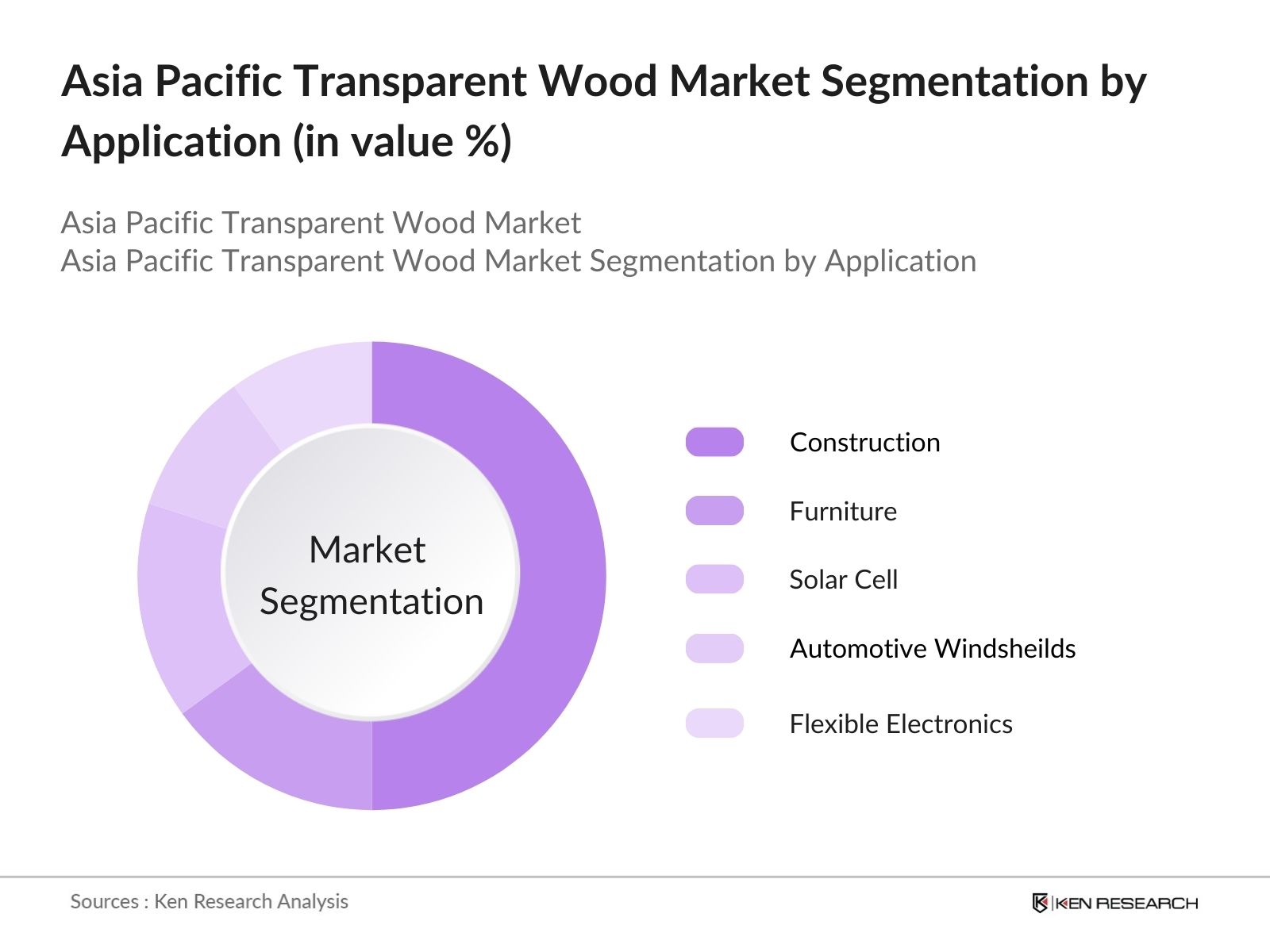
By Application: The Asia Pacific Transparent Wood Market is segmented by application into construction, furniture, solar cells, automotive windshields, and flexible electronics. Construction holds a dominant share in this segment due to its role in green building projects aimed at reducing carbon footprints. Transparent wood's ability to replace glass while offering better insulation and energy efficiency makes it a preferred material for architects and builders.
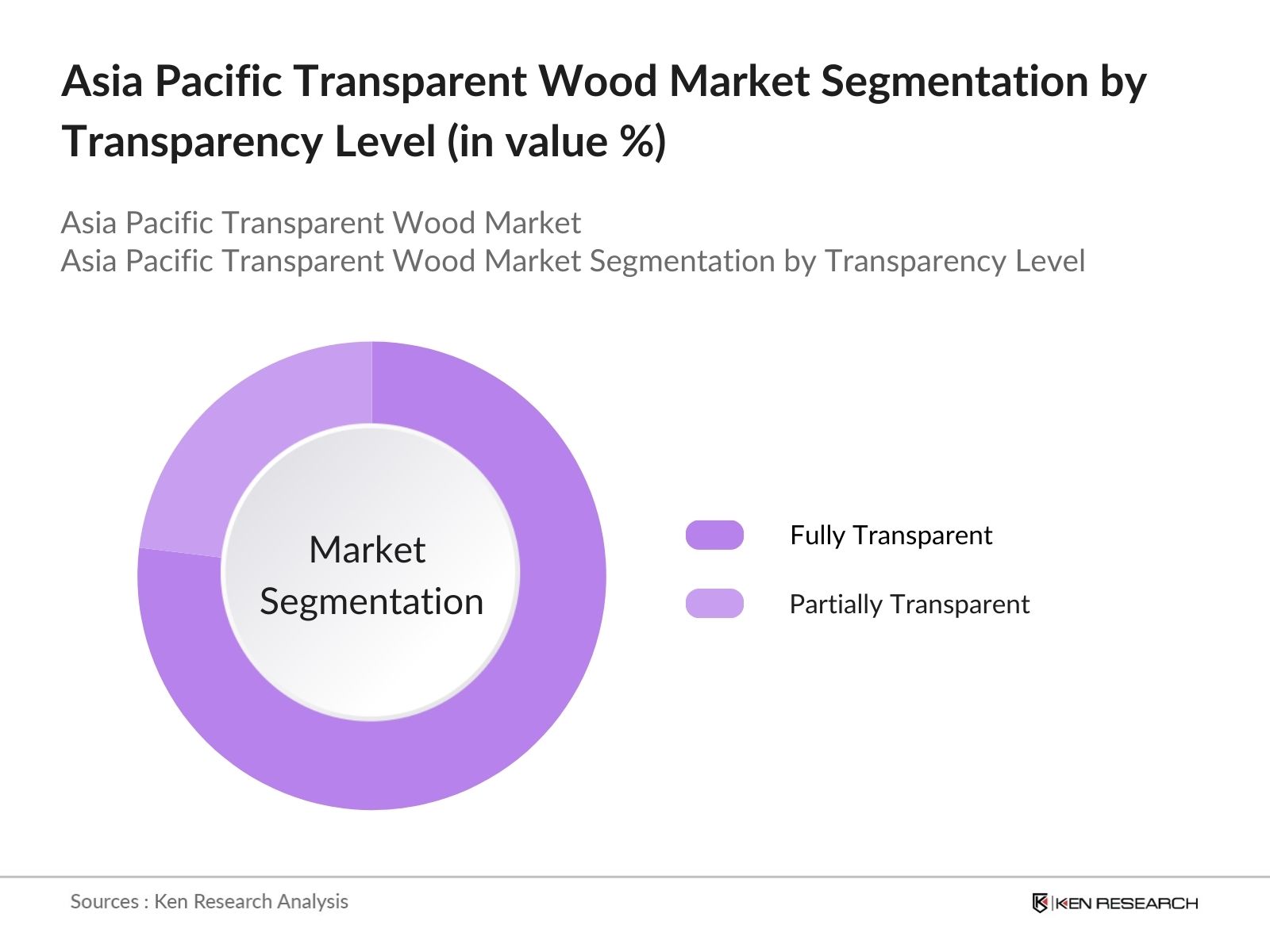
By Transparency Level: The market is segmented by transparency level into partially transparent and fully transparent materials. Fully transparent wood dominates this segment due to its high demand in solar panels and construction, where maximum light transmission is crucial. Its ability to allow natural light while maintaining structural integrity has made it the material of choice in premium projects.
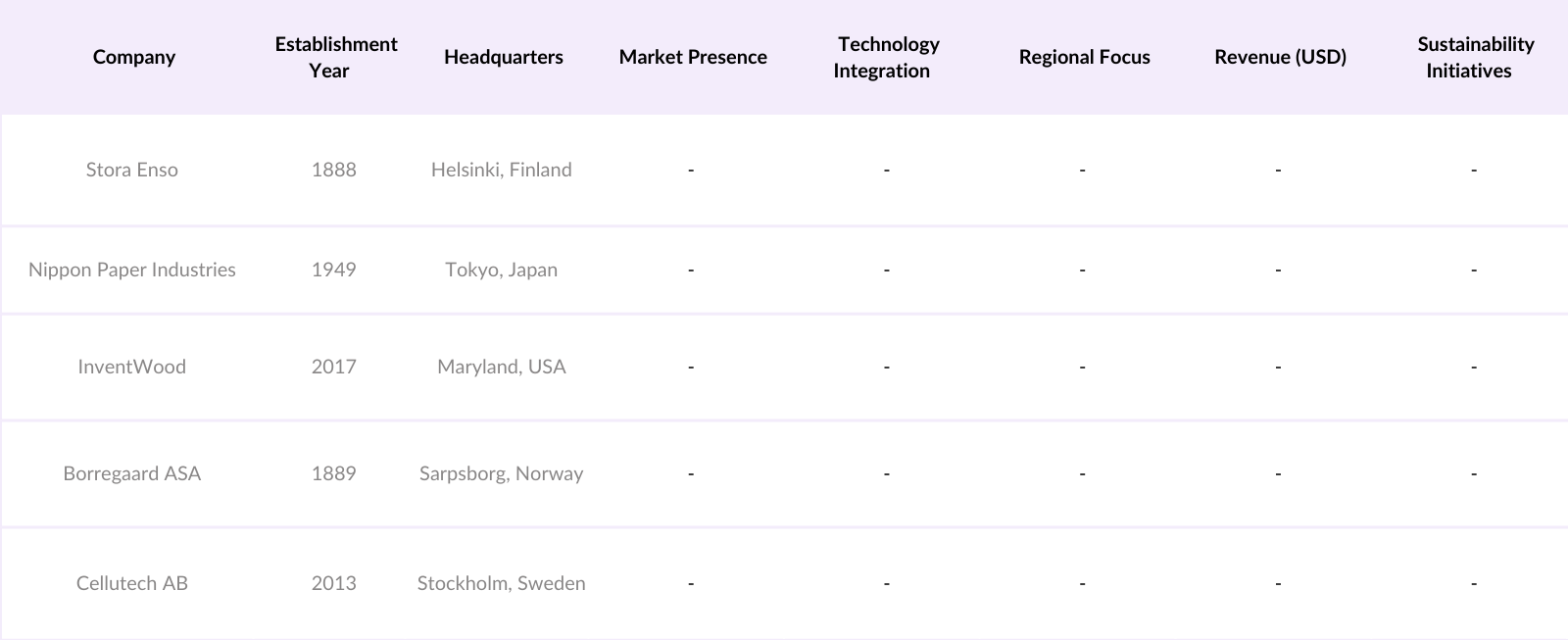
The Asia Pacific Transparent Wood Market is dominated by leading global and regional players, emphasizing innovation, sustainability, and strategic partnerships. The market is consolidated, with key companies focusing on R&D and eco-friendly manufacturing techniques. Companies like Stora Enso and Nippon Paper Industries leverage their expertise in wood-based products, while startups such as InventWood are driving innovation through patented processes.
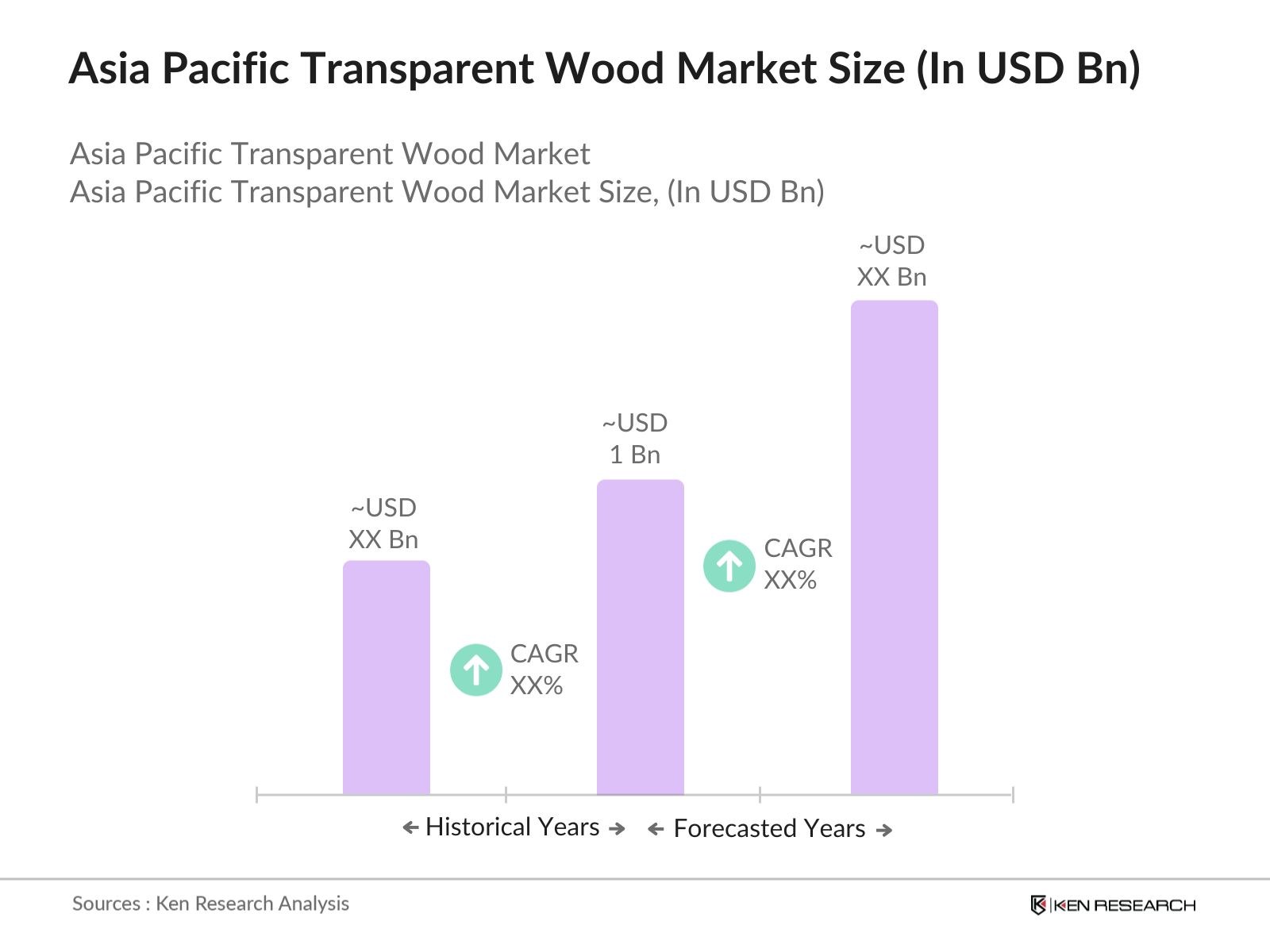
Over the next five years, the Asia Pacific Transparent Wood Market is expected to witness significant growth, driven by rising investments in sustainable construction and the integration of innovative materials in high-tech applications. Transparent wood's adoption in emerging markets, coupled with advancements in production techniques, will play a pivotal role in shaping its future.
|
By Application |
Construction |
|
By Transparency Level |
Fully Transparent |
|
By End-User |
Residential |
|
By Material Type |
Softwood |
|
By Country |
China |
1.1. Definition and Scope
1.2. Market Taxonomy
1.3. Market Growth Rate
1.4. Market Segmentation Overview
2.1. Historical Market Size
2.2. Year-On-Year Growth Analysis
2.3. Key Market Developments and Milestones
3.1. Growth Drivers
3.1.1. Sustainable Construction Practices
3.1.2. Technological Advancements in Material Science
3.1.3. Government Initiatives Promoting Eco-friendly Materials
3.1.4. Rising Consumer Preference for Aesthetic and Functional Materials
3.2. Market Challenges
3.2.1. High Production Costs
3.2.2. Limited Awareness and Adoption
3.2.3. Technical Limitations in Transparency Levels
3.3. Opportunities
3.3.1. Expansion into Emerging Markets
3.3.2. Collaboration with Architectural Firms
3.3.3. Development of Cost-effective Production Techniques
3.4. Trends
3.4.1. Integration with Smart Building Technologies
3.4.2. Use in Energy-efficient Building Designs
3.4.3. Adoption in High-end Furniture Manufacturing
3.5. Government Regulations
3.5.1. Building Codes Promoting Sustainable Materials
3.5.2. Subsidies and Incentives for Green Construction
3.5.3. Environmental Standards and Certifications
3.6. SWOT Analysis
3.7. Stakeholder Ecosystem
3.8. Porters Five Forces Analysis
3.9. Competitive Landscape
4.1. By Application (In Value %)
4.1.1. Construction
4.1.2. Furniture
4.1.3. Packaging
4.1.4. Automotive
4.1.5. Electronics
4.2. By Transparency Level (In Value %)
4.2.1. Fully Transparent
4.2.2. Semi-transparent
4.3. By End-User (In Value %)
4.3.1. Residential
4.3.2. Commercial
4.3.3. Industrial
4.4. By Material Type (In Value %)
4.4.1. Softwood
4.4.2. Hardwood
4.5. By Country (In Value %)
4.5.1. China
4.5.2. Japan
4.5.3. India
4.5.4. Australia
4.5.5. Rest of Asia Pacific
5.1. Detailed Profiles of Major Companies
5.1.1. Hoffmann Mineral GmbH
5.1.2. InventWood
5.1.3. Nomaco
5.1.4. Sayerlack
5.1.5. Abro
5.1.6. Cellutech AB
5.1.7. Holland Composites
5.1.8. Preserva Products LTD.
5.1.9. Wash Safe
5.1.10. DEFY
5.1.11. Stora Enso
5.1.12. Sappi Limited
5.1.13. Nippon Paper Industries Co., Ltd.
5.1.14. Borregaard ASA
5.1.15. Celanese Corporation
5.2. Cross Comparison Parameters (Number of Employees, Headquarters, Inception Year, Revenue, Product Portfolio, R&D Investment, Market Share, Regional Presence)
5.3. Market Share Analysis
5.4. Strategic Initiatives
5.5. Mergers and Acquisitions
5.6. Investment Analysis
5.6.1. Venture Capital Funding
5.6.2. Government Grants
5.6.3. Private Equity Investments
6.1. Environmental Standards
6.2. Compliance Requirements
6.3. Certification Processes
7.1. Future Market Size Projections
7.2. Key Factors Driving Future Market Growth
8.1. By Application (In Value %)
8.2. By Transparency Level (In Value %)
8.3. By End-User (In Value %)
8.4. By Material Type (In Value %)
8.5. By Country (In Value %)
9.1. TAM, SAM, SOM Analysis
9.2. Customer Cohort Analysis
9.3. Marketing Initiatives
9.4. White Space Opportunity Analysis
The initial phase involves mapping the stakeholders in the Asia Pacific Transparent Wood Market. Extensive desk research is conducted using secondary and proprietary databases to identify critical market dynamics.
This phase involves analyzing historical data and current trends to assess market penetration and revenue generation. Detailed evaluations of industry benchmarks ensure accurate findings.
Market hypotheses are validated through interviews with industry professionals, including manufacturers and architects. These insights refine the market estimates and analysis.
The final stage involves synthesizing primary and secondary data to deliver a comprehensive and validated analysis. Direct engagements with market leaders ensure the reliability of the report.
The Asia Pacific Transparent Wood Market is valued at USD 1 billion, driven by sustainable construction demand and advancements in material science.
Challenges in the Asia Pacific Transparent Wood Market include high production costs, limited awareness, and the complexity of large-scale adoption due to manufacturing constraints.
Key players in the Asia Pacific Transparent Wood Market include Stora Enso, Nippon Paper Industries, InventWood, Borregaard ASA, and Cellutech AB, known for their focus on innovation and sustainability.
The Asia Pacific Transparent Wood Market is propelled by green building initiatives, increasing demand for eco-friendly materials, and advancements in transparent wood production technologies.

What makes us stand out is that our consultants follows Robust, Refine and Result (RRR) methodology. i.e. Robust for clear definitions, approaches and sanity checking, Refine for differentiating respondents facts and opinions and Result for presenting data with story

We have set a benchmark in the industry by offering our clients with syndicated and customized market research reports featuring coverage of entire market as well as meticulous research and analyst insights.

While we don't replace traditional research, we flip the method upside down. Our dual approach of Top Bottom & Bottom Top ensures quality deliverable by not just verifying company fundamentals but also looking at the sector and macroeconomic factors.

With one step in the future, our research team constantly tries to show you the bigger picture. We help with some of the tough questions you may encounter along the way: How is the industry positioned? Best marketing channel? KPI's of competitors? By aligning every element, we help maximize success.

Our report gives you instant access to the answers and sources that other companies might choose to hide. We elaborate each steps of research methodology we have used and showcase you the sample size to earn your trust.

If you need any support, we are here! We pride ourselves on universe strength, data quality, and quick, friendly, and professional service.