
Asia-Pacific Trona Market Outlook to 2030
Region:Asia
Author(s):Naman Rohilla
Product Code:KROD4571
December 2024
97
About the Report
Asia-Pacific Trona Market Overview
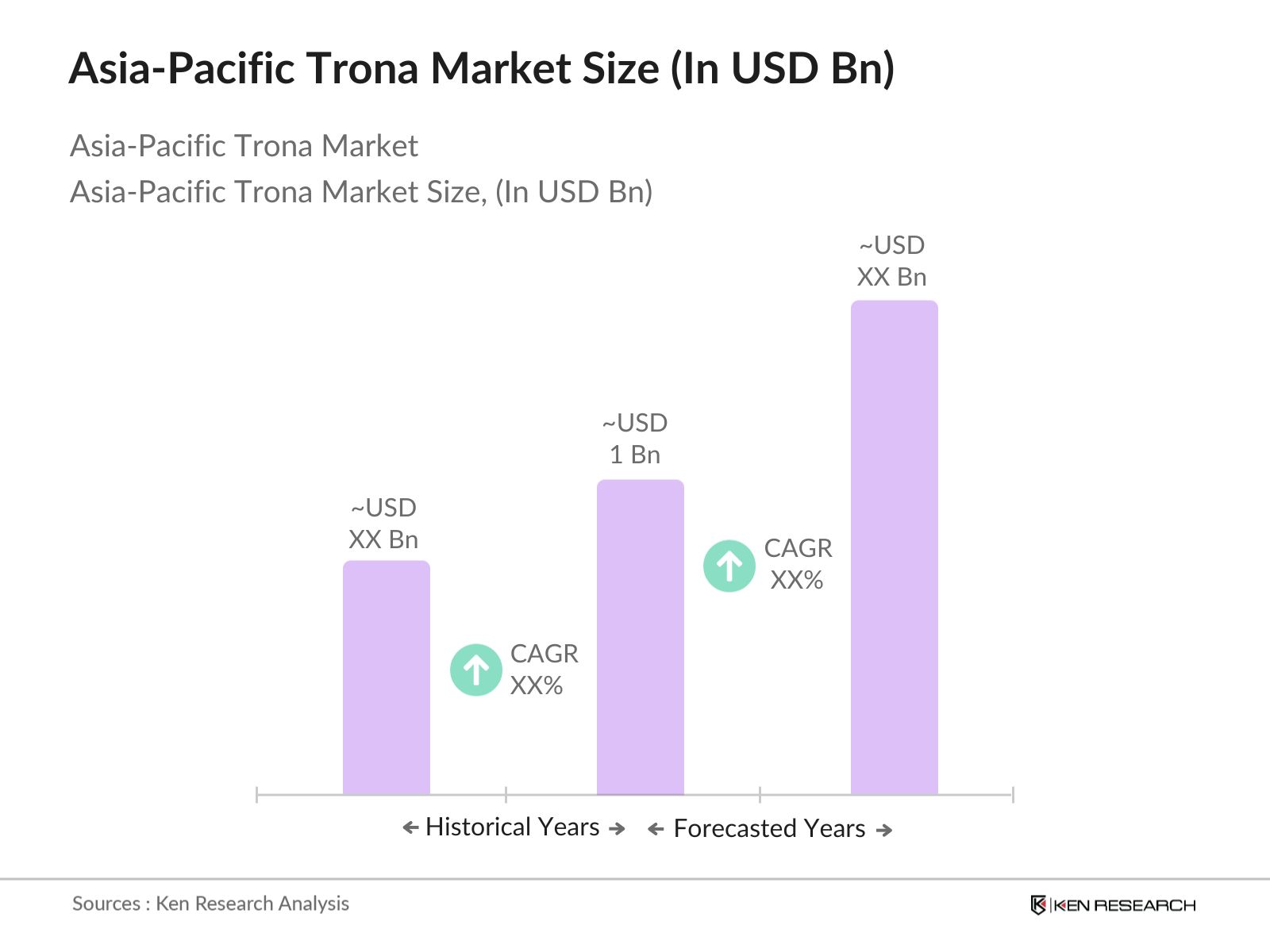
- The Asia-Pacific Trona market is valued at USD 1 billion, driven by its essential role in producing soda ash, which is a key ingredient for manufacturing glass, detergents, and various chemicals. This demand has been consistently increasing due to the robust industrial growth in emerging economies like India and China. The markets growth is primarily fueled by rapid urbanization, infrastructural developments, and rising demand for flat glass and other consumer goods that rely on soda ash. The high concentration of industries in these regions has created a favourable environment for trona consumption.
- The dominance of China and India in the Asia-Pacific Trona market can be attributed to their large-scale industrial activities, particularly in glass manufacturing, construction, and detergent production. These countries have access to a vast consumer base, cost-effective labour, and government support for expanding their industrial sectors. Additionally, China is one of the worlds largest producers and consumers of trona, leveraging its high-volume production capacities and low-cost manufacturing environment to maintain market dominance.
- Governments in the Asia-Pacific region is tightening environmental standards and mining policies to promote sustainability and conservation. China, in particular, implemented stricter mining regulations in 2023, requiring companies to conduct environmental impact assessments before starting new projects. Indias Ministry of Environment, Forest and Climate Change introduced similar regulations, mandating more stringent oversight of mining activities to ensure sustainable resource extraction. These policies are designed to balance industrial growth with environmental protection, influencing the practices of trona miners and soda ash producers across the region.
Asia-Pacific Trona Market Segmentation
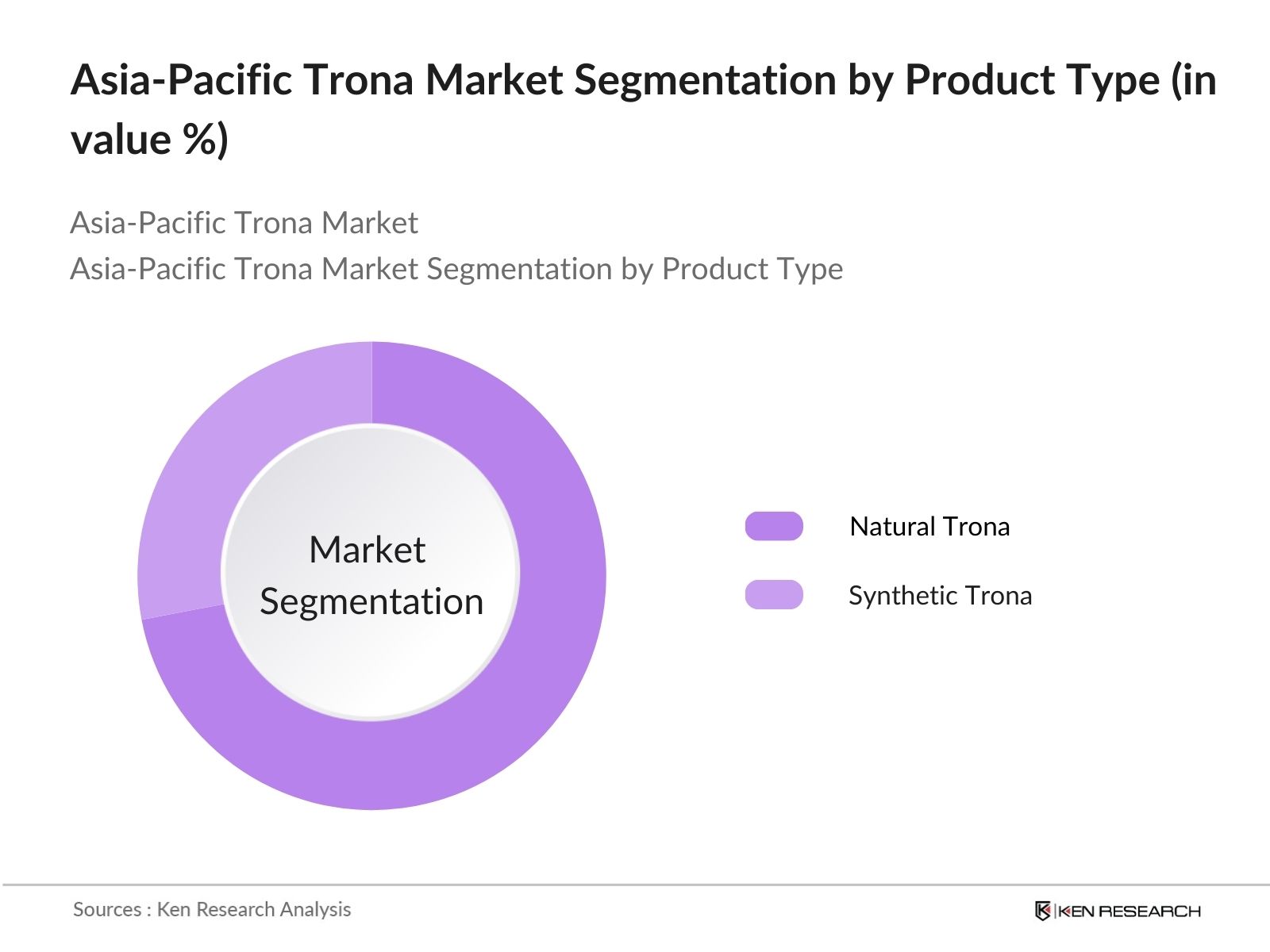
- By Product Type: The Asia-Pacific Trona market is segmented by product type into Natural Trona and Synthetic Trona. Natural trona holds a dominant market share, as it is less costly to extract and more environmentally sustainable compared to synthetic alternatives. Regions with significant natural deposits, such as China and India, rely heavily on mining natural trona due to the low operational costs associated with extraction. Additionally, the eco-friendly nature of natural trona has led to a higher adoption rate as industries increasingly lean towards sustainable practices.
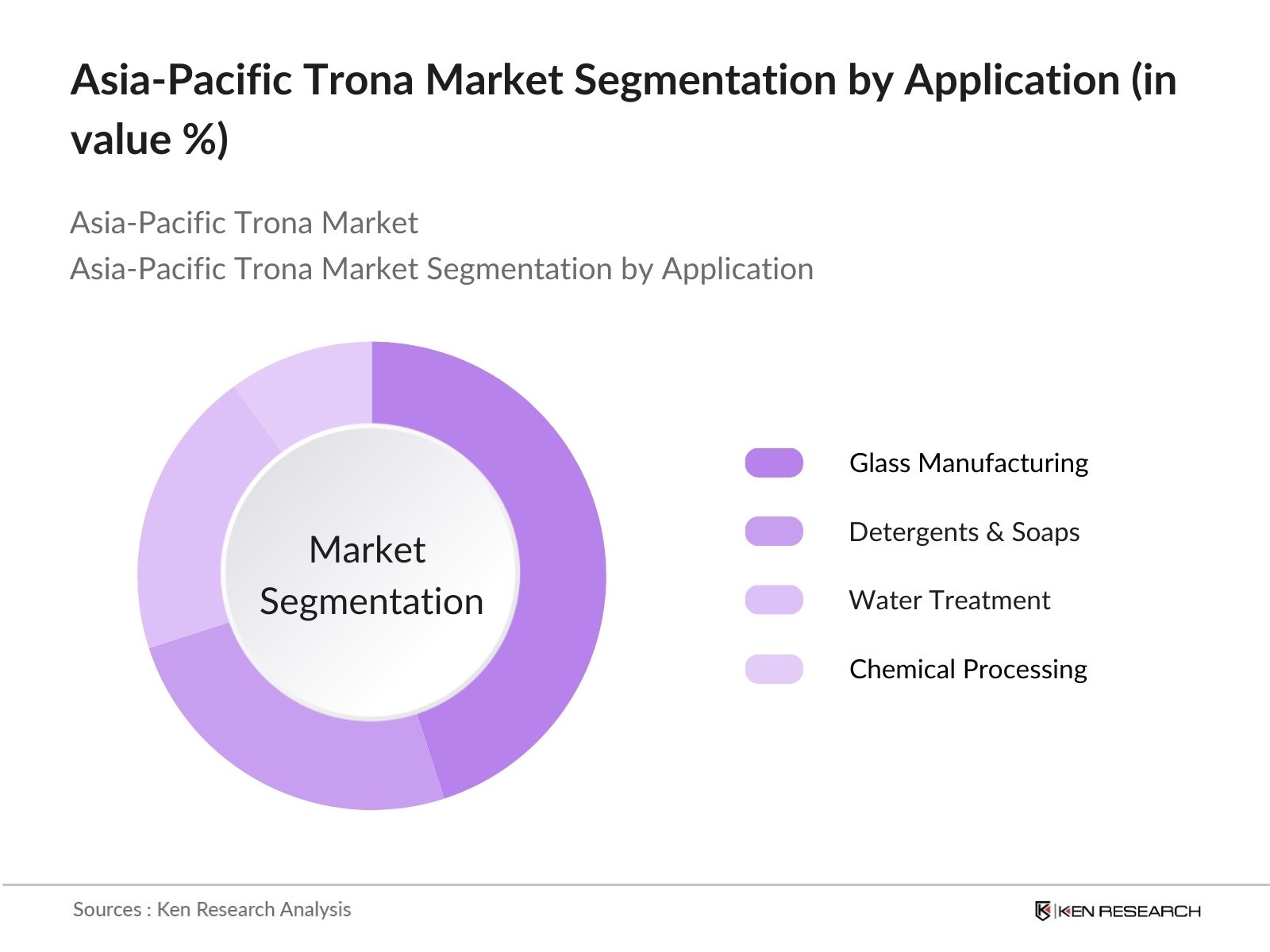
- By Application: The Asia-Pacific Trona market is segmented by application into Glass Manufacturing, Detergents and Soaps, Water Treatment, and Chemical Processing. The Glass Manufacturing segment dominates the market, holding the largest share due to the surging demand for flat glass in the construction and automotive sectors. Trona is a critical input in the production of soda ash, which is used to manufacture glass. With increasing infrastructure projects and rising vehicle production in China and India, the demand for glass is pushing this segments growth.
Asia-Pacific Trona Market Competitive Landscape
The Asia-Pacific Trona market is dominated by a mix of global and regional players. These companies have established their presence through strategic investments in mining operations, production capacity expansions, and partnerships with local governments. The markets competitive landscape is characterized by key players leveraging their extensive supply chains and technological advancements to maintain a competitive edge. Companies like Solvay and FMC Corporation continue to dominate due to their vast production capacities and commitment to sustainable practices.
|
Company Name |
Establishment Year |
Headquarters |
Production Capacity |
Global Presence |
R&D Investment |
Sustainability Initiatives |
Strategic Partnerships |
Revenue (USD Bn) |
|
Solvay SA |
1863 |
Brussels, Belgium |
- |
- |
- |
- |
- |
- |
|
FMC Corporation |
1883 |
Philadelphia, USA |
- |
- |
- |
- |
- |
- |
|
Searles Valley Minerals |
1916 |
California, USA |
- |
- |
- |
- |
- |
- |
|
Genesis Alkali |
1950 |
Wyoming, USA |
- |
- |
- |
- |
- |
- |
|
Tata Chemicals |
1939 |
Mumbai, India |
- |
- |
- |
- |
- |
- |
Asia-Pacific Trona Market Analysis
Asia-Pacific Trona Market Growth Drivers
- Increasing Demand for Soda Ash (Glass Manufacturing, Chemicals): The Asia-Pacific region is experiencing significant growth in soda ash demand, primarily driven by the glass manufacturing and chemicals industries. In 2024, soda ash is essential for producing flat glass used in the construction and automotive sectors, especially in China and India, which together account for over 60% of global flat glass production. The chemicals sector also consumes substantial amounts of soda ash for manufacturing detergents, dyes, and other industrial products. China's glass production reached approximately 900 million square meters in 2023, which continues to fuel trona demand, a key raw material for soda ash.
- Expanding Industrial Applications (Detergents, Water Treatment): Trona, a primary source of soda ash, is increasingly utilized in industrial applications like detergent manufacturing and water treatment. In India, the detergent market reached 7.7 million tons in 2023, with soda ash playing a crucial role in production processes. Water treatment facilities in Southeast Asia are also expanding due to urbanization and industrial growth. For instance, the water treatment chemicals market in Indonesia grew by 8% in 2023, boosting the demand for soda ash. The ongoing industrial development in these regions highlights the growing reliance on trona and its products across multiple industries.
- Rising Demand from Emerging Markets (India, China): Emerging markets like India and China are driving significant demand for trona due to rapid industrialization and urban development. Indias industrial output increased by 5.8% in 2023, driven by strong growth in construction and manufacturing sectors. Trona-derived soda ash is vital in the production of glass for buildings and consumer products. Similarly, China's industrial output remains robust, with a growth rate of 4.7% in 2023, further fuelling the demand for soda ash in the chemical and construction sectors. These trends emphasize the expanding need for trona to meet rising industrial demands.
Asia-Pacific Trona Market Challenges
- Environmental Regulations (Emissions Control, Mining Restrictions): Environmental regulations are becoming increasingly stringent in the Asia-Pacific region, impacting trona mining and soda ash production. Countries like China have introduced stricter emission standards for industrial activities, pushing companies to invest in cleaner technologies. In 2024, Chinas Ministry of Ecology and Environment mandated a 15% reduction in industrial emissions, directly affecting mining and processing operations. Similarly, India is tightening regulations around mining activities, requiring companies to comply with environmental impact assessments, which can slow down trona extraction. These regulatory pressures increase operational costs and may limit the expansion of mining activities in the region.
- Supply Chain Bottlenecks (Mining, Distribution): The trona market in Asia-Pacific faces significant supply chain bottlenecks due to logistical challenges in mining and distribution. For instance, in 2023, Indonesias mining sector faced delays due to inadequate transportation infrastructure, impacting the timely delivery of trona to industrial facilities. Additionally, border restrictions and export regulations in China have further complicated the supply chain, resulting in delays and higher costs for downstream industries. With an increasing reliance on international trade, disruptions in shipping and distribution networks pose a continuous challenge for trona suppliers across the region.
Asia-Pacific Trona Market Future Outlook
Over the next five years, the Asia-Pacific Trona market is expected to experience significant growth, driven by continuous industrial expansion, particularly in emerging markets like India and China. The increasing demand for soda ash in glass manufacturing and detergent production will remain a critical factor for the growth of this market. Additionally, advancements in mining technology, the shift towards sustainable extraction methods, and government support for industrial development are anticipated to bolster market growth in the region.
Asia-Pacific Trona Market Opportunities
- Expansion of Applications: Trona is finding new applications in advanced industries such as renewable energy storage and ceramics manufacturing. Soda ash, derived from trona, is a key component in the production of advanced ceramics, which are crucial for electronics and renewable energy technologies. In 2023, the Asia-Pacific advanced ceramics market reached 2.1 billion USD, driven by increasing demand for electronic devices and solar panels. Additionally, soda ash is being explored for use in renewable energy storage systems, particularly in the production of sodium-ion batteries, providing significant growth potential for the trona market.
- International Partnerships: International partnerships are creating new avenues for the Asia-Pacific trona market, with joint ventures and exports playing a major role in market expansion. In 2023, China signed agreements with Kazakhstan and Uzbekistan to import trona for domestic soda ash production. These cross-border ventures are enhancing supply chain security and ensuring a steady supply of raw materials for industrial applications. Similarly, India has increased its exports of soda ash to neighbouring countries, strengthening regional trade ties. Such partnerships are expected to bolster the trona market by facilitating access to new resources and expanding market reach.
Scope of the Report
|
By Product Type |
Natural Trona Synthetic Trona |
|
By Application |
Glass Manufacturing Detergents Water Treatment Chemical Processing |
|
By End-Use Industry |
Industrial Manufacturing Construction Agriculture Pharmaceuticals |
|
By Distribution Channel |
Direct Sales Distributors |
|
By Region |
East Asia Southeast Asia Oceania South Asia |
Products
Key Target Audience
Trona Mining Companies
Glass Manufacturing Industries
Chemical Processing Companies
Detergent Manufacturers
Water Treatment Plants
Banks and Financial Institutions
Investor and Venture Capitalist Firms
Government and Regulatory Bodies (Ministry of Industry, Ministry of Environment)
Sustainability Advocacy Groups
Companies
Asia-Pacific Trona Market Major Players
Solvay SA
FMC Corporation
Searles Valley Minerals
Genesis Alkali
Tata Chemicals
Ciner Resources Corporation
OCI Chemical Corporation
Nirma Limited
Tronox Holdings
American Natural Soda Ash Corporation (ANSAC)
Shandong Haihua Group
Sichuan Hebang
Weifang Soda Ash Group
Xinjiang Zhongtai
Qingdao Soda Ash Industrial Company
Table of Contents
1. Asia-Pacific Trona Market Overview
1.1. Definition and Scope
1.2. Market Taxonomy
1.3. Market Growth Rate (Factors Driving Growth)
1.4. Market Segmentation Overview (Key Areas of Use and Product Categories)
2. Asia-Pacific Trona Market Size (In USD Billion)
2.1. Historical Market Size
2.2. Year-On-Year Growth Analysis
2.3. Key Market Developments and Milestones (Production Innovations, Capacity Expansions)
3. Asia-Pacific Trona Market Analysis
3.1. Growth Drivers
3.1.1. Increasing Demand for Soda Ash (Glass Manufacturing, Chemicals)
3.1.2. Expanding Industrial Applications (Detergents, Water Treatment)
3.1.3. Rising Demand from Emerging Markets (India, China)
3.1.4. Government Initiatives Supporting Industrial Growth
3.2. Market Challenges
3.2.1. Environmental Regulations (Emissions Control, Mining Restrictions)
3.2.2. Supply Chain Bottlenecks (Mining, Distribution)
3.2.3. Rising Operational Costs (Energy, Labor)
3.3. Opportunities
3.3.1. Technological Advancements in Mining and Extraction (Automation, Efficiency)
3.3.2. Expansion of Applications (Renewable Energy Storage, Advanced Ceramics)
3.3.3. International Partnerships (Cross-border Joint Ventures, Exports)
3.4. Trends
3.4.1. Sustainability Trends in Manufacturing (Reduced Emissions, Waste Recycling)
3.4.2. Shift to Automation in Trona Mining
3.4.3. Adoption of Circular Economy Practices
3.5. Government Regulation
3.5.1. Environmental Standards and Mining Policies (Sustainability and Conservation)
3.5.2. Compliance with Emission Regulations (Energy and Water Usage Policies)
3.5.3. Regional Tariffs and Export Policies
3.6. SWOT Analysis
3.7. Stakeholder Ecosystem (Mining Companies, Distributors, End-users)
3.8. Porters Five Forces Analysis (Bargaining Power, Threats, Competitive Intensity)
3.9. Competitive Landscape (Global vs. Local Competitors)
4. Asia-Pacific Trona Market Segmentation
4.1. By Product Type (In Value %)
4.1.1. Natural Trona
4.1.2. Synthetic Trona
4.2. By Application (In Value %)
4.2.1. Glass Manufacturing
4.2.2. Detergents and Soaps
4.2.3. Water Treatment
4.2.4. Chemical Processing
4.3. By End-Use Industry (In Value %)
4.3.1. Industrial Manufacturing
4.3.2. Construction
4.3.3. Agriculture
4.3.4. Pharmaceuticals
4.4. By Distribution Channel (In Value %)
4.4.1. Direct Sales
4.4.2. Distributors
4.5. By Region (In Value %)
4.5.1. East Asia
4.5.2. Southeast Asia
4.5.3. Oceania
4.5.4. South Asia
5. Asia-Pacific Trona Market Competitive Analysis
5.1. Detailed Profiles of Major Companies
5.1.1. Solvay SA
5.1.2. FMC Corporation
5.1.3. Searles Valley Minerals
5.1.4. Genesis Alkali
5.1.5. Tata Chemicals
5.1.6. Ciner Resources Corporation
5.1.7. OCI Chemical Corporation
5.1.8. Nirma Limited
5.1.9. Tronox Holdings
5.1.10. American Natural Soda Ash Corporation (ANSAC)
5.1.11. Shandong Haihua Group
5.1.12. Sichuan Hebang
5.1.13. Weifang Soda Ash Group
5.1.14. Xinjiang Zhongtai
5.1.15. Qingdao Soda Ash Industrial Company
5.2. Cross Comparison Parameters (Revenue, Production Capacity, Global Presence, Market Share, Product Diversification, Investment in R&D, Strategic Partnerships, Sustainability Initiatives)
5.3. Market Share Analysis (Top Players by Market Share)
5.4. Strategic Initiatives (Product Launches, Technological Innovations)
5.5. Mergers and Acquisitions (Recent Deals and Industry Impact)
5.6. Investment Analysis (Private Equity, Foreign Investments)
5.7. Venture Capital Funding (Potential for Startups)
5.8. Government Grants and Subsidies (Mining Support Programs)
5.9. Private Equity Investments (Strategic Partnerships)
6. Asia-Pacific Trona Market Regulatory Framework
6.1. Environmental Standards for Mining and Processing
6.2. Compliance Requirements (Licensing, Emission Control)
6.3. Certification Processes (Sustainable Mining Certification)
7. Asia-Pacific Trona Future Market Size (In USD Billion)
7.1. Future Market Size Projections
7.2. Key Factors Driving Future Market Growth (Emerging Economies, Industrial Growth)
8. Asia-Pacific Trona Future Market Segmentation
8.1. By Product Type (In Value %)
8.2. By Application (In Value %)
8.3. By End-Use Industry (In Value %)
8.4. By Distribution Channel (In Value %)
8.5. By Region (In Value %)
9. Asia-Pacific Trona Market Analysts Recommendations
9.1. TAM/SAM/SOM Analysis
9.2. Customer Cohort Analysis
9.3. Marketing Initiatives
9.4. White Space Opportunity Analysis
Research Methodology
Step 1: Identification of Key Variables
This initial phase focuses on identifying the essential stakeholders in the Asia-Pacific Trona Market, including mining companies, glass manufacturers, and government bodies. The aim is to construct a clear understanding of the markets ecosystem, using a combination of secondary research and proprietary databases to define key variables like production capacity, consumption, and regulatory impact.
Step 2: Market Analysis and Construction
In this step, we collect and analyze historical data on trona production and consumption in the Asia-Pacific region. Key data points include production volumes, pricing trends, and revenue generation from trona-based products such as soda ash, along with an analysis of market penetration.
Step 3: Hypothesis Validation and Expert Consultation
We validate our hypotheses through expert consultations, conducting computer-assisted telephone interviews (CATIs) with leading industry professionals in trona mining and downstream industries. These interviews provide operational insights and help corroborate the market data collected through secondary research.
Step 4: Research Synthesis and Final Output
The final step synthesizes data from multiple sources, cross-checking the accuracy of statistics through interactions with trona mining companies and industry experts. This step ensures a comprehensive and validated analysis of the Asia-Pacific Trona market, including future growth projections.
Frequently Asked Questions
01. How big is the Asia-Pacific Trona Market?
The Asia-Pacific Trona market is valued at USD 1 billion, driven by its critical role in producing soda ash for glass manufacturing, detergents, and chemicals.
02. What are the challenges in the Asia-Pacific Trona Market?
Key challenges in the Asia-Pacific Trona market include stringent environmental regulations on mining practices, high operational costs, and the increasing focus on sustainability in industrial processes.
03. Who are the major players in the Asia-Pacific Trona Market?
Key players in the Asia-Pacific Trona market include Solvay SA, FMC Corporation, Tata Chemicals, Genesis Alkali, and Searles Valley Minerals. These companies dominate due to their extensive production capacities and strong market presence.
04. What are the growth drivers of the Asia-Pacific Trona Market?
Asia-Pacific Trona market growth drivers include the expanding demand for soda ash in glass manufacturing, increased industrial applications, and government support for industrial expansion in emerging economies like China and India.
Why Buy From Us?

What makes us stand out is that our consultants follows Robust, Refine and Result (RRR) methodology. i.e. Robust for clear definitions, approaches and sanity checking, Refine for differentiating respondents facts and opinions and Result for presenting data with story

We have set a benchmark in the industry by offering our clients with syndicated and customized market research reports featuring coverage of entire market as well as meticulous research and analyst insights.

While we don't replace traditional research, we flip the method upside down. Our dual approach of Top Bottom & Bottom Top ensures quality deliverable by not just verifying company fundamentals but also looking at the sector and macroeconomic factors.

With one step in the future, our research team constantly tries to show you the bigger picture. We help with some of the tough questions you may encounter along the way: How is the industry positioned? Best marketing channel? KPI's of competitors? By aligning every element, we help maximize success.

Our report gives you instant access to the answers and sources that other companies might choose to hide. We elaborate each steps of research methodology we have used and showcase you the sample size to earn your trust.

If you need any support, we are here! We pride ourselves on universe strength, data quality, and quick, friendly, and professional service.