
Asia Pacific Unified Communication as a Service Market (UCaaS) Outlook to 2030
Region:Asia
Author(s):Shreya Garg
Product Code:KROD2257
Region:Asia
Author(s):Shreya Garg
Product Code:KROD2257
November 2024
82
The Asia Pacific UCaaS Market is valued at USD 19 billion, driven by rapid digital transformation across various industries, particularly in IT, telecom, and retail. Unified Communications as a Service (UCaaS) has become a crucial component in enabling remote work and hybrid workplace models, which surged in demand post-pandemic. Cloud-based solutions have enhanced operational efficiency, making UCaaS a key choice for organizations looking for cost-effective communication solutions. The rise of digital infrastructure, especially in countries like China and India, further supports market growth, with investments in 5G and broadband connectivity fueling adoption.
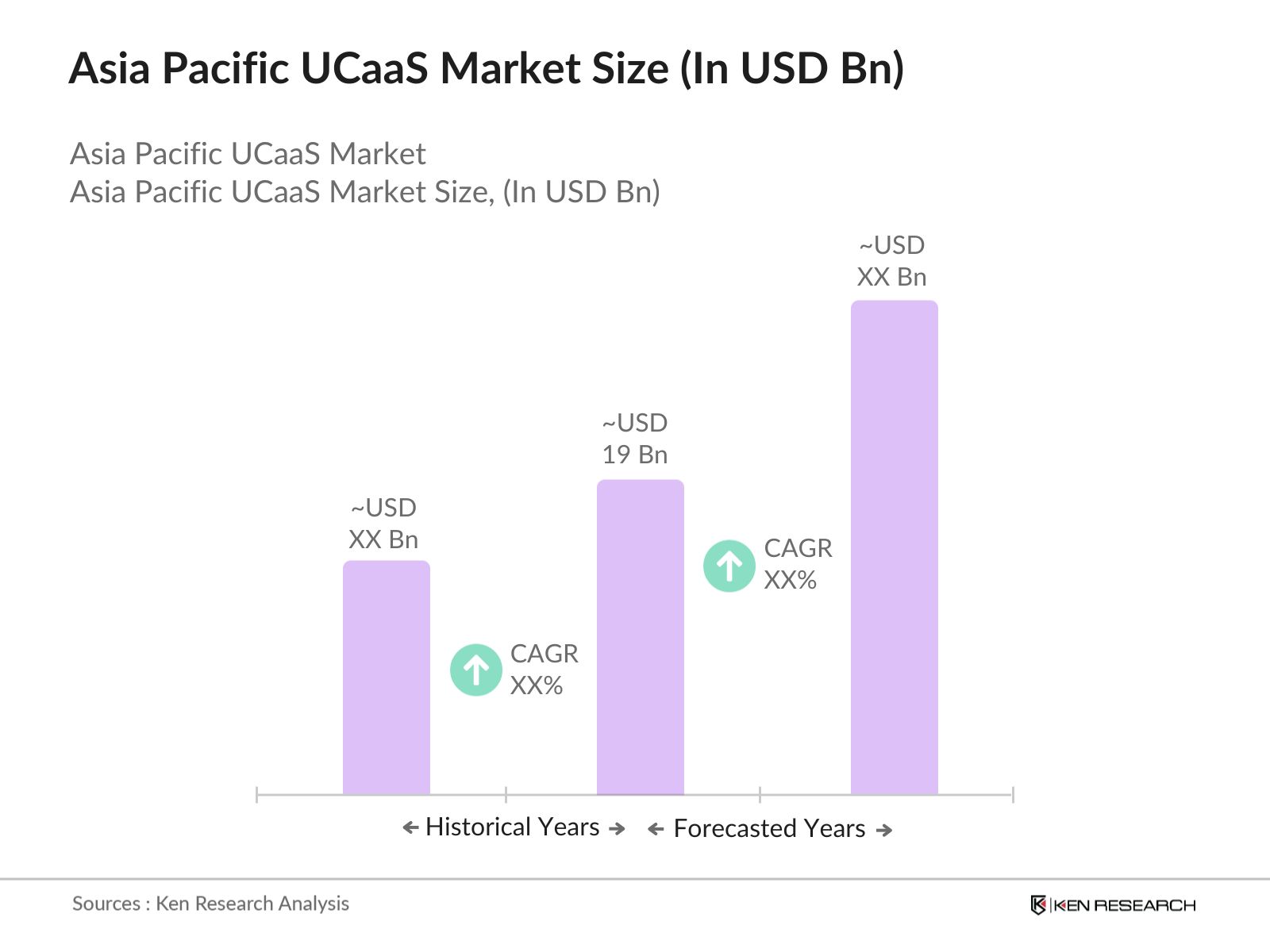
Dominant countries in the Asia Pacific UCaaS market include China, Japan, and India, largely due to their strong IT and telecom sectors and rapid adoption of cloud solutions. China leads the market owing to its robust digital infrastructure, government incentives, and widespread business digitalization. Japan, with its technology-forward enterprises, focuses on integrating AI into UCaaS, while Indias growing digital ecosystem, supported by increased government initiatives like Digital India, has driven rapid UCaaS adoption.
Government policies in China and India aimed at promoting cloud services are playing a crucial role in the growth of the UCaaS market. In 2023, China invested USD 12 billion in cloud infrastructure development, as reported by the IMF. Similarly, Indias Digital India initiative is driving cloud adoption across sectors, with over 70% of enterprises in urban areas adopting cloud-based communication solutions. These policies are creating a favorable environment for the growth of the UCaaS market in the region.
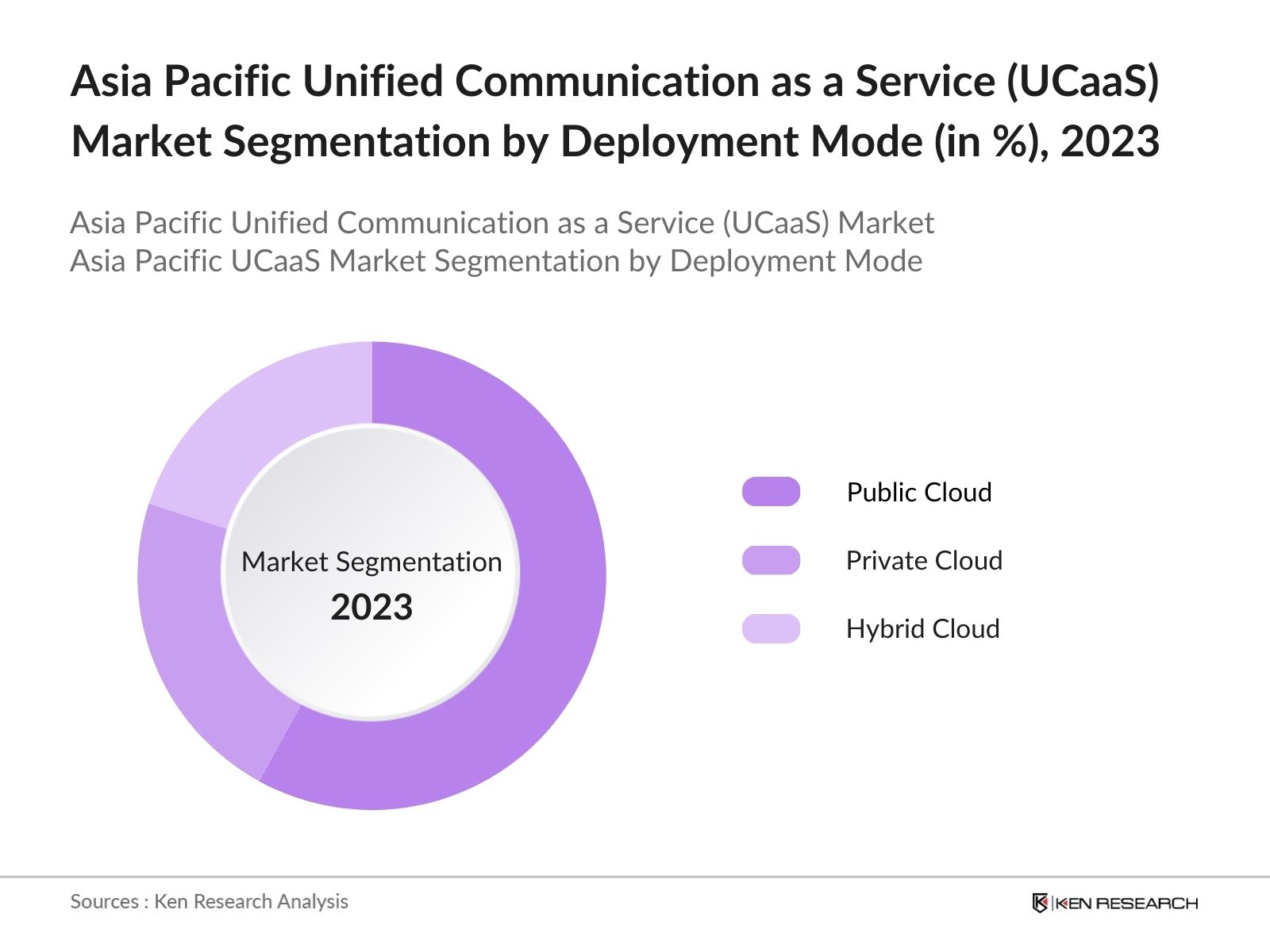
By Deployment Mode: The market is segmented by deployment mode into Public Cloud, Private Cloud, and Hybrid Cloud. Among these, the Public Cloud segment dominates due to its cost-effectiveness and flexibility. Public cloud providers offer scalable services, which appeal to small and medium-sized enterprises (SMEs) in the region. The affordability and ease of deployment in comparison to private cloud services make it a preferred option for businesses looking to streamline operations without substantial capital investment. Large enterprises tend to choose hybrid solutions for better control over sensitive data, but public cloud remains the more popular choice across the region.
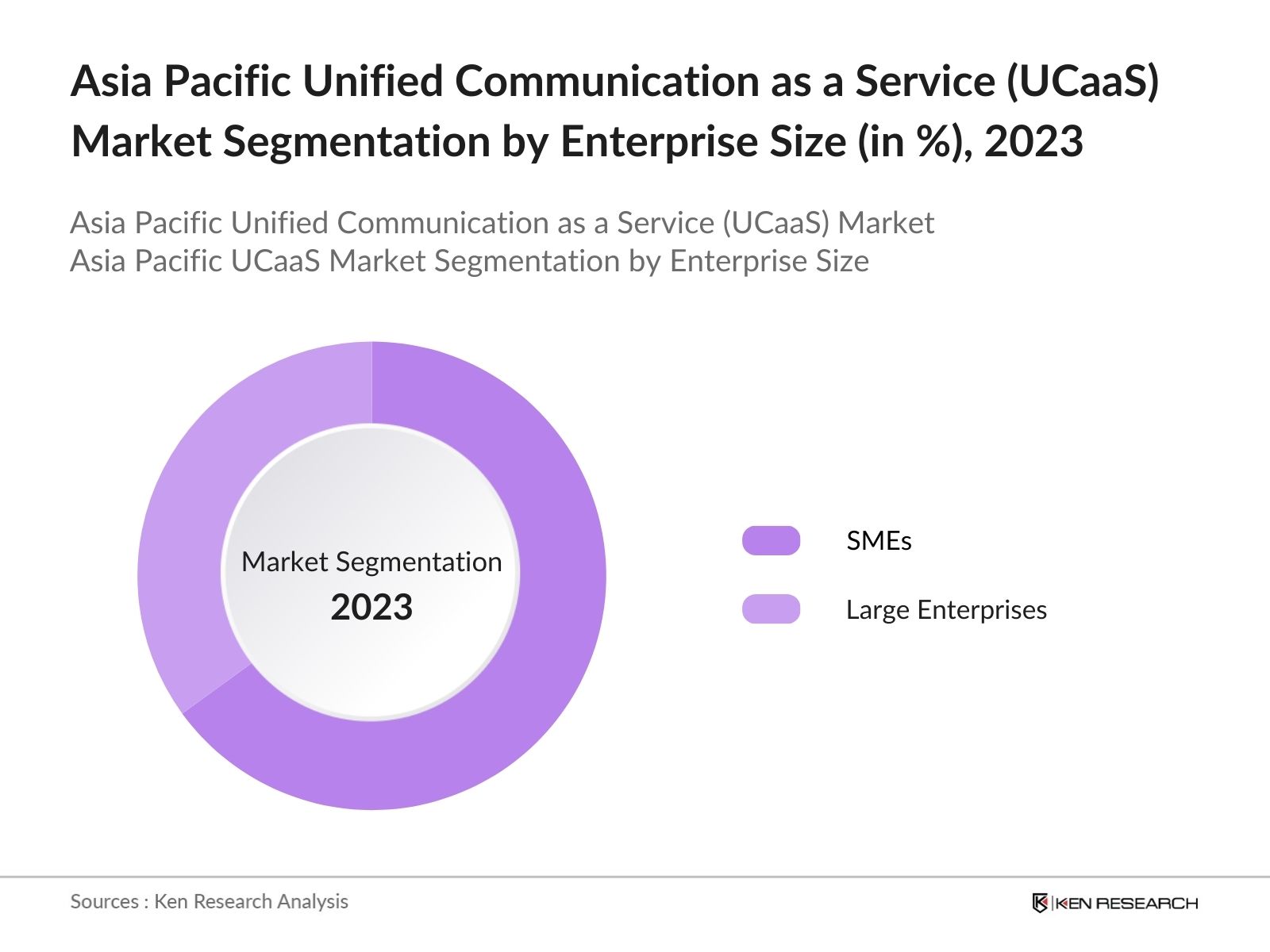
By Enterprise Size: The market is segmented by enterprise size into Small and Medium Enterprises (SMEs) and Large Enterprises. SMEs dominate the market, capturing the largest market share due to their growing need for cost-efficient communication solutions. UCaaS offers SMEs the ability to access sophisticated communication services like voice, video, and messaging without the need for heavy infrastructure investments. Moreover, the rise in startup culture, particularly in countries like India, Vietnam, and Indonesia, further fuels the demand for UcaaS among SMEs, making it a dominant segment.
The Asia Pacific UCaaS market is highly competitive, with key players leveraging strategic partnerships, product innovation, and regional expansion to strengthen their market positions. Dominating this market are global giants, regional players, and niche service providers, offering tailored solutions to meet the diverse communication needs across sectors.
|
Company |
Established |
Headquarters |
Cloud Infrastructure |
Global Presence |
Partnerships |
Innovation in AI |
Revenue (2023) |
Customer Base |
|---|---|---|---|---|---|---|---|---|
|
Microsoft Corporation |
1975 |
Redmond, USA |
||||||
|
Cisco Systems, Inc. |
1984 |
San Jose, USA |
||||||
|
Zoom Video Communications |
2011 |
San Jose, USA |
||||||
|
RingCentral, Inc. |
1999 |
Belmont, USA |
||||||
|
Tata Communications |
1986 |
Mumbai, India |
Rising Remote Work Trend: The market has been impacted by the rising trend of remote work. As of 2024, over 60 million professionals in the Asia Pacific region are working remotely, with countries like Japan, South Korea, and Australia experiencing a substantial rise in demand for Unified Communications as a Service (UCaaS) platforms. According to a report from the World Bank, 45% of employees in urban areas of the Asia Pacific region have shifted to remote work post-pandemic. This shift has driven businesses to adopt flexible communication solutions that UCaaS offers to ensure seamless communication across distributed teams.
Cost Efficiency for Enterprises: One of the key drivers for UCaaS adoption in the Asia Pacific market is its cost efficiency. Enterprises are increasingly looking for cost-saving measures, and UCaaS offers an affordable alternative to traditional on-premise communication systems. World Bank data highlights that the average operational costs for small and medium-sized enterprises (SMEs) in India, Indonesia, and the Philippines have reduced by approximately 15% by transitioning to cloud-based communication services. In Australia alone, enterprises have reported savings of over USD 3 billion through UCaaS adoption, leading to increased adoption across the region.
Demand for Integrated Communication Solutions: The demand for integrated communication solutions has grown due to the rising need for streamlined communication tools within organizations. UCaaS platforms, which combine voice, messaging, video, and conferencing services, have become the go-to solution for businesses aiming to enhance operational efficiency. According to the International Monetary Fund (IMF), the Asia Pacific region's digital infrastructure investments increased from 2022 to 2023, supporting the growing need for UCaaS.
Security Concern: Security concerns, particularly data security and privacy issues, are significant challenges for the Asia Pacific UCaaS industry. With increasing cyberattacks in countries like China, India, and Australia, businesses are concerned about the vulnerability of cloud-based communication platforms. In 2023, the Asia Pacific region accounted for more than one-third of global cyberattacks targeting communication systems, as reported by the World Bank. Governments in the region, including China and India, have introduced stringent data protection regulations, making it critical for UCaaS providers to prioritize security measures to gain customer trust.
Integration Complexities with Legacy Systems: The integration of UCaaS platforms with legacy systems remains a challenge for many businesses in the Asia Pacific region. Many enterprises, especially those in sectors such as manufacturing and banking, rely on legacy communication systems that are not easily compatible with UCaaS platforms. According to the IMF, 35% of businesses in the Asia Pacific region have reported difficulties in integrating cloud-based communication solutions with their existing infrastructure. These integration complexities have slowed the adoption of UCaaS across industries, posing a challenge for service providers.
Over the next five years, the Asia Pacific UCaaS market is expected to experience substantial growth, driven by technological advancements such as AI integration, cloud adoption, and the rollout of 5G networks. The increasing need for remote collaboration tools and unified communication solutions is anticipated to further push the demand for UCaaS, particularly in sectors like education, healthcare, and finance. Governments across the region are likely to play a critical role by investing in digital infrastructure and offering incentives for cloud technology adoption, bolstering UCaaS growth.
Technological Advancements in AI and Automation: Technological advancements in AI and automation present significant growth opportunities for the UCaaS market in the Asia Pacific region. AI-driven virtual assistants and automation tools are increasingly being integrated into UCaaS platforms to enhance user experience and improve operational efficiency. According to the World Bank, businesses in developed economies like Singapore and Japan are already using AI-powered UCaaS solutions to automate routine tasks. The growing integration of AI in UCaaS platforms is expected to further drive adoption across various sectors, creating new opportunities for market growth.
Development of 5G Infrastructure: The development of 5G infrastructure across the Asia Pacific region is a major opportunity for the UCaaS market. Countries like China, South Korea, and Japan are at the forefront of 5G deployment, with over 200 million 5G connections as of 2023, according to the IMF. The rollout of 5G technology is expected to enhance the performance of UCaaS platforms by providing faster and more reliable connectivity, particularly in remote areas. This technological advancement will enable businesses to leverage UCaaS solutions more effectively, creating new growth opportunities for service providers.
|
Deployment Mode |
Public Cloud Private Cloud Hybrid Cloud |
|
Enterprise Size |
SMEs Large Enterprises |
|
Industry Vertical |
IT & Telecom BFSI Healthcare Retail & E-commerce Government |
|
Service Type |
Telephony Unified Messaging Conferencing Collaboration Platforms |
|
End-User |
IT & Telecom Enterprises Government & Public Sector Manufacturing |
Major Players
1.1. Definition and Scope
1.2. Market Taxonomy
1.3. Market Growth Rate (CAGR, User Adoption Rate)
1.4. Market Segmentation Overview (Deployment Mode, Enterprise Size, Industry Vertical, Service Type, End-User)
2.1. Historical Market Size
2.2. Year-On-Year Growth Analysis (Revenue Growth, User Base Growth)
2.3. Key Market Developments and Milestones (Cloud Infrastructure Development, Key Partnerships)
3.1. Growth Drivers
3.1.1. Rising Remote Work Trend
3.1.2. Cost Efficiency for Enterprises
3.1.3. Increasing Adoption of Cloud Services
3.1.4. Demand for Integrated Communication Solutions
3.2. Market Challenges
3.2.1. Security Concerns (Data Security, Privacy Issues)
3.2.2. Lack of High-Speed Internet Access in Rural Areas
3.2.3. Integration Complexities with Legacy Systems
3.3. Opportunities
3.3.1. Technological Advancements in AI and Automation
3.3.2. Expansion into Emerging Markets (Indonesia, Vietnam)
3.3.3. Development of 5G Infrastructure
3.4. Trends
3.4.1. Growth of AI-Driven Virtual Assistants
3.4.2. Integration with Collaboration Tools (Slack, Teams)
3.4.3. Hybrid Cloud Deployments
3.5. Government Regulation
3.5.1. Data Localization Laws
3.5.2. Cybersecurity Regulations
3.5.3. Cloud Services Policy (China, India)
3.6. SWOT Analysis
3.7. Stakeholder Ecosystem (Service Providers, Vendors, End-Users)
3.8. Porters Five Forces
3.9. Competition Ecosystem
4.1. By Deployment Mode (In Value %)
4.1.1. Public Cloud
4.1.2. Private Cloud
4.1.3. Hybrid Cloud
4.2. By Enterprise Size (In Value %)
4.2.1. Small & Medium Enterprises (SMEs)
4.2.2. Large Enterprises
4.3. By Industry Vertical (In Value %)
4.3.1. IT & Telecom
4.3.2. BFSI
4.3.3. Healthcare
4.3.4. Retail & E-commerce
4.3.5. Government
4.4. By Service Type (In Value %)
4.4.1. Telephony
4.4.2. Unified Messaging
4.4.3. Conferencing
4.4.4. Collaboration Platforms
4.5. By End-User (In Value %)
4.5.1. IT & Telecom Enterprises
4.5.2. Government & Public Sector
4.5.3. Manufacturing
5.1. Detailed Profiles of Major Companies
5.1.1. Microsoft Corporation
5.1.2. Cisco Systems, Inc.
5.1.3. Google LLC
5.1.4. Zoom Video Communications, Inc.
5.1.5. RingCentral, Inc.
5.1.6. Mitel Networks Corporation
5.1.7. 8x8, Inc.
5.1.8. Avaya Inc.
5.1.9. NEC Corporation
5.1.10. Tata Communications
5.1.11. Vonage Holdings Corp.
5.1.12. Fuze, Inc.
5.1.13. BT Group PLC
5.1.14. Orange Business Services
5.1.15. AT&T Inc.
5.2. Cross Comparison Parameters (No. of Employees, Headquarters, Revenue, Customer Base, Cloud Infrastructure Capabilities, Market Presence, Product Portfolio, Industry Focus)
5.3. Market Share Analysis (In % by Key Players)
5.4. Strategic Initiatives (Partnerships, New Product Launches)
5.5. Mergers and Acquisitions
5.6. Investment Analysis
5.7. Venture Capital Funding
6.1. Compliance Requirements (Data Protection Laws, SLA Standards)
6.2. Certification Processes (Cloud Certifications, Security Standards)
7.1. Future Market Size Projections (By Key Segments)
7.2. Key Factors Driving Future Market Growth (Technology Advancements, 5G Rollout, Regulatory Support)
8.1. By Deployment Mode (In Value %)
8.2. By Enterprise Size (In Value %)
8.3. By Industry Vertical (In Value %)
8.4. By Service Type (In Value %)
8.5. By End-User (In Value %)
9.1. TAM/SAM/SOM Analysis
9.2. Customer Cohort Analysis (By Region, Enterprise Size)
9.3. Marketing Initiatives (Digital Transformation, Cloud Adoption)
9.4. White Space Opportunity Analysis (Unserved Regions, Emerging Markets)
The initial phase involves mapping all stakeholders in the Asia Pacific UCaaS Market, including service providers, regulators, and end-users. Desk research utilizing secondary databases identifies the critical variables influencing the market.
We analyze historical data, focusing on market penetration, provider-user ratios, and revenue generation. Additionally, we review service quality metrics to validate revenue estimates, ensuring accuracy.
Industry hypotheses are validated through interviews with UCaaS service providers and sector experts. These consultations provide real-time operational and financial insights, essential for refining our data.
Engagements with service providers help confirm and complement data collected through the bottom-up approach. This step ensures a comprehensive, validated analysis of the Asia Pacific UCaaS Market.
The Asia Pacific UCaaS market is valued at USD 19 billion driven by the growing demand for cloud-based communication solutions across industries such as IT, telecom, and retail.
Challenges in the Asia Pacific UCaaS market include data security concerns, limited high-speed internet access in rural regions, and integration complexities with legacy systems, which slow the adoption rate for many enterprises.
Key players in the Asia Pacific UCaaS market include Microsoft Corporation, Cisco Systems, Zoom Video Communications, RingCentral, and Tata Communications, each leveraging strategic partnerships and innovative cloud solutions.
Growth drivers in the Asia Pacific UCaaS market include the increasing need for remote communication solutions, advancements in AI, and the deployment of 5G networks, all of which facilitate faster and more efficient UCaaS solutions.
China, Japan, and India dominate the Asia Pacific UCaaS market due to their robust digital infrastructure, strong IT and telecom sectors, and government incentives promoting cloud adoption.

What makes us stand out is that our consultants follows Robust, Refine and Result (RRR) methodology. i.e. Robust for clear definitions, approaches and sanity checking, Refine for differentiating respondents facts and opinions and Result for presenting data with story

We have set a benchmark in the industry by offering our clients with syndicated and customized market research reports featuring coverage of entire market as well as meticulous research and analyst insights.

While we don't replace traditional research, we flip the method upside down. Our dual approach of Top Bottom & Bottom Top ensures quality deliverable by not just verifying company fundamentals but also looking at the sector and macroeconomic factors.

With one step in the future, our research team constantly tries to show you the bigger picture. We help with some of the tough questions you may encounter along the way: How is the industry positioned? Best marketing channel? KPI's of competitors? By aligning every element, we help maximize success.

Our report gives you instant access to the answers and sources that other companies might choose to hide. We elaborate each steps of research methodology we have used and showcase you the sample size to earn your trust.

If you need any support, we are here! We pride ourselves on universe strength, data quality, and quick, friendly, and professional service.