















Asia Pacific Vaginal Specula Market Outlook to 2030
Region:Asia
Author(s):Sanjeev
Product Code:KROD9235
November 2024
91
About the Report
Asia Pacific Vaginal Specula Market Overview
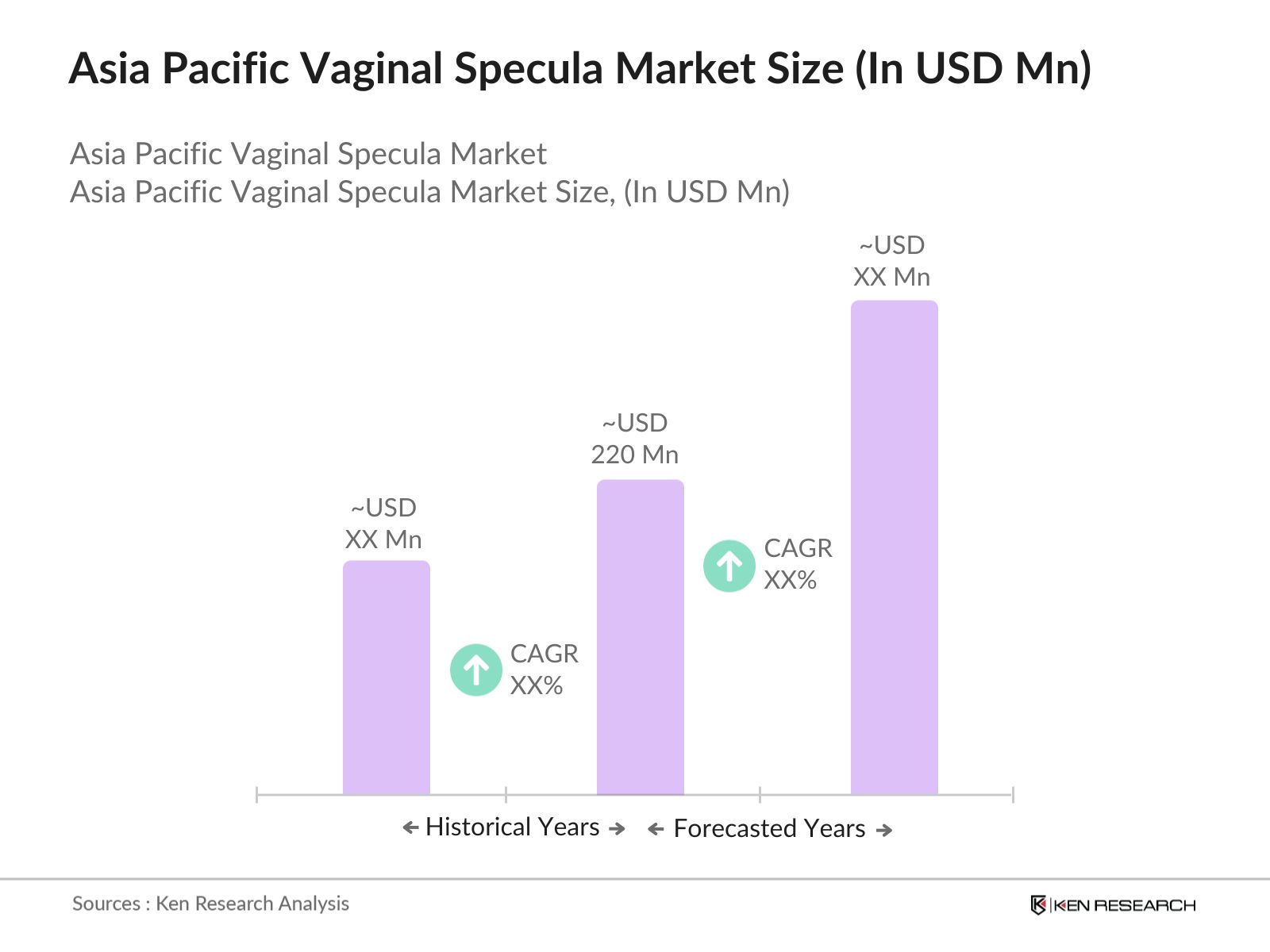
- The Asia Pacific Vaginal Specula market is valued at USD 220 million, driven by a combination of increasing demand for gynecological examinations and rising awareness of womens health. Government initiatives promoting healthcare access, and the growing prevalence of gynecological diseases are key contributors to the market's growth. Additionally, the shift toward disposable medical devices, aimed at reducing cross-contamination, has propelled the demand for vaginal specula across the region, enhancing market penetration in both urban and rural healthcare facilities.
- Countries like China, Japan, and India dominate the Asia Pacific Vaginal Specula market due to their large populations and well-established healthcare infrastructure. China leads in the region, driven by investments in medical technology and government support for healthcare expansion. Japan's advanced medical systems and high healthcare expenditure also place it at the forefront, while India benefits from a growing demand for medical devices, supported by the expansion of private hospitals and clinics across the country.
- Medical Device Regulations Across Asia Pacific Medical devices, including vaginal specula, are subject to stringent regulatory oversight in the Asia Pacific region. Each country has distinct regulatory bodies that govern the approval, distribution, and usage of medical devices. For example, the Australian Therapeutic Goods Administration (TGA) mandates rigorous safety assessments for all imported specula. In 2023, over 300,000 medical devices, including specula, were evaluated for compliance with TGA regulations before market entry.
Asia Pacific Vaginal Specula Market Segmentation
By Product Type: The market is segmented by product type into Disposable Vaginal Specula and Reusable Vaginal Specula. Among these, Disposable Vaginal Specula holds the dominant market share due to the increasing focus on infection control and the prevention of cross-contamination in healthcare settings. Disposable specula are preferred for their single-use nature, which ensures better hygiene and lowers the risk of infections. Additionally, the availability of disposable products at affordable prices has bolstered their use across both developed and emerging economies in the region.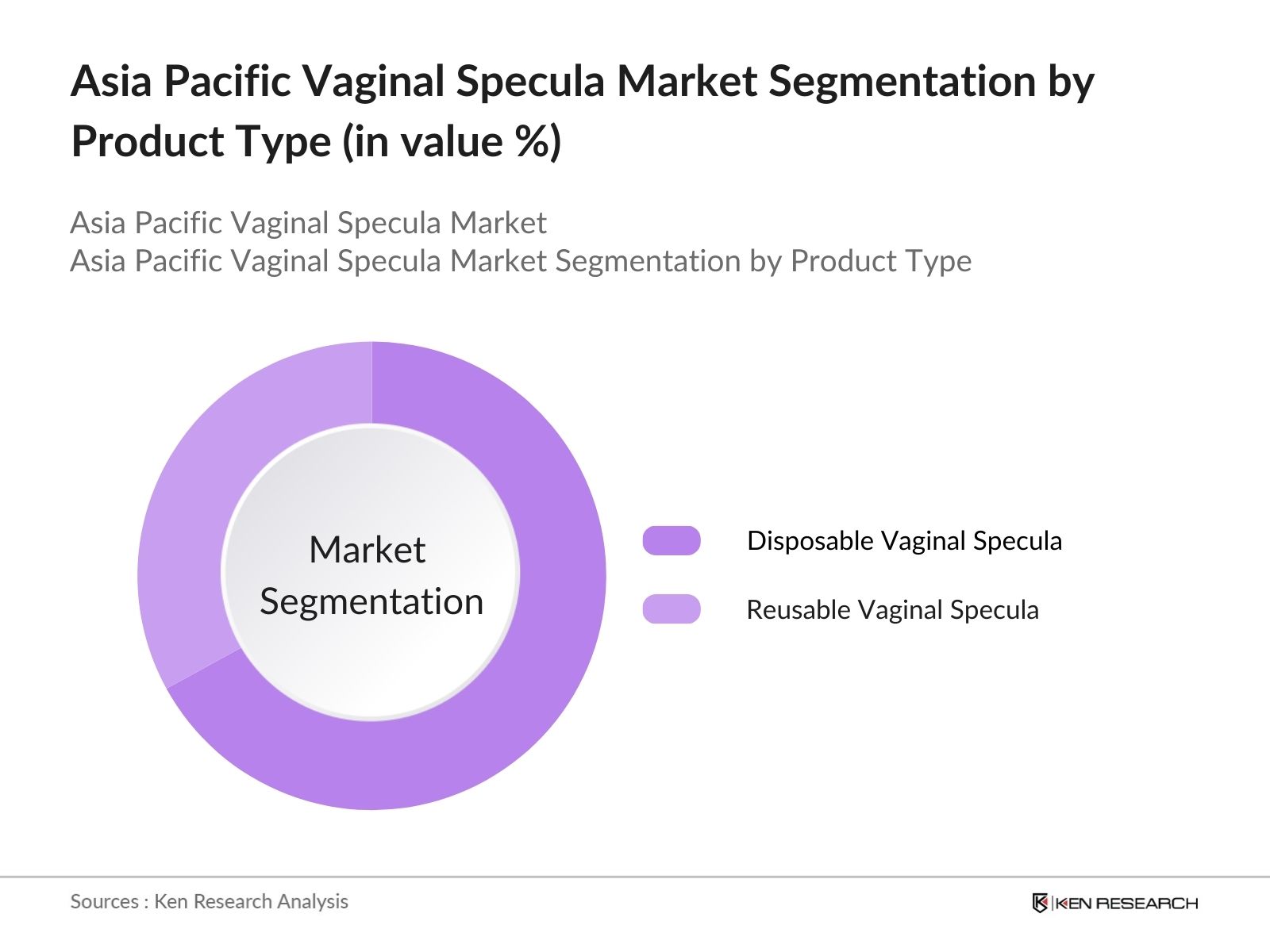
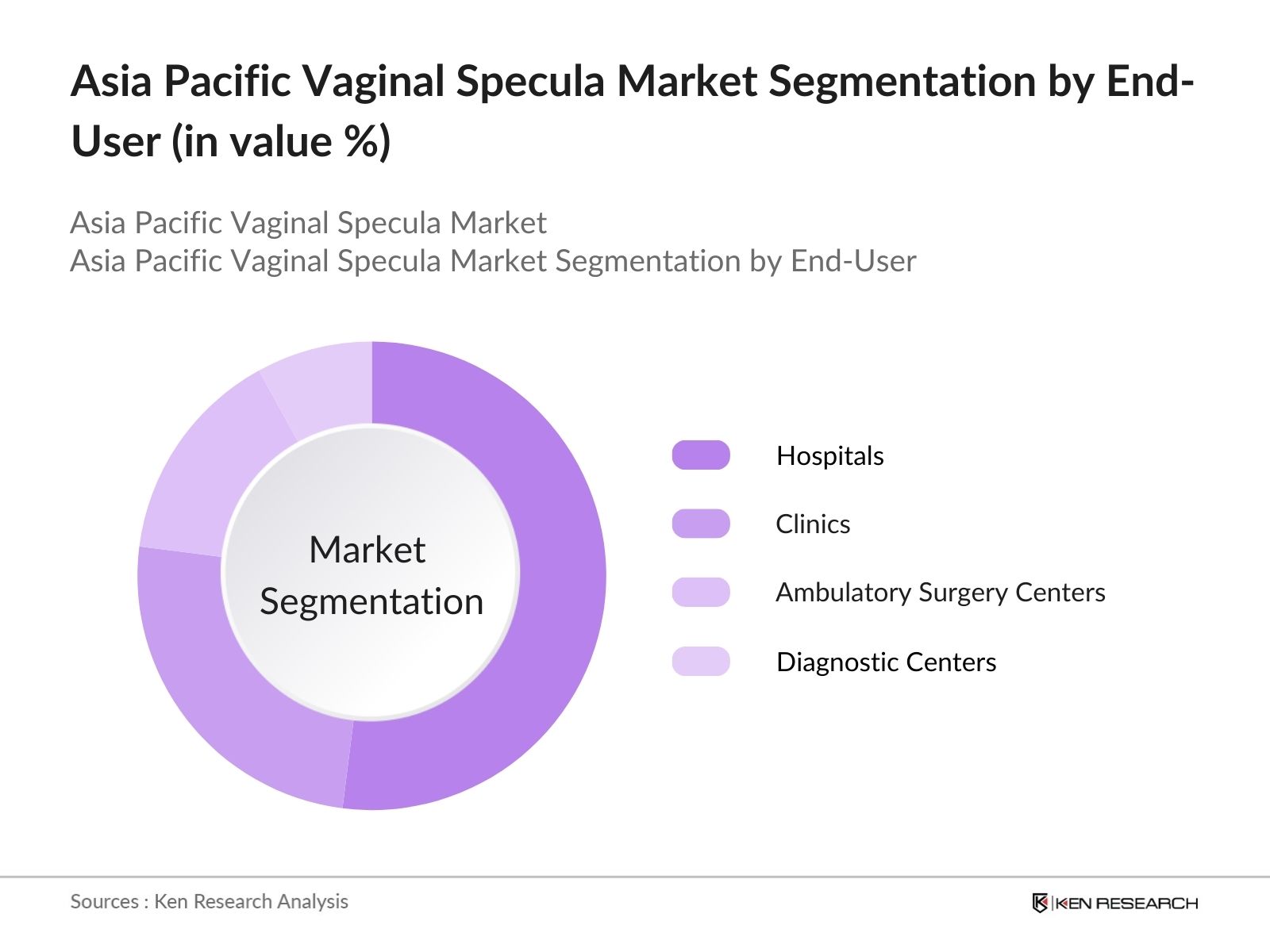
By End-User: The market is further segmented by end-user into Hospitals, Clinics, Ambulatory Surgery Centers, and Diagnostic Centers. Hospitals account for the largest market share in this segment, owing to their widespread presence, better access to medical devices, and the higher volume of gynecological examinations performed. Hospitals are equipped with advanced medical technologies and offer specialized gynecological departments, making them the primary healthcare provider for women's health issues.
Asia Pacific Vaginal Specula Market Competitive Landscape
The Asia Pacific Vaginal Specula market is consolidated with a few major players dominating the space. Key companies in the region include global giants and regional manufacturers that focus on product innovation and regional expansion strategies. The Asia Pacific Vaginal Specula market is led by major international companies such as CooperSurgical Inc., Welch Allyn, and Medline Industries, along with regional players like OBP Medical and Dynarex Corporation.
|
Company |
Established Year |
Headquarters |
Revenue (USD Mn) |
Product Range |
R&D Expenditure |
Employee Count |
Market Reach |
Strategic Partnerships |
Recent Developments |
|
CooperSurgical Inc. |
1990 |
USA |
|||||||
|
Welch Allyn |
1915 |
USA |
|||||||
|
Medline Industries |
1910 |
USA |
|||||||
|
OBP Medical |
2007 |
USA |
|||||||
|
Dynarex Corporation |
1967 |
USA |
Asia Pacific Vaginal Specula Industry Analysis
Market Growth Drivers
- Rising Prevalence of Gynecological Disorders Gynecological disorders such as cervical cancer, polycystic ovary syndrome (PCOS), and endometriosis are becoming increasingly prevalent in the Asia Pacific region. According to the World Health Organization (WHO), 570,000 women were diagnosed with cervical cancer globally in 2022, with a portion of cases reported in Asia Pacific countries. The rising burden of these conditions has increased the demand for diagnostic procedures, including vaginal specula, used in routine gynecological exams and cancer screenings. Government health programs are being strengthened to address these conditions, further supporting the market's growth.
- Increasing Adoption of Specula in Ambulatory Surgery Centers Ambulatory Surgery Centers (ASCs) are rapidly growing across the Asia Pacific region, particularly in countries such as Japan, China, and India. ASCs have adopted vaginal specula as a standard tool for outpatient gynecological procedures, driving demand. According to the Ministry of Health, Labour, and Welfare (Japan), there were over 3,500 ambulatory surgery centers in operation by the end of 2023, marking a 20% increase compared to 2022. This growth in ASCs is expected to bolster the use of vaginal specula in minimally invasive procedures.
- Government Initiatives for Women's Health Programs Governments in the Asia Pacific region are increasingly prioritizing women's health, launching various initiatives aimed at improving access to essential medical services. For example, Indias National Health Mission includes dedicated programs for cervical cancer screenings, for which vaginal specula are indispensable tools. In 2022, over 5 million women were screened under government programs in India alone, driving the demand for specula. This trend is reflected in other countries, with healthcare budgets being allocated towards enhancing womens healthcare services.
Market Challenges
- Regulatory Hurdles in Medical Device Approvals the Asia Pacific region faces stringent regulatory frameworks for the approval of medical devices, including vaginal specula. Each country has its own regulations, making it challenging for manufacturers to streamline product launches across the region. For instance, Chinas National Medical Products Administration (NMPA) requires extensive clinical trials for imported devices, which can delay approvals by up to 18 months. These lengthy regulatory processes slow market entry for new and advanced specula, hindering the overall market growth.
- Lack of Trained Professionals There is a shortage of trained healthcare professionals across several Asia Pacific countries, particularly in rural areas. This lack of expertise hampers the widespread use of advanced medical instruments, including vaginal specula. The Indian government reported in 2023 that there was a deficit of over 300,000 trained gynecologists in the country, leading to underutilization of available diagnostic tools in public health centers. Similar workforce shortages are seen in other nations, restricting the full potential of specula usage in healthcare systems.
Asia Pacific Vaginal Specula Market Future Outlook
Over the next five years, the Asia Pacific Vaginal Specula market is expected to witness steady growth, driven by increasing investments in healthcare infrastructure and the rising prevalence of gynecological disorders. Technological advancements, such as the introduction of disposable, cost-effective, and hygienic specula, will further boost market growth. Additionally, government initiatives focused on improving healthcare accessibility in rural areas and the growing awareness of womens health will play a critical role in shaping the future of the market.
Future Market Opportunities
- Growing Demand in Emerging Economies Emerging economies in the Asia Pacific, such as Vietnam and Bangladesh, are experiencing rapid improvements in healthcare infrastructure, leading to increased demand for medical devices. In 2023, Vietnam's healthcare spending grew to $17 billion, with a large portion allocated to upgrading diagnostic tools in public hospitals. As a result, there is a growing demand for vaginal specula in these nations, especially in rural areas where healthcare facilities are expanding rapidly.
- Product Customization Based on Regional Preferences Customization of vaginal specula based on regional medical practices and preferences offers a growth opportunity. Countries like China and Japan prefer smaller, more ergonomic devices that cater to their patient populations, prompting manufacturers to tailor their products accordingly. In 2023, regional manufacturers in China introduced customizable specula designs, contributing to a 15% rise in domestic market demand. This trend of localized customization is expected to continue, with more tailored solutions for specific patient demographics.
Scope of the Report
Products
Key Target Audience
Gynecological Device Manufacturers
Hospitals and Clinics
Medical Device Distributors
Ambulatory Surgery Centers
Diagnostic Centers
Investments and Venture Capitalist Firms
Government and Regulatory Bodies (e.g., National Medical Products Administration, FDA)
Healthcare Service Providers
Companies
Asia Pacific Vaginal Specula Market Major Players
CooperSurgical Inc.
Welch Allyn (Hillrom)
Medline Industries
OBP Medical
Dynarex Corporation
Becton, Dickinson and Company (BD)
Sklar Surgical Instruments
Teleflex Incorporated
Pelican Feminine Healthcare
Boston Scientific Corporation
Richard Wolf GmbH
Steris Corporation
Henry Schein Inc.
MedGyn Products Inc.
3M Health Care
Table of Contents
1. Asia Pacific Vaginal Specula Market Overview
1.1. Definition and Scope
1.2. Market Taxonomy
1.3. Market Growth Rate
1.4. Market Segmentation Overview
2. Asia Pacific Vaginal Specula Market Size (In USD Mn)
2.1. Historical Market Size
2.2. Year-On-Year Growth Analysis
2.3. Key Market Developments and Milestones
3. Asia Pacific Vaginal Specula Market Analysis
3.1. Growth Drivers
3.1.1. Rising Prevalence of Gynecological Disorders
3.1.2. Increasing Adoption of Specula in Ambulatory Surgery Centers
3.1.3. Government Initiatives for Women's Health Programs
3.1.4. Technological Advancements in Medical Instruments
3.2. Market Challenges
3.2.1. Regulatory Hurdles in Medical Device Approvals
3.2.2. Lack of Trained Professionals
3.2.3. High Cost of Advanced Specula
3.3. Opportunities
3.3.1. Growing Demand in Emerging Economies
3.3.2. Product Customization Based on Regional Preferences
3.3.3. Expansion of Telemedicine and Remote Health Monitoring
3.4. Trends
3.4.1. Adoption of Disposable Vaginal Specula
3.4.2. Preference for Hygienic and Sterile Solutions
3.4.3. Integration with Advanced Imaging Techniques
3.5. Government Regulation
3.5.1. Medical Device Regulations Across Asia Pacific
3.5.2. Health Safety and Sterilization Protocols
3.5.3. Government Subsidies for Womens Health Products
3.6. SWOT Analysis
3.7. Stake Ecosystem
3.8. Porters Five Forces
3.9. Competition Ecosystem
4. Asia Pacific Vaginal Specula Market Segmentation
4.1. By Product Type (In Value %)
4.1.1. Disposable Vaginal Specula
4.1.2. Reusable Vaginal Specula
4.2. By Material Type (In Value %)
4.2.1. Plastic
4.2.2. Metal
4.2.3. Other Materials
4.3. By End-User (In Value %)
4.3.1. Hospitals
4.3.2. Clinics
4.3.3. Ambulatory Surgery Centers
4.3.4. Diagnostic Centers
4.4. By Application (In Value %)
4.4.1. Routine Check-ups
4.4.2. Surgery
4.4.3. Diagnostic Procedures
4.5. By Region (In Value %)
4.5.1. North
4.5.2. East
4.5.3. West
4.5.4. South
5. Asia Pacific Vaginal Specula Market Competitive Analysis
5.1 Detailed Profiles of Major Companies
5.1.1. CooperSurgical Inc.
5.1.2. Welch Allyn (Hillrom)
5.1.3. Medline Industries
5.1.4. OBP Medical
5.1.5. Integra Lifesciences
5.1.6. Dynarex Corporation
5.1.7. Becton, Dickinson and Company (BD)
5.1.8. Sklar Surgical Instruments
5.1.9. Teleflex Incorporated
5.1.10. Pelican Feminine Healthcare
5.1.11. Boston Scientific Corporation
5.1.12. Richard Wolf GmbH
5.1.13. Steris Corporation
5.1.14. Henry Schein Inc.
5.1.15. MedGyn Products Inc.
5.2 Cross Comparison Parameters (Revenue, R&D Investment, Market Presence, Product Portfolio, Employee Count, Market Strategy, Strategic Partnerships, Geographic Reach)
5.3 Market Share Analysis
5.4 Strategic Initiatives
5.5 Mergers and Acquisitions
5.6 Investment Analysis
5.7 Venture Capital Funding
5.8 Government Grants
5.9 Private Equity Investments
6. Asia Pacific Vaginal Specula Market Regulatory Framework
6.1 Medical Device Standards
6.2 Compliance and Licensing Regulations
6.3 Certification and Quality Control Processes
7. Asia Pacific Vaginal Specula Future Market Size (In USD Mn)
7.1 Future Market Size Projections
7.2 Key Factors Driving Future Market Growth
8. Asia Pacific Vaginal Specula Future Market Segmentation
8.1. By Product Type (In Value %)
8.2. By Material Type (In Value %)
8.3. By End-User (In Value %)
8.4. By Application (In Value %)
8.5. By Region (In Value %)
9. Asia Pacific Vaginal Specula Market Analysts Recommendations
9.1 TAM/SAM/SOM Analysis
9.2 Consumer Cohort Analysis
9.3 Marketing Initiatives
9.4 White Space Opportunity Analysis
Disclaimer
Contact Us
Research Methodology
Step 1: Identification of Key Variables
The initial phase involved mapping the ecosystem of stakeholders within the Asia Pacific Vaginal Specula Market. Extensive desk research was carried out, leveraging both secondary data and proprietary databases. This phase focused on identifying the most critical variables influencing market dynamics, such as regulatory policies, healthcare access, and the demand for gynecological devices.
Step 2: Market Analysis and Construction
In this phase, we compiled and analyzed historical data from the Asia Pacific Vaginal Specula Market. Key indicators such as market penetration rates, distribution networks, and revenue generation were assessed. Additionally, qualitative insights on healthcare infrastructure and medical device adoption trends were gathered to provide a holistic view of the market.
Step 3: Hypothesis Validation and Expert Consultation
To validate our hypotheses, we conducted computer-assisted telephone interviews (CATIs) with industry experts. These professionals provided critical insights into market operations, offering financial and operational data from leading companies, which allowed us to refine our analysis.
Step 4: Research Synthesis and Final Output
The final stage involved synthesizing all gathered data and verifying it through consultations with vaginal specula manufacturers. These discussions helped validate product-specific statistics and overall market estimates, ensuring that our analysis accurately reflects the current market scenario.
Frequently Asked Questions
01. How big is the Asia Pacific Vaginal Specula Market?
The Asia Pacific Vaginal Specula market is valued at USD 220 million, driven by increasing healthcare access and the growing prevalence of gynecological diseases across the region.
02. What are the challenges in the Asia Pacific Vaginal Specula Market?
Key challenges in the Asia Pacific Vaginal Specula market include regulatory barriers in different countries, the high cost of advanced devices, and a lack of trained healthcare professionals in rural areas.
03. Who are the major players in the Asia Pacific Vaginal Specula Market?
Major players in the Asia Pacific Vaginal Specula market include CooperSurgical Inc., Welch Allyn, Medline Industries, OBP Medical, and Dynarex Corporation. These companies lead the market with their innovative products and extensive distribution networks.
04. What are the growth drivers of the Asia Pacific Vaginal Specula Market?
The Asia Pacific Vaginal Specula market is driven by increasing awareness of women's health, government initiatives to improve healthcare access, and rising demand for disposable medical devices to prevent infections.
05. Which regions dominate the Asia Pacific Vaginal Specula Market?
China, Japan, and India dominate the Asia Pacific Vaginal Specula market due to their advanced healthcare infrastructure, large populations, and government support for healthcare development.
Why Buy From Us?

What makes us stand out is that our consultants follows Robust, Refine and Result (RRR) methodology. i.e. Robust for clear definitions, approaches and sanity checking, Refine for differentiating respondents facts and opinions and Result for presenting data with story

We have set a benchmark in the industry by offering our clients with syndicated and customized market research reports featuring coverage of entire market as well as meticulous research and analyst insights.

While we don't replace traditional research, we flip the method upside down. Our dual approach of Top Bottom & Bottom Top ensures quality deliverable by not just verifying company fundamentals but also looking at the sector and macroeconomic factors.

With one step in the future, our research team constantly tries to show you the bigger picture. We help with some of the tough questions you may encounter along the way: How is the industry positioned? Best marketing channel? KPI's of competitors? By aligning every element, we help maximize success.

Our report gives you instant access to the answers and sources that other companies might choose to hide. We elaborate each steps of research methodology we have used and showcase you the sample size to earn your trust.

If you need any support, we are here! We pride ourselves on universe strength, data quality, and quick, friendly, and professional service.