
Asia Pacific Video Game Market Outlook to 2030
Region:Afganistan
Author(s):Paribhasha Tiwari
Product Code:KROD9709
Region:Afganistan
Author(s):Paribhasha Tiwari
Product Code:KROD9709
December 2024
89
Listen to the audio summary
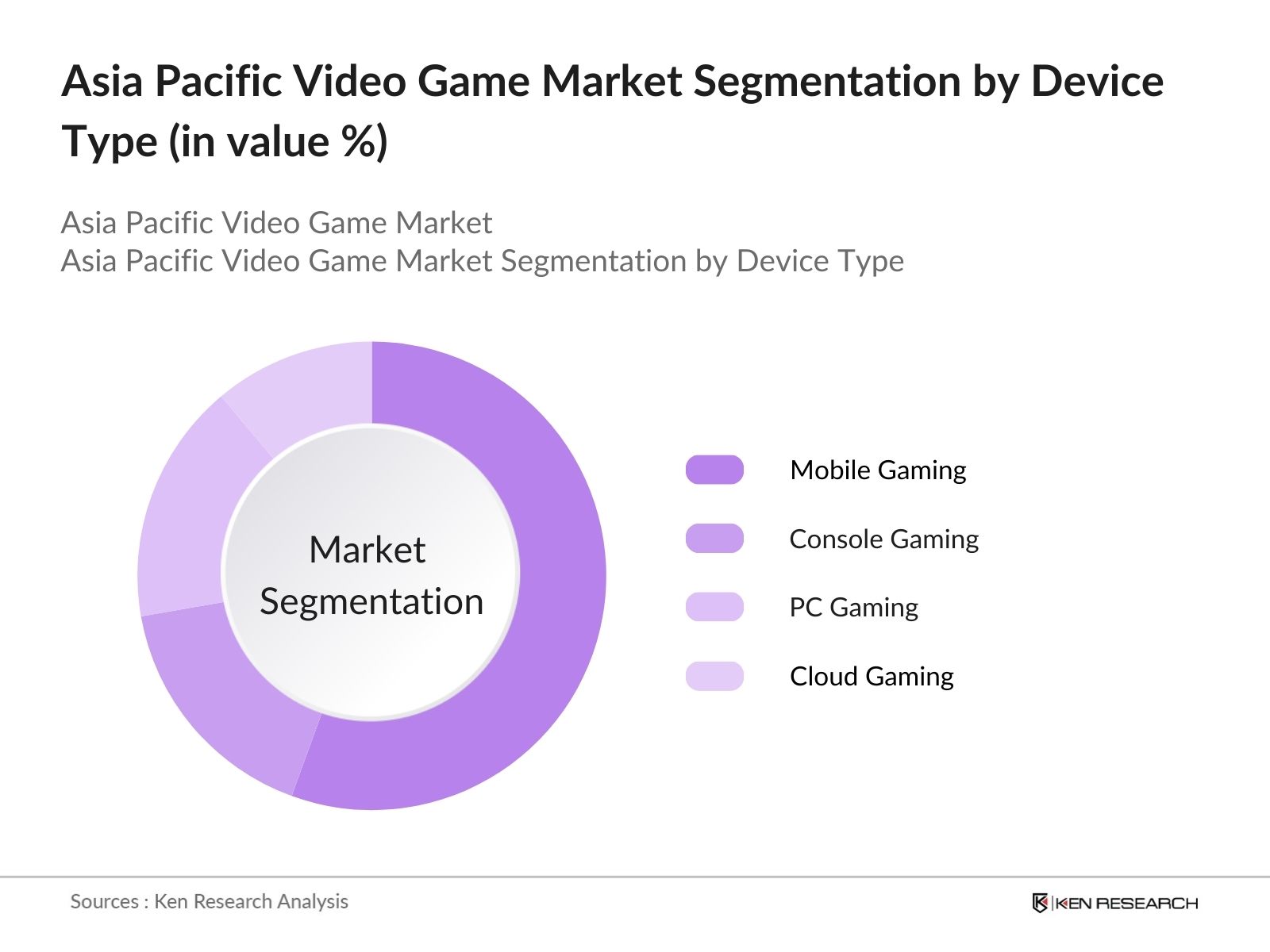
By Device Type: The Asia Pacific Video Game market is segmented by device type into mobile gaming, console gaming, PC gaming, and cloud gaming. Recently, mobile gaming holds a dominant market share due to its accessibility and affordability, which appeals to a broad audience across all income levels. The widespread adoption of smartphones in the region, combined with low-cost data plans and app-based gaming, contributes to mobile gamings prevalence, supported by local developers who create region-specific content tailored to user preferences.
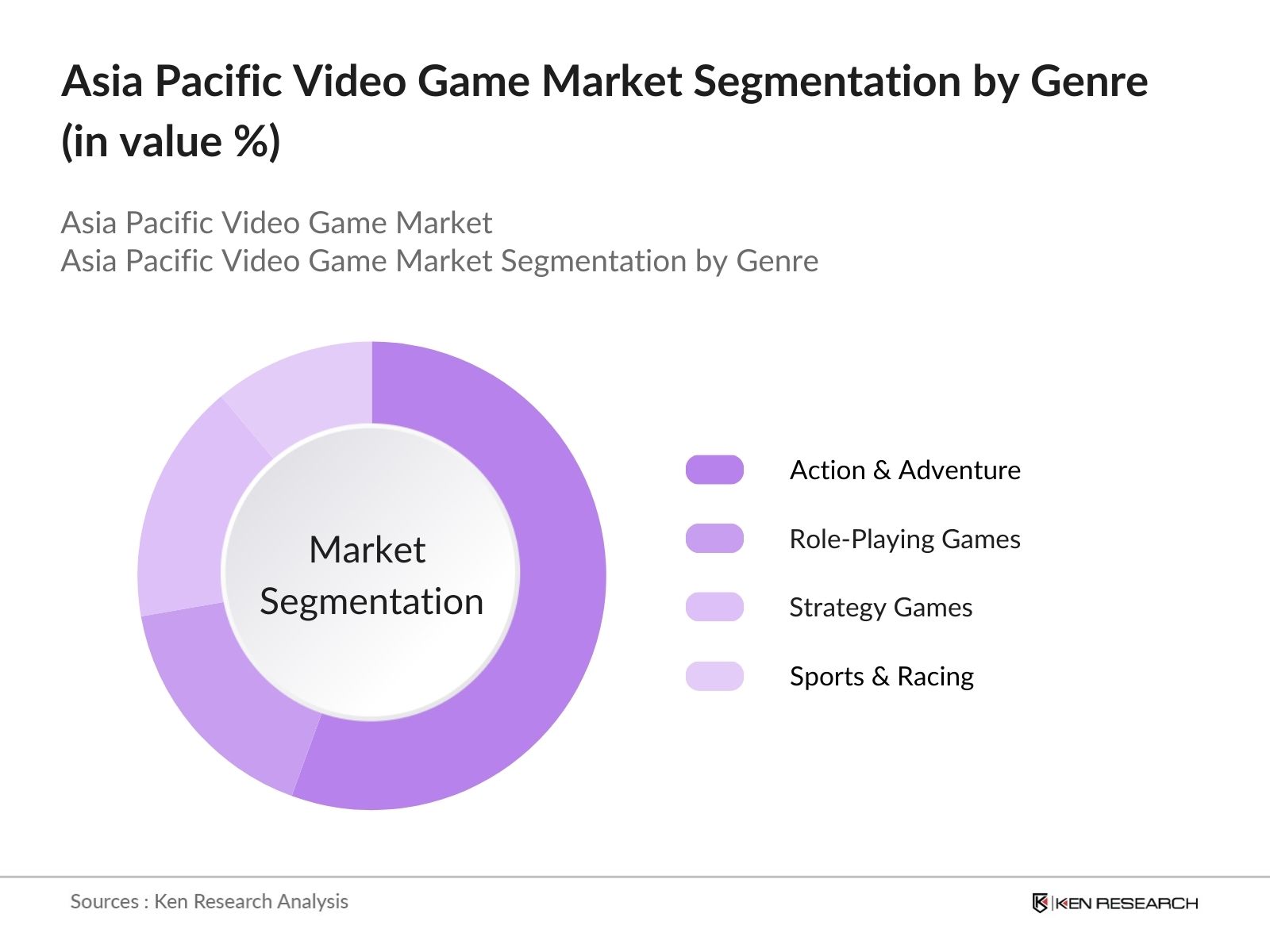
By Genre: The Asia Pacific Video Game market is segmented by genre into action & adventure, role-playing games (RPG), strategy games, and sports & racing games. Action and adventure games dominate the genre segmentation due to their immersive graphics, captivating storylines, and innovative gameplay mechanics that have strong appeal across demographics. Leading developers continuously release high-quality games within this genre, keeping it relevant and engaging for both casual and hardcore gamers.
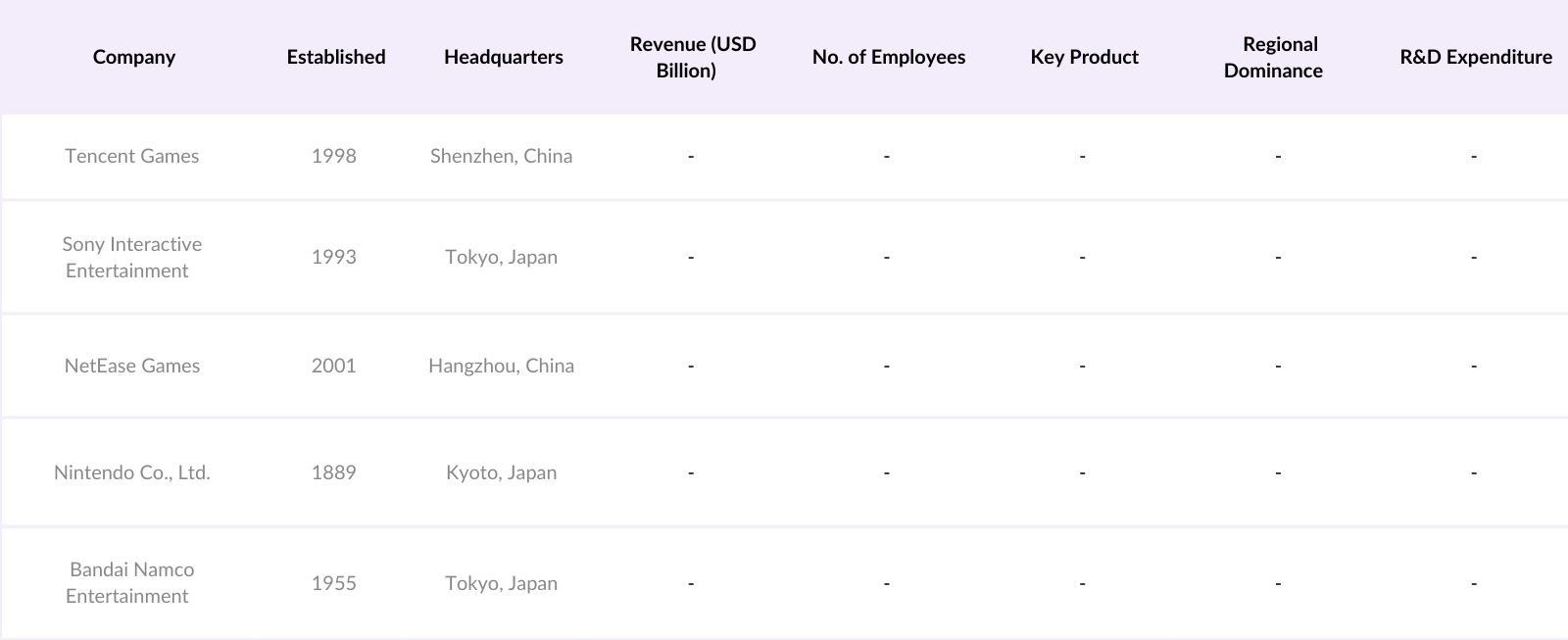
The Asia Pacific Video Game Market is dominated by a few prominent players, including Tencent Games, Sony Interactive Entertainment, and NetEase Games. This consolidation showcases the significant influence of these companies in terms of technological innovation and content development.
Future Outlook
The Asia Pacific Video Game Market is expected to experience substantial growth over the coming years, driven by advancements in mobile gaming technology, the rise of virtual reality gaming, and the expansion of the eSports industry. Continuous support from both local and international investors and the increasing adoption of 5G connectivity across the region will also bolster market growth. As more gaming companies expand into Asia Pacifics lucrative market, further investments are expected, driving innovation and enhancing the gaming experience for a larger audience.
|
By Device Type |
Mobile Gaming |
|
By Genre |
Action & Adventure |
|
By Revenue Model |
Free-to-Play |
|
By Gamer Type |
Casual Gamers |
|
By Country |
China |
1.1. Definition and Scope
1.2. Market Taxonomy
1.3. Growth Rate & Market Segmentation Overview
1.4. Market Life Cycle Stage
2.1. Historical Market Size
2.2. Year-On-Year Growth Analysis
2.3. Key Market Developments & Technological Milestones
3.1. Growth Drivers
3.1.1. Rise in Smartphone Penetration
3.1.2. Expanding Digital Infrastructure
3.1.3. Evolving Gaming Preferences (e.g., mobile vs. console)
3.1.4. Surge in Cloud Gaming Platforms
3.2. Market Challenges
3.2.1. Regulatory Constraints
3.2.2. High Development and Maintenance Costs
3.2.3. Cybersecurity & Data Privacy Concerns
3.3. Opportunities
3.3.1. Growth in eSports Viewership
3.3.2. Rise of Subscription-Based Gaming Models
3.3.3. Expansion in 5G Gaming Services
3.4. Trends
3.4.1. Integration of AI & AR in Games
3.4.2. Increasing Popularity of Metaverse Gaming
3.4.3. Shift Towards Free-to-Play and In-Game Purchases
3.5. Government Regulation
3.5.1. Content Censorship Policies
3.5.2. Age-Based Gaming Restrictions
3.5.3. In-App Purchase Regulations
3.6. SWOT Analysis
3.7. Ecosystem Mapping
3.8. Porters Five Forces
3.9. Competition Ecosystem
4.1. By Device Type (In Value %)
4.1.1. Mobile Gaming
4.1.2. Console Gaming
4.1.3. PC Gaming
4.1.4. Cloud Gaming
4.2. By Genre (In Value %)
4.2.1. Action & Adventure
4.2.2. Role-Playing Games (RPG)
4.2.3. Strategy Games
4.2.4. Sports & Racing
4.3. By Revenue Model (In Value %)
4.3.1. Free-to-Play
4.3.2. Paid Games
4.3.3. In-Game Purchases
4.3.4. Subscription-Based Gaming
4.4. By Gamer Type (In Value %)
4.4.1. Casual Gamers
4.4.2. Professional Gamers
4.4.3. eSports Players
4.5. By Country (In Value %)
4.5.1. China
4.5.2. Japan
4.5.3. South Korea
4.5.4. India
4.5.5. Australia
5.1. Detailed Profiles of Major Competitors
5.1.1. Tencent Games
5.1.2. Sony Interactive Entertainment
5.1.3. Nintendo Co., Ltd.
5.1.4. Nexon Co., Ltd.
5.1.5. Square Enix Holdings Co., Ltd.
5.1.6. NetEase Games
5.1.7. Sega Corporation
5.1.8. Electronic Arts (EA)
5.1.9. Bandai Namco Entertainment
5.1.10. Ubisoft Entertainment SA
5.1.11. Pearl Abyss Corporation
5.1.12. Krafton, Inc.
5.1.13. Activision Blizzard
5.1.14. Zynga Inc.
5.1.15. miHoYo Co., Ltd.
5.2. Cross-Comparison Parameters (Revenue, Market Share, Innovation Index, User Base, In-App Purchase Revenue, Advertising Revenue, R&D Expenditure, Mobile App Ratings)
5.3. Market Share Analysis
5.4. Strategic Initiatives
5.5. Mergers & Acquisitions
5.6. Investment & Funding Landscape
5.7. Strategic Partnerships & Alliances
5.8. Product Innovation & R&D Focus
6.1. Content Rating Systems
6.2. Data Privacy Regulations
6.3. Advertising Standards & Guidelines
6.4. Cybersecurity Standards for Online Games
6.5. In-App Purchase Compliance Requirements
7.1. Projected Market Size
7.2. Key Growth Factors for Market Expansion
8.1. By Device Type (In Value %)
8.2. By Genre (In Value %)
8.3. By Revenue Model (In Value %)
8.4. By Gamer Type (In Value %)
8.5. By Country (In Value %)
Asia Pacific Video Game Market Analysts Recommendations
9.1. Market Entry Strategy
9.2. Customer Segmentation & Targeting
9.3. Marketing Campaign Optimization
9.4. Innovation Opportunities in Game Design & Monetization
Disclaimer Contact UsIn the initial stage, we mapped the key stakeholders within the Asia Pacific Video Game Market ecosystem. This involved detailed desk research to gather industry-level data and analyze the primary variables influencing the market, including mobile penetration rates, gamer demographics, and platform preferences.
We gathered historical data on the Asia Pacific Video Game Market, focusing on revenue generation trends, gamer types, and device adoption rates. This step ensured a reliable foundation for future projections by examining regional gaming patterns and game genre popularity.
Our market hypotheses were verified through interviews and consultations with industry experts from major gaming companies in Asia Pacific. Insights from these experts provided valuable input on market drivers and technological advancements, adding depth to our analysis.
The final phase involved synthesizing primary and secondary data to create a comprehensive report, which underwent rigorous validation for accuracy. We consolidated our findings into a structured, actionable report, tailored to meet the needs of business professionals.
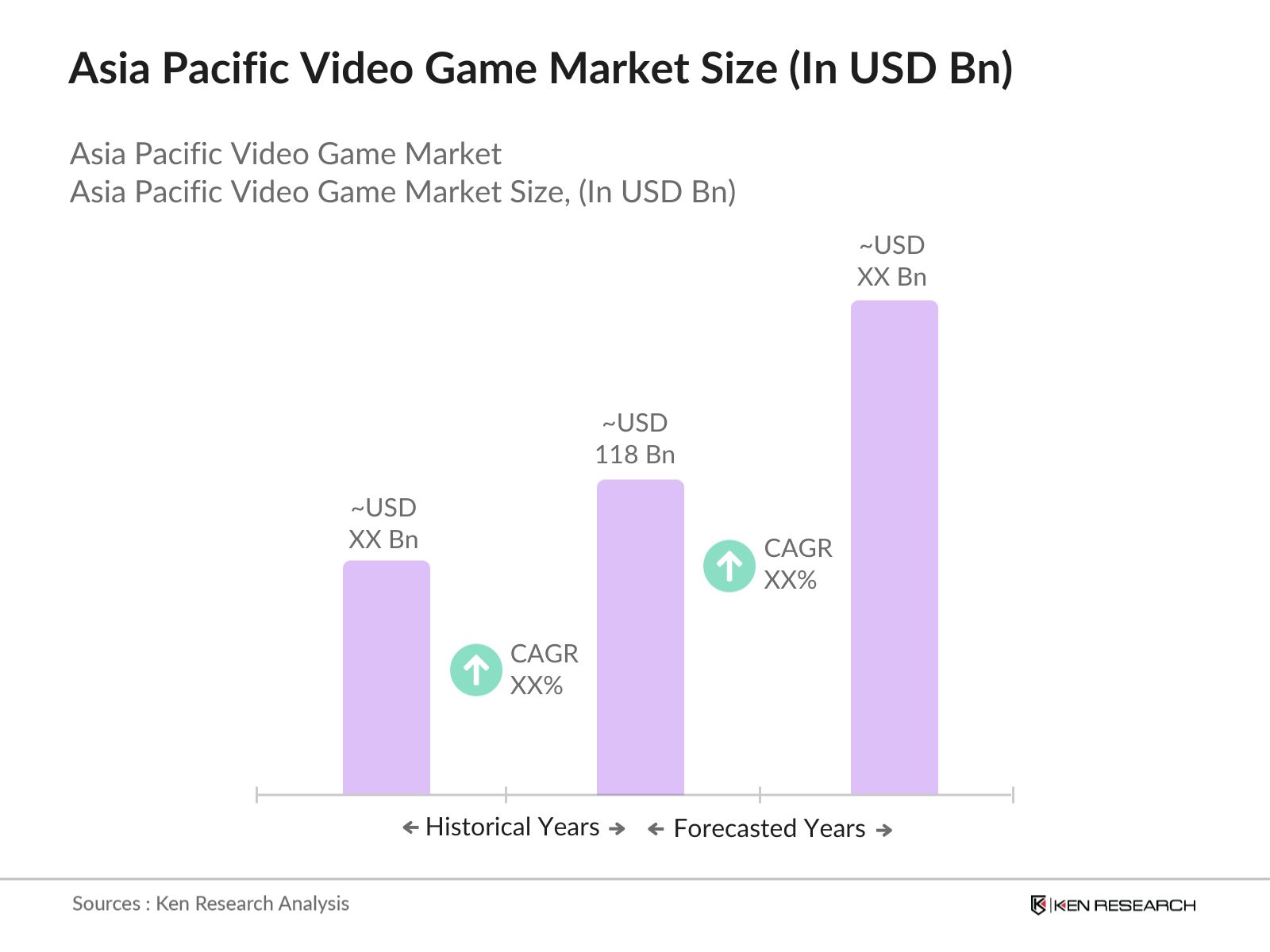
The Asia Pacific Video Game Market is valued at USD 118 billion, driven by mobile gaming adoption and growing internet connectivity across the region.
Key drivers in the Asia Pacific Video Game Market include rising smartphone penetration, digital infrastructure expansion, and the popularity of mobile and cloud gaming platforms across diverse age groups.
Dominant players in the Asia Pacific Video Game Market include Tencent Games, Sony Interactive Entertainment, NetEase Games, and Nintendo, largely due to their technological innovation and market presence.
Challenges in the Asia Pacific Video Game Market include regulatory constraints, high development costs, and data privacy concerns, particularly as gaming becomes more interconnected.

What makes us stand out is that our consultants follows Robust, Refine and Result (RRR) methodology. i.e. Robust for clear definitions, approaches and sanity checking, Refine for differentiating respondents facts and opinions and Result for presenting data with story

We have set a benchmark in the industry by offering our clients with syndicated and customized market research reports featuring coverage of entire market as well as meticulous research and analyst insights.

While we don't replace traditional research, we flip the method upside down. Our dual approach of Top Bottom & Bottom Top ensures quality deliverable by not just verifying company fundamentals but also looking at the sector and macroeconomic factors.

With one step in the future, our research team constantly tries to show you the bigger picture. We help with some of the tough questions you may encounter along the way: How is the industry positioned? Best marketing channel? KPI's of competitors? By aligning every element, we help maximize success.

Our report gives you instant access to the answers and sources that other companies might choose to hide. We elaborate each steps of research methodology we have used and showcase you the sample size to earn your trust.

If you need any support, we are here! We pride ourselves on universe strength, data quality, and quick, friendly, and professional service.