















Asia Pacific Vinyl Flooring Market Outlook to 2030
Region:Asia
Author(s):Paribhasha Tiwari
Product Code:KROD9461
November 2024
95
About the Report
Asia Pacific Vinyl Flooring Market Overview
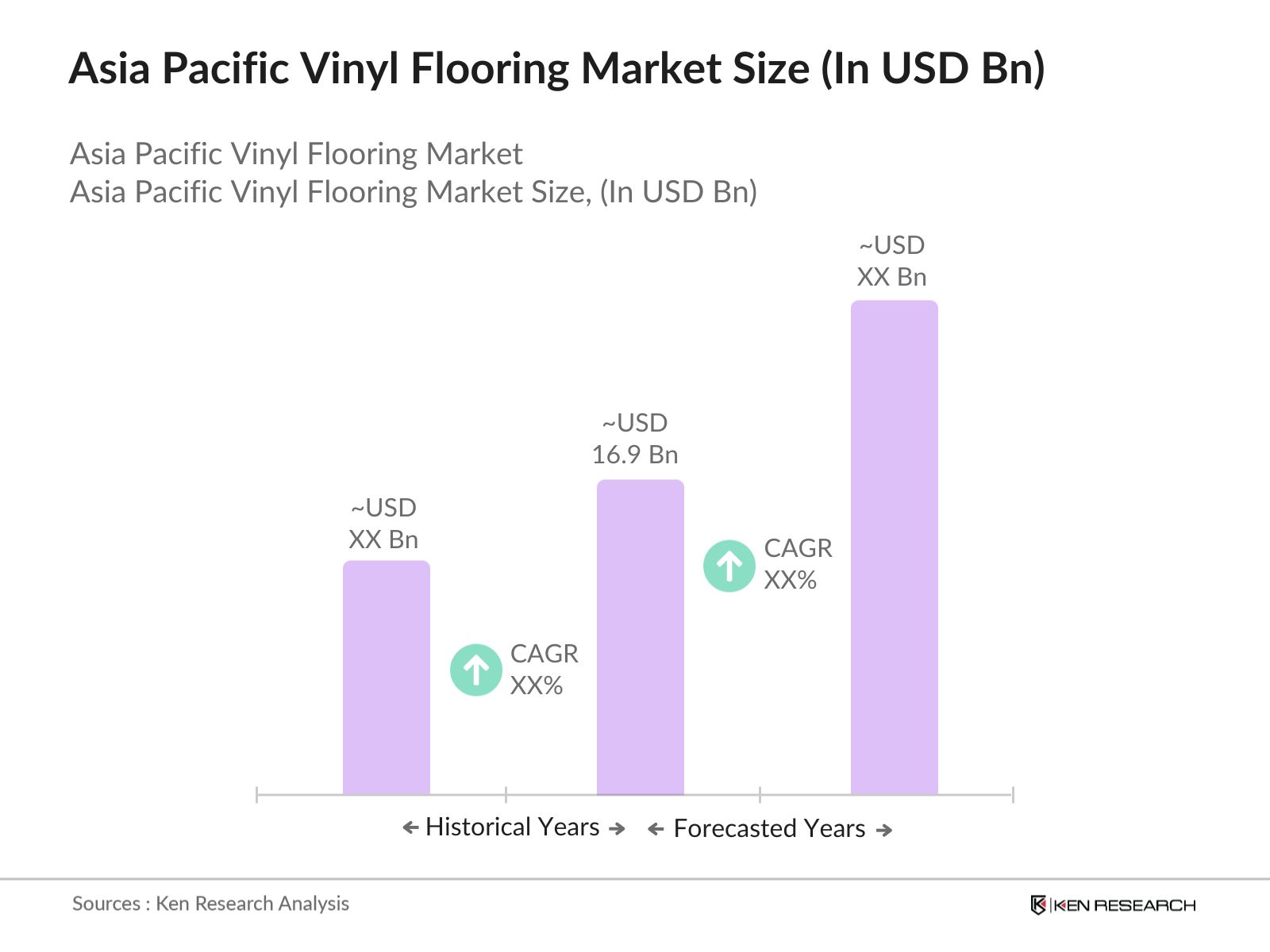
- The Asia Pacific vinyl flooring market is valued at USD 16.9 billion, driven by increasing urbanization, infrastructure development, and rising consumer demand for durable and aesthetic flooring solutions. Vinyl flooring has become a preferred choice due to its cost-effectiveness, ease of installation, and resistance to moisture. The demand is also bolstered by government infrastructure projects, particularly in countries like China and India, where massive construction and renovation activities are fueling the market. This trend is expected to continue as consumer preference shifts from traditional flooring materials like wood and ceramic to vinyl due to its versatility.
- Countries like China, India, and Japan dominate the Asia Pacific vinyl flooring market, largely due to their massive construction activities and expanding real estate sectors. China leads with a significant share, driven by its large-scale government infrastructure initiatives and industrialization. India follows closely, with growth driven by residential construction and urban development projects. Japans market is sustained by the demand for high-quality flooring in residential and commercial applications, supported by technological advancements in manufacturing. These countries are critical hubs due to their evolving construction sectors, which significantly influence the vinyl flooring industry.
- In 2024, several key players in the vinyl flooring market, including multinational corporations, announced significant investments in new manufacturing facilities in Asia Pacific. For instance, a leading flooring manufacturer invested over $100 million in expanding its production facility in Vietnam, aiming to meet the growing regional demand for vinyl flooring products. This expansion is expected to increase local production capacity by 30%.
Asia Pacific Vinyl Flooring Market Segmentation
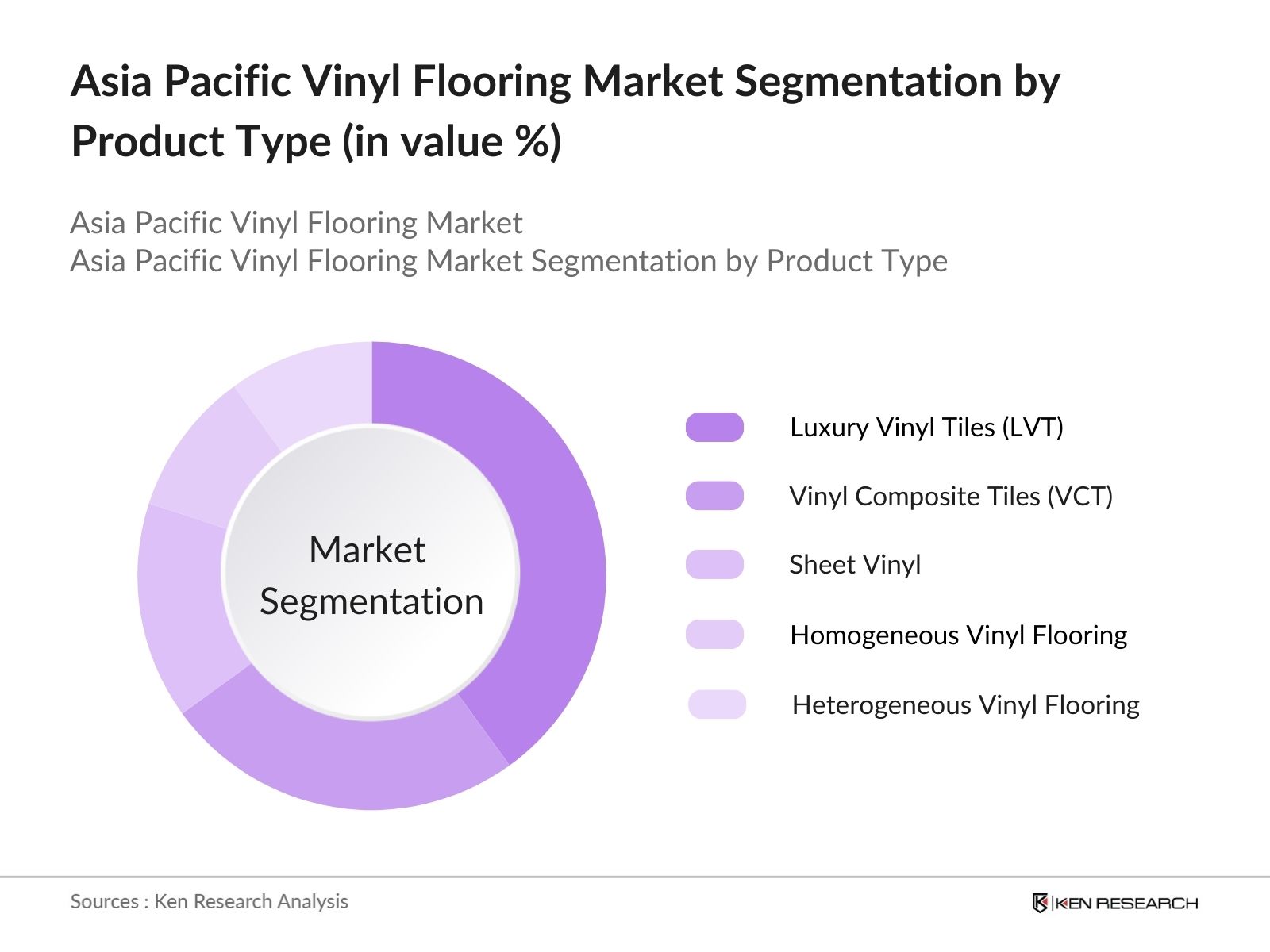
By Product Type: The Asia Pacific vinyl flooring market is segmented by product type into Luxury Vinyl Tiles (LVT), Vinyl Composite Tiles (VCT), Sheet Vinyl, Homogeneous Vinyl Flooring, and Heterogeneous Vinyl Flooring. Luxury Vinyl Tiles hold a dominant market share due to their superior aesthetics, durability, and versatility in design. They are widely used in both residential and commercial sectors, particularly in high-end construction projects. The rise in demand for luxury finishes and customizable designs has cemented LVT as the leading product type in this market, catering to consumers looking for premium flooring solutions.
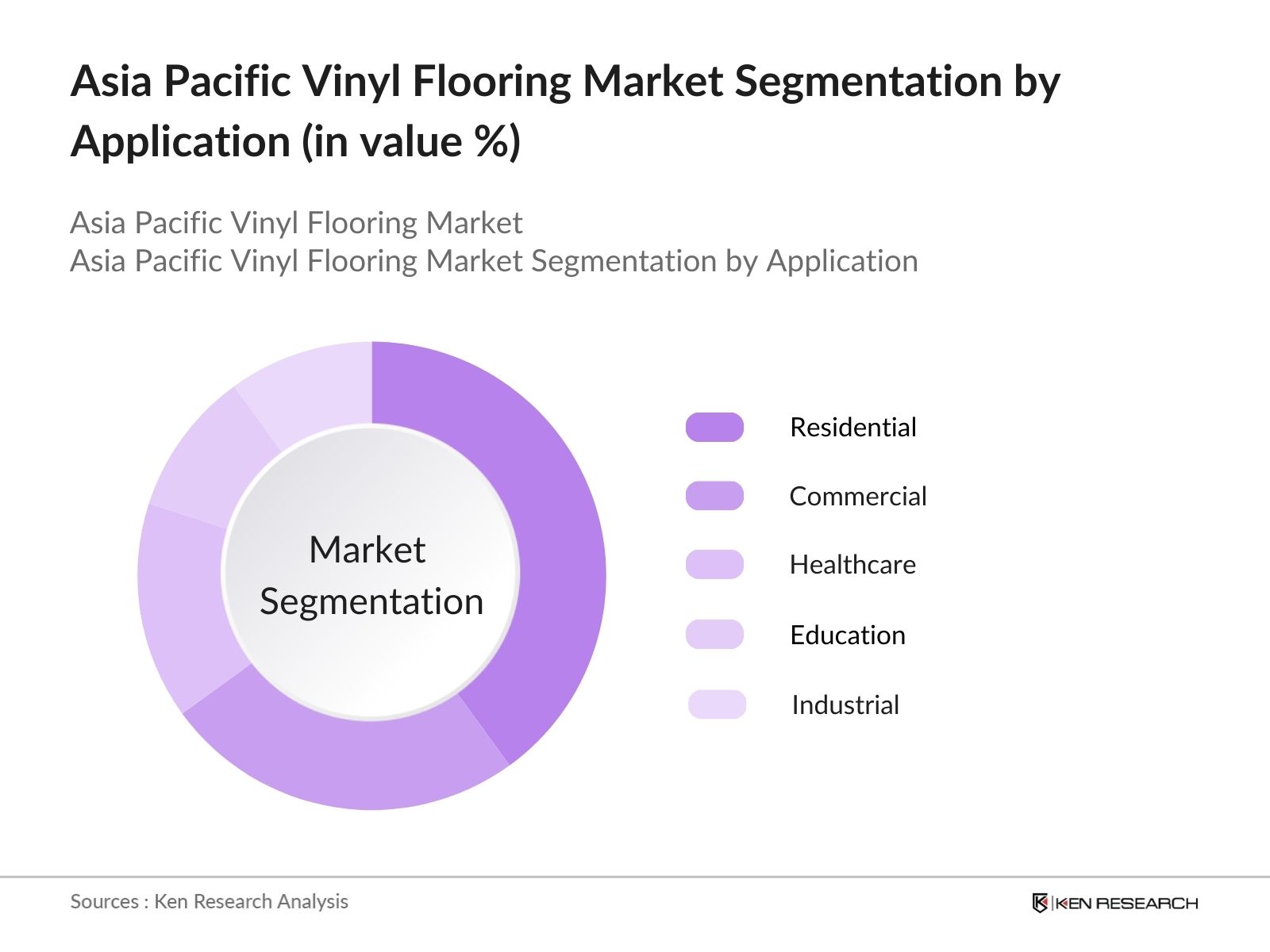
By Application: The market is further segmented by application into Residential, Commercial, Healthcare, Education, and Industrial. The Residential segment dominates the market, driven by rapid urbanization and rising consumer demand for modern home interiors. With a growing middle class in countries like India and China, the demand for affordable yet stylish flooring options is surging. Vinyl flooring, with its cost-efficiency and low maintenance, is an ideal choice for homeowners, especially in metropolitan areas where construction activities are thriving.
Asia Pacific Vinyl Flooring Market Competitive Landscape
The Asia Pacific vinyl flooring market is characterized by the presence of both global and local players, with the top companies dominating through innovation, extensive distribution networks, and strong brand presence. These players are focusing on sustainability and the development of eco-friendly products to comply with rising environmental concerns. The competitive landscape is also shaped by mergers, acquisitions, and partnerships that help companies expand their product portfolios and market presence.
|
Company |
Establishment Year |
Headquarters |
Revenue (USD Billion) |
Employees |
Key Product Types |
Sustainability Initiatives |
R&D Investments |
Market Penetration |
Geographical Reach |
|---|---|---|---|---|---|---|---|---|---|
|
Mohawk Industries |
1878 |
USA |
- |
- |
- |
- |
- |
- |
- |
|
Tarkett |
1886 |
France |
- |
- |
- |
- |
- |
- |
- |
|
Armstrong Flooring |
1860 |
USA |
- |
- |
- |
- |
- |
- |
- |
|
Shaw Industries Group |
1946 |
USA |
- |
- |
- |
- |
- |
- |
- |
|
LG Hausys |
1958 |
South Korea |
- |
- |
- |
- |
- |
- |
- |
Asia Pacific Vinyl Flooring Market Analysis
Growth Drivers
- Urban Infrastructure Development: In 2024, urban infrastructure expansion across the Asia Pacific region is significantly contributing to the vinyl flooring market. Countries like China and India are witnessing large-scale commercial and residential construction projects, including shopping malls, office complexes, and housing developments. For instance, China alone is expected to complete over 100 million square meters of urban residential space by the end of 2024, creating strong demand for durable and cost-effective flooring solutions such as vinyl flooring, favored for its flexibility and ease of maintenance in both residential and commercial environments.
- Demand from Hospitality Sector: The hospitality industry in key markets like Japan, Thailand, and Australia is driving the demand for vinyl flooring due to the increasing number of hotels, resorts, and tourism facilities. Japan, with preparations for major events, including continued tourism expansion, has witnessed a surge in vinyl flooring demand in hospitality construction projects, contributing to over $10 billion in hotel construction investments in 2024. Vinyl's resistance to moisture, high foot traffic, and ease of installation make it the preferred choice for new projects in this sector.
- Use in Affordable Housing and Public Buildings: Government-backed infrastructure projects aimed at affordable housing and the construction of public buildings across Southeast Asian nations are bolstering the vinyl flooring market. Indias Housing for All scheme aims to deliver around 10 million urban housing units by 2024, and vinyl flooring is being integrated as a cost-effective, low-maintenance flooring option in many of these projects, owing to its durability and low installation costs. Government subsidies for public infrastructure are expected to further fuel market demand.
Market Challenges
- High Competition from Local Manufacturers: The Asia Pacific vinyl flooring market faces stiff competition from local manufacturers, particularly in price-sensitive regions like India, Vietnam, and Indonesia. The presence of numerous small to medium-sized manufacturers is exerting downward pressure on pricing, affecting profit margins for larger global players. For instance, over 500 local vinyl flooring producers in China alone are offering products at lower prices, challenging multinational brands to maintain their market share without sacrificing quality.
- Environmental Regulations: Increasing environmental regulations concerning the use of PVC in vinyl flooring are creating challenges for manufacturers in the Asia Pacific region. As of 2024, countries such as Japan and Australia have introduced stricter regulations on volatile organic compounds (VOCs) and the recyclability of PVC products, pushing manufacturers to invest in more sustainable production methods. Compliance costs for these regulations have increased operational expenses by as much as 15%, impacting the overall profitability of the market.
Asia Pacific Vinyl Flooring Market Future Outlook
Over the next five years, the Asia Pacific vinyl flooring market is expected to experience substantial growth, driven by continuous urban development, rising investments in commercial real estate, and consumer demand for modern interiors. Governments across the region are focused on infrastructural improvements, particularly in countries like China and India, where smart city projects and affordable housing initiatives are expected to fuel demand for vinyl flooring. Additionally, the shift toward eco-friendly materials and innovations in design technology, such as digital printing, will further propel the market forward.
Market Opportunities
- Expansion into Untapped Geographies: Rural and semi-urban areas across Asia Pacific present untapped potential for the vinyl flooring market. As infrastructure development spreads to these regions, demand for affordable, easy-to-maintain flooring options is rising. For example, in India, the governments focus on developing Tier-2 and Tier-3 cities has led to a surge in construction projects, with an estimated $2 billion allocated for semi-urban housing developments in 2024. Vinyl flooring is being adopted in these areas due to its cost-efficiency and durability.
- Rising Trend of Luxury Vinyl Tiles : The luxury vinyl tile (LVT) segment is gaining traction in the Asia Pacific market due to its enhanced aesthetic appeal and ability to replicate the look of premium flooring materials like wood and marble. In markets like Australia and South Korea, LVT sales are forecasted to reach nearly $500 million in 2024, driven by increased consumer demand for high-end finishes in both residential and commercial spaces. LVT's ease of installation and durability are further contributing to its popularity.
Scope of the Report
|
By Product Type |
Luxury Vinyl Tiles (LVT) Vinyl Composite Tiles (VCT) Sheet Vinyl Homogeneous Vinyl Flooring Heterogeneous Vinyl Flooring |
|
By Application |
Residential Commercial Healthcare Education Industrial |
|
By Installation Method |
Glue Down Loose Lay Click Systems Peel & Stick |
|
By End-User |
Residential Consumers Contractors/Builders Architects and Designers Facility Managers |
|
By Region |
China India Japan Australia ASEAN Nations |
Products
Key Target Audience
Flooring Manufacturers
Construction and Real Estate Developer
Distributors and Wholesalers
Retailers and E-Commerce Platforms
Architects and Interior Designers
Facility Management Companies
Investors and Venture Capitalist Firms
Government and Regulatory Bodies (China National Development and Reform Commission, Indian Ministry of Housing and Urban Affairs)
Companies
Players mentioned in the report:
Mohawk Industries
Tarkett
Armstrong Flooring
Shaw Industries Group
LG Hausys
Gerflor Group
Beaulieu International Group
Mannington Mills
Polyflor Ltd
Interface Inc.
Table of Contents
1. Asia Pacific Vinyl Flooring Market Overview
1.1. Definition and Scope
1.2. Market Taxonomy
1.3. Market Growth Rate
1.4. Market Segmentation Overview
2. Asia Pacific Vinyl Flooring Market Size (In USD Bn)
2.1. Historical Market Size
2.2. Year-On-Year Growth Analysis
2.3. Key Market Developments and Milestones
3. Asia Pacific Vinyl Flooring Market Analysis
3.1. Growth Drivers
3.1.1. Urban Infrastructure Development (Flooring Applications in Commercial and Residential Projects)
3.1.2. Demand from Hospitality Sector (Vinyl Flooring in Hotels and Tourism Facilities)
3.1.3. Government Infrastructure Projects (Use in Affordable Housing and Public Buildings)
3.1.4. Increased Consumer Preference for Durable Flooring (Shift from Traditional Flooring Materials)
3.2. Market Challenges
3.2.1. High Competition from Local Manufacturers (Price Sensitivity in Emerging Markets)
3.2.2. Environmental Regulations (Sustainability Concerns Over PVC-based Products)
3.2.3. Raw Material Price Fluctuations (Impact of Resin and Plasticizer Costs on Vinyl Pricing)
3.2.4. Limited Skilled Workforce for Installation (Specialized Installation Requirements)
3.3. Opportunities
3.3.1. Expansion into Untapped Geographies (Potential Growth in Rural and Semi-Urban Areas)
3.3.2. Rising Trend of Luxury Vinyl Tiles (High Demand for Aesthetic Appeal in Flooring)
3.3.3. Growth in Modular Housing (Quick Installation Benefits for Prefabricated Homes)
3.3.4. Eco-friendly Vinyl Flooring Innovations (Development of Recyclable and Low VOC Flooring Products)
3.4. Trends
3.4.1. Growing Adoption of Digital Printing in Vinyl Flooring (Customization in Design)
3.4.2. Shift Toward Homogeneous Vinyl Flooring (Demand for High Durability Products in High Traffic Areas)
3.4.3. Integration of Vinyl Flooring with Smart Home Systems (Automation and Sensors for Maintenance)
3.4.4. Increased Usage of Waterproof Vinyl Flooring (Preference for Wet Areas in Residential and Commercial Spaces)
3.5. Government Regulation
3.5.1. Environmental Compliance in Manufacturing (Regulations on Emissions and Recycling of Vinyl Waste)
3.5.2. Building Codes and Standards (Compliance with Regional Construction Standards)
3.5.3. Import and Export Tariff Policies (Impact on Raw Material Supply Chains)
3.5.4. Subsidies for Green Building Materials (Government Initiatives to Encourage Sustainable Flooring Solutions)
3.6. SWOT Analysis
3.7. Stakeholder Ecosystem
3.8. Porters Five Forces Analysis
3.9. Competitive Ecosystem
4. Asia Pacific Vinyl Flooring Market Segmentation
4.1. By Product Type (In Value %)
4.1.1. Luxury Vinyl Tiles (LVT)
4.1.2. Vinyl Composite Tiles (VCT)
4.1.3. Sheet Vinyl
4.1.4. Homogeneous Vinyl Flooring
4.1.5. Heterogeneous Vinyl Flooring
4.2. By Application (In Value %)
4.2.1. Residential
4.2.2. Commercial
4.2.3. Healthcare
4.2.4. Education
4.2.5. Industrial
4.3. By Installation Method (In Value %)
4.3.1. Glue Down
4.3.2. Loose Lay
4.3.3. Click Systems
4.3.4. Peel & Stick
4.4. By End-User (In Value %)
4.4.1. Residential Consumers
4.4.2. Contractors/Builders
4.4.3. Architects and Designers
4.4.4. Facility Managers
4.5. By Region (In Value %)
4.5.1. China
4.5.2. India
4.5.3. Japan
4.5.4. Australia
4.5.5. ASEAN Nations
5. Asia Pacific Vinyl Flooring Market Competitive Analysis
5.1 Detailed Profiles of Major Companies
5.1.1. Mohawk Industries
5.1.2. Tarkett
5.1.3. Armstrong Flooring
5.1.4. Shaw Industries Group
5.1.5. Forbo Holding
5.1.6. Gerflor Group
5.1.7. Mannington Mills
5.1.8. Beaulieu International Group
5.1.9. Interface Inc.
5.1.10. Polyflor Ltd
5.1.11. Milliken & Company
5.1.12. LG Hausys
5.1.13. Congoleum Corporation
5.1.14. James Halstead Plc
5.1.15. J+J Flooring Group
5.2 Cross Comparison Parameters
5.2.1 No. of Employees
5.2.2 Headquarters
5.2.3 Inception Year
5.2.4 Annual Revenue
5.2.5 Key Patents/Technologies
5.2.6 Environmental Certification
5.2.7 Supply Chain Integration
5.2.8 Global Presence
5.3. Market Share Analysis
5.4. Strategic Initiatives
5.5. Mergers and Acquisitions
5.6. Investment Analysis
5.7. Government Grants
5.8. Private Equity Investments
6. Asia Pacific Vinyl Flooring Market Regulatory Framework
6.1. Environmental Standards
6.2. Compliance Requirements
6.3. Certification Processes
7. Asia Pacific Vinyl Flooring Future Market Size (In USD Bn)
7.1. Future Market Size Projections
7.2. Key Factors Driving Future Market Growth
8. Asia Pacific Vinyl Flooring Future Market Segmentation
8.1. By Product Type (In Value %)
8.2. By Application (In Value %)
8.3. By Installation Method (In Value %)
8.4. By End-User (In Value %)
8.5. By Region (In Value %)
9. Asia Pacific Vinyl Flooring Market Analysts Recommendations
9.1. TAM/SAM/SOM Analysis
9.2. Customer Cohort Analysis
9.3. Marketing Initiatives
9.4. White Space Opportunity Analysis
Disclaimer Contact UsResearch Methodology
Step 1: Identification of Key Variables
The first step involves a thorough analysis of all stakeholders within the Asia Pacific Vinyl Flooring Market. Extensive desk research is conducted to gather data from secondary sources, including government reports, industry databases, and proprietary tools, ensuring a comprehensive understanding of market dynamics.
Step 2: Market Analysis and Construction
In this phase, historical data on the Asia Pacific Vinyl Flooring Market is compiled and analyzed. This includes studying market penetration and performance, which helps in estimating the markets current revenue. This phase also involves evaluating production capacities, pricing trends, and distribution channels.
Step 3: Hypothesis Validation and Expert Consultation
To validate the gathered data and assumptions, in-depth interviews with industry experts are conducted. These interviews provide critical insights into market growth factors, challenges, and future trends from key industry professionals in vinyl flooring manufacturing, distribution, and sales.
Step 4: Research Synthesis and Final Output
The final phase involves synthesizing all data collected, verified, and validated during the research process. A detailed market report is then created, ensuring that the insights reflect the most accurate and current understanding of the Asia Pacific Vinyl Flooring Market, including forecasts for growth and recommendations.
Frequently Asked Questions
01. How big is the Asia Pacific Vinyl Flooring Market?
The Asia Pacific Vinyl Flooring Market is valued at USD 14.2 billion, driven by urbanization, increased construction activities, and rising demand for aesthetically appealing and durable flooring solutions.
02. What are the challenges in the Asia Pacific Vinyl Flooring Market?
Key challenges in the Asia Pacific Vinyl Flooring Market include high competition from local manufacturers, rising concerns about environmental sustainability, and fluctuations in raw material prices, particularly for PVC-based products.
03. Who are the major players in the Asia Pacific Vinyl Flooring Market?
Major players in the Asia Pacific Vinyl Flooring Market include Mohawk Industries, Tarkett, Armstrong Flooring, Shaw Industries Group, and LG Hausys. These companies dominate the market due to their strong product portfolios and global distribution networks.
04. What are the growth drivers of the Asia Pacific Vinyl Flooring Market?
The Asia Pacific Vinyl Flooring Market is driven by increased investments in infrastructure, rapid urbanization, and the rising popularity of luxury vinyl tiles. Additionally, government projects in housing and commercial real estate are playing a significant role in market expansion.
Why Buy From Us?

What makes us stand out is that our consultants follows Robust, Refine and Result (RRR) methodology. i.e. Robust for clear definitions, approaches and sanity checking, Refine for differentiating respondents facts and opinions and Result for presenting data with story

We have set a benchmark in the industry by offering our clients with syndicated and customized market research reports featuring coverage of entire market as well as meticulous research and analyst insights.

While we don't replace traditional research, we flip the method upside down. Our dual approach of Top Bottom & Bottom Top ensures quality deliverable by not just verifying company fundamentals but also looking at the sector and macroeconomic factors.

With one step in the future, our research team constantly tries to show you the bigger picture. We help with some of the tough questions you may encounter along the way: How is the industry positioned? Best marketing channel? KPI's of competitors? By aligning every element, we help maximize success.

Our report gives you instant access to the answers and sources that other companies might choose to hide. We elaborate each steps of research methodology we have used and showcase you the sample size to earn your trust.

If you need any support, we are here! We pride ourselves on universe strength, data quality, and quick, friendly, and professional service.