
Asia-Pacific Virtual Reality Games Market Outlook to 2030
Region:Asia
Author(s):Naman Rohilla
Product Code:KROD4221
December 2024
98
About the Report
Asia-Pacific Virtual Reality Games Market Overview
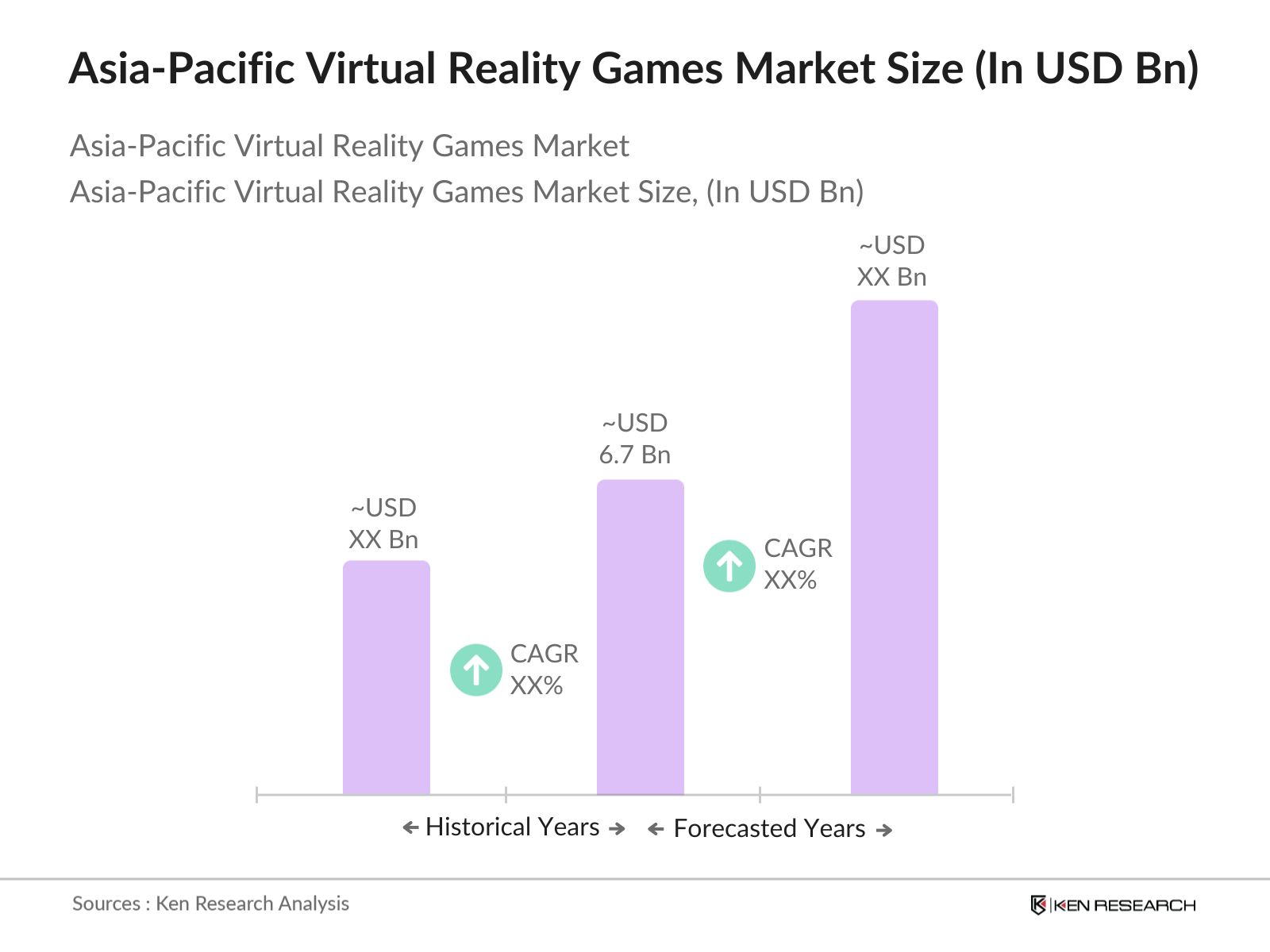
- The Asia-Pacific Virtual Reality Games market is valued at USD 6.7 billion, based on a five-year historical analysis. The market's growth is driven by advancements in VR technology, coupled with increasing affordability of VR headsets. Additionally, the surge in demand for immersive gaming experiences has further accelerated market expansion, especially among younger demographics seeking high-tech entertainment options.
- China and Japan are the dominant countries in this market. Chinas dominance is largely attributed to its vast population of tech-savvy consumers, coupled with strong government support for VR development. Japan, on the other hand, leads due to its extensive history in gaming innovation, strong consumer demand, and the presence of major VR game developers and hardware manufacturers.
- As VR gaming involves personal data collection through headsets and user interactions, data privacy regulations have become focus in the Asia-Pacific region. In 2023, South Korea implemented strict data privacy guidelines under its Personal Information Protection Act (PIPA), requiring VR game developers to secure user data, particularly biometric information collected during gameplay. These regulations ensure that player data is protected, promoting trust in VR gaming platforms and encouraging user participation.
Asia-Pacific Virtual Reality Games Market Segmentation
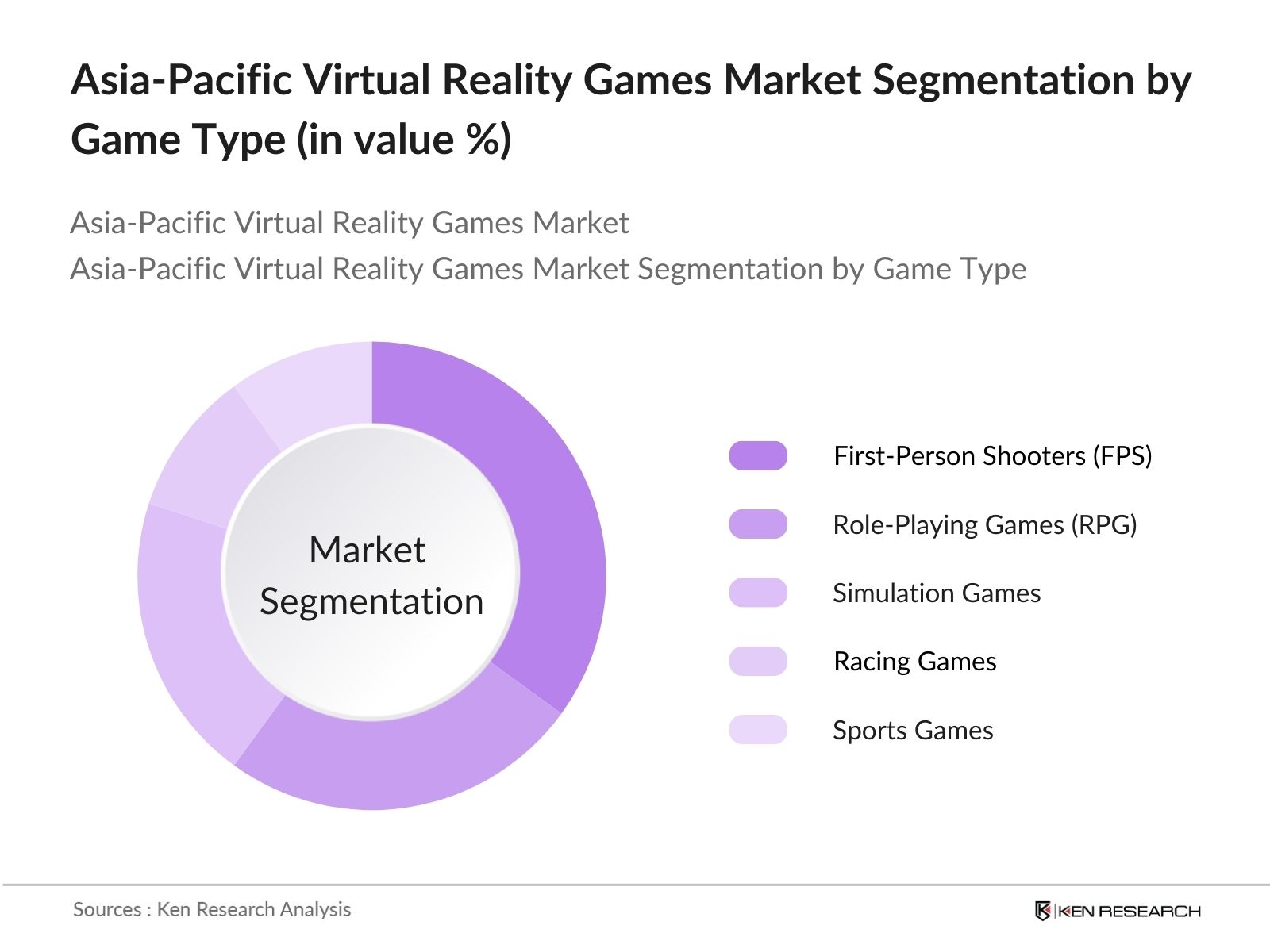
- By Game Type: The Asia-Pacific Virtual Reality Games market is segmented by game type into First-Person Shooters (FPS), Role-Playing Games (RPG), Simulation Games, Racing Games, and Sports Games. Recently, First-Person Shooters (FPS) have dominated the market share under this segmentation. This is due to the immersive nature of FPS games, where players are directly involved in the action. The VR medium enhances this experience by allowing users to move and interact with game environments in real-time, creating an engaging and lifelike experience. The success of popular VR titles like "Half-Life: Alyx" has bolstered the popularity of this sub-segment in the Asia-Pacific region.
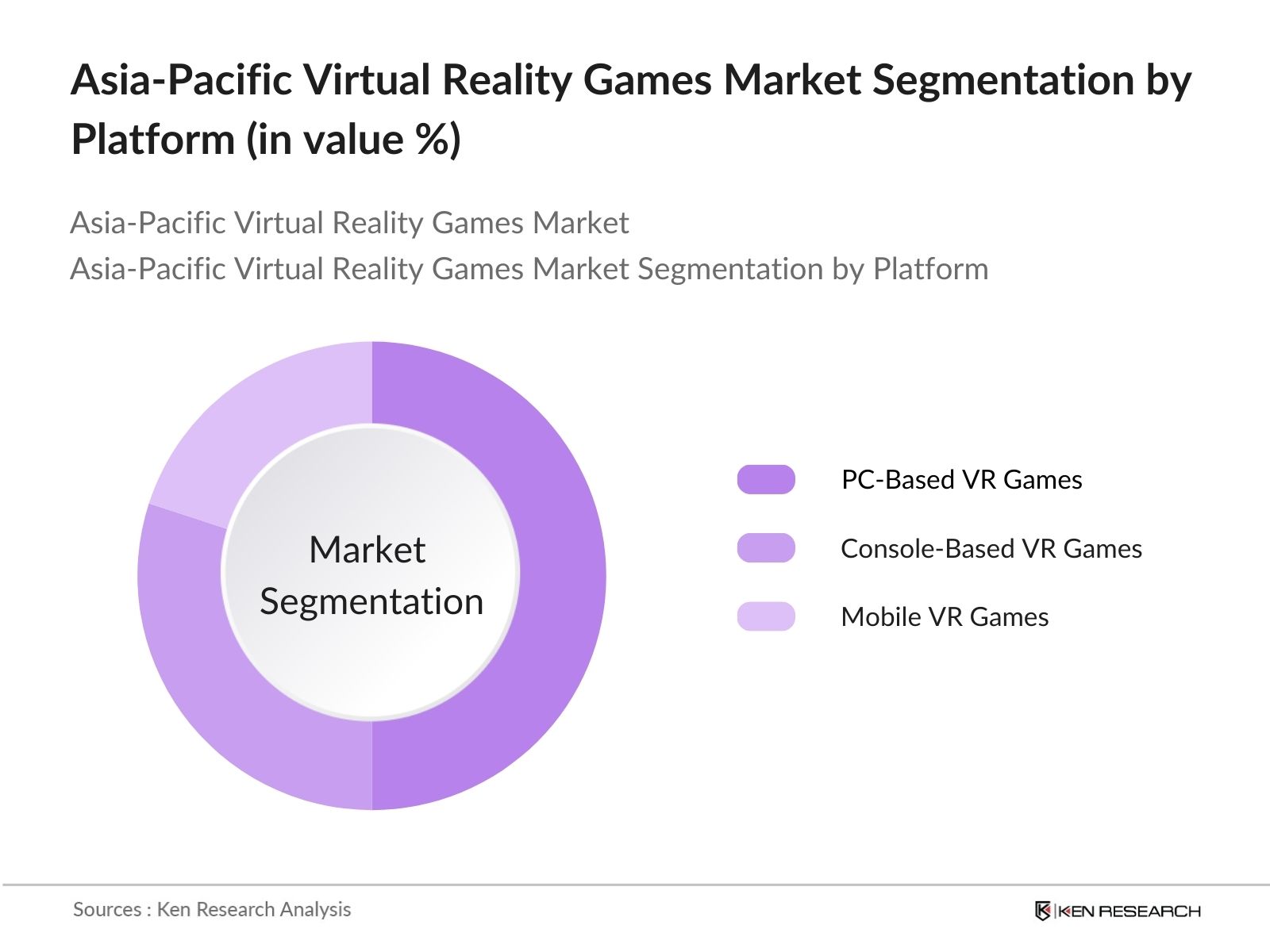
- By Platform: The market is also segmented by platform into PC-Based VR Games, Console-Based VR Games, and Mobile VR Games. PC-Based VR Games hold a dominant market share in this category due to the higher processing power and immersive experience that PCs can provide. High-end VR experiences like detailed simulations and FPS games require the capabilities of gaming PCs, and as such, users in the Asia-Pacific region prefer PC-based platforms to fully leverage these features. The availability of accessories like specialized VR controllers and tracking devices also adds to the popularity of this sub-segment.
Asia-Pacific Virtual Reality Games Market Competitive Landscape
The Asia-Pacific Virtual Reality Games market is dominated by key industry players, with a combination of local and international brands. Companies such as Sony Interactive Entertainment and HTC Corporation are at the forefront due to their strong presence in the region, continuous innovation in VR hardware, and a robust lineup of VR games. Additionally, Chinas Tencent Holdings has entered the market aggressively, leveraging its gaming experience and vast resources to expand in VR gaming.
|
Company Name |
Establishment Year |
Headquarters |
VR Hardware Offering |
Game Portfolio |
R&D Investments |
Market Presence |
Revenue (USD) |
Innovation Capability |
|
Sony Interactive Entertainment |
1993 |
Tokyo, Japan |
- |
- |
- |
- |
- |
- |
|
Oculus (Meta Platforms Inc.) |
2012 |
California, USA |
- |
- |
- |
- |
- |
- |
|
HTC Corporation |
1997 |
Taipei, Taiwan |
- |
- |
- |
- |
- |
- |
|
Tencent Holdings Ltd. |
1998 |
Shenzhen, China |
- |
- |
- |
- |
- |
- |
|
Valve Corporation |
1996 |
Washington, USA |
- |
- |
- |
- |
- |
- |
Asia-Pacific Virtual Reality Games Market Analysis
Asia-Pacific Virtual Reality Games Market Growth Drivers
- Rising Investments in VR Game Development: Investment in VR game development has surged, with the gaming industry in the Asia-Pacific region attracting over $8 billion in funding in 2023, as reported by IMF. This influx of capital has fueled the creation of immersive, interactive games that cater to a tech-savvy audience. Major players like Japan and China have established themselves as global leaders in VR game production, with both countries accounting for 60% of the regions VR game exports in 2022. These investments are crucial for the growth and innovation of VR gaming in the region.
- Expansion of High-Speed Internet Connectivity: High-speed internet connectivity is a cornerstone of the VR gaming experience, and in 2023, Asia-Pacific countries have made substantial progress. South Korea, for instance, achieved 90% broadband penetration, while Japan and China followed closely with 85% and 80%, respectively, according to World Bank data. These countries infrastructure advancements have enabled low-latency gaming experiences, essential for VR gamings interactive nature. With further government-backed 5G initiatives underway, it is projected that VR gaming platforms will benefit immensely from these connectivity improvements.
- Increasing Popularity of Esports and VR Competitions: Esports has become a driving force behind the popularity of VR gaming. In 2023, the Asia-Pacific region saw over 500 VR gaming tournaments, particularly in countries like South Korea, Japan, and China, as per government data. These events drew massive global viewership, with over 50 million viewers tuning in to VR Esports events. The gaming community's strong demand for immersive experiences, coupled with esports tournaments, is pushing VR gaming into the mainstream, further boosting its adoption and development.
Asia-Pacific Virtual Reality Games Market Challenges
- High Price Point for Advanced VR Headsets: Despite technological advancements, the high price of advanced VR headsets remains a barrier to widespread consumer adoption. In 2023, the average price for high-end VR headsets in the Asia-Pacific region was around $600-$800, according to market data from South Korean trade reports. With median disposable incomes in countries like India hovering around $2,000 annually, the cost of VR headsets puts them out of reach for many consumers. This financial barrier limits the broader adoption of VR gaming across several Asia-Pacific nations.
- Health Concerns Related to Prolonged VR Usage: Health issues such as eye strain, motion sickness, and fatigue are associated with extended VR use. According to a 2023 report from the Japan Ministry of Health, 22% of frequent VR gamers reported experiencing adverse health effects, including dizziness and headaches. This has prompted regulatory bodies to consider health guidelines for VR gaming, which could potentially affect user engagement. The risks tied to long-term VR use must be addressed to ensure sustainable growth in the VR gaming sector.
Asia-Pacific Virtual Reality Games Future Outlook
Over the next five years, the Asia-Pacific Virtual Reality Games market is expected to experience growth. This growth will be driven by continuous technological advancements, growing affordability of VR equipment, and the rise of 5G connectivity in the region, which enhances the online gaming experience. Increased investment in VR gaming infrastructure, especially in countries like China, Japan, and South Korea, is also anticipated to propel the market forward. Furthermore, the integration of VR in sectors beyond entertainment, such as education and training, presents new opportunities for market players.
Asia-Pacific Virtual Reality Games Market Opportunities
- Potential for Cloud-Based VR Gaming: Cloud-based VR gaming presents a lucrative opportunity for the Asia-Pacific market, particularly in countries like Japan and South Korea, where cloud infrastructure is well-established. With cloud gaming platforms already generating over $2 billion in revenue in 2023, according to data from the IMF, the integration of VR into cloud services offers scalability and accessibility to users without the need for high-end gaming hardware. This technological shift could make VR gaming more affordable, enabling wider market penetration.
- Expansion into Developing Markets with Affordable VR Solutions: Developing economies in Southeast Asia, such as Vietnam and Indonesia, are seeing rapid growth in digital technology adoption. With disposable income levels risingIndonesias per capita income reached $4,500 in 2023, as reported by the World Bankthere is a growing demand for affordable VR gaming solutions. Local and international companies have the opportunity to tap into these markets by providing low-cost, yet immersive VR gaming experiences, particularly through mobile VR platforms that require minimal hardware investment.
Scope of the Report
|
By Game Type |
FPS RPG Simulation Racing Sports |
|
By Platform |
PC-Based Console-Based Mobile VR |
|
By Revenue Model |
Freemium Paid Games In-Game Purchases |
|
By End-User |
Individual Players Commercial |
|
By Region |
China Japan South Korea India Southeast Asia |
Products
Key Target Audience
VR Hardware Manufacturers
VR Game Developers
Entertainment Centers and VR Arcades
Mobile and Console Gaming Companies
E-Sports Associations and Tournament Organizers
Government and Regulatory Bodies (China's Ministry of Industry and Information Technology, Japan's Ministry of Internal Affairs and Communications)
Investments and Venture Capitalist Firms
Online Gaming Platforms
Companies
Major Players in the Asia-Pacific Virtual Reality Games Market
Sony Interactive Entertainment
Oculus (Meta Platforms Inc.)
HTC Corporation
Valve Corporation
Tencent Holdings Ltd.
Microsoft Corporation
Samsung Electronics Co., Ltd.
NetEase Games
Ubisoft Entertainment
Electronic Arts Inc.
Bandai Namco Entertainment
Unity Technologies
Epic Games, Inc.
Virtuix
Google LLC
Table of Contents
1. Asia-Pacific Virtual Reality Games Market Overview
1.1. Definition and Scope
1.2. Market Taxonomy
1.3. Market Growth Rate
1.4. Market Segmentation Overview
2. Asia-Pacific Virtual Reality Games Market Size (In USD Bn)
2.1. Historical Market Size
2.2. Year-On-Year Growth Analysis
2.3. Key Market Developments and Milestones
3. Asia-Pacific Virtual Reality Games Market Analysis
3.1. Growth Drivers (Increased Adoption of VR Gaming Platforms, Rising Demand for Immersive Gaming Experiences)
3.1.1. Technological Advancements in VR Hardware
3.1.2. Rising Investments in VR Game Development
3.1.3. Expansion of High-Speed Internet Connectivity
3.1.4. Increasing Popularity of Esports and VR Competitions
3.2. Market Challenges (High Development Costs, Limited Consumer Access to VR Devices)
3.2.1. High Price Point for Advanced VR Headsets
3.2.2. Health Concerns Related to Prolonged VR Usage
3.2.3. Technical Limitations in VR Motion Sickness
3.3. Opportunities (Collaborations Between Gaming Studios and VR Equipment Manufacturers)
3.3.1. Potential for Cloud-Based VR Gaming
3.3.2. Expansion into Developing Markets with Affordable VR Solutions
3.3.3. Integration with Augmented Reality for Hybrid Games
3.4. Trends (Rise of Multiplayer and Social VR Gaming, Use of VR in Educational and Training Simulations)
3.4.1. Cross-Platform Integration (VR and Non-VR Games)
3.4.2. Customizable In-Game VR Environments
3.4.3. Growth of VR Arcades and Location-Based Entertainment Centers
3.5. Government Regulation (Cybersecurity in VR Games, Privacy Policies for VR Users)
3.5.1. Regulations on VR Content Ratings
3.5.2. Data Privacy Guidelines for VR Players
3.5.3. International Trade Policies for VR Hardware
3.6. SWOT Analysis
3.7. Stakeholder Ecosystem (Game Developers, VR Hardware Manufacturers, Distributors, Gamers)
3.8. Porters Five Forces
3.9. Competitive Ecosystem
4. Asia-Pacific Virtual Reality Games Market Segmentation
4.1. By Game Type (In Value %)
4.1.1. First-Person Shooters (FPS)
4.1.2. Role-Playing Games (RPG)
4.1.3. Simulation Games
4.1.4. Racing Games
4.1.5. Sports Games
4.2. By Platform (In Value %)
4.2.1. PC-Based VR Games
4.2.2. Console-Based VR Games
4.2.3. Mobile VR Games
4.3. By Revenue Model (In Value %)
4.3.1. Freemium
4.3.2. Paid Games
4.3.3. In-Game Purchases
4.4. By End-User (In Value %)
4.4.1. Individual Players
4.4.2. Commercial (VR Arcades, Entertainment Centers)
4.5. By Region (In Value %)
4.5.1. China
4.5.2. Japan
4.5.3. South Korea
4.5.4. India
4.5.5. Southeast Asia
5. Asia-Pacific Virtual Reality Games Market Competitive Analysis
5.1. Detailed Profiles of Major Companies
5.1.1. Sony Interactive Entertainment
5.1.2. Oculus (Meta Platforms Inc.)
5.1.3. HTC Corporation
5.1.4. Valve Corporation
5.1.5. Microsoft Corporation
5.1.6. Samsung Electronics Co., Ltd.
5.1.7. Google LLC
5.1.8. Tencent Holdings Ltd.
5.1.9. NetEase Games
5.1.10. Ubisoft Entertainment
5.1.11. Electronic Arts Inc.
5.1.12. Bandai Namco Entertainment
5.1.13. Unity Technologies
5.1.14. Epic Games, Inc.
5.1.15. Virtuix
5.2. Cross Comparison Parameters (Game Library, Innovation in VR Hardware, Global Reach, Subscription Models, Game Genre Focus, Market Presence, User Engagement Metrics, Financial Performance)
5.3. Market Share Analysis
5.4. Strategic Initiatives
5.5. Mergers and Acquisitions
5.6. Investment Analysis
5.7. Venture Capital Funding
5.8. Partnerships with VR Hardware Providers
6. Asia-Pacific Virtual Reality Games Market Regulatory Framework
6.1. Content Rating Regulations for VR Games
6.2. Health and Safety Standards for VR Hardware
6.3. Intellectual Property Laws Related to VR Gaming Content
7. Asia-Pacific Virtual Reality Games Future Market Size (In USD Bn)
7.1. Future Market Size Projections
7.2. Key Factors Driving Future Market Growth (Consumer Acceptance, Advancements in Motion Tracking)
8. Asia-Pacific Virtual Reality Games Future Market Segmentation
8.1. By Game Type (In Value %)
8.2. By Platform (In Value %)
8.3. By Revenue Model (In Value %)
8.4. By End-User (In Value %)
8.5. By Region (In Value %)
9. Asia-Pacific Virtual Reality Games Market Analysts Recommendations
9.1. TAM/SAM/SOM Analysis
9.2. Customer Cohort Analysis
9.3. Marketing Initiatives
9.4. White Space Opportunity Analysis
Research Methodology
Step 1: Identification of Key Variables
The initial step involved mapping out the key stakeholders within the Asia-Pacific Virtual Reality Games Market. This included identifying the VR hardware manufacturers, game developers, distributors, and consumers. Through comprehensive desk research, critical market variables such as game adoption rates, VR equipment sales, and industry investments were defined.
Step 2: Market Analysis and Construction
We analyzed historical data from various proprietary databases and third-party sources to construct the market landscape. This step also involved examining the revenue generation across different game segments, hardware platforms, and regions in the Asia-Pacific VR gaming ecosystem.
Step 3: Hypothesis Validation and Expert Consultation
Through interviews and consultations with VR hardware manufacturers and game developers, our hypotheses regarding market trends and growth patterns were validated. Experts provided insights into user behavior, product development, and expected market shifts, which helped refine our projections.
Step 4: Research Synthesis and Final Output
In the final phase, we synthesized data from all sources to create a detailed analysis of the Asia-Pacific Virtual Reality Games market. This included compiling information on VR game types, market leaders, and emerging trends, leading to a comprehensive market report that offers actionable insights.
Frequently Asked Questions
01. How big is the Asia-Pacific Virtual Reality Games Market?
The Asia-Pacific Virtual Reality Games Market was valued at USD 6.7 billion, driven by the increasing adoption of VR technology and consumer demand for immersive experiences.
02. What are the challenges in the Asia-Pacific Virtual Reality Games Market?
Key challenges in the Asia-Pacific Virtual Reality Games Market include high development costs for VR games and devices, limited access to affordable VR hardware, and technical issues such as motion sickness experienced by users.
03. Who are the major players in the Asia-Pacific Virtual Reality Games Market?
Asia-Pacific Virtual Reality Games Market Major players include Sony Interactive Entertainment, Oculus (Meta Platforms Inc.), HTC Corporation, Tencent Holdings Ltd., and Valve Corporation.
04. What are the growth drivers for the Asia-Pacific Virtual Reality Games Market?
The Asia-Pacific Virtual Reality Games Market is driven by advancements in VR technology, rising demand for immersive experiences, and increased internet penetration, particularly with 5G networks enhancing multiplayer VR games.
Why Buy From Us?

What makes us stand out is that our consultants follows Robust, Refine and Result (RRR) methodology. i.e. Robust for clear definitions, approaches and sanity checking, Refine for differentiating respondents facts and opinions and Result for presenting data with story

We have set a benchmark in the industry by offering our clients with syndicated and customized market research reports featuring coverage of entire market as well as meticulous research and analyst insights.

While we don't replace traditional research, we flip the method upside down. Our dual approach of Top Bottom & Bottom Top ensures quality deliverable by not just verifying company fundamentals but also looking at the sector and macroeconomic factors.

With one step in the future, our research team constantly tries to show you the bigger picture. We help with some of the tough questions you may encounter along the way: How is the industry positioned? Best marketing channel? KPI's of competitors? By aligning every element, we help maximize success.

Our report gives you instant access to the answers and sources that other companies might choose to hide. We elaborate each steps of research methodology we have used and showcase you the sample size to earn your trust.

If you need any support, we are here! We pride ourselves on universe strength, data quality, and quick, friendly, and professional service.