















Asia Pacific Virtual Reality Gaming Market Outlook to 2030
Region:Asia
Author(s):Vijay Kumar
Product Code:KROD4433
December 2024
94
About the Report
Asia Pacific Virtual Reality Gaming Market Overview
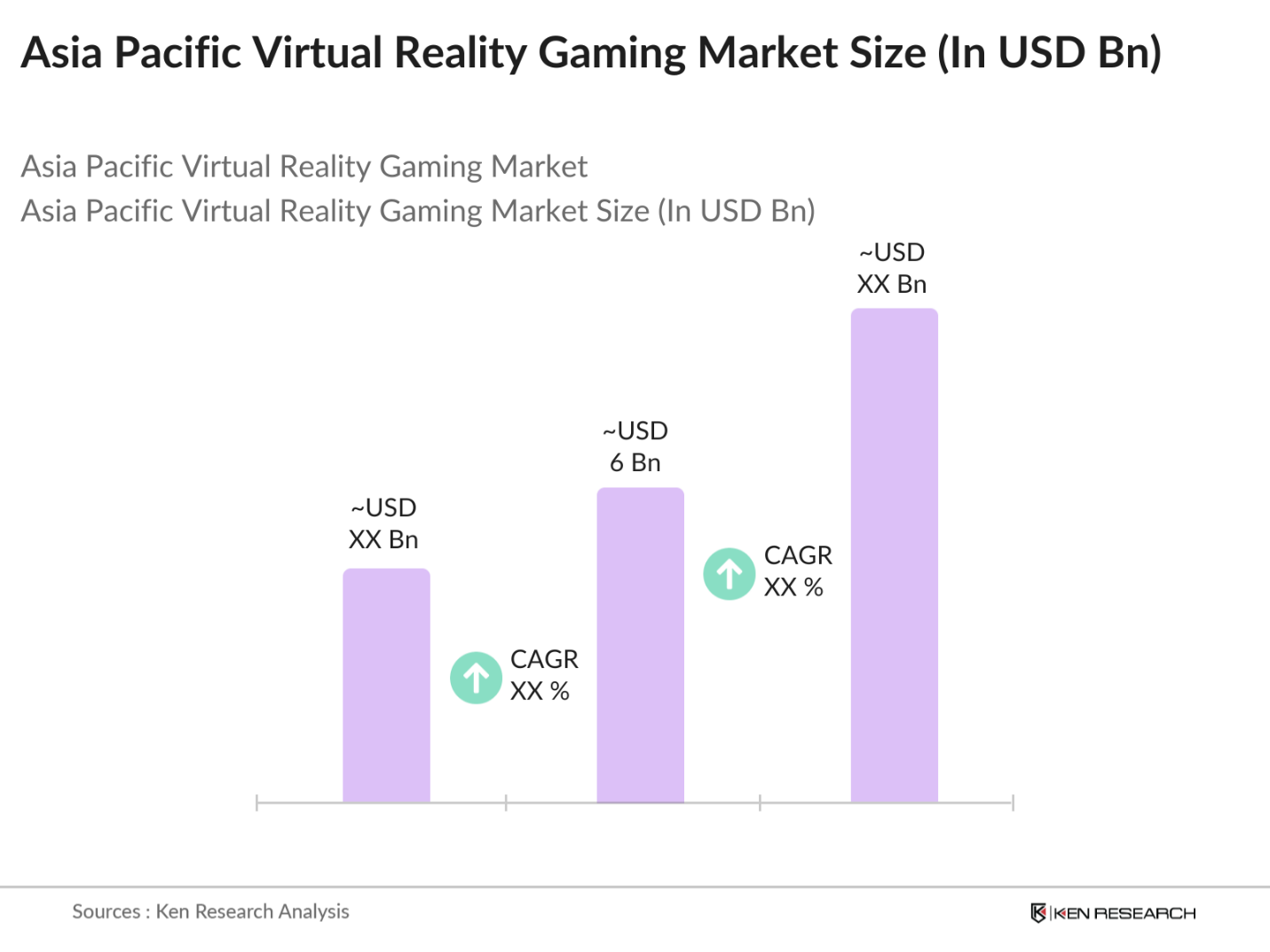
- The Asia Pacific virtual reality gaming market is valued at USD 6 billion, based on a five-year historical analysis. This market growth is driven by increasing investments in VR hardware, software development, and the deployment of high-speed 5G technology across the region. Enhanced gaming experiences provided by advanced VR systems are attracting consumers, leading to substantial market expansion. The growth is further bolstered by the rising popularity of e-sports and social gaming platforms integrating virtual reality elements.
- China and Japan dominate the Asia Pacific virtual reality gaming market due to their robust technological infrastructure, large consumer base, and the presence of leading VR hardware and software companies. The adoption of VR gaming in China is fueled by local companies like HTC Corporation and international partnerships with key players. Japan's dominance, on the other hand, is bolstered by its long-standing gaming culture and the presence of market giants like Sony Corporation, which continually drive innovation in VR gaming experiences.
- Country-specific regulations play a significant role in shaping the VR gaming market. China, for instance, enforces strict licensing requirements for game developers, affecting the rollout of new VR content. In contrast, countries like Singapore have adopted more lenient policies, promoting VR as part of their digital economy strategy. Understanding these policy environments is crucial for market participants.
Asia Pacific Virtual Reality Gaming Market Segmentation
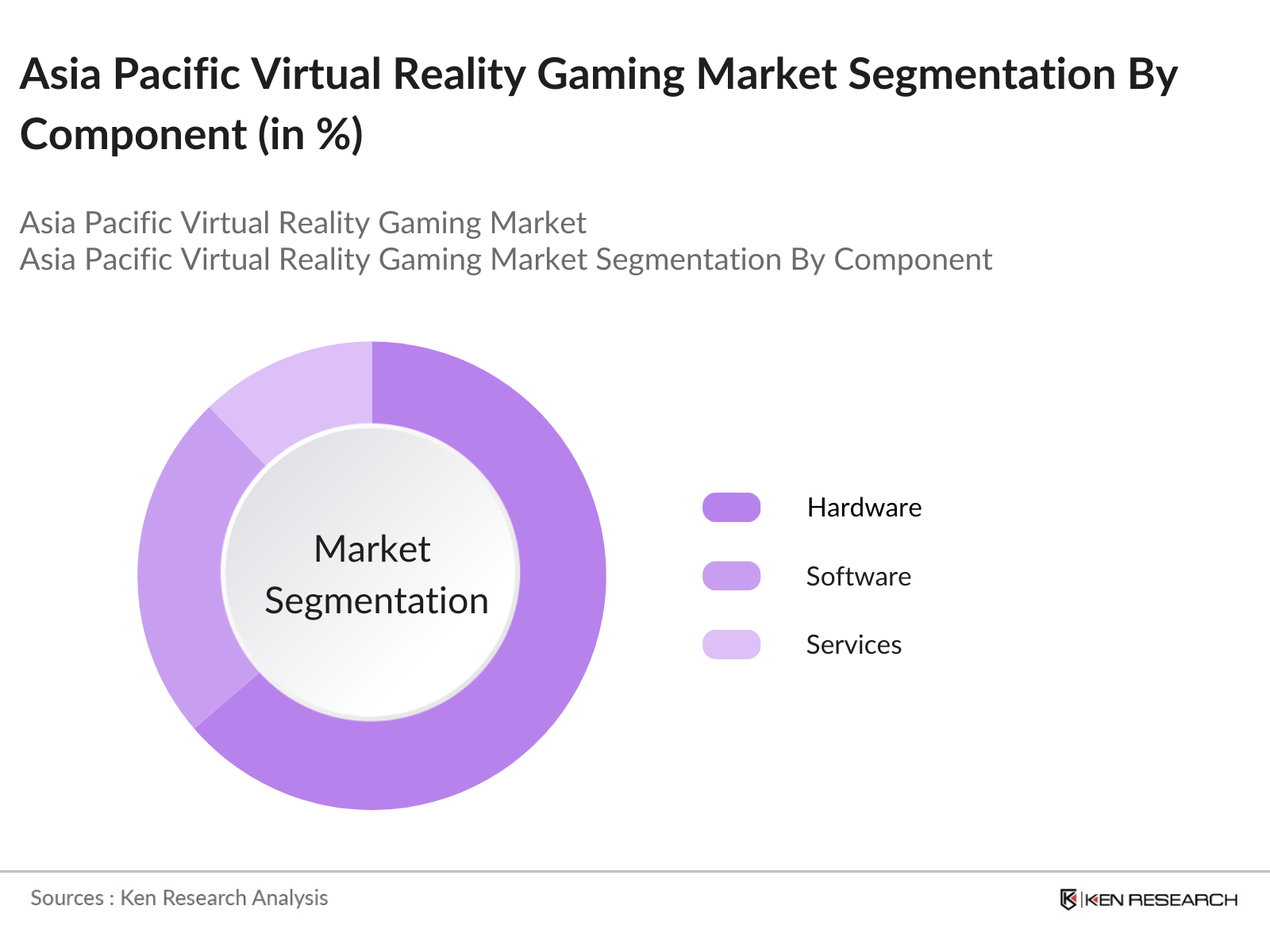
By Component: The market is segmented by component into hardware, software, and services. The hardware segment includes VR headsets, controllers, haptic devices, and other gaming accessories. The software segment covers VR game development tools and platforms, while services encompass installation, maintenance, and technical support.
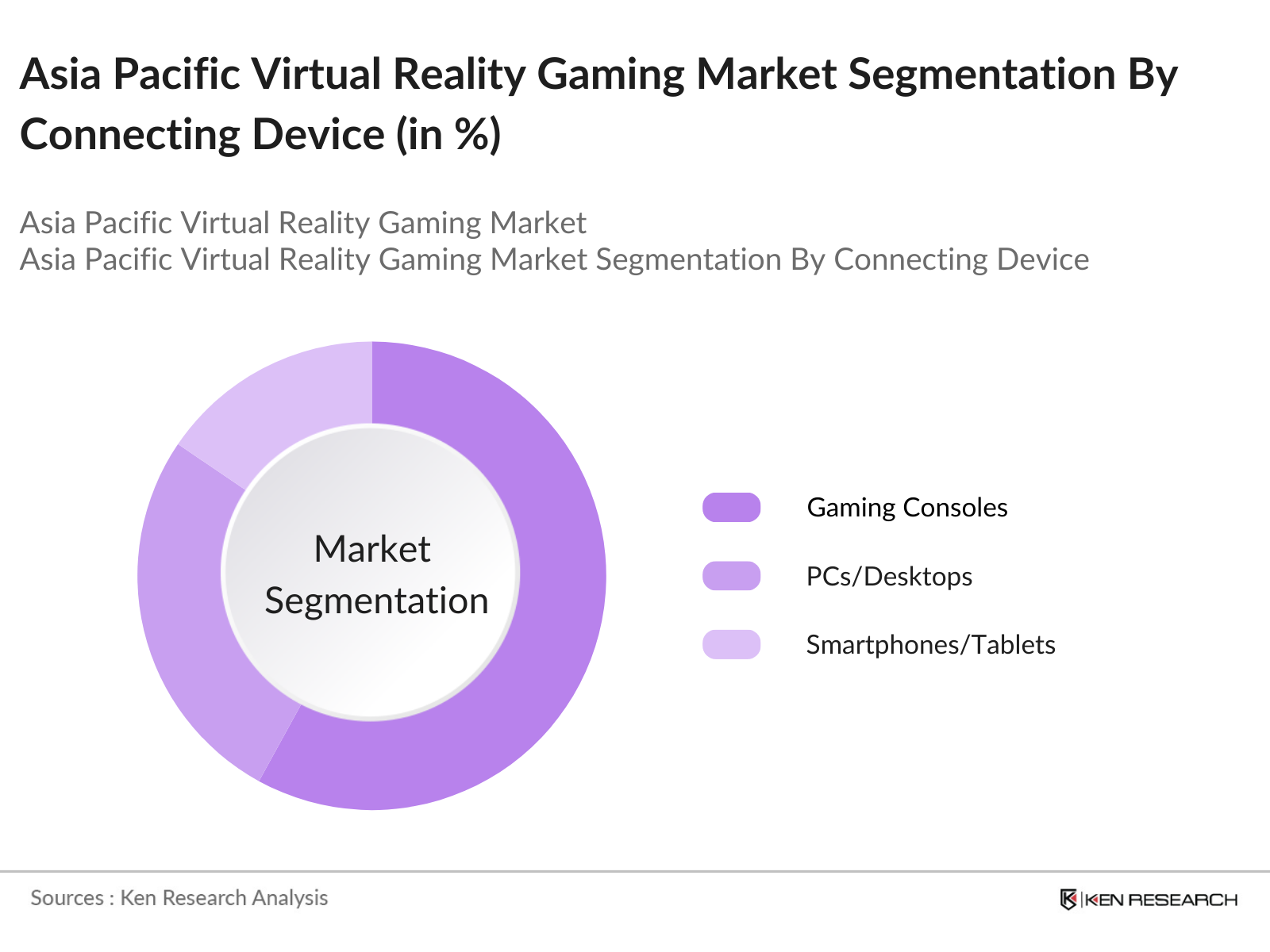
By Connecting Device: The market is also segmented by connecting device into gaming consoles, PCs/desktops, and smartphones/tablets. The gaming console segment holds the largest share owing to its high performance and compatibility with advanced VR accessories. Companies like Sony and Microsoft have launched next-generation consoles, such as PlayStation 5 and Xbox Series X, which offer superior VR support and graphics capabilities.
Asia Pacific Virtual Reality Gaming Market Competitive Landscape
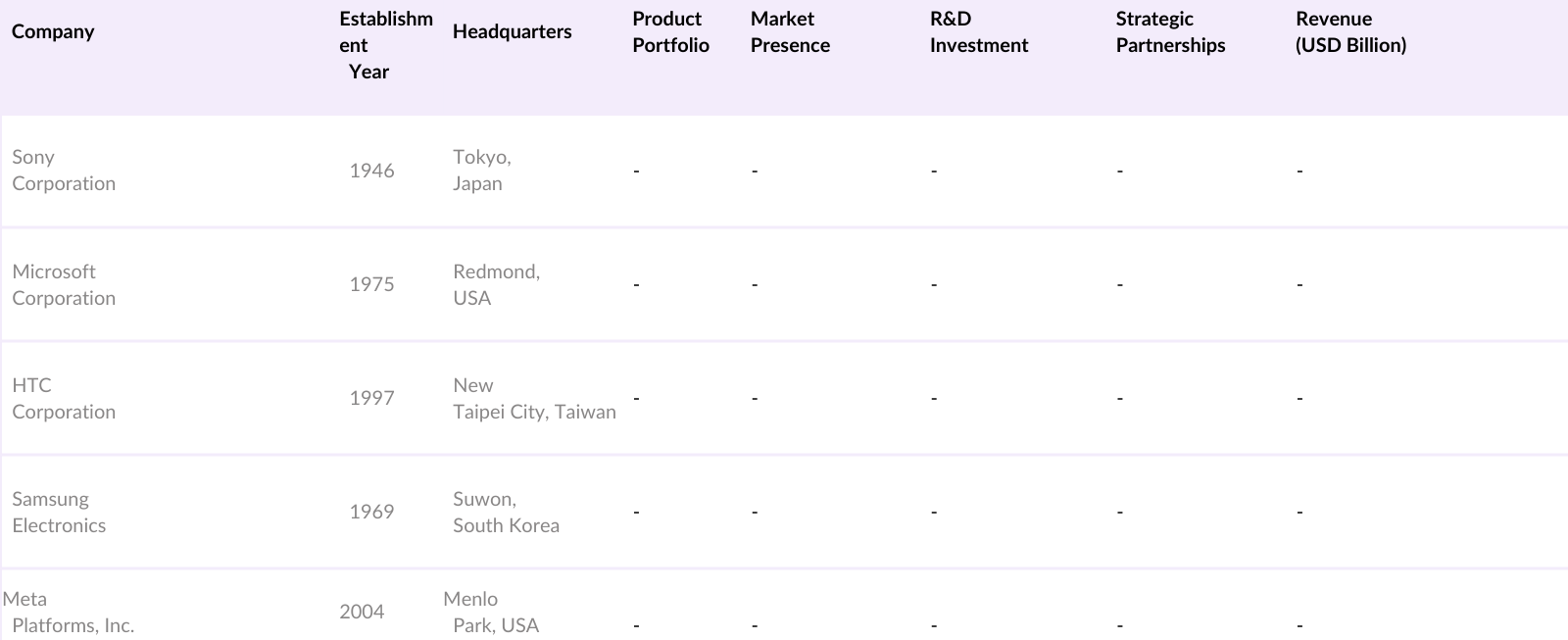
The Asia Pacific virtual reality gaming market is characterized by intense competition among key players. Major companies focus on continuous technological innovation, regional expansion, and strategic collaborations to maintain their market position. For example, Sony Corporation and HTC Corporation have been at the forefront of launching advanced VR products that cater to both casual and hardcore gamers. Moreover, the increasing presence of international players in emerging Asian markets is intensifying competition.
Asia Pacific Virtual Reality Gaming Industry Analysis
Growth Drivers
- Technological Advancements in VR Hardware and Software: The Asia Pacific region has witnessed significant technological developments in VR hardware, with companies like HTC and Sony leading the way in VR headset innovations. The launch of more accessible and advanced devices has resulted in increased consumer adoption. By 2024, the gaming hardware industry has capitalized on these advancements to enhance user experiences. The growing investment in software development, including improved haptic feedback and real-time tracking, is fostering a richer, more immersive VR gaming environment, further supported by a regional focus on technology adoption and innovation.
- Expansion of 5G Infrastructure The implementation of 5G infrastructure in the Asia Pacific region, particularly in South Korea, China, and Japan, is a pivotal growth driver. The high-speed, low-latency nature of 5G networks facilitates seamless VR gaming experiences, reducing lag and improving interactivity. As of 2024, China alone has deployed over 2.3 million 5G base stations, enhancing connectivity and enabling more sophisticated VR applications. This infrastructure development is expected to further stimulate growth in the VR gaming market by providing a robust network environment for both developers and users.
- Rise in e-sports Viewership and Participation The e-sports industry in the Asia Pacific region has shown substantial growth, with countries like South Korea and China contributing significantly to global viewership and participation numbers. As of 2024, the region accounts for over 35% of global e-sports revenue. The integration of VR in e-sports tournaments is creating new competitive formats and drawing more participants and viewers. This rise is supported by government-backed initiatives and private investments, which have propelled the expansion of e-sports leagues featuring VR games.
Market Challenges
- Device Compatibility Issues: Compatibility between various VR hardware and gaming platforms remains a challenge. The lack of standardized protocols across different devices has limited content accessibility and inter-device connectivity. For instance, certain VR games developed for HTC devices may not be compatible with Sony or Oculus headsets, affecting user experience and adoption rates. Addressing these compatibility issues is essential for fostering a cohesive ecosystem.
- High Initial Hardware and Maintenance Costs: The high cost of VR hardware, including headsets and controllers, is a barrier to widespread consumer adoption. Even though prices have dropped since 2020, the average VR setup costs over USD 700, which remains unaffordable for many in developing Asia Pacific economies. Additionally, maintenance and upgrades further increase the total cost of ownership, hindering penetration in lower-income markets.
Asia Pacific Virtual Reality Gaming Market Future Outlook
Over the next few years, the Asia Pacific virtual reality gaming market is expected to show significant growth, driven by advancements in hardware technology, the proliferation of 5G networks, and a shift towards more immersive gaming experiences. The rising demand for affordable VR devices in emerging economies, coupled with increasing consumer interest in augmented and virtual reality, will contribute to a positive market trajectory.
Market Opportunities
- Integration of Cloud Gaming Solutions: The integration of cloud gaming with VR technology presents a significant opportunity. Cloud-based solutions, supported by the regions expanding 5G network, enable high-quality VR experiences without the need for expensive hardware. This approach lowers entry barriers and is expected to increase user engagement. Major cloud service providers, like Tencent and AWS, have already started offering cloud VR services in countries such as Japan and Singapore, enhancing accessibility and market reach.
- Emerging Markets in Southeast Asia: Emerging markets in Southeast Asia, including Vietnam and Thailand, are witnessing rapid digital infrastructure development, creating a conducive environment for VR adoption. With GDP growth rates in these countries expected to exceed 5% in 2024, there is a growing middle class with the purchasing power to invest in VR technology. The increasing interest in digital entertainment and government support for tech-based economic initiatives are expected to drive future growth in these markets.
Scope of the Report
|
Component |
Hardware (Headsets, Controllers, Haptic Devices, VR Platforms) |
|
Connecting Device |
Gaming Consoles |
|
Application |
Commercial (VR Arcades, Theme Parks, Retail Experiences) |
|
End User |
Casual Gamers |
|
Region |
China Korea |
Products
Key Target Audience
Investments and Venture Capitalist Firms
Government and Regulatory Bodies (e.g., Ministry of Electronics and Information Technology, China)
Gaming Hardware Manufacturers
Software Development Firms
E-sports Associations and Clubs
Gaming Content Creators and Publishers
Consumer Electronics Retailers
VR Arcades and Amusement Parks
Companies
Players Mentioned in the Report
Sony Corporation
Microsoft Corporation
HTC Corporation
Samsung Electronics
Meta Platforms, Inc.
NVIDIA Corporation
Google Inc.
Nintendo Co., Ltd.
Linden Research, Inc.
Valve Corporation
Table of Contents
1. Asia Pacific Virtual Reality Gaming Market Overview
1.1. Definition and Scope
1.2. Market Taxonomy
1.3. Market Growth Rate and Dynamics
1.4. Market Segmentation Overview
2. Asia Pacific Virtual Reality Gaming Market Size (In USD Billion)
2.1. Historical Market Size
2.2. Year-on-Year Growth Analysis
2.3. Key Market Developments and Milestones
3. Asia Pacific Virtual Reality Gaming Market Analysis
3.1. Growth Drivers (e.g., 5G adoption, rising e-sports, increased VR hardware accessibility)
3.1.1. Technological Advancements in VR Hardware and Software
3.1.2. Expansion of 5G Infrastructure
3.1.3. Rise in e-sports Viewership and Participation
3.1.4. Increasing Consumer Preference for Immersive Gaming Experiences
3.2. Market Challenges (e.g., hardware compatibility, high costs)
3.2.1. Device Compatibility Issues
3.2.2. High Initial Hardware and Maintenance Costs
3.2.3. Limited Content Availability for VR Platforms
3.2.4. Regulations and Privacy Concerns in Digital Gaming
3.3. Opportunities (e.g., integration with cloud gaming, international partnerships)
3.3.1. Integration of Cloud Gaming Solutions
3.3.2. Emerging Markets in Southeast Asia
3.3.3. Strategic Partnerships for Technological Advancements
3.4. Trends (e.g., development of haptic suits, VR in multiplayer gaming)
3.4.1. Growth in Development of VR Accessories (Haptic Suits, Treadmills, Gloves)
3.4.2. Expansion of VR Arcades and Commercial Spaces
3.4.3. Transition Towards More Affordable Consumer VR Devices
3.5. Government Regulation (e.g., digital gaming regulations, consumer data privacy laws)
3.5.1. Country-Specific Digital Gaming Policies
3.5.2. Consumer Data Protection Regulations
3.5.3. E-sports Licensing and Regulation
3.6. SWOT Analysis
3.7. Value Chain and Stakeholder Ecosystem Analysis
3.8. Porters Five Forces Analysis
3.9. Competition Ecosystem Analysis
4. Asia Pacific Virtual Reality Gaming Market Segmentation
4.1. By Component
4.1.1. Hardware (Headsets, Controllers, Haptic Devices, VR Platforms)
4.1.2. Software (VR Content Creation Software, Game Development Tools)
4.1.3. Services (Installation, Maintenance, After-Sales Support)
4.2. By Connecting Device
4.2.1. Gaming Consoles
4.2.2. PCs/Desktops
4.2.3. Smartphones/Tablets
4.3. By Application
4.3.1. Commercial (VR Arcades, Theme Parks, Retail Experiences)
4.3.2. Individual Consumers
4.3.3. Educational and Training Institutes
4.4. By End User
4.4.1. Casual Gamers
4.4.2. Hardcore Gamers
4.4.3. E-sports Professionals
4.5. By Region
4.5.1. China
4.5.2. Japan
4.5.3. South Korea
4.5.4. India
4.5.5. Southeast Asia (Indonesia, Malaysia, Thailand, Singapore, Vietnam)
5. Asia Pacific Virtual Reality Gaming Market Competitive Analysis
5.1 Detailed Profiles of Major Companies
5.1.1. Sony Corporation
5.1.2. Microsoft Corporation
5.1.3. HTC Corporation
5.1.4. Samsung Electronics
5.1.5. Meta Platforms, Inc. (formerly Facebook)
5.1.6. NVIDIA Corporation
5.1.7. Google Inc.
5.1.8. Nintendo Co., Ltd.
5.1.9. Linden Research, Inc.
5.1.10. Valve Corporation
5.1.11. Qualcomm Technologies, Inc.
5.1.12. Virtuix
5.1.13. Ultraleap Limited
5.1.14. Tesla Studios
5.1.15. Lucidcam.com
5.2 Cross-Comparison Parameters (Headquarters, Revenue, Market Presence, R&D Investment, No. of Employees, Product Portfolio, Strategic Initiatives, Market Penetration Strategy)
5.3 Market Share Analysis
5.4 Strategic Initiatives (e.g., Partnerships, Collaborations, Product Launches)
5.5 Mergers and Acquisitions
5.6 Investment Analysis
5.7 Government Grants and Incentives for VR Development
5.8 Venture Capital and Private Equity Investments
6. Asia Pacific Virtual Reality Gaming Market Regulatory Framework
6.1 Digital Gaming and VR Technology Regulations
6.2 Licensing Requirements for VR Gaming Zones
6.3 Compliance Requirements for VR Hardware and Software
6.4 Regulations on Consumer Data and Privacy in VR Gaming
7. Asia Pacific Virtual Reality Gaming Market Future Market Size (In USD Billion)
7.1 Future Market Size Projections
7.2 Key Factors Driving Future Market Growth (e.g., advancements in 5G, cross-platform compatibility)
8. Asia Pacific Virtual Reality Gaming Market Segmentation
8.1. By Component
8.2. By Connecting Device
8.3. By Application
8.4. By End User
8.5. By Region
9. Asia Pacific Virtual Reality Gaming Market Analysts Recommendations
9.1 TAM/SAM/SOM Analysis
9.2 Customer Cohort Analysis
9.3 Strategic Marketing Initiatives
9.4 White Space Opportunity Analysis
Research Methodology
Step 1: Identification of Key Variables
The initial phase involves constructing an ecosystem map encompassing all major stakeholders within the Asia Pacific Virtual Reality Gaming Market. This step is underpinned by extensive desk research, utilizing a combination of secondary and proprietary databases to gather comprehensive industry-level information. The primary objective is to identify and define the critical variables that influence market dynamics.
Step 2: Market Analysis and Construction
In this phase, we will compile and analyze historical data pertaining to the Asia Pacific Virtual Reality Gaming Market. This includes assessing market penetration, the ratio of marketplaces to service providers, and the resultant revenue generation. Furthermore, an evaluation of service quality statistics will be conducted to ensure the reliability and accuracy of the revenue estimates.
Step 3: Hypothesis Validation and Expert Consultation
Market hypotheses will be developed and subsequently validated through computer-assisted telephone interviews (CATIS) with industry experts representing a diverse array of companies. These consultations will provide valuable operational and financial insights directly from industry practitioners, which will be instrumental in refining and corroborating the market data.
Step 4: Research Synthesis and Final Output
The final phase involves direct engagement with multiple VR gaming hardware and software manufacturers to acquire detailed insights into product segments, sales performance, consumer preferences, and other pertinent factors. This interaction will serve to verify and complement the statistics derived from the bottom-up approach, thereby ensuring a comprehensive, accurate, and validated analysis of the Asia Pacific Virtual Reality Gaming Market.
Frequently Asked Questions
1. How big is the Asia Pacific Virtual Reality Gaming Market?
The Asia Pacific virtual reality gaming market is valued at USD 6 billion, based on a five-year historical analysis. This market growth is driven by increasing investments in VR hardware, software development, and the deployment of high-speed 5G technology across the region.
2. What are the challenges in the Asia Pacific Virtual Reality Gaming Market?
Challenges include high costs of VR hardware, device compatibility issues, and the limited availability of high-quality content. Additionally, regulatory hurdles and privacy concerns pose significant barriers to market expansion.
3. Who are the major players in the Asia Pacific Virtual Reality Gaming Market?
Key players include Sony Corporation, Microsoft Corporation, HTC Corporation, Samsung Electronics, and Meta Platforms, Inc. These companies dominate the market due to their strong product portfolios, continuous innovation, and strategic partnerships.
4. What are the growth drivers of the Asia Pacific Virtual Reality Gaming Market?
The market is propelled by advancements in 5G technology, increasing disposable incomes, and the growing popularity of e-sports and VR gaming zones. Additionally, the integration of VR in education and training is opening new growth avenues.
Why Buy From Us?

What makes us stand out is that our consultants follows Robust, Refine and Result (RRR) methodology. i.e. Robust for clear definitions, approaches and sanity checking, Refine for differentiating respondents facts and opinions and Result for presenting data with story

We have set a benchmark in the industry by offering our clients with syndicated and customized market research reports featuring coverage of entire market as well as meticulous research and analyst insights.

While we don't replace traditional research, we flip the method upside down. Our dual approach of Top Bottom & Bottom Top ensures quality deliverable by not just verifying company fundamentals but also looking at the sector and macroeconomic factors.

With one step in the future, our research team constantly tries to show you the bigger picture. We help with some of the tough questions you may encounter along the way: How is the industry positioned? Best marketing channel? KPI's of competitors? By aligning every element, we help maximize success.

Our report gives you instant access to the answers and sources that other companies might choose to hide. We elaborate each steps of research methodology we have used and showcase you the sample size to earn your trust.

If you need any support, we are here! We pride ourselves on universe strength, data quality, and quick, friendly, and professional service.