
Asia Pacific Waterproofing Membrane Market Outlook to 2030
Region:Asia
Author(s):Paribhasha Tiwari
Product Code:KROD4435
December 2024
90
About the Report
Asia Pacific Waterproofing Membrane Market Overview
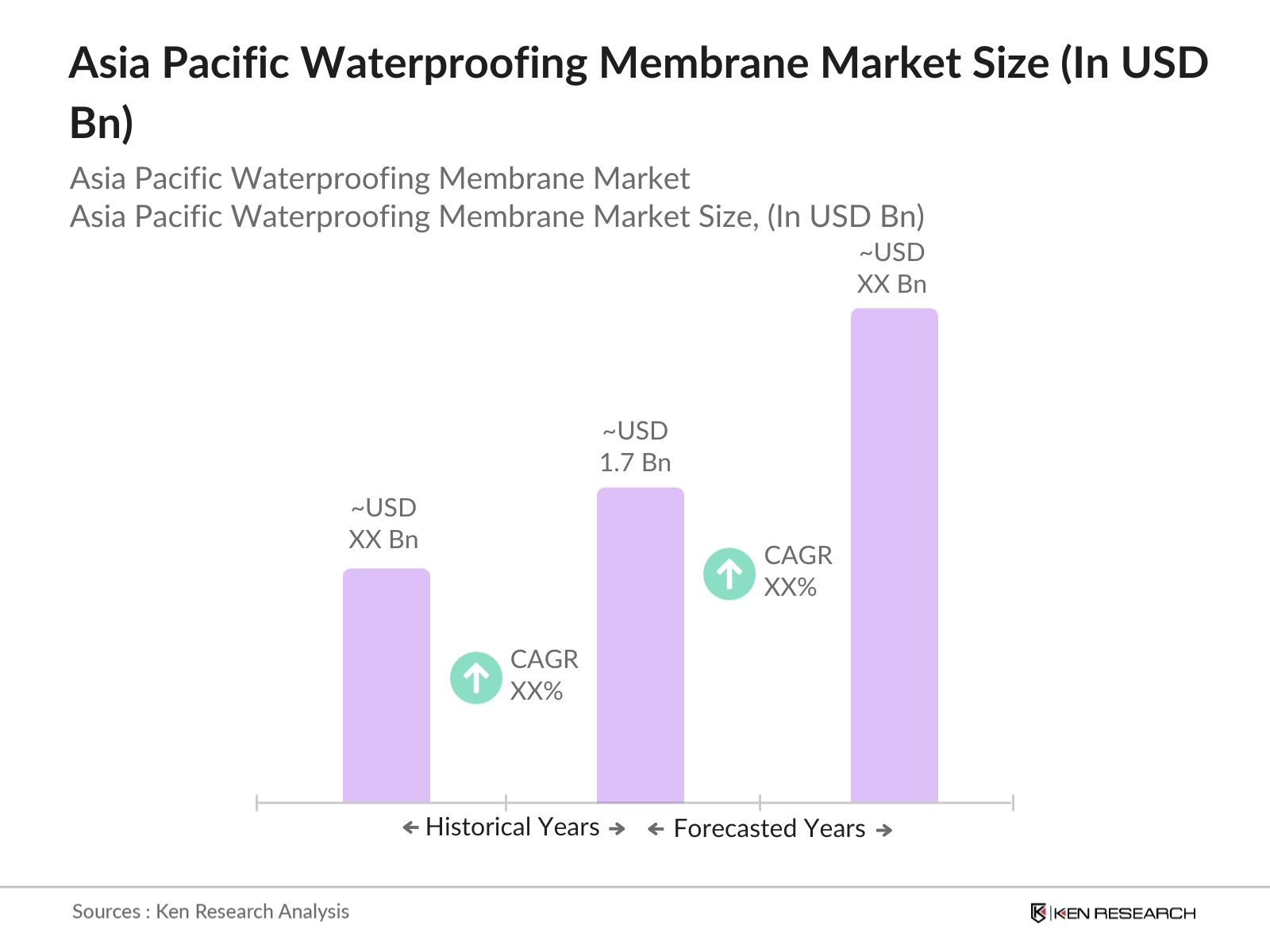
- The Asia Pacific waterproofing membrane market is valued at USD 1.7 billion, based on a five-year historical analysis. The market is primarily driven by the rapid expansion of infrastructure projects, increasing urbanization, and government-led initiatives for smart city development. Countries such as China and India are investing heavily in urban infrastructure, which has elevated the demand for high-quality waterproofing solutions. Additionally, environmental regulations are encouraging the use of sustainable and durable materials, further propelling the market growth.
- China and India dominate the Asia Pacific waterproofing membrane market due to their significant investments in construction and infrastructure projects. China, with its Belt and Road Initiative, has been focusing on building extensive urban infrastructure, while India's Smart Cities Mission is fostering demand for waterproofing materials. Moreover, Japan and South Korea are seeing increased demand due to their focus on technological innovations in the construction sector, adding to the overall regional dominance.
- Chinas 14th Five-Year Plan (2021-2025) has prioritized sustainable urban development, allocating over $150 billion for water conservation and flood prevention projects in 2024. This includes funding for modern waterproofing solutions that support Chinas efforts to upgrade urban infrastructure and meet environmental targets.
Asia Pacific Waterproofing Membrane Market Segmentation
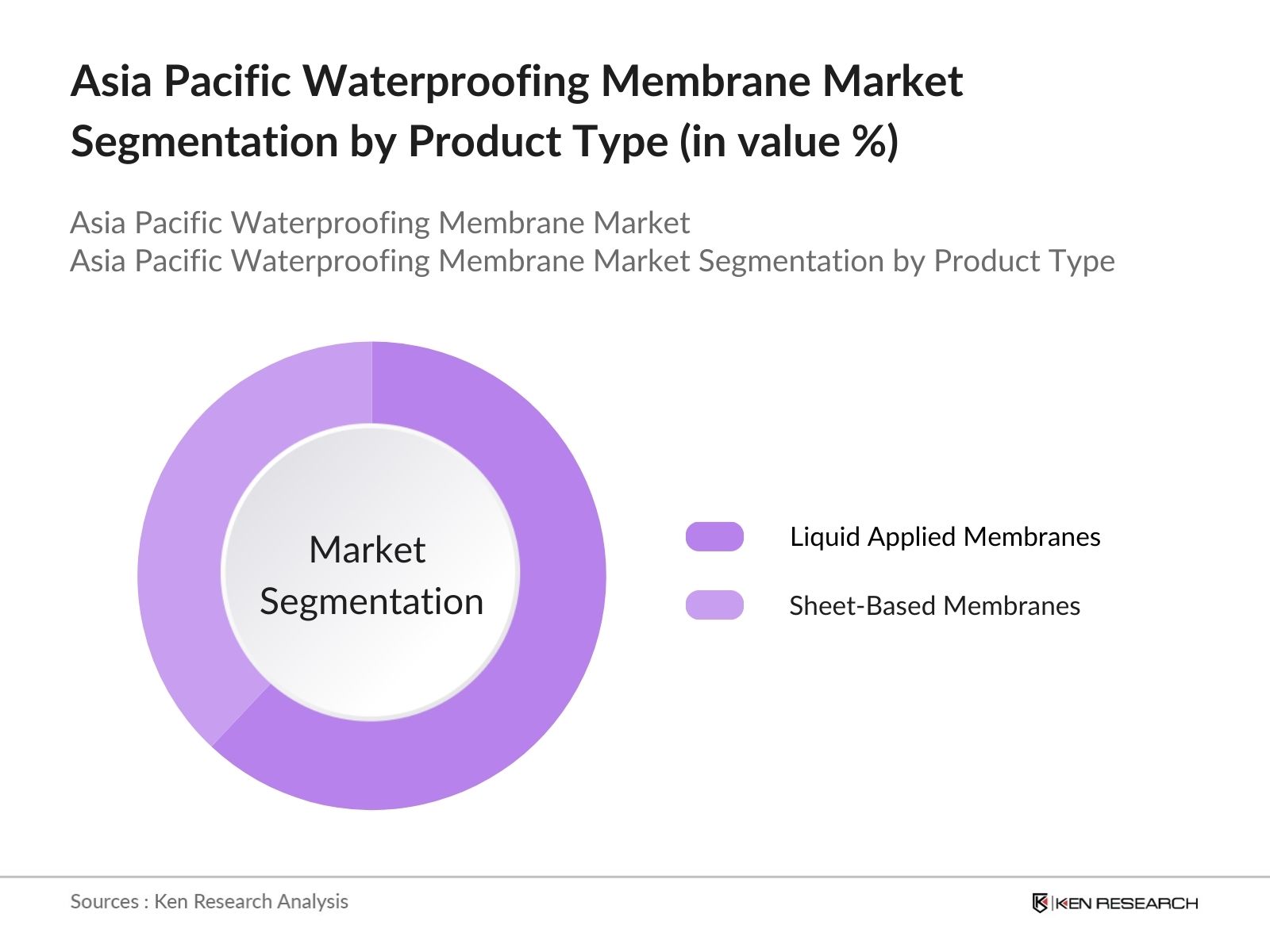
By Product Type: The Asia Pacific waterproofing membrane market is segmented by product type into liquid applied membranes and sheet-based membranes. Recently, liquid applied membranes have captured a dominant market share, driven by their ease of application, flexibility, and cost-effectiveness. These membranes are increasingly being used in complex building structures due to their seamless application, which ensures better protection against water ingress. Their rising adoption across various industries, including commercial, residential, and industrial sectors, further solidifies their position in the market.
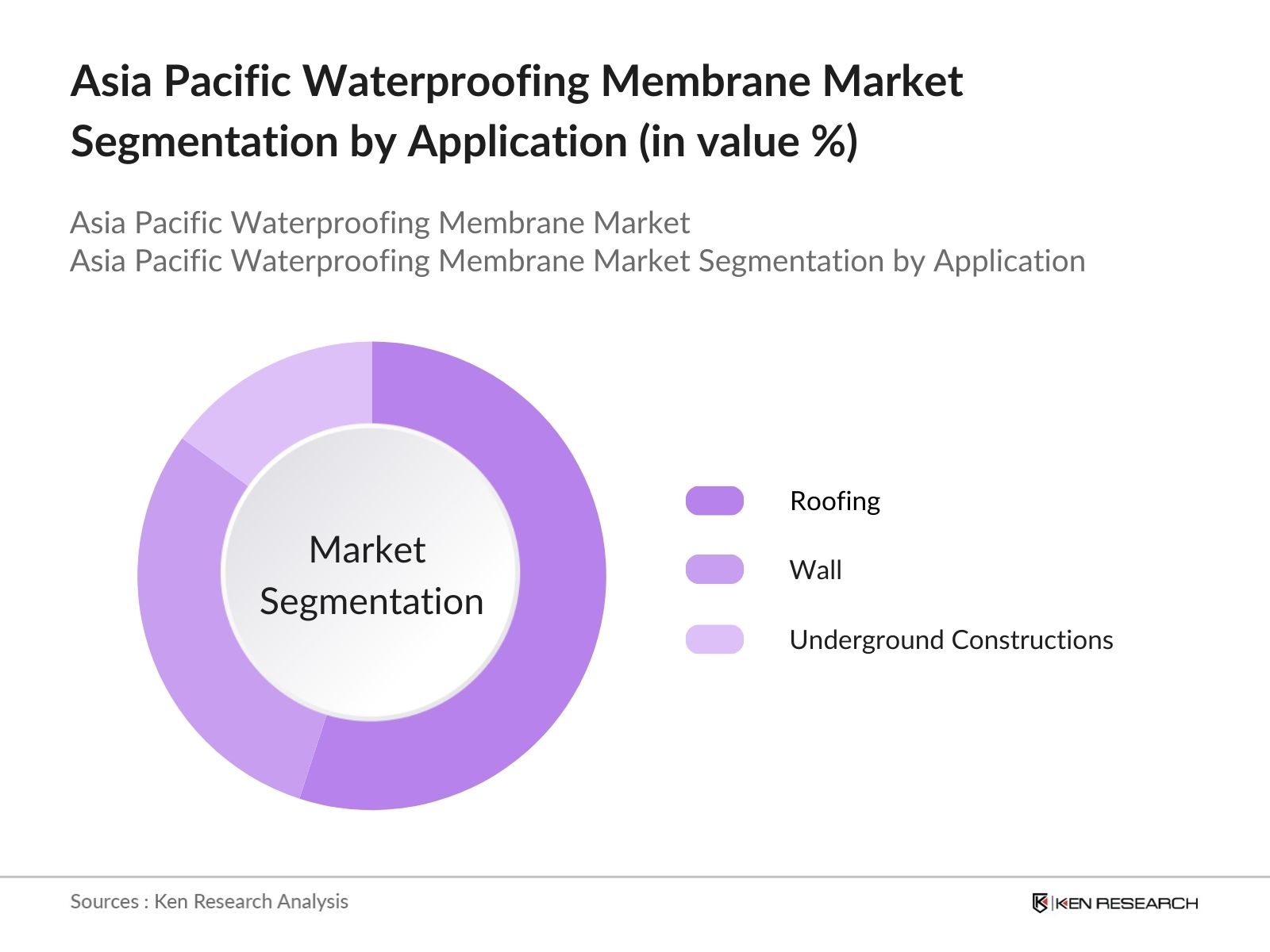
By Application: In terms of application, the market is segmented into roofing, wall, and underground constructions. Roofing dominates this segment as the demand for roofing waterproofing solutions has surged, particularly in urban centers where high-rise buildings are on the rise. The increased frequency of extreme weather events has also highlighted the importance of roof waterproofing. Additionally, governments across the region are imposing stricter regulations for roofing materials, driving the demand for high-performance waterproofing membranes.
Asia Pacific Waterproofing Membrane Market Competitive Landscape
The Asia Pacific waterproofing membrane market is dominated by both regional and global players. Major companies continue to invest in R&D to develop new and advanced membrane technologies. These efforts are aimed at creating eco-friendly and sustainable products that comply with the growing environmental regulations across the region. Some companies are focusing on expanding their geographical presence through mergers, acquisitions, and collaborations, while others are enhancing their product portfolios.
|
Company |
Establishment Year |
Headquarters |
Revenue (2023) |
R&D Investments |
Product Portfolio |
Sustainability Initiatives |
Manufacturing Presence |
Technological Capabilities |
|
Sika AG |
1910 |
Baar, Switzerland |
- | - | - | - | - | - |
|
BASF SE |
1865 |
Ludwigshafen, Germany |
- | - | - | - | - | - |
|
GCP Applied Technologies |
2015 |
Cambridge, USA |
- | - | - | - | - | - |
|
Saint-Gobain Weber |
1665 |
Paris, France |
- | - | - | - | - | - |
|
Fosroc International |
1972 |
Dubai, UAE |
- | - | - | - | - | - |
Asia Pacific Waterproofing Membrane Market Analysis
Growth Drivers
- Rapid Urbanization and Infrastructure Expansion: Urban infrastructure projects in China and India are driving waterproofing membrane demand. By 2024, Chinas urban population will surpass 900 million, necessitating large-scale infrastructure like smart cities and high-rise buildings. These projects require high-performance, durable waterproofing solutions to protect against water damage, spurred by government initiatives supporting modern infrastructure upgrades.
- Growing Focus on Water Management Solutions: Asia Pacifics flood-prone regions, particularly in Southeast Asia, are driving demand for efficient water management systems. By 2024, over 2.5 billion people will rely on advanced water infrastructure, boosting demand for waterproofing membranes in flood control and water conservation projects. Government investments in flood prevention infrastructure across Indonesia and the Philippines will further drive market growth.
- Stringent Environmental Regulations on Construction: Governments in Asia Pacific have enforced stricter environmental regulations for the construction industry, promoting sustainable practices. By 2024, India and China have mandated green building codes requiring the use of environmentally friendly waterproofing membranes in urban projects. These regulations are accelerating demand for low-carbon, energy-efficient waterproofing solutions that comply with eco-friendly building standards.
Market Challenges
- High Initial Costs of Advanced Membranes: The high cost of advanced waterproofing membranes such as TPO and liquid-applied membranes limits adoption in cost-sensitive markets. In India, TPO membrane systems average INR 3,000 per square meter, which is unaffordable for many smaller projects. This cost barrier affects the widespread use of premium waterproofing technologies, especially in developing countries with tighter construction budgets.
- Volatility in Raw Material Prices: Fluctuations in raw material prices, particularly bitumen and polymers, pose a challenge for the waterproofing membrane market. In 2024, crude oil prices between $70-$85 per barrel impacted the cost of bitumen-based membranes, causing price instability. This volatility in raw material supply chains affects the profitability of manufacturers and makes pricing less predictable for consumers.
Asia Pacific Waterproofing Membrane Market Future Outlook
Over the next five years, the Asia Pacific waterproofing membrane market is expected to experience steady growth, driven by continued investment in infrastructure development across key markets such as China, India, and Southeast Asia. Additionally, advancements in membrane technologies, such as self-healing and nanotechnology-based waterproofing membranes, are likely to accelerate market growth. Increased government support for environmentally sustainable construction practices will further boost demand for innovative waterproofing solutions.
Market Opportunities
- Rising Demand for Eco-Friendly Membranes: Eco-friendly building materials are increasingly in demand across Asia Pacific, driven by government sustainability initiatives. In 2024, Singapores Green Building Masterplan is pushing for higher adoption of recyclable, low-VOC waterproofing membranes in commercial and residential projects. These materials offer a sustainable alternative to traditional membranes, presenting significant growth opportunities for manufacturers offering green solutions.
- Integration with Smart Building Technologies: The rise of smart buildings in urban areas is driving demand for waterproofing membranes integrated with IoT technology for real-time monitoring. By 2024, cities like Tokyo and Shanghai will adopt smart infrastructure solutions that include sensors in waterproofing systems for early leak detection, offering an advanced, tech-driven opportunity for membrane manufacturers.
Scope of the Report
|
By Product Type |
Liquid Applied Membranes Sheet-Based Membranes Polymer Modified Membranes Bitumen Membranes |
|
By Application |
Roofing Wall Underground Constructions Waste and Water Management |
|
By End-Use Industry |
Residential Commercial Infrastructure Industrial |
|
By Technology |
PVC-Based EPDM-Based TPO-Based Bituminous |
|
By Region |
China India Japan Australia ASEAN |
Products
Key Target Audience
Waterproofing Membrane Manufacturers
Construction Companies
Government and Regulatory Bodies (Ministry of Housing and Urban Affairs, National Building Code Authorities)
Infrastructure Development Firms
Architects and Engineering Consultancies
Real Estate Developers
Investors and Venture Capitalist Firms
Sustainability and Green Building Certification Agencies
Companies
Players Mentioned in the Report:
Sika AG
BASF SE
GCP Applied Technologies
Saint-Gobain Weber
Fosroc International
Mapei S.p.A
Carlisle Companies Inc.
Dow Chemical Company
Tremco
Oriental Yuhong
RPM International Inc.
Soprema Group
Johns Manville
Firestone Building Products
Pidilite Industries
Table of Contents
1. Asia Pacific Waterproofing Membrane Market Overview
1.1 Definition and Scope
1.2 Market Taxonomy
1.3 Market Growth Rate
1.4 Market Segmentation Overview
2. Asia Pacific Waterproofing Membrane Market Size (In USD Bn)
2.1 Historical Market Size
2.2 Year-On-Year Growth Analysis
2.3 Key Market Developments and Milestones
3. Asia Pacific Waterproofing Membrane Market Analysis
3.1 Growth Drivers (Urban Infrastructure Development, Construction Sector Growth, and Sustainability Regulations)
3.1.1 Rapid Urbanization
3.1.2 Demand for Water Management Solutions
3.1.3 Stringent Environmental Regulations
3.1.4 Technological Advancements in Membrane Durability
3.2 Market Challenges (Cost Constraints, Availability of Raw Materials, Technological Barriers)
3.2.1 High Initial Costs
3.2.2 Volatility in Raw Material Prices
3.2.3 Complexity in Application Processes
3.3 Opportunities (Eco-Friendly Membranes, Smart Infrastructure Integration)
3.3.1 Rising Demand for Green Building Materials
3.3.2 Integration with Smart Building Technologies
3.3.3 Expansion in Emerging Economies
3.4 Trends (Self-Healing Membranes, Advanced Polymer-Based Membranes, Nanotechnology Applications)
3.4.1 Increasing Adoption of Liquid-Applied Membranes
3.4.2 Growth of Polymer-Modified Bitumen Membranes
3.4.3 Utilization of Nanotechnology in Waterproofing Solutions
3.5 Government Regulation (Building Codes, Safety Standards, Environmental Compliance)
3.5.1 National Building Standards for Waterproofing
3.5.2 Green Building Certifications and Regulations
3.5.3 Tax Incentives for Sustainable Construction
3.6 SWOT Analysis
3.7 Stakeholder Ecosystem
3.8 Porters Five Forces Analysis
3.9 Competition Ecosystem
4. Asia Pacific Waterproofing Membrane Market Segmentation
4.1 By Product Type (In Value %)
4.1.1 Liquid Applied Membranes
4.1.2 Sheet-Based Membranes
4.1.3 Polymer Modified Membranes
4.1.4 Bitumen Membranes
4.2 By Application (In Value %)
4.2.1 Roofing
4.2.2 Wall
4.2.3 Underground Constructions
4.2.4 Waste and Water Management
4.3 By End-Use Industry (In Value %)
4.3.1 Residential
4.3.2 Commercial
4.3.3 Infrastructure
4.3.4 Industrial
4.4 By Technology (In Value %)
4.4.1 PVC-Based Waterproofing Membranes
4.4.2 EPDM-Based Waterproofing Membranes
4.4.3 TPO-Based Waterproofing Membranes
4.4.4 Bituminous Membranes
4.5 By Region (In Value %)
4.5.1 China
4.5.2 India
4.5.3 Japan
4.5.4 Australia
4.5.5 ASEAN
5. Asia Pacific Waterproofing Membrane Market Competitive Analysis
5.1 Detailed Profiles of Major Companies
5.1.1 Sika AG
5.1.2 BASF SE
5.1.3 GCP Applied Technologies
5.1.4 Carlisle Companies Inc.
5.1.5 Saint-Gobain Weber
5.1.6 Mapei S.p.A
5.1.7 Fosroc International
5.1.8 Tremco
5.1.9 Soprema Group
5.1.10 Johns Manville
5.1.11 Firestone Building Products
5.1.12 Dow Chemical Company
5.1.13 RPM International Inc.
5.1.14 Oriental Yuhong
5.1.15 Pidilite Industries
5.2 Cross Comparison Parameters (Revenue, R&D Investments, Geographical Presence, Technology Portfolio, Sustainability Initiatives, Product Customization Capabilities, Strategic Partnerships, Manufacturing Capabilities)
5.3 Market Share Analysis
5.4 Strategic Initiatives (Partnerships, Technological Collaborations)
5.5 Mergers and Acquisitions
5.6 Investment Analysis
5.7 Government Grants
5.8 Private Equity Investments
6. Asia Pacific Waterproofing Membrane Market Regulatory Framework
6.1 Environmental Standards
6.2 Compliance Requirements
6.3 Certification Processes
7. Asia Pacific Waterproofing Membrane Future Market Size (In USD Bn)
7.1 Future Market Size Projections
7.2 Key Factors Driving Future Market Growth
8. Asia Pacific Waterproofing Membrane Future Market Segmentation
8.1 By Product Type (In Value %)
8.2 By Application (In Value %)
8.3 By End-Use Industry (In Value %)
8.4 By Technology (In Value %)
8.5 By Region (In Value %)
9. Asia Pacific Waterproofing Membrane Market Analysts Recommendations
9.1 TAM/SAM/SOM Analysis
9.2 Customer Cohort Analysis
9.3 Marketing Initiatives
9.4 White Space Opportunity Analysis
Research Methodology
Step 1: Identification of Key Variables
This stage involves developing an ecosystem map for the Asia Pacific waterproofing membrane market. We utilize secondary and proprietary data sources to identify critical factors affecting the market, including material innovation, regulatory changes, and market dynamics.
Step 2: Market Analysis and Construction
Here, we collect and analyze historical data concerning the waterproofing membrane market. We assess factors like market penetration and application-specific revenue to form accurate estimates.
Step 3: Hypothesis Validation and Expert Consultation
Industry-specific hypotheses are formed and validated through consultations with construction industry experts. These insights refine the market data and provide operational and financial perspectives.
Step 4: Research Synthesis and Final Output
In the final stage, direct consultations with membrane manufacturers help corroborate market statistics, ensuring the data is both comprehensive and validated.
Frequently Asked Questions
01. How big is the Asia Pacific Waterproofing Membrane Market?
The Asia Pacific waterproofing membrane market is valued at USD 1.7 billion. It is driven by extensive infrastructure projects, increasing urbanization, and strict environmental regulations promoting sustainable building materials.
02. What are the challenges in the Asia Pacific Waterproofing Membrane Market?
Key challenges in the Asia Pacific waterproofing membrane market include fluctuating raw material prices, high initial costs, and the complexity of membrane application processes. The market also faces increasing competition from low-cost local manufacturers.
03. Who are the major players in the Asia Pacific Waterproofing Membrane Market?
Major players in the Asia Pacific waterproofing membrane market include Sika AG, BASF SE, GCP Applied Technologies, Saint-Gobain Weber, and Fosroc International. These companies are leading in terms of innovation, sustainability, and geographical presence.
04. What are the growth drivers in the Asia Pacific Waterproofing Membrane Market?
Growth drivers in the Asia Pacific waterproofing membrane market include the rapid urbanization in countries like China and India, large-scale infrastructure projects, and government regulations mandating sustainable construction practices.
Why Buy From Us?

What makes us stand out is that our consultants follows Robust, Refine and Result (RRR) methodology. i.e. Robust for clear definitions, approaches and sanity checking, Refine for differentiating respondents facts and opinions and Result for presenting data with story

We have set a benchmark in the industry by offering our clients with syndicated and customized market research reports featuring coverage of entire market as well as meticulous research and analyst insights.

While we don't replace traditional research, we flip the method upside down. Our dual approach of Top Bottom & Bottom Top ensures quality deliverable by not just verifying company fundamentals but also looking at the sector and macroeconomic factors.

With one step in the future, our research team constantly tries to show you the bigger picture. We help with some of the tough questions you may encounter along the way: How is the industry positioned? Best marketing channel? KPI's of competitors? By aligning every element, we help maximize success.

Our report gives you instant access to the answers and sources that other companies might choose to hide. We elaborate each steps of research methodology we have used and showcase you the sample size to earn your trust.

If you need any support, we are here! We pride ourselves on universe strength, data quality, and quick, friendly, and professional service.