
China Battery Management System Market Outlook to 2030
Region:China
Author(s):Sanjna
Product Code:KROD3519
Region:China
Author(s):Sanjna
Product Code:KROD3519
November 2024
95
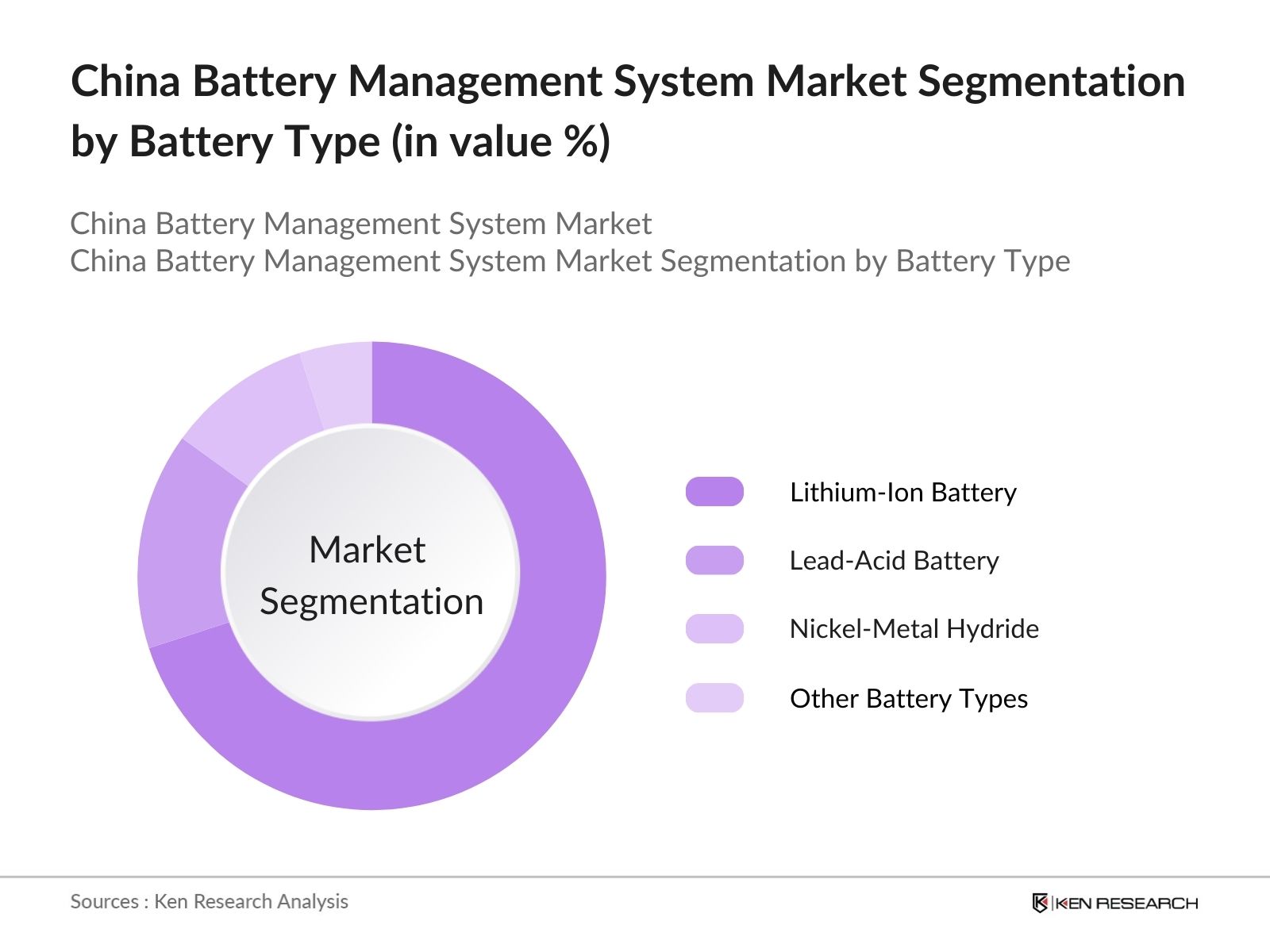
By Battery Type: The China Battery Management System market is segmented by battery type into Lithium-Ion Battery, Lead-Acid Battery, Nickel-Metal Hydride Battery, and Other Battery Types. Among these, Lithium-Ion Battery holds the dominant market share due to its widespread application in electric vehicles and consumer electronics. Lithium-ion batteries offer higher energy density, longer cycle life, and better efficiency compared to other battery types, which make them ideal for the growing EV market in China.
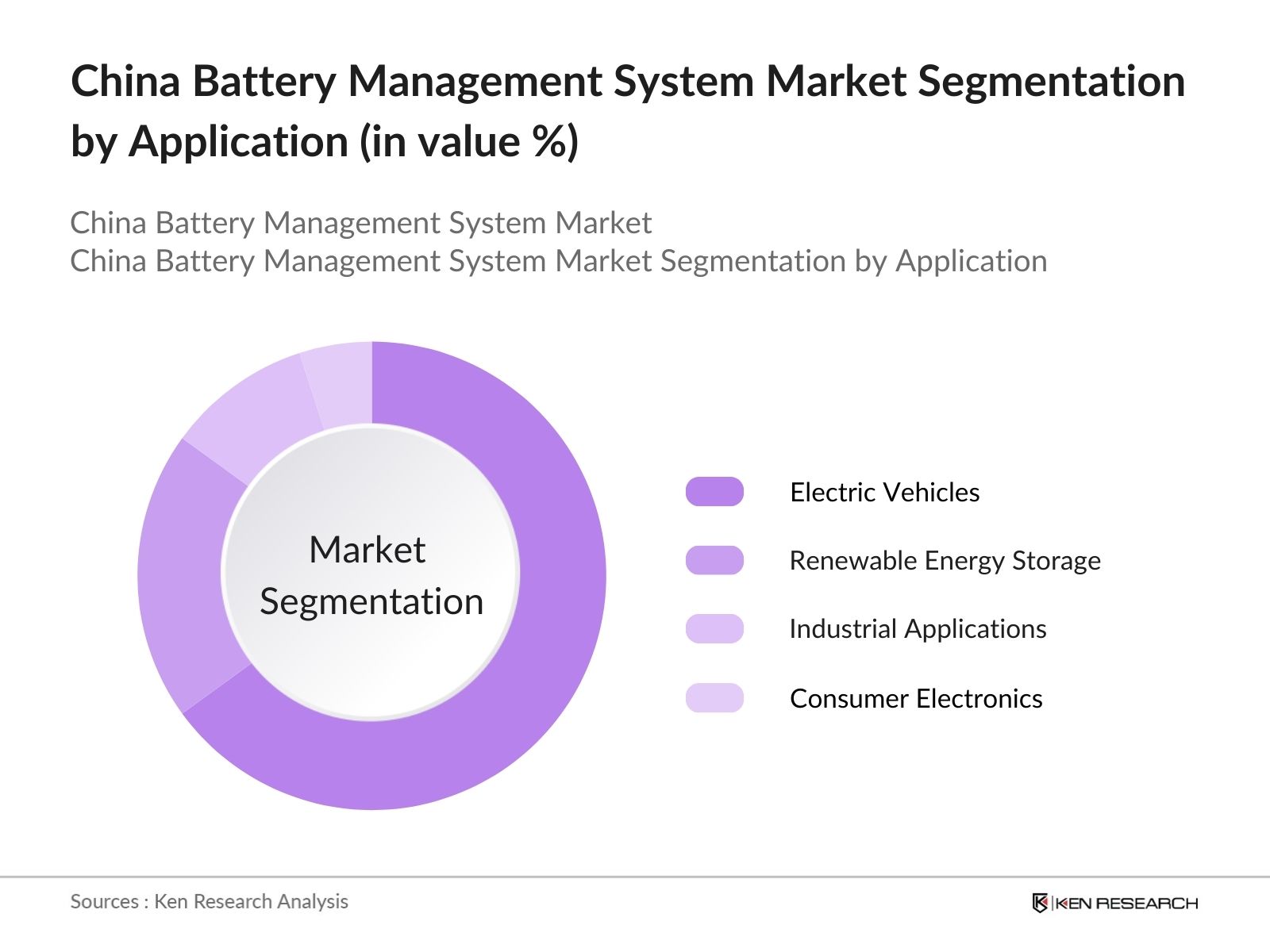
 By Application: The China Battery Management System market is segmented by application into Electric Vehicles, Renewable Energy Storage Systems, Industrial Applications, and Consumer Electronics. Electric Vehicles dominate the market share within this segmentation, driven by the Chinese governments aggressive policies to promote electric mobility. China is the largest market for electric vehicles globally, with a robust EV infrastructure, including charging stations and subsidies for EV buyers.
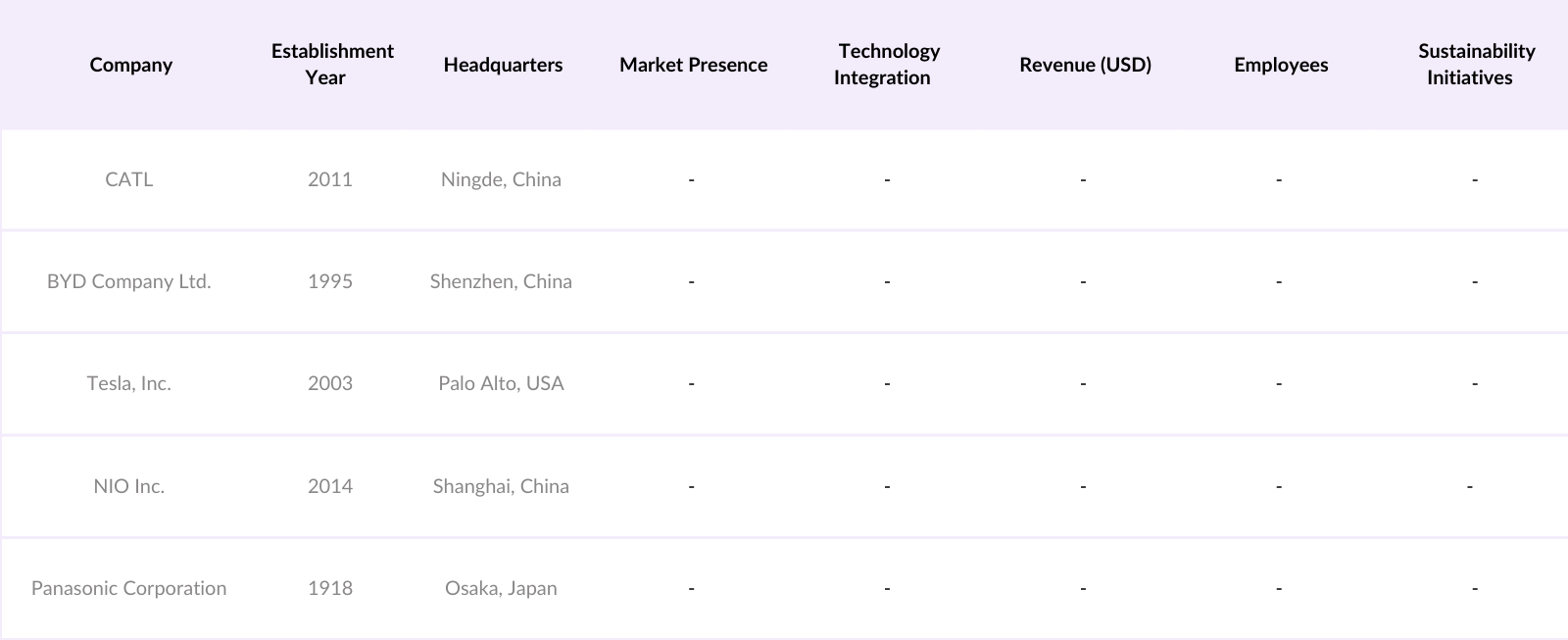
The China Battery Management System market is dominated by several major players, including both domestic and international firms. These companies are capitalizing on the growing demand for EVs and energy storage systems in China, leveraging advanced technology and strategic partnerships to enhance their market presence. The competition landscape is primarily driven by technology innovation, sustainability initiatives, and regional expansions.
Growth Drivers
Challenges
China Battery Management System market is expected to experience significant growth, propelled by continuous advancements in battery technologies, the rapid adoption of electric vehicles, and expanding energy storage infrastructure. Government regulations supporting clean energy and EV production are likely to sustain the upward trajectory of the market. The shift towards more efficient and sustainable energy systems will also create opportunities for further innovation in battery management solutions.
Market Opportunities
|
Segment |
Sub-Segment |
|
By Battery Type |
Lithium-Ion Battery |
|
Lead-Acid Battery |
|
|
Nickel-Metal Hydride Battery |
|
|
Other Battery Types |
|
|
By Application |
Electric Vehicles |
|
Renewable Energy Storage Systems |
|
|
Industrial Applications |
|
|
Consumer Electronics |
|
|
By Topology |
Centralized |
|
Modular |
|
|
Distributed |
|
|
By Connectivity Type |
Wired BMS |
|
Wireless BMS |
|
|
By Region |
East |
|
South |
|
|
North |
|
|
Central |
|
|
West |
1.1 Definition and Scope
1.2 Market Taxonomy
1.3 Market Growth Rate
1.4 Market Segmentation Overview
2.1 Historical Market Size
2.2 Year-On-Year Growth Analysis
2.3 Key Market Developments and Milestones
3.1 Growth Drivers
3.1.1 Rising Demand for Electric Vehicles
3.1.2 Government Support for Green Energy (Government Policies)
3.1.3 Advancements in Battery Technologies
3.1.4 Increasing Focus on Renewable Energy Storage
3.2 Market Challenges
3.2.1 High Initial Costs (Cost Factor)
3.2.2 Lack of Standardization (Standardization Issues)
3.2.3 Technical Complexities in Integration (Technical Barriers)
3.3 Opportunities
3.3.1 Growth in Consumer Electronics (Consumer Market Expansion)
3.3.2 Technological Innovation in Battery Management Systems (Technology Advancements)
3.3.3 International Collaboration in Energy Storage Projects (Strategic Alliances)
3.4 Trends
3.4.1 Integration with IoT and Smart Grids (Technological Integration)
3.4.2 Adoption of AI-Based Monitoring Systems (AI Technology Adoption)
3.4.3 Growth in Lithium-Ion Battery Market (Battery Technology Evolution)
3.5 Government Regulation
3.5.1 National Energy Storage Regulations
3.5.2 Environmental Regulations on Battery Manufacturing
3.5.3 Safety Standards for Battery Management Systems
3.5.4 Government Incentives for EV Adoption
4.1 By Battery Type (In Value %)
4.1.1 Lithium-Ion Battery
4.1.2 Lead-Acid Battery
4.1.3 Nickel-Metal Hydride Battery
4.1.4 Other Battery Types
4.2 By Application (In Value %)
4.2.1 Electric Vehicles
4.2.2 Renewable Energy Storage Systems
4.2.3 Industrial Applications
4.2.4 Consumer Electronics
4.3 By Topology (In Value %)
4.3.1 Centralized
4.3.2 Modular
4.3.3 Distributed
4.4 By Connectivity Type (In Value %)
4.4.1 Wired BMS
4.4.2 Wireless BMS
4.5 By Region (In Value %)
4.5.1 East
4.5.2 South
4.5.3 North
4.5.4 Central
4.5.5 West
5.1 Detailed Profiles of Major Companies
5.1.1 CATL (Contemporary Amperex Technology Co. Ltd.)
5.1.2 BYD Company Ltd.
5.1.3 NIO Inc.
5.1.4 Huawei Technologies Co. Ltd.
5.1.5 LG Energy Solution
5.1.6 Panasonic Corporation
5.1.7 Tesla, Inc.
5.1.8 Johnson Controls International plc
5.1.9 Envision AESC
5.1.10 EVE Energy Co., Ltd.
5.2 Cross Comparison Parameters (No. of Employees, Headquarters, Inception Year, Revenue, Battery Technology Focus, R&D Investments, Strategic Partnerships, Product Portfolio)
5.3 Market Share Analysis
5.4 Strategic Initiatives
5.5 Mergers and Acquisitions
5.6 Investment Analysis
5.7 Venture Capital Funding
5.8 Government Grants
5.9 Private Equity Investments
6.1 Compliance Requirements for Energy Storage Systems
6.2 National Standards for Battery Safety
6.3 Certification Processes for Battery Management Systems
7.1 Future Market Size Projections
7.2 Key Factors Driving Future Market Growth
8.1 By Battery Type (In Value %)
8.2 By Application (In Value %)
8.3 By Topology (In Value %)
8.4 By Connectivity Type (In Value %)
8.5 By Region (In Value %)
9.1 TAM/SAM/SOM Analysis
9.2 Customer Cohort Analysis
9.3 Marketing Initiatives
9.4 White Space Opportunity Analysis
The first step involves mapping the ecosystem of stakeholders in the China Battery Management System Market. This process uses extensive desk research to identify key influencers, including major battery and electric vehicle manufacturers, and relevant government bodies. The aim is to pinpoint the primary variables that define market trends and dynamics.
In this step, historical data is analyzed to assess the penetration of battery management systems across different sectors. Market size, regional distribution, and applications are evaluated to understand past trends. Furthermore, specific growth factors, such as technological innovations and regulatory impacts, are explored.
Market hypotheses derived from initial analysis are validated through expert consultations, including industry professionals from battery manufacturing and energy sectors. Their input helps refine the understanding of market-specific challenges and opportunities, ensuring accurate and validated projections.
The final step combines quantitative and qualitative research to deliver a comprehensive market report. Insights from key stakeholders, including industry experts, are incorporated to provide a full perspective on the future direction of the China Battery Management System Market.
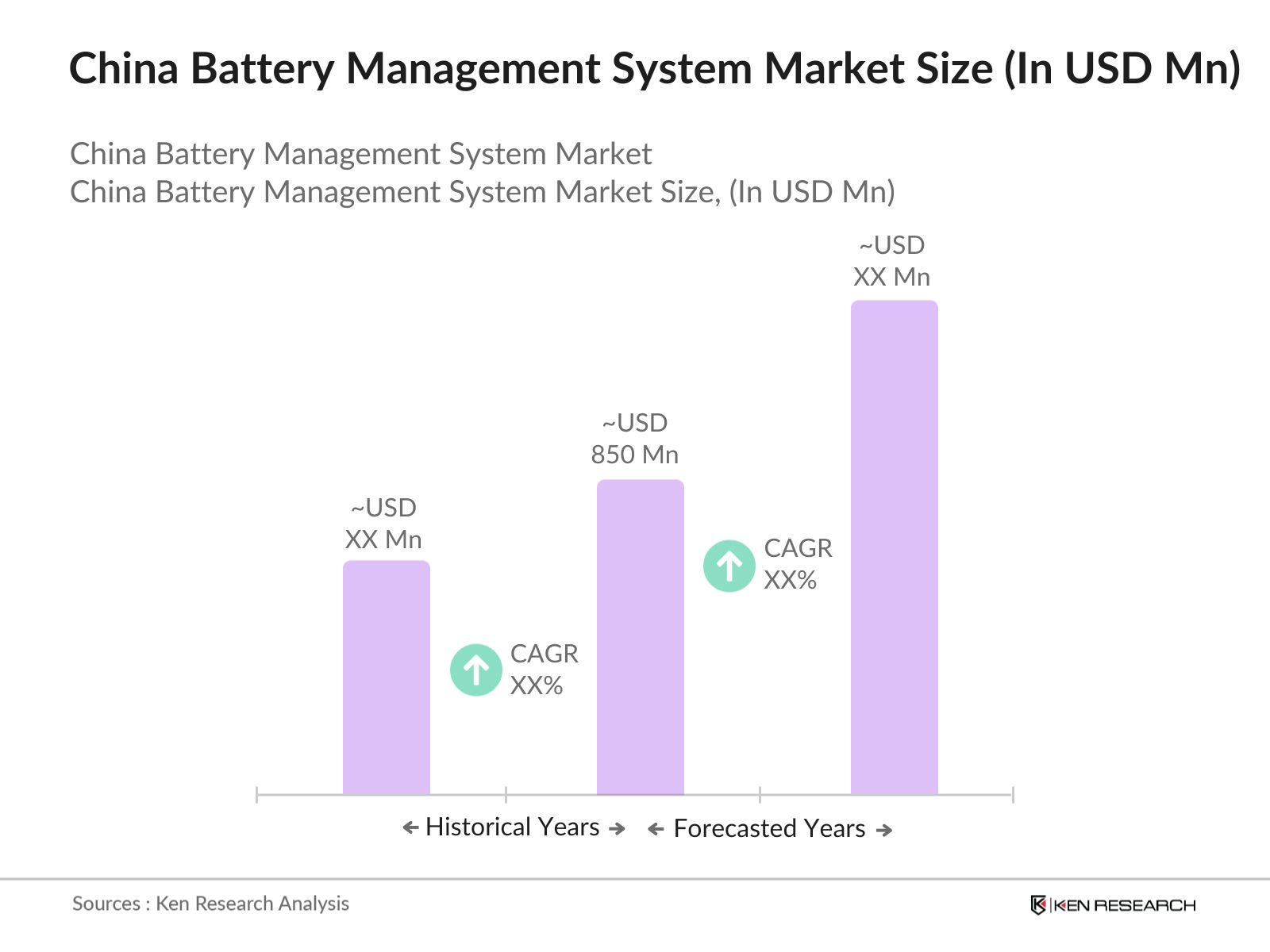
The China Battery Management System Market is valued at USD 850 million, driven by rapid growth in electric vehicles and energy storage applications. The market has seen steady demand due to government incentives and the increasing need for efficient battery solutions.
China Battery Management System market faces challenges such as high initial costs of implementation, lack of standardization across battery systems, and complex technical integration for different applications. Addressing these barriers will be essential for future growth.
Key players in China Battery Management System market include CATL, BYD Company Ltd., Tesla, Inc., NIO Inc., and Panasonic Corporation. These companies dominate the market through advanced technologies and strategic partnerships within the battery manufacturing and electric vehicle sectors.
Key drivers in China Battery Management System Market include the increasing adoption of electric vehicles, government support for renewable energy, advancements in battery technologies, and the rising demand for energy storage systems to support grid stability.

What makes us stand out is that our consultants follows Robust, Refine and Result (RRR) methodology. i.e. Robust for clear definitions, approaches and sanity checking, Refine for differentiating respondents facts and opinions and Result for presenting data with story

We have set a benchmark in the industry by offering our clients with syndicated and customized market research reports featuring coverage of entire market as well as meticulous research and analyst insights.

While we don't replace traditional research, we flip the method upside down. Our dual approach of Top Bottom & Bottom Top ensures quality deliverable by not just verifying company fundamentals but also looking at the sector and macroeconomic factors.

With one step in the future, our research team constantly tries to show you the bigger picture. We help with some of the tough questions you may encounter along the way: How is the industry positioned? Best marketing channel? KPI's of competitors? By aligning every element, we help maximize success.

Our report gives you instant access to the answers and sources that other companies might choose to hide. We elaborate each steps of research methodology we have used and showcase you the sample size to earn your trust.

If you need any support, we are here! We pride ourselves on universe strength, data quality, and quick, friendly, and professional service.