
Europe Animal Feed Additives Market Outlook to 2030
Region:Europe
Author(s):Shreya
Product Code:KROD11332
November 2024
93
About the Report
Europe Animal Feed Additives Market Overview
The Europe animal feed additives market is valued at USD 8.5 billion, driven by the increasing demand for high-quality animal products and the need to enhance livestock health and productivity. The rising consumption of meat and dairy products, coupled with stringent regulations on animal nutrition, has led to a surge in the adoption of feed additives to improve feed efficiency and animal performance. 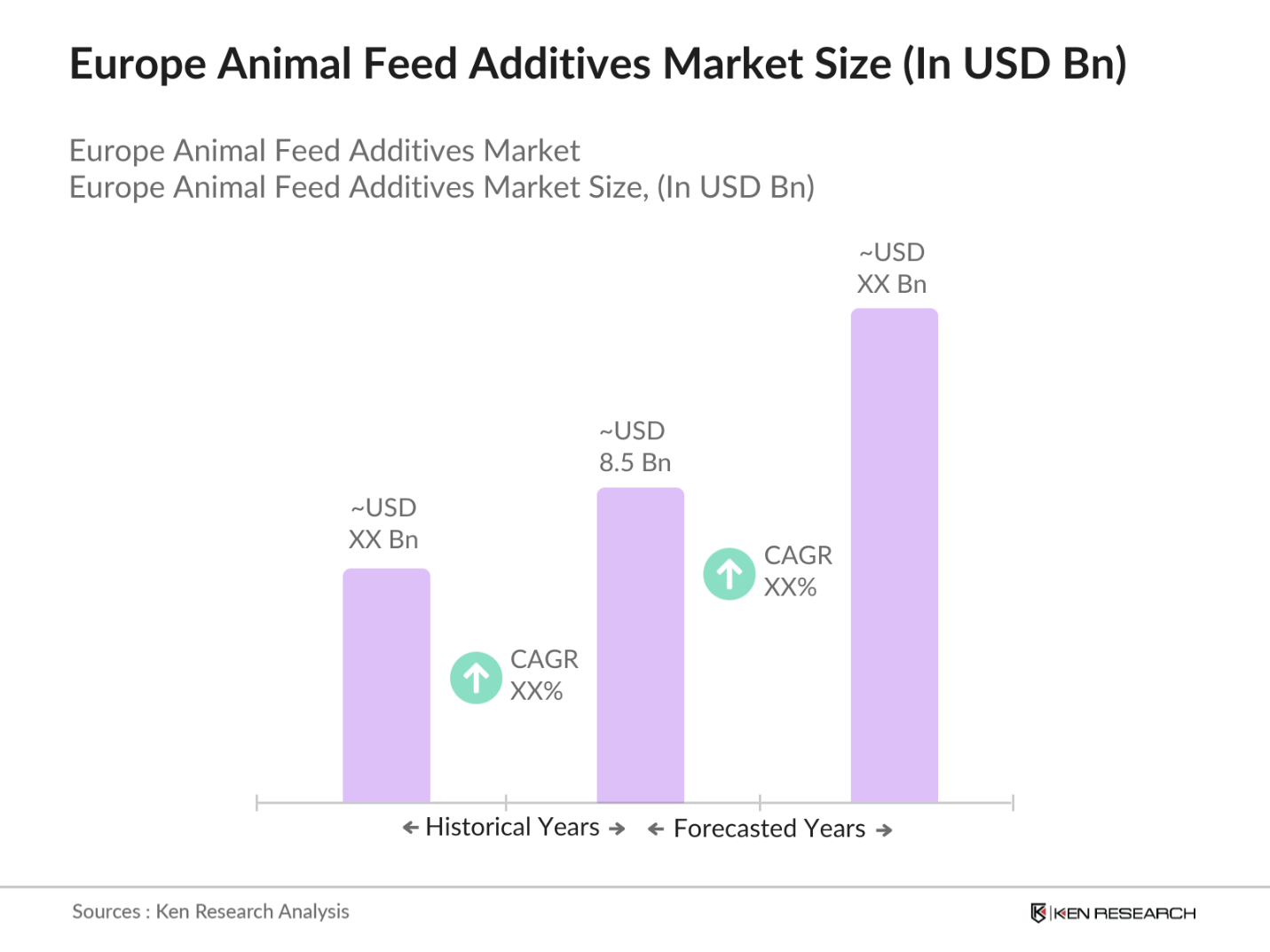
Germany, France, and the United Kingdom are dominant players in the European animal feed additives market. Germany's leadership is attributed to its advanced livestock farming practices and significant investments in animal nutrition research. France's dominance stems from its large-scale poultry and swine industries, while the UK's market strength is due to its stringent animal welfare regulations and high consumer demand for quality meat products.
The European Union's Regulation (EC) No 1831/2003 establishes a comprehensive framework for the authorization, marketing, and use of feed additives within member states. This regulation mandates a thorough evaluation of additives to ensure they are safe for animals, consumers, and the environment. The European Food Safety Authority (EFSA) plays a pivotal role in assessing these additives, providing scientific opinions that inform regulatory decisions. As of April 2023, the European Commission has implemented an online version of the EU Register of Feed Additives, enhancing transparency and accessibility for stakeholders.
Europe Animal Feed Additives Market Segmentation
By Additive Type: The market is segmented by additive type into antibiotics, vitamins, antioxidants, amino acids, enzymes, acidifiers, mycotoxin detoxifiers, prebiotics, probiotics, flavors and sweeteners, pigments, binders, minerals, and emulsifiers. Amino acids hold a dominant market share due to their essential role in protein synthesis and overall animal growth. The inclusion of amino acids in feed formulations enhances feed efficiency and supports optimal animal health, making them indispensable in modern livestock nutrition.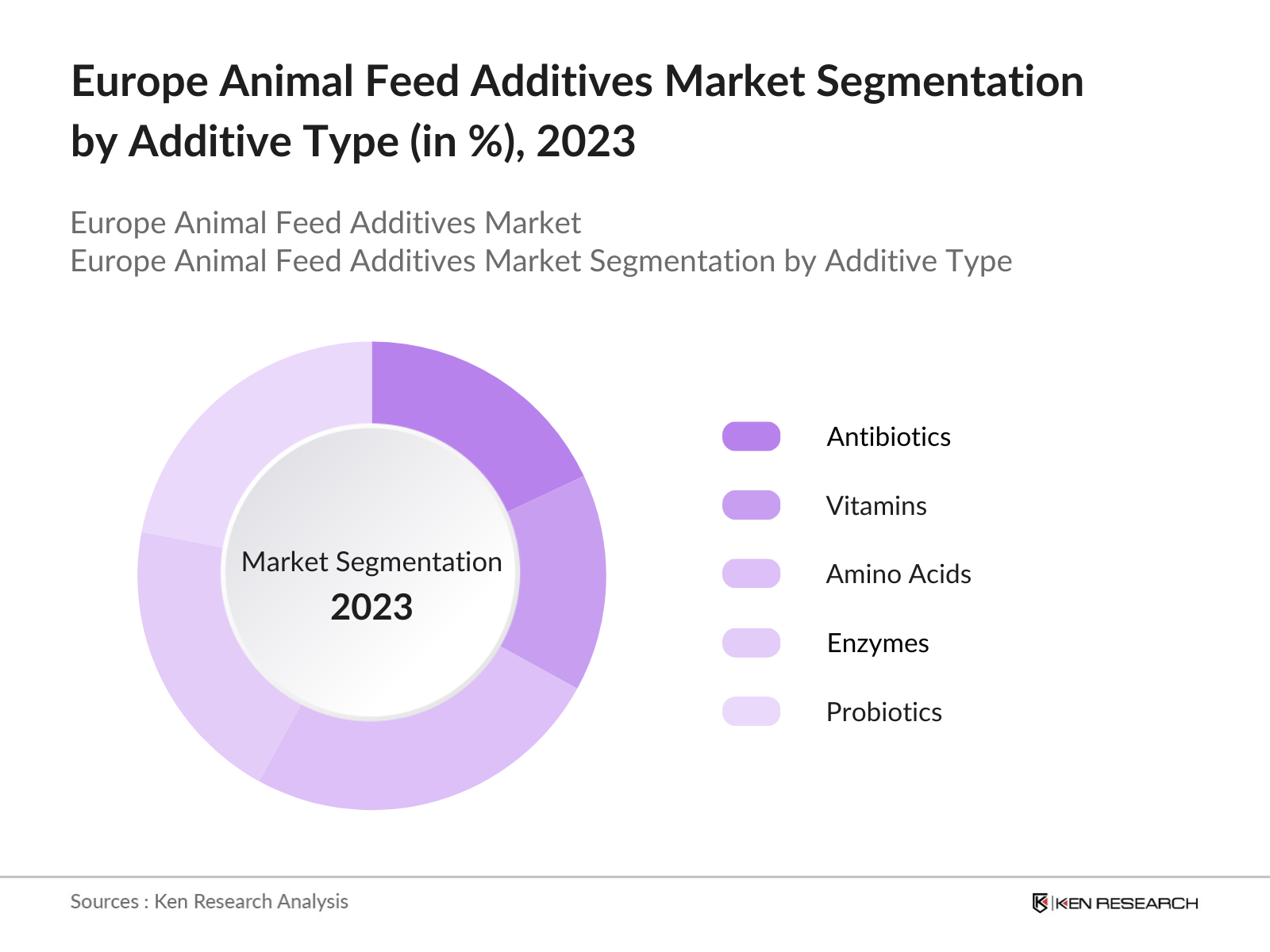
By Livestock: The market is also segmented by livestock into poultry, swine, ruminants, aquaculture, and others. The poultry segment dominates the market, driven by the high consumption of poultry products and the intensive nature of poultry farming. Feed additives are crucial in poultry diets to ensure rapid growth rates, improve feed conversion ratios, and maintain health, thereby meeting the increasing consumer demand for poultry meat and eggs.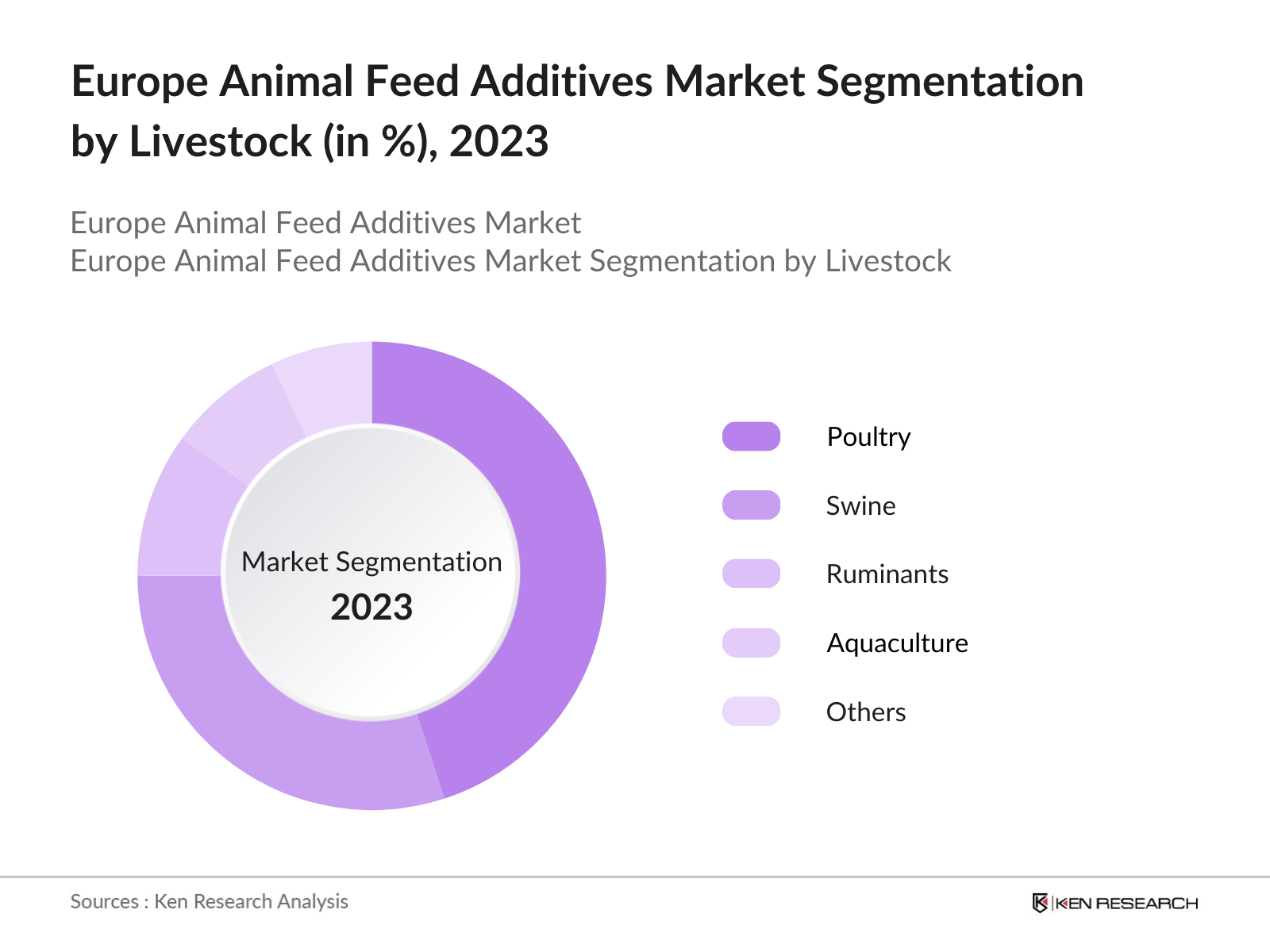
Europe Animal Feed Additives Market Competitive Landscape
The Europe animal feed additives market is characterized by the presence of several key players who contribute to its competitive dynamics. These companies are engaged in continuous research and development to introduce innovative products and expand their market presence.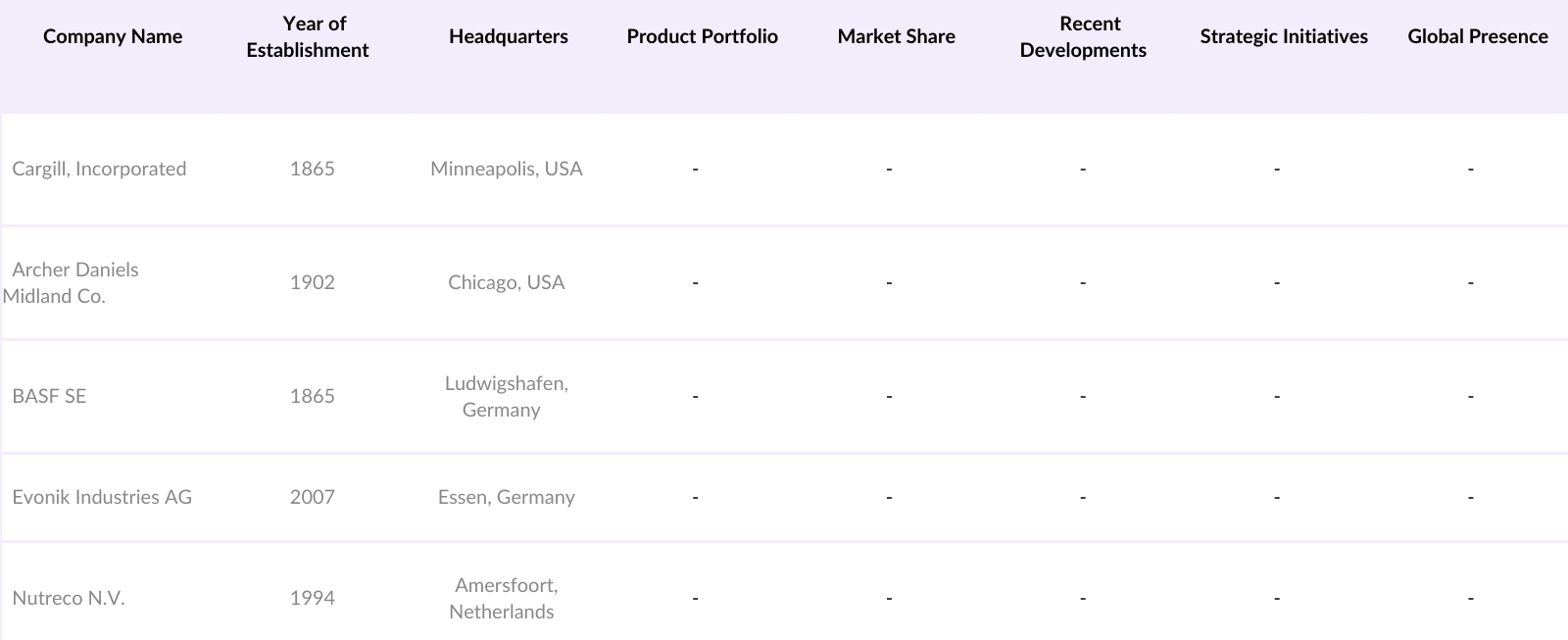
Europe Animal Feed Additives Industry Analysis
Growth Drivers
Increasing Livestock Production: The global livestock sector has experienced significant growth, with the World Bank reporting that livestock production accounts for approximately 40% of the global agricultural output. In 2022, the livestock production index (2014-2016 = 100) for the United States was recorded at 101.5, indicating a steady increase in production levels. This expansion is driven by rising consumer demand for meat and dairy products, particularly in developing countries where income growth is leading to dietary shifts. For instance, Tanzania's cattle population reached 36.6 million, making it the second-largest in Africa, highlighting the region's growing livestock industry.
Rising Demand for Quality Meat and Dairy Products: As global populations grow and urbanize, there is an increasing demand for high-quality meat and dairy products. The World Bank's Food Security Update from October 2024 notes that food price inflation has exceeded overall inflation in 58.9% of 168 countries, underscoring the heightened demand and value placed on food products, including meat and dairy. This surge in demand necessitates enhanced livestock production practices, including the use of effective feed additives to ensure product quality and safety.
Technological Advancements in Feed Additives: The feed additives industry has seen notable technological advancements aimed at improving animal health and productivity. Innovations include the development of phytogenic feed additives derived from herbs and spices, which serve as natural growth promoters. These additives have been shown to enhance feed efficiency and support animal health, offering sustainable alternatives to traditional antibiotics.
Market Challenges
Regulatory Compliance Issues: Navigating the complex regulatory landscape for feed additives poses challenges for manufacturers. The European Food Safety Authority (EFSA) provides detailed guidance on the assessment of feed additives, including safety evaluations for target species, consumers, and the environment. Ensuring compliance with such stringent regulations requires significant investment in research and development, as well as thorough documentation, which can be resource-intensive.
Fluctuating Raw Material Prices: The feed additives industry is susceptible to fluctuations in raw material prices, which can affect production costs and profitability. The World Bank's report on raw material commodity prices indicates that the Agriculture Raw Material Price Index increased marginally in January 2024, following a 1% decline in the fourth quarter of 2023. Such volatility necessitates strategic sourcing and cost management to maintain market stability.
Europe Animal Feed Additives Market Future Outlook
Over the next five years, the Europe animal feed additives market is expected to experience significant growth. This expansion will be driven by increasing consumer awareness regarding animal health, advancements in feed additive technologies, and the implementation of stringent regulations aimed at ensuring food safety and quality. The shift towards natural and organic feed additives is also anticipated to create new opportunities for market players.
Future Market Opportunities
Expansion into Emerging Markets: Emerging markets present significant growth opportunities for the feed additives industry. For instance, Tanzania's livestock sector, with its substantial cattle population, offers potential for increased adoption of feed additives to enhance productivity and meet rising domestic and regional demand. Investing in these markets can lead to substantial returns as livestock production scales up to meet consumer needs.
Strategic Collaborations and Partnerships: Collaborations between feed additive manufacturers, research institutions, and livestock producers can lead to innovative solutions and expanded market reach. Such partnerships facilitate the sharing of knowledge and resources, driving advancements in feed additive technologies and their application in livestock production. This collaborative approach can enhance product development and market penetration, benefiting all stakeholders involved.
Scope of the Report
|
Segment |
Sub-segments |
|---|---|
|
Additive Type |
Antibiotics |
|
Livestock |
Poultry |
|
Form |
Dry |
|
Source |
Natural |
|
Country |
Germany |
Products
Key Target Audience
Livestock Farmers
Animal Nutritionists
Feed Manufacturers
Veterinary Clinics
Government and Regulatory Bodies (e.g., European Food Safety Authority)
Research and Development Institutes
Investors and Venture Capitalist Firms
Agricultural Cooperatives
Companies
Major Players
Cargill, Incorporated
Archer Daniels Midland Company
BASF SE
Evonik Industries AG
Nutreco N.V.
Alltech, Inc.
Kemin Industries, Inc.
Novozymes A/S
DSM Nutritional Products AG
DuPont de Nemours, Inc.
Phibro Animal Health Corporation
Lallemand Inc.
Adisseo France SAS
Sumitomo Chemical Company, Limited
Elanco Animal Health Incorporated
Table of Contents
Market Overview
Definition and Scope
Market Taxonomy
Market Growth Rate
Market Segmentation Overview
Market Size (In USD Billion)
Historical Market Size
Year-On-Year Growth Analysis
Key Market Developments and Milestones
Market Analysis
Growth Drivers
Increasing Livestock Production
Rising Demand for Quality Meat and Dairy Products
Technological Advancements in Feed Additives
Stringent Animal Health Regulations
Market Challenges
High Cost of Additives
Regulatory Compliance Issues
Fluctuating Raw Material Prices
Opportunities
Expansion into Emerging Markets
Development of Natural and Organic Additives
Strategic Collaborations and Partnerships
Trends
Shift Towards Probiotics and Prebiotics
Adoption of Sustainable Feed Practices
Integration of Digital Technologies in Feed Management
Government Regulations
European Union Feed Additives Regulation
National Animal Feed Laws
Import and Export Policies
Compliance and Certification Requirements
SWOT Analysis
Stakeholder Ecosystem
Porters Five Forces Analysis
Competitive Landscape
Market Segmentation
By Additive Type (In Value %)
Antibiotics
Vitamins
Antioxidants
Amino Acids
Enzymes
Acidifiers
Mycotoxin Detoxifiers
Prebiotics
Probiotics
Flavors and Sweeteners
Pigments
Binders
Minerals
Emulsifiers
By Livestock (In Value %)
Poultry
Swine
Ruminants
Aquaculture
Others
By Form (In Value %)
Dry
Liquid
By Source (In Value %)
Natural
Synthetic
By Country (In Value %)
Germany
United Kingdom
France
Spain
Italy
Russia
Rest of Europe
Competitive Analysis
Detailed Profiles of Major Companies
Cargill, Incorporated
Archer Daniels Midland Company
BASF SE
Evonik Industries AG
Nutreco N.V.
Alltech, Inc.
Kemin Industries, Inc.
Novozymes A/S
DSM Nutritional Products AG
DuPont de Nemours, Inc.
Phibro Animal Health Corporation
Lallemand Inc.
Adisseo France SAS
Sumitomo Chemical Company, Limited
Elanco Animal Health Incorporated
Cross Comparison Parameters
Number of Employees
Headquarters Location
Year of Establishment
Annual Revenue
Product Portfolio
Market Share
Recent Developments
Strategic Initiatives
Market Share Analysis
Strategic Initiatives
Mergers and Acquisitions
Investment Analysis
Venture Capital Funding
Government Grants
Private Equity Investments
Regulatory Framework
European Food Safety Authority (EFSA) Guidelines
Registration and Approval Processes
Labeling and Packaging Regulations
Compliance and Monitoring Mechanisms
Future Market Size (In USD Billion)
Future Market Size Projections
Key Factors Driving Future Market Growth
Future Market Segmentation
By Additive Type (In Value %)
By Livestock (In Value %)
By Form (In Value %)
By Source (In Value %)
By Country (In Value %)
Analysts Recommendations
Total Addressable Market (TAM), Serviceable Available Market (SAM), and Serviceable Obtainable Market (SOM) Analysis
Customer Segmentation and Targeting Strategies
Marketing and Branding Initiatives
Identification of Untapped Market Opportunities
Disclaimer Contact UsResearch Methodology
Step 1: Identification of Key Variables
The initial phase involves constructing an ecosystem map encompassing all major stakeholders within the Europe animal feed additives market. This step is underpinned by extensive desk research, utilizing a combination of secondary and proprietary databases to gather comprehensive industry-level information. The primary objective is to identify and define the critical variables that influence market dynamics.
Step 2: Market Analysis and Construction
In this phase, we compile and analyze historical data pertaining to the Europe animal feed additives market. This includes assessing market penetration, the ratio of marketplaces to service providers, and the resultant revenue generation. Furthermore, an evaluation of service quality statistics is conducted to ensure the reliability and accuracy of the revenue estimates.
Step 3: Hypothesis Validation and Expert Consultation
Market hypotheses are developed and subsequently validated through computer-assisted telephone interviews (CATIs) with industry experts representing a diverse array of companies. These consultations provide valuable operational and financial insights directly from industry practitioners, which are instrumental in refining and corroborating the market data.
Step 4: Research Synthesis and Final Output
The final phase involves direct engagement with multiple feed additive manufacturers to acquire detailed insights into product segments, sales performance, consumer preferences, and other pertinent factors. This interaction serves to verify and complement the statistics derived from the bottom-up approach, thereby ensuring a comprehensive, accurate, and validated analysis of the Europe animal feed additives market.
Frequently Asked Questions
How big is the Europe animal feed additives market?
The Europe animal feed additives market is valued at USD 8.5 billion, driven by the increasing demand for high-quality animal products and the need to enhance livestock health and productivity.
What are the challenges in the Europe animal feed additives market?
Challenges in the Europe animal feed additives market include high costs of additives, regulatory compliance issues, and fluctuating raw material prices. Additionally, the growing consumer preference for natural and organic products poses a challenge for synthetic additive manufacturers.
Who are the major players in the Europe animal feed additives market?
Key players in the Europe animal feed additives market include Cargill, Incorporated; Archer Daniels Midland Company; BASF SE; Evonik Industries AG; and Nutreco N.V. These companies dominate the market due to their extensive product portfolios, advanced research capabilities, and strong distribution networks across Europe.
What are the growth drivers of the Europe animal feed additives market?
The Europe animal feed additives market is propelled by increasing livestock production, the rising demand for high-quality meat and dairy products, and stringent regulations on animal health and nutrition. Additionally, advancements in feed additive formulations and a growing emphasis on animal welfare are boosting market demand.
What are the emerging trends in the Europe animal feed additives market?
Emerging trends in the Europe animal feed additives market include the shift towards natural and organic feed additives, the increasing adoption of sustainable feed practices, and the integration of digital technologies for precision feeding. These trends align with the broader movement towards sustainable agriculture in Europe, driven by consumer demand and regulatory pressures.
Why Buy From Us?

What makes us stand out is that our consultants follows Robust, Refine and Result (RRR) methodology. i.e. Robust for clear definitions, approaches and sanity checking, Refine for differentiating respondents facts and opinions and Result for presenting data with story

We have set a benchmark in the industry by offering our clients with syndicated and customized market research reports featuring coverage of entire market as well as meticulous research and analyst insights.

While we don't replace traditional research, we flip the method upside down. Our dual approach of Top Bottom & Bottom Top ensures quality deliverable by not just verifying company fundamentals but also looking at the sector and macroeconomic factors.

With one step in the future, our research team constantly tries to show you the bigger picture. We help with some of the tough questions you may encounter along the way: How is the industry positioned? Best marketing channel? KPI's of competitors? By aligning every element, we help maximize success.

Our report gives you instant access to the answers and sources that other companies might choose to hide. We elaborate each steps of research methodology we have used and showcase you the sample size to earn your trust.

If you need any support, we are here! We pride ourselves on universe strength, data quality, and quick, friendly, and professional service.