
Europe Artificial Flowers Market Outlook to 2030
Region:Europe
Author(s):Paribhasha Tiwari
Product Code:KROD5826
November 2024
93
About the Report
Europe Artificial Flowers Market Overview
- The Europe Artificial Flowers market is currently valued at USD 726 million, driven by several factors including the increasing consumer preference for durable, cost-effective alternatives to fresh flowers. Artificial flowers offer long-lasting aesthetics, contributing to their popularity in households, commercial establishments, and event planning sectors. The market has grown steadily over the past five years, largely due to their low maintenance, environmental sustainability, and the development of eco-friendly materials such as recyclable plastic and silk.
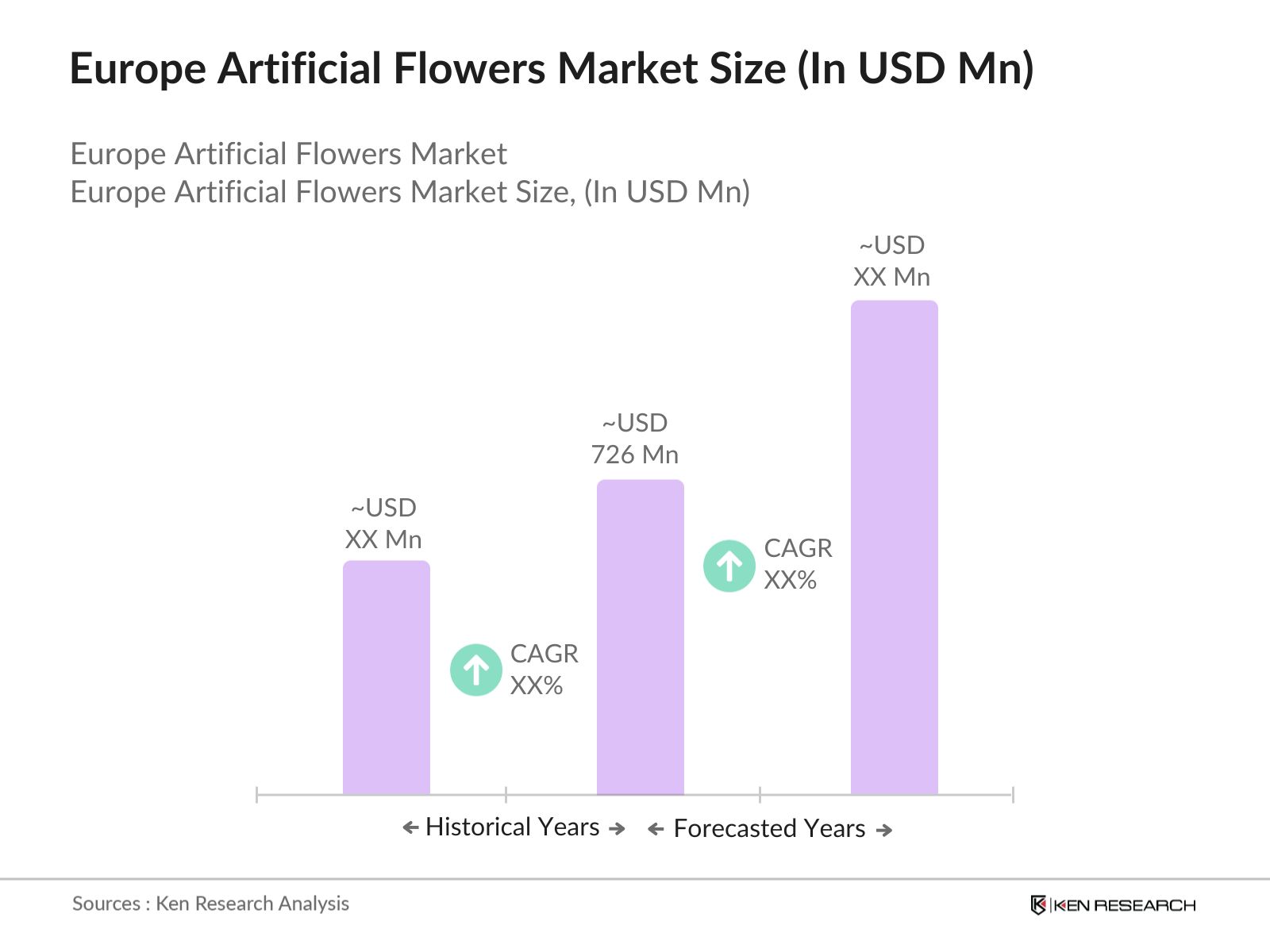
- Several countries, including Germany, the United Kingdom, and France, dominate the Europe Artificial Flowers market due to their well-established retail sectors, strong consumer demand for seasonal and event-related decorations, and the prevalence of large-scale events. Germanys sophisticated market for event decor, along with the UKs expanding online retail channels, has cemented their leading positions in the market. These countries are also home to some of the most significant artificial flower manufacturers and distributors.
- In 2024, European governments have continued to roll out initiatives aimed at supporting SMEs, which make up a significant portion of the artificial flower manufacturing sector. Programs such as the EUs SME Instrument have provided funding and resources to help small businesses scale up their operations and improve their market reach. This has been particularly beneficial for artificial flower producers in countries like Spain and Portugal, where the SME sector plays a crucial role in local economies.
Europe Artificial Flowers Market Segmentation
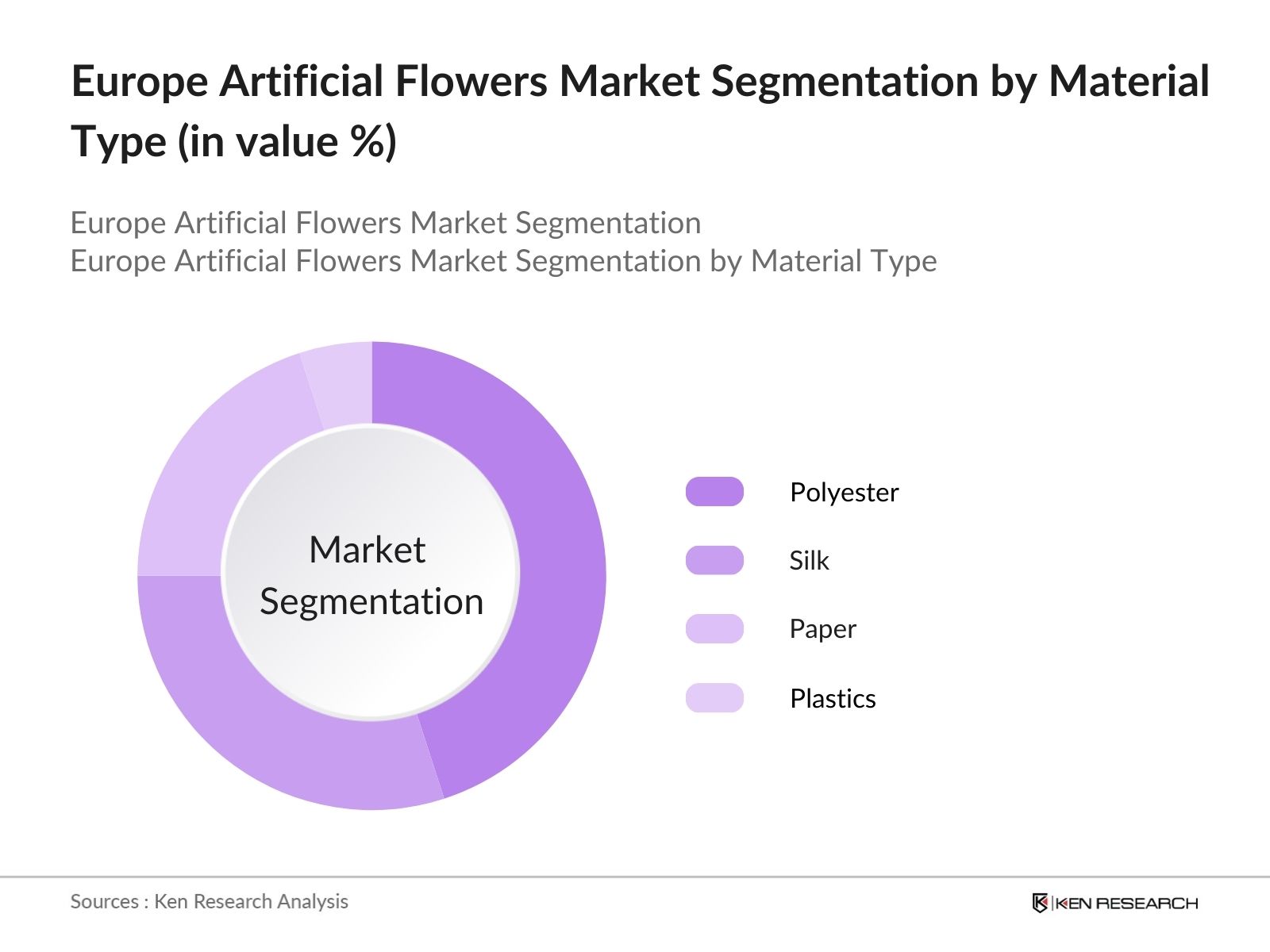
- By Material Type: The Europe Artificial Flowers market is segmented by material type into polyester, silk, paper, and plastic. Polyester dominates the market due to its low cost and durability, making it an attractive option for both residential and commercial uses. Polyester flowers have gained popularity in households and event management because they are cost-effective, easy to clean, and available in a wide range of designs. This material also mimics the appearance of real flowers, making it the top choice for consumers seeking affordability without compromising on aesthetics.
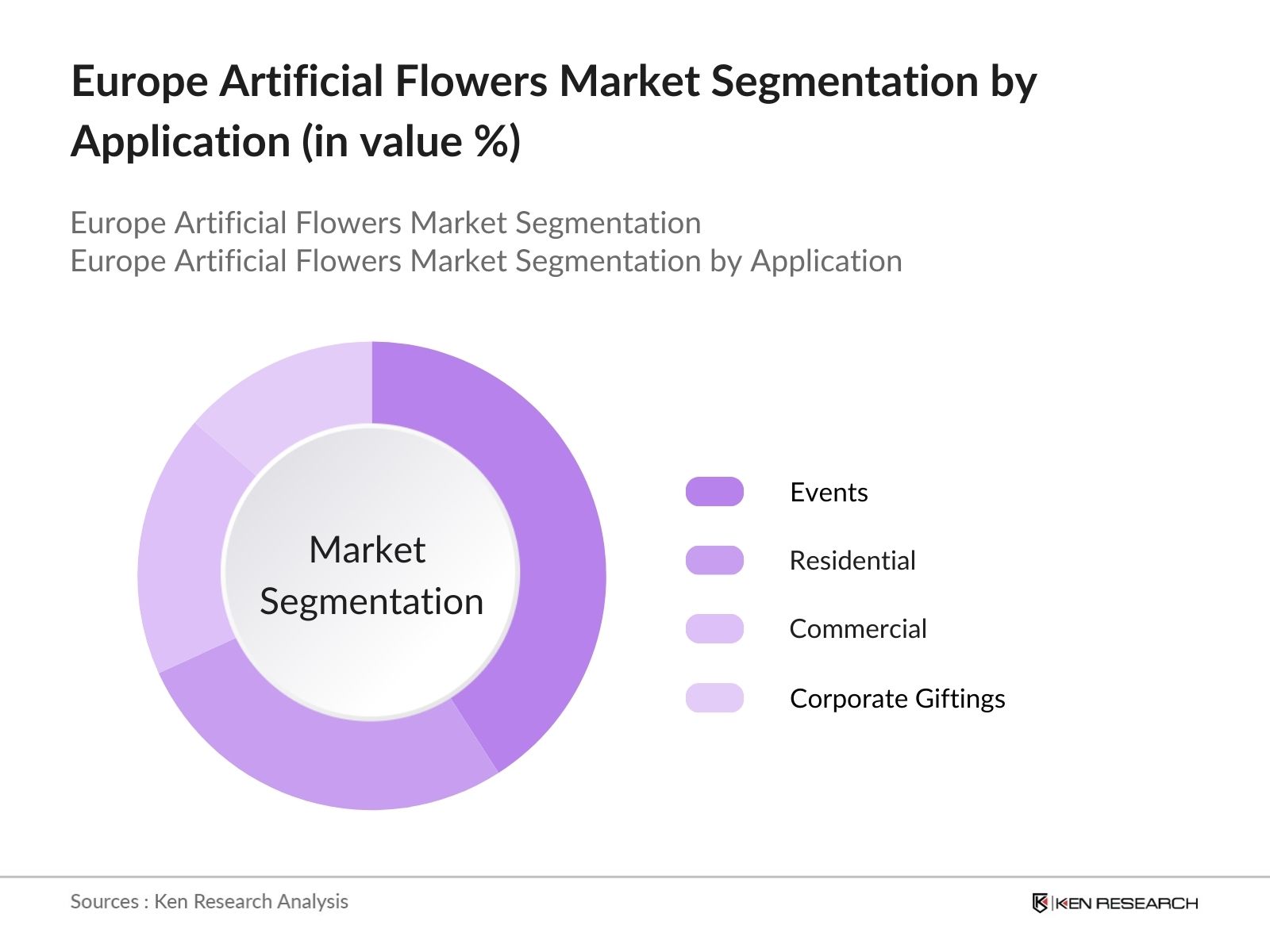
- By Application: The market is segmented by application into residential, commercial, events, and corporate gifting. The events segment holds the largest market share as artificial flowers have become a staple in event decor for weddings, corporate functions, and seasonal festivals. Their reusability, cost-effectiveness, and availability in bulk quantities make them the preferred choice for event planners. Artificial flowers also reduce logistical concerns associated with fresh flowers, such as wilting, perishability, and seasonal availability, thus increasing their use in the events sector.
Europe Artificial Flowers Market Competitive Landscape
The Europe Artificial Flowers market is dominated by a mix of well-established international companies and local players, contributing to a diverse competitive landscape. Leading companies have focused on expanding their product lines, introducing eco-friendly alternatives, and leveraging digital marketing strategies to attract a larger customer base. The competition in the market has led to innovations in material quality, design, and sustainability.
|
Company Name |
Year of Establishment |
Headquarters |
Product Range |
Key Clients |
Sustainability Initiatives |
R&D Expenditure |
Customization Options |
Number of Retail Stores |
E-commerce Presence |
|
Nearly Natural |
2002 |
United States |
- | - | - | - | - | - | - |
|
Euroflorist |
1982 |
Netherlands |
- | - | - | - | - | - | - |
|
Flora Holland |
1911 |
Netherlands |
- | - | - | - | - | - | - |
|
IKEA |
1943 |
Sweden |
- | - | - | - | - | - | - |
|
Prestige Botanicals |
1989 |
Ireland |
- | - | - | - | - | - | - |
Europe Artificial Flowers Market Analysis
Makret Growth Drivers
- Shifting Consumer Preferences Towards Sustainable Decor: In 2024, there has been a notable shift in consumer behavior across Europe toward sustainable, eco-friendly home dcor options. Artificial flowers made from biodegradable materials or recycled products have gained traction due to increased awareness of environmental sustainability. This has been particularly prevalent in countries like Germany and the UK, where consumers increasingly prefer long-lasting dcor over short-lived, fresh flower alternatives. The adoption of these artificial flowers is driven by their reusability and the lower environmental impact compared to fresh flowers, aligning with broader eco-conscious consumer trends across Europe.
- Rising Demand for Cost-Effective Aesthetic Solutions: The rising cost of living across Europe, particularly in major urban areas like Paris and London, has driven consumers to seek cost-effective yet visually appealing home dcor solutions. Artificial flowers provide a low-cost alternative to fresh flowers without compromising on aesthetics, making them a popular choice for households and small businesses. Data from 2024 shows a significant increase in sales of artificial flowers through discount stores and online platforms, with many consumers opting for these products for both home dcor and gifting purposes.
- Increased Adoption of Artificial Flowers in Event Planning: The European event planning industry, valued at several billion euros annually, has seen a growing adoption of artificial flowers. Artificial flowers offer event organizers the advantage of durability and low maintenance, which is crucial for large-scale events such as weddings, corporate functions, and exhibitions. In 2024, event organizers in countries like Italy and Spain are increasingly incorporating artificial flowers into their designs, both for cost control and aesthetic longevity, especially for multi-day events.
Market Challenges
- Fresh Flower Market Competition: In 2024, the fresh flower market remains a significant competitor for artificial flowers, particularly in regions like the Netherlands, where fresh flowers are deeply embedded in cultural and economic activities. The Dutch floriculture industry, which is among the largest in Europe, continues to dominate, with consumers preferring fresh flowers for their natural fragrance and traditional appeal. This preference poses a challenge for artificial flower manufacturers trying to penetrate markets that prioritize fresh, locally grown flowers.
- Difficulty in Market Penetration for Premium Artificial Flowers: Premium artificial flowers, made from higher-end materials like silk, face challenges in gaining traction in the European market. While affordable artificial flowers are popular, the luxury segment remains niche. Data from 2024 indicates that high-end consumers still favor luxury fresh flowers over artificial options due to the perceived prestige and exclusivity of real flowers. This makes market penetration difficult for premium artificial flower brands, particularly in affluent European cities like Zurich and Monaco.
Europe Artificial Flowers Market Future Outlook
Over the next five years, the Europe Artificial Flowers market is expected to experience significant growth, driven by several factors including the increased demand for sustainable decor, advancements in material technology, and the rise of e-commerce platforms. The growing awareness of environmental issues is pushing consumers to opt for eco-friendly artificial flowers made from recyclable or biodegradable materials. Additionally, innovations in the design and production processes, along with the increasing use of artificial flowers in the events and hospitality sectors, are anticipated to drive market growth further.
Market Opportunities
- Growing Online Retail Channels: In 2024, e-commerce platforms have become a dominant sales channel for artificial flowers across Europe, offering a convenient way for consumers to browse a wide variety of products. Online platforms such as Amazon and Etsy have seen a significant increase in sales of artificial flowers, driven by the ease of home delivery and the ability to source products from different parts of Europe. This has opened up opportunities for small and medium enterprises (SMEs) to reach a broader customer base, particularly in rural areas where access to physical stores is limited.
- Customization Services for High-End Consumers: Customization services have emerged as a growth area within the European artificial flowers market, particularly for high-end consumers. In 2024, companies are offering tailored designs and personalized artificial flower arrangements for weddings, corporate events, and luxury home dcor. This trend is particularly strong in markets like France and Italy, where high-end consumers are willing to pay a premium for bespoke artificial flower arrangements that suit their specific design preferences.
Scope of the Report
|
By Material Type |
Polyester Silk Paper Plastic |
|
By Application |
Residential Commercial Events Corporate Gifting |
|
By Sales Channel |
Online Specialty Stores Supermarkets & Hypermarkets Florists |
|
By End-User |
Household Decor Hospitality Event Management Office Spaces |
|
By Region |
West East South North |
Products
Key Target Audience
Artificial Flower Manufacturers
E-commerce Retailers
Event Management Companies
Corporate Gifting Firms
Interior Designers
Investors and Venture Capitalist Firms
Government and Regulatory Bodies (European Union Environmental Compliance Agency)
Import and Export Businesses
Companies
Players Mentioned in the Report:
Nearly Natural
Euroflorist
Flora Holland
IKEA
Prestige Botanicals
The Flower Factory
Trevenque Artificial Plants & Flowers
NDI Silk Plants
Silk-ka
Blume 2000
Table of Contents
1. Europe Artificial Flowers Market Overview
1.1 Definition and Scope
1.2 Market Taxonomy
1.3 Market Growth Rate
1.4 Market Segmentation Overview
2. Europe Artificial Flowers Market Size (In USD Mn)
2.1 Historical Market Size
2.2 Year-On-Year Growth Analysis
2.3 Key Market Developments and Milestones
3. Europe Artificial Flowers Market Analysis
3.1 Growth Drivers (Consumer Preferences, Seasonal Demand, Advancements in Manufacturing Techniques, Eco-Friendly Alternatives)
3.1.1 Shifting Consumer Preferences Towards Sustainable Decor
3.1.2 Rising Demand for Cost-Effective Aesthetic Solutions
3.1.3 Increased Adoption of Artificial Flowers in Event Planning
3.1.4 Durability and Low Maintenance as Key Purchase Motivators
3.2 Market Challenges (Competition from Fresh Flowers, Lack of Awareness in Niche Segments, Limited Customization Options, High Shipping Costs)
3.2.1 Fresh Flower Market Competition
3.2.2 Difficulty in Market Penetration for Premium Artificial Flowers
3.2.3 Limited Consumer Knowledge on Material Differentiation
3.2.4 Logistical and Import Tariff Barriers
3.3 Opportunities (Expanding E-commerce, Increasing Customization, Rising Popularity of Corporate Gifting, Growth of Wedding & Event Planning Industry)
3.3.1 Growing Online Retail Channels
3.3.2 Customization Services for High-End Consumers
3.3.3 Corporate Gifting Trends
3.3.4 Expansion into European Wedding Market
3.4 Trends (Use of Eco-Friendly Materials, Hybrid Flower Arrangements, Digital Marketing Innovations, Seasonal Home Decor Popularity)
3.4.1 Use of Recyclable and Biodegradable Materials
3.4.2 Integration of Artificial Flowers with Real Flowers in Decor
3.4.3 Influencer Marketing and Social Media Engagement
3.4.4 Popularity of Seasonal Artificial Flower Collections
3.5 Government Regulation (Import Duties on Synthetic Materials, Trade Regulations, European Union Standards on Artificial Plant Materials, Sustainability Regulations)
3.5.1 Import and Export Regulations for Synthetic Flowers
3.5.2 EU Standardization in Artificial Flower Manufacturing
3.5.3 Environmental Compliance for Non-Recyclable Materials
3.5.4 Market Regulations on Sustainability in Decorative Items
3.6 SWOT Analysis
3.7 Stake Ecosystem
3.8 Porters Five Forces Analysis (Supplier Power, Buyer Power, Threat of Substitutes, Industry Rivalry, Barriers to Entry)
3.9 Competition Ecosystem
4. Europe Artificial Flowers Market Segmentation
4.1 By Material Type (In Value %)
4.1.1 Polyester
4.1.2 Silk
4.1.3 Paper
4.1.4 Plastic
4.2 By Application (In Value %)
4.2.1 Residential
4.2.2 Commercial
4.2.3 Events
4.2.4 Corporate Gifting
4.3 By Sales Channel (In Value %)
4.3.1 Online
4.3.2 Specialty Stores
4.3.3 Supermarkets & Hypermarkets
4.3.4 Florists
4.4 By End-User (In Value %)
4.4.1 Household Decor
4.4.2 Hospitality
4.4.3 Event Management
4.4.4 Office Spaces
4.5 By Region (In Value %)
4.5.1 West
4.5.2 East
4.5.3 South
4.5.4 North
5. Europe Artificial Flowers Market Competitive Analysis
5.1 Detailed Profiles of Major Companies
5.1.1 Nearly Natural
5.1.2 Euroflorist
5.1.3 Trevenque Artificial Plants & Flowers
5.1.4 IKEA
5.1.5 Flora Holland
5.1.6 Floradecora
5.1.7 The Flower Factory
5.1.8 NDI Silk Plants
5.1.9 Prestige Botanicals
5.1.10 Habitus
5.1.11 Oogenlust
5.1.12 Blooms Artificial
5.1.13 Blume 2000
5.1.14 Petaloom
5.1.15 Silk-ka
5.2 Cross Comparison Parameters (Material Used, Number of Product Lines, Customization Options, Geographical Reach, Delivery Channels, Customer Segments, Sustainability Practices, Price Range)
5.3 Market Share Analysis
5.4 Strategic Initiatives
5.5 Mergers and Acquisitions
5.6 Investment Analysis
5.7 Venture Capital Funding
5.8 Government Grants
5.9 Private Equity Investments
6. Europe Artificial Flowers Market Regulatory Framework
6.1 European Standards on Artificial Plant Safety
6.2 Import Tariffs on Synthetic Materials
6.3 Sustainability Certifications
7. Europe Artificial Flowers Future Market Size (In USD Mn)
7.1 Future Market Size Projections
7.2 Key Factors Driving Future Market Growth
8. Europe Artificial Flowers Future Market Segmentation
8.1 By Material Type (In Value %)
8.2 By Application (In Value %)
8.3 By Sales Channel (In Value %)
8.4 By End-User (In Value %)
8.5 By Region (In Value %)
9. Europe Artificial Flowers Market Analysts Recommendations
9.1 TAM/SAM/SOM Analysis
9.2 Customer Cohort Analysis
9.3 Marketing Initiatives
9.4 White Space Opportunity Analysis
Disclaimer Contact UsResearch Methodology
Step 1: Identification of Key Variables
The initial step involves identifying the key variables that shape the Europe Artificial Flowers market. This includes analyzing the supply chain, stakeholder ecosystem, and market drivers such as consumer demand, pricing trends, and regulatory policies. Desk research was conducted using secondary data sources to establish a clear understanding of these variables.
Step 2: Market Analysis and Construction
This phase focuses on gathering historical market data related to the Europe Artificial Flowers market. The data, sourced from databases such as Eurostat, provides insights into the market structure, the ratio of product segments, and revenue streams. This data is cross-verified with sales figures from key players and industry associations.
Step 3: Hypothesis Validation and Expert Consultation
In this step, hypotheses based on the gathered data are validated through expert interviews with manufacturers, retailers, and event planners. These consultations provide operational insights and ensure the reliability of the market data.
Step 4: Research Synthesis and Final Output
The final phase synthesizes the data gathered from both secondary research and expert interviews. This ensures a comprehensive analysis of the Europe Artificial Flowers market, which is presented in this detailed report.
Frequently Asked Questions
01. How big is the Europe Artificial Flowers Market?
The Europe Artificial Flowers Market is valued at USD 726 million, driven by increasing consumer demand for eco-friendly, low-maintenance floral solutions.
02. What are the challenges in the Europe Artificial Flowers Market?
Challenges in the Europe Artificial Flowers Market include competition from the fresh flower market, high logistical costs for international shipping, and consumer perceptions regarding the quality of artificial flowers.
03. Who are the major players in the Europe Artificial Flowers Market?
Key players in the Europe Artificial Flowers Market include Nearly Natural, Euroflorist, Flora Holland, IKEA, and Prestige Botanicals. These companies have a strong foothold in the market due to their expansive product portfolios and sustainability initiatives.
04. What are the growth drivers of the Europe Artificial Flowers Market?
Growth drivers in the Europe Artificial Flowers Market include the increased use of artificial flowers in the event management sector, the rising popularity of e-commerce platforms for purchasing home decor, and the shift towards sustainable and durable alternatives to fresh flowers.
Why Buy From Us?

What makes us stand out is that our consultants follows Robust, Refine and Result (RRR) methodology. i.e. Robust for clear definitions, approaches and sanity checking, Refine for differentiating respondents facts and opinions and Result for presenting data with story

We have set a benchmark in the industry by offering our clients with syndicated and customized market research reports featuring coverage of entire market as well as meticulous research and analyst insights.

While we don't replace traditional research, we flip the method upside down. Our dual approach of Top Bottom & Bottom Top ensures quality deliverable by not just verifying company fundamentals but also looking at the sector and macroeconomic factors.

With one step in the future, our research team constantly tries to show you the bigger picture. We help with some of the tough questions you may encounter along the way: How is the industry positioned? Best marketing channel? KPI's of competitors? By aligning every element, we help maximize success.

Our report gives you instant access to the answers and sources that other companies might choose to hide. We elaborate each steps of research methodology we have used and showcase you the sample size to earn your trust.

If you need any support, we are here! We pride ourselves on universe strength, data quality, and quick, friendly, and professional service.