
Europe Astaxanthin Market Outlook to 2030
Region:Europe
Author(s):Paribhasha Tiwari
Product Code:KROD5532
December 2024
90
About the Report
Europe Astaxanthin Market Overview
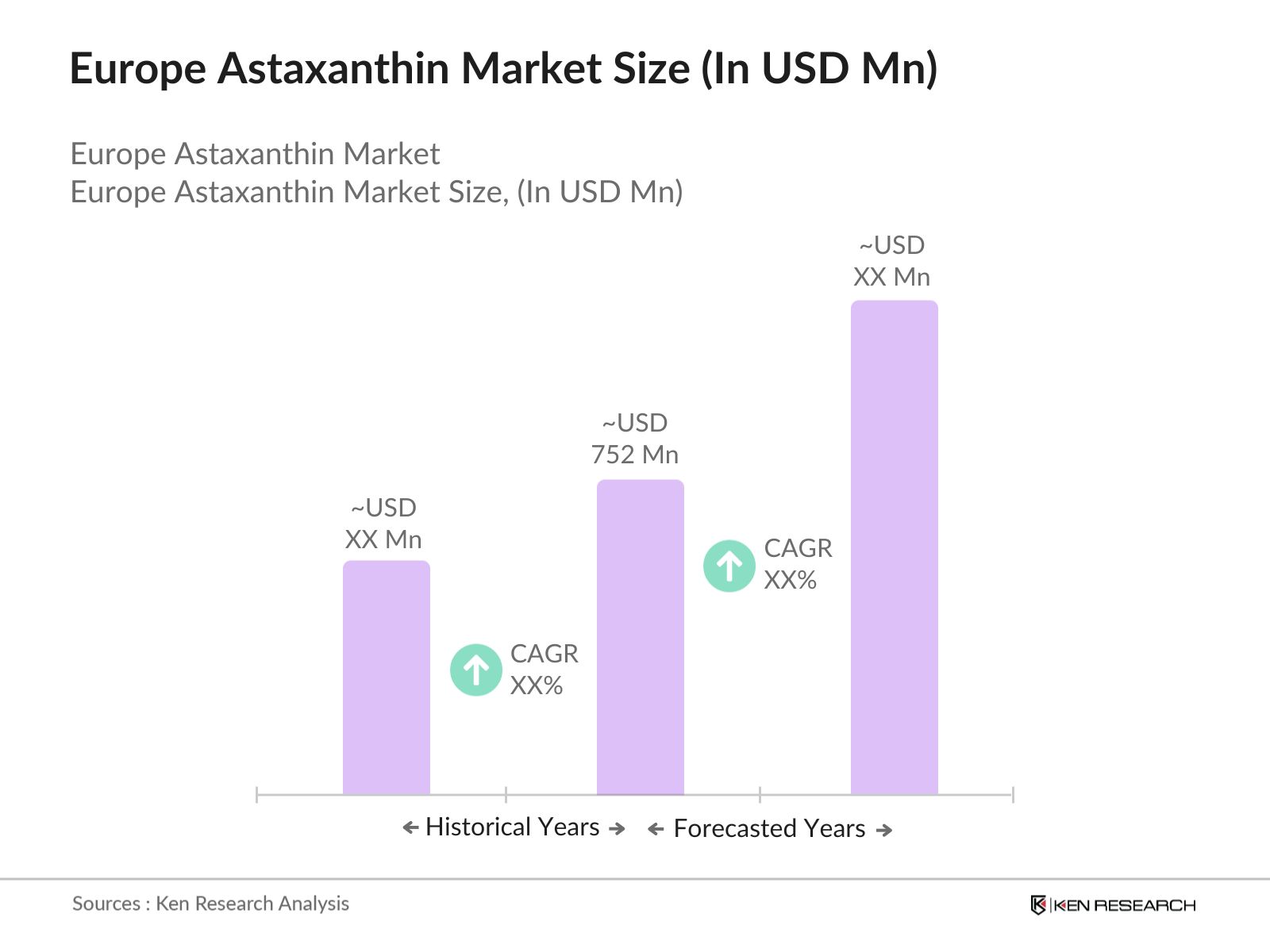
- The Europe Astaxanthin market is valued at USD 752 million, driven by increasing demand across industries such as nutraceuticals, cosmetics, and aquaculture. The market has seen consistent growth over the past five years due to the rising awareness of astaxanthin's antioxidant properties and its benefits for skin health, vision, and overall wellness. Nutraceutical companies have capitalized on this trend, resulting in steady demand for natural astaxanthin derived from microalgae, particularly in supplements and skincare products. The ongoing preference for natural ingredients across the food and cosmetic sectors has been a significant driver of the markets expansion.
- Germany, France, and the Netherlands dominate the Europe Astaxanthin market due to their robust biotechnology and aquaculture industries. Germanys advanced biotechnological research capabilities have supported large-scale production, particularly in natural astaxanthin from algae. Frances thriving cosmetics market has also driven demand, especially for anti-aging and skin-enhancing products. The Netherlands, with its extensive aquaculture industry, is a leading consumer of synthetic astaxanthin, which is used as a feed additive to enhance the pigmentation of farmed fish, especially salmon. These countries are also key centers of innovation, further boosting their dominance.
- The European Commission has introduced harmonized regulations across the member states to streamline the approval process for natural ingredients like astaxanthin. In 2024, the European Food Safety Authority (EFSA) adopted new guidelines that simplify the approval of astaxanthin for use in functional foods and nutraceuticals. This initiative is expected to reduce the time and cost associated with bringing new products to market, benefiting manufacturers of astaxanthin-based supplements and foods.
Europe Astaxanthin Market Segmentation
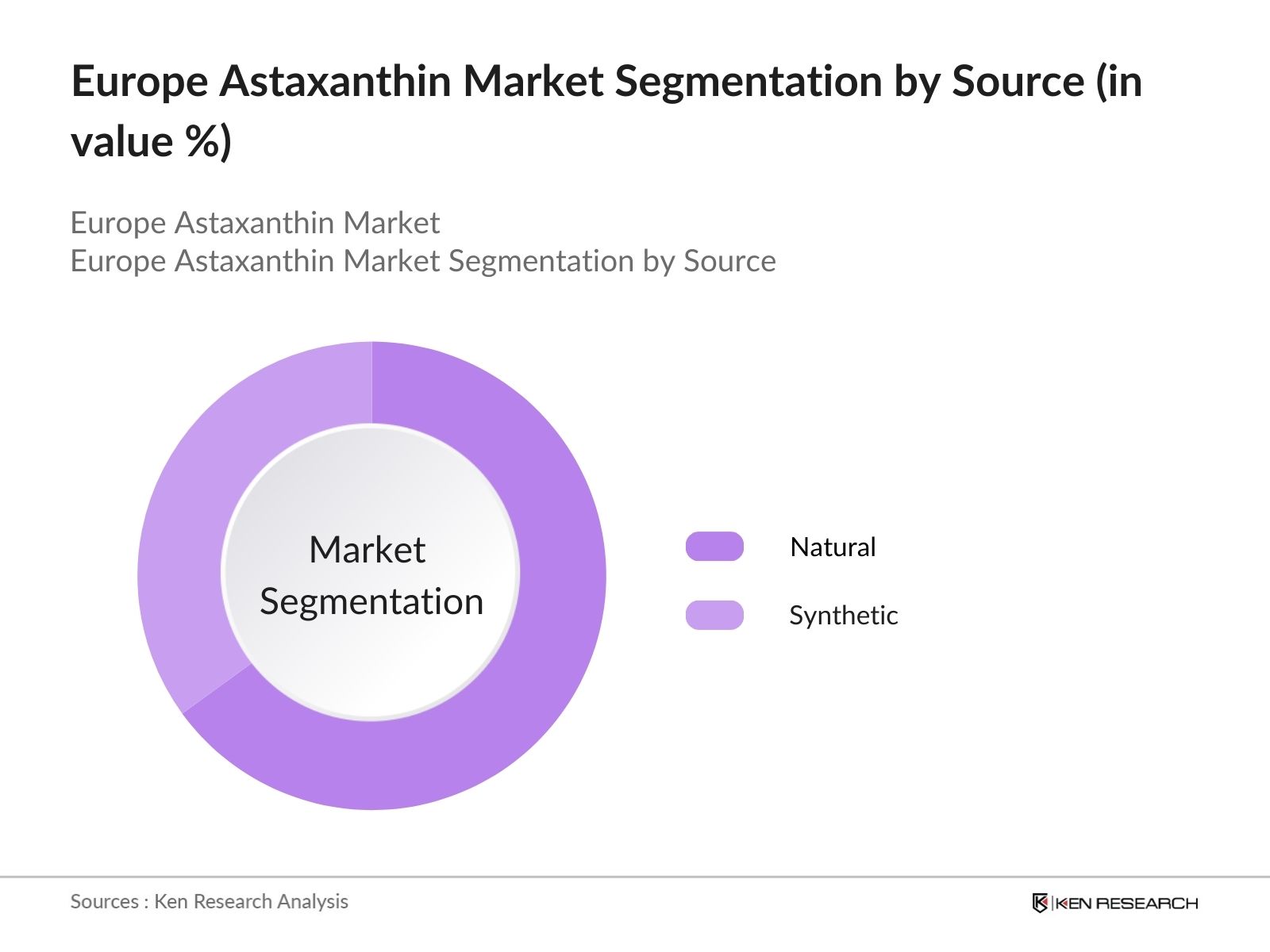
By Source: Europes Astaxanthin market is segmented by source into natural and synthetic forms. Natural astaxanthin dominates due to its popularity in health supplements and cosmetics. Derived mainly from microalgae like Haematococcus pluvialis, natural astaxanthin is preferred for its potent antioxidant effects and clean-label appeal. In contrast, synthetic astaxanthin, although more affordable, is primarily used in the aquaculture industry to enhance the coloration of farmed fish such as salmon. The growth in demand for natural products in food, nutraceuticals, and cosmetics is a key factor behind the dominance of natural astaxanthin in this segment.
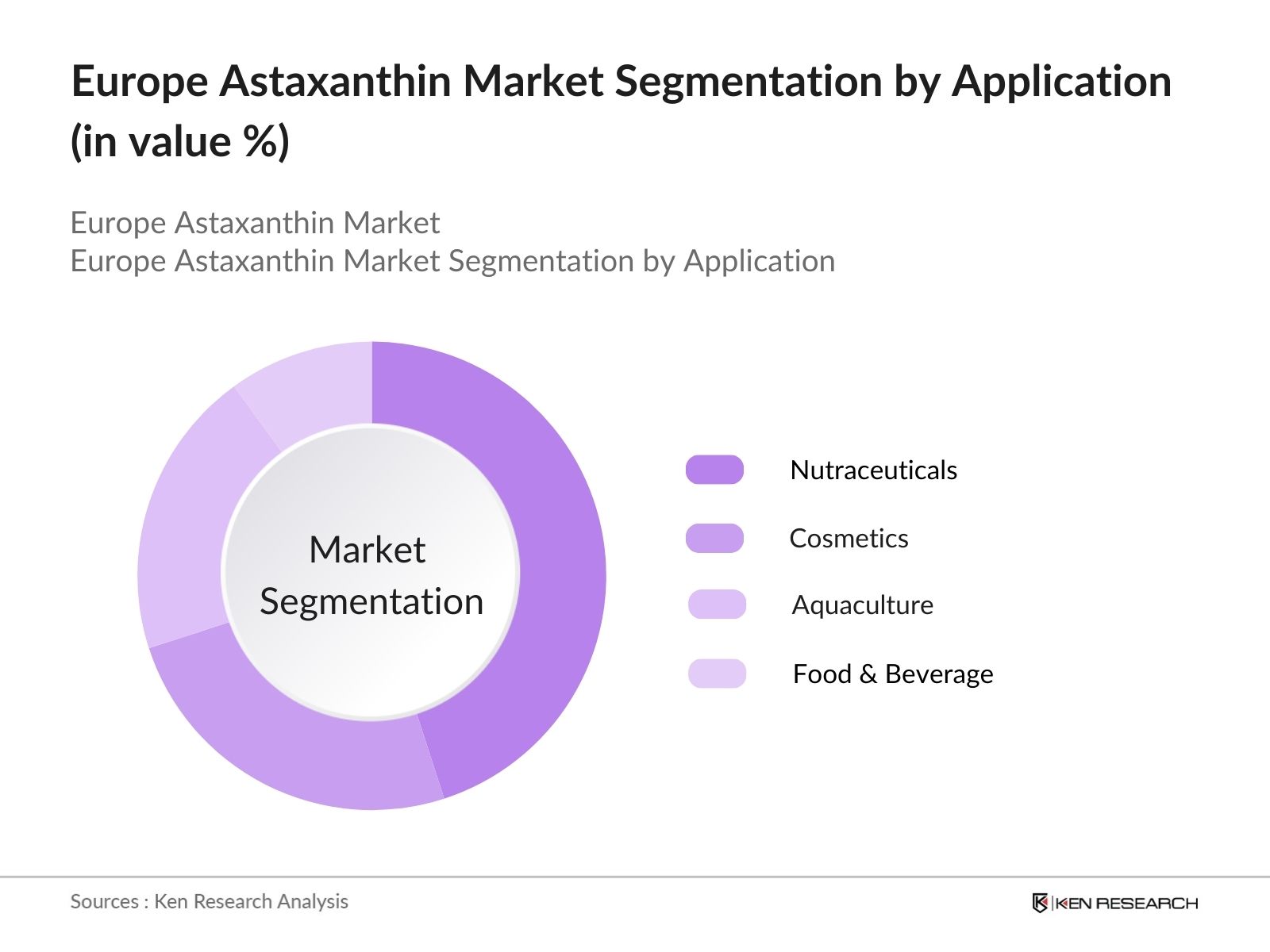
By Application: The market is segmented by application into nutraceuticals, cosmetics, aquaculture, and food and beverage. Nutraceuticals hold the dominant share in Europe, driven by the growing consumer preference for natural supplements that offer antioxidant and anti-inflammatory benefits. Astaxanthins role in reducing oxidative stress, improving skin health, and supporting cardiovascular health has made it a staple in the supplement industry. On the other hand, the aquaculture segment is a key user of synthetic astaxanthin, mainly for fish pigmentation. However, its usage in cosmetics and food is growing, supported by research-backed claims of its health benefits.
Europe Astaxanthin Market Competitive Landscape
The European Astaxanthin market is relatively consolidated, with a mix of global manufacturers and regional players contributing to the market's growth. Companies are investing heavily in research and development to explore new applications and improve production methods. The market is dominated by players such as BASF SE and Koninklijke DSM N.V., with significant research activities and product innovations. Cyanotech Corporation and AlgaTechnologies Ltd. also hold strong positions due to their focus on natural astaxanthin sourced from algae.
|
Company |
Establishment Year |
Headquarters |
R&D Investment |
Product Portfolio |
Partnerships |
Sustainability Initiatives |
Revenue |
Market Share |
|
BASF SE |
1865 |
Germany |
- | - | - | - | - | - |
|
Koninklijke DSM N.V. |
1902 |
Netherlands |
- | - | - | - | - | - |
|
Cyanotech Corporation |
1983 |
USA |
- | - | - | - | - | - |
|
AlgaTechnologies Ltd. |
1998 |
Israel |
- | - | - | - | - | - |
|
Fuji Chemical Industries Co. Ltd. |
1946 |
Japan |
- | - | - | - | - | - |
Europe Astaxanthin Market Analysis
Growth Drivers
- Increased Use in Nutraceuticals: The demand for astaxanthin in the nutraceutical industry has surged due to its potent antioxidant properties and potential health benefits, such as supporting cardiovascular health and reducing inflammation. In 2024 nutraceuticals held a notable portion of this demand attributed to natural compounds like astaxanthin. Growing consumer awareness of health and wellness has driven interest in natural supplements, leading to higher sales of astaxanthin-based products. Major manufacturers are capitalizing on this trend by introducing astaxanthin as a key ingredient in dietary supplements. The European Food Safety Authority (EFSA) has acknowledged the use of astaxanthin in various health applications, further fueling its demand.
- Rising Demand in Aquaculture: Astaxanthin plays a crucial role in aquaculture, particularly in enhancing the coloration and health of farmed fish such as salmon and shrimp. In 2024, Europe's aquaculture sector produced approximately 2.3 million tons of fish, with astaxanthin supplementation being essential for the quality and marketability of these species. Regulatory requirements for sustainably farmed fish in Europe have increased the usage of natural additives like astaxanthin, which is known to improve the growth and resilience of farmed fish. This demand is expected to maintain momentum as the European Union continues to push for sustainable seafood practices.
- Growing Interest in Cosmetics: The cosmetics industry has shown significant interest in astaxanthin for its anti-aging and skin-protecting benefits. Astaxanthin's ability to reduce oxidative stress and protect against UV damage has made it a popular ingredient in skincare formulations. Key players in the cosmetics industry are investing in research and product development, incorporating astaxanthin into sunscreens, creams, and serums. This trend is likely to grow as consumers continue to favor clean-label and sustainable beauty products.
Market Challenges
- High Production Costs: Astaxanthin production remains expensive due to the complex processes involved in its extraction from natural sources like microalgae. In 2024, the cost of producing astaxanthin from algae was estimated at approximately 700-800 per kilogram, significantly limiting its accessibility for smaller manufacturers. The high costs are primarily driven by the need for specialized cultivation systems and technologies to maximize yield, along with energy-intensive extraction methods. The lack of cost-effective production methods remains a significant barrier to the markets expansion, particularly in price-sensitive applications such as food and feed.
- Regulatory Approvals: Securing regulatory approval for the use of astaxanthin in various applications can be a lengthy and complex process. In Europe, the European Commission and the European Medicines Agency (EMA) closely regulate substances used in food and pharmaceuticals. The approval process often requires extensive safety and efficacy data, which can take several years to gather. As of 2024, manufacturers have faced delays in launching astaxanthin-based products due to these stringent regulations, particularly in sectors such as nutraceuticals and pharmaceuticals. Compliance with different national regulations across Europe adds an additional layer of complexity.
Europe Astaxanthin Market Future Outlook
Over the next five years, the Europe Astaxanthin market is projected to witness sustained growth, primarily driven by the increasing use of natural astaxanthin in the nutraceutical and cosmetics sectors. The rising consumer demand for health and wellness products is expected to fuel the adoption of astaxanthin-based supplements and anti-aging formulations. Additionally, the expansion of the aquaculture industry, especially in countries like Norway and the Netherlands, will continue to drive the demand for synthetic astaxanthin. Environmental sustainability and regulatory compliance will be key focus areas for manufacturers.
Market Opportunities
- Increasing Investment in Biotechnology: The European biotech sector has been investing heavily in the development of more efficient production methods for natural astaxanthin. In 2024, European Union research funds allocated funds to biotechnological innovations aimed at enhancing algae cultivation and extraction processes. These advancements could lead to significant reductions in production costs, making astaxanthin more accessible to a broader range of industries. Several biotech companies in Europe are exploring genetically engineered microalgae strains that could produce higher yields of astaxanthin, further reducing dependence on traditional cultivation methods.
- Expansion into New Applications: Astaxanthins versatility offers opportunities for expansion into new industries such as animal nutrition and functional beverages. In 2024, the European functional beverage market saw an increasing number of brands incorporating natural ingredients like astaxanthin for their health benefits. Similarly, the pet food industry has begun integrating astaxanthin into high-end formulations targeting joint health and immune support. This trend is likely to expand further as research continues to uncover new benefits of astaxanthin across different sectors.
Scope of the Report
|
By Source |
Natural Synthetic |
|
By Application |
Nutraceuticals Aquaculture Food & Beverage Cosmetics Animal Feed |
|
By Form |
Powder Liquid Tablets |
|
By Distribution Channel |
Direct Sales Retail Stores E-commerce |
|
By Region |
West East North South |
Products
Key Target Audience
Nutraceutical Manufacturers
Cosmetics Industry Stakeholders
Aquaculture Industry Players
Pharmaceutical Companies
Investors and Venture Capitalist Firms
Government and Regulatory Bodies (e.g., European Food Safety Authority, European Medicines Agency)
Biotechnology Companies
Natural Ingredient Suppliers
Companies
Players Mentioned in the Report:
BASF SE
Koninklijke DSM N.V.
Cyanotech Corporation
AlgaTechnologies Ltd.
Fuji Chemical Industries Co., Ltd.
Supreme Biotechnologies
Otsuka Pharmaceutical Co., Ltd.
Divis Laboratories
Algatech Ltd.
Cardax, Inc.
Table of Contents
1. Europe Astaxanthin Market Overview
1.1 Definition and Scope
1.2 Market Taxonomy
1.3 Market Growth Rate
1.4 Market Segmentation Overview
2. Europe Astaxanthin Market Size (In USD Bn)
2.1 Historical Market Size
2.2 Year-On-Year Growth Analysis
2.3 Key Market Developments and Milestones
3. Europe Astaxanthin Market Analysis
3.1 Growth Drivers
3.1.1 Increased Use in Nutraceuticals (Nutraceutical Applications)
3.1.2 Rising Demand in Aquaculture (Aquaculture Industry Demand)
3.1.3 Growing Interest in Cosmetics (Cosmetics Industry Usage)
3.1.4 Health Benefits and Antioxidant Properties (Health and Wellness Trends)
3.2 Market Challenges
3.2.1 High Production Costs (Production Efficiency Challenges)
3.2.2 Regulatory Approvals (Regulatory Compliance Hurdles)
3.2.3 Limited Availability of Natural Sources (Supply Chain Challenges)
3.2.4 Price Volatility (Pricing Instability)
3.3 Opportunities
3.3.1 Increasing Investment in Biotechnology (Biotech Advancements)
3.3.2 Expansion into New Applications (Expanding Industry Applications)
3.3.3 Potential in Anti-aging Products (Cosmetic Sector Growth)
3.3.4 Partnerships with Food & Beverage Industry (Strategic Partnerships)
3.4 Trends
3.4.1 Shift Towards Natural Astaxanthin (Natural Source Preference)
3.4.2 Growing Popularity in Sports Nutrition (Sports and Fitness Market)
3.4.3 Innovation in Product Formulations (Product Development Trends)
3.4.4 Sustainable Production Methods (Sustainability in Manufacturing)
3.5 Government Regulation
3.5.1 EU Approval for Food and Supplement Use (EU Food Regulation)
3.5.2 Environmental Sustainability Regulations (Environmental Policies)
3.5.3 Health and Safety Standards (Health and Safety Standards)
3.5.4 Import and Export Policies (Trade Policies)
3.6 SWOT Analysis
3.7 Stakeholder Ecosystem
3.8 Porters Five Forces Analysis
3.9 Competition Ecosystem
4. Europe Astaxanthin Market Segmentation
4.1 By Source (In Value %)
4.1.1 Natural
4.1.2 Synthetic
4.2 By Application (In Value %)
4.2.1 Nutraceuticals
4.2.2 Aquaculture
4.2.3 Food & Beverage
4.2.4 Cosmetics
4.2.5 Animal Feed
4.3 By Form (In Value %)
4.3.1 Powder
4.3.2 Liquid
4.3.3 Tablets
4.4 By Distribution Channel (In Value %)
4.4.1 Direct Sales
4.4.2 Retail Stores
4.4.3 E-commerce
4.5 By Region (In Value %)
4.5.1 Western Europe
4.5.2 Eastern Europe
4.5.3 Northern Europe
4.5.4 Southern Europe
5. Europe Astaxanthin Market Competitive Analysis
5.1 Detailed Profiles of Major Companies
5.1.1 BASF SE
5.1.2 Koninklijke DSM N.V.
5.1.3 Cyanotech Corporation
5.1.4 AlgaTechnologies Ltd.
5.1.5 Fuji Chemical Industries Co., Ltd.
5.1.6 Divis Laboratories
5.1.7 Otsuka Pharmaceutical Co., Ltd.
5.1.8 Algatech Ltd.
5.1.9 Supreme Biotechnologies
5.1.10 Piveg, Inc.
5.1.11 Cardax, Inc.
5.1.12 Fenchem Biotek Ltd.
5.1.13 Beijing Ginko Group
5.1.14 Atacama Bio Natural Products S.A.
5.1.15 AstaReal AB
5.2 Cross Comparison Parameters (Revenue, Headquarters, R&D Spending, Product Portfolio, Partnerships, Sustainability Initiatives, Regulatory Approvals, Market Share)
5.3 Market Share Analysis
5.4 Strategic Initiatives
5.5 Mergers And Acquisitions
5.6 Investment Analysis
5.7 Venture Capital Funding
5.8 Government Grants
5.9 Private Equity Investments
6. Europe Astaxanthin Market Regulatory Framework
6.1 Food Safety and Supplementation Laws
6.2 Environmental Compliance Regulations
6.3 Industry-Specific Certification Standards
6.4 Export and Import Regulations
7. Europe Astaxanthin Future Market Size (In USD Bn)
7.1 Future Market Size Projections
7.2 Key Factors Driving Future Market Growth
8. Europe Astaxanthin Future Market Segmentation
8.1 By Source (In Value %)
8.2 By Application (In Value %)
8.3 By Form (In Value %)
8.4 By Distribution Channel (In Value %)
8.5 By Region (In Value %)
9. Europe Astaxanthin Market Analyst Recommendations
9.1 TAM/SAM/SOM Analysis
9.2 Consumer Cohort Analysis
9.3 Strategic Market Entry Recommendations
9.4 White Space Opportunity Analysis
Research Methodology
Step 1: Identification of Key Variables
The initial phase of research focuses on mapping out all major stakeholders within the Europe Astaxanthin market. Comprehensive desk research, relying on both secondary and proprietary databases, is conducted to define and identify key variables that influence the market, such as demand for nutraceuticals and cosmetics.
Step 2: Market Analysis and Construction
This step involves gathering and analyzing historical data related to the Europe Astaxanthin market. Key metrics like product penetration, revenue growth, and consumer demand in different application sectors are analyzed to construct accurate market insights.
Step 3: Hypothesis Validation and Expert Consultation
Market assumptions and hypotheses are developed and validated through interviews with industry experts. These consultations provide valuable insights into production trends, consumer preferences, and the regulatory landscape, enhancing the accuracy of the market data.
Step 4: Research Synthesis and Final Output
In the final phase, information gathered from manufacturers and distributors is synthesized to provide a well-rounded analysis of the Europe Astaxanthin market. This phase ensures that the data is validated and provides a clear understanding of market dynamics.
Frequently Asked Questions
1. How big is the Europe Astaxanthin market?
The Europe Astaxanthin market was valued at USD 752 million, driven by its increasing use in the nutraceuticals, cosmetics, and aquaculture industries.
2. What are the challenges in the Europe Astaxanthin market?
Key challenges in the Europe Astaxanthin market include the high cost of natural astaxanthin production, regulatory hurdles related to its use in food and supplements, and price volatility due to supply chain issues.
3. Who are the major players in the Europe Astaxanthin market?
Major players in the Europe Astaxanthin market include BASF SE, Koninklijke DSM N.V., Cyanotech Corporation, AlgaTechnologies Ltd., and Fuji Chemical Industries Co., Ltd.
4. What are the growth drivers of the Europe Astaxanthin market?
Growth of Europe Astaxanthin market is primarily driven by the rising consumer preference for natural health supplements and cosmetics, along with the expanding aquaculture industry, which relies on astaxanthin for fish pigmentation.
Why Buy From Us?

What makes us stand out is that our consultants follows Robust, Refine and Result (RRR) methodology. i.e. Robust for clear definitions, approaches and sanity checking, Refine for differentiating respondents facts and opinions and Result for presenting data with story

We have set a benchmark in the industry by offering our clients with syndicated and customized market research reports featuring coverage of entire market as well as meticulous research and analyst insights.

While we don't replace traditional research, we flip the method upside down. Our dual approach of Top Bottom & Bottom Top ensures quality deliverable by not just verifying company fundamentals but also looking at the sector and macroeconomic factors.

With one step in the future, our research team constantly tries to show you the bigger picture. We help with some of the tough questions you may encounter along the way: How is the industry positioned? Best marketing channel? KPI's of competitors? By aligning every element, we help maximize success.

Our report gives you instant access to the answers and sources that other companies might choose to hide. We elaborate each steps of research methodology we have used and showcase you the sample size to earn your trust.

If you need any support, we are here! We pride ourselves on universe strength, data quality, and quick, friendly, and professional service.