
Europe Automotive Semiconductor Market Outlook to 2030
Region:Europe
Author(s):Sanjna
Product Code:KROD3480
Region:Europe
Author(s):Sanjna
Product Code:KROD3480
December 2024
104
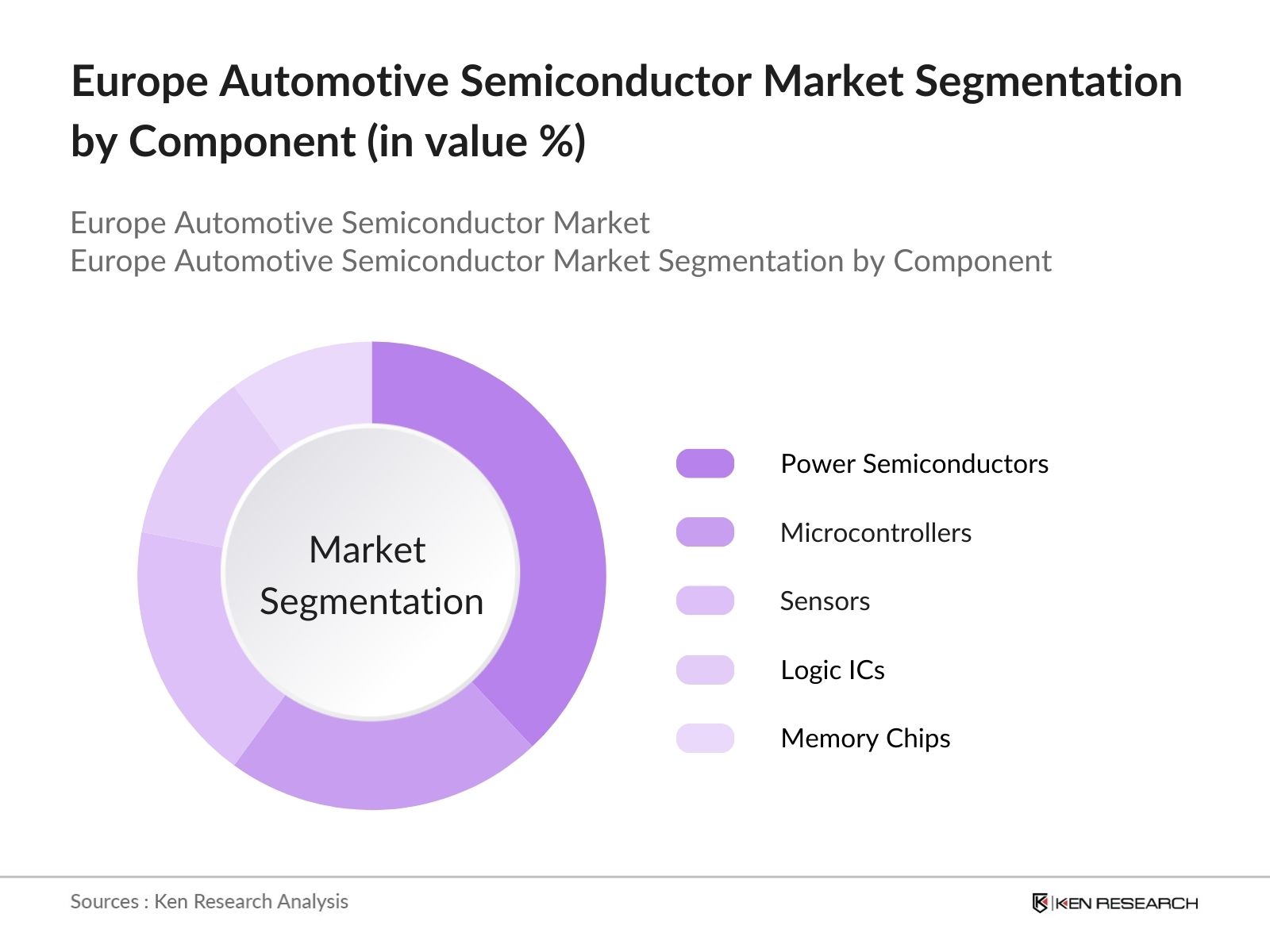
By Component: The Europe automotive semiconductor market is segmented by components into power semiconductors, microcontrollers, sensors, logic ICs, and memory chips. Among these, power semiconductors hold a dominant market share, primarily driven by the increasing adoption of electric vehicles across Europe. Power semiconductors are crucial for managing the electric power conversion and distribution in EVs, ensuring efficient energy use.
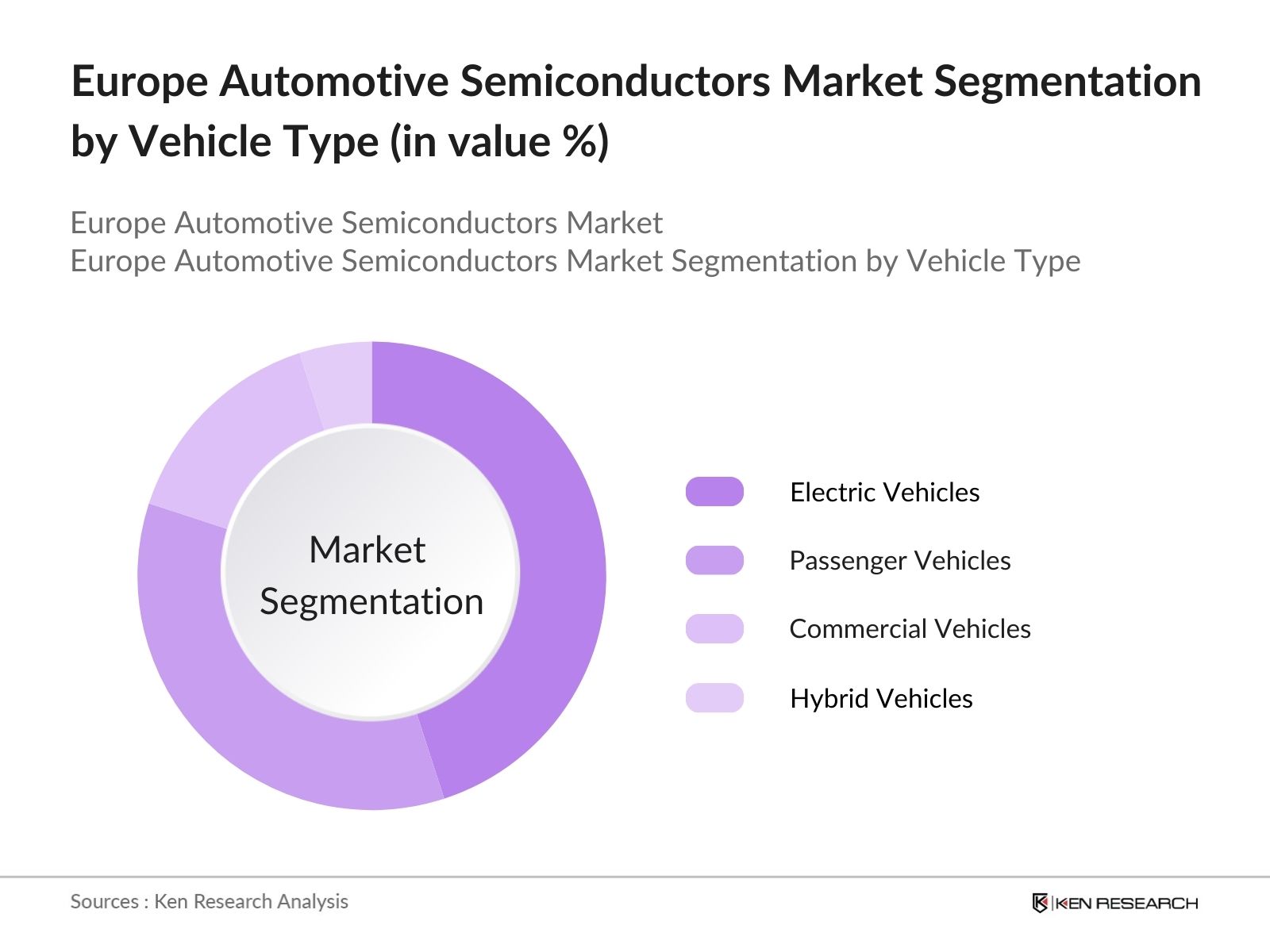
By Vehicle Type: The market is also segmented by vehicle type into passenger vehicles, commercial vehicles, electric vehicles (EVs), and hybrid vehicles. Electric vehicles lead the market under this segment due to the European Union's aggressive push towards reducing carbon emissions and transitioning to greener transportation. The growing consumer demand for eco-friendly vehicles and extensive government incentives have accelerated the adoption of electric vehicles, making them the dominant sub-segment in the automotive semiconductor market.
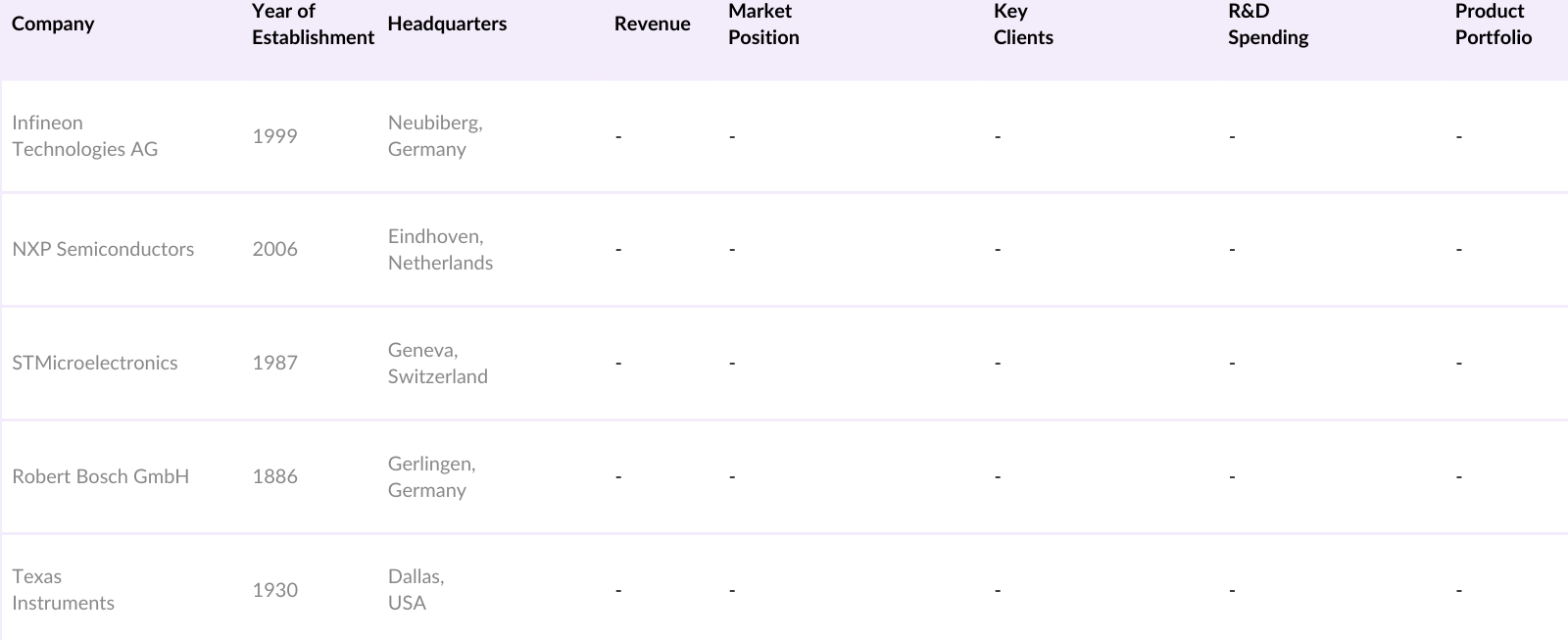
The Europe automotive semiconductor market is dominated by leading global players, including established semiconductor manufacturers and companies with a strong presence in automotive electronics. The competition is intense, with key players focusing on innovation, partnerships, and strategic collaborations to gain an edge in the rapidly evolving automotive technology landscape. The competitive landscape highlights the dominance of these players, who continuously invest in R&D to develop innovative semiconductor solutions tailored for the automotive industry. Their strong relationships with leading automakers further reinforce their market positions.
Over the next five years, the Europe automotive semiconductor market is expected to experience robust growth, driven by the ongoing advancements in vehicle electrification, ADAS technology, and the push for autonomous driving solutions. As European governments continue to implement stricter emissions regulations and support initiatives for EV adoption, the demand for high-performance, energy-efficient semiconductors is set to rise. Additionally, the increasing integration of artificial intelligence (AI) and machine learning technologies in vehicle systems will further propel the market forward, fostering innovation and growth in the semiconductor space.
|
Segment |
Sub-Segments |
|
Component |
Power Semiconductors Microcontrollers Sensors Logic ICs Memory Chips |
|
Vehicle Type |
Passenger Vehicles Commercial Vehicles Electric Vehicles Hybrid Vehicles |
|
Application |
ADAS & Safety Powertrain Infotainment Chassis and Body Electronics |
|
Technology |
Analog Digital Mixed-Signal |
|
Region |
Germany France Italy United Kingdom Spain |
1.1 Definition and Scope
1.2 Market Taxonomy
1.3 Market Growth Rate
1.4 Market Segmentation Overview
2.1 Historical Market Size
2.2 Year-On-Year Growth Analysis
2.3 Key Market Developments and Milestones
3.1 Growth Drivers (Automotive Electrification, Autonomous Driving)
3.1.1 Demand for Electric Vehicles (EVs)
3.1.2 Increasing Sensor Technology Integration
3.1.3 Regulatory Push for Emission Control
3.1.4 Increasing Demand for Vehicle Connectivity
3.2 Market Challenges (Supply Chain Bottlenecks, Silicon Wafer Shortages)
3.2.1 High Cost of Semiconductor Fabrication
3.2.2 Dependence on Raw Material Imports
3.2.3 Complex Design and Integration of Automotive Semiconductors
3.3 Opportunities (5G Integration in Vehicles, R&D for Advanced Semiconductors)
3.3.1 Growth in Autonomous Vehicle Development
3.3.2 Rise of ADAS (Advanced Driver Assistance Systems)
3.3.3 Strategic Partnerships with European Automakers
3.4 Trends (Transition to System-on-Chip, Energy-Efficient Semiconductors)
3.4.1 Miniaturization and Power Efficiency
3.4.2 Shift Towards AI-Driven Chips
3.4.3 Application of Quantum Computing in Automotive Semiconductors
3.5 Government Regulation (EU Regulatory Framework, Safety & Emission Standards)
3.5.1 EU Automotive Safety Regulations
3.5.2 Carbon Neutrality Goals
3.5.3 EV Battery Directive
3.5.4 Incentives for EV Semiconductor Adoption
3.6 SWOT Analysis
3.7 Stakeholder Ecosystem
3.8 Porters Five Forces Analysis
3.9 Competitive Landscape
4.1 By Component (In Value %)
4.1.1 Power Semiconductors
4.1.2 Microcontrollers
4.1.3 Sensors
4.1.4 Logic ICs
4.1.5 Memory Chips
4.2 By Vehicle Type (In Value %)
4.2.1 Passenger Vehicles
4.2.2 Commercial Vehicles
4.2.3 Electric Vehicles (EVs)
4.2.4 Hybrid Vehicles
4.3 By Application (In Value %)
4.3.1 ADAS & Safety
4.3.2 Powertrain
4.3.3 Infotainment
4.3.4 Chassis and Body Electronics
4.4 By Technology (In Value %)
4.4.1 Analog
4.4.2 Digital
4.4.3 Mixed-Signal
4.5 By Region (In Value %)
4.5.1 Germany
4.5.2 France
4.5.3 Italy
4.5.4 United Kingdom
4.5.5 Spain
5.1 Detailed Profiles of Major Companies
5.1.1 Infineon Technologies AG
5.1.2 NXP Semiconductors
5.1.3 STMicroelectronics
5.1.4 Robert Bosch GmbH
5.1.5 Texas Instruments
5.1.6 Renesas Electronics Corporation
5.1.7 ON Semiconductor
5.1.8 Analog Devices, Inc.
5.1.9 Micron Technology
5.1.10 Qualcomm Incorporated
5.2 Cross Comparison Parameters (Revenue, Headquarters, Employee Count, Key Clients, Product Portfolio, Market Share, R&D Spending, Market Position)
5.3 Market Share Analysis
5.4 Strategic Initiatives (Partnerships, Collaborations, Investments)
5.5 Mergers and Acquisitions
5.6 Investment Analysis (Venture Capital, Private Equity)
5.7 Government Grants
5.8 Technological Innovations and Patents
6.1 Environmental Regulations (Emissions and Sustainability)
6.2 Semiconductor Safety Certifications (Automotive Safety Integrity Level - ASIL)
6.3 Compliance with Cybersecurity Standards (ISO/SAE 21434)
6.4 European Union Directives on EV Semiconductors
7.1 Future Market Size Projections
7.2 Key Factors Driving Future Market Growth
8.1 By Component (In Value %)
8.2 By Vehicle Type (In Value %)
8.3 By Application (In Value %)
8.4 By Technology (In Value %)
8.5 By Region (In Value %)
9.1 Total Addressable Market (TAM) Analysis
9.2 Serviceable Available Market (SAM) Analysis
9.3 White Space Opportunity Analysis
9.4 Customer Adoption Insights
Disclaimer Contact UsIn the initial stage, we mapped the automotive semiconductor market ecosystem by identifying the key stakeholders, including semiconductor manufacturers, automotive OEMs, and technology providers. A detailed analysis of market drivers and constraints was conducted using data from proprietary and secondary sources, ensuring a comprehensive understanding of market dynamics.
The market was further analyzed by segmenting it into different categories, such as component types and vehicle types. Historical data on market performance, along with insights into current trends, was examined to provide a solid foundation for revenue estimates. We also assessed market penetration rates and technology adoption.
Interviews with industry experts from leading companies in the semiconductor and automotive sectors were conducted to validate market hypotheses. These consultations provided critical insights into market challenges, opportunities, and growth drivers, helping refine our projections.
The final step involved synthesizing the findings from primary and secondary research to produce an actionable and data-driven report. The insights gained from top-down and bottom-up approaches were corroborated to ensure accuracy and reliability in the market analysis.
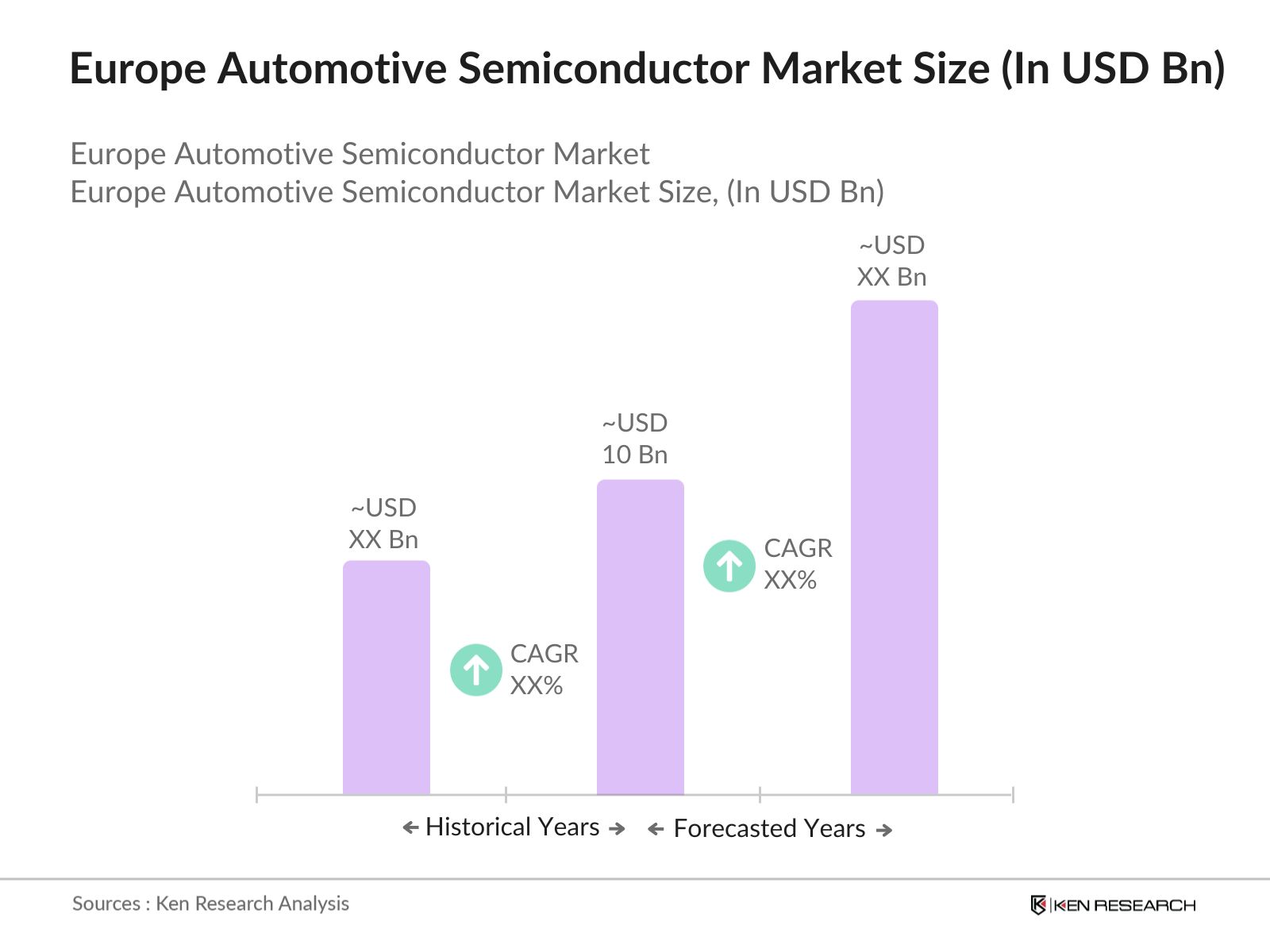
The Europe automotive semiconductor market is valued at USD 10 billion, driven by the increasing demand for electric vehicles and advanced driver-assistance systems across the region.
Key challenges in Europe automotive semiconductor market include supply chain disruptions, silicon wafer shortages, and high manufacturing costs. Additionally, the complexity of integrating semiconductors into vehicle systems remains a significant hurdle.
Key players in Europe automotive semiconductor market include Infineon Technologies, NXP Semiconductors, STMicroelectronics, Robert Bosch GmbH, and Texas Instruments, among others. These companies lead the market due to their strong R&D investments and established relationships with automakers.
Growth in Europe automotive semiconductor market is driven by the surge in electric vehicle adoption, advancements in ADAS and autonomous driving technologies, and the growing demand for energy-efficient vehicle components.

What makes us stand out is that our consultants follows Robust, Refine and Result (RRR) methodology. i.e. Robust for clear definitions, approaches and sanity checking, Refine for differentiating respondents facts and opinions and Result for presenting data with story

We have set a benchmark in the industry by offering our clients with syndicated and customized market research reports featuring coverage of entire market as well as meticulous research and analyst insights.

While we don't replace traditional research, we flip the method upside down. Our dual approach of Top Bottom & Bottom Top ensures quality deliverable by not just verifying company fundamentals but also looking at the sector and macroeconomic factors.

With one step in the future, our research team constantly tries to show you the bigger picture. We help with some of the tough questions you may encounter along the way: How is the industry positioned? Best marketing channel? KPI's of competitors? By aligning every element, we help maximize success.

Our report gives you instant access to the answers and sources that other companies might choose to hide. We elaborate each steps of research methodology we have used and showcase you the sample size to earn your trust.

If you need any support, we are here! We pride ourselves on universe strength, data quality, and quick, friendly, and professional service.