
Europe Aviation Market Outlook to 2030
Region:Europe
Author(s):Sanjna
Product Code:KROD10563
December 2024
80
About the Report
Europe Aviation Market Overview
- The Europe aviation market, valued at USD 60 billion, is heavily influenced by demand in both commercial and military segments. Technological advancements in aircraft design and efficiency have spurred growth, particularly in passenger travel and defense contracts. As economies in Europe recover from previous downturns, increased air travel, strategic government investments, and rising demand for fuel-efficient and autonomous aviation technologies are driving the market forward.
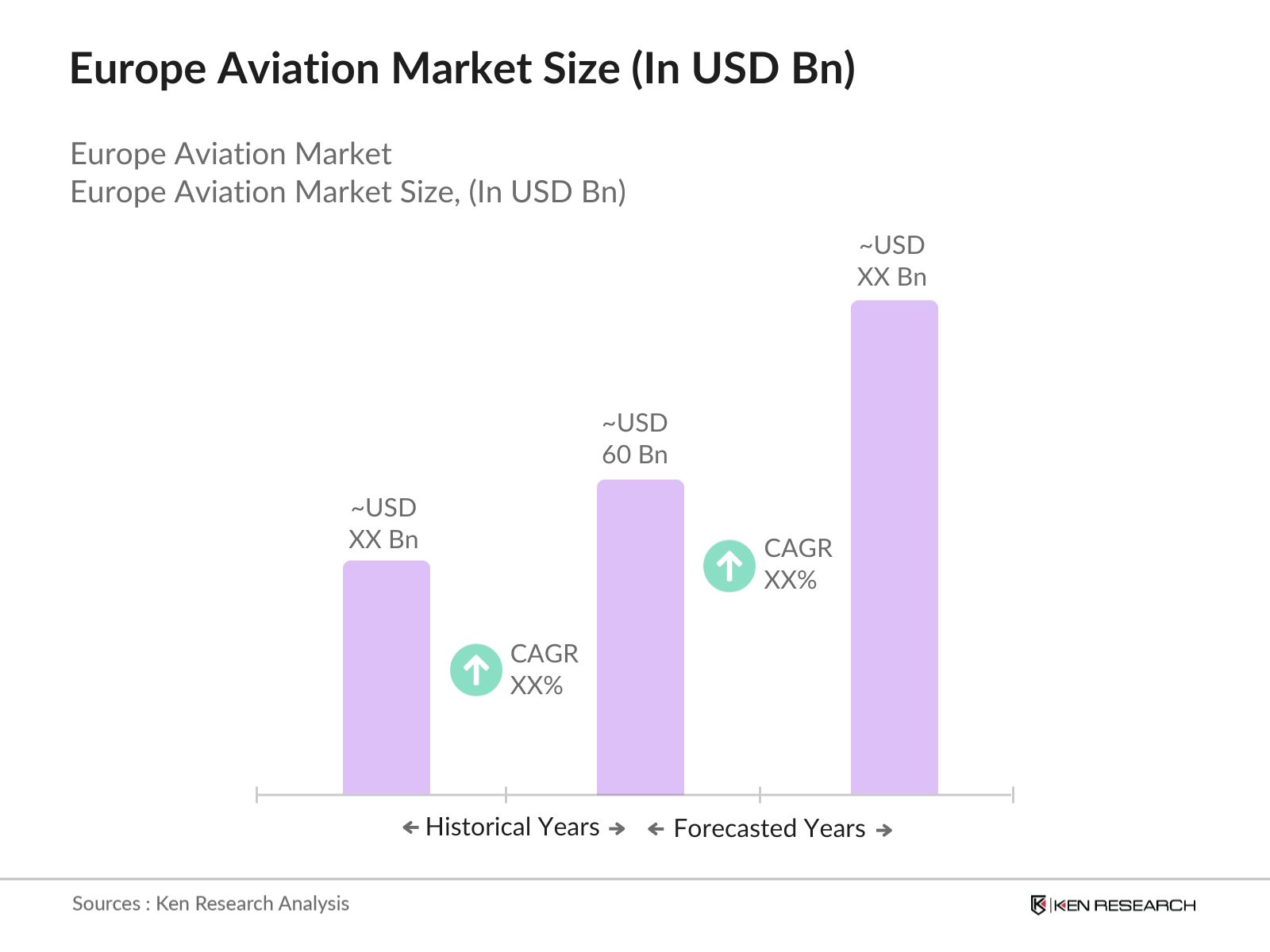
- Key countries dominating the European aviation market include the United Kingdom, France, and Germany. The UK benefits from high passenger traffic, advanced aviation infrastructure, and a robust business aviation sector, while France and Germany excel in military aviation advancements and strategic collaborations, such as the Future Combat Air System (FCAS). These nations prominence is due to established aerospace industries, government support, and large-scale production facilities.
- The European Green Deal requires airlines to significantly cut emissions, setting the target for climate neutrality by 2050. The EU aims for a 55% reduction in GHG emissions by 2030, with aviation included in the targets. Airlines operating within Europe are investing in SAF, fleet renewal, and efficient routing technologies to align with these regulations. This policy pushes airlines toward sustainable practices, marking a significant regulatory shift in the aviation sector.
Europe Aviation Market Segmentation
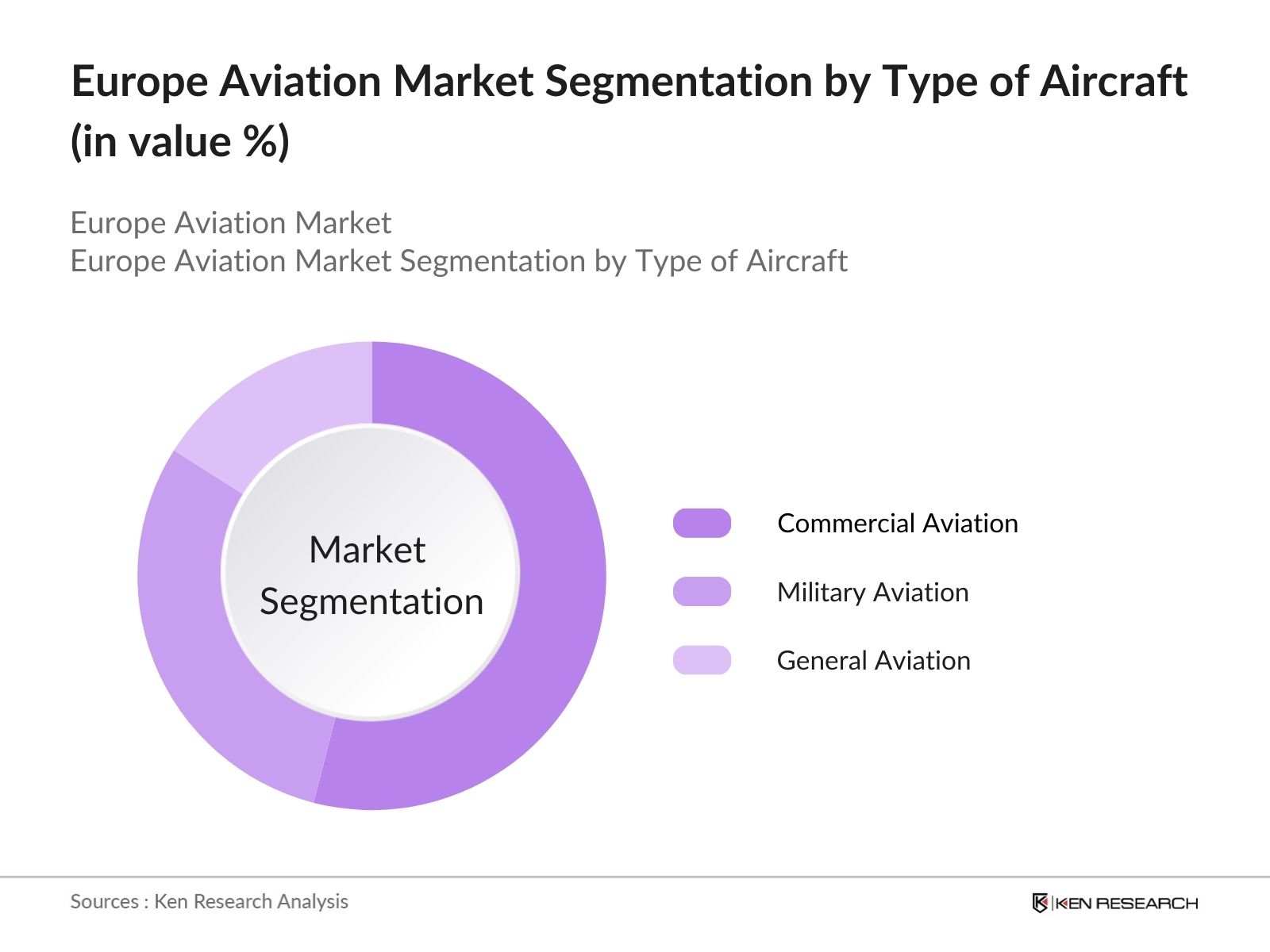
By Type of Aircraft: Europe's aviation market is segmented by type of aircraft, primarily into commercial, military, and general aviation. Commercial aviation, particularly passenger aircraft, holds a dominant market share, attributed to increased demand for air travel post-pandemic and expansion by European carriers like Ryanair and EasyJet. Companies have capitalized on passenger demand, leading to substantial investments in fleet expansions and fuel-efficient models, solidifying the dominance of commercial aircraft within the European market.
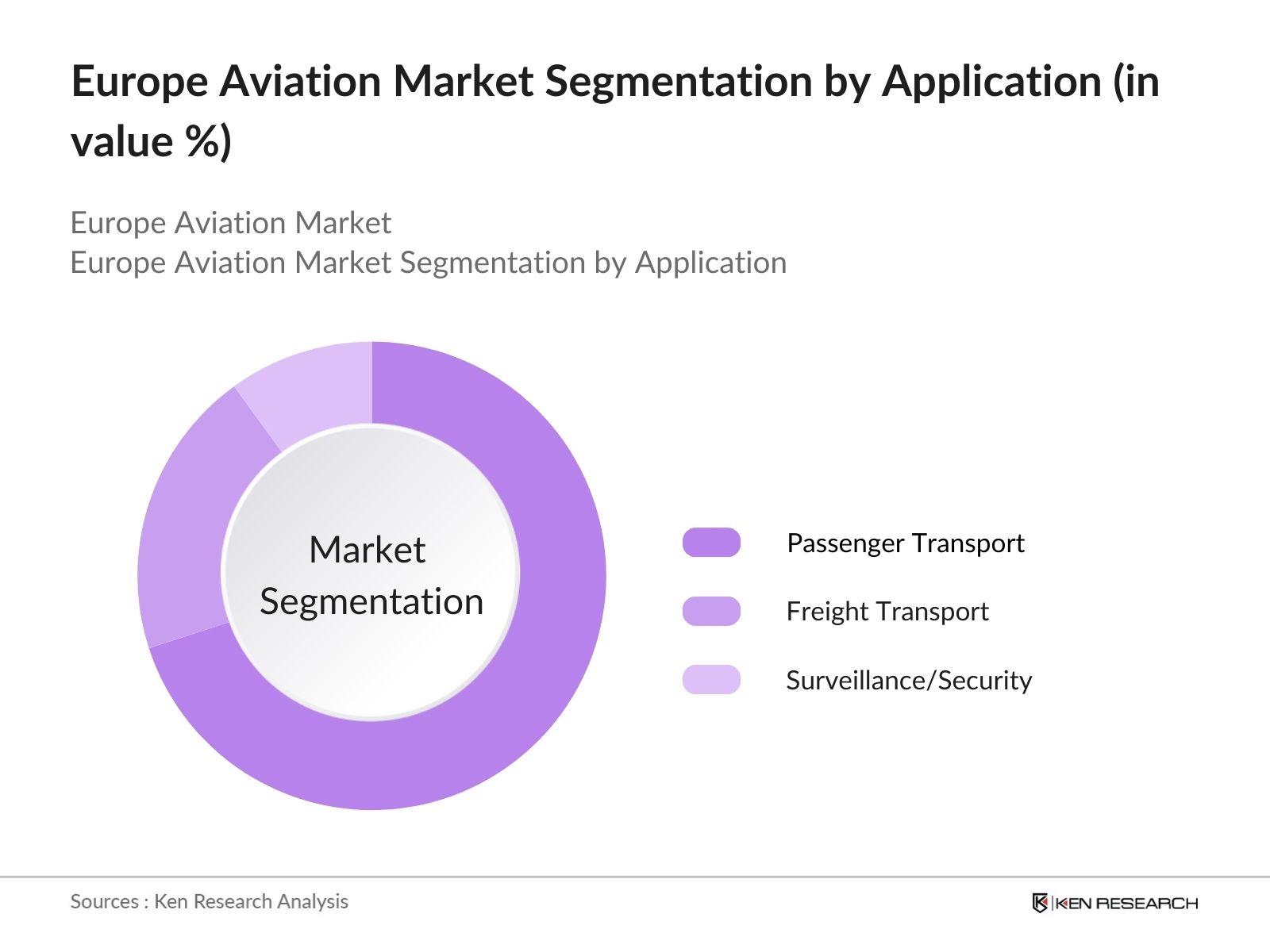
By Application: In terms of application, the market is divided into passenger transport, freight transport, and surveillance/security. Passenger transport remains dominant due to the high volume of tourists and business travelers in Europes bustling metropolitan areas. Key airports, such as London Heathrow and Charles de Gaulle in Paris, serve as major hubs, amplifying the need for extensive passenger aviation services and infrastructure.
Europe Aviation Market Competitive Landscape
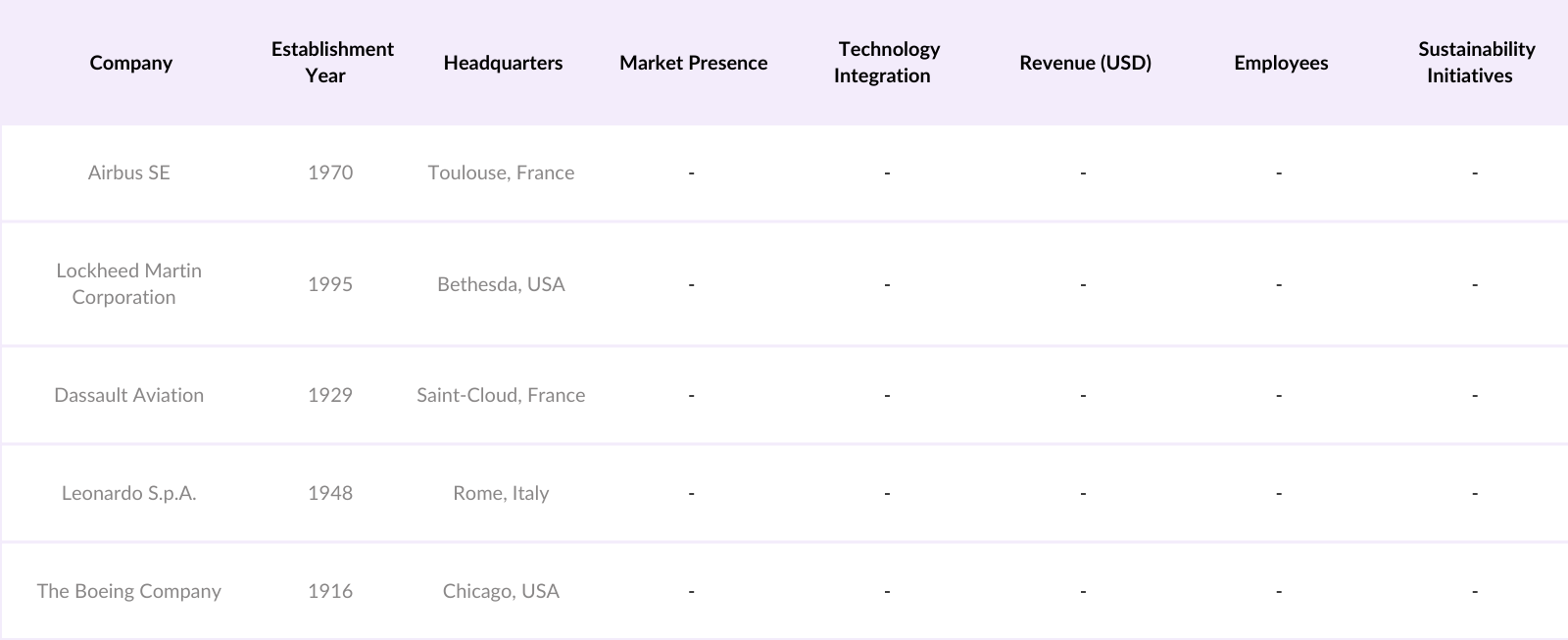
The European aviation market is marked by a few dominant players with significant market shares. These companies have strategically invested in technology integration, regional expansions, and sustainability initiatives, which allow them to maintain leadership within the market. The European aviation market is consolidated, with key players such as Airbus and Boeing holding a substantial share.
Europe Aviation Market Analysis
Growth Drivers
- Technological Innovations (Autonomous Systems, Fuel Efficiency): Europe's aviation sector is experiencing rapid technological advancements, with a strong focus on autonomous systems and fuel-efficient engines. For example, Airbuss recent adoption of sustainable aviation fuel (SAF) and electric propulsion systems highlights the drive towards fuel efficiency. Furthermore, the European Union (EU) has set a target to reduce aviation emissions by 55% by 2030 under the Green Deal, pushing further investments into fuel-efficient technologies.
- Increased Demand in Business and Charter Aviation: Business and charter aviation demand is rising significantly as companies prioritize faster, direct routes to key European business hubs. In 2024, the total daily flights by charter and business airlines rose by approximately 8% in Western Europe compared to 2022. This increase is largely attributed to heightened economic activities in Germany and France. Additionally, key routes like London to Zurich have seen a marked rise in private aviation, supported by increased corporate investments and cross-border trade facilitation.
- Government Investments in Military and Security Aviation: European governments are strengthening aviation security and military fleets in response to geopolitical tensions. The EU allocated significant funding, increasing defense spending by $10.84 billion in 2023, for modernizing military aviation fleets. France and Germany have expanded budgets for aviation security and surveillance, focusing on enhanced airspace protection. Additionally, Eurocontrol reports indicate increased collaboration with civil aviation for efficient airspace management in areas close to the conflict zones, improving real-time traffic and military operations coordination.
Challenges
- Regulatory Constraints and Emission Controls: European aviation faces strict regulatory and emission control challenges, with compliance demands increasing under EU's Green Deal. In 2024, the EU mandates that all flights within Europe must use at least 2% SAF, with plans to scale up this requirement by 2030. Countries like the Netherlands and Spain have implemented airport emissions monitoring, adding operational costs for airlines. These regulations push airlines to accelerate fleet modernization, though it imposes significant compliance costs.
- Geopolitical Tensions Impacting Supply Chains: Geopolitical tensions, particularly the Ukraine conflict, have severely impacted supply chains for aviation in Europe. Eurocontrol reports indicate that air traffic delays in Eastern European airspaces have increased by 12% due to restricted zones and heightened military presence. Major European airlines are experiencing delays in aircraft parts deliveries, with delays peaking in critical components for Boeing and Airbus jets. The increased need for rerouting flights through congested airspaces has added to operational complexities and delays.
Europe Aviation Market Future Outlook
The Europe aviation market is expected to experience significant growth over the next five years, propelled by technological advancements, expanding government support for sustainable aviation, and increasing consumer demand for air travel. Key growth drivers include innovations in electric and hybrid propulsion systems, strong investments in aerospace infrastructure, and accelerated adoption of digitalization and automation in aviation.
Market Opportunities
- Digital Transformation and IoT Integration: Digital transformation through IoT integration presents substantial efficiency gains for European aviation. Major airports, such as London Heathrow, have implemented IoT-enabled baggage handling and real-time tracking, reducing handling times by up to 15%. Eurocontrol forecasts suggest that digital upgrades could reduce average delays by 2-3 minutes per flight across Europe. Additionally, new airport data management systems are supporting advanced analytics, allowing for predictive maintenance and cost reduction.
- Fleet Modernization Initiatives Across Europe: Fleet modernization is a critical focus as Europe aims to meet its environmental targets. In 2024, Lufthansa initiated a fleet update with orders for 25 fuel-efficient A320neo aircraft to reduce fuel consumption. This trend aligns with the European Commissions objective to encourage green aviation technologies, with EU financial support facilitating part of these upgrades. The drive for newer, greener fleets will enhance both fuel efficiency and compliance with the European Green Deal.
Scope of the Report
|
Segment |
Sub-Segments |
|
Aircraft Type |
Commercial |
|
Military |
|
|
General |
|
|
Application |
Passenger Transport Freight Transport |
|
Surveillance and Security, |
|
|
Technology |
Fixed-Wing Rotary-Wing Electric Propulsion Systems |
|
Fuel Type |
Jet Fuel Sustainable Aviation Fuel Hydrogen |
|
Region |
United Kingdom Germany France Italy Spain Russia |
Products
Key Target Audience
Aircraft Manufacturers and Suppliers
Maintenance, Repair, and Overhaul (MRO) Providers
Air Charter Service Providers
Commercial Airlines and Cargo Carriers
Aerospace Component and Technology Providers
Defense and Security Agencies
Investors and Venture Capitalist Firms
Government and Regulatory Bodies (e.g., EASA, Eurocontrol)
Companies
Players Mentioned in the Report
Airbus SE
Lockheed Martin Corporation
Dassault Aviation
Leonardo S.p.A.
Boeing
Embraer SA
Bombardier Inc.
Textron Inc.
General Dynamics Corporation
Saab AB
Table of Contents
1. Europe Aviation Market Overview
1.1 Definition and Scope
1.2 Market Taxonomy
1.3 Market Growth Rate
1.4 Market Segmentation Overview
2. Europe Aviation Market Size (USD Million)
2.1 Historical Market Size
2.2 Year-on-Year Growth Analysis
2.3 Key Market Developments and Milestones
3. Europe Aviation Market Analysis
3.1 Market Growth Drivers
3.1.1 Technological Innovations (Autonomous Systems, Fuel Efficiency)
3.1.2 Increased Demand in Business and Charter Aviation
3.1.3 Government Investments in Military and Security Aviation
3.2 Market Challenges
3.2.1 Regulatory Constraints and Emission Controls
3.2.2 Rising Operational Costs and Labor Shortages
3.2.3 Geopolitical Tensions Impacting Supply Chains
3.3 Opportunities
3.3.1 Digital Transformation and IoT Integration
3.3.2 Fleet Modernization Initiatives Across Europe
3.3.3 Rise in Air Passenger Traffic in Key Hubs (e.g., UK, Germany)
3.4 Trends
3.4.1 Sustainable Aviation Initiatives (Green Hydrogen, SAF)
3.4.2 Increased Deployment of Electric and Hybrid-Electric Aircraft
3.4.3 Expansion in Regional Air Mobility (Air Taxi Projects)
3.5 Government Regulations
3.5.1 European Green Deal Compliance
3.5.2 National and EU Safety Standards (EASA Directives)
3.5.3 Emission Reduction Targets
3.6 SWOT Analysis
3.7 Stakeholder Ecosystem
3.8 Porters Five Forces Analysis
4. Europe Aviation Market Segmentation
4.1 By Aircraft Type
4.1.1 Commercial Aviation (Passenger, Freighter)
4.1.2 Military Aviation (Combat, Non-combat)
4.1.3 General Aviation (Helicopters, Business Jets)
4.2 By Application
4.2.1 Passenger Transport
4.2.2 Freight Transport
4.2.3 Surveillance and Security
4.2.4 Corporate and Private Aviation
4.3 By Technology
4.3.1 Fixed-Wing
4.3.2 Rotary-Wing
4.3.3 Electric Propulsion Systems
4.4 By Fuel Type
4.4.1 Jet Fuel
4.4.2 Sustainable Aviation Fuel (SAF)
4.4.3 Hydrogen
4.5 By Region
4.5.1 United Kingdom
4.5.2 Germany
4.5.3 France
4.5.4 Italy
4.5.5 Spain
4.5.6 Russia
5. Europe Aviation Market Competitive Analysis
5.1 Key Competitors
5.1.1 Airbus SE
5.1.2 Lockheed Martin Corporation
5.1.3 Dassault Aviation
5.1.4 Leonardo S.p.A.
5.1.5 Boeing
5.1.6 Embraer SA
5.1.7 Bombardier Inc.
5.1.8 Textron Inc.
5.1.9 General Dynamics Corporation
5.1.10 Saab AB
5.2 Cross-Comparison Parameters (Fleet Size, Headquarters, Revenue, Workforce, Technology Portfolio, Market Presence, Geographic Reach, R&D Investments)
5.3 Market Share Analysis
5.4 Strategic Initiatives
5.5 Mergers and Acquisitions
5.6 Investment Analysis
6. Europe Aviation Market Regulatory Framework
6.1 Emission Standards (EU Emission Trading System)
6.2 Safety and Compliance Requirements (EASA Regulations)
6.3 Certification Processes for New Aircraft and Technologies
7. Europe Aviation Future Market Size (USD Million)
7.1 Future Market Size Projections
7.2 Key Factors Driving Future Market Growth
8. Europe Aviation Future Market Segmentation
8.1 By Aircraft Type
8.2 By Application
8.3 By Technology
8.4 By Fuel Type
8.5 By Region
9. Market Analysts Recommendations
9.1 TAM/SAM/SOM Analysis
9.2 Customer Cohort Analysis
9.3 Market Penetration Strategies
9.4 White Space Opportunity Analysis
Research Methodology
Step 1: Identification of Key Variables
The initial phase involves constructing an ecosystem map of stakeholders in the Europe Aviation Market. Through extensive desk research, major variables impacting market dynamics are identified, such as technology advancements, passenger demand, and government regulations.
Step 2: Market Analysis and Construction
Historical data from multiple sources is compiled, covering revenue generation, market penetration, and segment performance. The data is assessed for service quality and accuracy to ensure reliable revenue estimates and projections.
Step 3: Hypothesis Validation and Expert Consultation
Market assumptions are validated via consultations with industry experts using structured interviews. These insights refine the data and enhance the reliability of market projections.
Step 4: Research Synthesis and Final Output
Final data synthesis includes analysis from various aviation manufacturers, focusing on product segments, consumer trends, and market drivers to ensure an accurate and comprehensive view of the European aviation landscape.
Frequently Asked Questions
1. How big is the Europe Aviation Market?
The Europe aviation market, valued at USD 60 billion, is driven by high passenger demand, government support for innovation, and significant advancements in fuel-efficient aircraft technology.
2. What are the major challenges in the Europe Aviation Market?
Challenges in Europe aviation market include stringent regulations, rising operational costs, and geopolitical tensions that affect supply chains, along with increasing demand for sustainable aviation solutions.
3. Who are the major players in the Europe Aviation Market?
Key players in Europe aviation market include Airbus SE, Boeing, Lockheed Martin Corporation, Dassault Aviation, and Leonardo S.p.A., who dominate the market through large-scale production and strategic government collaborations.
4. What drives growth in the Europe Aviation Market?
Growth in Europe aviation market is driven by expanding passenger travel, investments in defense aviation, advancements in electric and hybrid aircraft technologies, and increased government funding for sustainable aviation projects.
Why Buy From Us?

What makes us stand out is that our consultants follows Robust, Refine and Result (RRR) methodology. i.e. Robust for clear definitions, approaches and sanity checking, Refine for differentiating respondents facts and opinions and Result for presenting data with story

We have set a benchmark in the industry by offering our clients with syndicated and customized market research reports featuring coverage of entire market as well as meticulous research and analyst insights.

While we don't replace traditional research, we flip the method upside down. Our dual approach of Top Bottom & Bottom Top ensures quality deliverable by not just verifying company fundamentals but also looking at the sector and macroeconomic factors.

With one step in the future, our research team constantly tries to show you the bigger picture. We help with some of the tough questions you may encounter along the way: How is the industry positioned? Best marketing channel? KPI's of competitors? By aligning every element, we help maximize success.

Our report gives you instant access to the answers and sources that other companies might choose to hide. We elaborate each steps of research methodology we have used and showcase you the sample size to earn your trust.

If you need any support, we are here! We pride ourselves on universe strength, data quality, and quick, friendly, and professional service.