
Europe Cleaning Robots Market Outlook to 2030
Region:Albania
Author(s):Shreya Garg
Product Code:KROD7548
Region:Albania
Author(s):Shreya Garg
Product Code:KROD7548
December 2024
94
Listen to the audio summary
By Product Type: The Market is segmented by product type into robotic vacuums, robotic floor cleaners, pool cleaning robots, and window cleaning robots. Robotic vacuums currently hold a dominant market share within this category, attributed to their widespread adoption in residential applications and increasing usage in the commercial sector. Their popularity stems from advancements in features such as self-navigation, obstacle detection, and integration with smart home systems, which enhance usability and convenience for consumers. 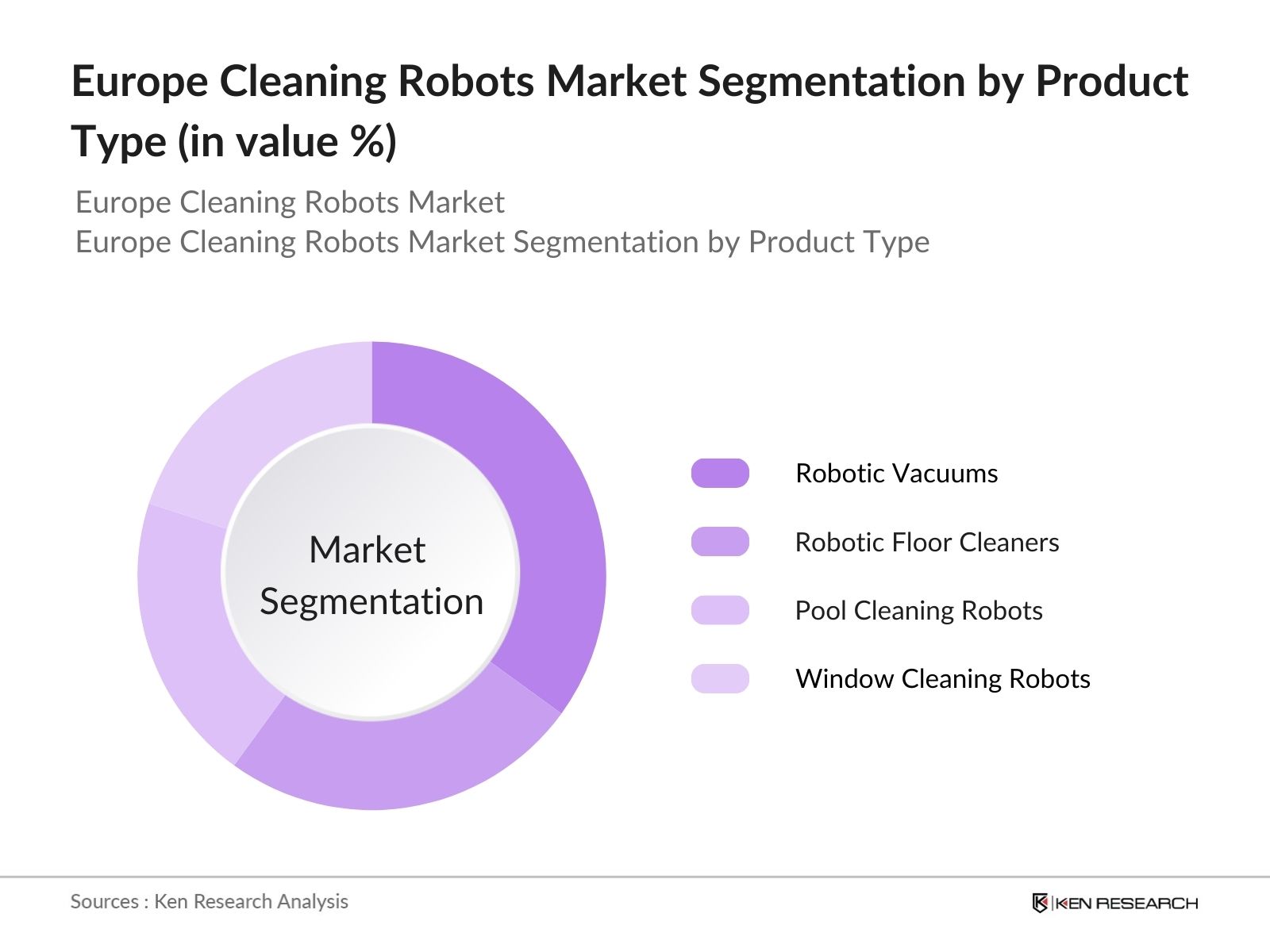
By Application: The market is further segmented by application into residential, commercial, and industrial uses. The residential segment dominates due to the growing adoption of home automation technologies across Europe, where cleaning robots offer convenience and efficiency for household cleaning. Furthermore, rising disposable income levels and changing lifestyles have led to an increase in demand for domestic cleaning solutions that save time and reduce manual effort. 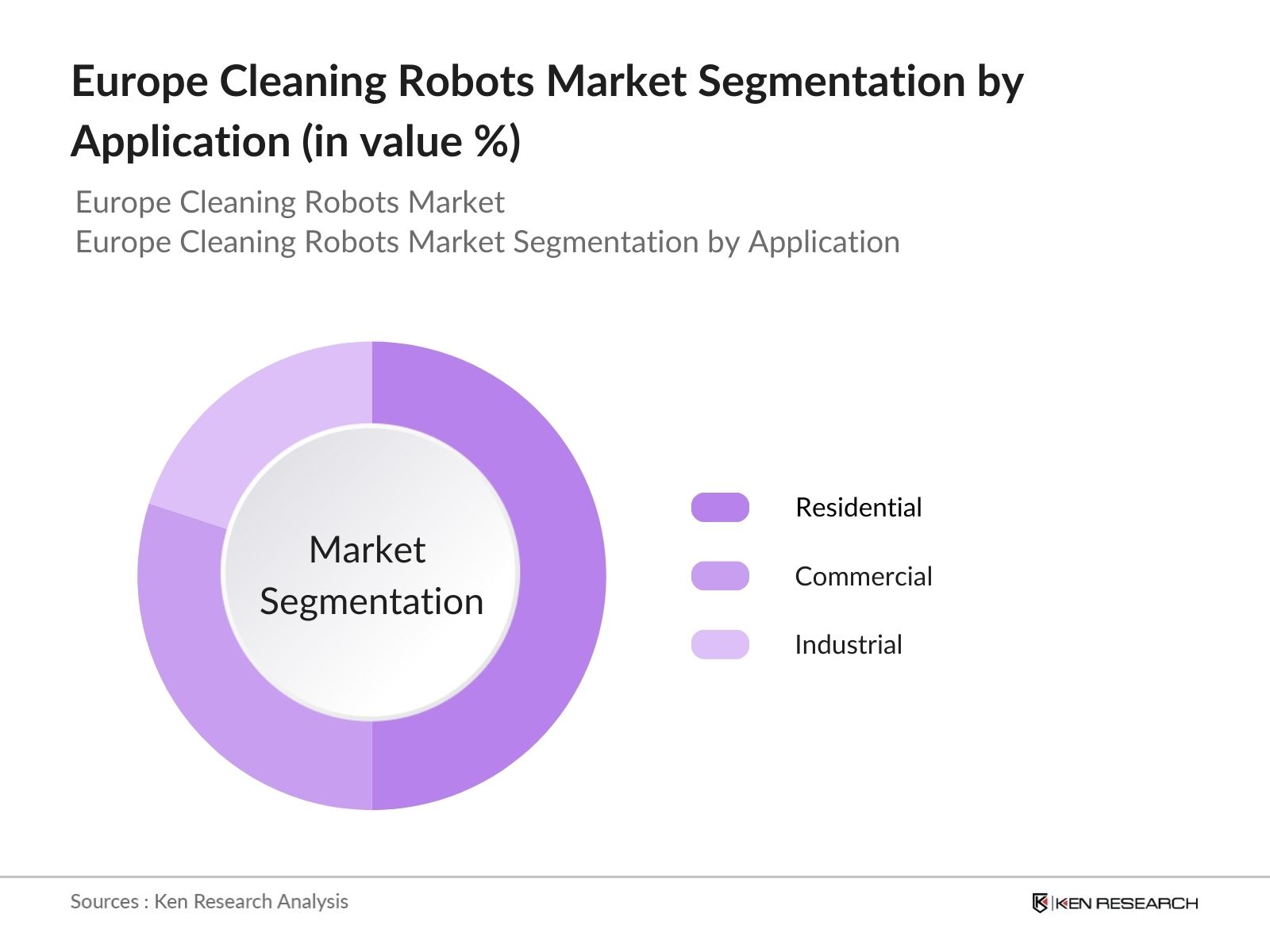
The Europe Cleaning Robots Market is dominated by prominent players who hold significant influence due to their technological expertise and extensive distribution networks. Major players include iRobot Corporation, Neato Robotics, Ecovacs Robotics, and Dyson Ltd., which together provide a wide range of cleaning robots tailored to varying consumer needs and preferences. The competitive landscape highlights a consolidation around established brands with strong brand loyalty and ongoing innovation. 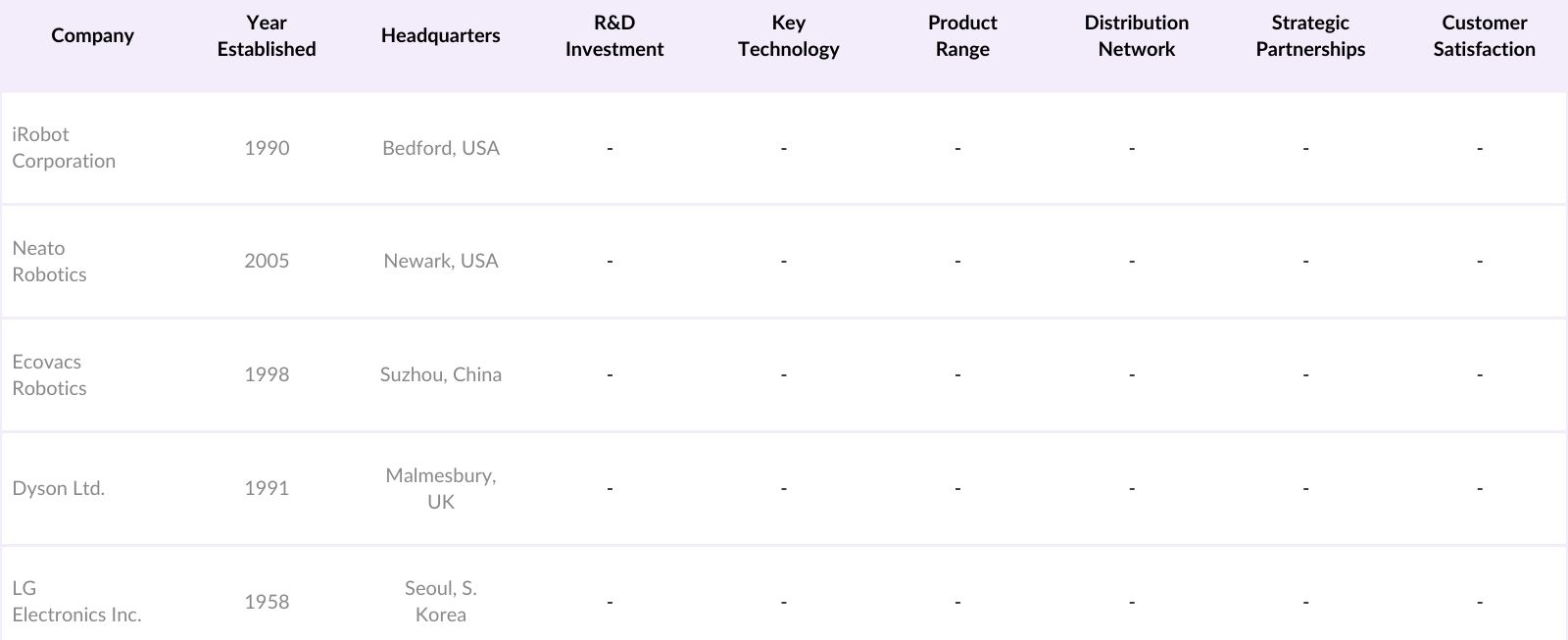
The Europe Cleaning Robots Market is set for continued expansion, driven by technological advancements in robotics and artificial intelligence. As more households and commercial spaces integrate smart technologies, the demand for intelligent cleaning solutions is expected to rise. The markets growth will be further supported by innovations in sensor technology and IoT compatibility, which are making cleaning robots more adaptable and efficient in complex environments.
|
Product Type |
Robotic Vacuums Robotic Floor Cleaners Pool Cleaning Robots Window Cleaning Robots |
|
Technology |
Autonomous Navigation Semi-autonomous Cleaning AI-enhanced Robots |
|
Application |
Residential Commercial Industrial |
|
Sales Channel |
Online Retail Offline Retail |
|
Region |
West East North South |
1.1 Definition and Scope
1.2 Market Taxonomy
1.3 Market Adoption and Penetration Rate
1.4 Market Segmentation Overview
2.1 Historical Market Size
2.2 Growth Rate Analysis
2.3 Key Developments and Milestones
3.1 Growth Drivers
3.1.1 Increasing Urbanization
3.1.2 Technological Advancements
3.1.3 Labor Cost Reduction
3.1.4 Rising Consumer Disposable Income
3.2 Market Challenges
3.2.1 High Initial Investment
3.2.2 Limited Product Lifespan
3.2.3 Data Privacy Concerns
3.3 Opportunities
3.3.1 Integration of AI and IoT
3.3.2 Emerging Markets in Eastern Europe
3.3.3 Expansion in Commercial Cleaning Services
3.4 Trends
3.4.1 Adoption of Smart Home Technology
3.4.2 Increasing Demand for Eco-friendly Cleaning Robots
3.4.3 Voice-Control and App-Based Operation
3.5 Government Regulation
3.5.1 European Union Robotics Compliance
3.5.2 Environmental Safety Standards
3.5.3 Import-Export Regulations
3.6 SWOT Analysis
3.7 Stakeholder Ecosystem
3.8 Porters Five Forces Analysis
3.9 Competitive Landscape Overview
4.1 By Product Type (In Value %)
4.1.1 Robotic Vacuum Cleaners
4.1.2 Robotic Pool Cleaners
4.1.3 Robotic Window Cleaners
4.1.4 Robotic Lawn Cleaners
4.2 By Application (In Value %)
4.2.1 Residential
4.2.2 Commercial
4.2.3 Industrial
4.3 By Technology (In Value %)
4.3.1 Autonomous Navigation
4.3.2 Smart Sensors
4.3.3 Voice Recognition
4.4 By End-User (In Value %)
4.4.1 Individual Households
4.4.2 Hospitality Sector
4.4.3 Healthcare Facilities
4.4.4 Offices and Corporate Spaces
4.5 By Region (In Value %)
4.5.1 North
4.5.2 South
4.5.3 West
4.5.4 East
5.1 Detailed Profiles of Major Companies
5.1.1 iRobot Corporation
5.1.2 Neato Robotics, Inc.
5.1.3 Ecovacs Robotics
5.1.4 LG Electronics
5.1.5 Samsung Electronics Co., Ltd.
5.1.6 Dyson Ltd.
5.1.7 Miele & Cie. KG
5.1.8 Panasonic Corporation
5.1.9 Xiaomi Corporation
5.1.10 Nilfisk Holding A/S
5.1.11 Krcher GmbH
5.1.12 Bissell Inc.
5.1.13 Cecotec Innovaciones S.L.
5.1.14 SharkNinja Operating LLC
5.1.15 Alfred Krcher SE & Co. KG
5.2 Cross Comparison Parameters (Revenue, Market Share, Headquarters, R&D Investment, Employee Strength, Product Portfolio, Market Strategy, Patents)
5.3 Market Share Analysis
5.4 Strategic Initiatives (Mergers, Acquisitions, Partnerships)
5.5 Technological Advancements
5.6 Investment and Funding Analysis
6.1 EU Compliance Standards
6.2 Import Tariff and Duties
6.3 Certification Processes and Protocols
7.1 Market Growth Catalysts
7.2 Key Consumer Trends Driving Future Market
8.1 Strategic Market Entry Analysis
8.2 Consumer Behavior Insights
8.3 Technological Adoption Pathways
8.4 White Space Analysis and New Opportunities
9.1 Key Component Suppliers
9.2 Distribution and Logistics Partners
9.3 Research and Development Collaborations
9.4 Industry Associations and Alliances
Disclaimer Contact UsThis phase involves mapping out the primary stakeholders and operational metrics within the Europe Cleaning Robots Market. Extensive desk research is performed to identify influential market variables, supported by proprietary databases for data validation.
Historical data on the cleaning robots market is compiled and analyzed, assessing market penetration across product types and applications. This analysis includes operational metrics that ensure reliable data interpretation and accuracy.
Market hypotheses are developed and tested through direct consultations with industry experts, including stakeholders from manufacturing and distribution. These insights help validate operational and financial perspectives within the market.
In the final stage, interactions with cleaning robot manufacturers are conducted to obtain in-depth insights into product segments, sales performance, and consumer preferences. This information, combined with validated data, provides a comprehensive analysis of the Europe Cleaning Robots Market.
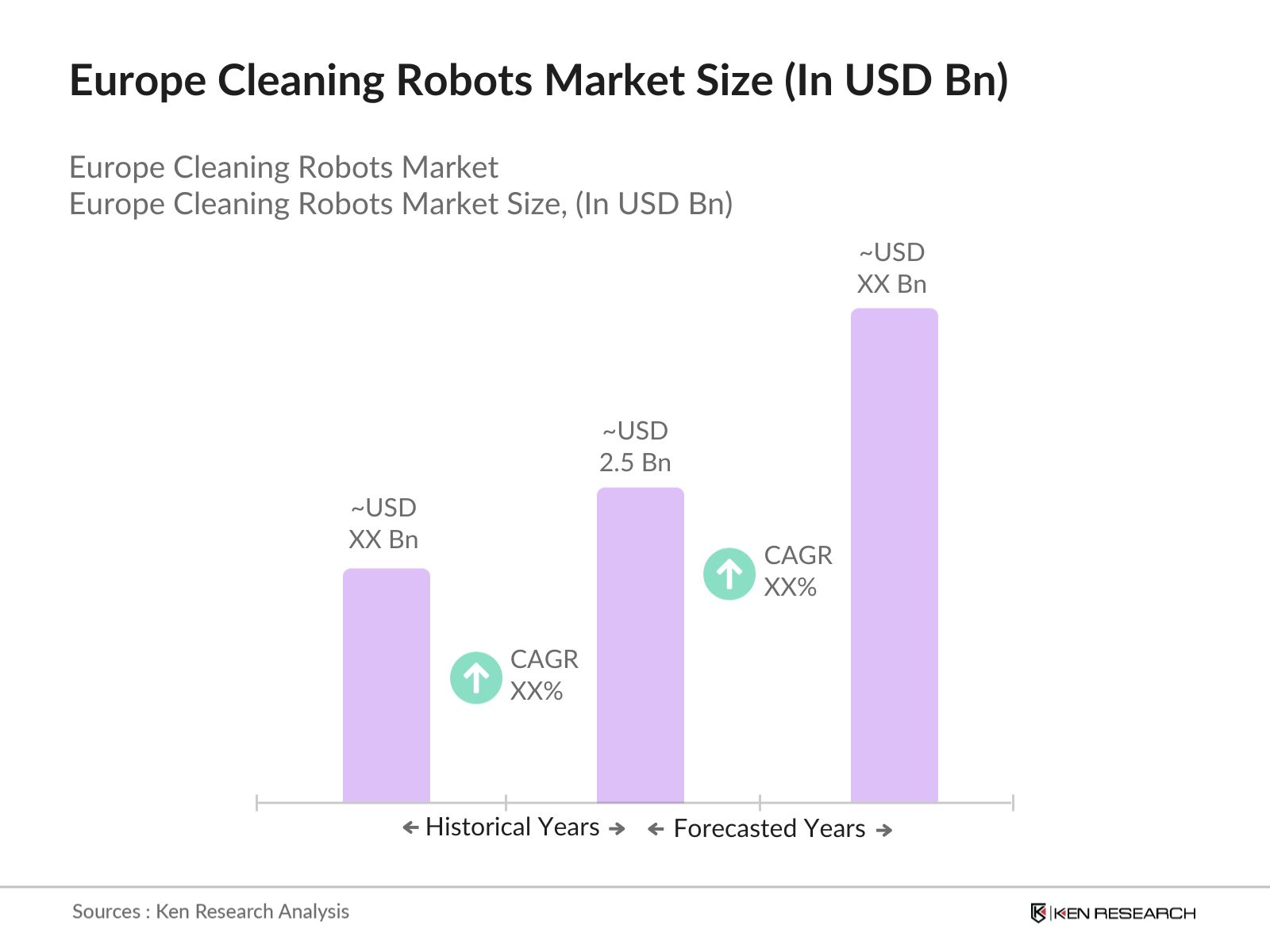
The Europe Cleaning Robots Market is valued at USD 2.5 billion, driven by rising consumer demand for automation in household cleaning and the adoption of smart home technologies.
Key challenges in the Europe Cleaning Robots Market include high initial costs for advanced models and cybersecurity concerns associated with IoT-enabled devices, which may affect adoption rates in some segments.
Leading players in the Europe Cleaning Robots Market include iRobot Corporation, Neato Robotics, Ecovacs Robotics, Dyson Ltd., and LG Electronics Inc., who dominate due to their technological advancements and extensive distribution networks.
Growth in the Europe Cleaning Robots Market is propelled by increasing disposable income, consumer inclination towards automation, and advances in AI and IoT, which improve product functionality and consumer appeal.
Opportunities in the Europe Cleaning Robots Market include the expansion of cleaning robots in commercial and industrial applications, along with growing interest in integrating these robots with broader smart home ecosystems.

What makes us stand out is that our consultants follows Robust, Refine and Result (RRR) methodology. i.e. Robust for clear definitions, approaches and sanity checking, Refine for differentiating respondents facts and opinions and Result for presenting data with story

We have set a benchmark in the industry by offering our clients with syndicated and customized market research reports featuring coverage of entire market as well as meticulous research and analyst insights.

While we don't replace traditional research, we flip the method upside down. Our dual approach of Top Bottom & Bottom Top ensures quality deliverable by not just verifying company fundamentals but also looking at the sector and macroeconomic factors.

With one step in the future, our research team constantly tries to show you the bigger picture. We help with some of the tough questions you may encounter along the way: How is the industry positioned? Best marketing channel? KPI's of competitors? By aligning every element, we help maximize success.

Our report gives you instant access to the answers and sources that other companies might choose to hide. We elaborate each steps of research methodology we have used and showcase you the sample size to earn your trust.

If you need any support, we are here! We pride ourselves on universe strength, data quality, and quick, friendly, and professional service.