Europe Digital Signature Market Outlook to 2030

Region:Europe

Author(s):Meenakshi Bisht

Product Code:KROD1816

Published On

December 2024

Total pages

83

About the Report

Europe Digital Signature Market Overview

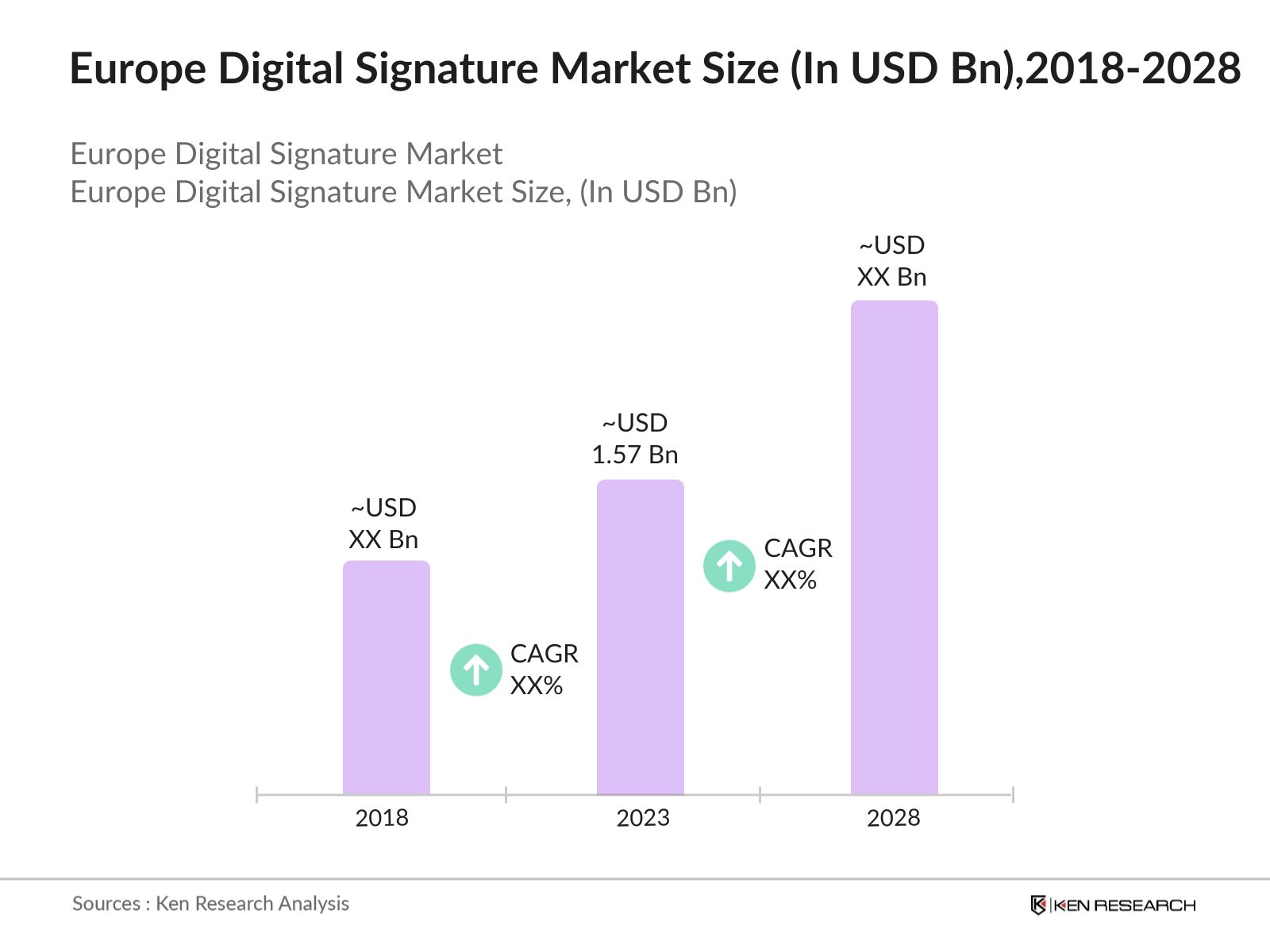
  • The Europe Digital Signature Market was valued at USD 1.57 billion in 2023. The surge in remote work, heightened focus on cybersecurity, and stringent regulatory requirements for digital transactions have been pivotal in propelling the market forward. Additionally, the rise in e-commerce and the need for secure digital authentication methods have further fueled market growth.

Europe Digital Signature Market size

  • The Europe Digital Signature Market is highly competitive, with several key players dominating the landscape. Prominent companies include DocuSign, Adobe Sign, Signicat, GlobalSign, and Thales Group. These organizations leverage advanced technologies and strategic partnerships to enhance their market presence and offer comprehensive digital signature solutions tailored to diverse business needs.
  • In March 2024, Signicat expanded its digital identity solutions by acquiring SmartWorks, a leading digital signature provider in Iceland. This acquisition enhances Signicats capabilities in combating digital fraud and strengthens its presence in the Icelandic market. The integration of SmartWorks' technology with Signicats existing offerings is expected to provide comprehensive solutions to address the growing challenges of digital identity verification and secure digital transactions across Europe.
  • Munich is the city that dominates the market, driven by its strong tech ecosystem, presence of numerous tech startups, and significant investments in digital infrastructure. The city is a hub for innovation, with several multinational corporations and financial institutions based there, which actively adopt and integrate digital signature technologies.

Europe Digital Signature Market Segmentation

The Europe Digital Signature Market is segmented into different factors like by product type, by application and region.

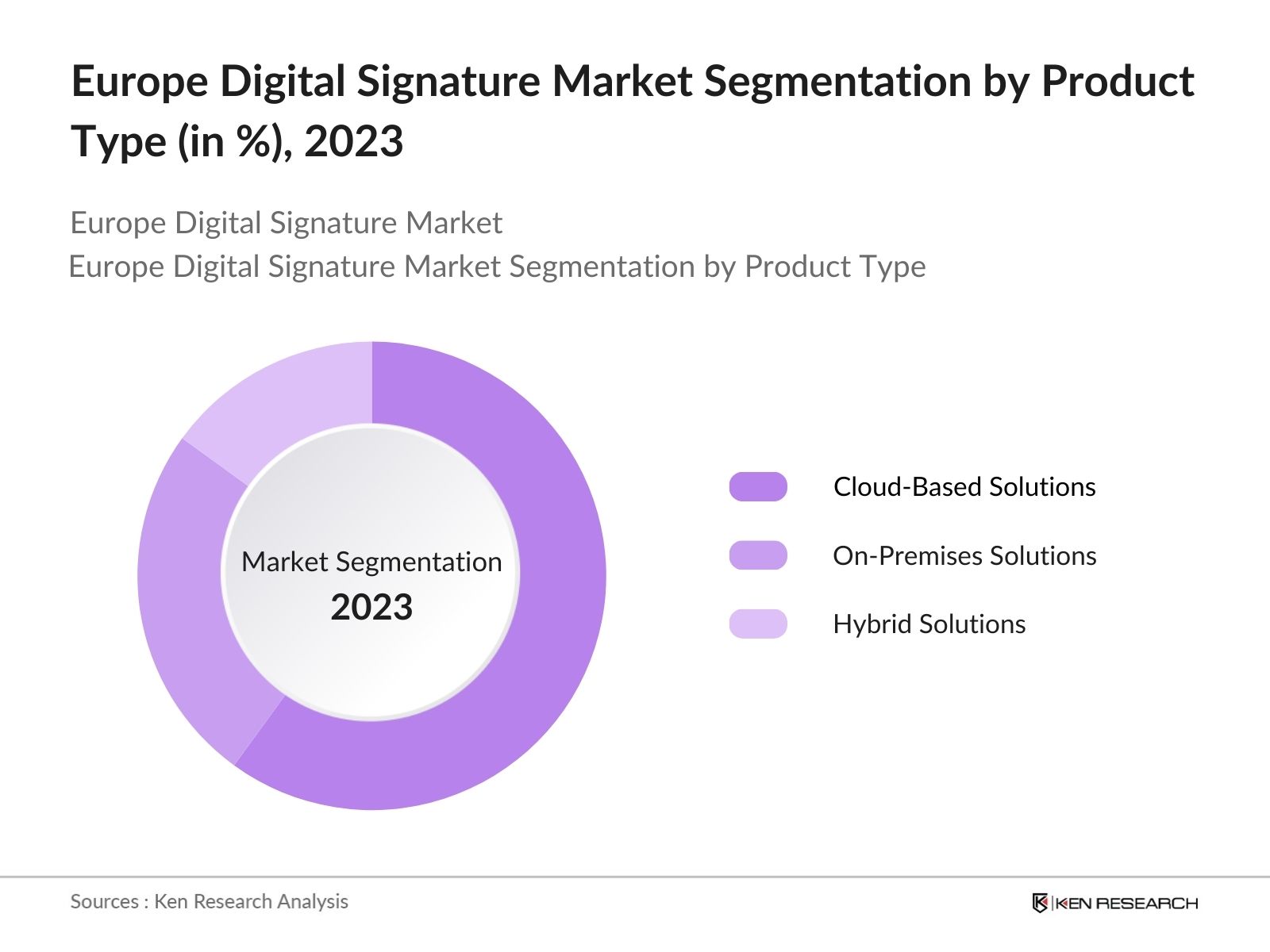
By Product Type: The market is segmented by product type into cloud-based solutions, on-premises solutions, and hybrid solutions. In 2023, Cloud-Based Solutions held the dominant market share, attributed to their scalability, flexibility, and lower upfront costs. The increasing preference for SaaS (Software as a Service) models among businesses of all sizes has significantly contributed to the dominance of cloud-based digital signature platforms.
Europe Digital Signature Market Segmentation by Product Type

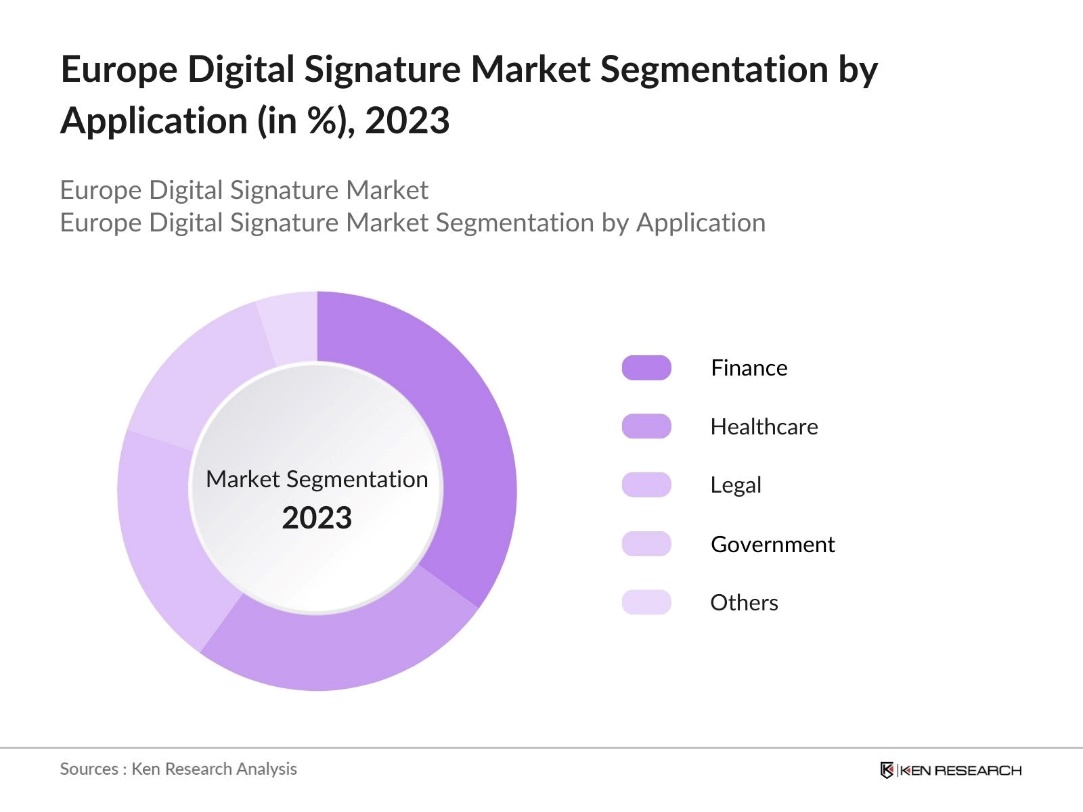
By Application: The market is segmented by application into finance, healthcare, legal, government, and others. In 2023, the Finance segment captured the largest market share due to the application segment due to the critical need for secure and compliant transaction methods. Digital signatures facilitate faster processing of financial documents, enhance security against fraud, and ensure adherence to regulatory requirements. The integration of digital signatures in banking operations, loan processing, and investment management has significantly boosted their adoption within the financial industry.
Europe Digital Signature Market Segmentation by Application

By Region: The regional segmentation includes Germany, France, United Kingdom, Sweden, Italy, and Rest of Europe. In 2023, Germany held the highest market share driven by its strong economy, technological advancements, and high digital adoption across various industries. This is driven due to their advanced digital infrastructure, high adoption rates among businesses, and supportive government policies promoting digital transformation. Countries like Sweden and France also contribute significantly due to their emphasis on cybersecurity and digital innovation

Europe Digital Signature Market Competitive Landscape

Company

Establishment Year

Headquarters

DocuSign

2003

San Francisco, USA

Adobe Sign

1982

San Jose, USA

Signicat

2000

Oslo, Norway

GlobalSign

1996

Montreal, Canada

Thales Group

2000

Paris, France

  • Thales Group: In August 2024, Thales Group announced that they have actively implemented and prototyped the National Institute of Standards and Technology (NIST) post-quantum cryptography (PQC) algorithms within their product lines. Thales is focusing on quantum-safe encryption solutions and Hardware Security Modules (HSMs) that are ready for testing across various applications. They have also been accelerating practical proof of concepts for hybrid algorithms in digital signatures and key exchange mechanisms, making strides towards future-proofing digital identities and securing data against quantum threats.
  • GlobalSign: In 2023, GlobalSign recently launched its Qualified Signing Service (QSS), a cloud-based solution for eIDAS-compliant qualified electronic signatures and seals. QSS allows organizations to deploy secure, legally binding electronic signatures through a simple REST API, enhancing document security for remote employees. It ensures compliance with EU regulations, provides easy mobile authentication, and reduces the need for hardware. QSS is designed to support various industries like fintech, legal, healthcare, and more.

Europe Digital Signature Market Analysis

Growth Drivers

  • Regulatory Compliance and Data Protection Requirements: Strict regulations like GDPR and eIDAS have significantly boosted Europe's digital signature market, driving demand in sectors such as finance and healthcare for secure transactions. The introduction of eIDAS 2.0 aims to further streamline digital identification and authentication processes, which will likely bolster the use of digital signatures even more by establishing a secure European Digital Identity Wallet.
  • Increased Adoption of Remote Work and Digitalization: The surge in remote work due to the COVID-19 pandemic has accelerated the adoption of digital signatures across Europe. A survey by PwC found that 70% of businesses have adopted hybrid work models in 2024, driven by businesses transitioning to remote operations and the need for secure, verifiable digital documentation. The shift towards digital workflows is expected to continue growing as companies embrace hybrid work models and seek efficient ways to manage documents and contracts digitally.
  • Growth in E-commerce and Online Transactions: The rapid growth of e-commerce and online transactions in Europe has led to the increased adoption of digital signatures to secure and authenticate transactions. As online banking, digital contracts, and electronic payments rise, businesses are prioritizing customer trust and security. Digital signatures play a key role in ensuring safe transactions, becoming a critical tool for securing the e-commerce landscape and other digital sectors.

Challenges

  • Fragmented Regulatory Landscape Across Europe: One of the significant challenges faced by the digital signature market is the fragmented regulatory environment across different European countries. In 2024, it was reported that businesses operating across borders often faced difficulties in ensuring compliance with varying digital signature regulations, leading to increased implementation costs and legal complexities. This fragmentation poses a barrier to seamless market expansion and standardization of digital signature practices.
  • High Implementation Costs for SMEs: Small and medium-sized enterprises (SMEs) in Europe face significant challenges due to the high costs of implementing digital signature systems. Expenses related to software, training, and compliance measures make it difficult for many SMEs, particularly in less developed regions, to fully integrate these solutions. Limited financial resources further complicate adoption, hindering widespread use among smaller businesses. These barriers slow the transition to secure digital processes for SMEs despite the growing demand for such solutions.

Government Initiatives

  • European Digital Identity: In 2024, the European Union adopted Regulation (EU) 2024/1183, establishing a new framework for a European Digital Identity. This initiative mandates the creation of European Digital Identity Wallets (EDIW) by each Member State, ensuring secure and reliable electronic identification services across the EU. The initiative is backed by a $0.0483 billion investment from the Digital Europe Programme to test the EDIW in various use cases, including eHealth and payments, significantly enhancing cross-border digital services.
  • Germany's Strategy for International Digital Policy: In February 2024, Germany unveiled its first Strategy for International Digital Policy, aiming to enhance its global digital engagement. This strategy includes nine guiding principles focused on protecting human rights online, advocating for a secure and open internet, and promoting secure cross-border data flows. Additionally, Germany plans to strengthen its digital infrastructure and international standards while mitigating risks in technology value chains. The initiative also includes expanding bilateral Digital Dialogues, particularly with African states.

Europe Digital Signature Market Future Outlook

The Europe Digital Signature Market is projected to grow exponentially by 2028. The future growth will be underpinned by advancements in blockchain technology, increasing government mandates for digital documentation, and the widespread adoption of mobile-based digital signature solutions. Additionally, the integration of artificial intelligence (AI) and machine learning (ML) into digital signature platforms will enhance security and user experience, further driving market expansion.

Future Market Trends

  • Increased Integration of AI and Machine Learning: Over the next five years, the Europe Digital Signature Market is expected to see significant advancements in the integration of artificial intelligence (AI) and machine learning (ML) into digital signature platforms. By 2028, the digital transactions annually will be processed using AI-enhanced digital signature solutions. These technologies will improve the accuracy of signature verification, enhance fraud detection, and streamline the overall signing process, making digital signatures more secure and efficient.
  • Expansion of Blockchain-Based Digital Signatures: The adoption of blockchain technology in digital signature solutions is anticipated to grow rapidly. By 2028, blockchain-based digital signatures are offering unparalleled security and transparency. The immutable nature of blockchain will ensure the integrity and authenticity of digital documents, driving adoption in sectors such as finance, healthcare, and government.

Scope of the Report

By Product Type

Cloud-Based Solutions

On-Premises Solutions

Hybrid Solutions

By Application

Finance

Healthcare

Legal

Government

Others

By Region

Germany

France

United Kingdom

Sweden

Italy

Rest of Europe

By Technology

Encryption-Based Signatures

Biometric Signatures

Blockchain-Based Signatures

Others

By Industry

Banking and Financial Services

Healthcare

Legal

Government

Retail

Products

Key Target Audience Organizations and Entities Who Can Benefit by Subscribing This Report:

  • Legal Firms

  • Travel & Hospitality Companies

  • Manufacturing Companies

  • Accounting and Audit Firms

  • Energy Companies

  • Technology Companies

  • Software Companies

  • E-commerce Companies

  • Telecommunications companies

  • Banks and Financial Institution

  • Investors and VC Firms

  • Government Agencies (European Commission, Federal Ministry of the Interior (Germany))

Time Period Captured in the Report:

  • Historical Period: 2018-2023

  • Base Year: 2023

  • Forecast Period: 2023-2028

Companies

Players Mentioned in the Report:

  • DocuSign

  • Adobe Sign

  • Signicat

  • GlobalSign

  • Thales Group

  • HelloSign

  • Nitro

  • Sertifi

  • SignNow

  • Yoti

  • OneSpan

  • Zoho Sign

  • PandaDoc

  • SignEasy

  • eSignLive

Table of Contents

1. Europe Digital Signature Market Overview

1.1. Definition and Scope

1.2. Market Taxonomy

1.3. Market Growth Rate

1.4. Market Segmentation Overview

2. Europe Digital Signature Market Size (in USD Bn), 2018-2023

2.1. Historical Market Size

2.2. Year-on-Year Growth Analysis

2.3. Key Market Developments and Milestones

3. Europe Digital Signature Market Analysis

3.1. Growth Drivers

3.1.1. Regulatory Compliance and Data Protection Requirements

3.1.2. Increased Adoption of Remote Work and Digitalization

3.1.3. Growth in E-commerce and Online Transactions

3.1.4. Government Support for Digital Transformation

3.2. Restraints

3.2.1. Fragmented Regulatory Landscape Across Europe

3.2.2. High Implementation Costs for SMEs

3.2.3. Cybersecurity Concerns and Threats

3.2.4. Lack of Awareness and Education

3.3. Opportunities

3.3.1. Technological Advancements

3.3.2. International Collaborations

3.3.3. Expansion into Emerging Markets

3.4. Trends

3.4.1. Adoption of AI and Machine Learning

3.4.2. Integration with Blockchain Technology

3.4.3. Growth of Biometric Authentication

3.4.4. Widespread Adoption of Cloud-Based Solutions

3.5. Government Regulation

3.5.1. European Digital Identit

3.5.2. Germany's Strategy for International Digital Policy

3.5.3. eIDAS Regulation Implementation

3.5.4. National Cybersecurity Initiatives

3.6. SWOT Analysis

3.7. Stake Ecosystem

3.8. Competition Ecosystem

4. Europe Digital Signature Market Segmentation, 2023

4.1. By Product Type (in Value %)

4.1.1. Cloud-Based Solutions

4.1.2. On-Premises Solutions

4.1.3. Hybrid Solutions

4.1.4. Others

4.2. By Application (in Value %)

4.2.1. Finance

4.2.2. Healthcare

4.2.3. Legal

4.2.4. Government

4.2.5. Others

4.3. By Technology (in Value %)

4.3.1. Encryption-Based Signatures

4.3.2. Biometric Signatures

4.3.3. Blockchain-Based Signatures

4.3.4. Others

4.4. By Industry (in Value %)

4.4.1. Banking and Financial Services

4.4.2. Healthcare

4.4.3. Legal

4.4.4. Government

4.4.5. Retail

4.5. By Region (in Value %)

4.5.1. Germany

4.5.2. France

4.5.3. United Kingdom

4.5.4. Sweden

4.5.5. Italy

4.5.6. Rest of Europe

5. Europe Digital Signature Market Cross Comparison

5.1. Detailed Profiles of Major Companies

5.1.1. DocuSign

5.1.2. Adobe Sign

5.1.3. Signicat

5.1.4. GlobalSign

5.1.5. Thales Group

5.1.6. HelloSign

5.1.7. Nitro

5.1.8. Sertifi

5.1.9. SignNow

5.1.10. Yoti

5.1.11. OneSpan

5.1.12. Zoho Sign

5.1.13. PandaDoc

5.1.14. SignEasy

5.1.15. eSignLive

5.2. Cross Comparison Parameters (No. of Employees, Headquarters, Inception Year, Revenue)

6. Europe Digital Signature Market Competitive Landscape

6.1. Market Share Analysis

6.2. Strategic Initiatives

6.3. Mergers and Acquisitions

6.4. Investment Analysis

6.4.1. Venture Capital Funding

6.4.2. Government Grants

6.4.3. Private Equity Investments

7. Europe Digital Signature Market Regulatory Framework

7.1. Data Protection Standards

7.2. Compliance Requirements

7.3. Certification Processes

8. Europe Digital Signature Market Future Market Size (in USD Bn), 2023-2028

8.1. Future Market Size Projections

8.2. Key Factors Driving Future Market Growth

9. Europe Digital Signature Market Future Market Segmentation, 2028

9.1. By Product Type (in Value %)

9.2. By Application (in Value %)

9.3. By Technology (in Value %)

9.4. By Industry (in Value %)

9.5. By Region (in Value %)

10. Europe Digital Signature Market Analysts Recommendations

10.1. TAM/SAM/SOM Analysis

10.2. Customer Cohort Analysis

10.3. Marketing Initiatives

10.4. White Space Opportunity Analysis

Disclaimer Contact Us

Research Methodology

Step: 1 Identifying Key Variables:

Ecosystem creation for all the major entities and referring to multiple secondary and proprietary databases to perform desk research around market to collate industry level information.

Step: 2 Market Building:

Collating statistics on Europe Digital Signature Market over the years, penetration of marketplaces and service providers ratio to compute revenue generated for Europe Digital Signature Industry. We will also review service quality statistics to understand revenue generated which can ensure accuracy behind the data points shared.

Step: 3 Validating and Finalizing:

Building market hypothesis and conducting CATIs with industry experts belonging to different companies to validate statistics and seek operational and financial information from company representatives.

Step: 4 Research Output:

Our team will approach multiple IT and software companies and understand nature of product segments and sales, consumer preference and other parameters, which will support us validate statistics derived through bottom to top approach from IT and software companies.

Frequently Asked Questions

01 How big is the Europe Digital Signature Market?

The Europe Digital Signature Market was valued at USD 1.57 billion in 2023, driven by the surge in remote work, heightened focus on cybersecurity, and stringent regulatory requirements for digital transactions.

02 What are the challenges in the Europe Digital Signature Market?

Challenges in Europe Digital Signature Market include a fragmented regulatory landscape across Europe, high implementation costs for SMEs, cybersecurity concerns, and a lack of awareness and education regarding digital signature benefits.

03 Who are the major players in the Europe Digital Signature Market?

Key players in the Europe Digital Signature Market include DocuSign, Adobe Sign, Signicat, GlobalSign, and Thales Group, known for their advanced technologies and strategic partnerships in the digital signature domain.

04 What are the growth drivers of the Europe Digital Signature Market?

The Europe Digital Signature Market is driven by regulatory compliance and data protection requirements, increased adoption of remote work, growth in e-commerce and online transactions, and government support for digital transformation.

Why Buy From Us?

RRR
Refine Robust Result (RRR) Framework

What makes us stand out is that our consultants follows Robust, Refine and Result (RRR) methodology. i.e. Robust for clear definitions, approaches and sanity checking, Refine for differentiating respondents facts and opinions and Result for presenting data with story

Our Reach Is Unmatched

We have set a benchmark in the industry by offering our clients with syndicated and customized market research reports featuring coverage of entire market as well as meticulous research and analyst insights.

Research
Shifting the Research Paradigm

While we don't replace traditional research, we flip the method upside down. Our dual approach of Top Bottom & Bottom Top ensures quality deliverable by not just verifying company fundamentals but also looking at the sector and macroeconomic factors.

Insite
More Insights-Better Decisions

With one step in the future, our research team constantly tries to show you the bigger picture. We help with some of the tough questions you may encounter along the way: How is the industry positioned? Best marketing channel? KPI's of competitors? By aligning every element, we help maximize success.

Trust
Transparency and Trust

Our report gives you instant access to the answers and sources that other companies might choose to hide. We elaborate each steps of research methodology we have used and showcase you the sample size to earn your trust.

support
Round the Clock Support

If you need any support, we are here! We pride ourselves on universe strength, data quality, and quick, friendly, and professional service.

Why Client Choose Us?

400000+ Reports in repository
150+ Consulting project a year
100+ Analysts
8000+ Client Queries in 2022