















Europe Dry Eye Syndrome Market Outlook to 2030
Region:Europe
Author(s):Paribhasha Tiwari
Product Code:KROD6162
November 2024
95
About the Report
Europe Dry Eye Syndrome Market Overview
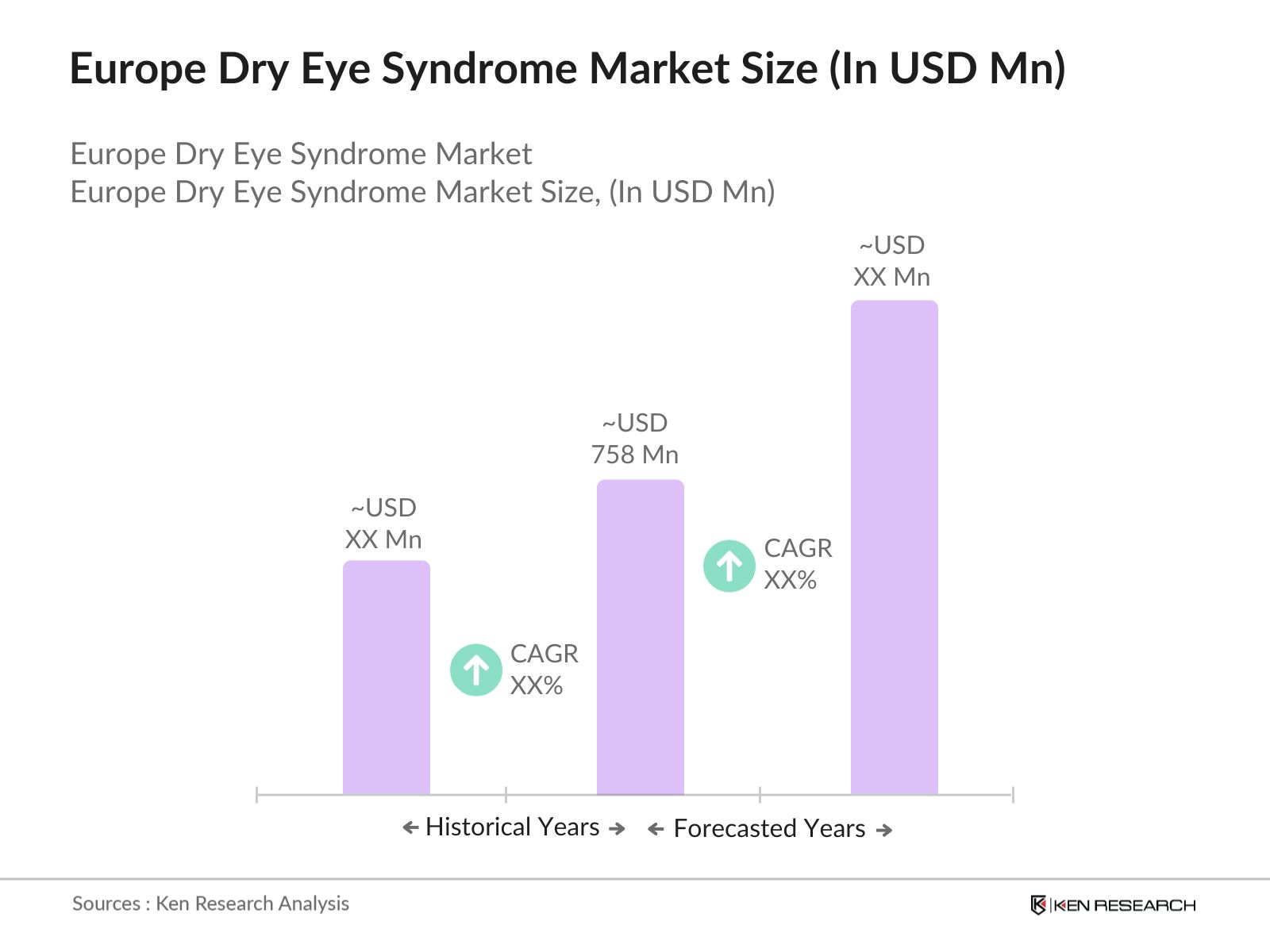
- The Europe Dry Eye Syndrome Market is valued at USD 758 million, driven by the increasing prevalence of dry eye conditions across Europe. Factors such as rising screen time, increased use of contact lenses, and a growing elderly population have significantly contributed to market growth. The demand for effective treatments, such as artificial tears, punctal plugs, and prescription medications, is rapidly increasing, leading to a robust expansion in the pharmaceutical and healthcare sectors catering to this condition.
- Dominant regions in the Europe Dry Eye Syndrome Market include Western Europe, particularly countries like Germany, France, and the UK, where advanced healthcare infrastructure and widespread access to ophthalmic treatments are available. These countries dominate due to high awareness about eye health, the prevalence of aging populations, and government healthcare support. Additionally, these nations have strong pharmaceutical sectors, allowing quicker access to innovations and treatments for dry eye conditions.
- Governments across Europe have introduced subsidized treatment programs for elderly patients suffering from dry eye syndrome. By 2024, these programs provide financial assistance to over 500,000 seniors, helping them access advanced treatments such as prescription medications and non-invasive therapies. Over the next five years, these programs are expected to expand, reaching an additional 1 million elderly patients, particularly in countries like Germany and Italy.
Europe Dry Eye Syndrome Market Segmentation
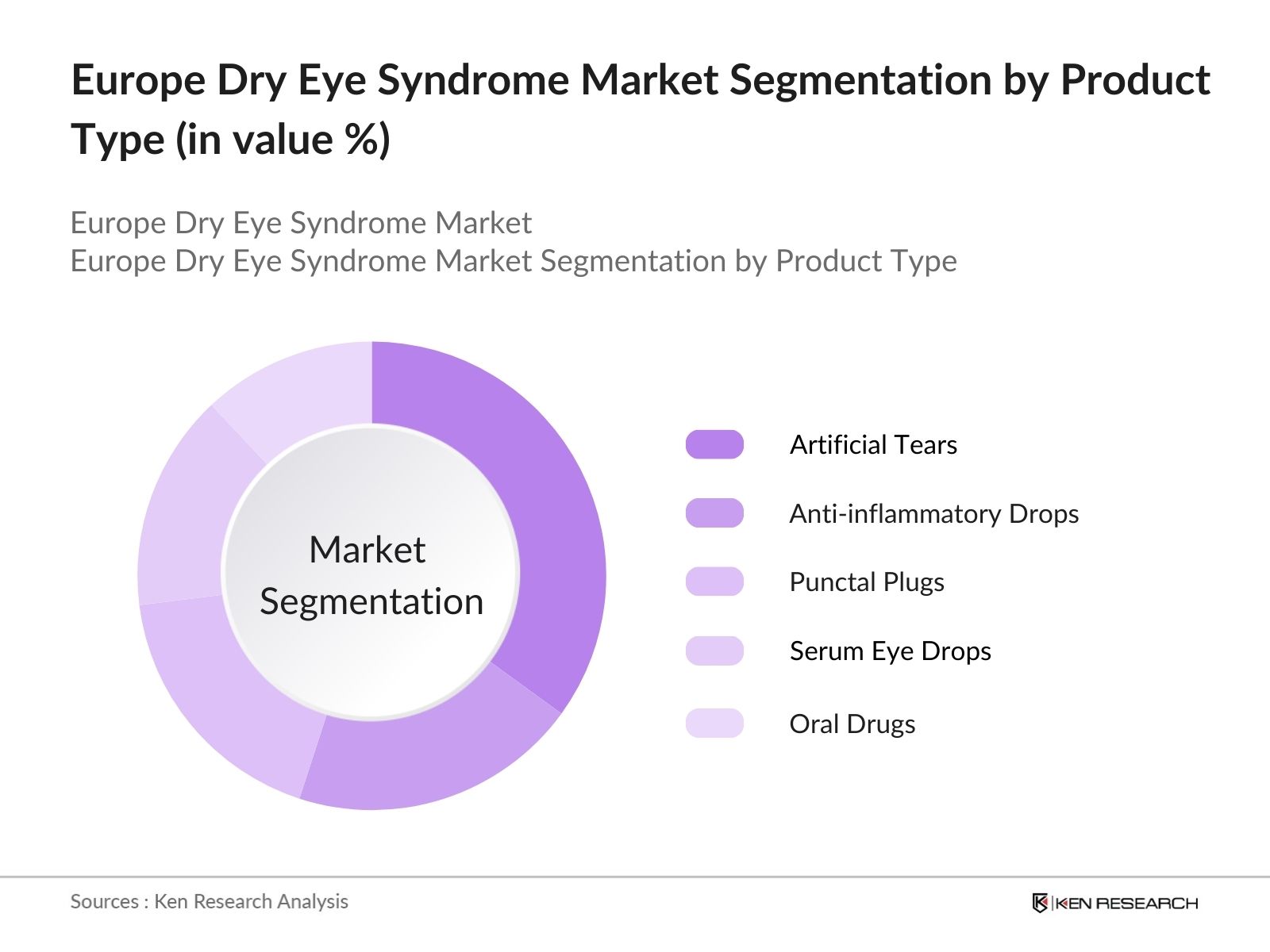
By Product Type: The Europe Dry Eye Syndrome Market is segmented by product type into artificial tears, anti-inflammatory drops, punctal plugs, serum eye drops, and oral drugs. Among these, artificial tears hold the dominant market share, primarily due to their widespread use as an over-the-counter treatment for mild to moderate dry eye symptoms. These products are easily accessible and offer immediate relief to patients suffering from dryness, irritation, and burning sensations. Their affordability and growing presence in pharmacies and online platforms contribute to their significant market share. Additionally, manufacturers are continuously improving formulations, further enhancing the dominance of this segment.
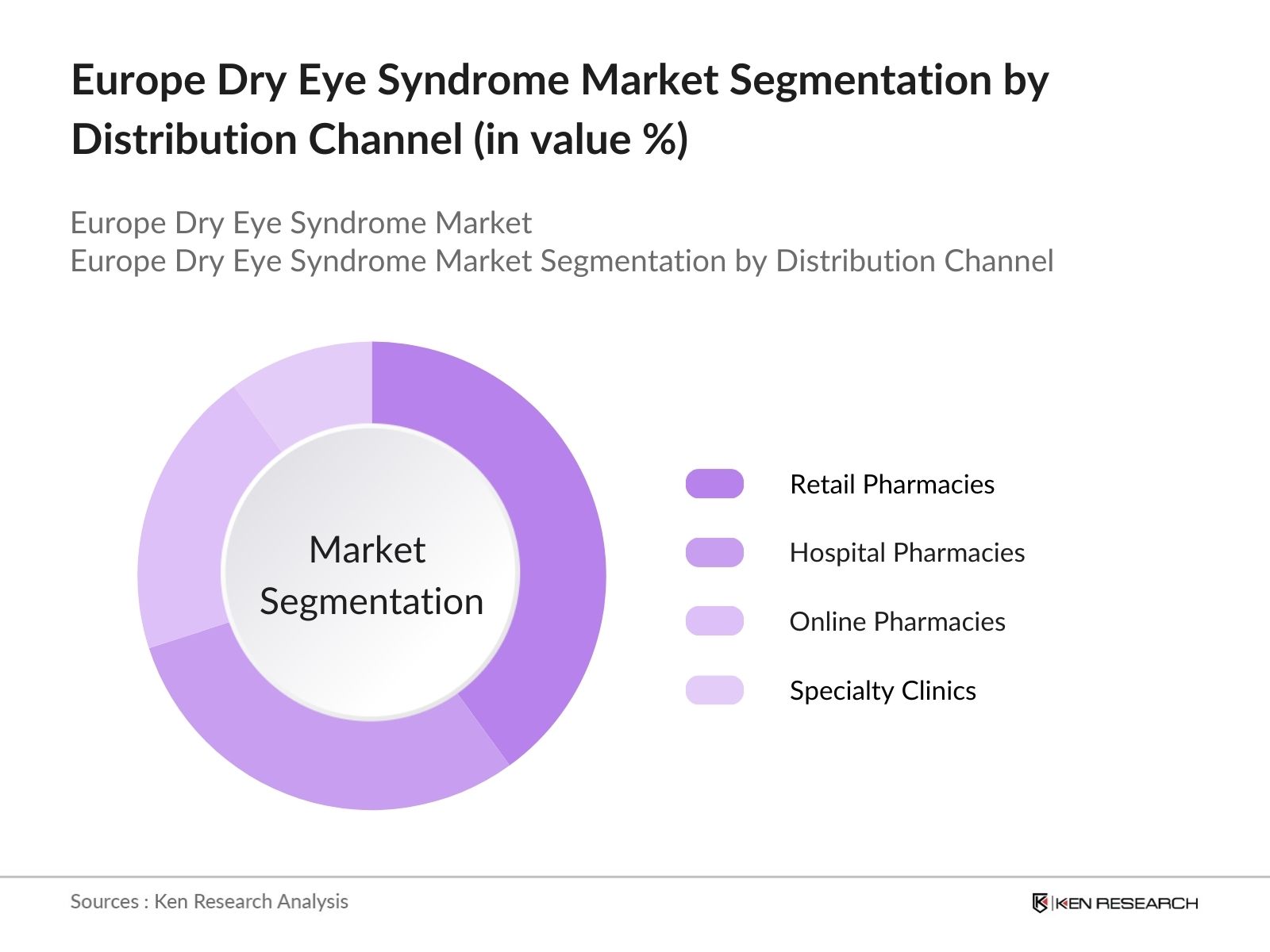
By Distribution Channel: The market is segmented by distribution channels into hospital pharmacies, retail pharmacies, online pharmacies, and specialty clinics. Retail pharmacies have the largest market share due to their wide accessibility and the availability of various over-the-counter products. Most dry eye sufferers prefer purchasing artificial tears and eye drops without a prescription, and retail pharmacies cater to this demand. Moreover, pharmacists often provide guidance, making them a preferred choice for consumers. Retail pharmacies expansion across urban and rural areas of Europe has also solidified their dominant position in this market.
Europe Dry Eye Syndrome Market Competitive Landscape
The Europe Dry Eye Syndrome market is dominated by a few key players, including multinational pharmaceutical giants and specialized ophthalmic care companies. These companies dominate the landscape through extensive research and development (R&D) efforts, strong product portfolios, and strategic mergers and acquisitions. Their presence in Western Europe provides access to advanced healthcare infrastructure, giving them an advantage in launching innovative dry eye treatments.
|
Company |
Establishment Year |
Headquarters |
R&D Investment (2023) |
No. of Products |
Geographic Presence |
Market Share (2023) |
Partnerships |
Recent Acquisitions |
|---|---|---|---|---|---|---|---|---|
|
Novartis AG |
1996 |
Switzerland |
- | - | - | - | - | - |
|
Johnson & Johnson |
1886 |
USA |
- | - | - | - | - | - |
|
Bausch Health Companies |
1959 |
Canada |
- | - | - | - | - | - |
|
Santen Pharmaceutical |
1890 |
Japan |
- | - | - | - | - | - |
|
AbbVie Inc. |
2013 |
USA |
- | - | - | - | - | - |
Europe Dry Eye Syndrome Market Analysis
Growth Drivers
- Population Over 50 with Increased Dry Eye Incidence: The aging population in Europe, particularly those aged 50 and above, has been identified as a significant driver for the increasing incidence of dry eye syndrome (DES). As of 2024, around 200 million Europeans are over 50, and studies show that more than 30% of this population suffers from dry eye-related symptoms. With the number of people aged over 50 projected to rise by an additional 15 million in the next five years, the demand for treatments and therapies targeting dry eye syndrome is expected to increase, particularly in countries like Germany, Italy, and the United Kingdom, where aging populations are most prevalent.
- Impact of Digital Devices on Eye Health: The surge in digital device usage across Europe has resulted in a growing incidence of dry eye syndrome, particularly among younger adults. In 2024, there are over 450 million mobile and desktop users, with an average screen time of 7 hours per day. This prolonged exposure to screens is contributing to a rise in eye strain and dry eye symptoms, leading to increased demand for treatment solutions. The European digital economy continues to expand, which is likely to further fuel the prevalence of screen-related dry eye issues in the next five years.
- Air Pollution and Dry Eye Prevalence: Increasing air pollution levels, especially in urban areas like Paris, London, and Madrid, have exacerbated the prevalence of dry eye syndrome. As of 2024, more than 60 million residents across Europe live in cities with high air pollution levels, leading to an increase in environmental dry eye cases. This trend is expected to continue as environmental concerns grow, driving the need for specialized treatments that can help mitigate the effects of pollution on eye health.
Market Challenges
- High Treatment Costs: The cost of advanced dry eye treatments, particularly surgical and prescription options, remains a significant barrier to widespread adoption. In 2024, the average cost for dry eye surgery ranges between 1,500 and 3,000, making it inaccessible for many patients across Europe. Furthermore, the cost of prescription medications continues to rise, limiting access to those in low-income brackets. This financial burden is a critical challenge that restricts market growth in regions with limited reimbursement policies.
- Limited Awareness in Rural Areas: Despite the advancements in treatment options, awareness of dry eye syndrome remains limited in rural parts of Europe. As of 2024, nearly 90 million Europeans live in rural areas with inadequate access to healthcare infrastructure, making it challenging to diagnose and treat dry eye syndrome. The lack of awareness and availability of specialized eye care facilities in these regions continues to hinder the market's potential for growth.
Europe Dry Eye Syndrome Market Future Outlook
Over the next five years, the Europe Dry Eye Syndrome Market is expected to see robust growth due to several driving factors. Key elements include the rising incidence of dry eye conditions, advancements in treatment options, and the increasing availability of OTC products. Additionally, as awareness of eye health continues to grow, supported by government initiatives and better healthcare infrastructure, the market will see an influx of innovations in treatment solutions. The entry of new players and partnerships between pharmaceutical companies and tech firms will also catalyze growth.
Market Opportunities
- Emerging Non-Invasive Treatments: The development of non-invasive treatments for dry eye syndrome presents a significant opportunity in Europe. By 2024, several new non-invasive therapies, such as intense pulsed light (IPL) therapy and thermal pulsation devices, are gaining popularity due to their ease of use and reduced side effects. These therapies are expected to see wider adoption in the next five years, with over 200,000 new treatment sessions projected annually across Europe by 2028.
- Growing Demand for OTC Eye Drops: The demand for over-the-counter (OTC) eye drops for dry eye syndrome continues to grow in Europe, with nearly 50 million units sold in 2024. This trend is driven by the increasing preference for self-care among patients, as well as the affordability and accessibility of these products. In the next five years, sales of OTC eye drops are expected to increase significantly, particularly in countries with high urbanization and busy lifestyles, such as the UK and France.
Scope of the Report
|
By Product Type |
Artificial Tears Anti-inflammatory Drops Punctal Plugs Serum Eye Drops Oral Drugs |
|
By Distribution Channel |
Hospital Pharmacies Retail Pharmacies Online Pharmacies Specialty Clinics |
|
By End-User |
Hospitals Specialty Clinics Retail Consumers Research Institutes |
|
By Treatment Type |
OTC Treatments Prescription Medications Surgical Interventions Non-Invasive Therapies |
|
By Region |
West East North South |
Products
Key Target Audience
Ophthalmologists and Eye Care Professionals
Pharmaceutical Companies
Investors and Venture Capitalist Firms
Government and Regulatory Bodies (European Medicines Agency, National Health Services)
Retail Pharmacies and Specialty Clinics
Healthcare Providers
OTC Drug Manufacturers
Hospitals and Diagnostic Centers
Companies
Players Mentioned in the Report:
Novartis AG
Johnson & Johnson
Bausch Health Companies
Santen Pharmaceutical
AbbVie Inc.
Pfizer Inc.
Otsuka Pharmaceutical Co. Ltd.
Kala Pharmaceuticals
GlaxoSmithKline
Tha Pharmaceuticals
Table of Contents
1. Europe Dry Eye Syndrome Market Overview
1.1. Definition and Scope
1.2. Market Taxonomy
1.3. Market Growth Rate (Dry Eye Cases Per Year, Growth In Ophthalmic Treatments)
1.4. Market Segmentation Overview
2. Europe Dry Eye Syndrome Market Size (In USD Bn)
2.1. Historical Market Size (Increased Diagnosis Rates, Growth in Clinical Visits)
2.2. Year-On-Year Growth Analysis
2.3. Key Market Developments and Milestones (Introduction of New Therapies, Increased Focus on Eye Care)
3. Europe Dry Eye Syndrome Market Analysis
3.1. Growth Drivers
3.1.1. Aging Population (Population Over 50 with Increased Dry Eye Incidence)
3.1.2. Increased Screen Time (Impact of Digital Devices on Eye Health)
3.1.3. Environmental Factors (Air Pollution and Dry Eye Prevalence)
3.1.4. Growth in Ophthalmology Clinics (Expansion of Specialized Eye Clinics)
3.2. Market Challenges
3.2.1. High Treatment Costs
3.2.2. Limited Awareness in Rural Areas
3.2.3. Regulatory Approval Delays for New Treatments
3.2.4. Limited Access to Advanced Diagnostics
3.3. Opportunities
3.3.1. Emerging Non-Invasive Treatments
3.3.2. Growing Demand for OTC Eye Drops
3.3.3. Increasing Focus on Preventive Eye Health Programs
3.3.4. Expanding Research in Novel Drug Therapies
3.4. Trends
3.4.1. Adoption of Tear Film Analysis Devices
3.4.2. Increase in Tele-Ophthalmology Services
3.4.3. Growth of Natural and Herbal Eye Products
3.4.4. Integration of Artificial Intelligence in Eye Care Diagnostics
3.5. Government Regulation
3.5.1. Ophthalmic Drug Approval Policies
3.5.2. Eye Health Awareness Campaigns
3.5.3. National Healthcare Support for Dry Eye Treatments
3.5.4. Regulations on OTC Eye Drops and Prescriptions
3.6. SWOT Analysis (Market Strengths, Weaknesses, Opportunities, Threats)
3.7. Stakeholder Ecosystem (Ophthalmologists, Drug Manufacturers, Pharmacists)
3.8. Porters Five Forces (Competitive Intensity, Supplier Power, Buyer Power, etc.)
3.9. Competitive Landscape Overview
4. Europe Dry Eye Syndrome Market Segmentation
4.1. By Product Type (In Value %)
4.1.1. Artificial Tears
4.1.2. Anti-inflammatory Drops
4.1.3. Punctal Plugs
4.1.4. Serum Eye Drops
4.1.5. Oral Drugs
4.2. By Treatment Type (In Value %)
4.2.1. OTC Treatments
4.2.2. Prescription Medications
4.2.3. Surgical Interventions
4.2.4. Non-Invasive Therapies
4.3. By Distribution Channel (In Value %)
4.3.1. Hospital Pharmacies
4.3.2. Retail Pharmacies
4.3.3. Online Pharmacies
4.3.4. Specialty Clinics
4.4. By End-User (In Value %)
4.4.1. Hospitals
4.4.2. Specialty Clinics
4.4.3. Retail Consumers
4.4.4. Research Institutes
4.5. By Region (In Value %)
4.5.1. Western Europe
4.5.2. Eastern Europe
4.5.3. Northern Europe
4.5.4. Southern Europe
5. Europe Dry Eye Syndrome Market Competitive Analysis
5.1. Detailed Profiles of Major Companies
5.1.1. Novartis AG
5.1.2. Johnson & Johnson
5.1.3. Allergan
5.1.4. Bausch Health Companies Inc.
5.1.5. Santen Pharmaceutical
5.1.6. Sun Pharmaceutical Industries Ltd.
5.1.7. Alcon Inc.
5.1.8. Pfizer Inc.
5.1.9. Kala Pharmaceuticals
5.1.10. Otsuka Pharmaceutical Co., Ltd.
5.1.11. GlaxoSmithKline
5.1.12. AbbVie Inc.
5.1.13. Shire Pharmaceuticals
5.1.14. Sentiss Pharma
5.1.15. Tha Pharmaceuticals
5.2. Cross Comparison Parameters (Revenue, Market Share, R&D Investment, Drug Approvals, Innovation Pipeline, Product Portfolio, Geographic Reach, Strategic Partnerships)
5.3. Market Share Analysis (Top Competitors by Market Share)
5.4. Strategic Initiatives (Mergers, Acquisitions, New Product Launches)
5.5. Mergers and Acquisitions (Key M&A in the Dry Eye Syndrome Market)
5.6. Investment Analysis (Major Investments in R&D and Infrastructure)
5.7. Government Grants and Funding for Research
5.8. Private Equity and Venture Capital Funding
6. Europe Dry Eye Syndrome Market Regulatory Framework
6.1. Ophthalmic Drug Safety Regulations
6.2. EU Guidelines for Clinical Trials in Ophthalmology
6.3. Prescription Control Policies
6.4. OTC Eye Drops Certification Processes
7. Europe Dry Eye Syndrome Future Market Size (In USD Bn)
7.1. Future Market Size Projections (Increased Incidence Rates, Availability of Advanced Treatments)
7.2. Key Factors Driving Future Market Growth
8. Europe Dry Eye Syndrome Future Market Segmentation
8.1. By Product Type (In Value %)
8.2. By Treatment Type (In Value %)
8.3. By Distribution Channel (In Value %)
8.4. By End-User (In Value %)
8.5. By Region (In Value %)
9. Europe Dry Eye Syndrome Market Analysts Recommendations
9.1. TAM/SAM/SOM Analysis
9.2. Emerging Markets Strategy
9.3. Product Differentiation Opportunities
9.4. Expansion in Online Retail Channels
Research Methodology
Step 1: Identification of Key Variables
The research process begins with identifying critical variables impacting the Europe Dry Eye Syndrome Market. This is done through comprehensive desk research using databases, scientific publications, and industry reports. The focus is on market dynamics, product offerings, and treatment trends in the ophthalmology sector.
Step 2: Market Analysis and Construction
This stage involves collecting and analyzing historical data about product penetration and revenue generation in the dry eye syndrome treatment segment. In addition, we assess how different products, such as artificial tears, have contributed to market revenue and which channels generate the highest sales.
Step 3: Hypothesis Validation and Expert Consultation
Hypotheses regarding the drivers and challenges of the market are validated by engaging with industry experts through interviews and surveys. These consultations provide practical insights into the market landscape, product preferences, and regulatory hurdles, helping refine the overall analysis.
Step 4: Research Synthesis and Final Output
Finally, the gathered data and expert feedback are synthesized into the final market report. This ensures a comprehensive understanding of the Europe Dry Eye Syndrome Market, covering all aspects of the industry from product segments to competitive landscape, regulatory framework, and future outlook.
Frequently Asked Questions
01. How big is the Europe Dry Eye Syndrome Market?
The Europe Dry Eye Syndrome Market is valued at USD 758 million, driven by the increasing prevalence of dry eye conditions, expanding use of contact lenses, and a growing elderly population.
02. What are the challenges in the Europe Dry Eye Syndrome Market?
Challenges in Europe Dry Eye Syndrome market include high treatment costs, limited access to advanced diagnostic tools, and delayed regulatory approvals for newer treatment options, which hamper the swift adoption of innovative therapies.
03. Who are the major players in the Europe Dry Eye Syndrome Market?
Key players in the Europe Dry Eye Syndrome market include Novartis AG, Johnson & Johnson, Bausch Health Companies, Santen Pharmaceutical, and AbbVie Inc., who dominate due to their extensive R&D capabilities, strong market presence, and strategic acquisitions.
04. What are the growth drivers of the Europe Dry Eye Syndrome Market?
The Europe Dry Eye Syndrome market is driven by factors such as the aging population, increased screen time leading to dry eye conditions, and the rise of digital devices impacting eye health. Additionally, advancements in non-invasive treatments are contributing to market growth.
Why Buy From Us?

What makes us stand out is that our consultants follows Robust, Refine and Result (RRR) methodology. i.e. Robust for clear definitions, approaches and sanity checking, Refine for differentiating respondents facts and opinions and Result for presenting data with story

We have set a benchmark in the industry by offering our clients with syndicated and customized market research reports featuring coverage of entire market as well as meticulous research and analyst insights.

While we don't replace traditional research, we flip the method upside down. Our dual approach of Top Bottom & Bottom Top ensures quality deliverable by not just verifying company fundamentals but also looking at the sector and macroeconomic factors.

With one step in the future, our research team constantly tries to show you the bigger picture. We help with some of the tough questions you may encounter along the way: How is the industry positioned? Best marketing channel? KPI's of competitors? By aligning every element, we help maximize success.

Our report gives you instant access to the answers and sources that other companies might choose to hide. We elaborate each steps of research methodology we have used and showcase you the sample size to earn your trust.

If you need any support, we are here! We pride ourselves on universe strength, data quality, and quick, friendly, and professional service.