
Europe Electric Trucks Market Outlook to 2030
Region:Europe
Author(s):Paribhasha Tiwari
Product Code:KROD4309
December 2024
90
About the Report
Europe Electric Trucks Market Overview
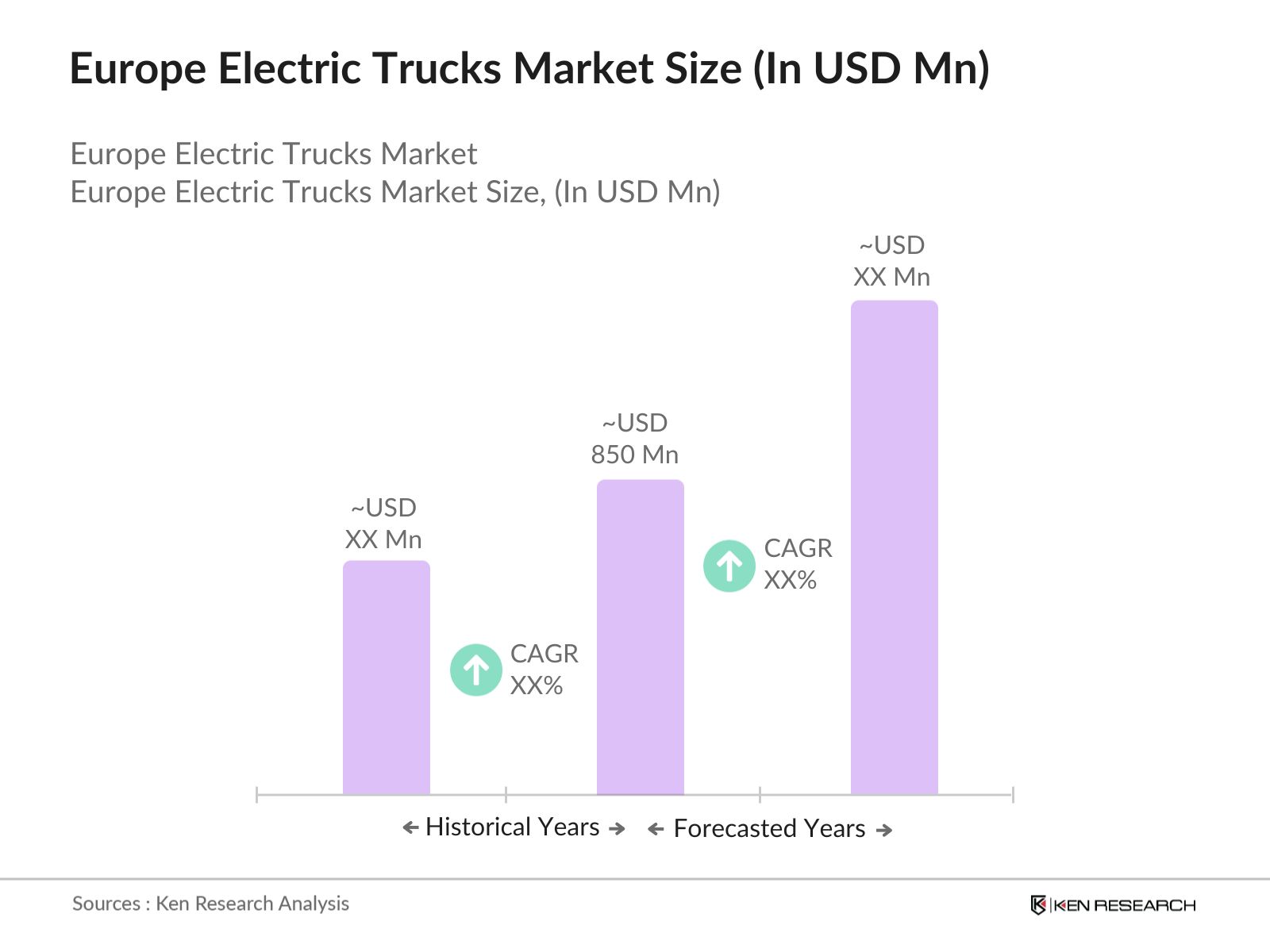
- The Europe electric trucks market is valued at USD 850 million, driven by the rising demand for sustainable transportation and stringent emission regulations from the European Union. Factors such as the growing logistics industry, increasing fuel costs, and technological advancements in electric vehicle (EV) components have further pushed the adoption of electric trucks. Government incentives promoting electric vehicle production, along with the expansion of charging infrastructure, are critical in supporting the market's growth.
- Germany, France, and the United Kingdom dominate the electric trucks market in Europe due to their well-developed automotive industries and robust government policies supporting electrification. Germany, in particular, benefits from significant investments in electric vehicle R&D and its extensive electric vehicle infrastructure. The UK and France also lead in this segment, supported by strong environmental policies aimed at reducing CO2 emissions in transportation.
- The European Unions Green Deal and Fit for 55 package include ambitious targets to reduce greenhouse gas emissions by 55% by 2030. As of 2024, these regulations mandated a reduction in emissions for heavy-duty vehicles, pushing the adoption of electric trucks as a key solution. This regulatory push has resulted in increased funding for electric truck development, making Europe one of the leading regions for electric vehicle adoption.
Europe Electric Trucks Market Segmentation
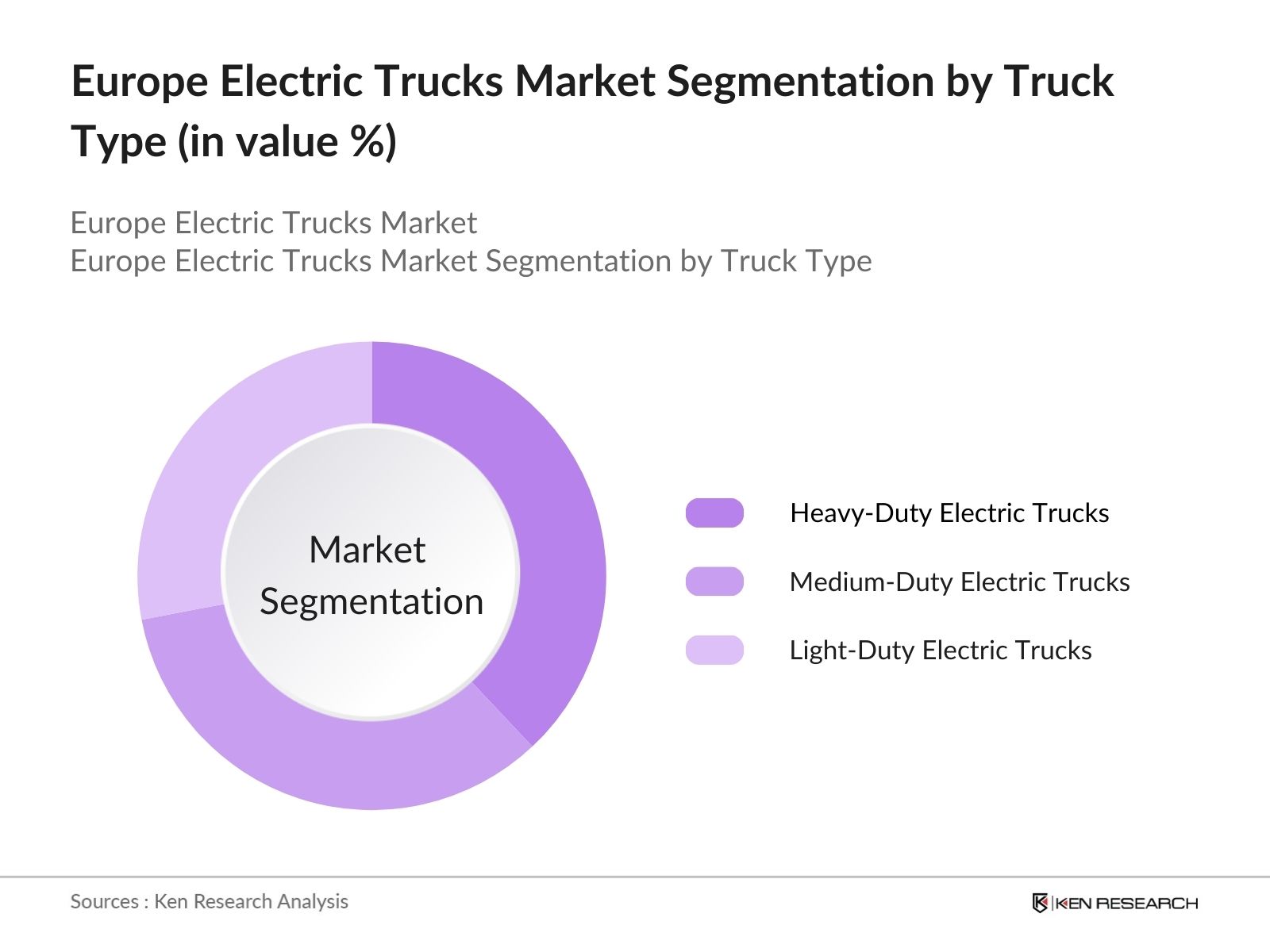
By Truck Type: The Europe electric trucks market is segmented by truck type into light-duty electric trucks, medium-duty electric trucks, and heavy-duty electric trucks. Recently, medium-duty electric trucks have garnered a dominant share of the market due to their wide applicability in urban logistics and delivery services. These trucks are highly efficient for shorter routes and urban transportation, making them a popular choice for delivery companies that are looking to reduce emissions and fuel costs while meeting stringent urban emission norms.
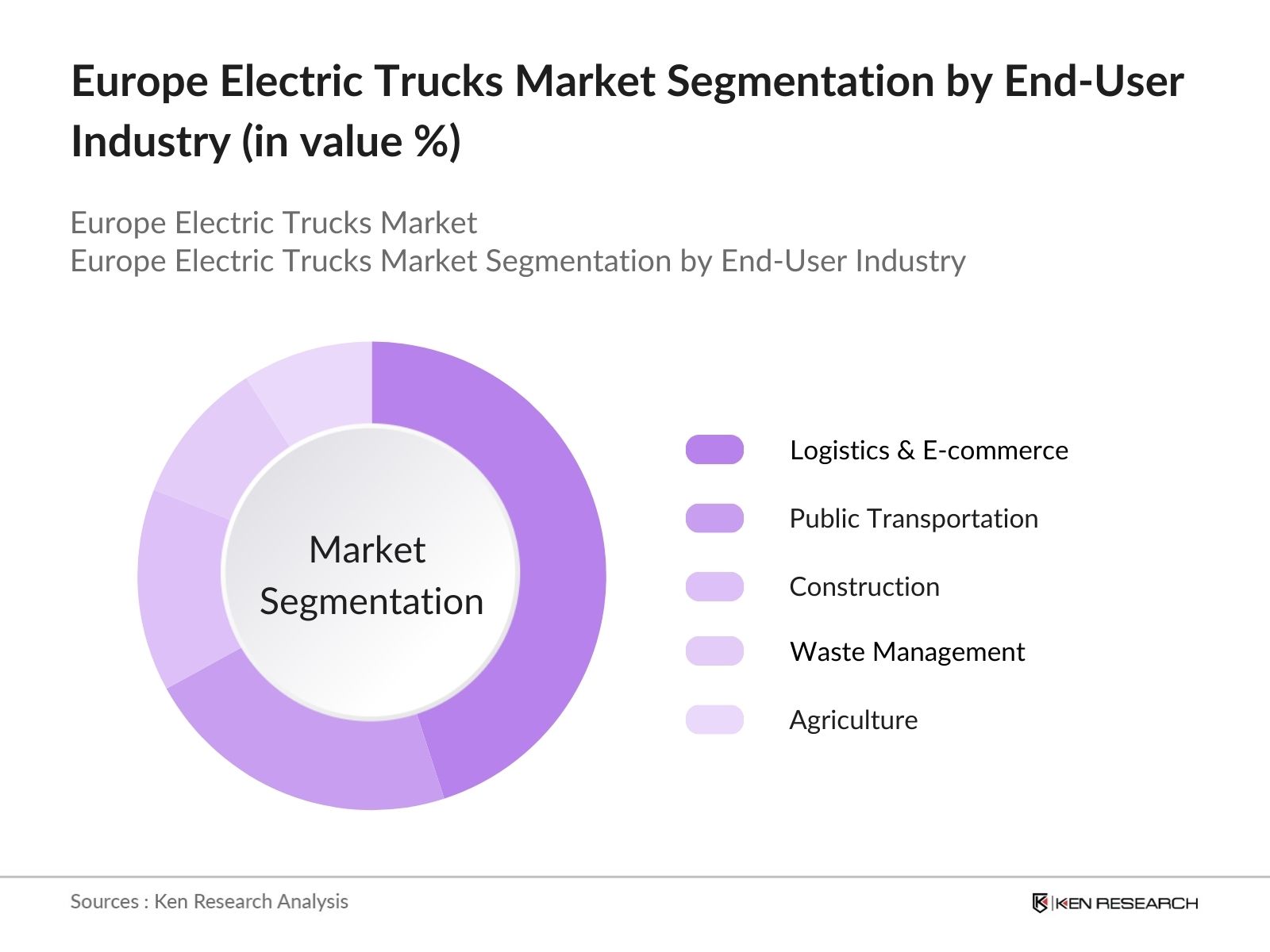
By End-Use Industry: The market is further segmented by end-use industry into logistics and e-commerce, public transportation, construction, waste management, and agriculture. Within this segment, logistics and e-commerce dominate due to the rapid growth of online shopping and the need for efficient, low-emission delivery vehicles. Electric trucks are increasingly being adopted by logistics firms to ensure faster deliveries in congested urban areas while adhering to emission regulations. Companies such as DHL and Amazon are spearheading the adoption of electric trucks in their fleets to achieve carbon neutrality.
Europe Electric Trucks Market Competitive Landscape
The Europe electric trucks market is dominated by major players such as Daimler AG, Volvo Trucks, and Tesla. These companies have consolidated their positions through heavy investments in R&D, partnerships with charging infrastructure providers, and government collaborations. Companies like Scania and MAN SE are also leading innovators in electric trucks, focusing on expanding their electric fleet to capture a larger market share. This consolidation demonstrates the significant influence of these key companies, which continue to lead in product innovations and charging solutions.
|
Company |
Establishment Year |
Headquarters |
R&D Investments (EUR mn) |
Electric Truck Models |
Global Reach (No. of Countries) |
Production Capacity (Units/Year) |
Partnerships |
Charging Network |
Sustainability Initiatives |
|
Daimler AG |
1926 |
Stuttgart, Germany |
- | - | - | - | - | - | - |
|
Volvo Trucks |
1927 |
Gothenburg, Sweden |
- | - | - | - | - | - | - |
|
Tesla Inc. |
2003 |
Palo Alto, USA |
- | - | - | - | - | - | - |
|
MAN SE |
1758 |
Munich, Germany |
- | - | - | - | - | - | - |
|
Scania AB |
1891 |
Sdertlje, Sweden |
- | - | - | - | - | - | - |
Europe Electric Trucks Market Analysis
Growth Drivers
- Government Incentives and Subsidies (EU Green Deal, Emission Norms): The European Union has actively promoted the adoption of electric trucks through various incentives and policies such as the EU Green Deal. In 2024, the EU allocated billions of euros to support green initiatives, including subsidies for electric vehicle (EV) purchases and infrastructure development. For instance, countries like Germany and France offer grants and tax rebates for purchasing electric trucks, encouraging businesses to adopt cleaner alternatives. By 2024, emissions regulations for heavy-duty vehicles in the EU have been tightened, pushing companies to shift from diesel trucks to electric trucks.
- Expansion of Electric Charging Networks: Governments across Europe are investing heavily in the expansion of electric vehicle charging infrastructure, which is crucial for supporting the growth of electric trucks. By 2024, over 500,000 public charging points were expected to be available across the EU, with key markets like Germany and the UK leading the development. The Trans-European Transport Network (TEN-T) is part of the EU's strategy to establish an extensive network of charging stations for long-haul electric trucks, promoting the logistics sector's shift to electrification.
- Rising Fuel Prices and Shift to Electrification: The rise in global fuel prices has further accelerated the shift towards electric trucks. In 2024, diesel prices in Europe surpassed 1.60 per liter in several regions, making the operational cost of diesel trucks significantly higher than their electric counterparts. This price difference is driving logistics and transportation companies to transition to electric trucks, as the cost savings in fuel and maintenance are becoming more apparent.
Market Challenges
- High Initial Purchase Cost: Despite the operational savings associated with electric trucks, their initial purchase cost remains a significant barrier. As of 2024, the cost of an electric truck in Europe was between 300,000 and 500,000, making it considerably more expensive than traditional diesel trucks. This high upfront cost deters small and medium-sized logistics firms from transitioning to electric fleets, especially in markets with fewer financial incentives.
- Limited Range and Payload Capacity: Electric trucks face challenges related to range and payload capacity, which are crucial for long-haul and heavy-duty transport. In 2024, the average range for electric trucks was around 400-500 kilometers, which may not be sufficient for long-distance logistics operations. Additionally, battery weight can reduce payload capacity, making electric trucks less efficient for heavy-duty operations compared to diesel alternatives.
Europe Electric Trucks Market Future Outlook
Over the next five years, the Europe electric trucks market is expected to experience robust growth driven by strong government support for emissions reduction, advancements in battery technology, and increasing adoption by logistics and delivery companies. The expansion of fast-charging networks across Europe will further accelerate the markets growth, as will the growing preference for eco-friendly solutions in public transportation. The market will likely see increased collaborations between automotive manufacturers and energy companies to address charging infrastructure challenges and expand the range of electric trucks.
Market Opportunities
- Advancements in Fast-Charging Solutions: Innovations in fast-charging technology present a significant opportunity for the growth of electric trucks. By 2024, major charging infrastructure providers are developing ultra-fast chargers capable of delivering over 500 kW, reducing charging times for electric trucks to less than 30 minutes. This technology could make electric trucks more viable for long-haul operations and attract logistics companies looking to reduce downtime associated with charging.
- Growth in E-Commerce and Last-Mile Delivery Services: The rise of e-commerce in Europe has significantly increased the demand for last-mile delivery services. In 2024, Europes e-commerce market grew to over 700 billion, with electric trucks emerging as an ideal solution for last-mile delivery due to their lower operational costs and zero emissions. Logistics companies are expected to continue investing in electric trucks to meet the growing demand for sustainable delivery options, particularly in urban areas where emissions regulations are stricter.
Scope of the Report
|
By Truck Type |
Light-Duty Medium-Duty Heavy-Duty |
|
By End-Use Industry |
Logistics & E-commerce Public Transportation Construction Waste Management Agriculture |
|
By Charging Type |
Fast Charging Slow Charging Battery Swapping |
|
By Powertrain |
Battery Electric Hybrid Electric Hydrogen Fuel Cell |
|
By Country |
Germany France UK Italy Spain |
Products
Key Target Audience
Electric truck manufacturers
Logistics and transportation companies
Automotive component suppliers
Government and regulatory bodies (European Commission, National Transport Agencies)
Investors and venture capitalist firms
Public transportation authorities
Charging infrastructure providers
Renewable energy providers
Companies
Players Mentioned in the Report:
Daimler AG
Volvo Trucks
Tesla Inc.
MAN SE
Scania AB
Renault Trucks
Nikola Motor
Iveco Group
BYD Europe
Hyzon Motors
Tata Motors
DAF Trucks
Geely Commercial Vehicles
Rivian
Ashok Leyland
Table of Contents
1. Europe Electric Trucks Market Overview
1.1. Definition and Scope
1.2. Market Taxonomy
1.3. Market Growth Rate
1.4. Market Segmentation Overview
2. Europe Electric Trucks Market Size (In EUR Bn)
2.1. Historical Market Size
2.2. Year-On-Year Growth Analysis
2.3. Key Market Developments and Milestones (Electric Trucks Penetration, Charging Infrastructure Expansion)
3. Europe Electric Trucks Market Analysis
3.1. Growth Drivers
3.1.1. Government Incentives and Subsidies (EU Green Deal, Emission Norms)
3.1.2. Expansion of Electric Charging Networks
3.1.3. Rising Fuel Prices and Shift to Electrification
3.1.4. Technological Advancements in Battery Technology
3.2. Market Challenges
3.2.1. High Initial Purchase Cost
3.2.2. Limited Range and Payload Capacity
3.2.3. Charging Time and Infrastructure Limitations
3.2.4. Dependence on Government Policies
3.3. Opportunities
3.3.1. Advancements in Fast-Charging Solutions
3.3.2. Growth in E-Commerce and Last-Mile Delivery Services
3.3.3. Expansion into Regional and Long-Haul Transport
3.3.4. Collaborations with Renewable Energy Providers
3.4. Trends
3.4.1. Development of Hydrogen Fuel Cell Electric Trucks
3.4.2. Integration of Autonomous Driving Features
3.4.3. Growth of Fleet Electrification in Logistics Companies
3.4.4. Shift Toward Zero-Emission Zones in European Cities
3.5. Government Regulation
3.5.1. Emission Standards and Euro 7 Norms
3.5.2. Government Subsidies and Incentive Programs
3.5.3. EU CO2 Emission Targets
3.5.4. Public-Private Partnerships for Infrastructure Development
3.6. SWOT Analysis (Market-Specific)
3.7. Stakeholder Ecosystem (Manufacturers, Fleet Operators, Charging Infrastructure Providers)
3.8. Porters Five Forces Analysis (Market-Specific Dynamics for Electric Truck OEMs)
3.9. Competitive Landscape
4. Europe Electric Trucks Market Segmentation
4.1. By Truck Type (In Value %)
4.1.1. Light-Duty Electric Trucks
4.1.2. Medium-Duty Electric Trucks
4.1.3. Heavy-Duty Electric Trucks
4.2. By End-Use Industry (In Value %)
4.2.1. Logistics & E-commerce
4.2.2. Public Transportation
4.2.3. Construction
4.2.4. Waste Management
4.2.5. Agriculture
4.3. By Charging Type (In Value %)
4.3.1. Fast Charging
4.3.2. Slow Charging
4.3.3. Battery Swapping
4.4. By Powertrain (In Value %)
4.4.1. Battery Electric Trucks
4.4.2. Hybrid Electric Trucks
4.4.3. Hydrogen Fuel Cell Trucks
4.5. By Country (In Value %)
4.5.1. Germany
4.5.2. France
4.5.3. United Kingdom
4.5.4. Italy
4.5.5. Spain
5. Europe Electric Trucks Market Competitive Analysis
5.1. Detailed Profiles of Major Companies
5.1.1. Daimler AG
5.1.2. Volvo Trucks
5.1.3. Scania AB
5.1.4. MAN SE
5.1.5. Nikola Motor
5.1.6. Tesla Inc.
5.1.7. Renault Trucks
5.1.8. BYD Europe
5.1.9. Iveco Group
5.1.10. DAF Trucks
5.1.11. Hyzon Motors
5.1.12. Rivian
5.1.13. Geely Commercial Vehicles
5.1.14. Ashok Leyland
5.1.15. Tata Motors
5.2. Cross Comparison Parameters (No. of Employees, Market Share, Electric Truck Models, Manufacturing Capacity, Production Facilities, Revenue, R&D Investments, Global Reach)
5.3. Market Share Analysis
5.4. Strategic Initiatives (Collaborations, Partnerships, Technological Innovations)
5.5. Mergers and Acquisitions
5.6. Investment Analysis
5.7. Government Grants and Incentives
5.8. Private Equity Investments
6. Europe Electric Trucks Market Regulatory Framework
6.1. Environmental Standards for Electric Trucks
6.2. Compliance with EU Emission Norms
6.3. Certification Processes for Electric Trucks
6.4. Safety Standards and Regulations
7. Europe Electric Trucks Future Market Size (In EUR Bn)
7.1. Future Market Size Projections
7.2. Key Factors Driving Future Market Growth
8. Europe Electric Trucks Future Market Segmentation
8.1. By Truck Type (In Value %)
8.2. By End-Use Industry (In Value %)
8.3. By Charging Type (In Value %)
8.4. By Powertrain (In Value %)
8.5. By Country (In Value %)
9. Europe Electric Trucks Market Analysts Recommendations
9.1. TAM/SAM/SOM Analysis
9.2. Fleet Electrification Strategy Recommendations
9.3. Partnership Opportunities with Renewable Energy Providers
9.4. White Space Opportunity Analysis
Disclaimer Contact UsResearch Methodology
Step 1: Identification of Key Variables
The research process starts with identifying critical variables that influence the Europe Electric Trucks Market. A comprehensive analysis of stakeholders such as electric truck manufacturers, fleet operators, and charging infrastructure providers is conducted using both proprietary and secondary research databases.
Step 2: Market Analysis and Construction
The research process starts with identifying critical variables that influence the Europe Electric Trucks Market. A comprehensive analysis of stakeholders such as electric truck manufacturers, fleet operators, and charging infrastructure providers is conducted using both proprietary and secondary research databases.
Step 3: Hypothesis Validation and Expert Consultation
Hypotheses related to market growth drivers and challenges are developed and validated through interviews with industry experts, truck manufacturers, and government bodies. These consultations provide valuable insights into the operational realities of the market.
Step 4: Research Synthesis and Final Output
The final step involves synthesizing research findings into a cohesive market report, incorporating expert insights, historical data, and detailed analysis of electric truck market segments, growth drivers, and opportunities.
Frequently Asked Questions
1. How big is the Europe Electric Trucks Market?
The Europe Electric Trucks Market is valued at USD 850 Million, driven by significant investments in charging infrastructure, government incentives, and the transition to cleaner transport solutions in logistics and public transportation sectors.
2. What are the challenges in the Europe Electric Trucks Market?
Key challenges in the Europe Electric Trucks Market include the high upfront costs of electric trucks, limited range, the need for a comprehensive charging infrastructure, and heavy reliance on government policies to promote electric truck adoption.
3. Who are the major players in the Europe Electric Trucks Market?
Major players in the Europe Electric Trucks Market include Daimler AG, Volvo Trucks, Nikola Motors, Tesla Inc., and Renault Trucks. These companies are leading the market through technological innovations and strategic partnerships.
4. What are the growth drivers of the Europe Electric Trucks Market?
Growth drivers in the Europe Electric Trucks Market include stringent EU emission regulations, increased demand for zero-emission transport solutions, and continuous advancements in battery technology, making electric trucks more cost-competitive.
Why Buy From Us?

What makes us stand out is that our consultants follows Robust, Refine and Result (RRR) methodology. i.e. Robust for clear definitions, approaches and sanity checking, Refine for differentiating respondents facts and opinions and Result for presenting data with story

We have set a benchmark in the industry by offering our clients with syndicated and customized market research reports featuring coverage of entire market as well as meticulous research and analyst insights.

While we don't replace traditional research, we flip the method upside down. Our dual approach of Top Bottom & Bottom Top ensures quality deliverable by not just verifying company fundamentals but also looking at the sector and macroeconomic factors.

With one step in the future, our research team constantly tries to show you the bigger picture. We help with some of the tough questions you may encounter along the way: How is the industry positioned? Best marketing channel? KPI's of competitors? By aligning every element, we help maximize success.

Our report gives you instant access to the answers and sources that other companies might choose to hide. We elaborate each steps of research methodology we have used and showcase you the sample size to earn your trust.

If you need any support, we are here! We pride ourselves on universe strength, data quality, and quick, friendly, and professional service.