
Europe Fast Food Market Outlook to 2030
Region:Albania
Author(s):Shreya Garg
Product Code:KROD8080
Region:Albania
Author(s):Shreya Garg
Product Code:KROD8080
December 2024
98
By Product Type: The market is segmented by product type into burgers & sandwiches, pizzas & pasta, Asian & ethnic fast food, desserts & beverages, and snacks & sides. Currently, burgers & sandwiches maintain a dominant share within this category, attributed to their embedded place in European fast-food culture. Popularity among consumers is sustained by brand loyalty, strong promotional activities, and customization options. Major brands such as McDonalds and Burger King have built a consistent market presence through standardized quality and widespread availability. 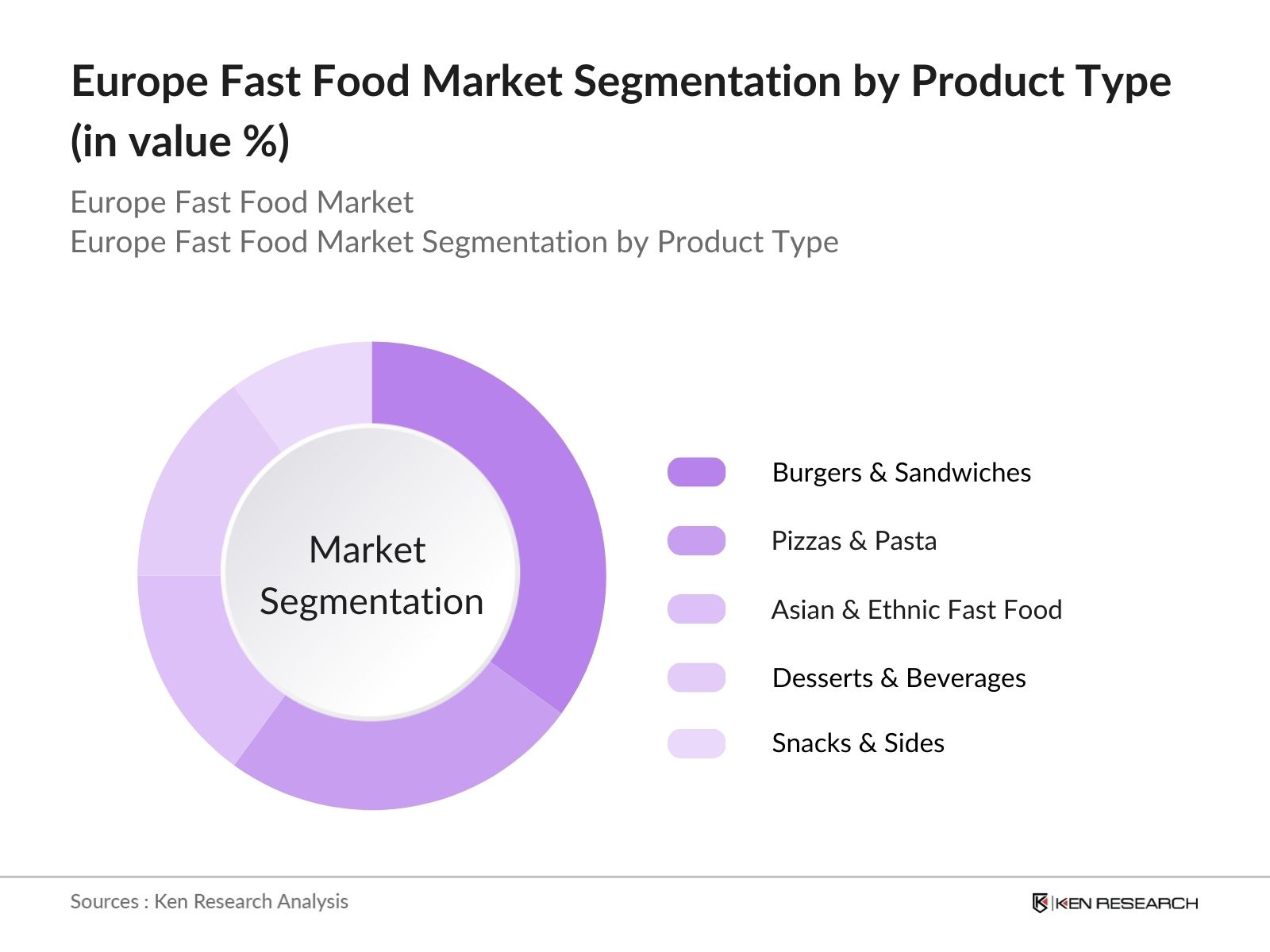
By Distribution Channel: The market is also segmented by distribution channel into quick-service restaurants (QSRs), drive-through, food trucks & stalls, and online food delivery platforms. QSRs lead in this segment due to their convenience, quick service, and frequent adoption of consumer-oriented digital solutions. Chains within QSRs have embraced the digital transformation, offering streamlined mobile ordering and contactless payment options, which have enhanced customer convenience and expanded their reach across urban and suburban markets. 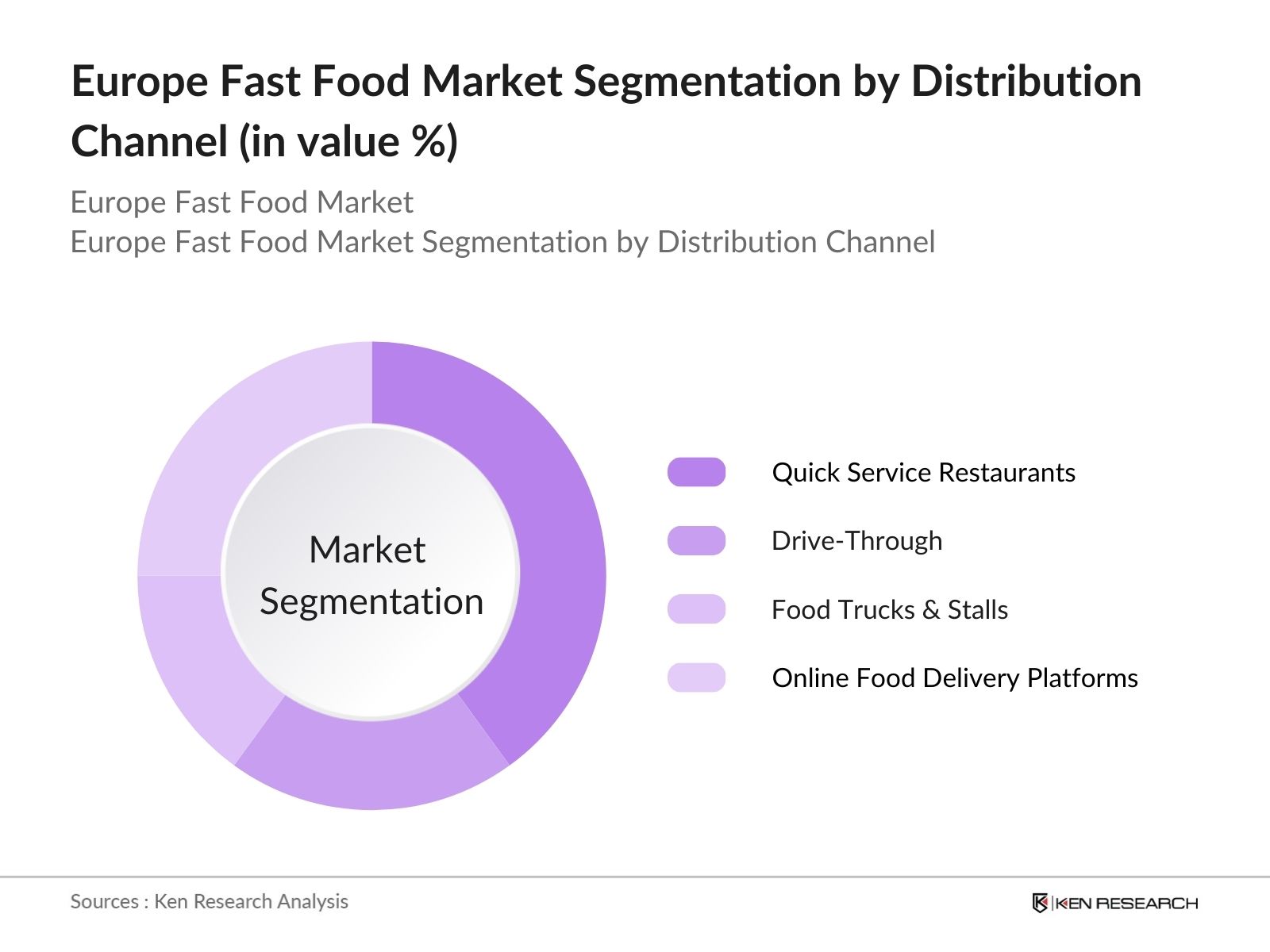
The Europe fast food market is characterized by intense competition among key global and regional players, each capitalizing on specific market niches and consumer preferences. The market is led by well-established companies that continuously evolve their menu options and enhance service quality to retain and grow their customer base.
|
Company Name |
Establishment Year |
Headquarters |
Market Focus |
Digital Strategy |
Sustainability Initiatives |
Revenue (USD Bn) |
Number of Outlets |
Regional Presence |
|
McDonalds Corporation |
1940 |
USA |
||||||
|
Burger King |
1954 |
USA |
||||||
|
Dominos Pizza |
1960 |
USA |
||||||
|
Starbucks |
1971 |
USA |
||||||
|
KFC |
1930 |
USA |
The Europe fast food market is expected to continue evolving with a focus on health-conscious options, innovative delivery models, and sustainability initiatives. This growth trajectory is influenced by both technological advancements and shifting consumer preferences towards sustainable and convenient food choices. Additionally, the rise in plant-based and alternative protein products is anticipated to reshape traditional menu offerings, expanding the markets consumer base.
|
Product Type |
Burgers & Sandwiches |
|
Distribution Channel |
Quick Service Restaurants (QSRs) |
|
Age Group |
Kids & Teenagers |
|
Dining Mode |
Dine-In |
|
Country |
United Kingdom |
Definition and Scope
Market Taxonomy
Competitive Landscape Overview
Distribution Channels Overview
Market Maturity Analysis
Historical Market Size
Year-On-Year Growth Analysis
Key Market Developments and Milestones
Market Impact of Regulatory Changes
Consumer Demand Shifts
Growth Drivers
Urbanization and Changing Lifestyles
Increase in Disposable Income
Consumer Preference for Convenience Foods
Expansion of Delivery Services (On-demand, Contactless)
Market Challenges
Rising Health Concerns and Regulations on Ingredients
Environmental Sustainability (Waste Management, Carbon Footprint)
High Competition from Local & International Chains
Opportunities
Health-Conscious Menu Innovations
Technological Integration (Kiosk, Mobile Ordering)
Expansion in Tier 2 and Tier 3 Cities
Trends
Rise in Plant-Based & Organic Options
Digital Transformation in Ordering and Payment Systems
Partnerships with Delivery Aggregators
Government Regulations
Food Safety Standards
Advertising Restrictions (Nutritional and Health Claims)
Sustainable Packaging and Waste Management Policies
By Product Type (In Value %)
Burgers & Sandwiches
Pizzas & Pasta
Asian & Ethnic Fast Food
Desserts & Beverages
Snacks & Sides
By Distribution Channel (In Value %)
Quick Service Restaurants (QSRs)
Drive-Through
Food Trucks & Stalls
Online Food Delivery Platforms
By Age Group (In Value %)
Kids & Teenagers
Young Adults
Working Professionals
Family Groups
By Dining Mode (In Value %)
Dine-In
Takeaway
Delivery (Home & Office)
By Country (In Value %)
United Kingdom
Germany
France
Spain
Italy
Detailed Profiles of Major Companies
McDonalds Corporation
Burger King
Subway
KFC
Dominos Pizza
Starbucks
Pizza Hut
Tim Hortons
Five Guys
Dunkin Donuts
Taco Bell
Nandos
Vapiano
Nordsee
Pret A Manger
Cross Comparison Parameters (Revenue, Headquarters, Employee Count, Outlet Count, Regional Presence, Product Innovation, Delivery Service Collaboration, Sustainability Initiatives)
Market Share Analysis
Strategic Initiatives (Franchise Expansion, Partnerships)
Mergers and Acquisitions
Investment Analysis
Private Equity Involvement
Technological Adoption Levels
Food Safety Regulations
Nutritional Labeling Requirements
Health & Hygiene Compliance Standards
Advertising and Marketing Regulations
Environmental Compliance (Sustainable Practices)
Projected Growth and Market Expansion
Anticipated Changes in Consumer Preferences
Technology-Driven Operational Efficiency
Strategic Partnerships and Collaborations
By Product Type (In Value %)
By Distribution Channel (In Value %)
By Age Group (In Value %)
By Dining Mode (In Value %)
By Country (In Value %)
TAM/SAM/SOM Analysis
Consumer Behavior Analysis
Strategic Positioning for New Entrants
Marketing & Branding Strategy
White Space Analysis for Unexplored Segments
Disclaimer Contact UsThe first phase involves identifying primary variables shaping the Europe fast food market. This includes extensive desk research to map out stakeholder ecosystems, consumer behavior, and technological trends across the industry.
In this phase, we analyze historical data to understand market dynamics, including sales performance, consumer demographics, and geographic segmentation. This stage helps in establishing accurate market size estimates for different segments.
Consultations with industry experts using computer-assisted telephone interviews (CATIs) are conducted to validate initial findings. These insights help to fine-tune our understanding of revenue projections and competitive strategies.
The final phase integrates findings from bottom-up and top-down approaches, along with direct input from fast food operators. This synthesis ensures comprehensive coverage of the market, including emerging trends and strategic opportunities.
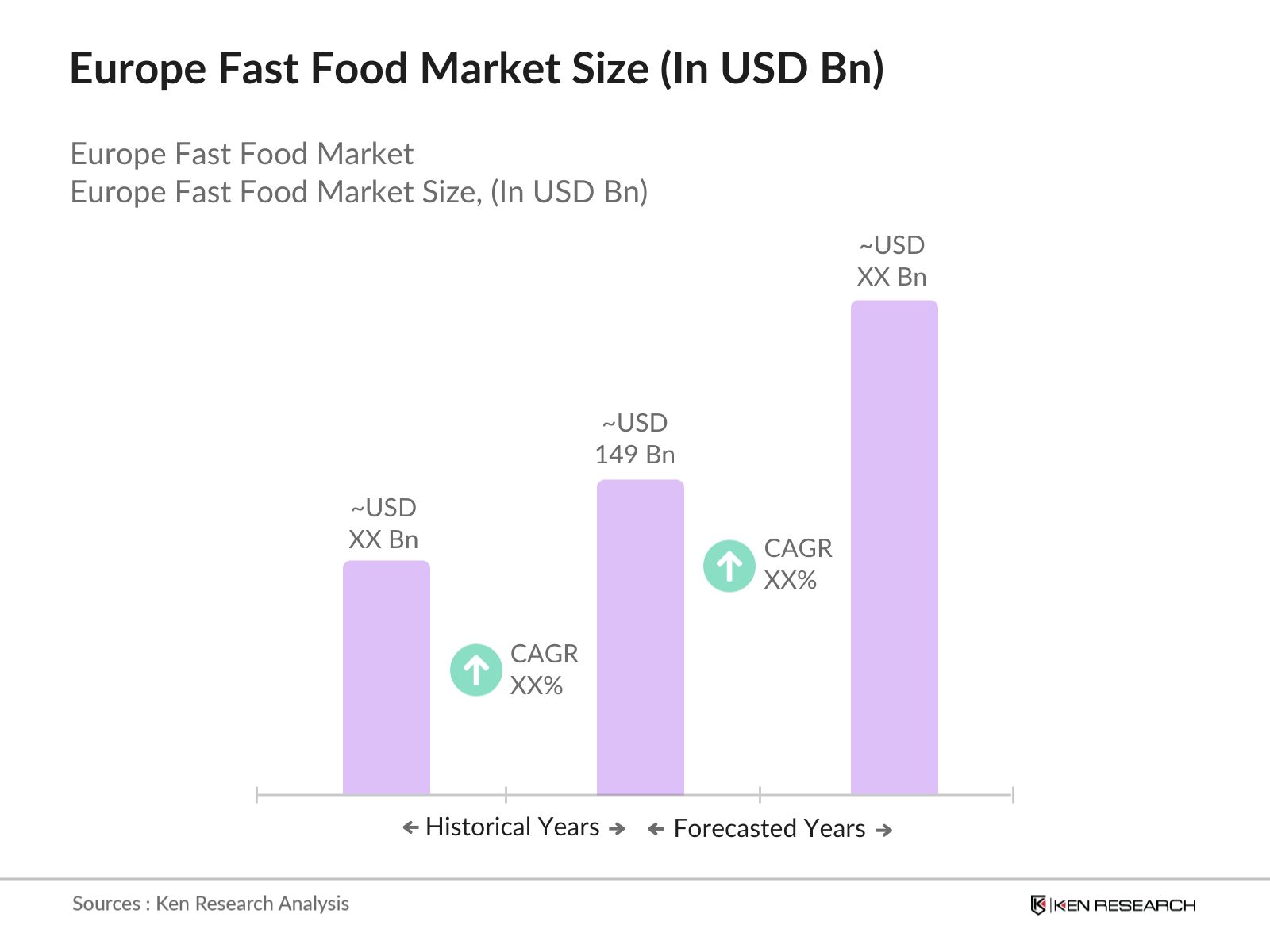
The Europe fast food market is valued at USD 149 billion, driven by urbanization and evolving consumer preferences for convenience-based dining options, supported by extensive digital integration across major chains.
The Europe fast food market faces challenges such as rising health consciousness, regulatory scrutiny over nutritional content, and the environmental impact of waste management, all of which necessitate sustainable adaptations by industry players.
Major players in the Europe fast food market include McDonalds, Burger King, Dominos, Starbucks, and KFC, dominating due to strong brand presence, robust supply chains, and consistent service quality across regions.
Key drivers in the Europe fast food market include increased consumer demand for quick and accessible meal options, technological innovations in ordering and delivery, and evolving dietary preferences, particularly toward alternative protein and plant-based options.
The UK, Germany, and France are prominent in the Europe fast food market due to high urban populations, established food delivery networks, and consumer trends favoring international fast food brands, enhancing accessibility and demand for diverse food options.

What makes us stand out is that our consultants follows Robust, Refine and Result (RRR) methodology. i.e. Robust for clear definitions, approaches and sanity checking, Refine for differentiating respondents facts and opinions and Result for presenting data with story

We have set a benchmark in the industry by offering our clients with syndicated and customized market research reports featuring coverage of entire market as well as meticulous research and analyst insights.

While we don't replace traditional research, we flip the method upside down. Our dual approach of Top Bottom & Bottom Top ensures quality deliverable by not just verifying company fundamentals but also looking at the sector and macroeconomic factors.

With one step in the future, our research team constantly tries to show you the bigger picture. We help with some of the tough questions you may encounter along the way: How is the industry positioned? Best marketing channel? KPI's of competitors? By aligning every element, we help maximize success.

Our report gives you instant access to the answers and sources that other companies might choose to hide. We elaborate each steps of research methodology we have used and showcase you the sample size to earn your trust.

If you need any support, we are here! We pride ourselves on universe strength, data quality, and quick, friendly, and professional service.