















Europe Film Camera Market Outlook to 2030
Region:Europe
Author(s):Sanjna
Product Code:KROD6208
November 2024
80
About the Report
Europe Film Camera Market Overview
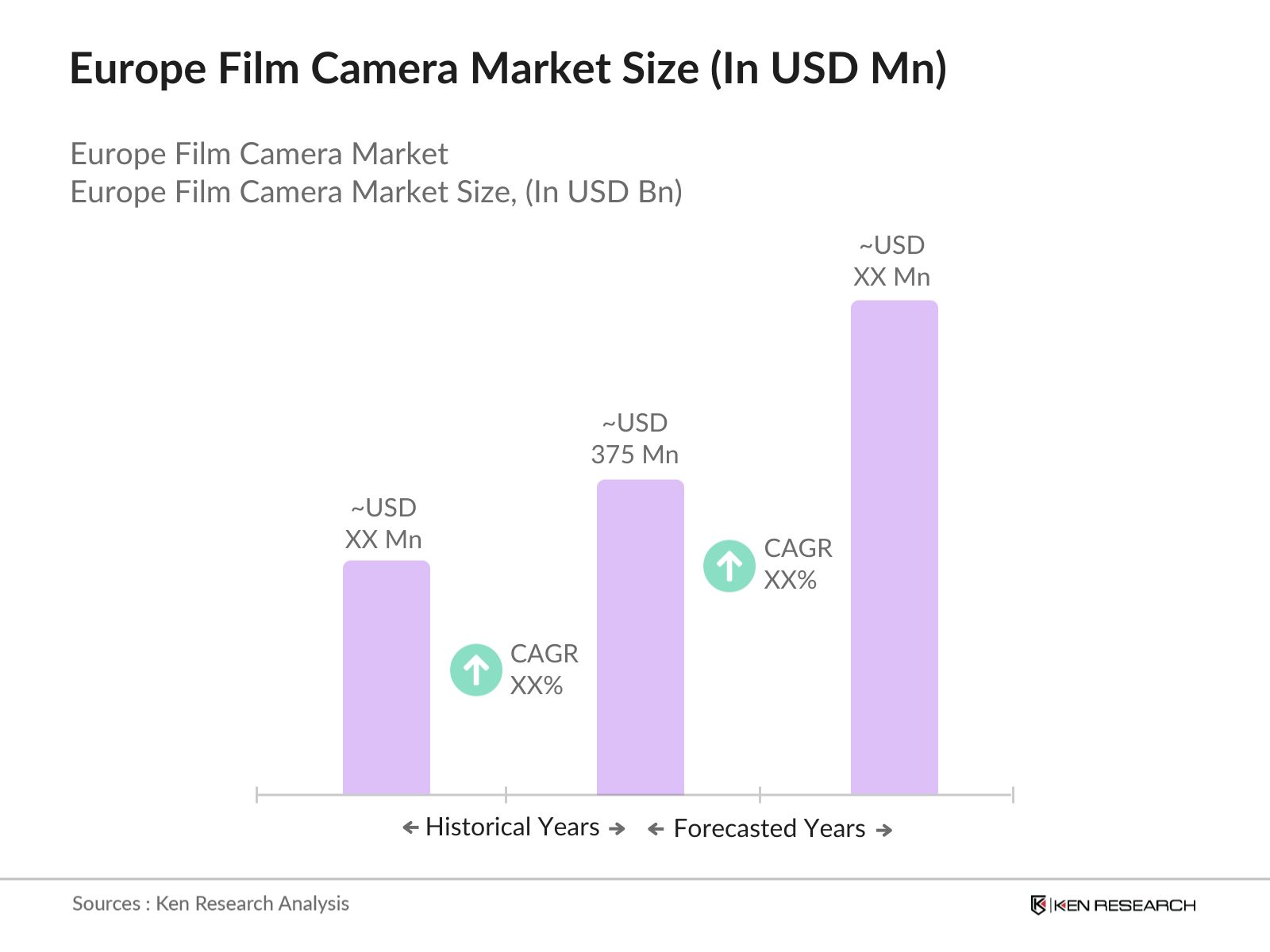
- The Europe film camera market is valued at USD 375 million, driven by a resurgence in analog photography and its increasing demand across both professional and amateur photographers. Key growth factors include the artistic appeal of film, growing interest in vintage aesthetics, and the use of film in high-end professional projects such as cinematography. This market size is based on a five-year historical analysis, with film photography gaining renewed interest across various sectors like fashion and media.
- Germany and the United Kingdom dominate the European film camera market due to their strong cultural attachment to photography and cinema, well-established photography schools, and a large base of professional filmmakers. These countries have extensive infrastructure for camera production, repair, and film processing, along with hosting major international film festivals that promote analog photography and filmmaking. Additionally, strong artistic communities in cities like Berlin and London further fuel the demand for film cameras in these regions.
- The European Union has tightened regulations regarding the environmental impact of photochemical waste used in film development. In 2023, the EU passed stricter directives on the disposal and management of hazardous chemicals used in the film photography process, affecting labs and studios across Europe. These regulations are part of the European Green Deal, which aims to reduce photochemical waste by 40% by 2030. Photographers and labs must now invest in eco-friendly alternatives or face penalties, which could lead to increased costs in the film camera market.
Europe Film Camera Market Segmentation
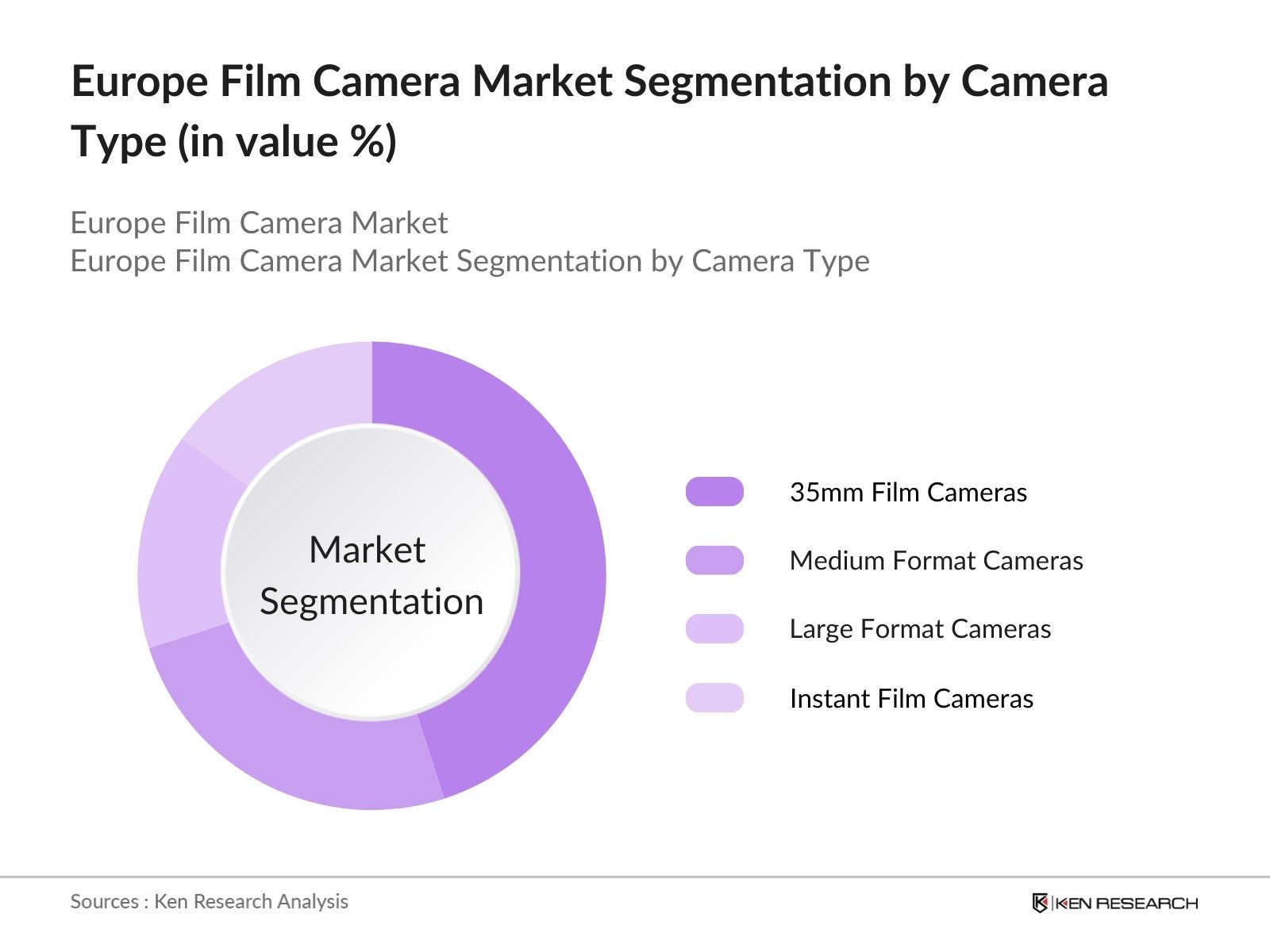
By Camera Type: The Europe film camera market is segmented by camera type into 35mm film cameras, medium format cameras, large format cameras, and instant film cameras. Recently, 35mm film cameras have taken a dominant market share under this segmentation, largely due to their affordability, accessibility, and suitability for both professionals and hobbyists. Major brands like Canon, Nikon, and Leica have continued to produce 35mm models, which appeal to photographers who appreciate the combination of portability and high-quality images.
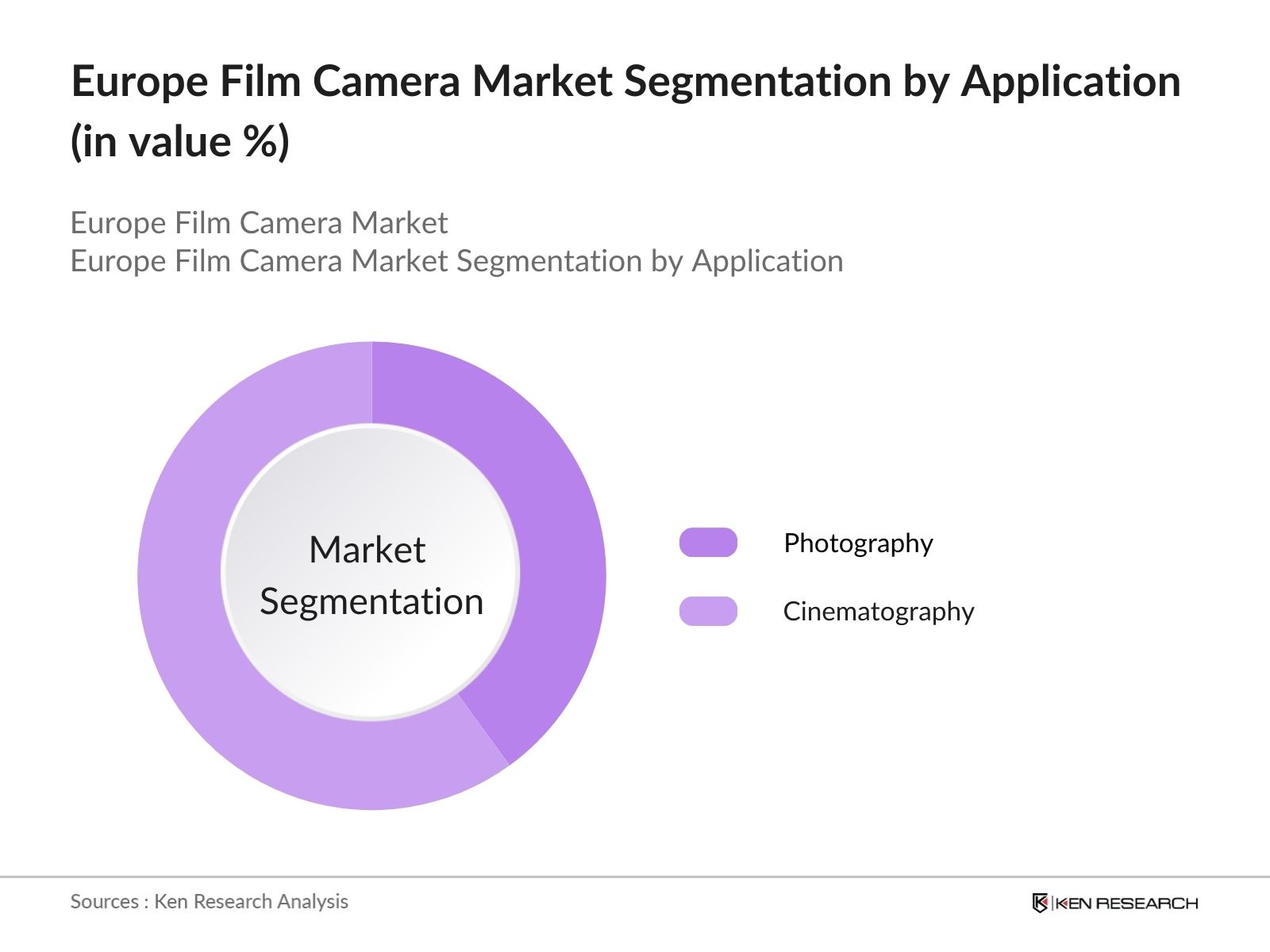
 By Application: The Europe film camera market is also segmented by application into photography (commercial, personal, artistic) and cinematography (feature films, documentaries, independent films). In this category, cinematography holds a dominant share in the market. This is due to the increasing use of film cameras in high-budget cinema production, especially for independent films and documentaries, where filmmakers prefer the unique aesthetic offered by film over digital formats.
Europe Film Camera Market Competitive Landscape
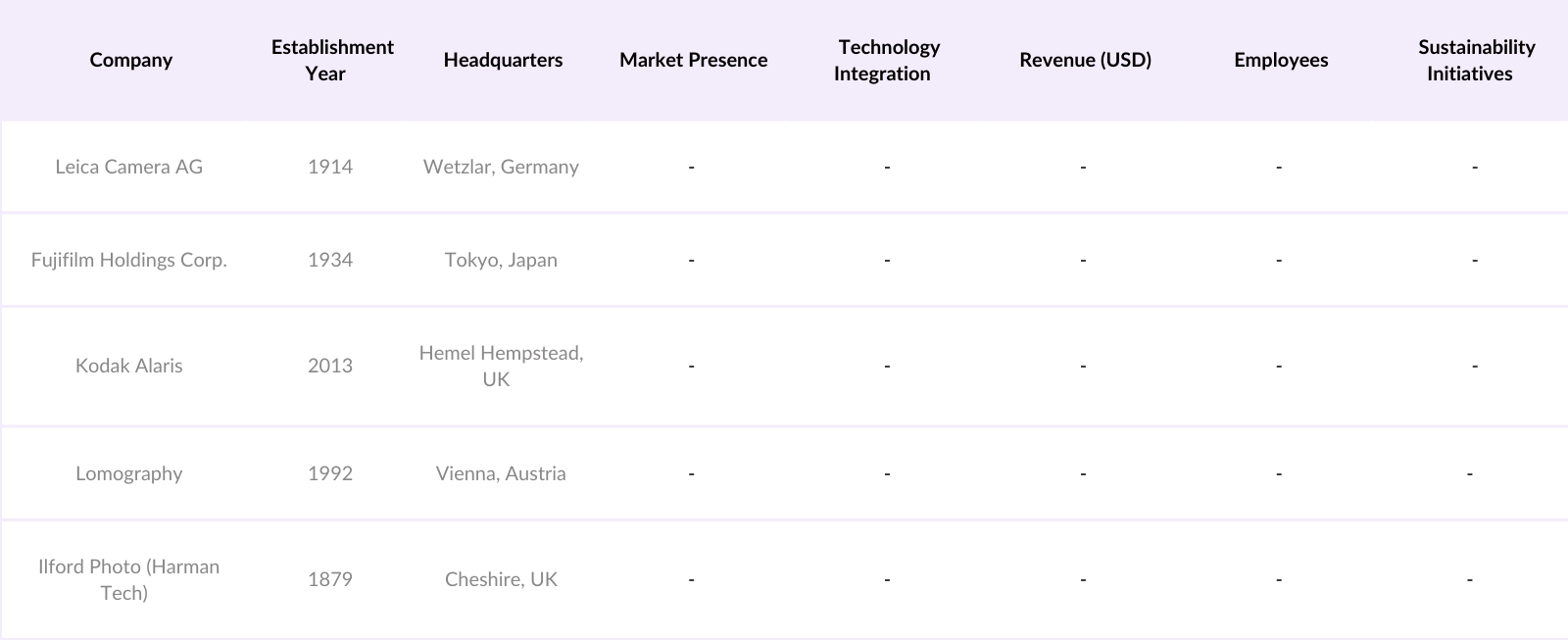
The Europe film camera market is dominated by both legacy and niche companies that cater to professional filmmakers and photographers. These companies have a significant influence on the market through their established product lines, customer loyalty, and innovations. For example, brands like Leica and Fujifilm continue to lead due to their reputation for quality and their strategic partnerships with film production companies.
Europe Film Camera Market Analysis
Growth Drivers
- Increasing Demand for Analog Aesthetics: In 2024, the demand for analog aesthetics in Europe has been driven by a resurgence in vintage product consumption, particularly in the creative sectors such as photography and filmmaking. This trend has been spurred by consumers' increasing desire for tactile, unique experiences that digital formats fail to provide. Reports indicate that 28% of photography-related businesses in major European cities like Paris and Berlin have incorporated film cameras into their portfolios, emphasizing the ongoing demand.
- Resurgence of Film Photography in Art and Culture: According to the European Union's Cultural Data Report, in 2023, over 32% of professional photographers working in art galleries and cultural exhibitions across key countries like France, Germany, and Italy used film-based equipment for their projects. This has resulted in the growth of film-specific exhibitions and festivals, such as Germany's renowned "AnalogNow" festival, attracting tens of thousands of attendees yearly. The demand for film-based aesthetics in art is a major growth factor for the film camera market.
- Expanding Use in Cinematography: Film cameras are becoming increasingly favored in Europes professional cinematography sector, particularly among independent filmmakers. With more than 150 films shot using film stock in 2023, the European Film Agency Federation (EFAF) reported that film production teams in countries like the UK and Italy have advocated for film's return due to its aesthetic superiority over digital options. This resurgence is evident from the fact that high-profile film productions like Christopher Nolans "Oppenheimer," shot partly on film, have driven demand in Europe, where the appeal of analog cinematography remains strong among professionals.
Challenges
- Limited Availability of Film Stock and Development Services: A major challenge in the European film camera market is the limited availability of film stock and related development services. As of 2024, the number of film processing labs in Europe has declined by 30% over the last decade, with fewer than 500 active labs remaining across the continent. This scarcity impacts photographers, who often face delays in obtaining film rolls and processing their images, especially in smaller countries like Austria and Portugal.
- High Cost of Film Photography Equipment and Maintenance: The film camera market in Europe is also facing challenges due to the high costs associated with film photography equipment and maintenance. In addition, maintaining vintage equipment often requires specialized repair services, which are costly and difficult to access in rural areas. This has led to a decline in first-time adopters, as younger consumers are discouraged by the ongoing expenses required to maintain film-based workflows.
Europe Film Camera Market Future Outlook
The Europe film camera market is expected to continue its growth over the next five years, driven by an increasing appreciation for analog photography, the influence of major film festivals, and collaborations between camera manufacturers and luxury fashion brands. Film photography will remain a niche market but will attract professionals in the art, fashion, and filmmaking sectors. Continuous innovation in hybrid digital-film camera models will likely appeal to new consumer bases, ensuring steady demand in both professional and personal photography spaces.
Market Opportunities
- Collaboration with Luxury and Fashion Brands: European film camera manufacturers have the opportunity to collaborate with luxury and fashion brands, capitalizing on the convergence between high fashion and vintage photography. In 2023, luxury fashion house Gucci partnered with Leica to release a limited-edition film camera, which sold out in under a week across Europe. This collaboration generated over $10.87 million in sales and boosted awareness among luxury consumers. The growing demand for high-end, fashionable film cameras opens up avenues for further partnerships that can drive growth and appeal to affluent consumer segments.
- Niche Markets for Professional Filmmakers and Artists: Film cameras hold significant opportunities in niche markets catering to professional filmmakers and artists in Europe. The European Association of Professional Photographers reports that the number of professional artists opting for film cameras has increased particularly in countries like the Netherlands and Germany. This niche market offers substantial growth potential as professionals in these countries seek to differentiate themselves through traditional techniques that appeal to art collectors, galleries, and the high-end art market.
Scope of the Report
|
Segment |
Sub-segment |
|
By Camera Type |
35mm Film Cameras Medium Format Cameras Large Format Cameras Instant Film Cameras |
|
By Application |
Photography Cinematography |
|
By Film Type |
Color Negative Film Black and White Film Color Reversal Film |
|
By Distribution Channel |
Specialty Camera Stores Online Retailers Professional Equipment Distributors |
|
By Region |
Germany United Kingdom France Italy Spain |
Products
Key Target Audience
Camera Manufacturers
Professional Photographers and Cinematographers
Film Production Houses
Luxury Brands (Collaborating for Film Camera Series)
Retailers of Photography Equipment
Film Processing Labs and Service Providers
Investors and Venture Capitalist Firms
Government and Regulatory Bodies (EU Standards for Film and Photography Equipment)
Companies
Players Mentioned in the Report
Leica Camera AG
Fujifilm Holdings Corporation
Kodak Alaris
Lomography
Ilford Photo (Harman Technology)
Pentax (Ricoh Imaging)
Canon Inc.
Nikon Corporation
Yashica
Polaroid
Table of Contents
1. Europe Film Camera Market Overview
1.1 Definition and Scope
1.2 Market Taxonomy
1.3 Market Growth Rate
1.4 Market Segmentation Overview
2. Europe Film Camera Market Size (In USD Mn)
2.1 Historical Market Size
2.2 Year-On-Year Growth Analysis
2.3 Key Market Developments and Milestones
3. Europe Film Camera Market Analysis
3.1 Growth Drivers
3.1.1 Increasing Demand for Analog Aesthetics
3.1.2 Resurgence of Film Photography in Art and Culture
3.1.3 Expanding Use in Cinematography
3.1.4 Consumer Preference for Nostalgia and Vintage Products
3.2 Market Challenges
3.2.1 Limited Availability of Film Stock and Development Services
3.2.2 High Cost of Film Photography Equipment and Maintenance
3.2.3 Environmental Impact of Film Production and Processing
3.3 Opportunities
3.3.1 Collaboration with Luxury and Fashion Brands
3.3.2 Expanding Film Camera Use in Educational Institutions
3.3.3 Niche Markets for Professional Filmmakers and Artists
3.4 Trends
3.4.1 Adoption of Hybrid Film-Digital Cameras
3.4.2 Growth in Limited Edition and Customizable Camera Models
3.4.3 Use of Film Cameras in Commercial and Independent Cinema
3.5 Government Regulation
3.5.1 Environmental Regulations Impacting Film Chemicals
3.5.2 EU Standards for Photography Equipment Imports
3.5.3 Tax Incentives for Film Production in Europe
3.6 SWOT Analysis
3.7 Stake Ecosystem
3.8 Porters Five Forces
3.9 Competition Ecosystem
4. Europe Film Camera Market Segmentation
4.1 By Camera Type (In Value %)
4.1.1 35mm Film Cameras
4.1.2 Medium Format Cameras
4.1.3 Large Format Cameras
4.1.4 Instant Film Cameras
4.2 By Application (In Value %)
4.2.1 Photography (Commercial, Personal, Artistic)
4.2.2 Cinematography (Feature Films, Documentaries, Independent Films)
4.3 By Film Type (In Value %)
4.3.1 Color Negative Film
4.3.2 Black and White Film
4.3.3 Color Reversal Film
4.4 By Distribution Channel (In Value %)
4.4.1 Specialty Camera Stores
4.4.2 Online Retailers
4.4.3 Professional Equipment Distributors
4.5 By Region (In Value %)
4.5.1 Germany
4.5.2 United Kingdom
4.5.3 France
4.5.4 Italy
4.5.5 Spain
5. Europe Film Camera Market Competitive Analysis
5.1 Detailed Profiles of Major Companies
5.1.1 Leica Camera AG
5.1.2 Fujifilm Holdings Corporation
5.1.3 Kodak Alaris
5.1.4 Lomography
5.1.5 Ilford Photo (Harman Technology)
5.1.6 Pentax (Ricoh Imaging)
5.1.7 Canon Inc.
5.1.8 Nikon Corporation
5.1.9 Yashica
5.1.10 Polaroid
5.2 Cross Comparison Parameters (Revenue, Camera Models Offered, Product Innovation, Global Market Reach, Environmental Initiatives, Strategic Partnerships, Manufacturing Locations, Customer Segments)
5.3 Market Share Analysis
5.4 Strategic Initiatives
5.5 Mergers and Acquisitions
5.6 Investment Analysis
5.7 Venture Capital Funding
5.8 Government Grants
5.9 Private Equity Investments
6. Europe Film Camera Market Regulatory Framework
6.1 Environmental Standards
6.2 Compliance Requirements for Film and Chemicals
6.3 Certification Processes for Photography Equipment
7. Europe Film Camera Future Market Size (In USD Mn)
7.1 Future Market Size Projections
7.2 Key Factors Driving Future Market Growth
8. Europe Film Camera Future Market Segmentation
8.1 By Camera Type (In Value %)
8.2 By Application (In Value %)
8.3 By Film Type (In Value %)
8.4 By Distribution Channel (In Value %)
8.5 By Region (In Value %)
9. Europe Film Camera Market Analysts Recommendations
9.1 TAM/SAM/SOM Analysis
9.2 Customer Cohort Analysis
9.3 Marketing Initiatives
9.4 White Space Opportunity Analysis
Research Methodology
Step 1: Identification of Key Variables
The first phase of research involves identifying the critical variables influencing the Europe film camera market. This step includes extensive desk research to map the key stakeholders such as camera manufacturers, film labs, and distributors. We also conduct secondary research to gather industry-level data, which forms the foundation for the market analysis.
Step 2: Market Analysis and Construction
During this phase, historical data on market penetration and sales trends are compiled and analyzed. This includes an evaluation of film camera sales, revenue generation, and consumer preferences. The goal is to accurately estimate the current market size and validate the market projections.
Step 3: Hypothesis Validation and Expert Consultation
Key market assumptions are validated through interviews with industry experts, including camera manufacturers and professional photographers. These interviews help refine the data and offer insights into consumer behavior and market trends that may not be captured through desk research alone.
Step 4: Research Synthesis and Final Output
The final stage involves synthesizing the data collected into a comprehensive analysis. This includes direct engagement with film camera manufacturers to gather insights on product innovation, sales performance, and market demand. The findings are validated through multiple checks to ensure accuracy.
Frequently Asked Questions
01. How big is the Europe Film Camera Market?
The Europe film camera market is valued at USD 278 million, with growth driven by a resurgence in analog photography, a growing base of hobbyist photographers, and increasing use in cinema production.
02. What are the challenges in the Europe Film Camera Market?
Europe film camera market faces challenges such as the limited availability of film stock and development services, the environmental impact of film processing, and the high cost of professional film camera equipment.
03. Who are the major players in the Europe Film Camera Market?
Key players in Europe film camera market include Leica Camera AG, Fujifilm Holdings, Kodak Alaris, Lomography, and Ilford Photo. These companies dominate due to their reputation for quality, innovative products, and long-standing market presence.
04. What are the growth drivers of the Europe Film Camera Market?
Europe film camera market is propelled by increasing demand for vintage and analog aesthetics, the resurgence of film in professional cinematography, and the collaboration between camera brands and luxury fashion companies.
Why Buy From Us?

What makes us stand out is that our consultants follows Robust, Refine and Result (RRR) methodology. i.e. Robust for clear definitions, approaches and sanity checking, Refine for differentiating respondents facts and opinions and Result for presenting data with story

We have set a benchmark in the industry by offering our clients with syndicated and customized market research reports featuring coverage of entire market as well as meticulous research and analyst insights.

While we don't replace traditional research, we flip the method upside down. Our dual approach of Top Bottom & Bottom Top ensures quality deliverable by not just verifying company fundamentals but also looking at the sector and macroeconomic factors.

With one step in the future, our research team constantly tries to show you the bigger picture. We help with some of the tough questions you may encounter along the way: How is the industry positioned? Best marketing channel? KPI's of competitors? By aligning every element, we help maximize success.

Our report gives you instant access to the answers and sources that other companies might choose to hide. We elaborate each steps of research methodology we have used and showcase you the sample size to earn your trust.

If you need any support, we are here! We pride ourselves on universe strength, data quality, and quick, friendly, and professional service.