
Europe Flower Pots Market Outlook to 2030
Region:Europe
Author(s):Shreya
Product Code:KROD5645
December 2024
100
About the Report
Europe Flower Pots Market Overview
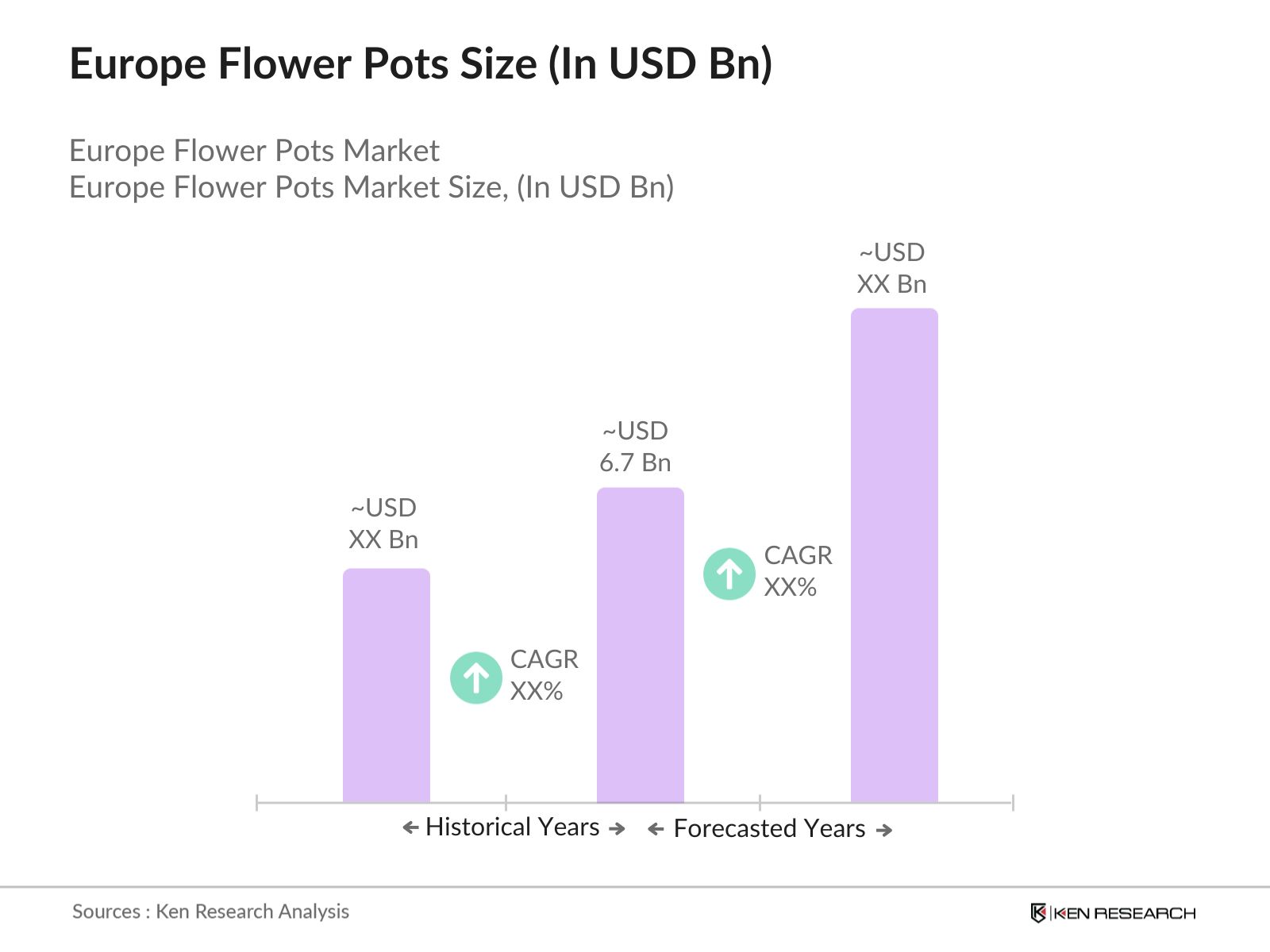
- The Europe Flower Pots market is valued at USD 6.7 billion. It is driven by the increasing popularity of gardening and outdoor living, particularly in urban areas, where consumers are increasingly incorporating plants into their home decor. Factors such as growing interest in sustainable living, eco-friendly products, and the rise of urban gardening are fueling the demand for various types of flower pots, including plastic, ceramic, and terracotta. The market is also supported by a shift towards automation in gardening, with smart flower pots gaining traction among tech-savvy consumers. The growth rate is expected to be sustained by consistent demand from the DIY sector and increasing retail activity.
- Countries such as Germany, France, and the UK dominate the Europe Flower Pots market due to their strong economies, large gardening communities, and growing interest in sustainable home improvement products. Germany, known for its advanced retail infrastructure, leads the market with a high demand for garden products, while France and the UK maintain robust consumer bases for flower pots, particularly in urban settings. Additionally, countries with significant horticultural industries, such as the Netherlands, are also prominent players in the market due to their established flower-growing traditions and large-scale commercial use of flower pots.
- European governments have implemented national air quality monitoring programs to combat pollution. These initiatives promote urban greening as a measure to improve air quality, increasing the demand for flower pots in public spaces and residential areas. The EU's Ambient Air Quality Directive sets standards that encourage such environmental measures.
Europe Flower Pots Market Segmentation
By Material: The market is segmented by material into terracotta, plastic, wood, and other materials. Among these, the plastic segment holds a dominant share due to its affordability, variety, and ease of manufacturing. Plastic flower pots are lightweight, durable, and come in a range of sizes, shapes, and colors, making them a popular choice among consumers for both indoor and outdoor gardening. Their affordability and availability in various designs have solidified their position as the leading material in the market. The ease of production and relatively low environmental impact compared to some other materials further contribute to the dominance of plastic flower pots in the European market. 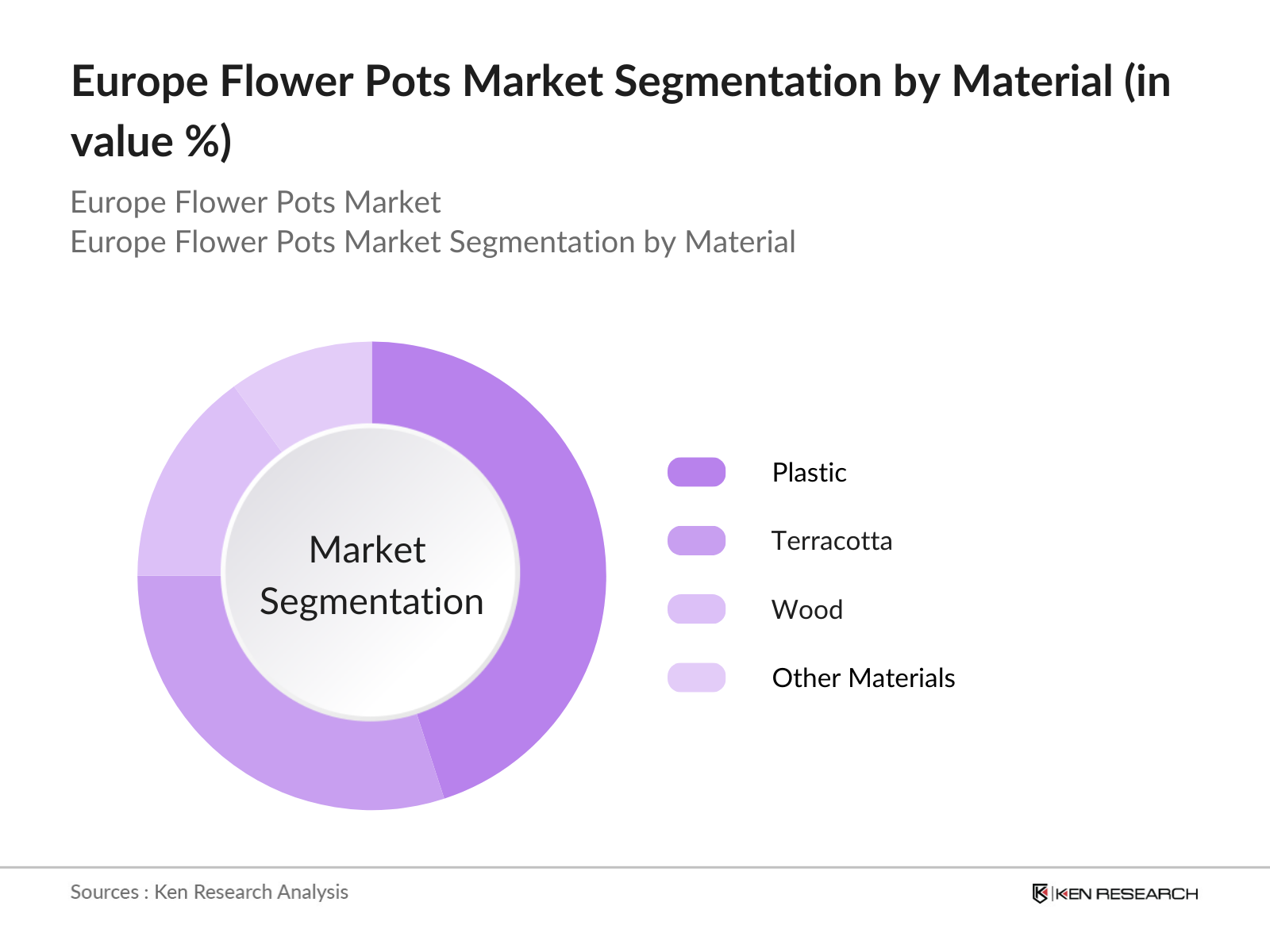
By End-User: The market is also segmented by end-user into residential, greenhouse and container farming, and other end-users. The residential segment commands the largest share due to the growing trend of gardening among homeowners and urban dwellers. Flower pots are increasingly used as decorative elements in homes, balconies, and gardens. The trend toward indoor plants for aesthetic and air-purification purposes has also boosted the demand for flower pots. Additionally, the rise of small-space gardening, especially in apartments and city areas, has made flower pots an essential part of home dcor and personal well-being. 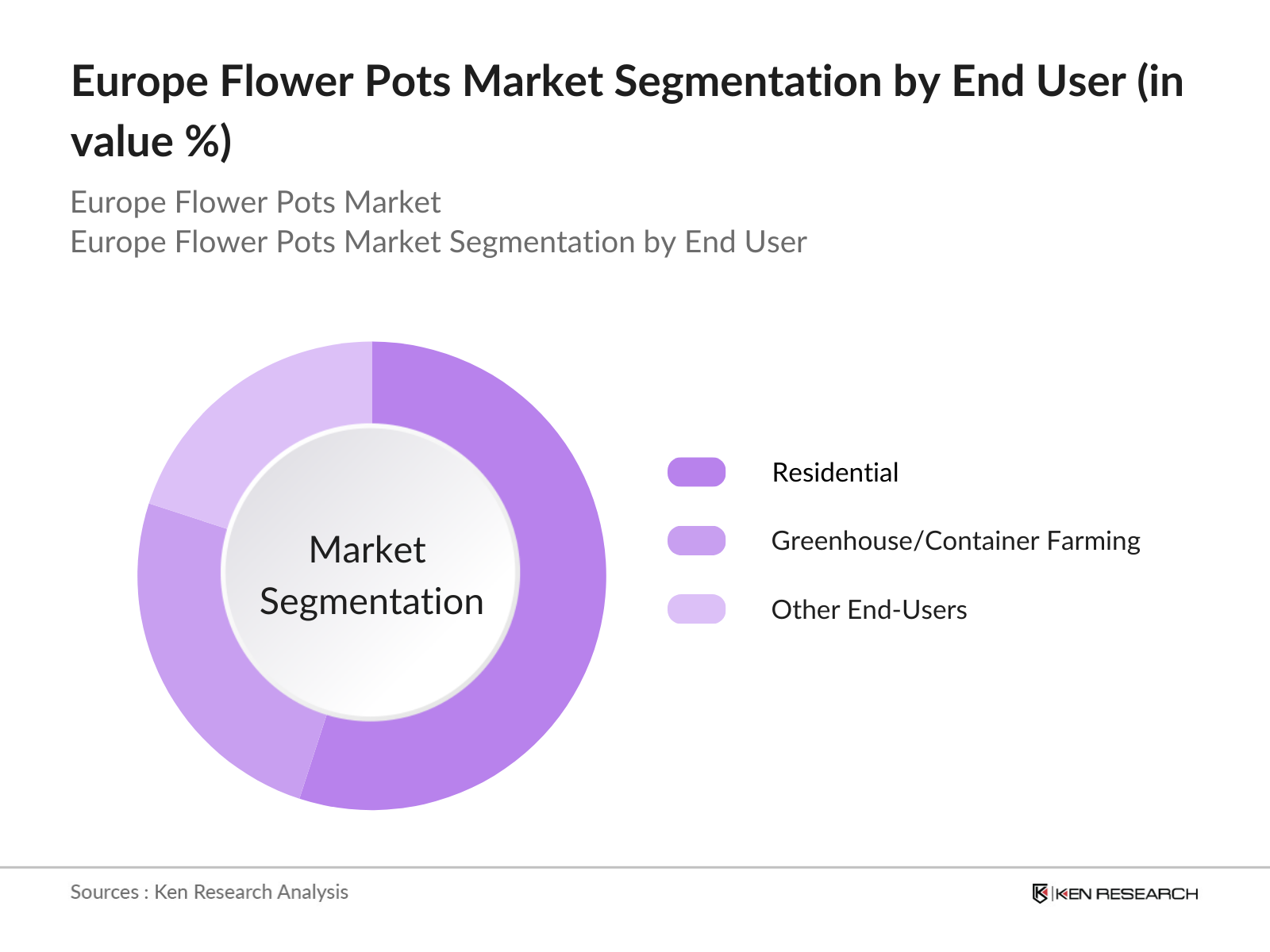
Europe Flower Pots Market Competitive Landscape
The European Flower Pots market is dominated by a mix of global brands and regional players that are focused on innovation, sustainability, and broad distribution networks. Companies like Keter, Scheurich, and Elho have established a strong market presence due to their extensive product portfolios and strategic collaborations. The market's competitive nature is intensified by companies investing in eco-friendly materials and advanced manufacturing techniques to cater to the growing demand for sustainable gardening solutions. A few major players in the market include local manufacturers as well as large multinational brands. 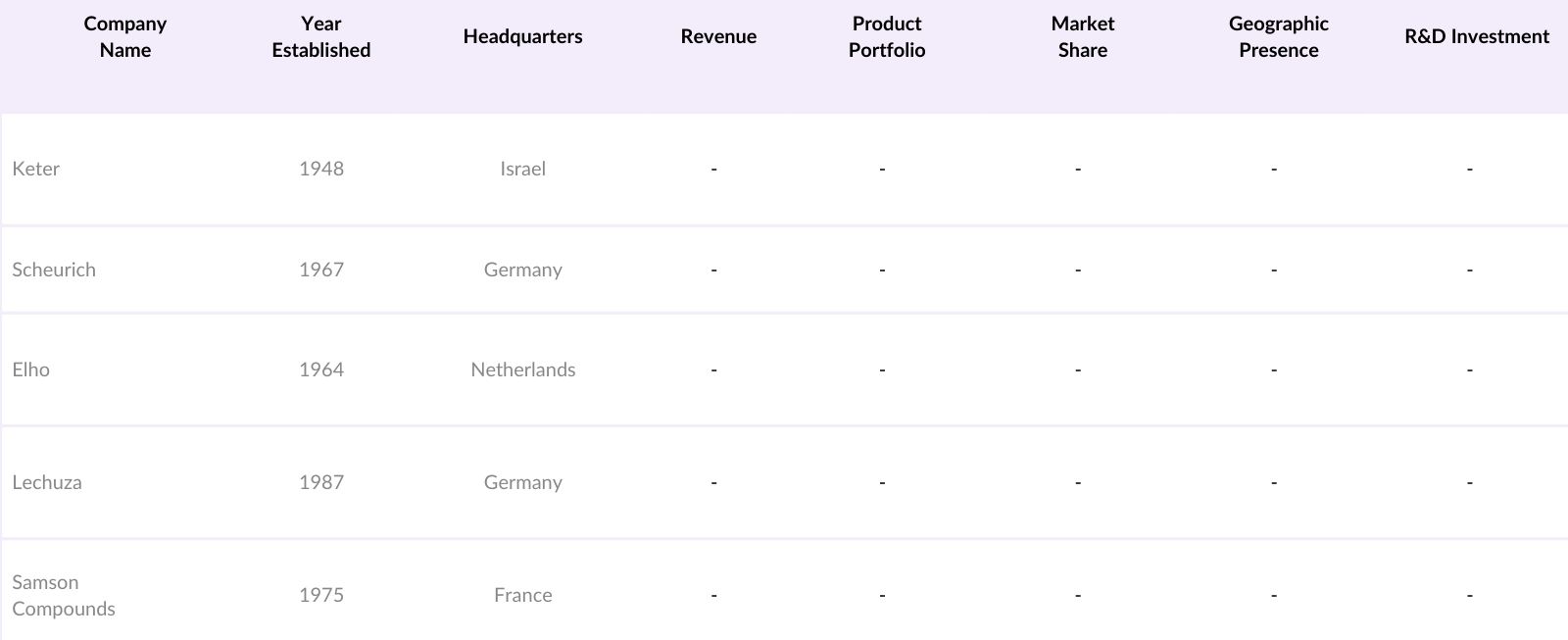
Europe Flower Pots Industry Analysis
Growth Drivers
- Urbanization: As of 2024, Europe's urban population has reached approximately 567 million individuals, accounting for 75% of the total population. This significant urbanization has led to a surge in demand for flower pots, as city dwellers increasingly incorporate greenery into their living spaces to enhance aesthetics and air quality. The European Union's Urban Agenda emphasizes sustainable urban development, further promoting the integration of plants in urban settings.
- Industrialization: Europe's industrial sector has been expanding, with the manufacturing industry contributing over 2.1 trillion to the EU's GDP in 2023. This growth has increased the production of flower pots, meeting the rising consumer demand. The European Commission's Industrial Strategy aims to boost manufacturing capabilities, indirectly supporting the flower pots market by ensuring a steady supply chain.
- Government Regulations: The European Union has implemented regulations promoting sustainable materials in consumer products. The EU's Circular Economy Action Plan encourages the use of recyclable and biodegradable materials, leading manufacturers to produce eco-friendly flower pots. This regulatory framework has driven innovation in the market, aligning with consumer preferences for sustainable products.
Market Challenges
- High Initial Costs: The production of eco-friendly flower pots involves higher initial costs due to the use of sustainable materials and advanced manufacturing processes. For instance, biodegradable materials can be 20-30% more expensive than traditional plastics, impacting profit margins for manufacturers and leading to higher prices for consumers.
- Technical Challenges: Developing durable and aesthetically pleasing flower pots from sustainable materials presents technical challenges. Biodegradable materials may lack the strength and longevity of conventional plastics, requiring ongoing research and development to improve product quality. This necessity for innovation can strain resources for manufacturers, especially small and medium-sized enterprises.
Europe Flower Pots Market Future Outlook
Over the next 5 years, the Europe Flower Pots market is expected to witness continued growth driven by urbanization, increasing demand for sustainable gardening solutions, and technological innovations. The market is also likely to benefit from the growing popularity of indoor plants, especially as consumers become more eco-conscious and seek ways to integrate nature into their living spaces. The demand for self-watering and automated flower pots will rise, aligning with the trend towards smart home technology. Additionally, the shift towards recyclable materials in product design is expected to spur further growth in eco-friendly flower pots.
Future Market Opportunities
- Technological Advancements: Advancements in materials science have led to the development of biodegradable and recyclable materials suitable for flower pot production. For example, polylactic acid (PLA) derived from renewable resources offers a sustainable alternative to traditional plastics. Adopting such technologies can reduce environmental impact and appeal to eco-conscious consumers.
- International Collaborations: Collaborations between European manufacturers and international partners can facilitate the exchange of technology and best practices. For instance, partnerships with Asian companies experienced in bamboo-based products can introduce new materials into the European market, diversifying product offerings and meeting consumer demand for sustainable options.
Scope of the Report
| Material | - Terracotta - Plastic - Wood - Other Materials |
| End-User | - Residential - Greenhouse and Container Farming - Other |
| Distribution Channels | - Supermarkets/Hypermarkets - Specialty Stores - Online - Other Distribution Channels |
| Region | - Germany - France - UK - Italy - Russia - Rest of Europe |
Products
Key Target Audience
Retailers and Distributors
Garden Center Chains
Urban Gardening Enthusiasts
Home Improvement Stores
E-commerce Platforms
Investments and Venture Capitalist Firms
Government and Regulatory Bodies (European Commission, Environment Agency)
Interior Designers and Landscape Architects
Companies
Major Players
Keter
Scheurich
Elho
Lechuza
Samson Compounds
Garant Group
GCP Europe
Stefanplast
Lionshome
Tohatsu Ltd.
Rosti Mepal
Apta
Trovelore
Benetton
Hometalk
Table of Contents
Europe Flower Pots Market Overview
1.1. Definition and Scope
1.2. Market Taxonomy
1.3. Market Growth Rate
1.4. Market Segmentation Overview
Europe Flower Pots Market Size (In USD Bn)
2.1. Historical Market Size
2.2. Year-On-Year Growth Analysis
2.3. Key Market Developments and Milestones
Europe Flower Pots Market Analysis
3.1. Growth Drivers
3.1.1. Urbanization
3.1.2. Industrialization
3.1.3. Government Regulations
3.1.4. Public Awareness
3.2. Market Challenges
3.2.1. High Initial Costs
3.2.2. Technical Challenges
3.2.3. Lack of Skilled Workforce
3.3. Opportunities
3.3.1. Technological Advancements
3.3.2. International Collaborations
3.3.3. Expansion into Rural Areas
3.4. Trends
3.4.1. Adoption of IoT
3.4.2. Integration with Smart City Projects
3.4.3. Increased Use of Mobile Monitoring Units
3.5. Government Regulation
3.5.1. National Air Quality Monitoring Program
3.5.2. Emission Reduction Targets
3.5.3. Clean Air Initiative
3.5.4. Public-Private Partnerships
3.6. SWOT Analysis
3.7. Stakeholder Ecosystem
3.8. Porters Five Forces
3.9. Competition Ecosystem
Europe Flower Pots Market Segmentation
4.1. By Material (In Value %)
4.1.1. Terracotta
4.1.2. Plastic
4.1.3. Wood
4.1.4. Other Materials
4.2. By End-User (In Value %)
4.2.1. Residential
4.2.2. Greenhouse and Container Farming
4.2.3. Other End-Users
4.3. By Distribution Channels (In Value %)
4.3.1. Supermarkets/Hypermarkets
4.3.2. Specialty Stores
4.3.3. Online
4.3.4. Other Distribution Channels
4.4. By Region (In Value %)
4.4.1. Germany
4.4.2. France
4.4.3. UK
4.4.4. Italy
4.4.5. Russia
4.4.6. Rest of Europe
Europe Flower Pots Market Competitive Analysis
5.1. Detailed Profiles of Major Companies
5.1.1. Scheurich
5.1.2. Keter
5.1.3. Elho
5.1.4. Benito Urban
5.1.5. Lechuza
5.1.6. GCP Europe
5.1.7. Stefanplast
5.1.8. Garant Group
5.1.9. Samson Compounds
5.1.10. Lionshome
5.2. Cross Comparison Parameters
5.2.1. Number of Employees
5.2.2. Headquarters
5.2.3. Inception Year
5.2.4. Revenue
5.2.5. Product Portfolio
5.2.6. Market Share
5.2.7. Geographic Presence
5.2.8. Recent Developments
5.3. Market Share Analysis
5.4. Strategic Initiatives
5.5. Mergers and Acquisitions
5.6. Investment Analysis
5.6.1. Venture Capital Funding
5.6.2. Government Grants
5.6.3. Private Equity Investments
5.7. Competitive Landscape
Europe Flower Pots Market Regulatory Framework
6.1. Environmental Standards
6.2. Compliance Requirements
6.3. Certification Processes
Europe Flower Pots Market Future Market Size (In USD Bn)
7.1. Future Market Size Projections
7.2. Key Factors Driving Future Market Growth
Europe Flower Pots Market Future Market Segmentation
8.1. By Material (In Value %)
8.2. By End-User (In Value %)
8.3. By Distribution Channels (In Value %)
8.4. By Region (In Value %)
Europe Flower Pots Market Analysts Recommendations
9.1. Total Addressable Market (TAM) / Serviceable Available Market (SAM) / Serviceable Obtainable Market (SOM) Analysis
9.2. Customer Cohort Analysis
9.3. Marketing Initiatives
9.4. White Space Opportunity Analysis
Disclaimer Contact UsResearch Methodology
Step 1: Identification of Key Variables
The first step involves constructing an ecosystem map of the Europe Flower Pots market. This includes collecting data from secondary research, using reports from trusted market sources, to identify key market drivers and trends. This helps define the core variables influencing market growth.
Step 2: Market Analysis and Construction
Historical data is analyzed to assess market penetration and identify growth patterns. In this phase, we evaluate regional growth, material preferences, and product innovations. We also gather data on consumer behavior and demographic shifts, ensuring that the data is comprehensive and covers all aspects of the flower pot market.
Step 3: Hypothesis Validation and Expert Consultation
After forming hypotheses about the market, we validate them by conducting interviews with industry experts, including manufacturers, distributors, and retailers. This ensures our findings align with the real-world trends, providing an accurate picture of the market's current state and future potential.
Step 4: Research Synthesis and Final Output
In the final phase, we synthesize the data from primary and secondary research, cross-checking our findings with industry stakeholders. This stage includes in-depth consultations with key market players, helping refine the analysis. The resulting output is a detailed, validated market report with actionable insights.
Frequently Asked Questions
How big is the Europe Flower Pots Market?
The Europe Flower Pots market is valued at USD 6.7 billion, driven by growing interest in sustainable gardening, urban gardening trends, and the demand for eco-friendly products.
What are the challenges in the Europe Flower Pots Market?
Challenges in the Europe Flower Pots market include increasing competition, the high cost of raw materials, and the need for continuous innovation to meet sustainability demands.
Who are the major players in the Europe Flower Pots Market?
Key players in the Europe Flower Pots market include Keter, Scheurich, Elho, and Lechuza, which dominate the market due to their broad product offerings and strong distribution networks.
What are the growth drivers of the Europe Flower Pots Market?
The Europe Flower Pots market is driven by the increasing popularity of gardening, the shift towards eco-friendly products, and the growing trend of indoor plants for decoration and air purification.
What are the key segments in the Europe Flower Pots Market?
The Europe Flower Pots market is segmented by material (plastic, terracotta, wood) and end-user (residential, greenhouse/container farming). Plastic flower pots are the most dominant segment, driven by cost-effectiveness and variety.
Why Buy From Us?

What makes us stand out is that our consultants follows Robust, Refine and Result (RRR) methodology. i.e. Robust for clear definitions, approaches and sanity checking, Refine for differentiating respondents facts and opinions and Result for presenting data with story

We have set a benchmark in the industry by offering our clients with syndicated and customized market research reports featuring coverage of entire market as well as meticulous research and analyst insights.

While we don't replace traditional research, we flip the method upside down. Our dual approach of Top Bottom & Bottom Top ensures quality deliverable by not just verifying company fundamentals but also looking at the sector and macroeconomic factors.

With one step in the future, our research team constantly tries to show you the bigger picture. We help with some of the tough questions you may encounter along the way: How is the industry positioned? Best marketing channel? KPI's of competitors? By aligning every element, we help maximize success.

Our report gives you instant access to the answers and sources that other companies might choose to hide. We elaborate each steps of research methodology we have used and showcase you the sample size to earn your trust.

If you need any support, we are here! We pride ourselves on universe strength, data quality, and quick, friendly, and professional service.