















Europe G-Protein Coupled Receptors Market Outlook to 2030
Region:Europe
Author(s):Paribhasha Tiwari
Product Code:KROD6960
December 2024
100
About the Report
Europe G-Protein Coupled Receptors Market Overview
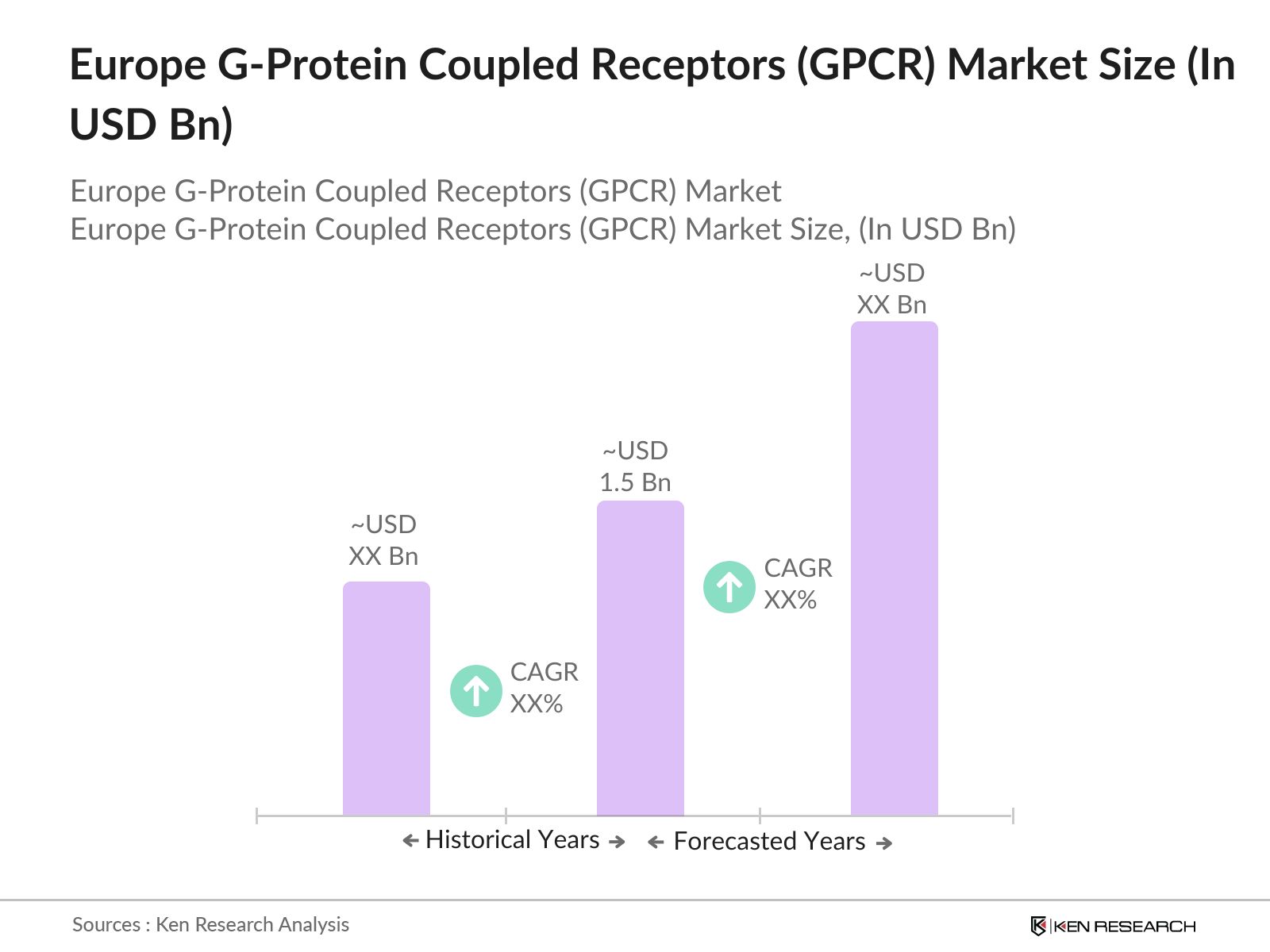
- The Europe G-Protein Coupled Receptors (GPCR) market is valued at USD 1.5 billion based on a five-year historical analysis. Growth in this sector is driven by the increasing demand for targeted therapies in chronic disease management, particularly within oncology and cardiovascular fields. Factors such as advancements in structural biology and high investment in biotechnology for drug discovery contribute to the development of novel GPCR-targeted treatments, further fueling market expansion.
- The market is led by major European countries, with Germany and the United Kingdom at the forefront. Germanys stronghold in this market can be attributed to its well-established pharmaceutical and biotechnology sectors, bolstered by government support and robust research funding. Meanwhile, the United Kingdom benefits from a thriving biopharmaceutical sector and a high concentration of biotech firms engaged in GPCR research, creating a competitive advantage.
- In 2024, several European pharmaceutical companies have integrated artificial intelligence in GPCR-targeted drug discovery, reducing the development timeline by an estimated 30%. These AI systems enable precise receptor mapping and streamline the identification of effective drug candidates.
Europe G-Protein Coupled Receptors Market Segmentation
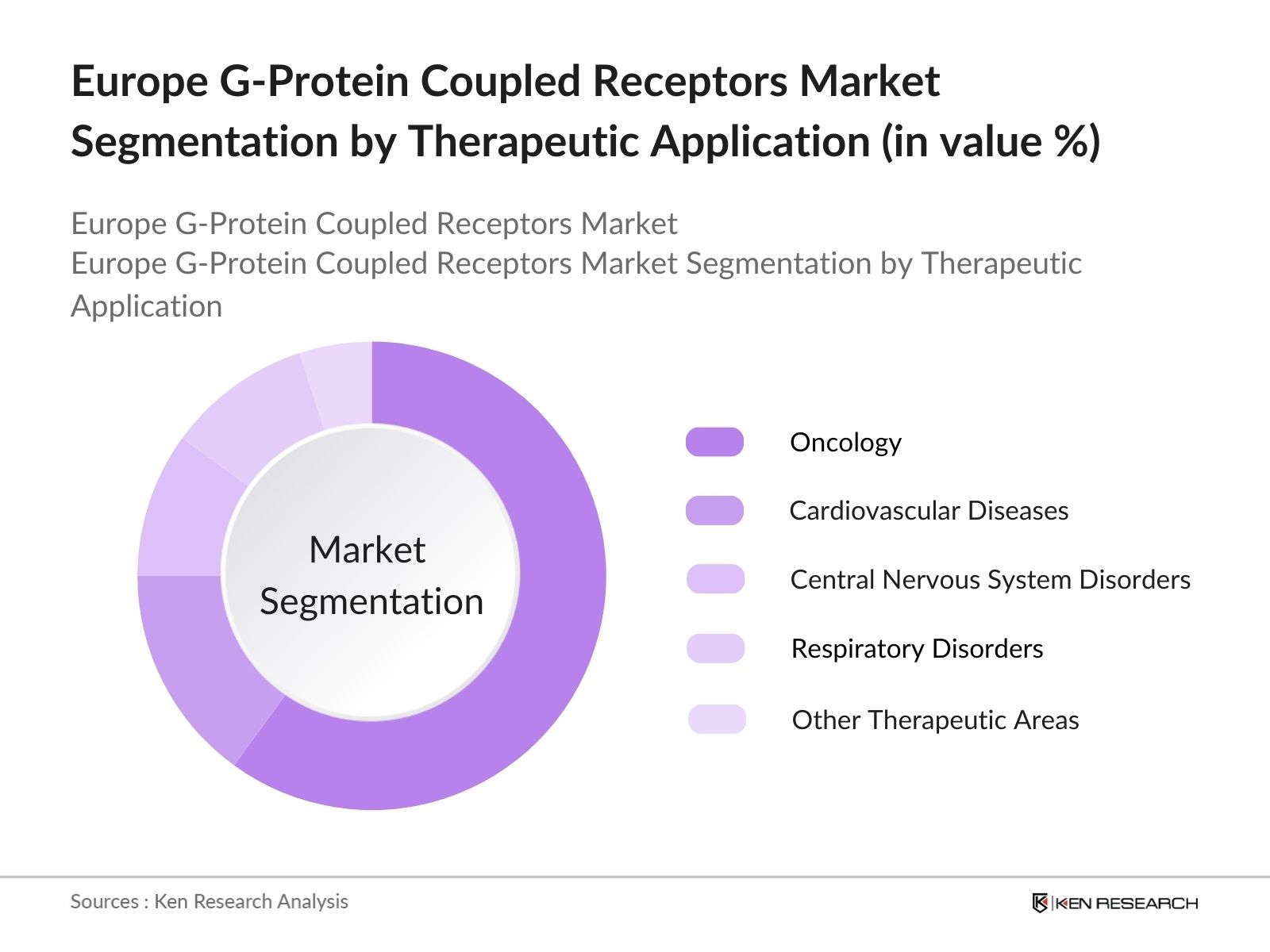
By Therapeutic Application: Europe's GPCR market is segmented by therapeutic application into oncology, cardiovascular diseases, central nervous system disorders, respiratory disorders, and other therapeutic areas. Currently, oncology holds the dominant position in this segment, driven by the high prevalence of cancer and the development of GPCR-targeted drugs that offer enhanced efficacy and reduced side effects. The demand for targeted oncology therapies has been rising, supported by research funding and industry-academic partnerships focusing on GPCRs.
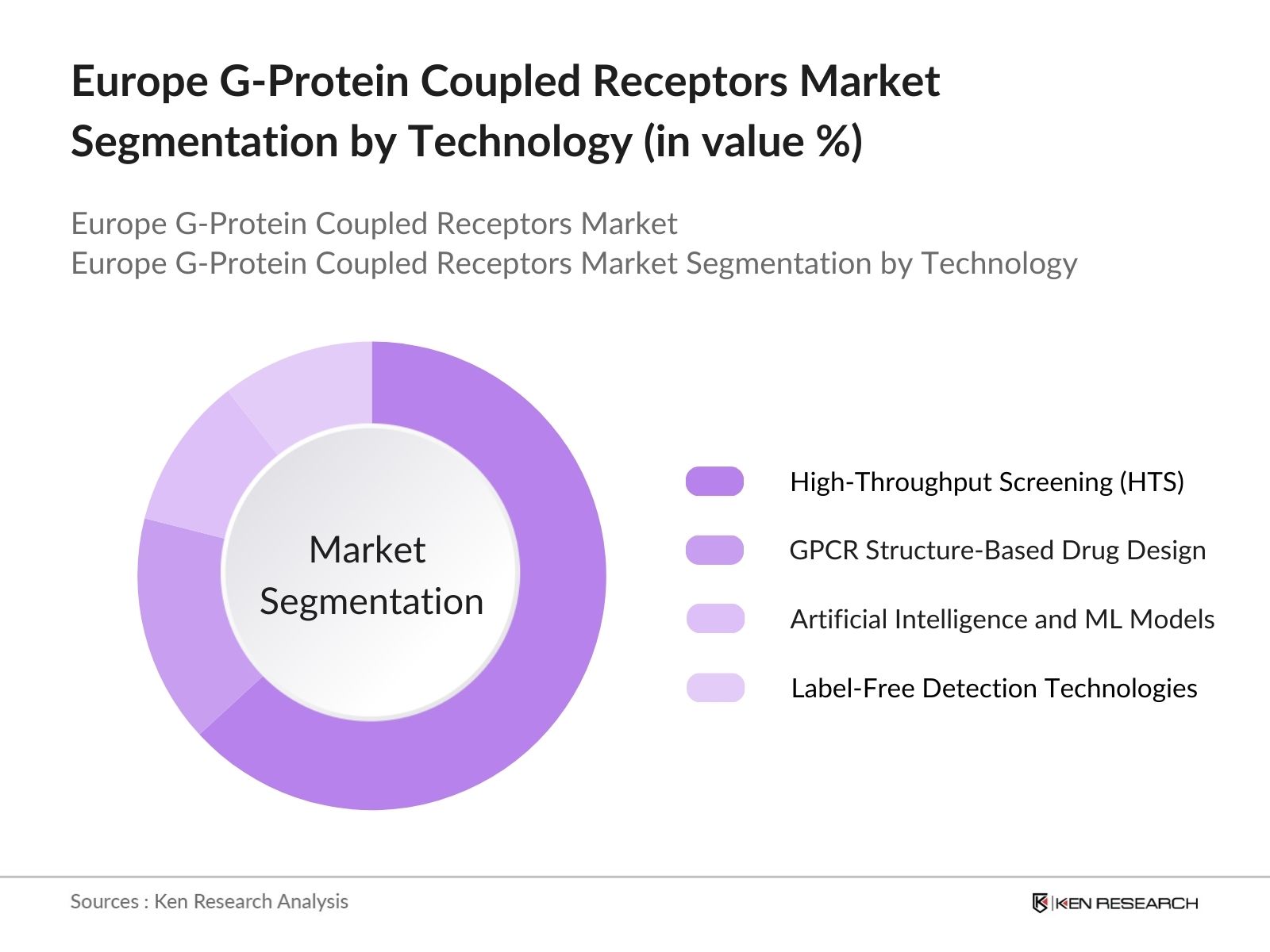
By Technology: The GPCR market in Europe is also segmented by technology, including high-throughput screening (HTS), GPCR structure-based drug design, artificial intelligence (AI) and machine learning models, and label-free detection technologies. High-throughput screening has a significant share due to its widespread use in GPCR drug discovery, allowing for efficient analysis of large compound libraries. Its adoption is fueled by the need for rapid identification of active compounds, especially in large-scale pharmaceutical R&D projects.
Europe G-Protein Coupled Receptors Market Competitive Landscape
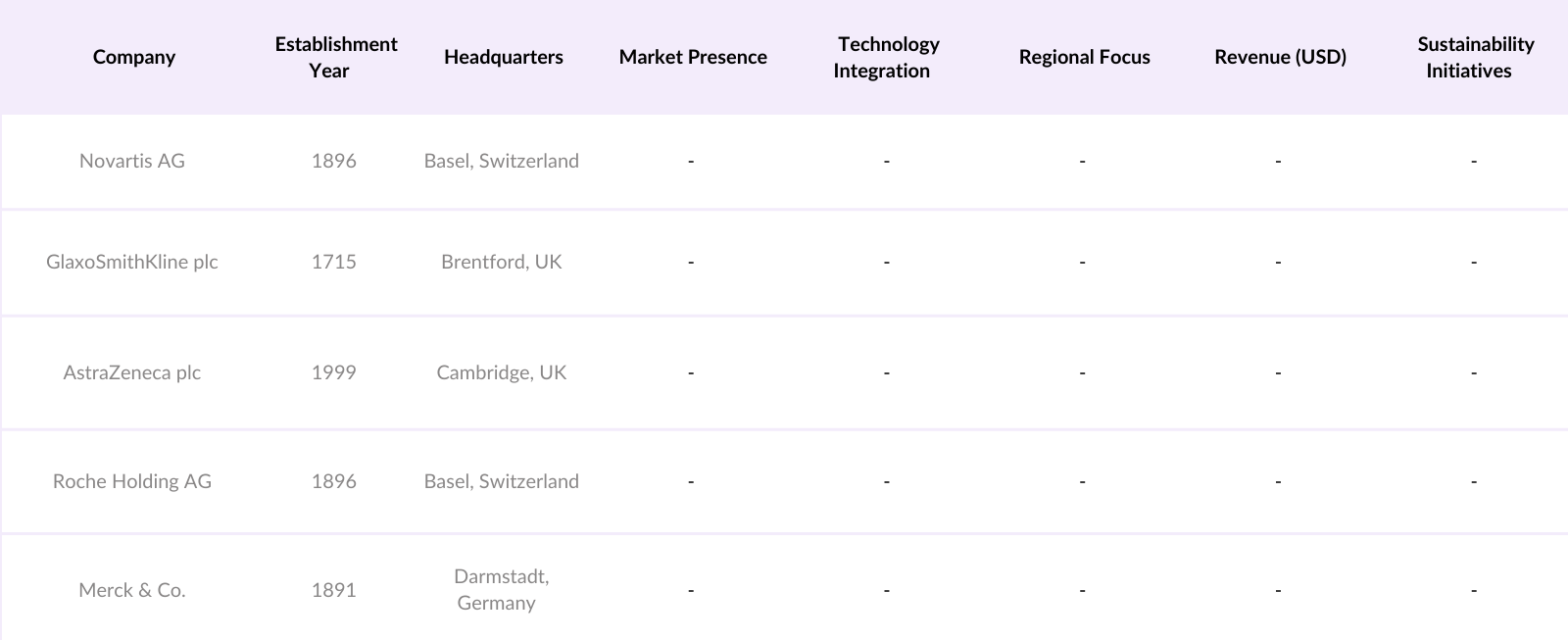
The Europe GPCR market is dominated by several key players that drive innovation and hold substantial market shares. Pharmaceutical giants and biotech firms with dedicated R&D resources lead the competition, reflecting a consolidated market with significant influence from these key companies.
Growth Drivers
- Rising Demand for Targeted Therapy: The need for targeted therapies has surged, driven by advancements in personalized medicine and precision oncology, where G-protein-coupled receptors (GPCRs) serve as critical targets. In 2024, it is estimated that targeted therapies addressing GPCRs will form a significant part of new drug development budgets, with pharmaceutical companies allocating over 2 billion to research in Europe. This trend is motivated by the ability of GPCR-based therapies to minimize side effects by targeting specific cellular receptors, enhancing efficacy for chronic conditions like cancer and cardiovascular diseases.
- Increasing Investment in Drug Discovery: Investment in GPCR-related drug discovery is growing, with public and private sectors in Europe contributing approximately 1.5 billion in 2024 towards research and development in this area. Government initiatives and funding programs such as Horizon Europe further support these investments, focusing on innovative drug discovery targeting GPCRs. As a result, researchers and pharmaceutical companies are increasingly exploring GPCR-related pathways, improving drug efficacy and reducing treatment costs.
- Advancements in Structural Biology and GPCR Crystallization: Structural biology and GPCR crystallization techniques have evolved, allowing detailed mapping of GPCR structures, which was previously challenging. These advancements have led to a notable reduction in the time and resources required for GPCR-targeted drug discovery. By 2024, European researchers have utilized high-resolution crystallography for nearly 500 GPCR structures, accelerating the development of effective therapies and propelling the markets growth.
Market Challenges
- High Research and Development Costs: The R&D costs associated with GPCR-targeted drugs remain significant, with average expenditures reaching 1.2 million for early-stage studies per drug candidate. The cost-intensive nature of GPCR research is attributed to the complexity of receptor structures and the resources required for trials. These high costs create a barrier, limiting entry to major pharmaceutical players and hindering smaller biotech firms in Europe.
- Regulatory Compliance Challenges: Regulatory frameworks in Europe are stringent, with agencies such as the European Medicines Agency (EMA) imposing detailed guidelines on GPCR-targeted drugs. Meeting these standards can be complex and time-consuming, with approval timelines extending up to 18 months and costing pharmaceutical companies up to 500,000 per application. Such regulations, while ensuring safety, can delay the launch of innovative GPCR therapies in the European market.
Europe G-Protein Coupled Receptors Market Future Outlook
The Europe GPCR market is anticipated to experience substantial growth over the next five years, driven by advancements in drug discovery technologies, ongoing research initiatives, and the increasing prevalence of chronic diseases. The integration of AI and machine learning models is expected to transform GPCR screening processes, enhancing the efficiency of drug development. Additionally, collaborative efforts between pharmaceutical companies and research institutions are likely to support the development of innovative GPCR-targeted therapies, thereby propelling market growth.
Market Opportunities
- Expansion of Biotech Collaborations: European biotech firms and research institutions are increasingly collaborating to expedite GPCR-focused drug development. In 2024, approximately 800 million has been invested in cross-border collaborative research, particularly among EU nations, which is anticipated to accelerate GPCR-targeted innovations and enhance regional research capabilities.
- Development of Orphan Drugs: The development of orphan drugs targeting rare diseases through GPCR pathways presents a promising opportunity, with European pharmaceutical companies receiving 300 million in grants from EU bodies for rare disease research in 2024. This funding is expected to foster the development of GPCR-based therapies for diseases that currently lack effective treatments.
Scope of the Report
|
By Therapeutic Application |
Oncology, Cardiovascular Diseases Central Nervous System Disorders Respiratory Disorders Other Therapeutic Areas |
|
By Technology |
High-Throughput Screening (HTS) GPCR Structure-Based Drug Design Artificial Intelligence and Machine Learning Models Label-Free Detection Technologies |
|
By Ligand Type |
Peptide Ligands Small Molecule Ligands Monoclonal Antibodies Natural Compounds |
|
By End-User |
Pharmaceutical Companies Academic & Research Institutes Biotech Companies Contract Research Organizations (CROs) |
|
By Region |
Germany France United Kingdom Italy Spain |
Products
Key Target Audience
Pharmaceutical Companies
Biotechnology Firms
Contract Research Organizations (CROs)
Investors and Venture Capitalist Firms
Government and Regulatory Bodies (e.g., European Medicines Agency)
Healthcare Providers
Drug Discovery Technology Vendors
Academic and Research Institutions
Companies
Players Mentioned in the Report:
Novartis AG
GlaxoSmithKline plc
AstraZeneca plc
Roche Holding AG
Merck & Co.
Sanofi
Pfizer Inc.
Bayer AG
Johnson & Johnson
Amgen Inc.
Table of Contents
1. Europe G-Protein Coupled Receptors Market Overview
1.1 Definition and Scope
1.2 Market Taxonomy
1.3 Mechanism of GPCR in Signal Transduction
1.4 Overview of Therapeutic Areas for GPCR Targeting
1.5 Market Segmentation Overview
2. Europe G-Protein Coupled Receptors Market Size (In USD Bn)
2.1 Historical Market Size
2.2 Year-On-Year Growth Analysis
2.3 Key Milestones and Innovations in GPCR Research
3. Europe G-Protein Coupled Receptors Market Dynamics
3.1 Growth Drivers
3.1.1 Rising Demand for Targeted Therapy
3.1.2 Increasing Investment in Drug Discovery
3.1.3 Advancements in Structural Biology and GPCR Crystallization
3.1.4 High Prevalence of Chronic Diseases
3.2 Market Challenges
3.2.1 High Research and Development Costs
3.2.2 Regulatory Compliance Challenges
3.2.3 Limited GPCR Targeted Drugs in the Pipeline
3.3 Opportunities
3.3.1 Expansion of Biotech Collaborations
3.3.2 Development of Orphan Drugs
3.3.3 New GPCR Pathways as Drug Targets
3.4 Trends
3.4.1 Use of Artificial Intelligence in GPCR Screening
3.4.2 Adoption of High-Throughput Screening Technologies
3.4.3 Increased Focus on GPCR Agonists
3.5 Government Regulation
3.5.1 European Medicines Agency (EMA) Guidelines
3.5.2 Intellectual Property Rights and GPCR Innovations
3.5.3 Regional GPCR Safety and Efficacy Standards
3.6 Stakeholder Ecosystem
3.7 Porters Five Forces Analysis
3.8 Competitive Landscape Overview
4. Europe G-Protein Coupled Receptors Market Segmentation
4.1 By Therapeutic Application (In Value %)
4.1.1 Oncology
4.1.2 Cardiovascular Diseases
4.1.3 Central Nervous System Disorders
4.1.4 Respiratory Disorders
4.1.5 Other Therapeutic Areas
4.2 By Technology (In Value %)
4.2.1 High-Throughput Screening (HTS)
4.2.2 GPCR Structure-Based Drug Design
4.2.3 Artificial Intelligence and Machine Learning Models
4.2.4 Label-Free Detection Technologies
4.3 By Ligand Type (In Value %)
4.3.1 Peptide Ligands
4.3.2 Small Molecule Ligands
4.3.3 Monoclonal Antibodies
4.3.4 Natural Compounds
4.4 By End-User (In Value %)
4.4.1 Pharmaceutical Companies
4.4.2 Academic & Research Institutes
4.4.3 Biotech Companies
4.4.4 Contract Research Organizations (CROs)
4.5 By Country (In Value %)
4.5.1 Germany
4.5.2 France
4.5.3 United Kingdom
4.5.4 Italy
4.5.5 Spain
5. Europe G-Protein Coupled Receptors Competitive Analysis
5.1 Detailed Profiles of Major Companies
5.1.1 Thermo Fisher Scientific
5.1.2 Merck & Co.
5.1.3 Bristol Myers Squibb
5.1.4 Novartis AG
5.1.5 Pfizer Inc.
5.1.6 GlaxoSmithKline plc
5.1.7 Roche Holding AG
5.1.8 Sanofi
5.1.9 AstraZeneca plc
5.1.10 Bayer AG
5.1.11 Amgen Inc.
5.1.12 AbbVie Inc.
5.1.13 Johnson & Johnson
5.1.14 Eli Lilly and Company
5.1.15 Takeda Pharmaceutical Company
5.2 Cross Comparison Parameters (Market-specific)
5.2.1 Revenue
5.2.2 Headquarters Location
5.2.3 Research Investments in GPCR Development
5.2.4 Drug Pipeline for GPCR Targeted Therapies
5.2.5 Patents and Intellectual Property Holdings
5.2.6 Global Presence and Market Reach
5.2.7 Regulatory Compliance Status
5.2.8 Strategic Partnerships and Collaborations
5.3 Market Share Analysis
5.4 Key Strategic Initiatives
5.5 Mergers, Acquisitions, and Partnerships
5.6 Investment and Funding Landscape
6. Europe G-Protein Coupled Receptors Market Regulatory Framework
6.1 Regulatory Requirements for Drug Approval
6.2 Intellectual Property Policies
6.3 Compliance and Certification Procedures
7. Europe G-Protein Coupled Receptors Future Market Size (In USD Bn)
7.1 Projections for Future Market Growth
7.2 Key Factors Influencing Market Expansion
8. Europe G-Protein Coupled Receptors Market Analyst Recommendations
8.1 Target Audience Analysis
8.2 Market Penetration Strategies
8.3 Product Differentiation Opportunities
8.4 Emerging White Space in GPCR Drug Development
Research Methodology
Step 1: Identification of Key Variables
This initial step involves mapping out the Europe GPCR market ecosystem, identifying primary stakeholders including pharmaceutical and biotech companies. Desk research draws on secondary sources and proprietary databases to collect comprehensive data on market dynamics.
Step 2: Market Analysis and Construction
This phase assesses historical data in the GPCR market, analyzing R&D investments, therapeutic applications, and revenue generation trends. Insights into market penetration and competitive standing are evaluated to ensure accurate market estimation.
Step 3: Hypothesis Validation and Expert Consultation
In this step, market hypotheses are validated through in-depth interviews with industry experts from leading pharmaceutical and biotech firms. This expert feedback refines data accuracy, with insights on technological adoption, market challenges, and competitive positioning.
Step 4: Research Synthesis and Final Output
The final phase integrates quantitative and qualitative data, with market insights corroborated through direct consultations with stakeholders. This synthesis provides a validated, comprehensive view of the Europe GPCR market, ensuring precision in analysis and report findings.
Frequently Asked Questions
01. How big is the Europe GPCR Market?
The Europe GPCR market is valued at USD 1.5 billion, supported by investments in targeted drug discovery and growth in biotech applications in healthcare.
02. What are the primary drivers in the Europe GPCR Market?
Growth of Europe GPCR market is driven by the demand for targeted therapies, advancements in GPCR-related drug discovery, and rising investments in biotechnology and pharmaceuticals.
03. Which countries dominate the Europe GPCR Market?
Germany and the United Kingdom lead the Europe GPCR market due to their robust pharmaceutical sectors, high R&D investment, and concentration of biotech companies involved in GPCR research.
04. What challenges affect the Europe GPCR Market?
High R&D costs, stringent regulatory requirements, and limited availability of approved GPCR-targeted drugs present challenges within the Europe GPCR market.
Why Buy From Us?

What makes us stand out is that our consultants follows Robust, Refine and Result (RRR) methodology. i.e. Robust for clear definitions, approaches and sanity checking, Refine for differentiating respondents facts and opinions and Result for presenting data with story

We have set a benchmark in the industry by offering our clients with syndicated and customized market research reports featuring coverage of entire market as well as meticulous research and analyst insights.

While we don't replace traditional research, we flip the method upside down. Our dual approach of Top Bottom & Bottom Top ensures quality deliverable by not just verifying company fundamentals but also looking at the sector and macroeconomic factors.

With one step in the future, our research team constantly tries to show you the bigger picture. We help with some of the tough questions you may encounter along the way: How is the industry positioned? Best marketing channel? KPI's of competitors? By aligning every element, we help maximize success.

Our report gives you instant access to the answers and sources that other companies might choose to hide. We elaborate each steps of research methodology we have used and showcase you the sample size to earn your trust.

If you need any support, we are here! We pride ourselves on universe strength, data quality, and quick, friendly, and professional service.