
Europe Games Market Outlook to 2030
Region:Europe
Author(s):Yogita Sahu
Product Code:KROD10360
December 2024
81
About the Report
Europe Games Market Overview
- The Europe Games Market is valued at USD 72.1 billion, supported by strong growth in digital content consumption and increasing investment in online gaming platforms. This growth is largely driven by rising mobile gaming engagement, subscription-based models, and the increasing adoption of gaming technology across various devices. The market's expansion reflects a five-year historical trend of digital transformation and the accessibility of immersive gaming experiences to a broad consumer base.

- Key regions such as the United Kingdom, Germany, and France dominate the European games market due to their established infrastructure, advanced technological adoption, and a highly active gaming culture. The UK leads with its strong eSports market and mobile gaming sector, while Germany's preference for strategy and simulation games coupled with high PC usage consolidates its market share. France follows due to its thriving game development industry and the popularity of console gaming.
- Germany has allocated 250 million in 2024 to support small and mid-sized game developers, enhancing skill development, resource accessibility, and infrastructure. This initiative targets both local talent and international collaborations, aiming to boost Germany's reputation as a gaming development hub.
Europe Games Market Segmentation
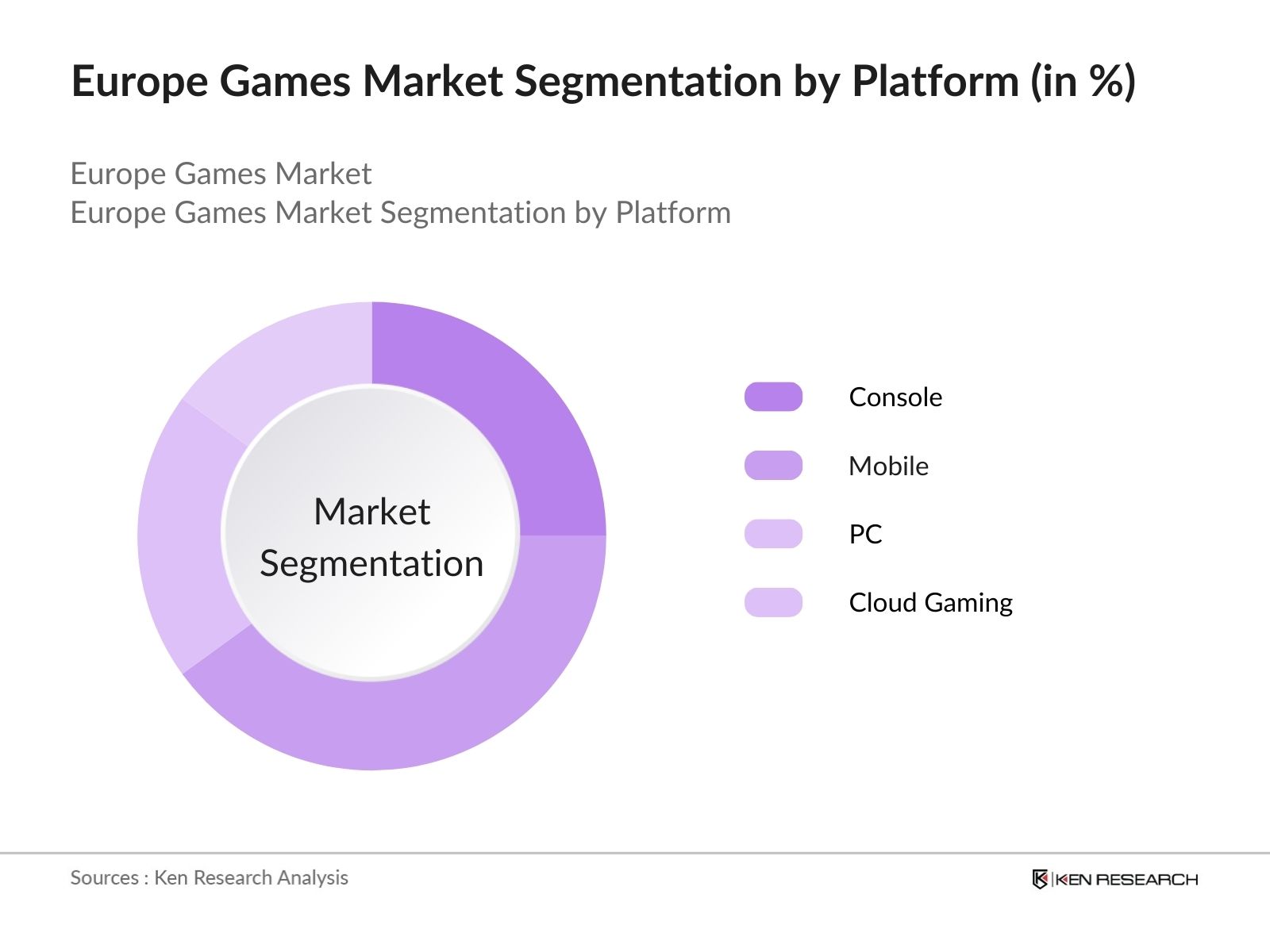
By Platform: The market is segmented by platform into console, mobile, PC, and cloud gaming. Mobile gaming holds a dominant market share under the platform segmentation. This segments prominence is attributed to high smartphone penetration, robust internet infrastructure, and an increase in casual gaming. Games tailored to mobile experiences attract a wide demographic, especially among younger audiences, leading to continuous revenue growth.
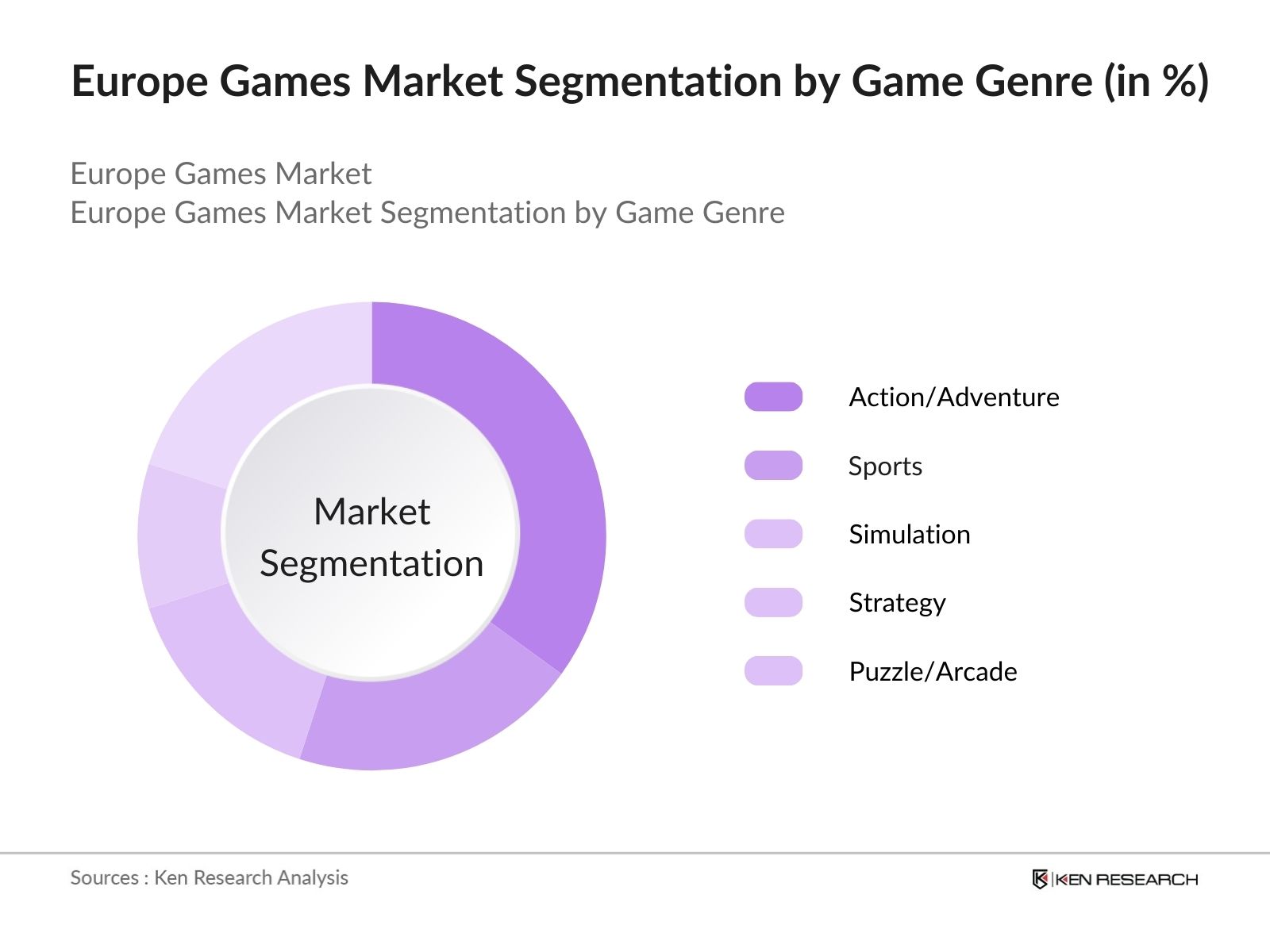
By Game Genre: The market is segmented by game genre into action/adventure, sports, simulation, strategy, and puzzle/arcade. Action/adventure games dominate the genre segmentation, primarily due to high demand for immersive experiences and evolving storytelling techniques. Well-known franchises and frequent new releases attract loyal player bases, driving growth within this genre. Additionally, the action/adventure category benefits from broad platform compatibility, appealing to console, PC, and mobile gamers alike.
Europe Games Market Competitive Landscape
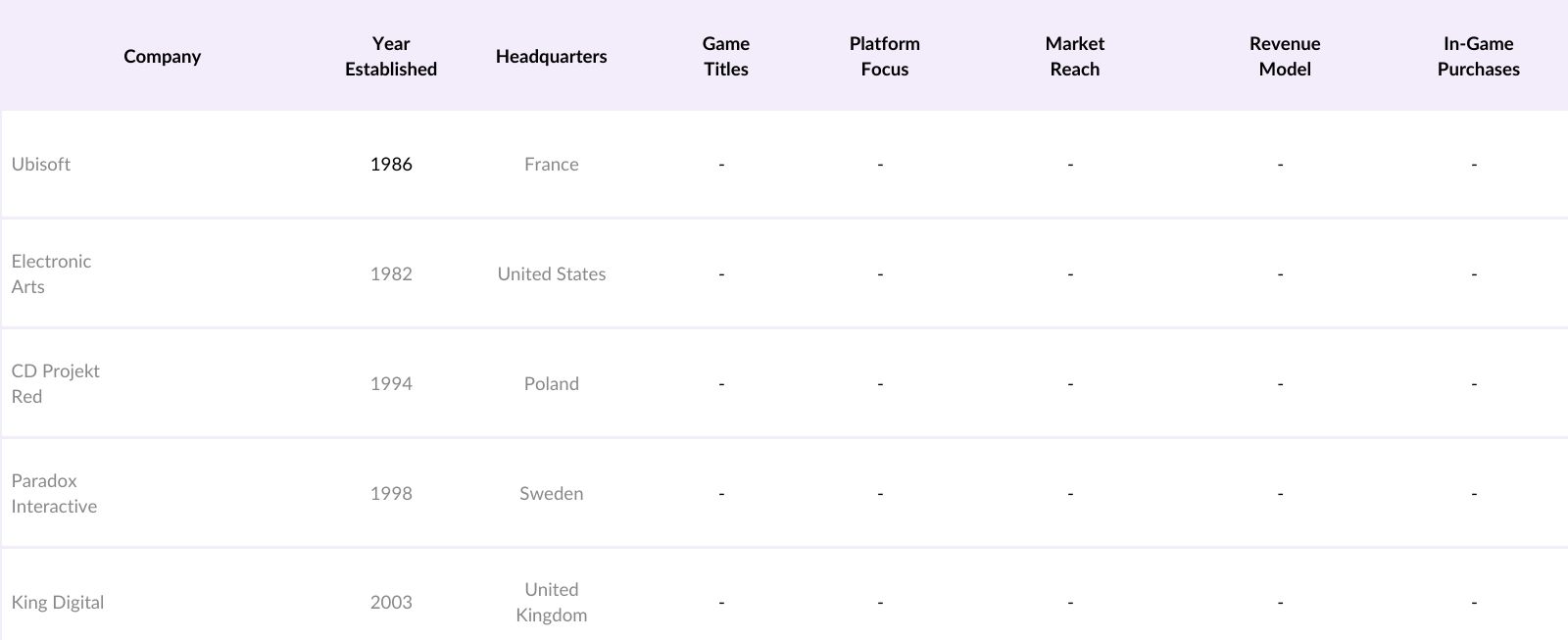
The market is highly competitive, with major players leveraging established brand loyalty and advanced technology to maintain market leadership. These companies focus on innovative gameplay, strong franchise portfolios, and large-scale marketing campaigns to enhance their market positions.
Europe Games Market Analysis
Market Growth Drivers
- Expansion in Mobile Gaming Platforms: The market is seeing strong growth in mobile gaming, with over 210 million active users accessing games via smartphones in 2024. Increased mobile internet penetration, particularly in countries like Germany and France, has supported this expansion. According to a report by GSMA, Europe had 472 million mobile internet users in 2024, fueling demand for mobile-based games and interactive applications.
- Rising Interest in eSports and Competitive Gaming: The European eSports market continues to flourish, reaching an estimated audience of 120 million active viewers, driven by a series of organized tournaments and competitive leagues. Governments in countries like Germany and the United Kingdom are investing in eSports arenas and gaming communities, with cumulative funding exceeding 55 million in 2024 to support regional tournaments and gaming events.
- Growth of Subscription-Based Gaming Services: Subscription-based gaming models have gained traction across Europe, with around 32 million users subscribing to various gaming platforms in 2024. Services such as Xbox Game Pass and PlayStation Now have seen widespread adoption due to affordable monthly fees, attracting a broader audience and increasing game accessibility across all age groups.
Market Challenges
- High Taxation and Regulatory Constraints on Game Monetization: European countries such as France and Italy impose heavy taxation on game revenue, impacting the profit margins of local developers. In 2024, the average corporate tax rate for gaming companies in Europe stood at around 800,000 annually per mid-sized developer. Regulatory challenges concerning monetization and in-game purchases further strain smaller studios struggling to adapt.
- Growing Concerns Over Gaming Addiction Among Youth: With an estimated 9.5 million adolescents actively engaged in gaming across Europe, governments are increasingly focused on curbing gaming addiction. A report in 2024 indicated that approximately 1.2 million young gamers are at risk of addiction. Regulations in countries like Norway and Finland now require parental controls on game times, resulting in added compliance costs for game developers.
Europe Games Market Future Outlook
The Europe Games industry is expected to experience steady growth in the coming years, driven by advancements in cloud gaming, increasing adoption of augmented reality (AR) and virtual reality (VR) technologies, and expanding online gaming communities.
Future Market Opportunities
- Significant Rise in Mobile-Based Cloud Gaming: Over the next five years, mobile-based cloud gaming is expected to attract 45 million additional users across Europe, reducing hardware limitations and enabling a broader user base to access AAA games. This trend is forecasted to account for a major share of gaming revenue by 2029 as users seek more convenient and affordable gaming options.
- Increased Focus on Gamification of Education and Training: By 2029, educational and corporate training sectors in Europe are projected to integrate gaming at a scale of 2 billion annually. Governments and private entities plan to implement game-based learning modules to enhance engagement, skill development, and efficiency in training programs.
Scope of the Report
|
Platform |
Console Mobile PC Cloud Gaming |
|
Game Genre |
Action/Adventure Sports Simulation Strategy Puzzle/Arcade |
|
Revenue Model |
Free-to-Play Premium Games Subscription-Based |
|
Device Type |
Smartphones Consoles PCs and Laptops VR Headsets |
|
Region |
Germany UK France Spain Italy |
Products
Key Target Audience Organizations and Entities Who Can Benefit by Subscribing This Report:
Gaming Hardware Manufacturers
Game Development Studios
E-commerce Platforms
Streaming Service Providers
Digital Distribution Platforms
Investor and Venture Capitalist Firms
Government and Regulatory Bodies (European Union, GDPR Authority)
Advertising and Sponsorship Agencies
Companies
Players Mentioned in the Report:
Ubisoft
Electronic Arts
CD Projekt Red
Paradox Interactive
King Digital
Sega Europe Ltd.
Gameloft SE
THQ Nordic
Rovio Entertainment
Playrix
Table of Contents
1. Europe Games Market Overview
1.1. Definition and Scope
1.2. Market Taxonomy
1.3. Market Growth Rate
1.4. Market Segmentation Overview
2. Europe Games Market Size (in USD Billion)
2.1. Historical Market Size
2.2. Year-On-Year Growth Analysis
2.3. Key Market Developments and Milestones
3. Europe Games Market Dynamics
3.1. Growth Drivers
3.1.1. Increased Mobile Penetration
3.1.2. Expanding Gaming Communities
3.1.3. Rising Demand for Cloud Gaming
3.1.4. Evolving Consumer Preferences (Game Genre, Platform)
3.2. Market Challenges
3.2.1. High Development Costs
3.2.2. Regulatory Restrictions
3.2.3. Market Fragmentation
3.3. Opportunities
3.3.1. Growth in Subscription-Based Models
3.3.2. Cross-Platform Game Development
3.3.3. Expansion into Untapped Regions
3.4. Trends
3.4.1. Rise of eSports
3.4.2. Increased AR/VR Game Development
3.4.3. Adoption of AI in Game Development
3.5. Regulatory Landscape
3.5.1. Data Privacy Regulations (GDPR)
3.5.2. Age and Content Rating Requirements
3.6. SWOT Analysis
3.7. Stakeholder Ecosystem
3.8. Porters Five Forces
3.9. Competition Ecosystem
4. Europe Games Market Segmentation
4.1. By Platform (in Value %)
4.1.1. Console
4.1.2. Mobile
4.1.3. PC
4.1.4. Cloud Gaming
4.2. By Game Genre (in Value %)
4.2.1. Action/Adventure
4.2.2. Sports
4.2.3. Simulation
4.2.4. Strategy
4.2.5. Puzzle/Arcade
4.3. By Revenue Model (in Value %)
4.3.1. Free-to-Play
4.3.2. Premium Games
4.3.3. Subscription-Based
4.4. By Device Type (in Value %)
4.4.1. Smartphones
4.4.2. Consoles
4.4.3. PCs and Laptops
4.4.4. VR Headsets
4.5. By Region (in Value %)
4.5.1. Germany
4.5.2. UK
4.5.3. France
4.5.4. Spain
4.5.5. Italy
5. Europe Games Market Competitive Analysis
5.1. Detailed Profiles of Major Companies
5.1.1. Electronic Arts
5.1.2. Ubisoft
5.1.3. CD Projekt Red
5.1.4. Paradox Interactive
5.1.5. THQ Nordic
5.1.6. Rovio Entertainment
5.1.7. Gameloft SE
5.1.8. Sega Europe Ltd.
5.1.9. King Digital Entertainment
5.1.10. Supercell Oy
5.1.11. Frontier Developments
5.1.12. Codemasters
5.1.13. Playrix
5.1.14. Ketchapp
5.1.15. Smilegate Europe
5.2. Cross-Comparison Parameters (Revenue, Game Titles, Revenue Model, Platform Focus, Market Share, Geographical Focus, User Ratings, Inception Year)
5.3. Market Share Analysis
5.4. Strategic Initiatives
5.5. Mergers and Acquisitions
5.6. Investment Analysis
5.7. Venture Capital Funding
5.8. Government Grants
5.9. Private Equity Investments
6. Europe Games Market Regulatory Framework
6.1. Age Restrictions and Rating Systems
6.2. GDPR and Data Privacy Compliance
6.3. In-Game Purchase Regulations
6.4. Advertising Standards and Regulations
7. Europe Games Future Market Size (in USD Billion)
7.1. Future Market Size Projections
7.2. Key Factors Driving Future Market Growth
8. Europe Games Future Market Segmentation
8.1. By Platform (in Value %)
8.2. By Game Genre (in Value %)
8.3. By Revenue Model (in Value %)
8.4. By Device Type (in Value %)
8.5. By Region (in Value %)
9. Europe Games Market Analysts Recommendations
9.1. TAM/SAM/SOM Analysis
9.2. Customer Cohort Analysis
9.3. Marketing Initiatives
9.4. White Space Opportunity Analysis
Disclaimer Contact UsResearch Methodology
Step 1: Identification of Key Variables
This phase involves defining essential variables affecting the Europe Games Market, from platform distribution to regional engagement metrics. Extensive desk research and use of proprietary databases assist in mapping the ecosystem, identifying demand trends, and determining player preferences.
Step 2: Market Analysis and Construction
In this step, historical data and current trends are analyzed to understand market dynamics. The analysis covers the segmentation by platform and genre, revenue generation models, and service quality, providing insights into Europes gaming landscape.
Step 3: Hypothesis Validation and Expert Consultation
Market hypotheses are validated through expert consultations, including structured interviews with stakeholders across gaming companies, service providers, and developers. Insights are gathered on operational, technical, and financial factors to refine the markets projected trends.
Step 4: Research Synthesis and Final Output
The final stage synthesizes all gathered data, aligning with quantitative and qualitative analyses to validate results. Comprehensive insights are compiled from industry experts to produce an accurate, reliable overview of the Europe Games Market.
Frequently Asked Questions
1. How big is the Europe Games Market?
The Europe Games Market, valued at USD 72.1 billion, continues to grow due to the digital transformation of entertainment, mobile accessibility, and increased demand for online gaming.
2. What are the growth drivers in the Europe Games Market?
Major growth drivers in the Europe Games Market include rising mobile gaming usage, enhanced cloud gaming experiences, and the popularity of immersive AR/VR technologies among European players.
3. Who are the major players in the Europe Games Market?
Key players in the Europe Games Market include Ubisoft, Electronic Arts, CD Projekt Red, King Digital, and Paradox Interactive, recognized for their innovation, diverse game portfolios, and strong market influence.
4. What challenges exist in the Europe Games Market?
Challenges in the Europe Games Market include regulatory complexities, high production costs, and market fragmentation, which affect game development cycles and distribution.
Why Buy From Us?

What makes us stand out is that our consultants follows Robust, Refine and Result (RRR) methodology. i.e. Robust for clear definitions, approaches and sanity checking, Refine for differentiating respondents facts and opinions and Result for presenting data with story

We have set a benchmark in the industry by offering our clients with syndicated and customized market research reports featuring coverage of entire market as well as meticulous research and analyst insights.

While we don't replace traditional research, we flip the method upside down. Our dual approach of Top Bottom & Bottom Top ensures quality deliverable by not just verifying company fundamentals but also looking at the sector and macroeconomic factors.

With one step in the future, our research team constantly tries to show you the bigger picture. We help with some of the tough questions you may encounter along the way: How is the industry positioned? Best marketing channel? KPI's of competitors? By aligning every element, we help maximize success.

Our report gives you instant access to the answers and sources that other companies might choose to hide. We elaborate each steps of research methodology we have used and showcase you the sample size to earn your trust.

If you need any support, we are here! We pride ourselves on universe strength, data quality, and quick, friendly, and professional service.