
Europe Jewelry Market Outlook to 2030
Region:Albania
Author(s):Paribhasha Tiwari
Product Code:KROD6988
Region:Albania
Author(s):Paribhasha Tiwari
Product Code:KROD6988
December 2024
82
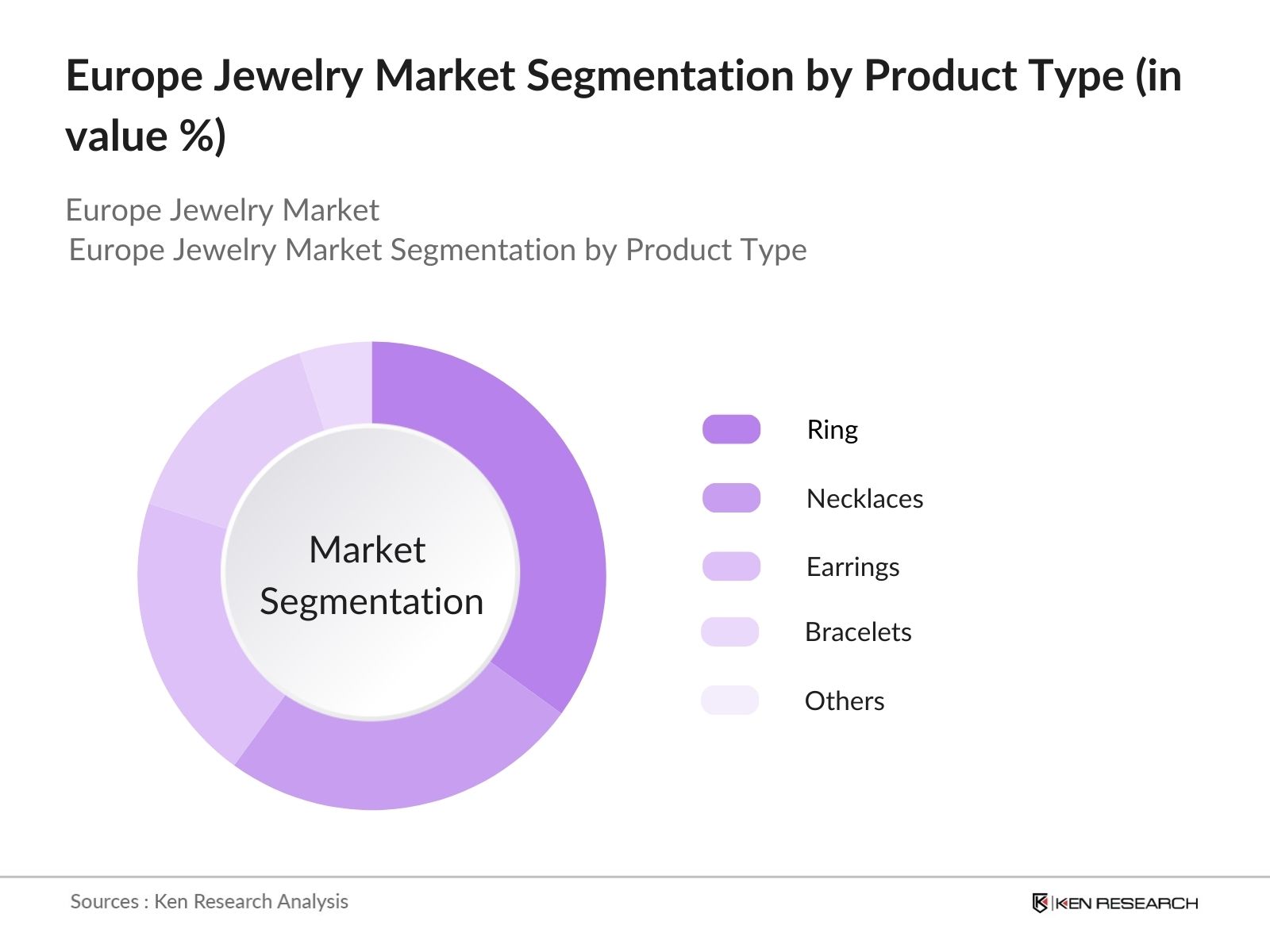
By Product Type: The Europe Jewelry Market is segmented by product type into necklaces, rings, earrings, bracelets, and others. Rings hold a dominant market share due to their popularity for engagement and wedding occasions, contributing significantly to the jewelry sector's revenue. Established brands have built a reputation around classic and contemporary ring designs, which cater to a wide consumer base, reinforcing rings as a top choice in the European market.
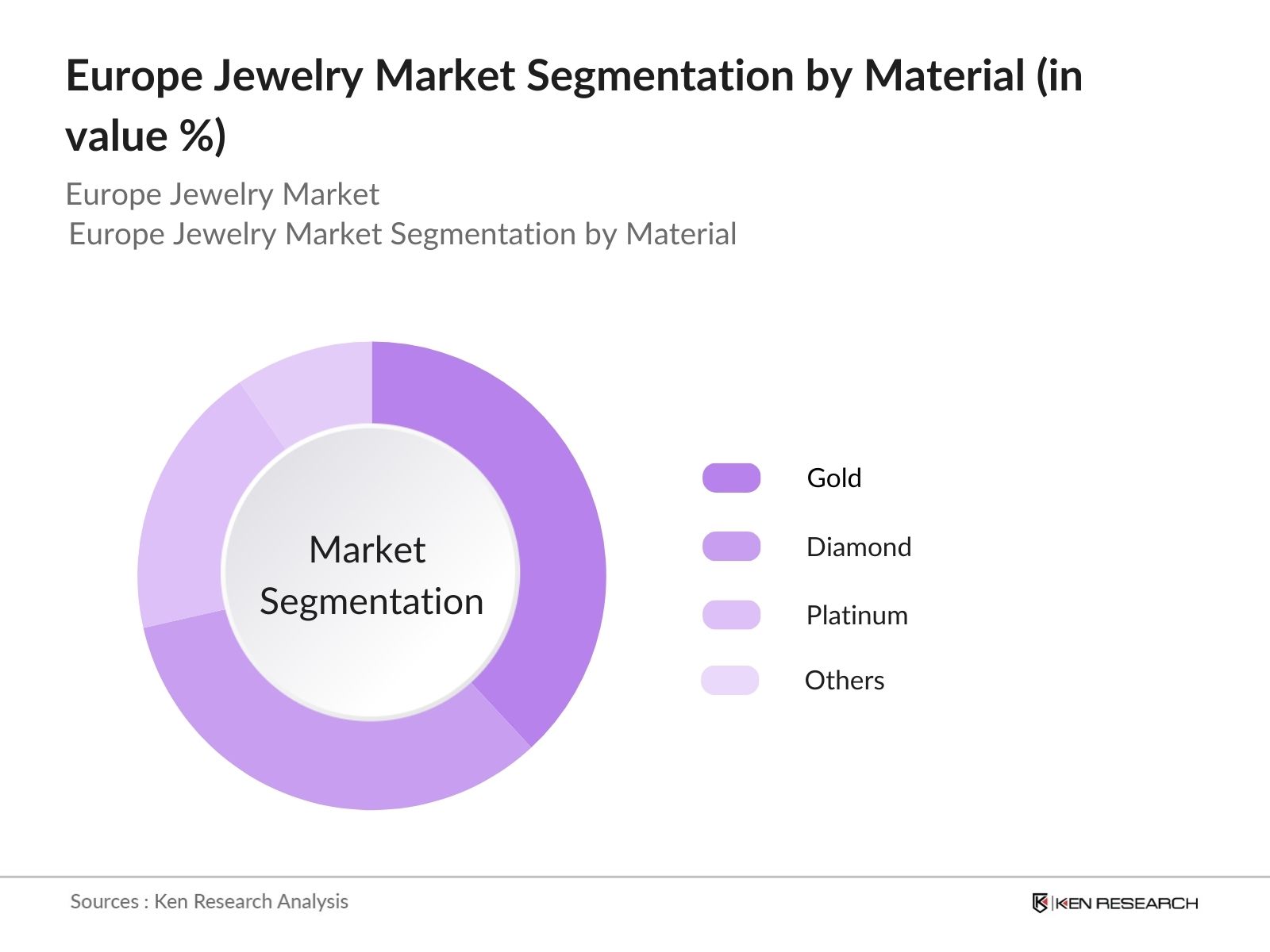
By Material: The material-based segmentation of the European jewelry market includes gold, platinum, diamond, and others. Gold jewelry leads due to its timeless appeal and cultural significance, particularly in markets like Italy and France. Its versatility and value make gold a preferred choice among consumers for various occasions, thus consolidating its dominance in the European market.
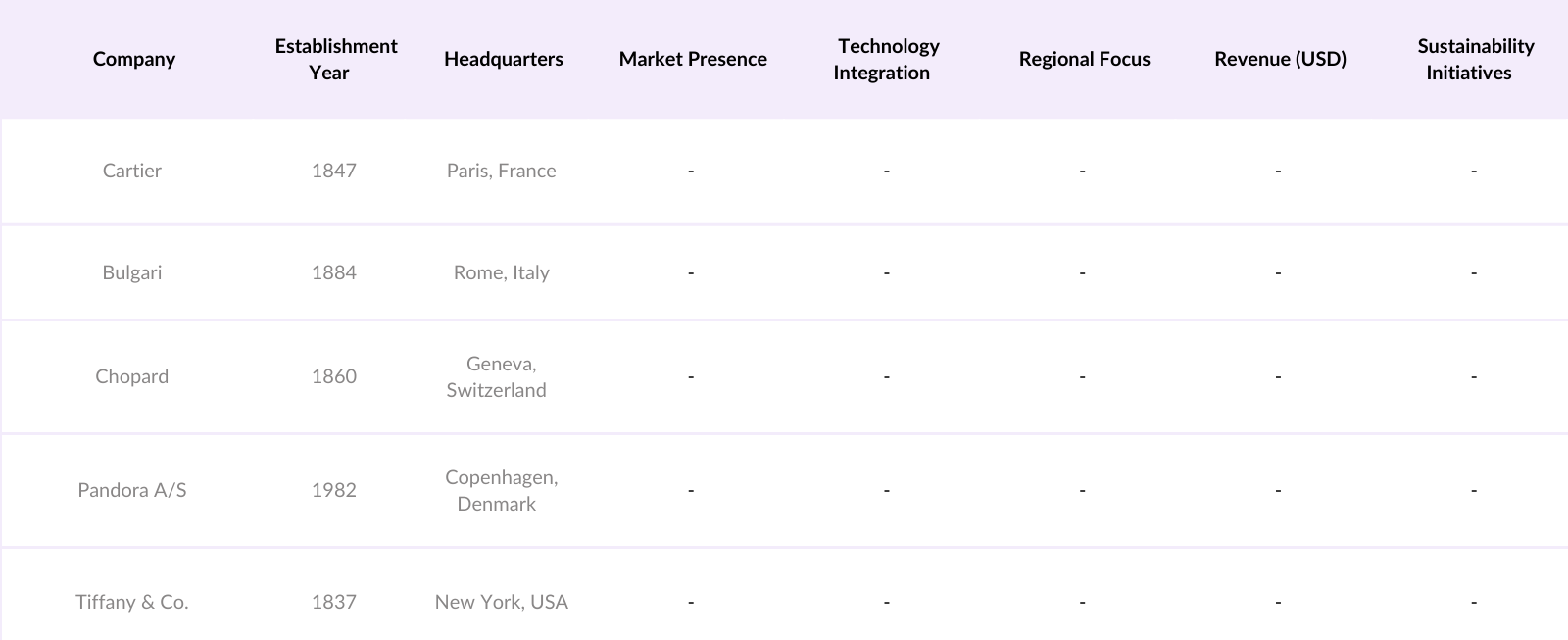
The Europe jewelry market is characterized by the presence of both global luxury brands and specialized local players, creating a competitive environment focused on craftsmanship, innovation, and brand heritage.
Over the next five years, the Europe jewelry market is poised for robust growth, driven by consumer demand for personalization, ethical sourcing, and advancements in digital retail. The market's expansion is also fueled by the increasing inclination toward high-value investments, with affluent consumers viewing fine jewelry as a stable asset.
|
By Product Type |
Necklaces Rings Earrings Bracelets Others |
|
By Material |
Gold Platinum Diamond Others |
|
By End-User |
Men Women Children |
|
By Distribution Channel |
Specialty Stores Department Stores Online Retailers Others |
|
By Country |
Germany France United Kingdom Italy Spain Others |
1.1. Definition and Scope
1.2. Market Taxonomy
1.3. Market Growth Rate
1.4. Market Segmentation Overview
2.1. Historical Market Size
2.2. Year-On-Year Growth Analysis
2.3. Key Market Developments and Milestones
3.1. Growth Drivers
3.1.1. Rising Disposable Income
3.1.2. Cultural Significance of Jewelry
3.1.3. Expansion of Online Sales Channels
3.1.4. Demand for Sustainable and Ethically Sourced Jewelry
3.2. Market Challenges
3.2.1. High Competition from Counterfeit Products
3.2.2. Fluctuating Raw Material Prices
3.2.3. Changing Consumer Preferences
3.3. Opportunities
3.3.1. Technological Advancements in Jewelry Design
3.3.2. Growth in Male Jewelry Segment
3.3.3. Emerging Markets in Eastern Europe
3.4. Trends
3.4.1. Adoption of Lab-Grown Diamonds
3.4.2. Popularity of Minimalist and Personalized Designs
3.4.3. Integration of Smart Technology in Jewelry
3.5. Government Regulations
3.5.1. Import and Export Tariffs
3.5.2. Hallmarking Standards
3.5.3. Environmental and Ethical Sourcing Regulations
3.6. SWOT Analysis
3.7. Stakeholder Ecosystem
3.8. Porters Five Forces Analysis
3.9. Competitive Landscape
4.1. By Product Type (In Value %)
4.1.1. Necklaces
4.1.2. Rings
4.1.3. Earrings
4.1.4. Bracelets
4.1.5. Others
4.2. By Material (In Value %)
4.2.1. Gold
4.2.2. Platinum
4.2.3. Diamond
4.2.4. Others
4.3. By End-User (In Value %)
4.3.1. Men
4.3.2. Women
4.3.3. Children
4.4. By Distribution Channel (In Value %)
4.4.1. Specialty Stores
4.4.2. Department Stores
4.4.3. Online Retailers
4.4.4. Others
4.5. By Country (In Value %)
4.5.1. Germany
4.5.2. France
4.5.3. United Kingdom
4.5.4. Italy
4.5.5. Spain
4.5.6. Others
5.1. Detailed Profiles of Major Companies
5.1.1. Cartier
5.1.2. Bulgari
5.1.3. Chopard
5.1.4. Pandora A/S
5.1.5. Swarovski
5.1.6. Van Cleef & Arpels
5.1.7. Tiffany & Co.
5.1.8. Graff
5.1.9. Piaget
5.1.10. Boucheron
5.1.11. Buccellati
5.1.12. Damiani
5.1.13. Georg Jensen
5.1.14. Pomellato
5.1.15. De Beers
5.2. Cross Comparison Parameters (Revenue, Market Share, Product Portfolio, Geographic Presence, Number of Retail Outlets, Online Presence, Brand Value, Sustainability Initiatives)
5.3. Market Share Analysis
5.4. Strategic Initiatives
5.5. Mergers and Acquisitions
5.6. Investment Analysis
5.6.1. Venture Capital Funding
5.6.2. Government Grants
5.6.3. Private Equity Investments
6.1. Environmental Standards
6.2. Compliance Requirements
6.3. Certification Processes
7.1. Future Market Size Projections
7.2. Key Factors Driving Future Market Growth
8.1. By Product Type (In Value %)
8.2. By Material (In Value %)
8.3. By End-User (In Value %)
8.4. By Distribution Channel (In Value %)
8.5. By Country (In Value %)
9.1. Total Addressable Market (TAM), Serviceable Available Market (SAM), Serviceable Obtainable Market (SOM) Analysis
9.2. Customer Cohort Analysis
9.3. Marketing Initiatives
9.4. White Space Opportunity Analysis
Disclaimer Contact UsThis stage involves mapping out the jewelry market ecosystem in Europe, identifying stakeholders from luxury brands to independent artisans. Extensive desk research is conducted using primary and secondary databases to establish key market drivers and challenges.
Here, we analyze historical data on market performance, consumer preferences, and retail trends to develop a comprehensive understanding of current market dynamics and forecast growth patterns.
Our team validates market insights through consultations with industry experts, including retailers, artisans, and technology integrators. These insights refine our analysis, ensuring accuracy and reliability.
The concluding phase synthesizes data from across the market value chain, including insights from leading brands and small-scale jewelers, culminating in a validated, robust analysis of the European jewelry market.
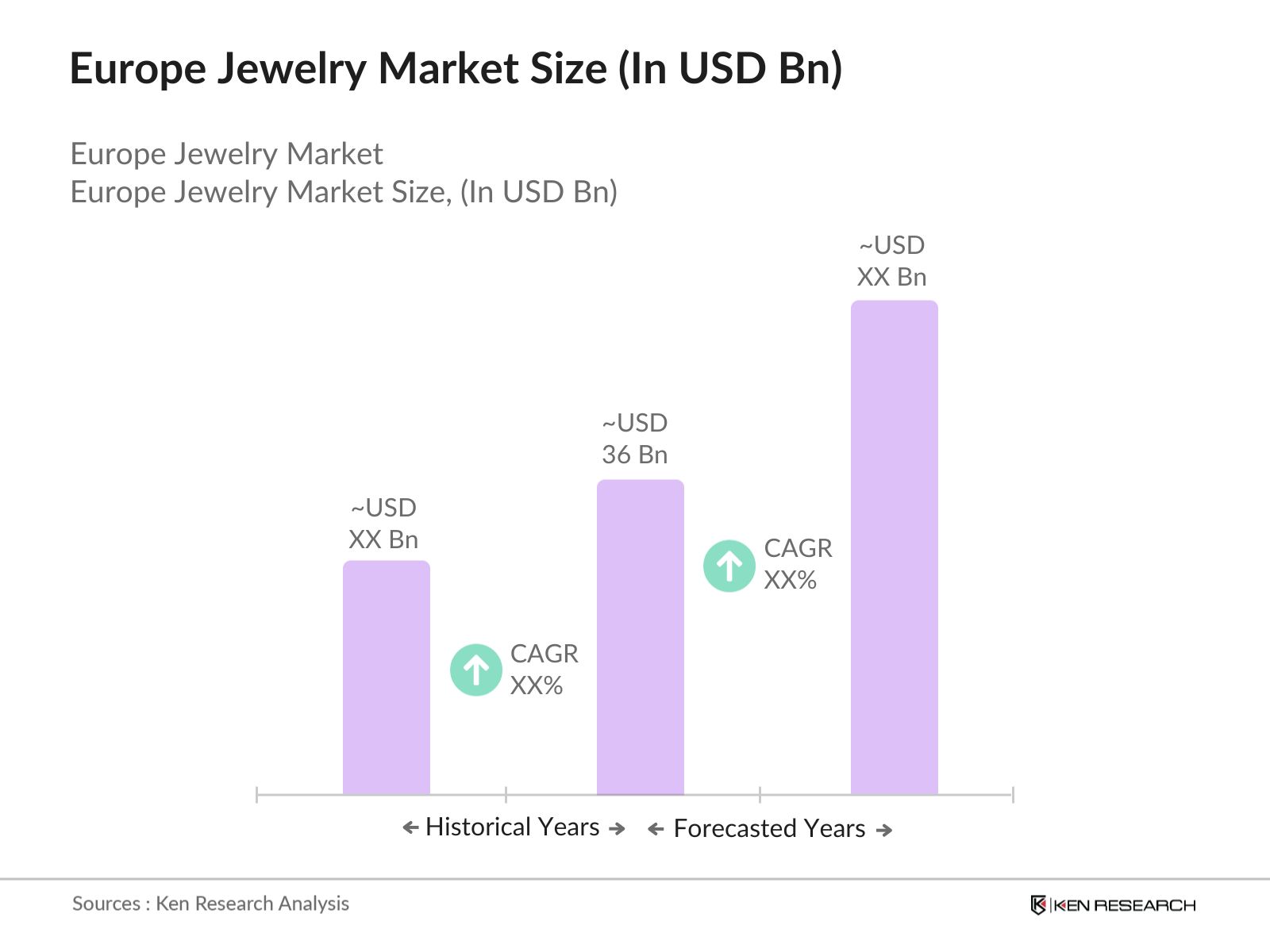
The Europe Jewelry Market is valued at USD 36 billion, supported by a robust luxury goods market and consumer interest in sustainable, high-quality jewelry.
Key challenges in the Europe Jewelry Market include competition from counterfeit products, fluctuations in raw material prices, and evolving consumer preferences toward ethical sourcing.
Dominant players in the Europe Jewelry Market include Cartier, Bulgari, Chopard, Tiffany & Co., and Pandora, who lead due to their brand heritage, extensive distribution, and high consumer loyalty.
The Europe Jewelry Market is driven by increasing disposable income, demand for personalized and sustainable jewelry, and a significant shift towards online retail.

What makes us stand out is that our consultants follows Robust, Refine and Result (RRR) methodology. i.e. Robust for clear definitions, approaches and sanity checking, Refine for differentiating respondents facts and opinions and Result for presenting data with story

We have set a benchmark in the industry by offering our clients with syndicated and customized market research reports featuring coverage of entire market as well as meticulous research and analyst insights.

While we don't replace traditional research, we flip the method upside down. Our dual approach of Top Bottom & Bottom Top ensures quality deliverable by not just verifying company fundamentals but also looking at the sector and macroeconomic factors.

With one step in the future, our research team constantly tries to show you the bigger picture. We help with some of the tough questions you may encounter along the way: How is the industry positioned? Best marketing channel? KPI's of competitors? By aligning every element, we help maximize success.

Our report gives you instant access to the answers and sources that other companies might choose to hide. We elaborate each steps of research methodology we have used and showcase you the sample size to earn your trust.

If you need any support, we are here! We pride ourselves on universe strength, data quality, and quick, friendly, and professional service.