
Europe Linux in OS Market Outlook to 2030
Region:Albania
Author(s):Sanjna Verma
Product Code:KROD7229
Region:Albania
Author(s):Sanjna Verma
Product Code:KROD7229
December 2024
87
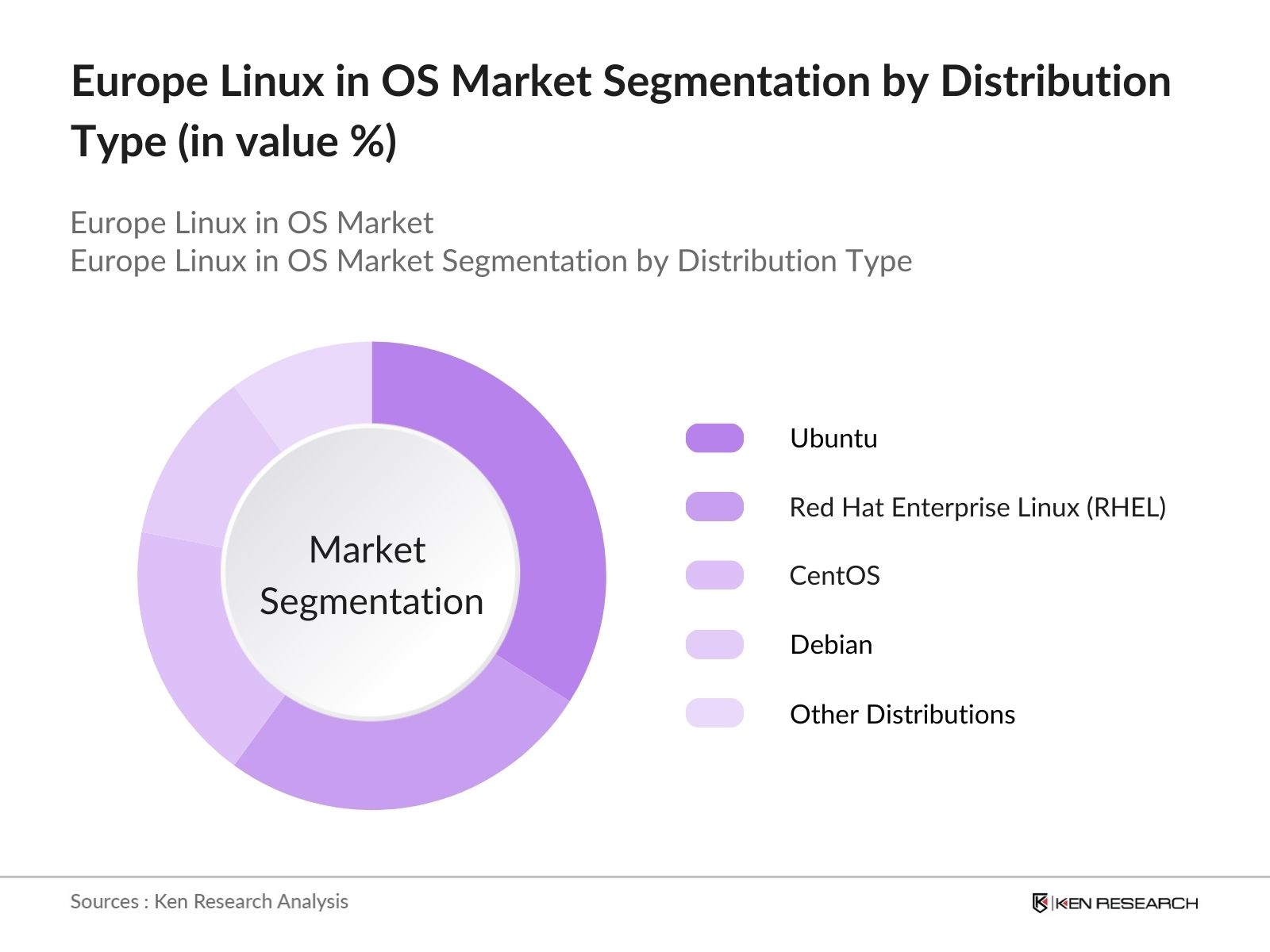
By Distribution Type: The Europe Linux in OS market is segmented by distribution type into Ubuntu, Red Hat Enterprise Linux (RHEL), CentOS, Debian, and other distributions. Ubuntu holds the largest market share under this segmentation due to its widespread use among developers and enterprises. Its user-friendly nature and large community support have made it a preferred choice for IT firms. Additionally, Ubuntu's integration with cloud services and container orchestration tools like Kubernetes has further enhanced its appeal, particularly in cloud and DevOps environments.
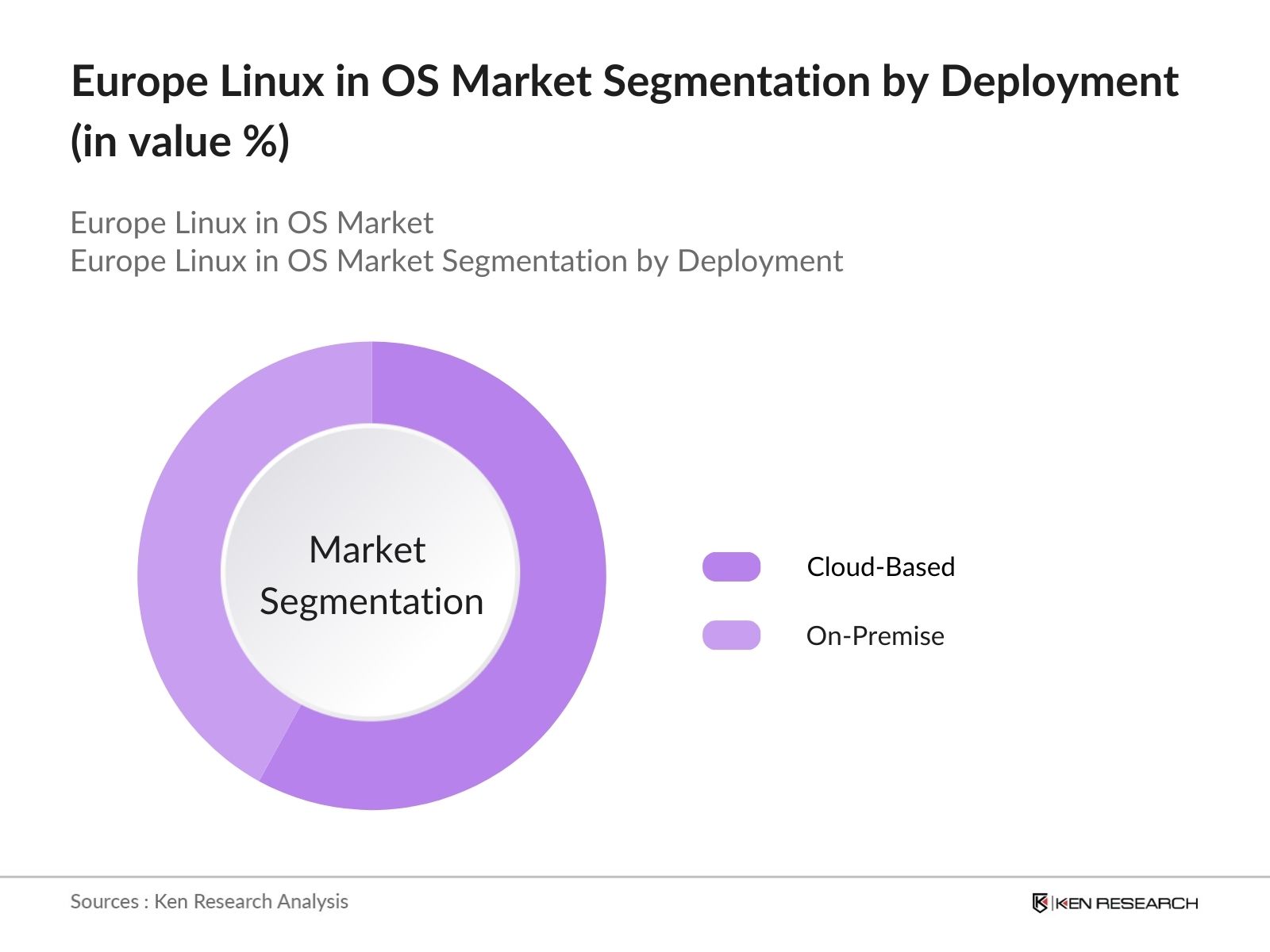
 By Deployment: The market is also segmented by deployment type into on-premise and cloud-based. Cloud-based Linux deployments are leading in this segment due to the increasing shift of enterprises towards cloud infrastructure. The scalability and flexibility offered by cloud-based systems allow companies to reduce costs associated with hardware infrastructure while ensuring seamless operations. Moreover, cloud-based deployments provide greater integration with advanced technologies such as AI, IoT, and big data, making them a dominant choice for organizations across Europe.
The Europe Linux in OS market is characterized by the presence of a few dominant players, including Red Hat, Canonical, and SUSE. These companies have carved a niche by offering enterprise-grade support, ensuring stability, and facilitating seamless integration with cloud services. Additionally, strategic partnerships and mergers have bolstered the market presence of key players. The market landscape is highly competitive, with companies competing on product customization, security features, and enterprise support services.
|
Company Name |
Year of Establishment |
Headquarters |
Key Products |
Cloud Integration |
Security Features |
Enterprise Support |
Client Base |
Strategic Partnerships |
Annual Revenue |
|
Red Hat Inc. |
1993 |
Raleigh, USA |
- |
- |
- |
- |
- |
- |
- |
|
Canonical Ltd. |
2004 |
London, UK |
- |
- |
- |
- |
- |
- |
- |
|
SUSE Linux GmbH |
1992 |
Nuremberg, Germany |
- |
- |
- |
- |
- |
- |
- |
|
Oracle Corporation |
1977 |
Austin, USA |
- |
- |
- |
- |
- |
- |
- |
|
IBM Corporation |
1911 |
Armonk, USA |
- |
- |
- |
- |
- |
- |
- |
Europe Linux in OS market is expected to witness significant growth driven by the increasing adoption of cloud-based services, advancements in open-source technology, and growing demand from sectors like government, healthcare, and telecommunications. The rapid digitization efforts in European countries will continue to fuel the demand for Linux, which is seen as a cost-effective and secure operating system solution. Enterprises are also likely to increase their reliance on Linux for cloud integration, IoT, and containerization, providing a robust outlook for the market.
|
By Segments |
Sub-Segments |
|
By Distribution Type |
Ubuntu Red Hat Enterprise Linux CentOS, Debian Other Distributions |
|
By Deployment |
On-Premise Cloud-Based |
|
By Application |
IT & Telecommunication Healthcare Retail Government Education |
|
By Enterprise Size |
Large Enterprises Small and Medium Enterprises (SMEs) |
|
By Country |
Germany France United Kingdom Italy Spain Netherlands Sweden Poland |
1.1. Definition and Scope
1.2. Market Taxonomy
1.3. Market Growth Rate
1.4. Market Segmentation Overview
2.1. Historical Market Size
2.2. Year-On-Year Growth Analysis
2.3. Key Market Developments and Milestones
3.1. Growth Drivers
3.1.1. Increased adoption of Open-Source Software
3.1.2. Enterprise-wide Deployments in Key Sectors
3.1.3. Cost Efficiency and Customizability
3.1.4. Government Promotion of Open-Source Technologies
3.2. Market Challenges
3.2.1. Security Concerns and Threat Vulnerability
3.2.2. Compatibility with Legacy Systems
3.2.3. Limited Vendor Support
3.2.4. High Training Costs for IT Staff
3.3. Opportunities
3.3.1. Integration with Cloud-Based Services
3.3.2. Growing Use of Automation and DevOps Tools
3.3.3. Adoption by Small and Medium Enterprises (SMEs)
3.3.4. Strategic Partnerships with Key IT Providers
3.4. Trends
3.4.1. Rising Adoption of Kubernetes for Container Orchestration
3.4.2. Increased Virtualization in Data Centers
3.4.3. Hybrid Environments Between On-Premise and Cloud
3.4.4. Role of Linux in IoT Deployments
3.5. Government Regulation
3.5.1. Compliance with European Digital Strategy
3.5.2. National Digital Sovereignty Initiatives
3.5.3. Data Privacy Regulations under GDPR
4.1. By Distribution Type (In Value %)
4.1.1. Ubuntu
4.1.2. Red Hat Enterprise Linux (RHEL)
4.1.3. CentOS
4.1.4. Debian
4.1.5. Other Distributions
4.2. By Deployment (In Value %)
4.2.1. On-Premise
4.2.2. Cloud-Based
4.3. By Application (In Value %)
4.3.1. IT & Telecommunication
4.3.2. Healthcare
4.3.3. Retail
4.3.4. Government
4.3.5. Education
4.4. By Enterprise Size (In Value %)
4.4.1. Large Enterprises
4.4.2. Small and Medium Enterprises (SMEs)
4.5. By Country (In Value %)
4.5.1. Germany
4.5.2. France
4.5.3. United Kingdom
4.5.4. Italy
4.5.5. Spain
4.5.6. Netherlands
4.5.7. Sweden
4.5.8. Poland
5.1. Detailed Profiles of Major Competitors
5.1.1. Red Hat Inc.
5.1.2. Canonical Ltd.
5.1.3. SUSE Linux GmbH
5.1.4. Oracle Corporation
5.1.5. IBM Corporation
5.1.6. Debian Project
5.1.7. ClearCenter
5.1.8. Amazon Web Services (AWS)
5.1.9. Google Cloud
5.1.10. Microsoft Azure
5.2. Cross Comparison Parameters (No. of Employees, Headquarters, Inception Year, Revenue, Enterprise Client Base, OS Support, Cloud Integration, Security Features)
5.3. Market Share Analysis
5.4. Strategic Initiatives
5.5. Mergers and Acquisitions
5.6. Investment Analysis
5.7. Venture Capital Funding
5.8. Government Grants
5.9. Private Equity Investments
6.1. Open-Source Software Regulations
6.2. National and EU Digital Strategies
6.3. Data Protection and Compliance Requirements
6.4. Certification Processes for Enterprise Linux
7.1. Future Market Size Projections
7.2. Key Factors Driving Future Market Growth
8.1. By Distribution Type (In Value %)
8.2. By Deployment (In Value %)
8.3. By Application (In Value %)
8.4. By Enterprise Size (In Value %)
8.5. By Country (In Value %)
9.1. TAM/SAM/SOM Analysis
9.2. Customer Cohort Analysis
9.3. Marketing Initiatives
9.4. White Space Opportunity Analysis
The initial phase involves identifying critical market drivers, distribution channels, and key stakeholders within the Europe Linux in OS market. Secondary research from proprietary databases, government publications, and industry reports is used to map the market's ecosystem.
In this phase, historical data on market penetration, revenue, and service providers is analyzed. We assess the relationship between various Linux distributions, customer preferences, and industry adoption rates.
Experts from IT and cloud service sectors are consulted through computer-assisted interviews to validate market assumptions and refine our revenue projections. These insights ensure the accuracy of the market analysis.
The final step includes synthesizing the collected data into a comprehensive report. We consult multiple Linux distribution providers to ensure the data accurately reflects the market reality, focusing on revenue generation and enterprise adoption rates.
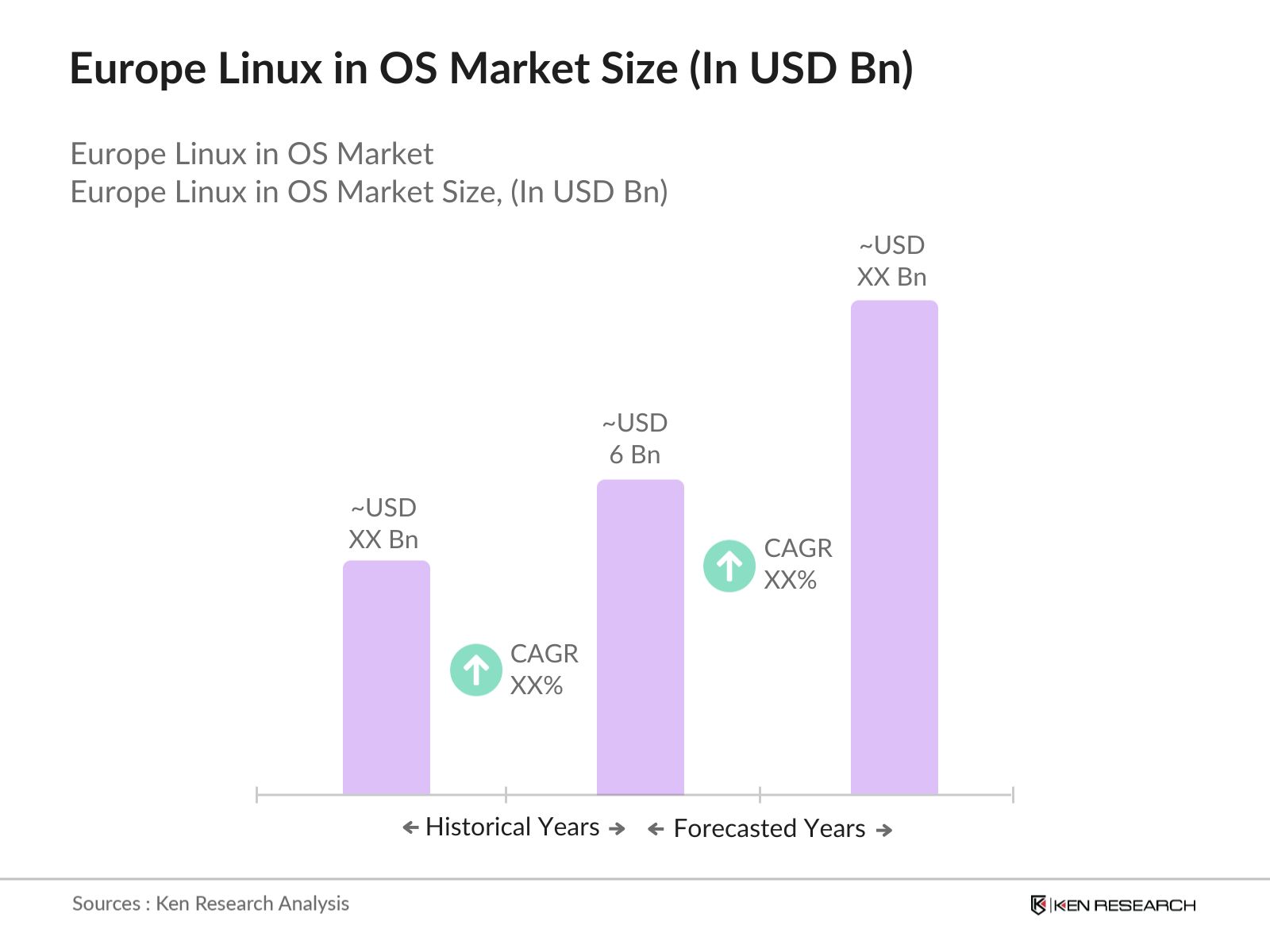
The Europe Linux in OS market is valued at USD 6 billion, driven by increasing adoption across industries such as IT & telecommunications, government, and healthcare. Its open-source nature and cost-efficiency make it a preferred choice for enterprises.
Challenges in Europe Linux in OS market include security vulnerabilities, especially due to its open-source architecture, and compatibility issues with legacy systems. The limited availability of enterprise-grade support is another significant challenge for large corporations.
Key players in Europe Linux in OS market include Red Hat Inc., Canonical Ltd., SUSE Linux GmbH, Oracle Corporation, and IBM Corporation. These companies dominate the market due to their extensive enterprise support services and strategic partnerships.
Growth drivers in Europe Linux in OS market include the increasing adoption of open-source software, the shift towards cloud-based services, and government initiatives promoting open-source technologies to achieve digital sovereignty.

What makes us stand out is that our consultants follows Robust, Refine and Result (RRR) methodology. i.e. Robust for clear definitions, approaches and sanity checking, Refine for differentiating respondents facts and opinions and Result for presenting data with story

We have set a benchmark in the industry by offering our clients with syndicated and customized market research reports featuring coverage of entire market as well as meticulous research and analyst insights.

While we don't replace traditional research, we flip the method upside down. Our dual approach of Top Bottom & Bottom Top ensures quality deliverable by not just verifying company fundamentals but also looking at the sector and macroeconomic factors.

With one step in the future, our research team constantly tries to show you the bigger picture. We help with some of the tough questions you may encounter along the way: How is the industry positioned? Best marketing channel? KPI's of competitors? By aligning every element, we help maximize success.

Our report gives you instant access to the answers and sources that other companies might choose to hide. We elaborate each steps of research methodology we have used and showcase you the sample size to earn your trust.

If you need any support, we are here! We pride ourselves on universe strength, data quality, and quick, friendly, and professional service.