















Europe Missile Market Outlook to 2030
Region:North America
Author(s):Shreya Garg
Product Code:KROD7632
December 2024
88
About the Report
Europe Missile Market Overview
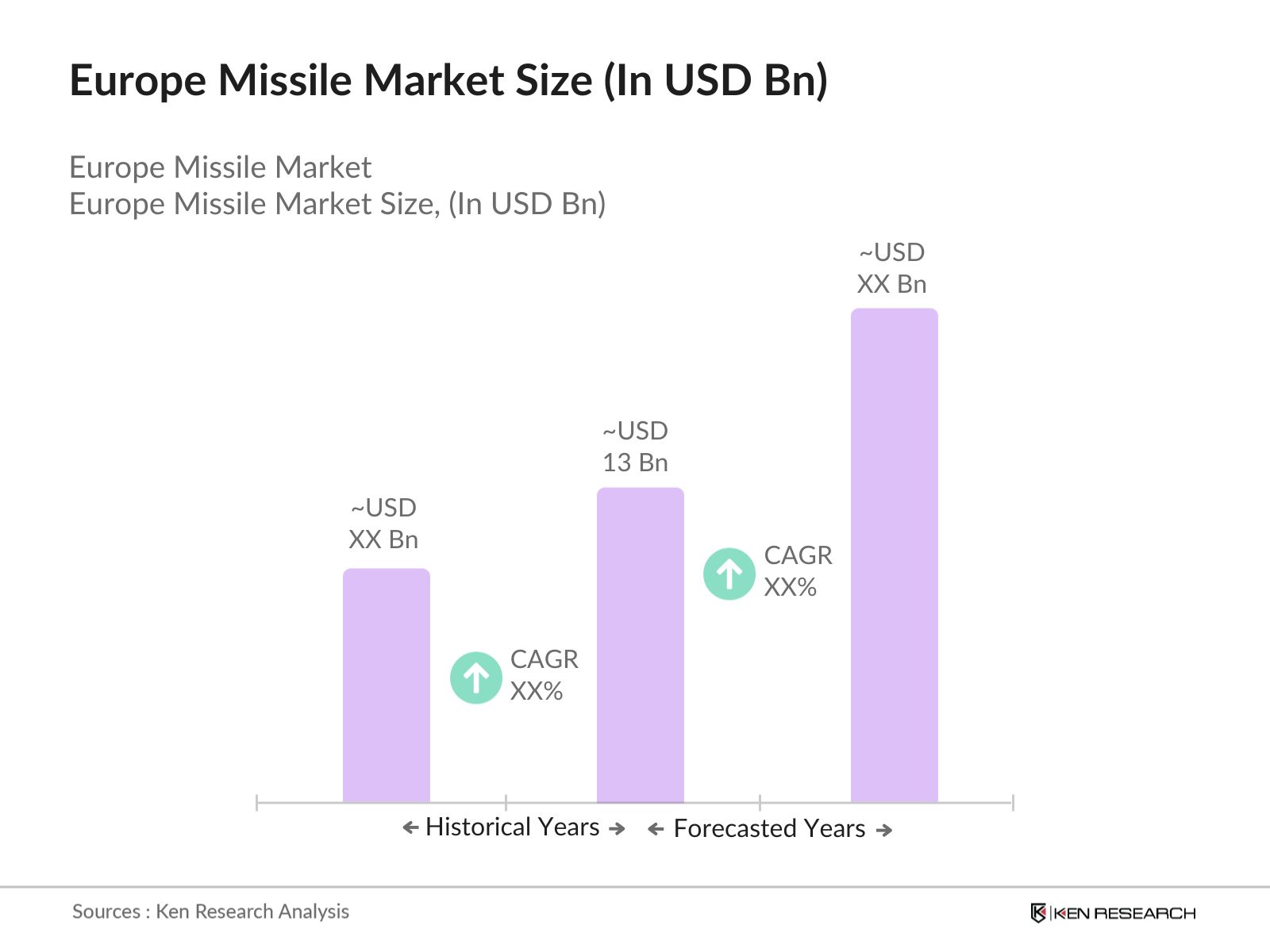
- The Europe Missile Market is valued at USD 13 billion, based on a five-year historical analysis. This market is driven by rising defense budgets across European nations and advancements in missile technology to address regional security concerns. Geopolitical factors play a significant role, with increased investments in sophisticated missile systems like anti-tank and air-defense missiles as governments aim to modernize their defense forces and ensure strategic capabilities.
???? 
- France, the United Kingdom, and Germany lead in the European missile market. Their dominance is attributed to robust defense funding, advanced technological infrastructure, and strong defense manufacturers that focus on continuous innovation. These countries host prominent defense companies that actively participate in European defense projects and partnerships, bolstering their leadership in the region.
- The European Defence Agency sets stringent guidelines on missile production, covering safety, performance, and environmental standards. In 2023, the Agency introduced over 50 new guidelines focused on sustainable production processes, aligning with EUs green policies. Compliance is mandatory, and failure to adhere can lead to significant penalties, impacting production timelines and costs. These regulations drive manufacturers to innovate sustainably while maintaining defense efficacy.
Europe Missile Market Segmentation
By Missile Type: The market is segmented by missile type into surface-to-air missiles, air-to-air missiles, anti-tank missiles, cruise missiles, and hypersonic missiles. Surface-to-air missiles dominate this segment due to their extensive application in defense systems, providing essential protection against airborne threats. The demand for advanced air-defense systems has increased, particularly given the rising security challenges in Europe, pushing surface-to-air missile technology to the forefront. 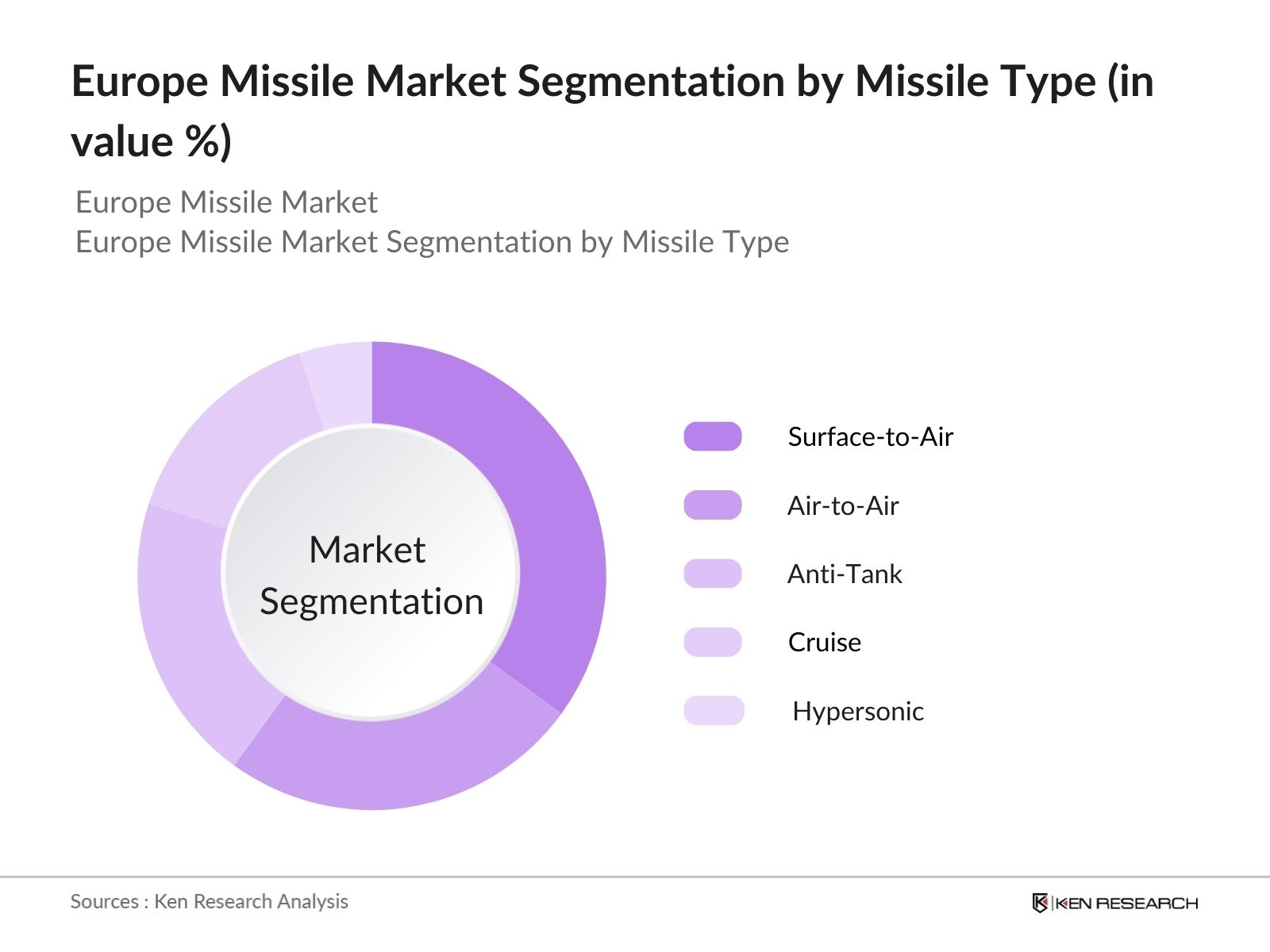
By Platform: The market is segmented by platform into naval, land, and aerial platforms. Naval platforms hold a significant market share due to the strategic importance of maritime defense in Europe, with countries investing heavily in missile systems that bolster naval strength. This dominance is driven by the geographical need for coastal security and the enhancement of European naval fleets, which are increasingly equipped with missile capabilities to counter maritime threats. 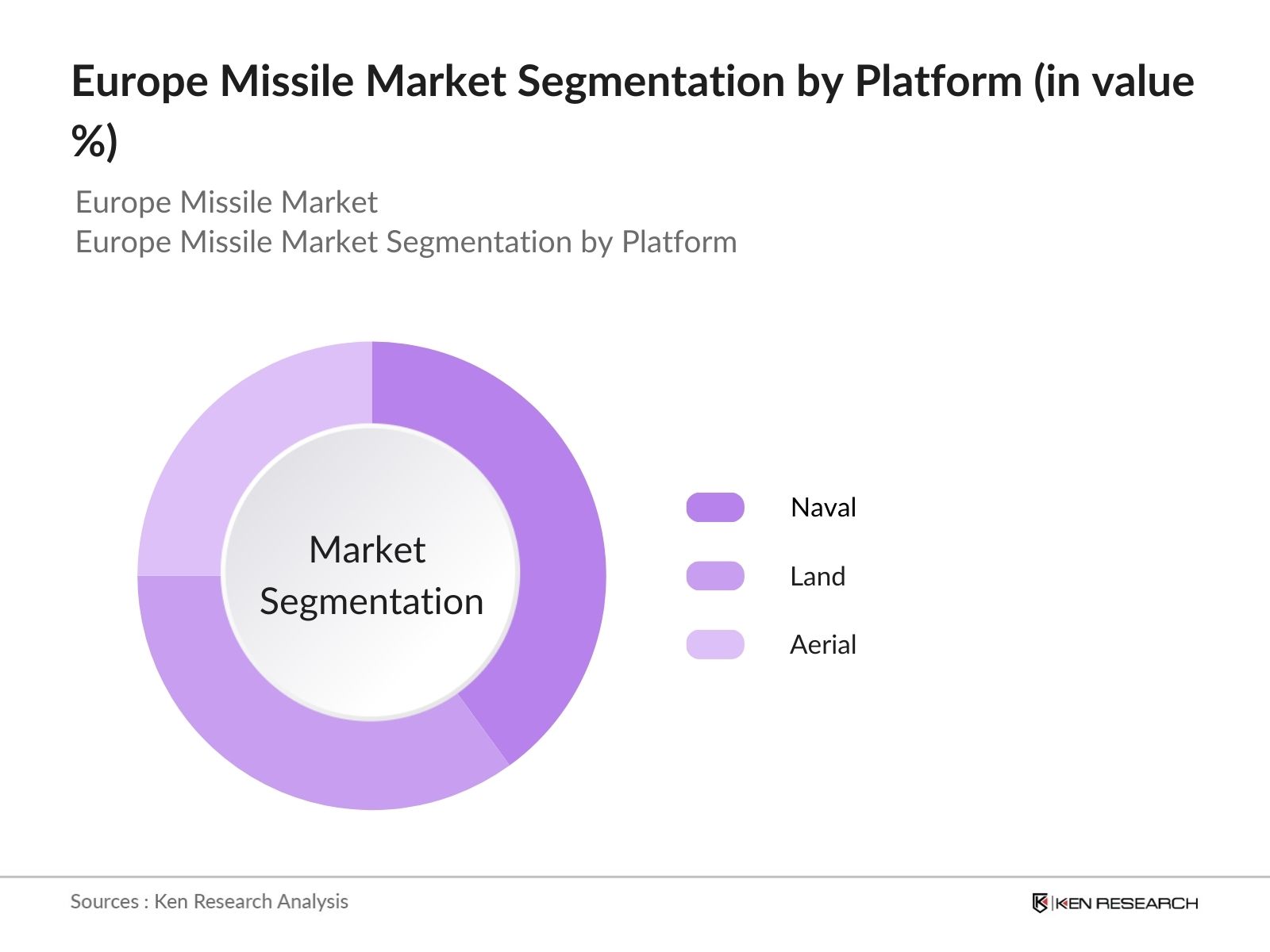
Europe Missile Market Competitive Landscape
The Europe missile market is dominated by major defense companies, both domestic and global, contributing to a consolidated industry structure. European manufacturers, in collaboration with governments, play a pivotal role in enhancing missile capabilities through investments in R&D and strategic partnerships. 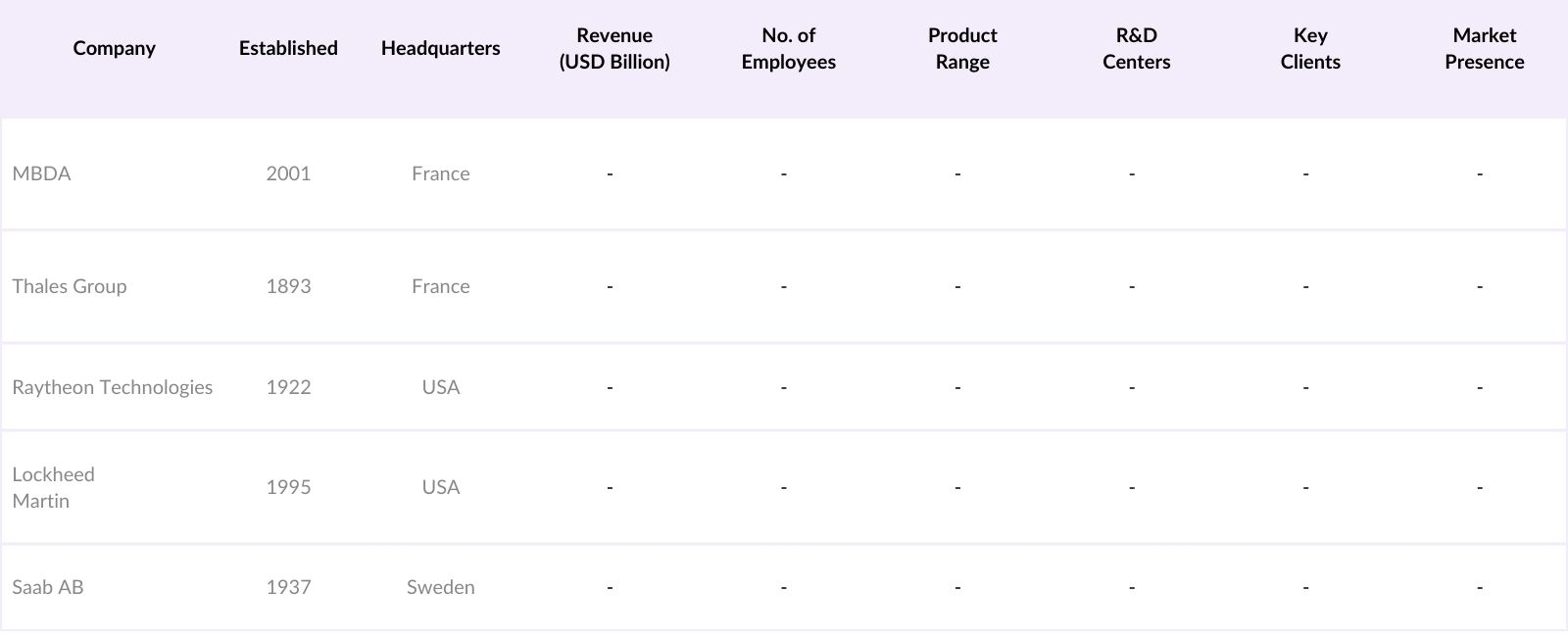
Europe Missile Industry Analysis
Growth Drivers
- Rising Defense Budgets: The European missile market benefits from a steady increase in defense budgets as governments across Europe prioritize national security amid geopolitical tensions. In 2023, defense expenditure in the EU rose significantly, with Germany allocating 53 billion to defense, a notable increase from previous years. Additionally, France committed to 44 billion for defense in 2024, reflecting robust financial support for advancements in missile capabilities. These funds are crucial for developing next-generation systems, enhancing missile readiness, and maintaining technological competitiveness globally.
- Technological Advancements in Missile Systems: Technological improvements in missile systems have been a cornerstone of Europe's defense strategy. The European Defence Agency reported over 3.8 billion allocated to R&D in defense technology in 2023, allowing for the development of more precise guidance systems, extended ranges, and rapid deployment capabilities. The deployment of modular systems enhances operational flexibility, making them highly sought after in modern combat scenarios. For instance, advancements in guidance technologies reduce reaction time by nearly 40%, boosting their strategic value.
- Increased Geopolitical Tensions: The resurgence of geopolitical tensions has bolstered missile demand in Europe as nations prepare for potential conflicts. NATOs assessment of threats in 2024 highlights heightened risks in Eastern Europe, prompting countries like Poland and the Baltic states to intensify defense spending and upgrade missile systems. A 2023 report noted that Poland invested 2.5 billion in missile defense, while Lithuania increased its defense budget by 27% to strengthen its air defenses. These investments are critical in establishing a robust defense network.
Market Challenges
- High Manufacturing and Development Costs: The cost-intensive nature of missile development poses significant challenges for manufacturers. As of 2024, the development of advanced missile systems costs around 10-15 million per unit due to expensive raw materials and specialized technologies. European companies face increased pressure to optimize costs without compromising on quality or safety, especially given stringent EU regulations. These factors contribute to cost escalations, particularly as countries seek to adopt innovative technologies in missile defense.
- Strict Regulatory and Compliance Standards: The European missile industry must adhere to stringent regulatory standards set by both the European Union and international entities like NATO. In 2023, the European Defence Agency highlighted over 120 compliance protocols related to safety, export control, and environmental impact, adding complexity and cost to missile production. Manufacturers face extensive audits and certification processes, which may delay product launch timelines and increase operational costs. This regulatory rigor, while ensuring safety, can be a hurdle for manufacturers.
Europe Missile Market Future Outlook
Over the next five years, the Europe Missile Market is expected to see robust development driven by heightened government defense budgets, advancements in missile technology, and collaborations within the European Union for unified defense strategies. Increased emphasis on high-tech missile solutions, such as hypersonic and cyber-defensive systems, will likely further bolster market growth, catering to the strategic interests of regional security.
Future Market Opportunities
- Collaboration with European Union Programs: Collaboration with EU-funded defense programs offers substantial growth avenues for the missile market. In 2023, the EU allocated 1.2 billion to the European Defence Fund, focusing on missile systems among other defense projects. The European Defence Agencys joint initiatives provide a platform for countries to co-develop and procure missile technologies, enabling smaller economies to access cutting-edge systems. These collaborations foster technological exchange and drive competitiveness in Europes missile production capabilities.
- Increased Demand for Next-Generation Missile Systems: The demand for next-generation missile systems, such as hypersonic and stealth missiles, has been on the rise. France and Germany alone have invested a combined 2 billion in hypersonic missile R&D in 2023, aiming to counter evolving threats effectively. This trend aligns with NATOs 2024 guidelines, which emphasize the need for rapid-response, stealth-capable systems in modern combat. The technological leap enhances Europes defense posture while attracting global attention to its missile systems.
Scope of the Report
|
Missile Type |
Surface-to-Air Missiles Air-to-Air Missiles Anti-Tank Missiles Cruise Missiles Hypersonic Missiles |
|
Component |
Guidance Systems Propulsion Systems Warheads Launch Mechanisms |
|
Platform |
Naval Platforms Land Platforms Aerial Platforms |
|
Range |
Short-Range Missiles Medium-Range Missiles Long-Range Missiles Intercontinental Missiles |
|
End-User |
Military Homeland Security Special Forces |
Products
Key Target Audience
Defense Ministries and Government Agencies (European Defence Agency, NATO)
Missile Manufacturers
Electronic Component Suppliers
Aerospace Companies
Investors and Venture Capitalist Firms
Security and Surveillance Agencies
Research and Development Organizations
Government and Regulatory Bodies (European Commission for Defense Industry)
Companies
Major Players
MBDA
Thales Group
Raytheon Technologies
Lockheed Martin
Saab AB
Northrop Grumman
Boeing Defense
Leonardo S.p.A
BAE Systems
Rheinmetall AG
Kongsberg Defence & Aerospace
Rafael Advanced Defense Systems
Aerojet Rocketdyne
Israel Aerospace Industries
Diehl Defence
Table of Contents
Europe Missile Market Overview
1.1 Definition and Scope
1.2 Market Taxonomy
1.3 Industry Value Chain Analysis
1.4 Market Drivers and Restraints Overview
Europe Missile Market Size (in USD Million)
2.1 Historical Market Size
2.2 Market Dynamics and Growth Analysis
2.3 Major Developments and Key Market Events
Europe Missile Market Analysis
3.1 Growth Drivers
3.1.1 Rising Defense Budgets
3.1.2 Technological Advancements in Missile Systems
3.1.3 Increased Geopolitical Tensions
3.1.4 Government Funding and R&D Initiatives
3.2 Market Challenges
3.2.1 High Manufacturing and Development Costs
3.2.2 Strict Regulatory and Compliance Standards
3.2.3 Dependency on Advanced Technologies
3.3 Opportunities
3.3.1 Collaboration with European Union Programs
3.3.2 Increased Demand for Next-Generation Missile Systems
3.3.3 Growth in Cyber-Defense and Electronic Warfare Solutions
3.4 Trends
3.4.1 AI Integration in Missile Guidance Systems
3.4.2 Modular Missile Development
3.4.3 Shift Towards Hypersonic Missiles
3.4.4 Enhanced Countermeasure Technologies
3.5 Government Regulations
3.5.1 European Defense Agency Guidelines
3.5.2 NATO Compliance Standards
3.5.3 International Arms Trade Agreements
3.5.4 Regional Export Control Laws
3.6 SWOT Analysis
3.7 Industry Stakeholder Ecosystem
3.8 Porters Five Forces Analysis
3.9 Competitive Landscape Overview
Europe Missile Market Segmentation
4.1 By Missile Type (in Value %)
4.1.1 Surface-to-Air Missiles
4.1.2 Air-to-Air Missiles
4.1.3 Anti-Tank Missiles
4.1.4 Cruise Missiles
4.1.5 Hypersonic Missiles
4.2 By Component (in Value %)
4.2.1 Guidance Systems
4.2.2 Propulsion Systems
4.2.3 Warheads
4.2.4 Launch Mechanisms
4.3 By Platform (in Value %)
4.3.1 Naval Platforms
4.3.2 Land Platforms
4.3.3 Aerial Platforms
4.4 By Range (in Value %)
4.4.1 Short-Range Missiles
4.4.2 Medium-Range Missiles
4.4.3 Long-Range Missiles
4.4.4 Intercontinental Missiles
4.5 By End-User (in Value %)
4.5.1 Military
4.5.2 Homeland Security
4.5.3 Special Forces
Europe Missile Market Competitive Analysis
5.1 Detailed Profiles of Major Companies
5.1.1 MBDA
5.1.2 Lockheed Martin
5.1.3 Raytheon Technologies
5.1.4 Northrop Grumman
5.1.5 Saab AB
5.1.6 Thales Group
5.1.7 Rafael Advanced Defense Systems
5.1.8 BAE Systems
5.1.9 Kongsberg Defence & Aerospace
5.1.10 Boeing Defense
5.1.11 Diehl Defence
5.1.12 Leonardo S.p.A
5.1.13 Rheinmetall AG
5.1.14 Aerojet Rocketdyne
5.1.15 Israel Aerospace Industries
5.2 Cross Comparison Parameters (Employee Count, Revenue, Regional Presence, Product Portfolio, Production Capacity, R&D Investment, Patent Count, Government Contracts)
5.3 Market Share Analysis
5.4 Strategic Partnerships and Collaborations
5.5 Merger & Acquisition Analysis
5.6 Capital Investments
5.7 Government Funding Analysis
5.8 Technology Licensing and Patents
Europe Missile Market Regulatory Framework
6.1 Compliance with Arms Control Standards
6.2 NATO and EU Defense Policies
6.3 Licensing and Export Controls
6.4 Environmental Impact Regulations
Europe Missile Market Future Segmentation
7.1 By Missile Type (Future Demand)
7.2 By Platform (Future Demand)
7.3 By Range (Future Demand)
7.4 By Component (Future Demand)
7.5 By End-User (Future Demand)
Europe Missile Market Analysts Recommendations
8.1 Total Addressable Market (TAM) Analysis
8.2 Strategic Opportunity Mapping
8.3 Emerging Market Segment Analysis
8.4 Customer Segment Focus
Europe Missile Market Analysts Recommendations
9.1. TAM/SAM/SOM Analysis
9.2. Customer Cohort Analysis
9.3. Marketing Initiatives
9.4. White Space Opportunity Analysis
Disclaimer Contact UsResearch Methodology
Step 1: Identification of Key Variables
This initial step involves mapping the Europe Missile Market's ecosystem, including stakeholders such as manufacturers, suppliers, and end-users. Utilizing secondary and proprietary databases, the analysis focuses on identifying key variables that impact market dynamics, such as defense spending, geopolitical tensions, and technological advancements.
Step 2: Market Analysis and Construction
Data is compiled from reliable sources, analyzing market dynamics and segmentation. This phase includes evaluating historical data, platform-specific usage rates, and revenue trends, ensuring a reliable understanding of the market's structure.
Step 3: Hypothesis Validation and Expert Consultation
Key market assumptions are validated through interviews with industry experts and defense sector professionals. These consultations help refine market insights and ensure the robustness of the market analysis, drawing from real-world industry expertise.
Step 4: Research Synthesis and Final Output
In this phase, we integrate detailed insights from missile manufacturers and government sources to consolidate the data. The final analysis verifies data through a combination of bottom-up approaches, ensuring accuracy in the market evaluation and projections.
Frequently Asked Questions
01. How big is the Europe Missile Market?
The Europe Missile Market, valued at USD 13 billion, benefits from increased defense budgets and technological advancements in missile technology, which drive demand across the region.
02. What are the challenges in the Europe Missile Market?
Challenges in the Europe Missile Market include high production costs, stringent compliance standards, and dependency on advanced technologies, which can constrain manufacturing and innovation efforts.
03. Who are the major players in the Europe Missile Market?
Key players in the Europe Missile Market include MBDA, Thales Group, Raytheon Technologies, Lockheed Martin, and Saab AB, each with strong R&D capabilities and strategic partnerships in the region.
04. What drives growth in the Europe Missile Market?
Growth in the Europe Missile Market is propelled by rising defense expenditures, the need for modernization of military capabilities, and increasing geopolitical tensions necessitating advanced missile systems.
05. Which regions dominate the Europe Missile Market?
France, the UK, and Germany are dominant in the Europe Missile Market due to substantial investments in defense infrastructure, strong local manufacturing bases, and extensive government support for technological innovation.
Why Buy From Us?

What makes us stand out is that our consultants follows Robust, Refine and Result (RRR) methodology. i.e. Robust for clear definitions, approaches and sanity checking, Refine for differentiating respondents facts and opinions and Result for presenting data with story

We have set a benchmark in the industry by offering our clients with syndicated and customized market research reports featuring coverage of entire market as well as meticulous research and analyst insights.

While we don't replace traditional research, we flip the method upside down. Our dual approach of Top Bottom & Bottom Top ensures quality deliverable by not just verifying company fundamentals but also looking at the sector and macroeconomic factors.

With one step in the future, our research team constantly tries to show you the bigger picture. We help with some of the tough questions you may encounter along the way: How is the industry positioned? Best marketing channel? KPI's of competitors? By aligning every element, we help maximize success.

Our report gives you instant access to the answers and sources that other companies might choose to hide. We elaborate each steps of research methodology we have used and showcase you the sample size to earn your trust.

If you need any support, we are here! We pride ourselves on universe strength, data quality, and quick, friendly, and professional service.