
Europe Pest Control Market Outlook to 2030
Region:Europe
Author(s):Sanjana
Product Code:KROD2015
Region:Europe
Author(s):Sanjana
Product Code:KROD2015
October 2024
81
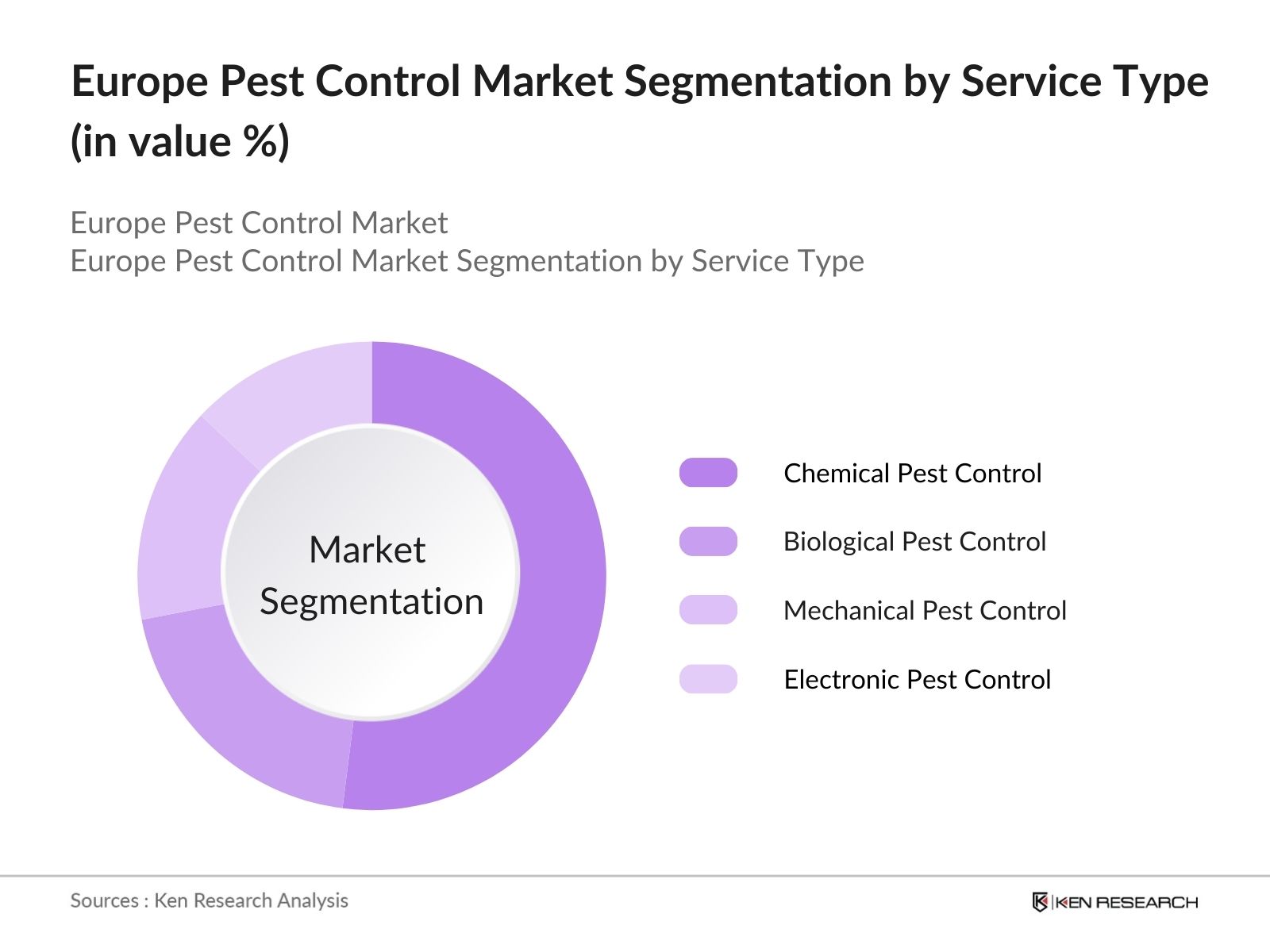
By Service Type: Europes pest control market is segmented by service type into chemical pest control, biological pest control, mechanical pest control, and electronic pest control. Among these, chemical pest control holds the dominant share in the market due to its long-standing usage and immediate efficacy. This segment is widely preferred in agricultural and industrial sectors for large-scale pest control efforts. The rapid action of chemical pesticides, coupled with regulatory approval in many European countries, continues to support its dominance, despite rising demand for eco-friendly alternatives like biological pest control.
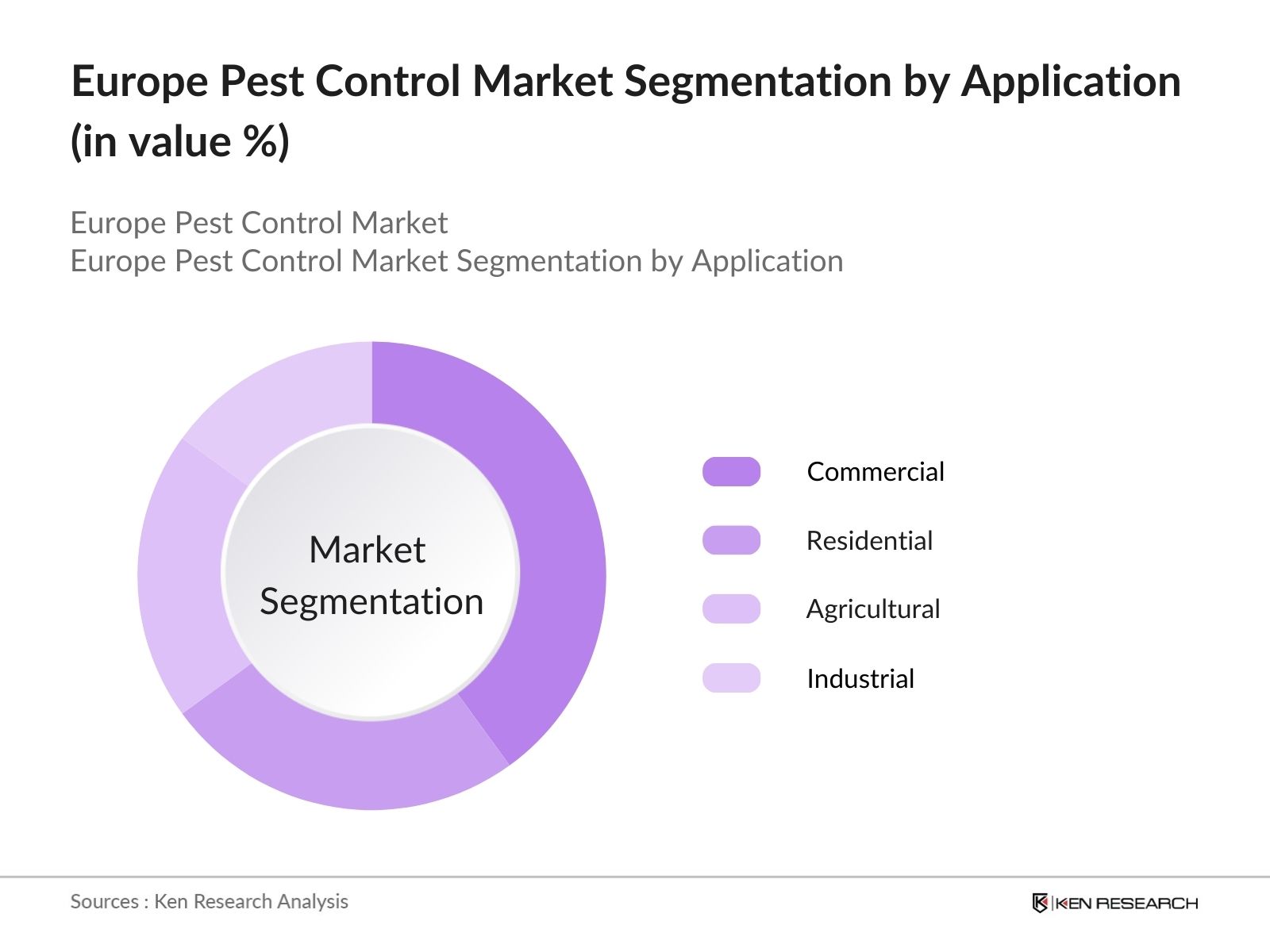
By Application: The pest control market in Europe is also segmented by application into residential, commercial, agricultural, and industrial sectors. The commercial sector dominates the pest control market, primarily due to increasing hygiene and safety standards in food production, hospitality, and healthcare industries. The need to maintain pest-free environments in restaurants, hotels, hospitals, and food processing plants drives the demand for professional pest control services. This trend is particularly evident in urban areas, where commercial spaces are highly concentrated and pest infestations pose significant risks to public health and business operations.
The Europe pest control market is dominated by a few major players, including Rentokil Initial Plc and BASF SE, which leverage their extensive research and development capabilities to provide innovative pest control solutions. The consolidation of market share among these key players highlights their ability to meet the diverse demands of different sectors, from agriculture to urban settings. These companies have established strong distribution networks and are continuously investing in eco-friendly pest control technologies to address environmental concerns.
|
Company Name |
Year Established |
Headquarters |
Revenue (USD Bn) |
Number of Employees |
Service Specialization |
Regional Presence |
R&D Investment |
|---|---|---|---|---|---|---|---|
|
Rentokil Initial Plc |
1925 |
United Kingdom |
|||||
|
BASF SE |
1865 |
Germany |
|||||
|
Bayer AG |
1863 |
Germany |
|||||
|
Ecolab Inc. |
1923 |
United States |
|||||
|
Terminix International |
1927 |
United States |
Growth Drivers
Challenges
Over the next five years, the Europe pest control market is expected to experience significant growth, driven by rising urbanization, stringent government regulations on pesticide use, and increasing awareness of eco-friendly pest control alternatives. Additionally, the advent of smart pest management technologies that utilize digital tracking and data-driven solutions is set to revolutionize the industry. This shift toward sustainable pest control practices is likely to attract both government and private investments, further propelling market growth.
Market Opportunities
|
Segment |
Sub-Segments |
|---|---|
|
Service Type |
- Chemical Pest Control |
|
- Biological Pest Control |
|
|
- Mechanical Pest Control |
|
|
- Electronic Pest Control |
|
|
Application |
- Residential |
|
- Commercial |
|
|
- Agricultural |
|
|
- Industrial |
|
|
Pest Type |
- Insects |
|
- Rodents |
|
|
- Termites |
|
|
- Wildlife |
|
|
Control Method |
- Physical |
|
- Chemical |
|
|
- Biological |
|
|
- Electronic |
|
|
Region |
- Western Europe |
|
- Eastern Europe |
|
|
- Northern Europe |
|
|
- Southern Europe |
1.1. Definition and Scope
1.2. Market Taxonomy
1.3. Market Growth Rate
1.4. Market Segmentation Overview
2.1. Historical Market Size
2.2. Year-on-Year Growth Analysis
2.3. Key Market Developments and Milestones
3.1. Growth Drivers
3.1.1. Rising Urbanization and Hygiene Awareness
3.1.2. Climate Change Impact on Pest Patterns
3.1.3. Technological Innovations in Pest Control Solutions
3.1.4. Agricultural Expansion and Demand for Pest Management
3.1.5. Stringent Government Regulations on Pest Control Practices
3.2. Market Challenges
3.2.1. High Initial Costs of Advanced Pest Control Systems
3.2.2. Environmental Concerns with Chemical Pesticides
3.2.3. Rising Resistance in Common Pest Species
3.2.4. Complex Regulatory Frameworks Across Europe
3.3. Opportunities
3.3.1. Increasing Demand for Eco-friendly Pest Control Solutions
3.3.2. Growth of Biological Pest Control Methods
3.3.3. Integration of Smart Technology in Pest Monitoring
3.3.4. Expansion into Emerging Markets in Eastern Europe
3.4. Trends (Sustainability, Integrated Pest Management, Digitalization, Urban Pest Control)
3.4.1. Growing Adoption of Sustainable Pest Control Practices
3.4.2. Rise in Integrated Pest Management (IPM) Adoption
3.4.3. Digitalization in Pest Monitoring and Control
3.4.4. Increasing Urban Pest Control Demand in Major European Cities
3.5. Government Regulations (Pesticide Usage Limits, EU Directives, Environmental Protection Laws)
3.5.1. Pesticide Usage Restrictions Imposed by EU
3.5.2. European Union Pest Control Regulations and Directives
3.5.3. Environmental Protection and Chemical Control Measures
3.5.4. Public Health Pest Control Initiatives
3.6. SWOT Analysis
3.7. Pest Control Stakeholder Ecosystem
3.8. Porters Five Forces
3.9. Competition Ecosystem
4.1. By Service Type (In Value %)
4.1.1. Chemical Pest Control
4.1.2. Biological Pest Control
4.1.3. Mechanical Pest Control
4.1.4. Electronic Pest Control
4.2. By Application (In Value %)
4.2.1. Residential
4.2.2. Commercial
4.2.3. Agricultural
4.2.4. Industrial
4.3. By Pest Type (In Value %)
4.3.1. Insects
4.3.2. Rodents
4.3.3. Termites
4.3.4. Wildlife
4.4. By Control Method (In Value %)
4.4.1. Physical
4.4.2. Chemical
4.4.3. Biological
4.4.4. Electronic
4.5. By Region (In Value %)
4.5.1. Western Europe
4.5.2. Eastern Europe
4.5.3. Northern Europe
4.5.4. Southern Europe
5.1. Detailed Profiles of Major Companies
5.1.1. Rentokil Initial Plc
5.1.2. BASF SE
5.1.3. Bayer AG
5.1.4. Ecolab Inc.
5.1.5. Anticimex Group
5.1.6. Terminix International Company
5.1.7. Rollins Inc.
5.1.8. FMC Corporation
5.1.9. Syngenta AG
5.1.10. Nufarm Limited
5.1.11. PelGar International
5.1.12. Bell Laboratories
5.1.13. UPL Limited
5.1.14. Dodson Pest Control
5.1.15. Killgerm Group
5.2. Cross Comparison Parameters (No. of Employees, Headquarters, Inception Year, Revenue, Market Reach, Service Type Focus, Research and Development Strength, Regional Coverage)
5.3. Market Share Analysis
5.4. Strategic Initiatives
5.5. Mergers and Acquisitions
5.6. Investment Analysis
5.7. Venture Capital Funding
5.8. Government Grants
5.9. Private Equity Investments
6.1. Environmental Standards
6.2. Compliance Requirements
6.3. Certification Processes
7.1. Future Market Size Projections
7.2. Key Factors Driving Future Market Growth
8.1. By Service Type (In Value %)
8.2. By Application (In Value %)
8.3. By Pest Type (In Value %)
8.4. By Control Method (In Value %)
8.5. By Region (In Value %)
9.1. TAM/SAM/SOM Analysis
9.2. Customer Cohort Analysis
9.3. Marketing Initiatives
9.4. White Space Opportunity Analysis
The initial step involved constructing a comprehensive map of stakeholders within the Europe pest control market. This was based on extensive desk research, drawing from proprietary databases and official reports to identify the major variables influencing market trends, including regulatory frameworks, technological developments, and consumer behavior.
In this phase, historical data on the pest control market in Europe was collected and analyzed. Factors like market penetration, regional distribution, and service provider capabilities were examined to generate accurate revenue estimates. Key performance indicators, such as service response times and efficiency, were also evaluated to ensure comprehensive market coverage.
Market hypotheses were formulated based on secondary research and subsequently validated through interviews with industry experts from key pest control companies. These consultations provided valuable insights into operational challenges, technological adoption, and service trends, enabling us to refine and verify the market data.
The final step involved synthesizing the data collected from multiple sources and stakeholders. Direct engagement with leading pest control providers helped corroborate the bottom-up revenue estimates, ensuring a robust and validated market analysis for the Europe pest control industry.
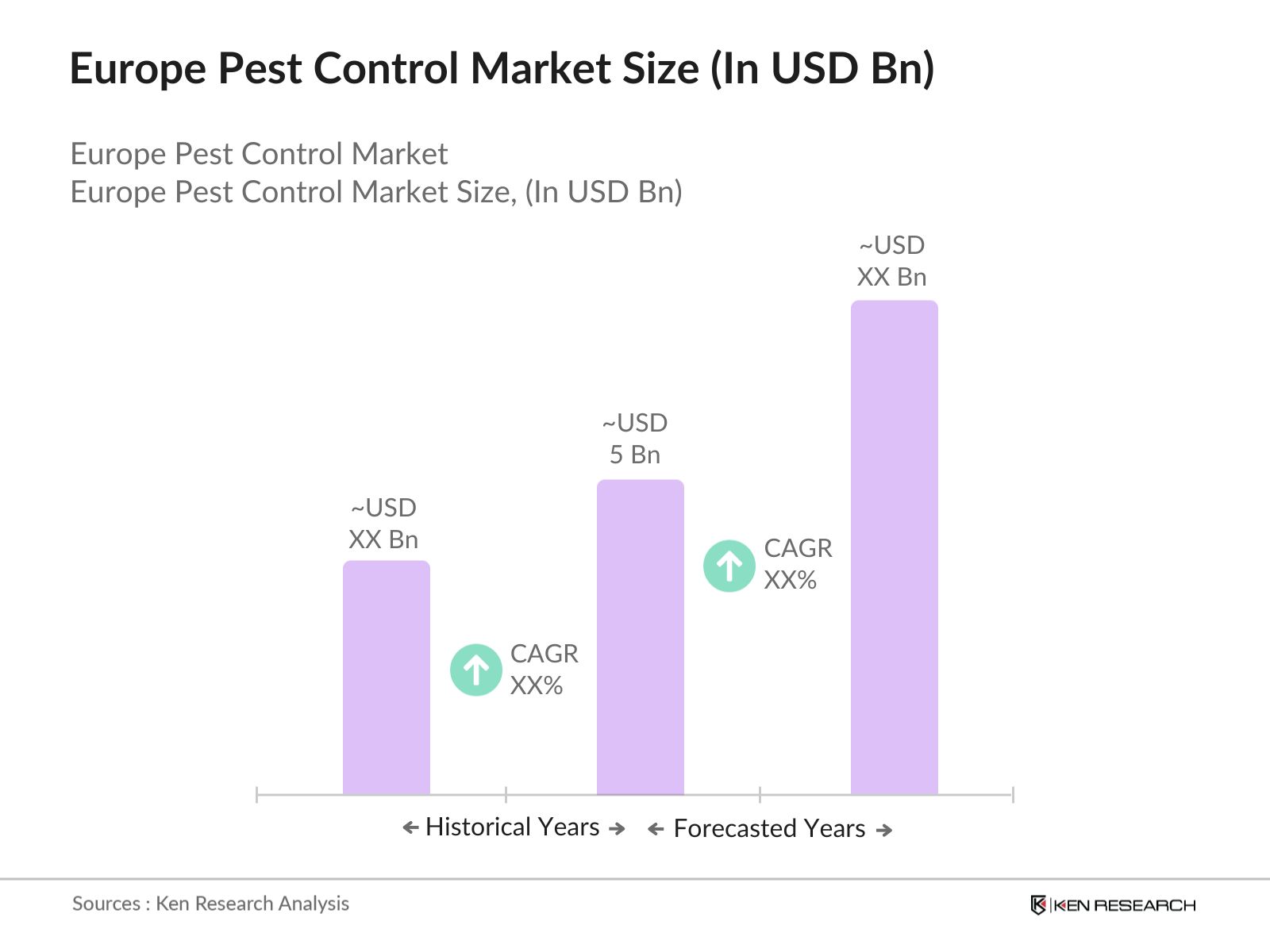
The Europe pest control market is valued at USD 5 billion, driven by factors such as increasing urbanization, climate change, and stricter pest control regulations across the continent.
Challenges in the Europe pest control market include regulatory complexities surrounding pesticide usage, increasing resistance among pests, and growing demand for environmentally friendly pest control solutions.
Key players in the Europe pest control market include Rentokil Initial Plc, BASF SE, Bayer AG, Ecolab Inc., and Terminix International Company. These companies dominate the market due to their wide service offerings and advanced pest control technologies.
The market is propelled by the rising demand for hygiene maintenance, urbanization, and the adoption of integrated pest management solutions that combine chemical, biological, and mechanical methods for effective pest control.

What makes us stand out is that our consultants follows Robust, Refine and Result (RRR) methodology. i.e. Robust for clear definitions, approaches and sanity checking, Refine for differentiating respondents facts and opinions and Result for presenting data with story

We have set a benchmark in the industry by offering our clients with syndicated and customized market research reports featuring coverage of entire market as well as meticulous research and analyst insights.

While we don't replace traditional research, we flip the method upside down. Our dual approach of Top Bottom & Bottom Top ensures quality deliverable by not just verifying company fundamentals but also looking at the sector and macroeconomic factors.

With one step in the future, our research team constantly tries to show you the bigger picture. We help with some of the tough questions you may encounter along the way: How is the industry positioned? Best marketing channel? KPI's of competitors? By aligning every element, we help maximize success.

Our report gives you instant access to the answers and sources that other companies might choose to hide. We elaborate each steps of research methodology we have used and showcase you the sample size to earn your trust.

If you need any support, we are here! We pride ourselves on universe strength, data quality, and quick, friendly, and professional service.