















Europe Polyurethane Market Outlook to 2030
Region:Europe
Author(s):Meenakshi Bisht
Product Code:KROD8407
December 2024
93
About the Report
Europe Polyurethane Market Overview
- The Europe Polyurethane Market is valued at USD 21 billion, based on a five-year historical analysis. This market is driven by a combination of factors, including the increasing demand for lightweight and durable materials in the automotive and construction sectors. Polyurethanes application in insulation, adhesives, and coatings further supports its extensive use across various industries. The market is propelled by stringent regulations promoting energy efficiency and sustainability, leading to the adoption of polyurethane materials in construction and automotive applications.
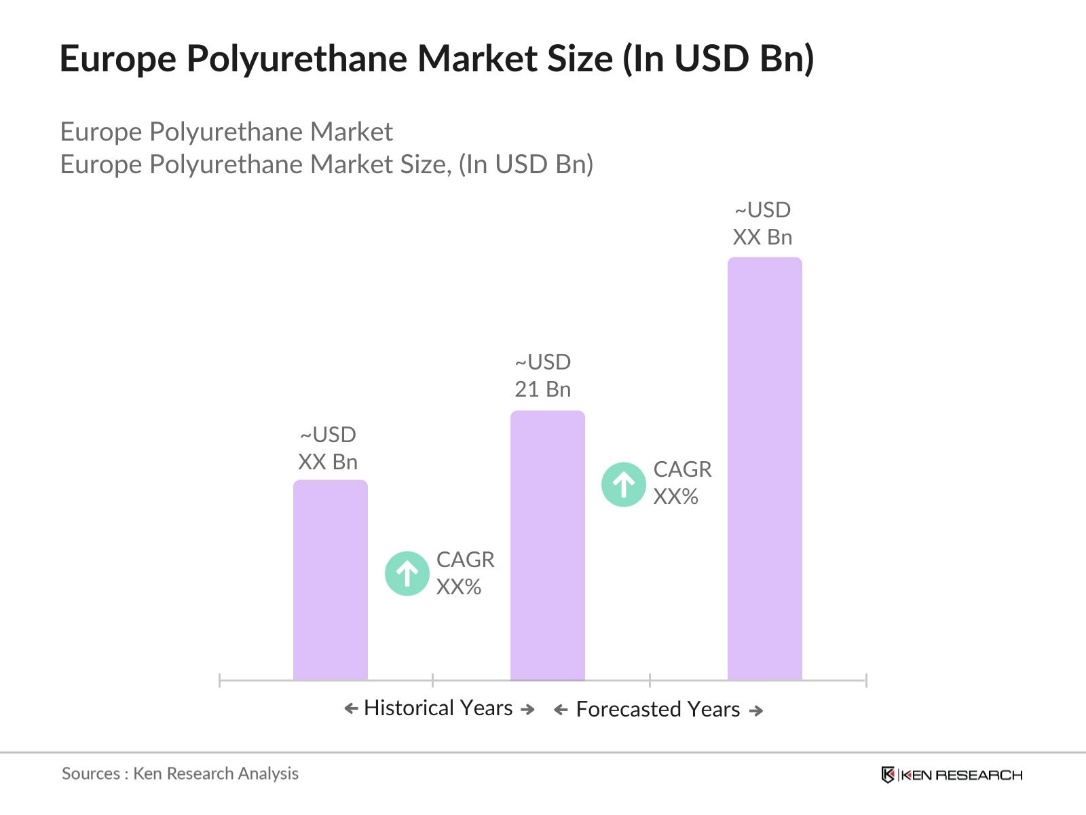
- Germany, France, and the United Kingdom dominate the Europe Polyurethane market. Germany is a leader due to its robust automotive manufacturing sector, where polyurethane is crucial for lightweight components and interiors. France has a strong focus on sustainable construction practices, increasing the demand for polyurethane-based insulation materials. The UKs focus on energy-efficient building standards and renovation projects drives its demand for polyurethane foam.
- The EU Green Deal emphasizes sustainability, directly impacting the use of polyurethane in construction. The Green Deal for green projects in 2023, focusing on sustainable building practices. Polyurethane insulation, known for its high thermal efficiency, aligns with the EU's climate-neutral objectives. The deal has increased the demand for eco-friendly polyurethane products in construction projects across Europe, particularly in retrofitting older buildings to improve energy efficiency.
Europe Polyurethane Market Segmentation
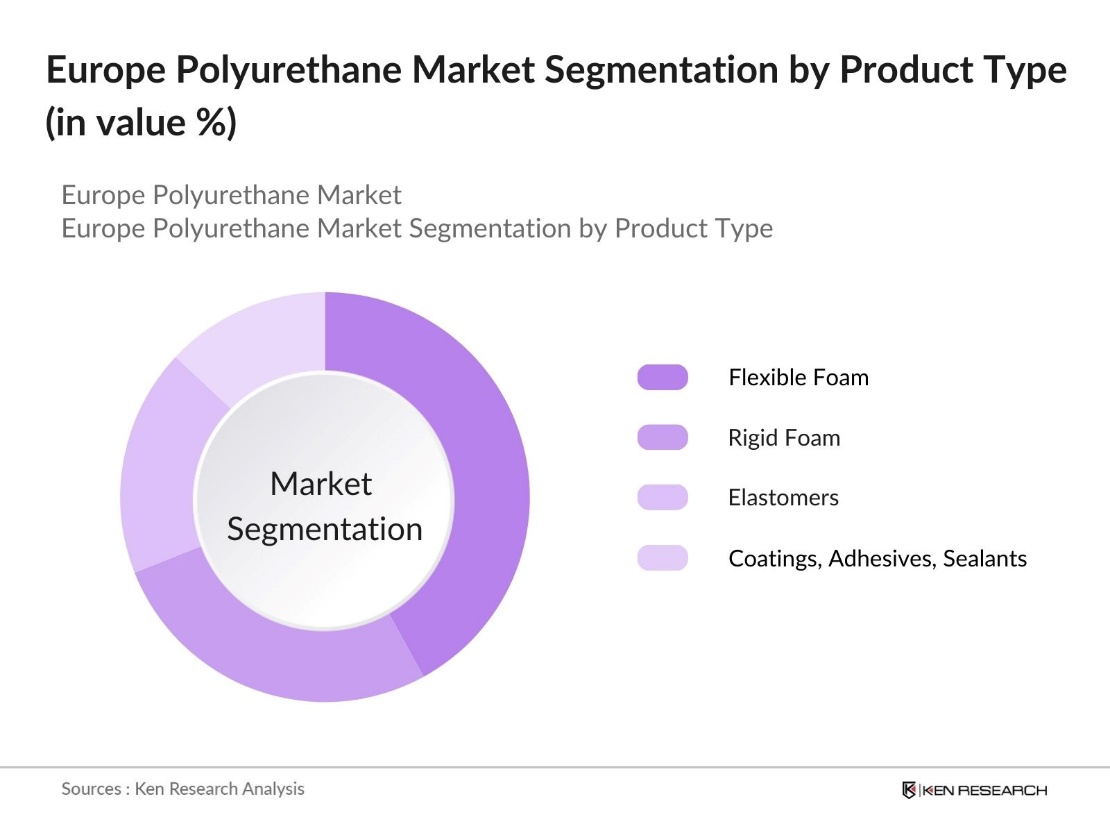
By Product Type: The Europe Polyurethane market is segmented by product type into flexible foam, rigid foam, elastomers, and coatings, adhesives, sealants. Recently, flexible foam has a dominant market share under the product type segmentation. It is extensively used in furniture, bedding, and automotive seating due to its comfort and durability. The growing demand for high-performance materials in mattresses and upholstery has driven the consumption of flexible polyurethane foam, making it a key component in the region's furniture industry.
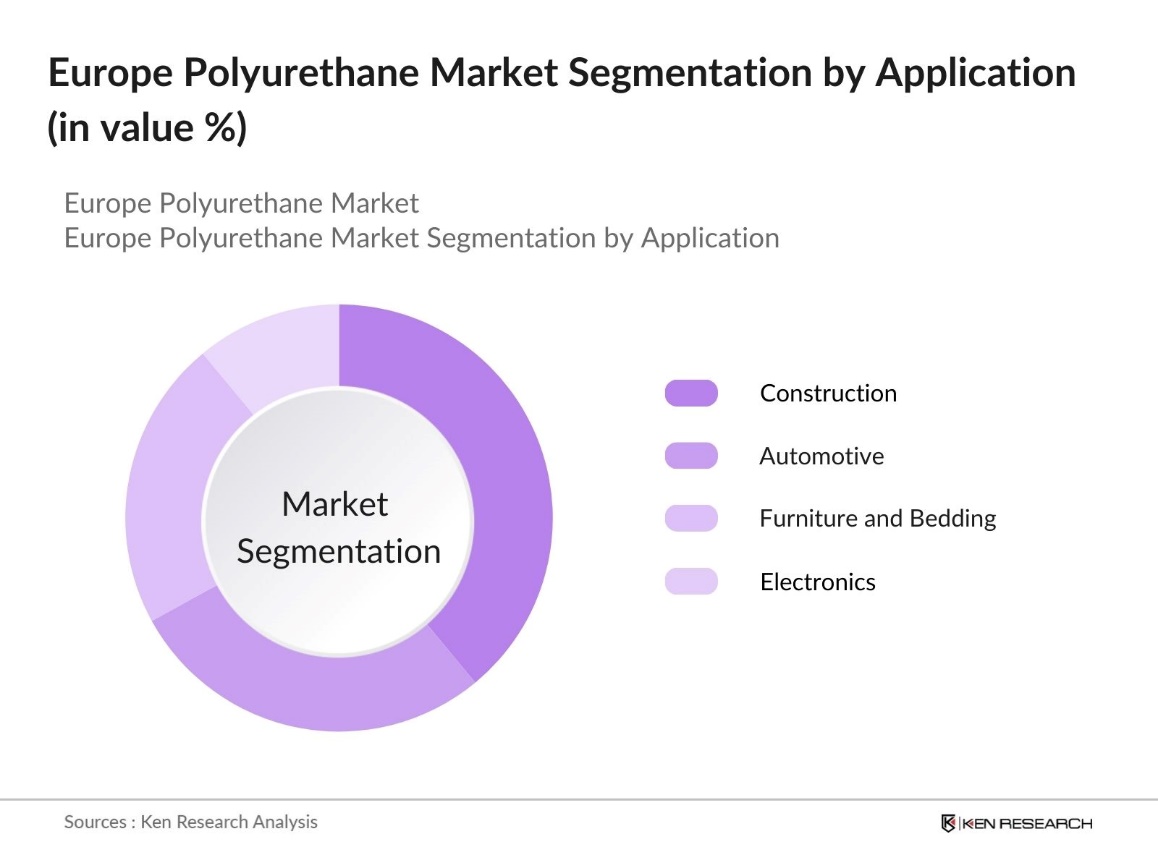
By Application: The Europe Polyurethane market is segmented by application into construction, automotive, furniture and bedding, and electronics. The construction segment holds a significant share due to the increasing use of polyurethane in insulation materials, sealants, and coatings, which are essential for energy-efficient building structures. Polyurethane's properties such as thermal insulation and moisture resistance make it a preferred material in modern building techniques, especially in regions focused on reducing energy consumption in buildings.
Europe Polyurethane Market Competitive Landscape
The Europe Polyurethane market is dominated by a few major players, including global giants like BASF SE, Covestro AG, and Dow Inc., as well as regional leaders such as Wanhua Chemical Group and Recticel SA. This consolidation of the market underscores the significant influence these companies hold due to their large-scale production capacities, extensive R&D investments, and well-established distribution networks across Europe.
|
Company |
Establishment Year |
Headquarters |
Production Capacity |
Revenue (USD Billion) |
R&D Investment |
Geographical Reach |
Sustainability Initiatives |
Key Product Lines |
Strategic Partnerships |
|---|---|---|---|---|---|---|---|---|---|
|
BASF SE |
1865 |
Germany |
|||||||
|
Covestro AG |
2015 |
Germany |
|||||||
|
Dow Inc. |
1897 |
USA |
|||||||
|
Wanhua Chemical Group |
1978 |
China |
|||||||
|
Recticel SA |
1896 |
Belgium |
Europe Polyurethane Industry Analysis
Growth Drivers
- Demand from Construction Sector (Insulation, Sealants, Flooring Applications): The construction industry is a major consumer of polyurethane products, especially for insulation, sealants, and flooring. The EU increased by 1.4% in 2023, a revision from earlier estimates that had suggested only a 0.1% growth. Polyurethane foam, due to its thermal insulation properties, is widely used in construction for reducing energy consumption. The shift toward retrofitting older buildings also drives the need for insulation solutions in the sector.
- Automotive Applications (Lightweight Materials, Interior, and Exterior Components): In 2023, EU car production reached over 12 million units, marking an 11.3% increase compared to 2022, is increasingly incorporating lightweight materials like polyurethane to improve fuel efficiency. Polyurethane is used in car interiors and exterior components due to its light weight and durability. Polyurethanes role in reducing vehicle weight contributes to increased range and efficiency, making it integral to the automotive sectors growth.
- Furniture and Bedding Industry (Foam, Cushions, Upholstery): The European furniture and bedding industry relies heavily on polyurethane foam due to its comfort, durability, and versatility. It is widely used in cushions, mattresses, and upholstery, providing support and comfort in various applications. As consumer preferences shift towards high-quality and long-lasting products, the demand for polyurethane foam in furniture and bedding has increased. Markets such as Italy and Poland are recognized for their robust furniture production and exports, further driving the use of polyurethane.
Market Challenges
- Environmental Concerns Regarding Raw Material Production (MDI, TDI): Polyurethane production relies on raw materials like MDI and TDI, which can have significant environmental impacts. The manufacturing processes of these chemicals are closely regulated, particularly under the EUs REACH framework, which aims to reduce emissions and environmental risks. This increases compliance costs for producers and requires adopting cleaner technologies, balancing environmental standards with maintaining production efficiency and profitability.
- Volatility in Crude Oil Prices (Impact on Raw Material Costs): Polyurethane production is sensitive to fluctuations in crude oil prices, as raw materials like polyols and isocyanates are derived from petroleum. Price volatility impacts production costs, affecting manufacturers' profit margins. This variability makes cost management challenging, requiring producers to adapt quickly to market changes while maintaining consistent supply and meeting demand, especially during periods of market instability.
Europe Polyurethane Market Future Outlook
Over the next five years, the Europe Polyurethane market is expected to witness steady growth, driven by increasing demand for energy-efficient building materials, expansion in the automotive sector, and the adoption of sustainable polyurethane products. The focus on reducing carbon emissions through enhanced insulation in buildings, coupled with the rising popularity of electric vehicles, will likely sustain demand. The market will also benefit from innovations in bio-based polyurethane solutions, which cater to the region's push for environmentally friendly alternatives.
Market Opportunities
- Bio-based Polyurethanes (Sustainable Raw Materials):The growing emphasis on sustainability has created significant opportunities for bio-based polyurethanes in Europe. These materials are derived from renewable sources like soy or castor oil, offering a more environmentally friendly alternative to traditional petrochemical-based polyols. The adoption of bio-based polyurethanes helps address environmental concerns associated with conventional polyurethane production, aligning with Europe's focus on reducing carbon footprints. This shift supports the regions broader goals of promoting sustainable manufacturing and innovation.
- Growing Demand for Polyurethane in Electric Vehicles (Battery Encapsulation, Noise Reduction): The rise of the electric vehicle (EV) market has driven demand for lightweight, durable materials like polyurethane. Its thermal stability makes it ideal for battery encapsulation, while its sound-dampening properties are useful for noise reduction in EV interiors. As automakers prioritize energy efficiency and safety, polyurethane-based components are becoming more integral to vehicle designs, supporting the growing focus on optimizing the performance and comfort of electric vehicles.
Scope of the Report
|
Product Type |
Flexible Foam Rigid Foam Elastomers Coatings, Adhesives, Sealants |
|
Application |
Construction Automotive Furniture and Bedding Electronics |
|
End-Use Industry |
Building and Construction Automotive and Transportation Consumer Goods Healthcare |
|
Raw Material |
MDI (Methylene Diphenyl Diisocyanate) TDI (Toluene Diisocyanate) Polyols |
|
Region |
Western Eastern Central |
Products
Key Target Audience
Polyurethane Manufacturers
Automotive Manufacturers
Construction Companies
Furniture and Bedding Industry Players
Insulation Material Manufacturers
Government and Regulatory Bodies (European Chemicals Agency - ECHA, EU Commission)
Investors and Venture Capitalist Firms
Banks and Financial Institutions
Companies
Players Mentioned in the Report
BASF SE
Covestro AG
Dow Inc.
Huntsman Corporation
Wanhua Chemical Group
Bayer MaterialScience
Recticel SA
Woodbridge Foam Corporation
Tosoh Corporation
Inoac Corporation
Table of Contents
1. Europe Polyurethane Market Overview
1.1. Definition and Scope
1.2. Market Taxonomy
1.3. Market Growth Rate
1.4. Market Segmentation Overview
2. Europe Polyurethane Market Size (In USD Bn)
2.1. Historical Market Size
2.2. Year-On-Year Growth Analysis
2.3. Key Market Developments and Milestones
3. Europe Polyurethane Market Analysis
3.1. Growth Drivers
3.1.1. Demand from Construction Sector (Insulation, Sealants, Flooring Applications)
3.1.2. Automotive Applications (Lightweight Materials, Interior, and Exterior Components)
3.1.3. Furniture and Bedding Industry (Foam, Cushions, Upholstery)
3.1.4. Regulatory Push for Energy-Efficient Buildings (Polyurethane Insulation)
3.2. Market Challenges
3.2.1. Environmental Concerns Regarding Raw Material Production (MDI, TDI)
3.2.2. Volatility in Crude Oil Prices (Impact on Raw Material Costs)
3.2.3. Competitive Pressure from Alternative Materials (Bio-based and Recyclable Polymers)
3.3. Opportunities
3.3.1. Bio-based Polyurethanes (Sustainable Raw Materials)
3.3.2. Growing Demand for Polyurethane in Electric Vehicles (Battery Encapsulation, Noise Reduction)
3.3.3. Expanding Use in Medical Devices (Biocompatible Materials)
3.4. Trends
3.4.1. Adoption of Recyclable Polyurethane Materials
3.4.2. Increasing Use in 3D Printing Applications
3.4.3. Development of Fire-Retardant Polyurethane Products
3.5. Government Regulation
3.5.1. REACH Regulations (Restriction of Hazardous Chemicals)
3.5.2. EU Green Deal (Sustainability in Construction Materials)
3.5.3. Energy Efficiency Directives (Insulation and Foam Applications)
3.6. SWOT Analysis
3.7. Stakeholder Ecosystem (Raw Material Suppliers, Manufacturers, End Users)
3.8. Porters Five Forces
3.9. Competitive Landscape Analysis
4. Europe Polyurethane Market Segmentation
4.1. By Product Type (In Value %)
4.1.1. Flexible Foam
4.1.2. Rigid Foam
4.1.3. Elastomers
4.1.4. Coatings, Adhesives, Sealants
4.2. By Application (In Value %)
4.2.1. Construction
4.2.2. Automotive
4.2.3. Furniture and Bedding
4.2.4. Electronics
4.3. By End-Use Industry (In Value %)
4.3.1. Building and Construction
4.3.2. Automotive and Transportation
4.3.3. Consumer Goods
4.3.4. Healthcare
4.4. By Raw Material (In Value %)
4.4.1. MDI (Methylene Diphenyl Diisocyanate)
4.4.2. TDI (Toluene Diisocyanate)
4.4.3. Polyols
4.5. By Region (In Value %)
4.5.1. Western
4.5.2. Eastern
4.5.3. Central
5. Europe Polyurethane Market Competitive Analysis
5.1. Detailed Profiles of Major Companies
5.1.1. BASF SE
5.1.2. Covestro AG
5.1.3. Dow Inc.
5.1.4. Huntsman Corporation
5.1.5. Wanhua Chemical Group
5.1.6. Bayer MaterialScience
5.1.7. Recticel SA
5.1.8. Woodbridge Foam Corporation
5.1.9. Tosoh Corporation
5.1.10. Inoac Corporation
5.1.11. Lubrizol Corporation
5.1.12. Armacell International SA
5.1.13. Stepan Company
5.1.14. Mitsui Chemicals Inc.
5.1.15. LANXESS AG
5.2. Cross Comparison Parameters (Revenue, Product Portfolio, Market Presence, R&D Investments, Production Capacity, Environmental Impact, Market Strategies, Geographical Reach)
5.3. Market Share Analysis
5.4. Strategic Initiatives (Product Innovations, Collaborations, Expansion Strategies)
5.5. Mergers And Acquisitions
5.6. Investment Analysis
5.7. Venture Capital Funding
5.8. Government Grants and Incentives
5.9. Private Equity Investments
6. Europe Polyurethane Market Regulatory Framework
6.1. Environmental Standards (Emissions, Waste Management)
6.2. Compliance Requirements (Material Safety Data Sheets, Labelling)
6.3. Certification Processes (ISO Certifications, Green Certifications)
7. Europe Polyurethane Market Future Market Size (In USD Bn)
7.1. Future Market Size Projections
7.2. Key Factors Driving Future Market Growth
8. Europe Polyurethane Market Future Segmentation
8.1. By Product Type (In Value %)
8.2. By Application (In Value %)
8.3. By End-Use Industry (In Value %)
8.4. By Raw Material (In Value %)
8.5. By Region (In Value %)
9. Europe Polyurethane Market Analysts Recommendations
9.1. TAM/SAM/SOM Analysis
9.2. Customer Cohort Analysis
9.3. Marketing Initiatives
9.4. White Space Opportunity Analysis
Disclaimer Contact UsResearch Methodology
Step 1: Identification of Key Variables
The initial phase involves constructing an ecosystem map encompassing all major stakeholders within the Europe Polyurethane Market. This step is underpinned by extensive desk research, utilizing a combination of secondary and proprietary databases to gather comprehensive industry-level information. The primary objective is to identify and define the critical variables that influence market dynamics.
Step 2: Market Analysis and Construction
In this phase, we compile and analyze historical data pertaining to the Europe Polyurethane Market. This includes assessing market penetration, production trends, and the resultant revenue generation. Furthermore, an evaluation of material usage statistics will be conducted to ensure the reliability and accuracy of the revenue estimates.
Step 3: Hypothesis Validation and Expert Consultation
Market hypotheses will be developed and subsequently validated through computer-assisted telephone interviews (CATIs) with industry experts representing a diverse array of companies. These consultations will provide valuable operational and financial insights directly from industry practitioners, which will be instrumental in refining and corroborating the market data.
Step 4: Research Synthesis and Final Output
The final phase involves direct engagement with multiple polyurethane manufacturers to acquire detailed insights into product segments, sales performance, consumer preferences, and other pertinent factors. This interaction will serve to verify and complement the statistics derived from the bottom-up approach, thereby ensuring a comprehensive, accurate, and validated analysis of the Europe Polyurethane market.
Frequently Asked Questions
01 How big is the Europe Polyurethane Market?
The Europe Polyurethane Market is valued at USD 21 billion, driven by demand from sectors such as construction and automotive, where polyurethane's versatile applications make it an essential material.
02 What are the challenges in the Europe Polyurethane Market?
Challenges in Europe Polyurethane Market include environmental concerns regarding the production of MDI and TDI, volatility in crude oil prices affecting raw material costs, and competitive pressure from alternative bio-based polymers.
03 Who are the major players in the Europe Polyurethane Market?
Key players in Europe Polyurethane Market include BASF SE, Covestro AG, Dow Inc., Huntsman Corporation, and Wanhua Chemical Group. These companies dominate due to their extensive production capacities, innovation capabilities, and robust supply chains.
04 What are the growth drivers of the Europe Polyurethane Market?
The Europe Polyurethane Market growth drivers include the demand for lightweight materials in automotive manufacturing, increasing use of polyurethane in energy-efficient building insulation, and innovations in sustainable polyurethane products.
Why Buy From Us?

What makes us stand out is that our consultants follows Robust, Refine and Result (RRR) methodology. i.e. Robust for clear definitions, approaches and sanity checking, Refine for differentiating respondents facts and opinions and Result for presenting data with story

We have set a benchmark in the industry by offering our clients with syndicated and customized market research reports featuring coverage of entire market as well as meticulous research and analyst insights.

While we don't replace traditional research, we flip the method upside down. Our dual approach of Top Bottom & Bottom Top ensures quality deliverable by not just verifying company fundamentals but also looking at the sector and macroeconomic factors.

With one step in the future, our research team constantly tries to show you the bigger picture. We help with some of the tough questions you may encounter along the way: How is the industry positioned? Best marketing channel? KPI's of competitors? By aligning every element, we help maximize success.

Our report gives you instant access to the answers and sources that other companies might choose to hide. We elaborate each steps of research methodology we have used and showcase you the sample size to earn your trust.

If you need any support, we are here! We pride ourselves on universe strength, data quality, and quick, friendly, and professional service.