
Europe Reusable Water Bottle Market Outlook to 2030
Region:Albania
Author(s):Yogita Sahu
Product Code:KROD4846
Region:Albania
Author(s):Yogita Sahu
Product Code:KROD4846
December 2024
92
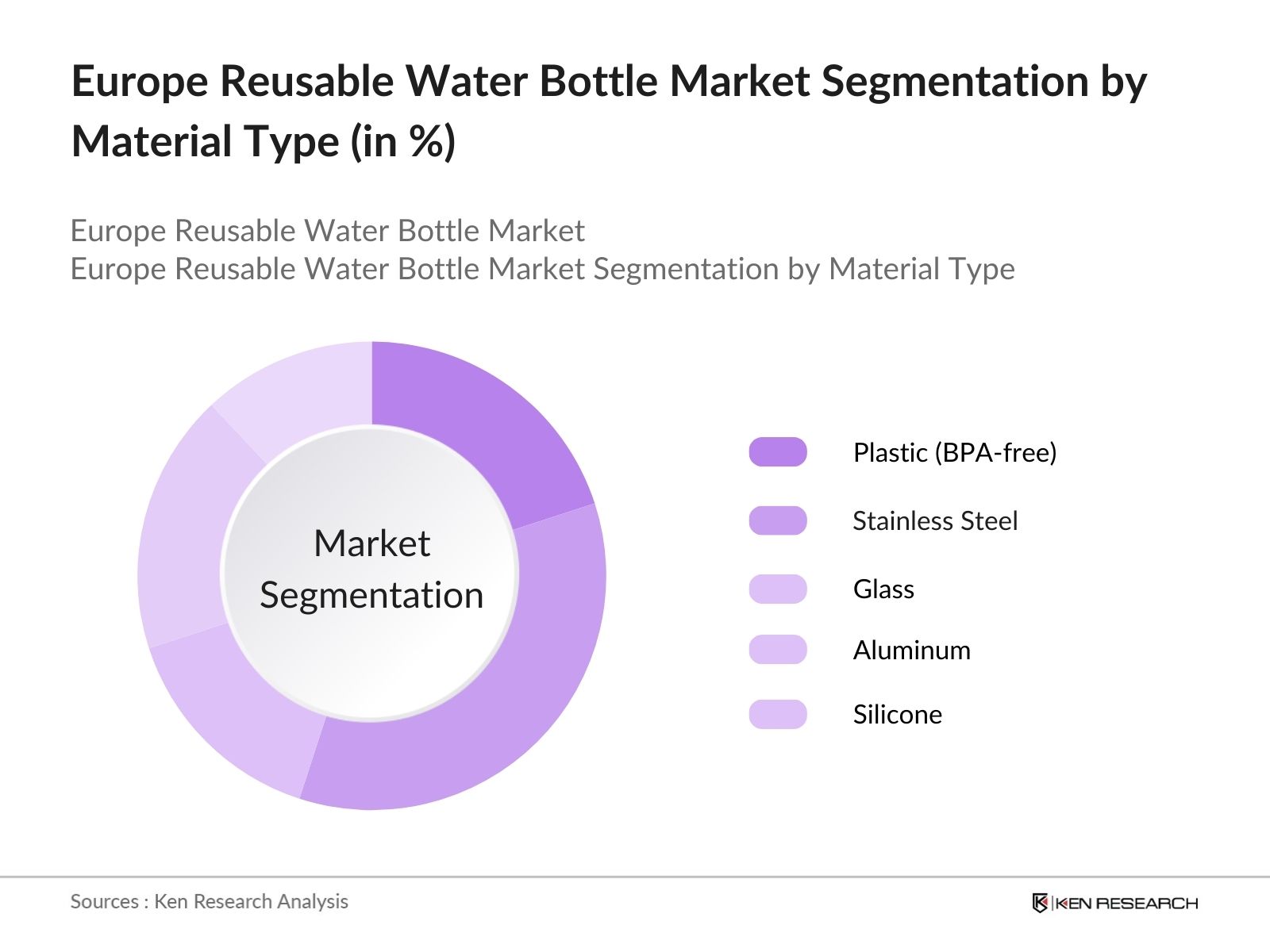
By Material Type: The market is segmented by material type into plastic (BPA-free), stainless steel, glass, aluminum, and silicone. Among these, stainless steel bottles dominate due to their durability, insulation properties, and ease of maintenance. Consumers in Europe prefer stainless steel as it offers longevity and reduces the frequency of purchases, aligning with their eco-friendly values.
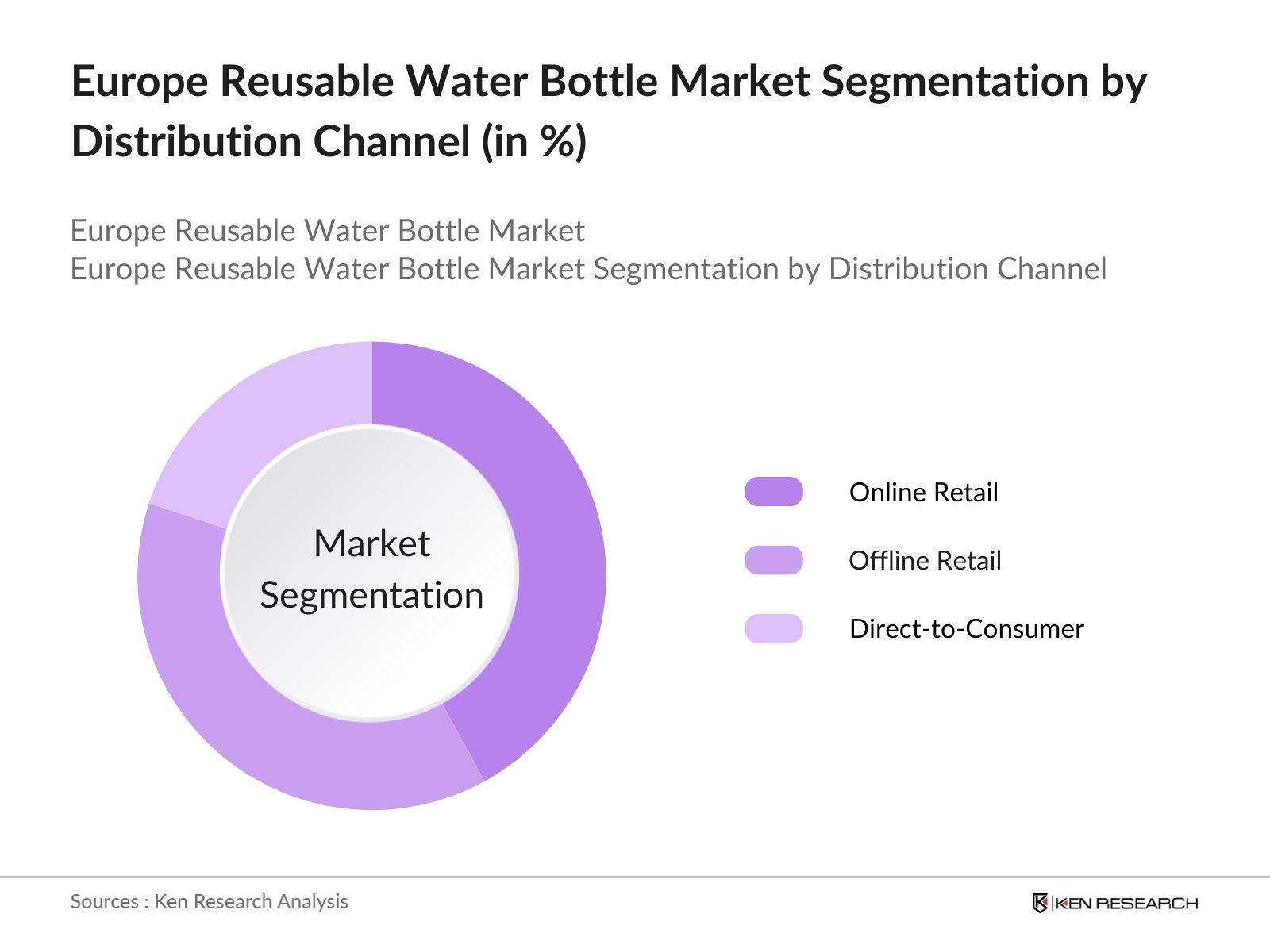
By Distribution Channel: The market is also segmented by distribution channels, including online retail, offline retail (supermarkets and specialty stores), and direct-to-consumer. The online retail channel leads due to the convenience it offers, especially with increasing e-commerce adoption across Europe. Leading platforms provide a variety of options and customization, attracting eco-conscious consumers who seek both quality and uniqueness in products.
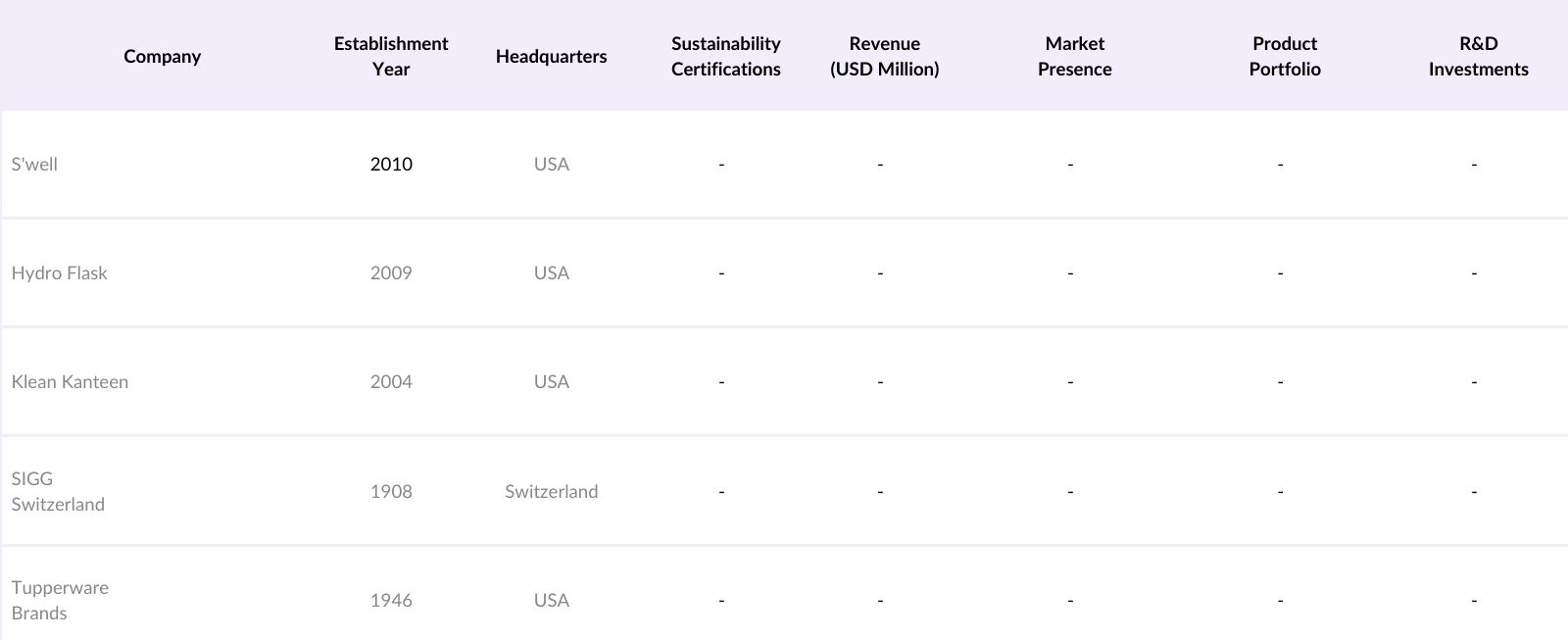
The market is dominated by established brands and a few prominent new players. Companies like S'well, Hydro Flask, and Klean Kanteen leverage product quality, brand loyalty, and sustainability initiatives to maintain their market positions.
Over the next five years, the Europe Reusable Water Bottle industry is projected to experience considerable growth. This expansion will likely be driven by stringent environmental regulations, an increased focus on sustainable living among consumers, and advancements in materials used for manufacturing, such as biodegradable and smart technology-enhanced bottles.
|
Material Type |
Plastic (BPA-Free) Stainless Steel Glass Aluminum Silicone |
|
Distribution Channel |
Online Retail Offline Retail (Supermarkets, Specialty Stores) Direct-to-Consumer |
|
End User |
Individual Consumers Corporate and Institutional Sports and Fitness |
|
Capacity |
Below 500ml 500ml 1L Above 1L |
|
Region |
Western Europe Eastern Europe Northern Europe Southern Europe |
1.1 Definition and Scope
1.2 Market Taxonomy
1.3 Market Growth Rate and CAGR Analysis
1.4 Market Segmentation Overview
2.1 Historical Market Size
2.2 Year-On-Year Growth Analysis
2.3 Market Dynamics and Key Milestones
3.1 Growth Drivers
3.1.1 Environmental Awareness (Reduction in Single-Use Plastic)
3.1.2 Rising Health and Wellness Trends
3.1.3 Increasing Government Regulations on Plastic Usage
3.1.4 Shift in Consumer Preferences Toward Sustainable Products
3.2 Market Challenges
3.2.1 High Manufacturing Costs
3.2.2 Competitive Pricing from Disposable Bottles
3.2.3 Limited Consumer Awareness in Emerging Markets
3.3 Opportunities
3.3.1 Expansion in Online Retail
3.3.2 Innovations in Materials (Stainless Steel, BPA-Free Plastics, etc.)
3.3.3 Partnerships with Health and Wellness Brands
3.4 Trends
3.4.1 Growing Demand for Customizable Designs
3.4.2 Integration of Technology (Smart Bottles)
3.4.3 Growth of Eco-friendly and Biodegradable Bottles
3.5 Government Regulation
3.5.1 EU Single-Use Plastics Directive
3.5.2 National Plastic Waste Reduction Policies
3.5.3 Compliance and Labeling Standards
3.6 SWOT Analysis
3.7 Value Chain Analysis
3.8 Porters Five Forces Analysis
3.9 Stakeholder Ecosystem
4.1 By Material Type (Market Share %)
4.1.1 Plastic (BPA-Free)
4.1.2 Stainless Steel
4.1.3 Glass
4.1.4 Aluminum
4.1.5 Silicone
4.2 By Distribution Channel (Market Share %)
4.2.1 Online Retail
4.2.2 Offline Retail (Supermarkets, Specialty Stores)
4.2.3 Direct-to-Consumer
4.3 By End User (Market Share %)
4.3.1 Individual Consumers
4.3.2 Corporate and Institutional
4.3.3 Sports and Fitness
4.4 By Capacity (Market Share %)
4.4.1 Below 500ml
4.4.2 500ml 1L
4.4.3 Above 1L
4.5 By Region (Market Share %)
4.5.1 Western Europe
4.5.2 Eastern Europe
4.5.3 Northern Europe
4.5.4 Southern Europe
5.1 Detailed Profiles of Major Companies
5.1.1 Swell
5.1.2 Klean Kanteen
5.1.3 Hydro Flask
5.1.4 Tupperware Brands
5.1.5 CamelBak
5.1.6 SIGG Switzerland
5.1.7 Nalgene Outdoor
5.1.8 Contigo
5.1.9 Brita
5.1.10 Thermos LLC
5.1.11 LARQ
5.1.12 Vapur
5.1.13 Aquasana
5.1.14 Kor Water
5.1.15 Fressko
5.2 Cross Comparison Parameters (Employee Count, Headquarters, Founding Year, Revenue, Market Presence, Product Portfolio, Environmental Certifications, Recent Innovations)
5.3 Market Share Analysis
5.4 Strategic Initiatives (Product Launches, Market Expansion)
5.5 Mergers and Acquisitions
5.6 Investment and Funding Analysis
5.7 Joint Ventures and Collaborations
5.8 Marketing and Advertising Expenditure Analysis
6.1 Environmental Standards and Compliance
6.2 Industry Certifications and Eco-Labels
6.3 Import and Export Regulations
7.1 Future Market Size Projections
7.2 Key Factors Driving Future Growth
8.1 By Material Type (Projected Market Share %)
8.2 By Distribution Channel (Projected Market Share %)
8.3 By End User (Projected Market Share %)
8.4 By Capacity (Projected Market Share %)
8.5 By Region (Projected Market Share %)
9.1 Market Penetration Strategy
9.2 Product Differentiation Strategy
9.3 Consumer Engagement Tactics
9.4 White Space Opportunity Analysis
Disclaimer Contact UsThis initial phase involved constructing a comprehensive market map of all stakeholders in the Europe Reusable Water Bottle market. Through desk research and secondary sources, we identified key drivers, inhibitors, and emerging trends shaping the industry.
This stage involved gathering historical data on product adoption, demand trends, and revenue streams. We conducted an in-depth analysis of product portfolios across different distribution channels to establish accurate market segment valuations.
We validated market assumptions through structured interviews with industry experts, including product managers and senior executives. Their insights provided clarity on the market dynamics and company strategies influencing growth.
Data synthesis entailed cross-verification with direct insights from manufacturers and sales data to ensure a comprehensive and accurate market analysis.
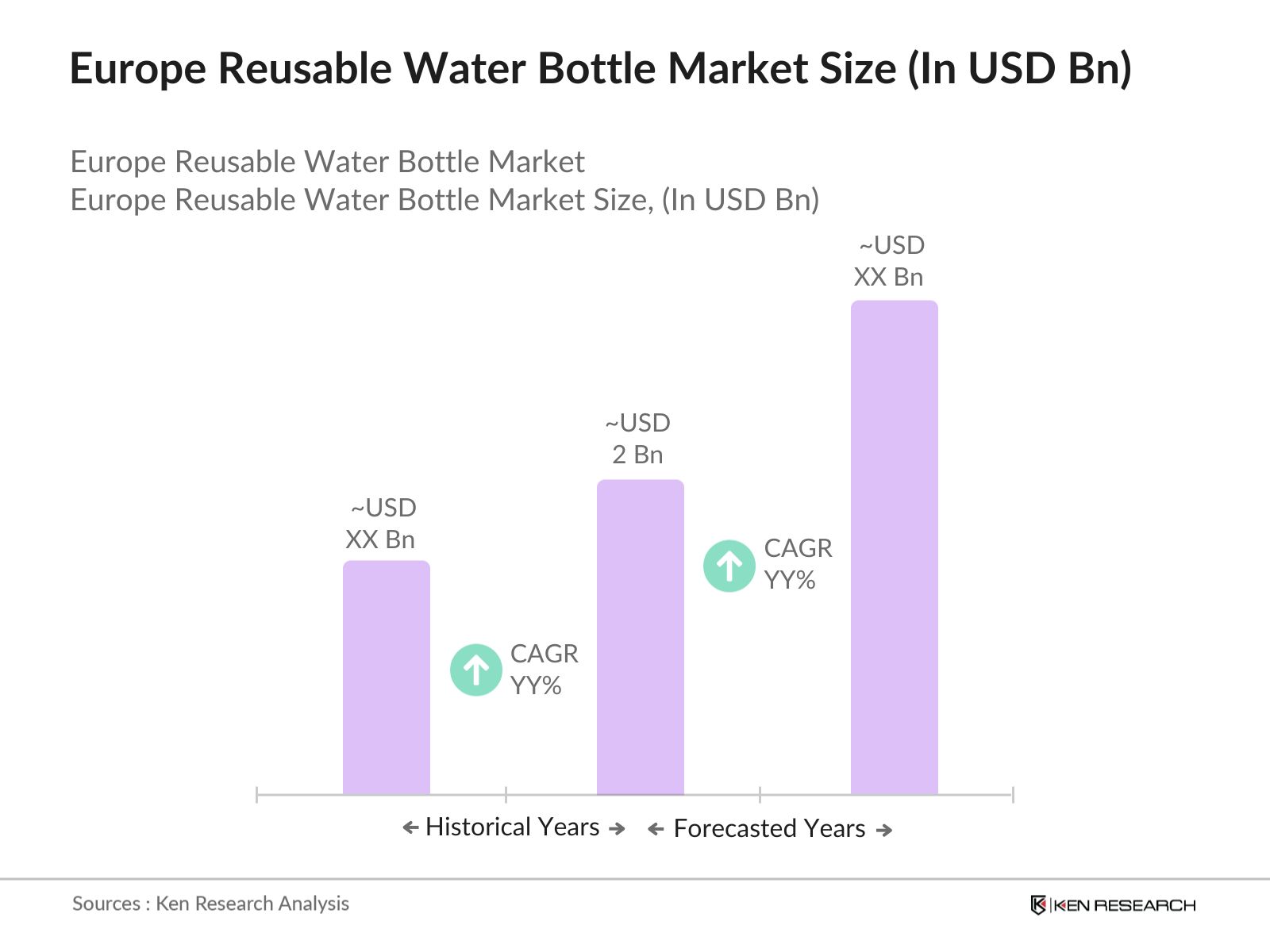
The Europe Reusable Water Bottle market is valued at USD 2 billion, driven by increased consumer awareness of environmental issues and government regulations on plastic waste reduction.
Challenges in the Europe Reusable Water Bottle market include high competition, price sensitivity among consumers, and manufacturing costs associated with sustainable materials.
Key players in the Europe Reusable Water Bottle market include S'well, Hydro Flask, Klean Kanteen, SIGG Switzerland, and Tupperware Brands. These companies leverage their established reputations and strong sustainability commitments.
Growth in the Europe Reusable Water Bottle market is propelled by consumer demand for sustainable products, stringent environmental regulations, and a shift towards eco-conscious lifestyles.

What makes us stand out is that our consultants follows Robust, Refine and Result (RRR) methodology. i.e. Robust for clear definitions, approaches and sanity checking, Refine for differentiating respondents facts and opinions and Result for presenting data with story

We have set a benchmark in the industry by offering our clients with syndicated and customized market research reports featuring coverage of entire market as well as meticulous research and analyst insights.

While we don't replace traditional research, we flip the method upside down. Our dual approach of Top Bottom & Bottom Top ensures quality deliverable by not just verifying company fundamentals but also looking at the sector and macroeconomic factors.

With one step in the future, our research team constantly tries to show you the bigger picture. We help with some of the tough questions you may encounter along the way: How is the industry positioned? Best marketing channel? KPI's of competitors? By aligning every element, we help maximize success.

Our report gives you instant access to the answers and sources that other companies might choose to hide. We elaborate each steps of research methodology we have used and showcase you the sample size to earn your trust.

If you need any support, we are here! We pride ourselves on universe strength, data quality, and quick, friendly, and professional service.