















Europe Shipping Container Market Outlook to 2030
Region:Europe
Author(s):Paribhasha Tiwari
Product Code:KROD9186
December 2024
89
About the Report
Europe Shipping Container Market Overview
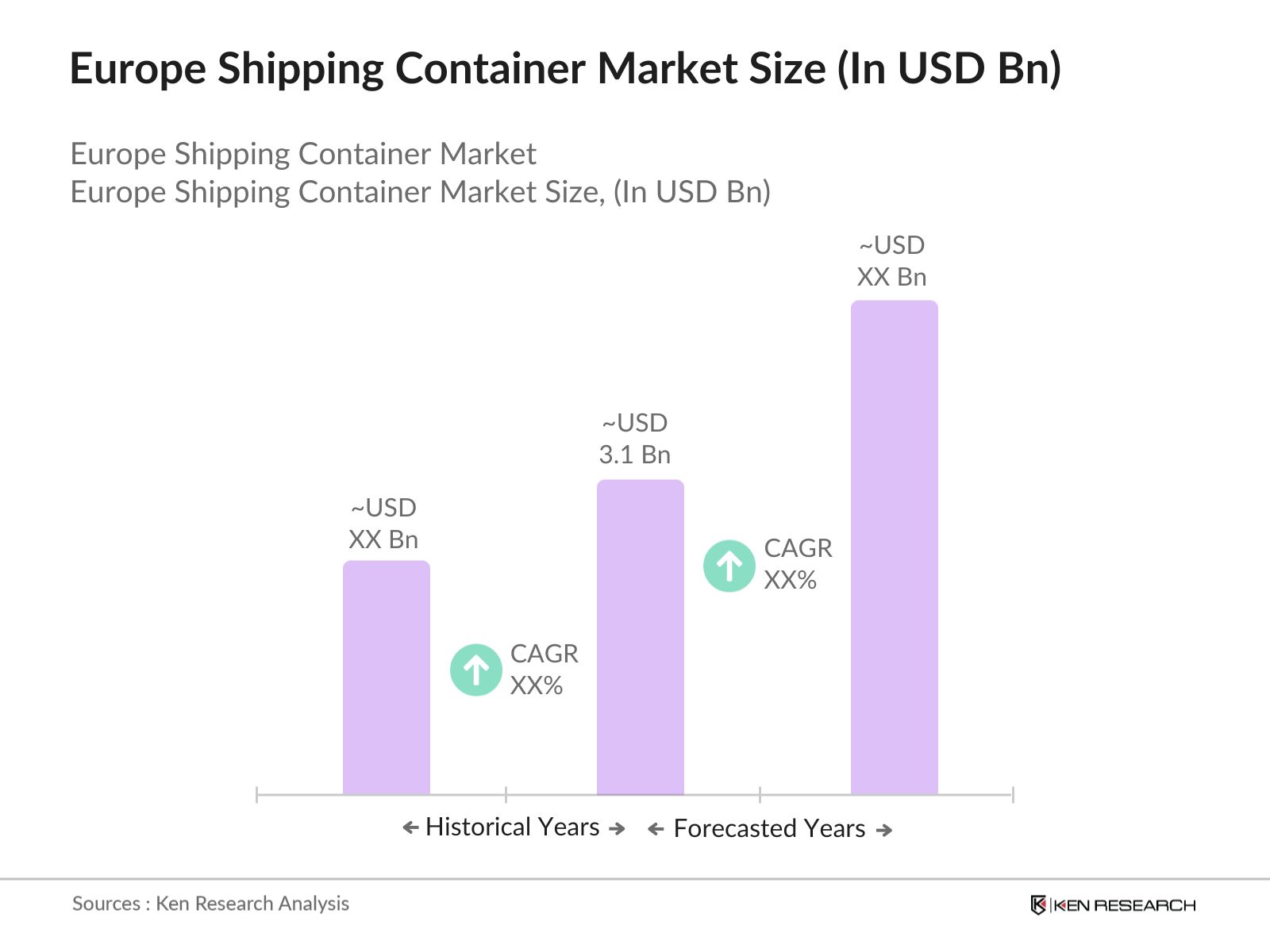
- The Europe shipping container market is valued at USD 3.1 billion, supported by the robust growth of international trade, increasing demand for intermodal transportation, and advancements in container tracking technologies. The market benefits significantly from the integration of Internet of Things (IoT) technologies, which optimize container logistics and enhance security. With high import-export activities, particularly in industrial goods, the market continues to expand, propelled by modernization in port infrastructure.
- Germany and the Netherlands lead the European shipping container market due to their strategic location and advanced logistics networks. Germanys industrialized economy heavily relies on containerized transport for exporting machinery and vehicles, while the Netherlands benefits from the Port of Rotterdam, one of the busiest ports globally, acting as a gateway to Europe. These regions have well-established infrastructure and strong international trade ties, positioning them as key players.
- The adoption of blockchain for tracking shipments has increased transparency. By 2024, over 30% of global shipping transactions utilized blockchain platforms, enhancing security and efficiency in the supply chain.
Europe Shipping Container Market Segmentation
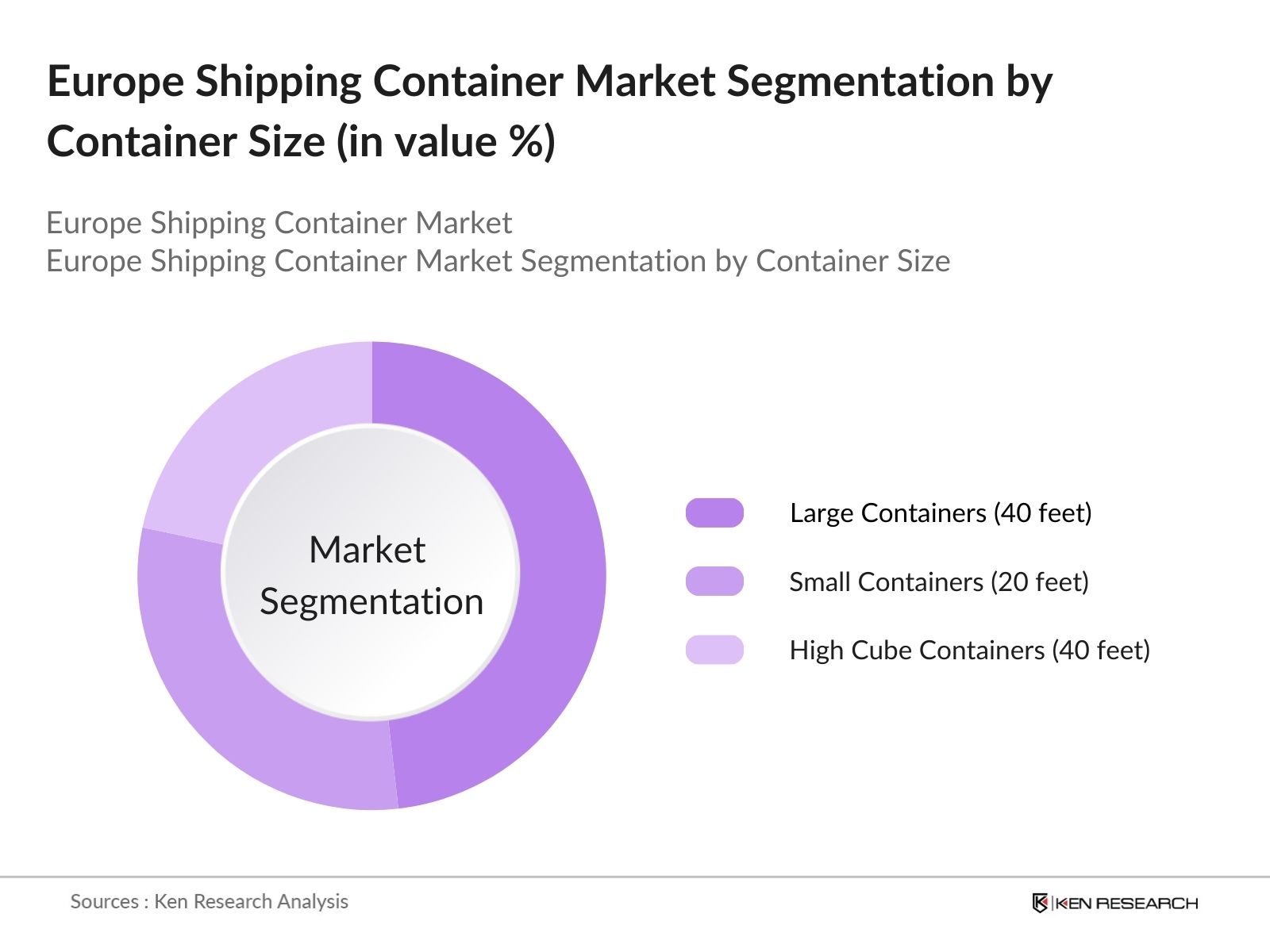
By Container Size: Europe's shipping container market is segmented by container size into large containers (40 feet), small containers (20 feet), and high cube containers (40 feet). Large containers dominate the market due to their ability to transport bulk goods efficiently, such as industrial equipment and automotive parts. Their standardized dimensions also allow for easy intermodal transport, ensuring a seamless connection between sea, road, and rail transport modes.
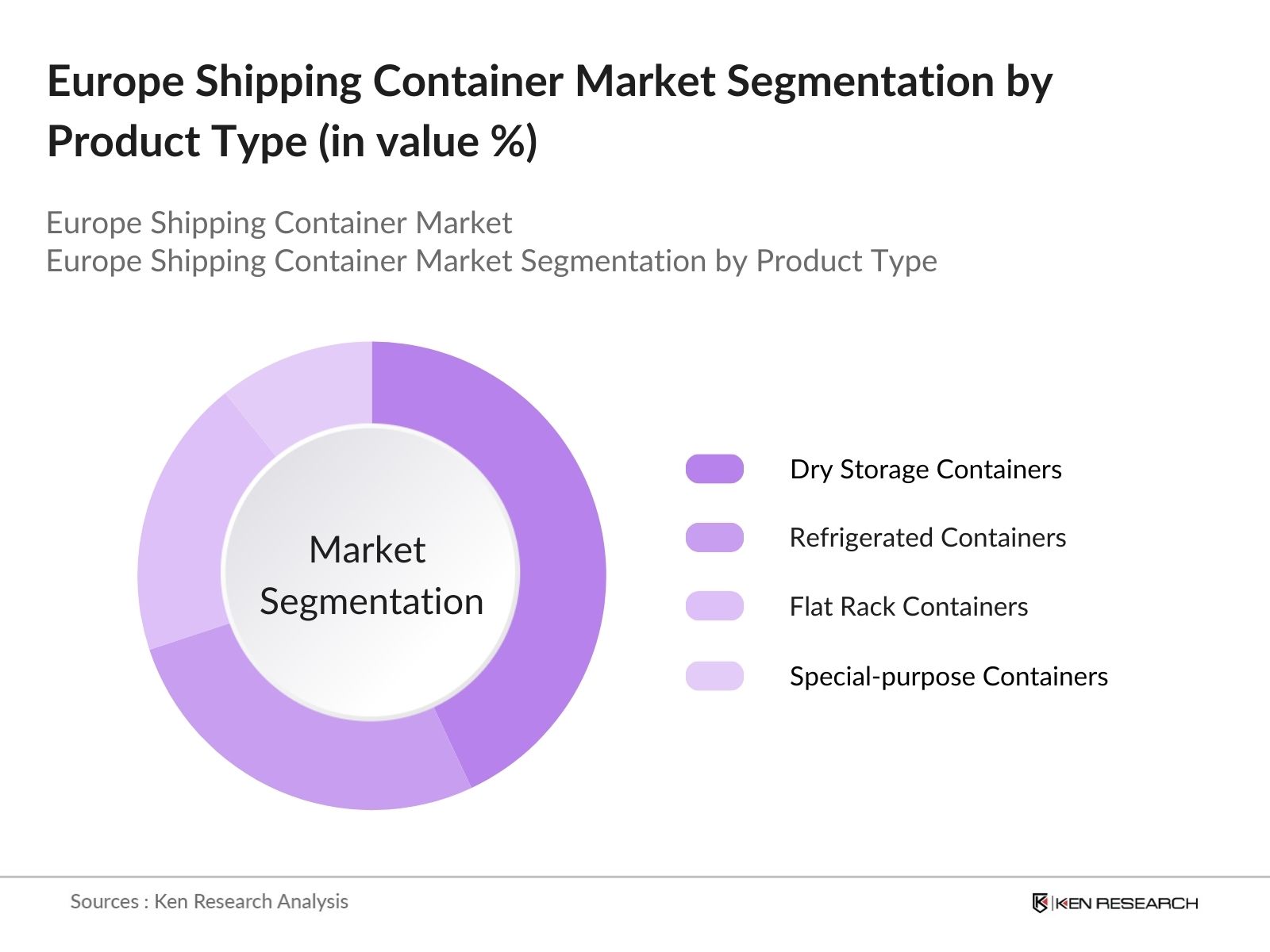
By Product Type: The market is segmented by product type into dry storage containers, refrigerated containers, flat rack containers, and special-purpose containers. Dry storage containers hold the largest market share due to their versatility and widespread use in transporting non-perishable goods. Their durability and compatibility with most goods make them the default choice for global trade.
Europe Shipping Container Market Competitive Landscape
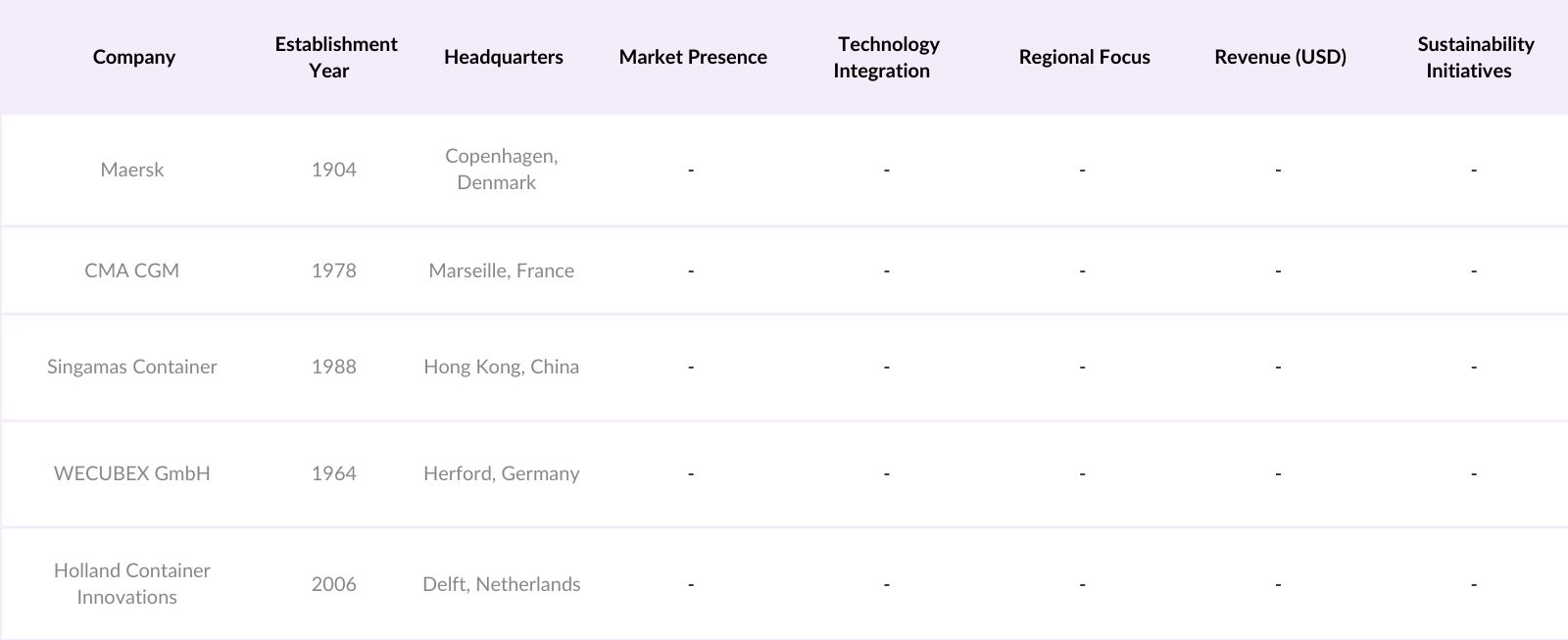
The European shipping container market is dominated by both local and international players. Key companies have established strong market positions through investments in smart containers and sustainable practices. The market is consolidated, with top players leveraging advanced technology and strategic partnerships to maintain their edge. Companies like Maersk and CMA CGM lead due to their global reach, while regional firms excel in niche markets such as custom containers.
Europe Shipping Container Market Analysis
Growth Drivers
- Expansion of International Trade: In 2024, global merchandise trade volume reached 24.5 billion metric tons, reflecting a significant increase from previous years. This surge has amplified the demand for container shipping services to facilitate the movement of goods across international borders.
- Rise in E-commerce Activities: The global e-commerce market generated revenues of $5.7 trillion in 2024, leading to a substantial rise in parcel shipments. This growth has necessitated efficient container shipping solutions to manage the increased volume of goods being transported globally.
- Advancements in Container Technology: The adoption of smart containers equipped with IoT devices has increased, with over 2 million units in operation by 2024. These containers offer real-time tracking and monitoring, enhancing supply chain efficiency and security.
Market Challenges
- Fluctuating Raw Material Prices: The cost of steel, a primary material for container manufacturing, averaged $1,200 per metric ton in 2024, up from $900 in 2023. This increase has led to higher production costs for container manufacturers, impacting profitability.
- Stringent Environmental Regulations: In 2024, the International Maritime Organization (IMO) implemented regulations requiring a 50% reduction in greenhouse gas emissions by 2050. Compliance necessitates significant investment in cleaner technologies and fuels, posing financial challenges for shipping companies.
Europe Shipping Container Market Future Outlook
Over the next five years, the European shipping container market is expected to witness significant growth driven by investments in smart container technologies and eco-friendly materials. Increasing adoption of blockchain for supply chain transparency and rising intermodal transport demand will further enhance the markets trajectory.
Market Opportunities
- Adoption of Smart Containers: The market for smart containers is projected to reach 5 million units by 2025. These containers provide real-time data on location, temperature, and security, offering shipping companies opportunities to enhance operational efficiency and customer satisfaction.
- Growth in Intermodal Transportation: The integration of rail, road, and sea transport has led to the development of intermodal terminals. In 2024, over 1,000 such terminals were operational globally, facilitating seamless cargo movement and reducing transit times.
Scope of the Report
|
By Container Size |
- Large Containers (40 Feet) |
|
By Product Type |
- Dry Storage Containers |
|
By End User |
- Food & Beverages |
|
By Ownership |
- Shipping Line Owned |
|
By Country |
- Germany |
Products
Key Target Audience
Logistics Companies
Shipping Lines and Freight Forwarders
Investors and Venture Capitalist Firms
Port Authorities and Terminal Operators
Manufacturers (automotive, industrial, consumer goods)
Government and Regulatory Bodies (European Maritime Safety Agency, National Transport Ministries)
Intermodal Transport Service Providers
Technology Providers (IoT and Blockchain Solutions)
Companies
Players Mentioned in the report:
Maersk
CMA CGM
Singamas Container
WECUBEX GmbH
Holland Container Innovations
BSL Containers Ltd.
ALHO Systembau GmbH
Joy Container GmbH
Kleusberg GmbH & Co. KG
Sea Box Inc.
Table of Contents
1. Europe Shipping Container Market Overview
1.1. Definition and Scope
1.2. Market Taxonomy
1.3. Market Growth Rate
1.4. Market Segmentation Overview
2. Europe Shipping Container Market Size (In USD Billion)
2.1. Historical Market Size
2.2. Year-On-Year Growth Analysis
2.3. Key Market Developments and Milestones
3. Europe Shipping Container Market Analysis
3.1. Growth Drivers
3.1.1. Expansion of International Trade
3.1.2. Rise in E-commerce Activities
3.1.3. Advancements in Container Technology
3.1.4. Development of Port Infrastructure
3.2. Market Challenges
3.2.1. Fluctuating Raw Material Prices
3.2.2. Stringent Environmental Regulations
3.2.3. Geopolitical Tensions
3.3. Opportunities
3.3.1. Adoption of Smart Containers
3.3.2. Growth in Intermodal Transportation
3.3.3. Demand for Sustainable Container Solutions
3.4. Trends
3.4.1. Integration of IoT in Container Tracking
3.4.2. Utilization of Blockchain for Supply Chain Transparency
3.4.3. Emergence of Modular Container Solutions
3.5. Government Regulations
3.5.1. Emission Standards for Shipping
3.5.2. Safety and Security Compliance
3.5.3. Trade Policies and Tariffs
3.6. SWOT Analysis
3.7. Stakeholder Ecosystem
3.8. Porters Five Forces Analysis
3.9. Competitive Landscape
4. Europe Shipping Container Market Segmentation
4.1. By Container Size (In Value %)
4.1.1. Large Containers (40 Feet)
4.1.2. Small Containers (20 Feet)
4.1.3. High Cube Containers (40 Feet)
4.2. By Product Type (In Value %)
4.2.1. Dry Storage Containers
4.2.2. Flat Rack Containers
4.2.3. Refrigerated Containers
4.2.4. Special-purpose Containers
4.3. By End User (In Value %)
4.3.1. Food & Beverages
4.3.2. Consumer Goods
4.3.3. Healthcare
4.3.4. Industrial Products
4.3.5. Vehicle Transport
4.4. By Ownership (In Value %)
4.4.1. Shipping Line Owned
4.4.2. Leasing Company Owned
4.4.3. Others
4.5. By Country (In Value %)
4.5.1. Germany
4.5.2. United Kingdom
4.5.3. Italy
4.5.4. France
4.5.5. Spain
4.5.6. Belgium
4.5.7. Russia
4.5.8. Netherlands
4.5.9. Rest of Europe
5. Europe Shipping Container Market Competitive Analysis
5.1. Detailed Profiles of Major Companies
5.1.1. Maersk Container Industry
5.1.2. Singamas Container Holdings Ltd
5.1.3. WECUBEX GmbH
5.1.4. BSL Containers Ltd
5.1.5. ALHO Systembau GmbH
5.1.6. Weimer GmbH & Co. KG
5.1.7. ALPINA Grillsysteme GmbH
5.1.8. K-tainer Trading BV
5.1.9. Holland Container Innovations
5.1.10. Joy Container GmbH
5.1.11. CMA CGM
5.1.12. CONTAINEX
5.1.13. Kleusberg GmbH & Co. KG
5.1.14. SCHOELLERSHAMMER GMBH & CO. KG
5.1.15. Sea Box Inc.
5.2. Cross Comparison Parameters (Number of Employees, Headquarters, Inception Year, Revenue, Market Share, Product Portfolio, Regional Presence, Recent Developments)
5.3. Market Share Analysis
5.4. Strategic Initiatives
5.5. Mergers and Acquisitions
5.6. Investment Analysis
5.7. Venture Capital Funding
5.8. Government Grants
5.9. Private Equity Investments
6. Europe Shipping Container Market Regulatory Framework
6.1. Environmental Standards
6.2. Compliance Requirements
6.3. Certification Processes
7. Europe Shipping Container Future Market Size (In USD Billion)
7.1. Future Market Size Projections
7.2. Key Factors Driving Future Market Growth
8. Europe Shipping Container Future Market Segmentation
8.1. By Container Size (In Value %)
8.2. By Product Type (In Value %)
8.3. By End User (In Value %)
8.4. By Ownership (In Value %)
8.5. By Country (In Value %)
9. Europe Shipping Container Market Analysts Recommendations
9.1. Total Addressable Market (TAM), Serviceable Available Market (SAM), and Serviceable Obtainable Market (SOM) Analysis
9.2. Customer Cohort Analysis
9.3. Marketing Initiatives
9.4. White Space Opportunity Analysis
Disclaimer Contact UsResearch Methodology
Step 1: Identification of Key Variables
The initial phase involves mapping the Europe shipping container ecosystem. This includes port authorities, logistics providers, and manufacturers. Desk research using government and industry reports helps define critical market drivers.
Step 2: Market Analysis and Construction
Historical data is analyzed to identify trends in container usage and trade flows. The analysis evaluates market penetration, container fleet utilization rates, and regional transport metrics.
Step 3: Hypothesis Validation and Expert Consultation
Interviews with industry experts validate market hypotheses and provide actionable insights. This step incorporates feedback from logistics professionals and shipping companies.
Step 4: Research Synthesis and Final Output
Engagement with shipping container manufacturers ensures comprehensive data collection, leading to a validated and detailed market report.
Frequently Asked Questions
1. How big is the Europe shipping container market?
The Europe shipping container market is valued at USD 3.1 billion, driven by rising trade activities and the adoption of intermodal transportation solutions.
2. What are the challenges in the Europe shipping container market?
Challenges in the Europe shipping container market include fluctuating raw material prices, stringent environmental regulations, and geopolitical tensions affecting trade routes.
3. Who are the major players in the Europe shipping container market?
Key players in the Europe shipping container market include Maersk, CMA CGM, Singamas Container, WECUBEX GmbH, and Holland Container Innovations.
4. What drives the Europe shipping container market?
Growth of Europe shipping container market is driven by advancements in IoT-based tracking systems, increased e-commerce activities, and demand for eco-friendly container materials.
Why Buy From Us?

What makes us stand out is that our consultants follows Robust, Refine and Result (RRR) methodology. i.e. Robust for clear definitions, approaches and sanity checking, Refine for differentiating respondents facts and opinions and Result for presenting data with story

We have set a benchmark in the industry by offering our clients with syndicated and customized market research reports featuring coverage of entire market as well as meticulous research and analyst insights.

While we don't replace traditional research, we flip the method upside down. Our dual approach of Top Bottom & Bottom Top ensures quality deliverable by not just verifying company fundamentals but also looking at the sector and macroeconomic factors.

With one step in the future, our research team constantly tries to show you the bigger picture. We help with some of the tough questions you may encounter along the way: How is the industry positioned? Best marketing channel? KPI's of competitors? By aligning every element, we help maximize success.

Our report gives you instant access to the answers and sources that other companies might choose to hide. We elaborate each steps of research methodology we have used and showcase you the sample size to earn your trust.

If you need any support, we are here! We pride ourselves on universe strength, data quality, and quick, friendly, and professional service.